DD
MM
YYYY

PAGES

DD
MM
YYYY

spot_img

PAGES

Home Blog Page 4352

Circle’s $3.3 billion Cash Exposure to Silicon Valley Bank Remains

1

USDC, which is meant to maintain its peg despite market conditions, went downhill. The price of the stablecoin depegged and fell initially to $0.95, then to $0.90, and currently stands at $0.9049, with a 9.51% drop in value over the last 24 hours. Circle has reportedly sent 314 million USDC to a null address as redemptions begin, signaling a strategic move to help restore the value of the stablecoin. This move is expected to pave the way for USDC to regain its 1:1 parity with the U.S. dollar.

Silicon Valley Bank is one of six banking partners Circle uses for managing the ~25% portion of USDC reserves held in cash. While we await clarity on how the FDIC receivership of SVB will impact its depositors, Circle and USDC continue to operate normally.

Circle is currently protecting USDC from a black swan failure in the U.S. banking system. SVB Financial is a critical bank in the U.S. economy and its failure – without a Federal rescue plan – will have broader implications for business, banking and entrepreneurs. As with Silvergate, our teams have worked at speed to limit any exposure to banks. This includes a wire transfer request made before SVB’s FDIC receivership. A $3.3 billion cash exposure remains – but we follow state and Federal regulatory guidance.

Press Release from Circle

Following the joint announcement by U.S. Treasury Secretary Janet Yellen and U.S. prudential regulators, all depositors with Silicon Valley Bank and Signature Bank, which was closed by regulators today, will be made whole.

The $3.3B USDC reserve deposit held at Silicon Valley Bank, about 8% of the USDC total reserve, will be fully available when U.S. banks open tomorrow morning. No USDC cash reserves were held at Signature Bank. As a regulated payment token, USDC remains redeemable 1:1 with the U.S. Dollar.

As part of our commitment to expanding banking partnerships, Circle is also announcing automated USDC minting and redemption for customers via new banking partners that go live this week.

“Trust, safety and 1:1 redeemability of all USDC in circulation is of paramount importance to Circle, even in the face of bank contagion affecting crypto markets,” said Jeremy Allaire, Co-founder and CEO of Circle. “We are heartened to see the U.S. government and financial regulators take crucial steps to mitigate risks extending from the banking system.

We’ve long advocated for full-reserve digital currency banking that insulates our base layer of internet money and payment systems from fractional reserve banking risk.”

On March 11, 2023, Circle shared details about the USDC reserve, stating it is currently collateralized 77% ($32.4B) with short-dated U.S. Treasury Bills. U.S. Treasury Bills are the most liquid assets in the world and are direct obligations of the U.S. government.

These reserves are held in custody by BNY Mellon and active liquidity and asset management is done by BlackRock. The cash portion of the USDC reserve, 23% ($9.7B), is now held primarily at BNY Mellon.

Anyone can view the entire liquidity ladder down to the CUSIP number on T-Bills via the USDXX ticker, and monthly USDC attestation reports, including the latest report from January, 2023, are available in the Trust & Transparency section of Circle’s website.

Meta (WhatsApp, Instagram and Facebook) is Winding Down on NFTs

0

Meta, parent company of Instagram of WhatsApp and Facebook, has recently announced that it would be ending its work on digital collectibles (NFTs).

In a Twitter thread, Stephane Kasriel, Commerce and FinTech Lead at Meta, announced that features supporting NFTs would be disabled across the platform. Meta Platforms Inc will stop supporting digital collectibles or non-fungible tokens (NFTs) on its platforms; WhatsApp, Instagram and Facebook.

“We’re winding down digital collectibles (NFTs) for now to focus on other ways to support creators, people, and businesses,” Kasriel tweeted. Kasriel didn’t offer any reasoning or justification for the decision, but said that creating financial opportunities for creators “remains a top priority.”

The company didn’t release any information about precisely when the features would be disabled, and representatives from Meta didn’t immediately respond request for comment.

The news came as a shock to many in the NFT community, especially since the company only recently rolled out the features in recent months.

In August of 2022, the company enabled NFT features for users in 100 countries all over the world. However, the tools only allowed users to display NFTs they created or collected. However, the platforms’ core NFT functionalities had yet to be added.

Namely, the ability for users to create/mint, buy, and sell NFTs with one another. It wasn’t until November of 2022 that things changed. That month, Instagram allowed a selected group of creators was allowed to start selling NFTs on the platform. It was only four months ago.

A24, Netflix Wins Big at the 95th Academy Awards

0

American independent entertainment company that specializes in film and television production, as well as film distribution A24, and Streaming Media service that offers a wide variety of award-winning TV shows/ movies, Netflix won big at the just concluded 95th Oscars award.

The 95th Academy Awards which took place at Los Angeles’ Dolby Theatre on Sunday, was hosted by Jimmy Kimmel and watched by millions of viewers across the globe.

A24 won the most Oscars on Sunday night, with a total of nine awards after getting 18 nominations with “Everything Everywhere All at Once”, leading the pack with 11 nominations. This made it not only the most nominated film in A24’s catalogue but also the most-nominated film this year.

It was an outstanding achievement for the New York-based company, which previously won its first Academy Award for Moonlight in 2017.

Netflix earned the second-most wins by a film distributor, earning six awards. Overall, Netflix won six Oscars on Sunday night, after receiving 16 total nominations at the award ceremony.

Netflix ranked second among its competitors with the most wins courtesy of the German War movie “All quiet on the Western Front” which won four(4) awards, the Indian documentary short film “The Elephant Whisperers won one (1) award, and the animated movie Guillermo’s Del Toro “Pinocchio” which won one (1) award.

According to reports, the last time Netflix won big at the Oscars award was in 2021, having a total of seven wins. Last year, the streaming service got nominated 26 times but unfortunately won only one award, which was Jane Campion’s win for directing “The Power of the Dog.”

Netflix has scored 132 Oscar nominations and 22 Oscar wins since 2014. 56 individual Netflix Original movies, shorts, and documentaries have been nominated at the Oscars since 2014.

Despite getting 13 nominations, American film, and entertainment studio Warner Bros only managed to win one award with “Navalny” earning an Oscar for the Documentary Feature film category.

Meanwhile, Disney grabbed only two wins for “Black Panther: Wakanda Forever” and “Avatar: The way of water”. Paramount’s Top Gun: Maverick” earned an academy award for sound. Amazon-owned MGM won the adapted screenplay category for “women talking”.

Among other list of winners at the last Night’s Oscars is Malaysian actress Michelle Yeoh, who won the Oscar for Best Actress in a Leading Role for “Everything Everywhere All at Once”.

Also, U.S. actor Brendan Fraser won the Oscar for Best Actor in a Leading Role for “The Whale”. U.S. directors Daniel Kwan and Daniel Scheinert both won the Oscars for Best Director for “Everything Everywhere All at Once”.

Defamation Under Nigerian Law – What You Need To Know

1

The right to free speech is a fundamental right guaranteed in the Constitution of The Federal Republic of Nigeria 1999(as amended), but this right is not without its limitations. One of these limitations is the restriction on communications that would constitute defamation, which is a tort(a type of civil wrong that can at the same time be classified as a crime) .

This article will be focusing on the topics of :-

– The definition of defamation under Nigerian Law.

– Required ingredients of defamation.

– Types of defamation.

– Defences to an allegation of defamation.

What is defamation as defined under Nigerian Law?

Defamation is defined under Nigerian Law is any written or spoken false communication about a person (an individual or corporate body) from one party to another party carrying the legal effect of exposing the person spoken about to either :-

– Public contempt.

– Scorn.

– Humiliation/Shame.

– Character/Reputation assassination/lowered estimations & opinions of the person spoken about in the minds of right thinking persons.

– Affecting the goodwill of the persons spoken about in their trades, businesses, livelihoods, or professions. 

What are the required ingredients of defamation under Nigerian Law?

To successfully prove an allegation of defamation, the following ingredients must be shown to exist:-

– A communication which is at face value, defamatory (damaging & untrue) must have been made.

– The defamatory communication must have specifically referred to the party alleging defamation.

– The defamatory communication must have been published to a 3rd party.

What are the types of defamation under Nigerian Law ?

Defamation under Nigerian Law is either strictly :-

Slander – Defamatory communications that consist of spoken words , signs or gestures.

Libel – Defamatory communications that are in written, typed or in readable formats e.g. False accusations or written unconfirmed assertions of fact. 

How are damages determined in defamation matters?

Under Nigerian Law, defamation (libel in particular) is a tort actionable per se which means that the publication of a defamation communication is presumed by its very existence to have caused damage to an affected party.

Can dead people legally sue for defamation under Nigerian Law?

Yes they can. This is possible through their estate either under a probate grant or in administration where they died intestate (without a will being drafted).

Which specific examples of communications would pass for defamation under Nigerian Law?

Examples of communications that would pass for defamation under Nigerian Law include :-

– Publishing communications stating a party is guilty of a crime punishable with an improvement term.

– Publishing untrue communications about a party having a communicable or sexually transmitted disease.

– Publishing untrue communications about a person who practices a certain profession that can affect their professional competence estimation in the minds of right-thinking members of the public.

What are the acceptable defences to an allegation of defamation under Nigerian Law?

Some of the acceptable defences to defamation under Nigerian Law include :-

– A mistake of fact :- This means being able to prove that the party making the communication honestly believed at the time of making those communications that the communications were true. 

– Mere vulgar abuse/Name-calling :- In online communications common with the internet era, this is the most frequent form of communication that may be deemed defamatory. This would however not be considered as such as the publishers are deemed to be making such abusive communications in the heat of the moment and not with the intent to cause damage within the contemplation of the Cybercrime Act of Nigeria.

– Comments on matters of public interest :- The would include comments on public policies , matters of public interest (like election petitions) or executive decisions not constituting sedition, incitement or treason. 

– Innocent Dissemination :- As in the case of courier companies conveying defamatory written communications or live media (TV and radio) shows where guests might publish defamatory communications to the viewing or listening public( based on the “Don’t shoot the messenger” principle).

US, UK Governments Step in to Protect Depositors’ Money in Failed SVB

0
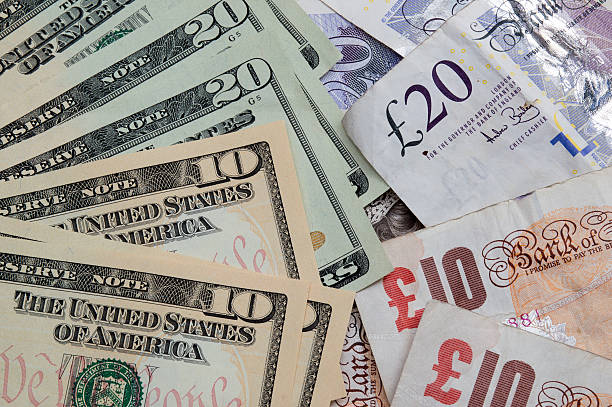
United States Ten and Twenty Dollar notes next to Ten and Twenty UK Pound Notes

Depositors of the collapsed Silicon Valley Bank (SVB) got a reprieve on Sunday after federal regulators assured that bank’s deposits will get a backing, minimizing the impact of the second-largest bank failure in U.S. history.

SVB, which was shut down on Friday, sent shock waves across markets as uncertainty swelled about trapped depositors’ fund. But the decision, which was announced on Sunday, has put calm on the whirlwind.

“Depositors will have access to all of their money starting Monday, March 13. No losses associated with the resolution of Silicon Valley Bank will be borne by the taxpayer,” The U.S. Treasury, the Federal Reserve and the Federal Deposit Insurance Corp., said in a joint statement Sunday evening.

According to the agencies, the government would back Silicon Valley Bank deposits beyond the federally insured ceiling of $250,000. SVB holds $209 billion in assets and more than $175 billion in deposits, making it the 16th largest bank in the US.

The agencies said that as part of the intervention, senior management of SVB will be removed.

SVB UK, which holds around £5.5 billion ($6.66 billion) in loans and around £6.7 billion ($8.11 billion) worth of deposits, would be purchased the British bank HSBC for just £1 ($1.21). A statement from U.K. finance minister Jeremy Hunt said the government has worked urgently to deliver on the promise of protecting the tech sector by finding a solution that will provide SVB UK’s customers with confidence.

“Today the government and the Bank of England have facilitated a private sale of Silicon Valley Bank UK; this ensures customer deposits are protected and can bank as normal, with no taxpayer support. I am pleased we have reached a resolution in such short order,” he said.

The US agencies have intervened without congressional action, following the invocation of “systemic risk exception,” by Washington officials. Systemic risk exception allows for the joint approval from the Federal Reserve, the FDIC and the Treasury in consultation with Biden.

US President Joe Biden said late Sunday that he was pleased with the move by the US agencies.

“The American people and American businesses can have confidence that their bank deposits will be there when they need them,” he said in a statement. “I am firmly committed to holding those responsible for this mess fully accountable and to continuing our efforts to strengthen oversight and regulation of larger banks so that we are not in this position again.”

The collapse of Silicon Valley Bank exposed several tech companies to risk of losing their funds parked in the bank. Streaming company Roku said it had 26% of its $1.9 billion total cash stashed in the troubled bank. Some 250 British tech CEOs had warned on Sunday that SVB’s failure would present an existential threat to startups and backers. The U.K. deal will likely calm markets and nerves of start-ups and their backers.

NBC reported that several SVB’s customers in the US and the UK breathed sigh of relief following the regulators’ announcement. Some of them had frozen their operations in anticipation of what would come next for a bank that held much of their assets.

The federal agencies also took over Signature, a New York-based crypto-financing bank, which also ran into trouble. They said on Sunday that a similar guarantee for Signature Bank depositors would be instituted in the process of shutting it down.

The SVB failure, which is the biggest in the US since 2008, has triggered concern about the wellbeing of other banks.  A senior Treasury official told reporters Sunday that regulators are watching other banks that may have similar issues. NBC reported the official, who did not rule out the possibility of finding a buyer for the troubled banks, as saying that as part of coordinated interagency efforts to backstop any further bank failures, the Fed has set up an emergency lending program to give banks expanded and quick access to funds “in times of stress.”