DD
MM
YYYY

PAGES

DD
MM
YYYY

spot_img

PAGES

Home Blog Page 4352

Will $USDC go the $UST Way?

0

Although $USDC has since regained its peg to the US dollar, there are justifiable fears that it might end up like collapsed UST especially since the full effect of its exposure to SVB has not been revealed. However, amidst this fear, $USDC would not likely crash to zero like $UST, the algorithmic stablecoin by Terra, did last year.

Recall that the collapse of $UST was attributed to its structure and backing by other digital assets, including Bitcoin and $LUNA. Since it depended on algorithms to track the value of the USD and always ensure parity, any pressure on its underlying coins (Bitcoin or LUNA), led to intense selling pressure, which caused a de-peg. 

While USDC’s depeg is unideal in the short-term, 91.75% of Circle’s USDC reserves remain liquid, even if the 8.25% of funds are totally lost, Coinbase would probably step in. It’s not like the FTX situation. Circle has 91.75% of the money. FTX had way less.

Circle is a regularly audited US entity and USDC has maintained a solid peg since its inception, unlike many other troubled stablecoins. Circle tweeted that “Circle and USDC continue to operate normally”

Now, USDC, issued by Circle, is backed 1:1 with cash, and redemption means every backing cash or cash equivalent from Circle must be sold and disbursed to the client. Reports showed that out of the entire basket of assets backing $USDC circulating supply, only $3.3 billion are stuck in SVB, less than 9% of its market cap’s USD equivalent. And even the funds are expected to be recovered sooner or later through bank insurance procedures instituted by FDIC.

The Federal Deposit Insurance Corp [FDIC] announced that all depositors, both insured and uninsured, at Silicon Valley Bank [SVB] and Signature Bank, will be made whole while equity and bond holders are wiped out. Why, I wonder, will equity and bond investors remain loyal to regional banks? This is how the Fed intends to backstop other liquidity issues through a new facility called the Bank Funding Term Program.

The idea is to provide banks with an alternative to liquidate their bond holdings when in need of raising liquidity to meet deposit outflow.

As a result, the damage done by its exposure to SVB might have been exaggerated. That’s why it is overdramatic to compare the $USDC troubles to those that led to the collapse of the Terra ecosystem almost a year ago.

The tremors caused by Circle’s exposure to SVB have reverberated through the crypto sphere, and as the dust continues to settle, questions are still hanging, not only on $USDC but overall stablecoins and their ability to maintain their pegs in times of distress.

Panic over SVB is over. Now, the onus lies on the crypto industry to regain public trust regarding stablecoins which is one of the bedrock of mainstream adoption, by putting in place measures to prevent future systemic failures.

I would especially keep an eye on zkEVM for Polygon, Bedrock for Optimism, Solana Migration for HNT, RDNT V2 and CAKE V3.

Stablecoins for Curve and Aave could fit in a narrative, especially with what happened to USDC. Of course now that USDC is close to peg, it’s easy to say it was a safe bet to buy USDC. Still USDC is not on the same level of risk UST was.

Always remember when something happens, crypto twitter’s reaction is 10x worse. Rationality leaves the door quickly in a state of panic. Seen people compare $USDC to $UST. UST was backed be magic internet money (algorithmic). USDC is backed by real reserves.


Nigerian Government Records 12.9million Cybersecurity Attacks During 2023 General Election

0

The Nigerian Government has said not less than 12.9million multifaceted Cyber-attacks were recorded internally and externally in Nigeria during and after the just concluded presidential and National Assembly elections in the country.

In a statement credited to the minister of Communications and Digital Economy, Professor Isa, Ali, Pantami, about 12.9million cybersecurity threats were recorded from within and outside Nigeria during and after the 2023 general elections. The minister disclosed that on the general election day alone, over 6.9 million attacks were recorded.

Professor Pantami however noted that most of the attacks were successfully neutered as a result of the sophisticated infrastructure that were put in place by different government agencies responsible for protecting the nation’s cyberspace.

The minister was also reported by the Nation to have said that in the building up to the presidential election, threat intelligence revealed an astronomical increase in cyber threats to Nigeria’s Cyberspace.

The statement reads in part: “During this period, a series of hacking attempts were recorded, including Distributed Denial of Service (DDS) email and IPS attacks, SSH Login Attempts, Brute Force Injection attempts, Path Traversal, Defection Evation and Forceful Browsing.

“A total of 12,988,978 cyber attacks were recorded, originating from within and outside Nigeria. It is worth noting that the centers successfully blocked these attacks and/or escalated them to the relevant institutions for appropriate action.

The minister lauded the parastatals under the supervision of his ministry for playing significant roles towards the successful conduct of a credible, free, fair and transparent election in the country. He also commended President Muhammad Buhari for providing enabling environment for agencies of government to perform their assignments without hindrances.

According to Professor, also instrumental to the successful curtailment of the cybersecurity threats received during the elections period are some cybersecurity centers under his ministry including the Computer Emergency Readiness and Response Team (CERRT) of the National Information Technology Development Agency (NITDA), the Computer Security Incident Response Team (CSIRT) of the Nigerian Communication Commission (NCC) and the Security Operations Center (SOC) of the Galaxy Back Bone (GBB).

Innovate, and be differentiated in your strategy!

0

We created an investment and portfolio management program , and this morning, I received this feedback from an experienced professional who co-runs a fund in Lagos, and who is attending our program:

 “I don’t know how to thank you for all that you’re doing. 

You’re truly a BLESSING to our generation. 

Thank you very much Sir. You’re a GENIUS. 

As usual, I am also enjoying this investment course”. 

Late last night, I sent a step-by-step process on how anyone living in Nigeria or broad Africa can set up an investment account in the United States, providing everything needed to do that, with ways to drive tax efficiencies in structures. By doing that, they will bypass investing-apps and banks, and own the assets in their names with protections offered to “US persons” by law. Practical business education is  what we do at Tekedia Institute.

How do you manage your assets? How diversified are your revenue sources? How do you spread risks? Silicon Valley Bank would not have collapsed if its “customer base” was diversified. Indeed, it goes beyond assets to diversification of income. In a piece in Harvard, I proclaimed: “ Innovators Go It Alone” and “do not herd by following everyone to do it the same”. There is a risk there: a single competitive bullet will take everyone down. (read in Harvard here )

Ratings agency Moody’s has downgraded its outlook on the U.S. banking system from “stable” to “negative,” following the failures of Silicon Valley Bank, Signature Bank and the crypto-focused Silvergate Bank. The move reflects the “rapid deterioration in the operating environment,” Moody’s said, adding that other banks with unrealized losses or uninsured depositors could be at risk despite government efforts to shore up the sector. Moody’s on Monday put six regional banks — including First Republic and Western Alliance — under review for possible downgrades.

Shares of First Republic and Western Alliance Bancorp dropped a record 62% and 47%, respectively, on Monday. They regained some of those losses Tuesday. Many investors now expect central banks to slow their interest rate increases. Accounting giant KPMG faces possible scrutiny after auditing SVB two weeks before its collapse.

Innovate, and be differentiated in your strategy – a message from Tekedia Institute.

Beat the Early Bird Deadline for Massive Discounts, Register for Tekedia Mini-MBA

0

Welcome! At Tekedia Institute, we co-learn with thousands of professionals and students, from 41 countries, on the mechanics of business, connecting innovation, growth and operational execution, across market territories and industrial sectors.

Our Faculty members come from Microsoft, Google, Shell, Flutterwave, Nigerian Breweries, NNPC, Jobberman, Coca Cola, PwC, and other great organizations. Besides pre-recorded courseware, thrice weekly, we hold live Zoom sessions (Tue, Thur and Sat at 7pm WAT).

We have opened registrations for a new edition (June 5 – Sept 2 2023). REGISTER and join us!  Beat the early bird for massive discounts https://school.tekedia.com/course/mmba11/

Tekedia Mini-MBA >> This is the #best school

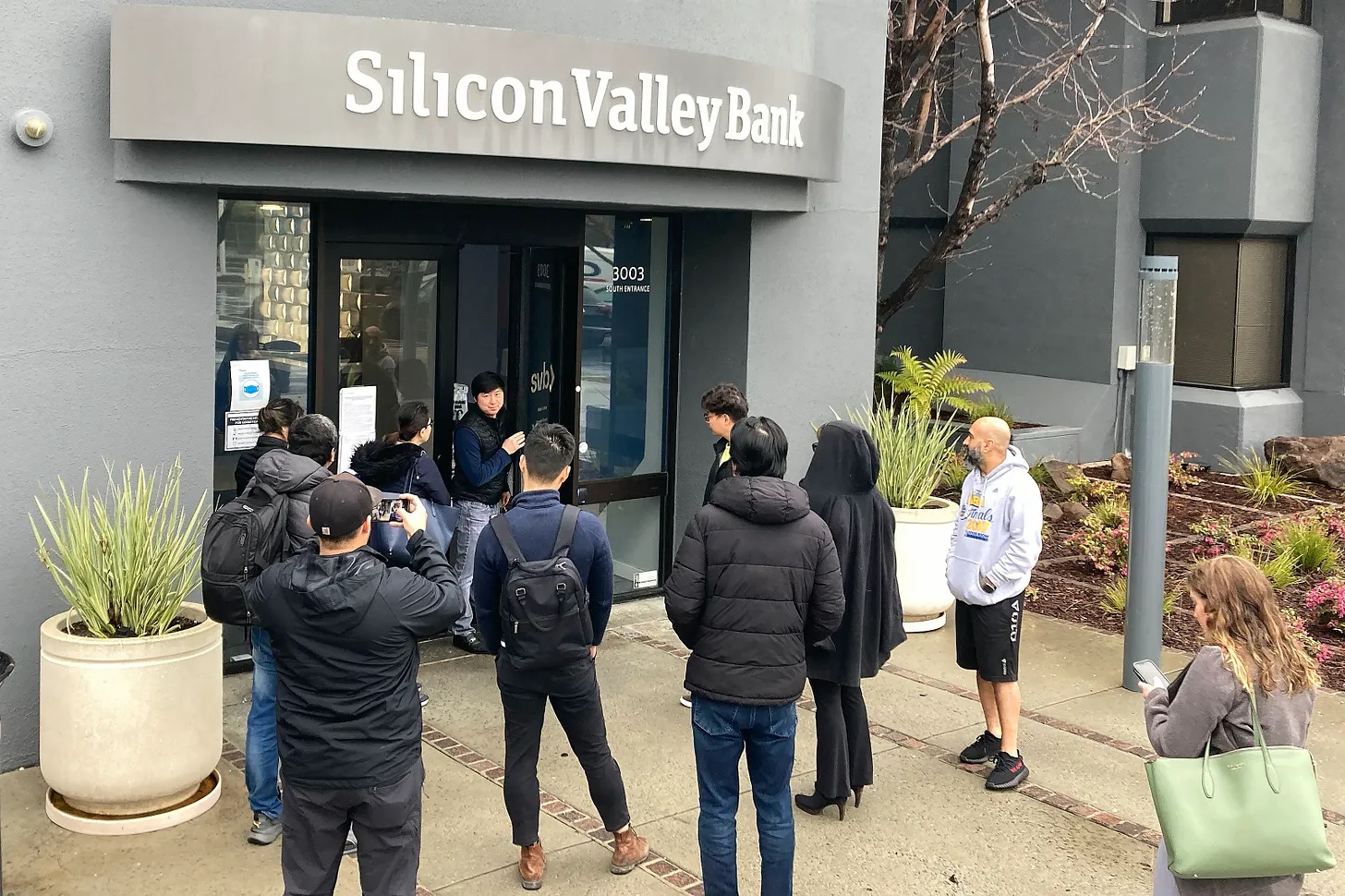
Silicon Valley Bank Collapse: Chinese Tech Startups Negatively Impacted

0

The collapse of tech-focused Silicon Valley Bank has no doubt dealt a huge blow to several tech startups across the globe, as the ripple effects of the collapse have been reportedly felt by Chinese startups, particularly those backed by U.S. dollar-denominated funds.

A Chinese tech founder who pleaded anonymity disclosed that the online system for opening an account at Silicon Valley Bank had allowed the use of a Chinese mobile number for verification. A startup could open an account at SVB in a space of one week, which was what spurred most Chinese tech start-ups to bank with SVB.

The founder disclosed that his startup once had tens of millions of U.S. dollars at SVB and has since moved funds out, but still has more than $250,000 stuck in the bank. He however disclosed that if there will be no SVB, it will negatively impact the tech industry, because there is no other bank that provides the features of speedy account opening for startups and visibility for venture capitalists.

Also, a Shanghai-based biotech company Zai Lab disclosed that as of the end of December 2022, about 2.3% of its roughly $1.01 billion in cash and cash equivalents were held at SVB. Chinese startups, entrepreneurs, and Venture funds are reportedly looking to move their funds out of SVB, with some turning to Chinese lenders such as Merchant’s bank and the Industrial & Commercial bank of China.

Having a bank account with a Silicon Valley bank allowed most Chinese Startups to tap funding from U.S based investors, with an eye to a public offering in the U.S. These startups had long relied on the tech-focused bank, which has forged ties with local government officials in Shanghai, for venture capital funds.

Reports disclose that the Chinese government exerts strict controls over its currency and imposes restrictions on foreign investments, making SVB one of the few lenders willing to work with China-based startups seeking capital from offshore investors.

In 2012, SVB partnered with Shanghai Pudong Development Bank to form SPD Silicon Valley Bank Co., which provides VC funds to tech startups. The SPD Silicon Valley Bank has however issued a statement that it has sound operations in accordance with Chinese laws and regulations, and perhaps more importantly, it has an independent balance sheet.

The collapse of SVB happened so swiftly, with $42bn leaving the bank’s coffers, that by the time decision-makers in China were waking up to the unfortunate news, attempts to recover their money were already in shambles. Several Chinese-based venture capital firms disclosed that some start-ups in their portfolios faced similar issues of not being able to access funds stuck in SVB.

It is however not clear how many China-based startups had accounts with SVB. Few Chinese tech founders have disclosed that the collapse of SVB could make it hard for Chinese startups to raise money from U.S investors

The Collapse of the Silicon Valley bank comes at a particularly tough time for Chinese groups raising foreign capital, with the ecosystem negatively impacted by Beijing’s tech crackdown, Covid-19 pandemic controls, and rising geopolitical tensions with Washington. Experts disclose Silicon Valley Bank collapse would lower the trust of Chinese companies in foreign banks, which will make them more cautious when considering U.S. dollar funds.

Meanwhile, reports disclosed that even before the SVB financial implosion, the Chinese tech sector has had trouble raising capital in the U.S., courtesy of the heightened geopolitical tensions as well as China’s economic problems.