DD
MM
YYYY

PAGES

DD
MM
YYYY

spot_img

PAGES

Home Blog Page 4377

Naira’s Unstoppable Race to N1,000/$1 Emits More Economic Hardship

0
Naira USD

Things are currently not looking good for the naira in the FX market, as its depreciation accelerates farther from when the Central Bank of Nigeria (CBN) removed control pegs on the currency in June.

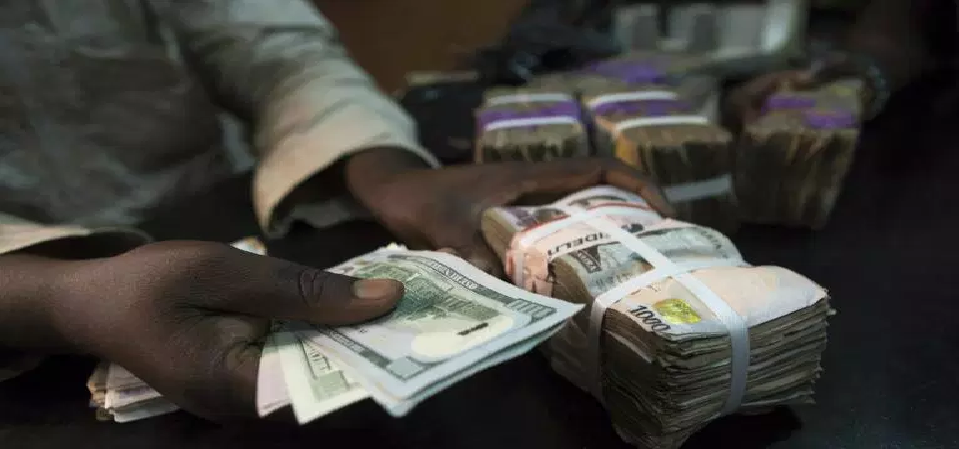
Naira’s performance against the dollar at the parallel market dropped to as low as N930/$1 on Thursday afternoon, triggering fresh anxiety among Nigerians. The new exchange rate indicates about a 5% increase from the N910/$1 recorded on Wednesday.

The pace, which creates anticipation for a fast-approaching N1,000 per dollar exchange rate, is expected to compound the squeeze that businesses and consumers are currently feeling.

“Businesses and consumers are squeezed because of this. This will lead to a reduction in the quantity of imported commodities doubling the price. There’ll be capital flight. You’ll see people looking for a safe heaven,” Clement Izu, Head of Research, Financial Derivative Company Ltd., told AriseTV in an interview.

The Africa Development Bank said the ongoing trend of currency depreciation in economies with higher global integration, such as Nigeria is likely going to continue. The development bank attributed the projection to capital outflows from investors seeking refuge in safe advanced economies.

With the impact of the forex crisis accelerating quickly across goods and services, Nigerian consumers are bracing up for unaffordable spikes in the cost of things.

The prices of petroleum products are expected to rise further. The Independent Petroleum Marketers Association of Nigeria (IPMAN) has reportedly issued a notice of an increase in pump price.

“Nigerians should understand that with fuel subsidy removal, the government is no longer determining pump prices but the market forces. The product is bought in dollars. The dollar is around 890/$1 now. As the dollar climbs, fuel pump prices will continue to go up,” Daily Post quoted Chinedu Okoronkwo, the National President of IPMAN, as saying.

The Nigerian Association of Liquefied Petroleum Gas Marketers announced Thursday a plan to review the prices of cooking gas upward, citing the rise in exchange rates.

Also, electricity consumers have decried over 100% hike in electricity bills, which many say is unaffordable.

Against this backdrop, the clamor for a solution has not been higher. But the solution is farfetched as the naira’s strength is largely tied to Nigeria’s export earnings.

Though the CBN said FX inflows into Nigeria through the Investor and Exporter window rose to $2.55 billion in two months following the deregulation of the forex market, the volume remains insignificant to the liquidity requirement that will boost the naira.

The insufficient FX inflow is attributed to poor oil output, which provides for more than 90% of Nigeria’s exports.

The nation’s daily oil production in July 2023 fell by 13.6% to average 1.08 million barrels per day compared to 1.25mbpd recorded in June, according to the latest production data from the Nigerian Upstream Petroleum Regulatory Commission, (NUPRC.)

The volume of production falls notably below the 1.7 million barrels per day production quota assigned to Nigeria by the Organization of the Petroleum Exporting Countries (OPEC). The most recent production figure represents a major setback for the government, which set a production target of 1.69 million barrels per day in the 2023 budget.

Diaspora remittance, which has served as another avenue of boosting forex liquidity, has significantly dropped in the past months. Following the floating of the forex market, the CBN abolished the naira 4 dollar scheme designed to encourage diaspora remittance and the RT200 FX Programme launched in early 2022, with a set of policies and plans to boost non-oil exports.

The significant drop in forex liquidity resulting from all these has piled more pressure on the naira, making it more vulnerable among its peers in the foreign exchange market.

While the CBN’s decision to float Nigeria’s forex market has been widely praised by investors, concern remains that it will bring unbearable economic hardship on Nigerians if measures are not taken to mitigate its immediate inflationary pressure.


CBN Attributes Naira’s Free Fall to Illegal Diaspora Remittances to the Parallel Market

0

The Central Bank of Nigeria (CBN) has attributed the woeful performance of the naira in the foreign exchange market to the diversion of diaspora remittances to the black market.

This was stated by the acting governor of the apex bank, Folashodun Shonubi, at the National Institute for Security Studies, Abuja. Delivering the Distinguished Personality lecture titled “Diaspora Remittances and Nigeria’s Economic Development” to participants of the Executive Intelligence Management Course (EIMC) 16, Shonubi said most of the diaspora remittances that came into Nigeria in dollars find their way to the parallel market without being recorded officially.

The acting central bank governor stated this amid the naira’s fall to N930 per dollar at the parallel market on Thursday, which marks its worst performance since the CBN floated the FX market in June.

“With those remittances, the dollars have come in, we know the dollars have come in but we don’t see them in the official system. So, they must be going somewhere and somewhere,” he said.

“And the challenge with the black market, unofficial market or parallel market or whatever name you want to call it, it is as a result that it is not regulated, and it becomes an easy place to have criminal activities.

“We investigate bankers, not just bankers, anybody who has committed an offense, the first thing they want to do is to run to the black markets, change it to the dollars because it is less money to carry around.

“Some of the funding in the black markets are actually from diaspora remittances. That’s why it is important we need to know a lot of what’s going on there. We can’t play the sentiment game. If we don’t understand the dynamics, we usually go with the literature which does not necessarily work for us,” Shonubi said.

He indicated that the amount of inflow coming through many unapproved channels and eventually ending up in the black market contributes significantly to Nigeria’s current FX market situation.

The apex bank chief said that implementing measures within the country to manage illicit remittances and detect these pathways would be beneficial, because it would help direct remittance flows through proper channels, maximizing economic benefits for growth.
He added that Nigeria witnessed a surge in diaspora remittances in 2021, surpassing the inflows from the construction industry.

“We intend to use more of the banking system to send money to Sub-Saharan Africa cost highest because we don’t have masses. It would be helpful if we can work together to identify these channels because we just want the flows into the proper channels, there we can get maximum benefits to grow the economy.

“We talk about black markets, which also create their own problems. Management of the foreign exchange market and the efficacy of our policies to manage the exchange rate becomes difficult due to the insignificance of our diaspora remittances which are going to other markets.

“Today, someone called me privately and said that this thing (naira) has gone up to some levels in the black markets, my question was, what do you want me to do? Do I operate in the black markets? I don’t know the basis of pricing in the black markets.

“The other thing people don’t realize is that, because you don’t have full information, and I will give you an example since we started the I&E window. We found out that some people would deliberately wait until the last minute and do one transaction of $5,000 and that becomes the closing rate.

“We can’t do without diaspora remittances. For many countries, that’s their main source of income,” he said.

However, financial experts appear to disagree with the notion that unofficial remittances to the parallel market are responsible for the free fall of the naira. Nigeria’s forex crisis has been attributed to insufficient dollar liquidity, orchestrated by poor oil and non-oil exports.

Experts say that the existing liquidity gap is too wide to be filled by diaspora remittances alone.

Beyond Banning Binance for Naira Stability, Why Nigeria’s Bureau De Change Operators Are Wrong

1

Naira is crashing and the Association of Bureau De Change Operators of Nigeria (ABCON) is blaming Binance. Its president, Alhaji Aminu Gwadebe, wants Binance banned in Nigeria. Right now, the disparity between the official and parallel market rates has widened; the I&E window hovers around N782/$1 while the black market has hit N930/$.

If you know about Binance, you will know that Binance trading is becoming the anchorage of both the investors and exporters window and the parallel market, which is unfortunate.

So, we have to do something that can stop? Binance. It’s a competition; we need to ban Binance and the only way to do so is if you have liquidity.

As I speak, Binance is the most liquid market; they do 1.2 million transactions per second. So it’s a very liquid market but that is not a scary status, we can break it through our local content and peculiarities.” Alhaji Aminu Gwadebe

This remains my position: “Nigeria will either pause the full floating of its currency or return back to fuel subsidy within 6 months. Nigeria’s weakest currency stability point remains that it has to continue importing petrol since it does not have any working refinery. That creates a vicious circle since those importing fuel will mark up prices, to cushion for the next round of import, working to stay ahead of currency deterioration, in a system with no official benchmark.”

Binance is not Nigeria’s problem. Our challenge is that we do not have parity on the demand and supply of Naira, and using basic economics, Naira will keep losing value since more people are looking for USD than supplying it in Nigeria. 

Floating or swimming Naira does not remove the play of fundamental economics in markets, and until Nigeria can have more USD, Naira will continue to lose value. But I expect the government to put a pedal very soon!

More so, according to the African Development Bank, in its  “Africa Economic Outlook 2023”, “Currency weaknesses in some of Africa’s more globally integrated economies (Kenya, Nigeria, and South Africa) are expected to persist in 2023, largely due to potential capital outflows as investors search for safe assets in advanced economies”.

Yet, with great policies, Nigeria can rise. The young people are very creative and can deliver great results if they are supported. For example, they continue to rake in revenue on Spotify and other ecosystems, demonstrating new potential sources of earning US dollars besides hydrocarbons.

“The number of Nigerian artists who generated more than 5 million NGN and 10 million NGN in royalties from Spotify alone has increased by nearly 25% over the last year. This figure represents revenue generated from Spotify alone and does not consider earnings from other services and recorded revenue streams, concert tickets, or merch.

“In 2022, revenues generated by Nigerian artists from Spotify alone reached over 11,000,000,000 NGN. While Nigerian music industry revenues overall have grown 63% from 2021 to 2022 (according to IFPI), revenues generated by Nigerian artists – from Spotify alone – grew 74% over this same period,” Spotify stated in the report. 

Meanwhile, the apex bank thinks the reason Naira is crashing is due to “the diversion of diaspora remittances to the black market.”

The acting central bank governor stated this amid the naira’s fall to N930 per dollar at the parallel market on Thursday, which marks its worst performance since the CBN floated the FX market in June.

“With those remittances, the dollars have come in, we know the dollars have come in but we don’t see them in the official system. So, they must be going somewhere and somewhere,” he said.

“And the challenge with the black market, unofficial market or parallel market or whatever name you want to call it, it is as a result that it is not regulated, and it becomes an easy place to have criminal activities.

“We investigate bankers, not just bankers, anybody who has committed an offense, the first thing they want to do is to run to the black markets, change it to the dollars because it is less money to carry around.

“Some of the funding in the black markets are actually from diaspora remittances. That’s why it is important we need to know a lot of what’s going on there. We can’t play the sentiment game. If we don’t understand the dynamics, we usually go with the literature which does not necessarily work for us,” Shonubi said.

To BRC 69 or not to BRC 69? That is the Amazonian Question!

0

So we have reached the stage with Sinosignias and the Sino Amazons where all the product elements are ready and we are looking at the implementation side.

The Sinosignia is off the Handshake Blockchain, so it is as secure as a Bitcoin is.

Imagine a specific Bitcoin that is not on a Centralized Exchange. It’s owner downloaded it to a hardware wallet. Imagine in a moment of emotion, they threw that hardware wallet in a fire and burnt the book where they had their seed phrase.

Imagine the next day they were unlucky and got involved in a tragic and fatal accident.

Try to steal that specific bitcoin. This is how hard it is to steal a Sinosignia!


The Sino Amazon (artwork) side of the product therefore does not need to be so secure, because the product pair is anchored in the Sinosignia. Any tokenization solution will do as long as it is cheap and fast.

So we have been looking at options for a good while, and the leaders in the field so far have been Optimism and Solana.

9ja Cosmos is very vocal about the drawbacks of Eth L2s – but remember, the product does not rely on the artwork mint solution for its security. There is no bridge between both elements of the product at a technical level. They reside in different wallets.

Then along came BRC 69 which seems extremely interesting.

It’s interesting, because it promises to reduce the mint cost over BRC 20 by up to 90% through a recursive algorithm.

The nature of a recursive function is that it solves a particular problem by calling a copy of itself and solving smaller subproblems of the original problems. Many more recursive calls can be generated as and when required.

Anybody that spent at least 75% not asleep in maths class and honestly passed maths JAMB should know this.

Therefore a recursive process needs to find some common elements in the feed data in order to execute on this. I’m guessing the ‘up to’ caveat depends on how many common elements it can find.

It doesn’t take a lot more than 2 brain cells to look at a series like the Bored Apes and immediately see where recursion can play a role, from an image rendering perspective.

My concern is that while the Sino Amazons have huge contributions from AI, and Midjourney is used as the finishing tool, there are about 4 separate AI ecosystem stages minimum, and there is organic input also, and not in the same order, or following any specific production path.

We have a variable organic end-to-end with AI input, not an AI end-to-end with some organic overview.

I’m therefore highly suspect of the claim of BRC 69 to be able to reduce the fees by 90%. Anybody that is familiar with file compression systems will understand an analogy how some types of files can be subject to huge file compression, while a compression tool can hardly reduce the size of certain other types of files at all.

How the ‘recursive’ process reduces gas fees needs more ‘down the rabbit hole’ explanations for those that are going to risk the success of a major product launch on it.

At the moment I’m not convinced of the ‘recursive’ process performance, and how variable it is.

I am also not sure it is an open protocol. Every cryptojournalist who has produced an article about it only mentions Luminex.

This is bad in two ways –

If it is a proprietary protocol, it has no ‘competitive community’ within which to encourage continuous improvement and the emergence of ‘best of breed’.

If it’s not a proprietary protocol, then the question begs – why is it so unattractive that only Luminex is the only provider with a blockchain anchor?

It’s risky when a technology is a one horse race. It’s ominous when its available to all and yet there is only one primary mover.

Engagement with Luminex has not yielded any great depth of understanding and the main engagement agenda seems to be to convert the prospect to a (refundable) deposit of $5000

They tell you, your project will go through a review and verification process.

You need to provide more documentation on your project, but there is no prescribed list that drills down to explain these expectations.

They tell you ‘the partnership can only work out after the review & verification process has been completed. Note: for the process to begin you’ll make a refundable deposit of $5000’.

Apparently there is a ‘hand holder’ assigned once you make your deposit, however, that is a bit of a mexican stand off, as what this so called ‘hand holder’ is empowered to reveal, should be what you need to know, before parting with the $5000.


9ja Cosmos has been very frugal so far in its execution on bringing products to market, and so far, $5000 would represent a major slice of cumulative items of expenditure. This would represent a significant outgoing as a single item. The promise of it being a refundable deposit holds absolutely no solace for us at all, as it would represent assets beyond reach, and therefore, all the while, not working in the best interests of 9ja Cosmos.

There does not seem to be any detailed documentation online about BRC 69 to the standard provided by the documentation on taproot upgrade or bitcoin ordinals.

If any Tekedians would like to reach out to us bringing extra visibility on BRC 69, we would be happy to receive opinions.

The Amazons are becoming impatient with me!


Thank you to those who have come out to support the new 9ja Cosmos page

We do however need the strong support of ‘Tekedians’ to move the needle forward, so more followers for the page are urgently needed.

9ja Cosmos is here… 

Get your .9jacom and .9javerse Web 3 domains  for $2 at:

.9jacom Domains

.9javerse Domains

Visit 9ja Cosmos

Follow us on LinkedIn HERE

All reference sites accessed 10/08/2023

cnet.com/culture/internet/bored-ape-yacht-club-nfts-explained/

luminex.io

geeksforgeeks.org/introduction-to-recursion-data-structure-and-algorithm-tutorials

thedefiant.io/yield-guild-games-token-halves-in-a-day-after-500-rally

publish0x.com/hifi-finance/brc-69-standard-claims-to-reduce-transaction-costs-by-90-per-xmyqglo

decrypt.co/147270/new-bitcoin-standard-brc-69-removes-data-limit-ordinals


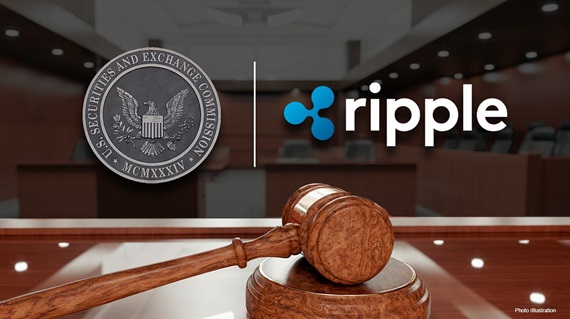
US SEC Files Letter with SDNY, Seeking Leave for Interlocutory Appeal in Ripple Case

0

The Securities and Exchange Commission (SEC) has filed a letter with the Southern District of New York (SDNY) requesting permission to file an interlocutory appeal in the ongoing lawsuit against Ripple Labs and its executives. An interlocutory appeal is a legal procedure that allows a party to appeal a judge’s ruling on a preliminary matter before the final judgment is issued. The SEC wants to challenge Judge Sarah Netburn’s decision to grant Ripple access to the agency’s internal communications regarding cryptocurrencies, especially Bitcoin and Ethereum.

The SEC argues that Judge Netburn’s order was “based on a misunderstanding of the governing law and an erroneous application of the relevant facts.” The agency claims that its internal deliberations are protected by the deliberative process privilege, which shields government officials from disclosing their opinions, recommendations, and advice on policy matters.

The SEC also contends that Ripple’s request for the agency’s communications with foreign regulators is irrelevant and overly burdensome, as it would require the SEC to review thousands of documents from dozens of countries. The agency says that such communications are not subject to discovery under the Federal Rules of Civil Procedure or the Hague Convention.

The SEC asserts that allowing Ripple to access its internal and external communications would “undermine the SEC’s ability to carry out its statutory mandate and protect investors.” The agency says that it would also “create a dangerous precedent for future enforcement actions.”

Ripple, on the other hand, maintains that the SEC’s communications are relevant and necessary for its fair notice defense. Ripple argues that the SEC failed to provide clear guidance on the legal status of XRP, the digital asset at the center of the lawsuit. Ripple claims that the SEC’s own statements and actions created confusion and inconsistency in the market, and that the agency treated XRP differently from Bitcoin and Ethereum, which it declared as not securities.

Ripple also accuses the SEC of engaging in “regulation by enforcement,” by suing Ripple without warning or prior notice. Ripple says that it needs to see the SEC’s internal and external communications to prove that the agency did not act in good faith and violated Ripple’s due process rights.

The letter filed by the SEC is not a formal motion for interlocutory appeal, but rather a request for leave to file one. The SDNY will have to decide whether to grant or deny the SEC’s request. If granted, the SEC will then have to file a motion for interlocutory appeal with the Second Circuit Court of Appeals, which will have to decide whether to accept or reject the appeal.

The reason why the SEC sued Ripple Labs in the first place is because it alleges that Ripple sold XRP as an unregistered security, in violation of the federal securities laws. The SEC claims that XRP is not a currency or a commodity, but rather an investment contract that represents a share in Ripple’s enterprise. The SEC says that Ripple raised over $1.3 billion through its sales of XRP, without disclosing the risks and benefits of investing in XRP to potential buyers. The SEC seeks to stop Ripple from selling XRP, impose civil penalties, and require Ripple to return the funds it obtained from investors.

The lawsuit also names Ripple’s co-founder and former CEO, Christian Larsen, and its current CEO, Brad Garlinghouse, as defendants. The SEC argues that XRP is not a currency, but a security, and that Ripple failed to register it as such or seek an exemption from the registration requirements. The SEC alleges that Ripple and its executives misled investors about the nature, status, and utility of XRP, and engaged in manipulative and deceptive conduct to increase demand and price for XRP. The SEC seeks injunctive relief, disgorgement of ill-gotten gains, civil penalties, and a permanent ban on Ripple and its executives from participating in any future securities offerings.

Ripple has denied the SEC’s allegations, Ripple maintains that XRP is a currency, not a security, and that it has been operating in compliance with the law. Ripple also claims that the SEC’s action is an attack on the entire cryptocurrency industry and will harm millions of XRP holders who have done nothing wrong. Ripple argues that the SEC is applying an outdated and inconsistent framework to regulate digital assets, and that it is ignoring the clear regulatory guidance and precedent that exist for cryptocurrencies like XRP.

The outcome of this legal battle could have significant implications for the future of XRP and the cryptocurrency industry as a whole. The case is expected to continue until at least early 2024, unless a settlement is reached before then.