DD
MM
YYYY

PAGES

DD
MM
YYYY

spot_img

PAGES

Home Blog Page 4388

Twitter Threatens to Sue Meta Over Threads, Sends ‘Cease And Desist’ Letter

0

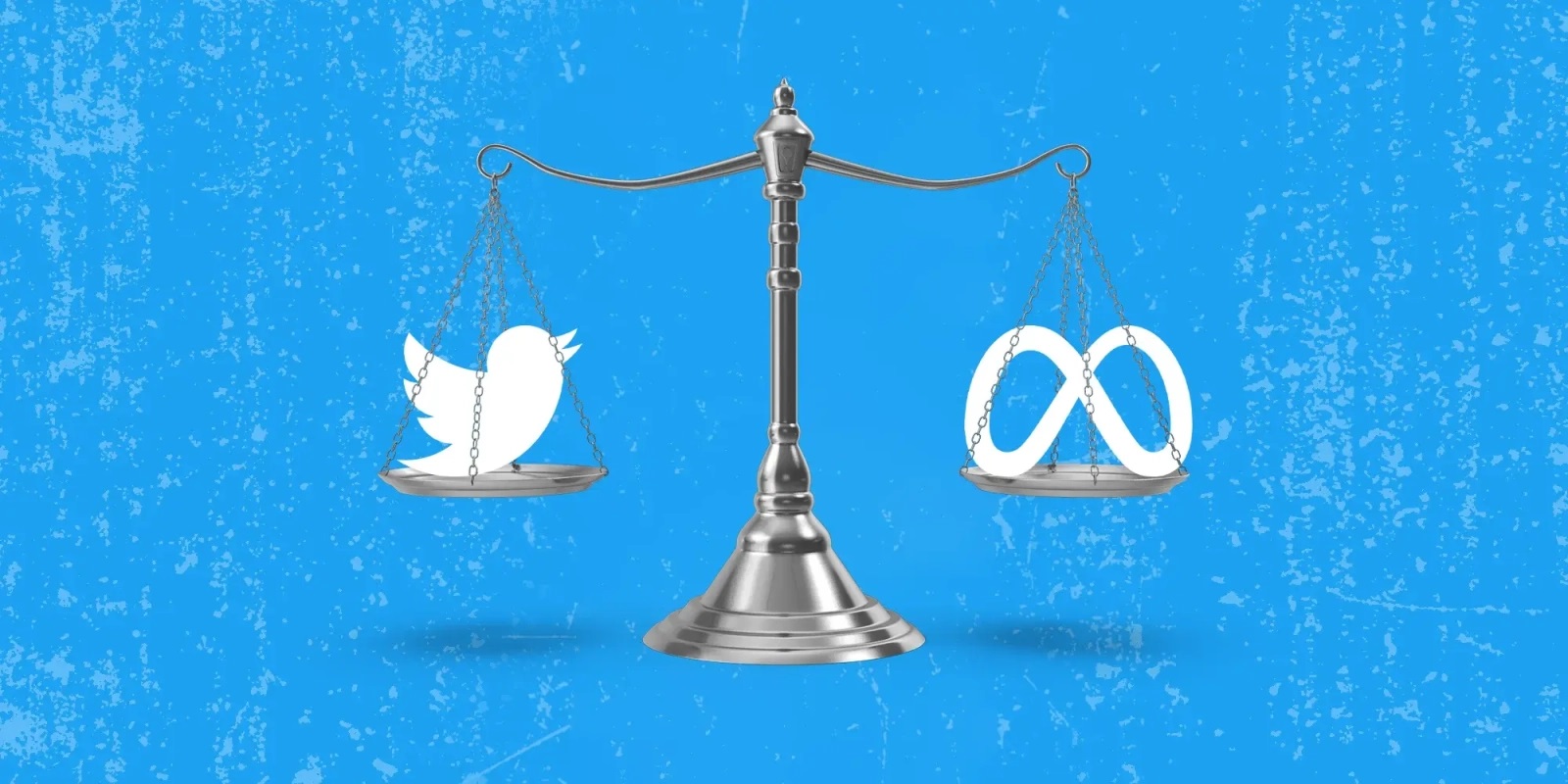
Twitter is threatening to file a suit against Meta for launching Thread – a “copycat” social media platform launched by Instagram on Wednesday, Semafor has reported.

In a cease and desist letter sent to Meta, Twitter alleges that the social media behemoth poached its employees to create Thread, which is a typical replica of Twitter.

In the letter sent to Meta CEO Mark Zuckerberg, Twitter lawyer, Alex Spiro, accused the company of engaging in “systematic, willful, and unlawful misappropriation of Twitter’s trade secrets and other intellectual property.”

“Twitter intends to strictly enforce its intellectual property rights, and demands that Meta take immediate steps to stop using any Twitter trade secrets or other highly confidential information,” Spiro wrote in a letter obtained exclusively by Semafor. “Twitter reserves all rights, including, but not limited to, the right to seek both civil remedies and injunctive relief without further notice to prevent any further retention, disclosure, or use of its intellectual property by Meta.”

According to the letter, Meta hired dozens of former Twitter employees who “had and continue to have access to Twitter’s trade secrets and other highly confidential information.”

Spiro also accused Zuckerberg of using former Twitter employees to steal the company’s trade secrets and also assigned those employees to develop “Meta’s copycat ‘Threads’ app with the specific intent that they use Twitter’s trade secrets and other intellectual property in order to accelerate the development of Meta’s competing app, in violation of both state and federal law as well as those employees’ ongoing obligations to Twitter.”

Musk acknowledged the development in a tweet on Thursday, saying that “Competition is fine, cheating is not”, in response to the report.

Following the launch of Thread on Wednesday, thousands of Twitter users have signed up – making the app one of the fastest-growing social media platforms with a record 30 million users in less than a day. Other Twitter rivals like Mastodon, and Bluesky have failed to gain mainstream traction and large user bases over time.

Musk’s threat to sue Meta indicates that Threads is so far, the greatest threat to Twitter. With Meta resources and grit, Threads stands a chance to sweep what is remaining of Twitter’s users and advertisers.

The RIPTwitter hashtag was trending on Twitter following Zuckerberg’s announcement to launch Thread.

Musk’s method of running Twitter has been heavily criticized by both users and advertisers. His decision to cap the number of tweets users can view during the weekend appeared to be the last straw for many. The company said the decision was part of efforts to halt data scraping. But users were not having any of the excuses.

It is not clear if the matter will lead to a legal battle between the two companies. Musk’s decision to make Twitter algorithm open source has been blamed for the development.

Semafor quoted a Meta source saying that Twitter’s accusations are baseless. “No one on the Threads engineering team is a former Twitter employee — that’s just not a thing,” the source said.

Meta is notorious for using copycats to get on the edge of the competition. The company used Instagram Stories to limit Snapchat’s growth, and Reels is currently giving TikTok a run for its money.
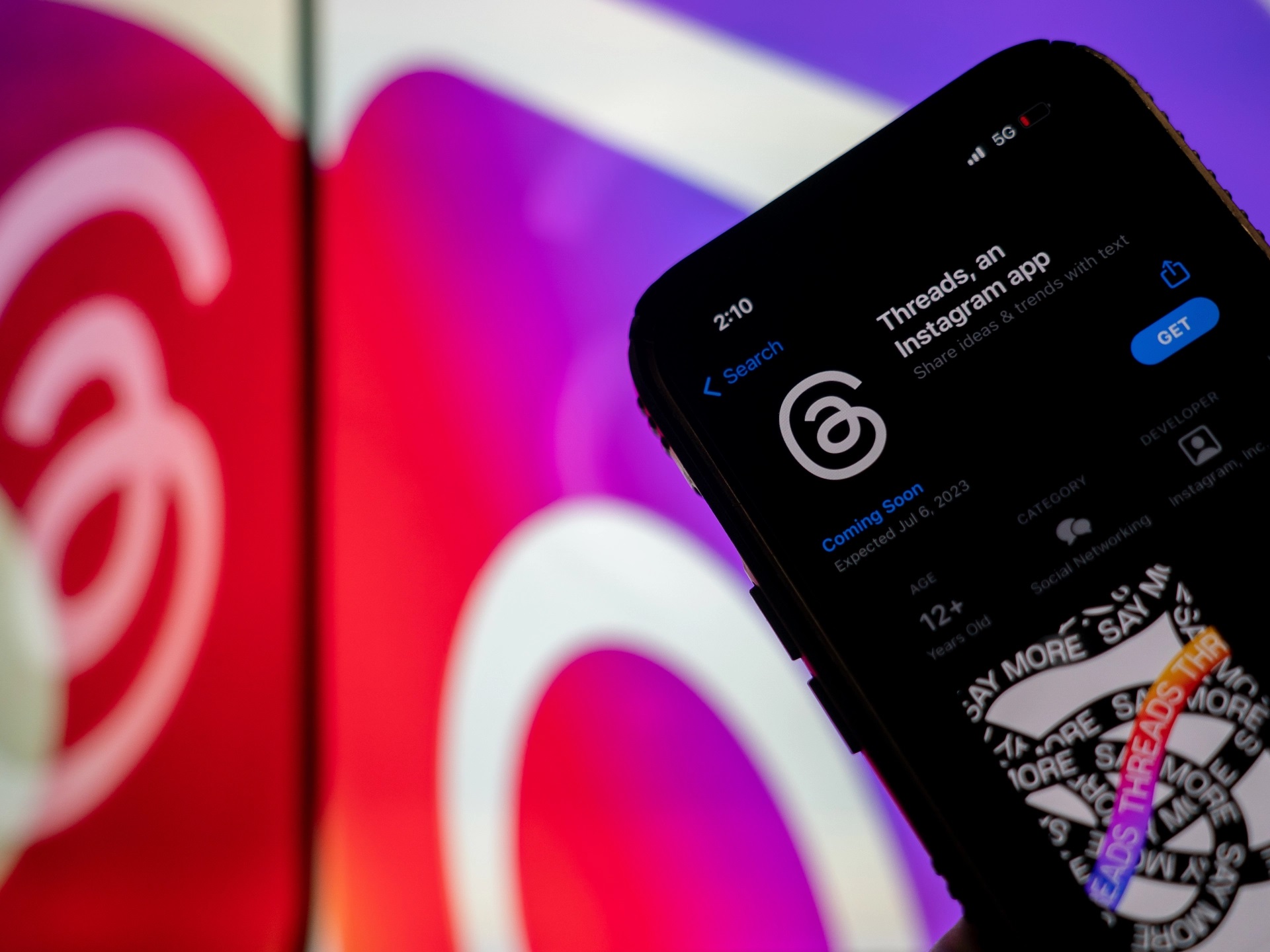
Have You Joined Threads Yet?

0

Threads is a new social media platform launched yesterday by Meta Inc and it is called Threads. It is the new guy in town. It was introduced by Meta specifically to kick out Twitter and so far it has proven to be a worthy rival to Twitter. 

Much like Twitter, the app features short text posts that users can like, re-post and reply to with either short text or video or picture. It has a bit of both the features of Instagram and Twitter combined in one. It is more like Twitter for Instagram. 

According to Mark Zuckerberg, Threads garnered over 10 million users in less than seven hours after its launch on Wednesday, as of now Threads can boast of having over thirty million users. 

I am quite sure that Mark Zuckerberg has been working on rolling out a solid competition against Twitter and sending his current number-one rival Elon Musk back to Tesla but he has been waiting for the right time to strike. There could have been no other better time other than now that people are rumbling against Twitter and threatening to totally leave the platform for good over the number of views per day feature that was recently introduced by Elon Musk into Twitter, coupled with the earlier verification payment which some users are yet to come to peace with. 

It will surely be an elephant fight between Elon Musk and Mark Zuck as I can bet that Elon Musk will not sit and watch Mark win this competition war over him. Elon Musk may currently be working on rolling out a new app that could be similar to Instagram or Facebook or he will be working on adding more features to Twitter so as not to lose Its users to Threads.

Threads I believe is still at the testing stage as there are still many features missing from the platform which I know will be introduced subsequently; there is no edit button yet (just like prior Twitter), and there is no live feature or story feature yet, there is no direct message yet, you can not optimize your timeline or view only what you choose and numerous other things they need to get fixed.

Hopefully, it does not become as toxic as Twitter or as porous as Instagram. 

Well, If you are to get on Threads, I suggest you do that immediately because I believe Mark Zuckerberg is not joking with it; let’s connect on threads if you are already there; 

My username is @stanalieke.

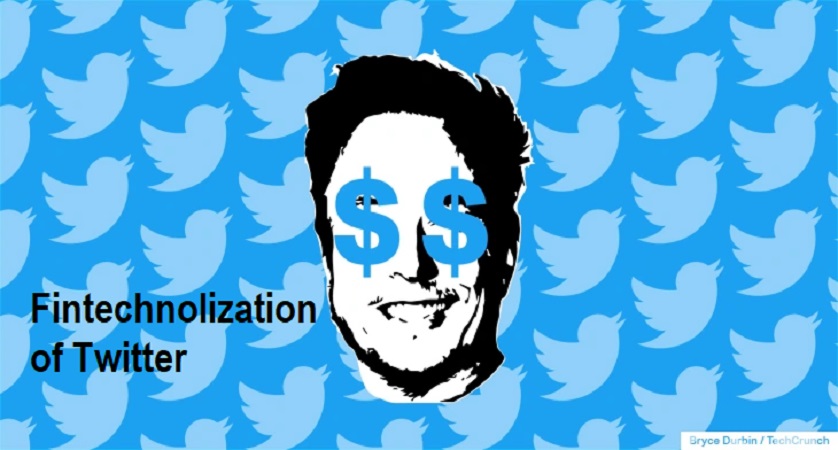
The Fintechnolization of Twitter As Some US States Grant Payment License

0

Elon Musk is his generation’s finest innovator: ”Twitter’s quest to become a payment company has taken its first major step with license acquisition. The company announced Wednesday that it has been granted money transmitter licenses by three US states namely: Missouri, Michigan, and New Hampshire.”

Today, Twitter as a fintech is born. As Meta (yes Facebook) is coming with Threads to challenge Twitter, the microblogging platform, Elon Musk has moved  on, understanding that the natural stable state of all digital platforms is fintechnolization: “a construct that every digital platform must have a maturity state of offering a fintech solution.“

Last year, I coined the word “fintechnolization” – a construct that every digital platform must have a maturity state of offering a fintech solution. I had watched all great digital platforms on how they ended up providing fintech solutions even when they began in an unrelated sector. It was also on that framework that I started Tekedia Capital since Tekedia itself is a platform. In that piece, I made a call that in 2021, I would start a financial services solution on Tekedia!

Imagine if I can promote Tekedia Mini-MBA on Twitter, and you do not need to click to visit our site, but can pay right there? I cannot wait for that feature to come to LinkedIn also. Simply, why do I need a PayPal or Stripe on our website? It is about removing friction for transactions to take place. It is about reducing the inertia for sales to happen.

Good People, Twitter is back because Twitter 2.0 as a fintech is starting with 300 million users.

Comment on Feed

Comment 1: I have a question prof.

If social networks can take advantage of their users to add a fintech layer

can fintechs also create social platforms to attract and keep users?

My Response: Allow me to weigh in on this
So I think the premises are different for both case studies.

Social networks are built to foster communication as would be obtainable in reality. To have productive communication we would require some inherent level of “TRUST”.
When we build social networks, we build ” digital trust vehicles”, with this, interactions can continue.

Thereafter, the natural principle of giving performs it’s wonders – givers never lack.
What these digital vehicles earn is a public attestation of trust and credibility.

These firms can then leverage this public vote of confidence (signalled by downloads and average daily usage) to touch opportunities that would typically require brick and mortar setups.

The flip side (based on your question) can signal desperation to the typical user.
Fintechs are profit oriented and best believe, when it’s 8pm and you want to feel human again, you don’t look at your numbers.
A decent option to explore would be to keep fintechs as fintechs and maybe allow for peer to peer transactions like that binance has.
Startups can ride this wave and expand to social networking to change the narrative.

It’s a touch and go game but I think it could be worth the risk.

Comment 2: A smart move. No point wasting effort competing with Thread, which is a totally free platform. I foresee in the future, Thread adopting same fee structure for verification, as Twitter does, unless the revenue streams from advertising through integration with other Meta platforms are more than enough to sustain Thread.

My Response: At the end, they will all settle to one stable state despite all the garagra at the beginning.

Comment 3: Elon Musk is coming back to fintech after he sold PayPal. He knows there is a lot of gaps in fintech, but the market is in Africa, where majority of the countries are literally exclude from global financial ecosystem.

Comment 4: Interesting development.
As new companies unlock the power of fintech, the veterans will redeploy and adapt and I foresee a new wave of dislocation that will birth new model of payment. Twitter joining the league of stripe and Paypal(more like its foster parent) especially as one of the leading competitors to Meta, has many market possibilities to, and reactions from other social platforms. Expect Tiktok, Snap, Instagram, Truthsocial, and others in that category to join the fintech race rather than partner.

Beyond this competition, its the ease of adoption for creators, cross site integration, and industry wide compliance from Asia, America, Europe to Africa that will determine who wins as the market realign and evolve. Imagine Twitter taking it far to join local fintech space with Moniepoint, Opay and the likes?

Unlock seamless banking from just owning a Twitter account. The possibilities ahead combining massive data repositories with finance, and AI leaves the mouth tasty of what is to come. I foresee mergers & acquisition as some players (social media giants and fintechs company) naturally fizzle out in years to come. Africa innovators and investors should give us our own Twitter. We can still join this race!

My Response: The only defense these days is to have a little offline component which cannot be taken out by these large foreign firms.

Three US States Grant Twitter Licenses to Offer Financial Services

Three US States Grant Twitter Licenses to Offer Financial Services

1

Twitter’s quest to become a payment company has taken its first major step with license acquisition. The company announced Wednesday that it has been granted money transmitter licenses by three US states namely: Missouri, Michigan, and New Hampshire.

Early this year, Twitter made a move to onboard payment into its services as part of Elon Musk’s push to create everything app dubbed X, which was incorporated earlier this year.

A state-approved money transmitter license grants official authorization to an entity or individual to legally participate in the money transmission or payment instrument business.

The aim is to make Twitter a money transmitter in all 50 US states, before expanding the service outside the US – pending approval from regulatory authorities.

The three states’ licenses have set the ball rolling for the social media app, which until its acquisition in October last year by Musk, was solely a space for real-time conversations online.

According to Musk, Twitter aims to launch a payments system by the end of the year, following approvals from both the United States and international markets.

In April, eToro, a social trading company, announced that it has partnered with Twitter to offer financial services within the platform. The partnership would allow Twitter users to access stocks, cryptocurrencies, and other financial assets.

With the licenses, Twitter can now offer financial services such as issuing prepaid cards and providing remittance services involving foreign currencies.

Musk’s “Everything App” vision is tied to X.com — a payment company he started and eventually merged with PayPal. He had last April, set up a trio of holding companies in Delaware with a variation of the name “X Holdings”, as part of his bid to acquire Twitter.
Musk paid $44 billion for Twitter but admitted that it was overpriced. He said in a tweet that buying the company was an “accelerant to creating X, the everything app.”

The Everything App mirrors China’s WeChat app, which has a comprehensive combination of various functionalities such as social media, payments, news, and messaging.

The money transmitter licenses were approved by the states at a time when Meta was launching Threads, a real-time conversation platform that CEO Mark Zuckerberg plans to offer as an alternative to Twitter. The app has recorded 10 million users since it was launched by Instagram on Wednesday.

Zuckerberg said he intends to increase the number of Thread users to 1 billion. “It’ll take some time, but I think there should be a public conversations app with 1 billion+ people on it. Twitter has had the opportunity to do this but hasn’t nailed it. Hopefully, we will,” he said.

However, the news of the money transmitter licenses offers solace to Twitter for the chaos the company experienced during the weekend, following a decision by Musk to limit the number of tweets users can view within the app.

Who Cares About Your Comment?

8

In today’s digital landscape, social media platforms have revolutionized the way we communicate and connect with others. Commenting on posts and engaging in conversations has become an integral part of our online experience. But have you ever wondered why some comments seem to carry more weight than others? This piece  delves into the psychological factors that influence who cares about your comment in the world of social media. 

The Complex Web of Online Interactions 

Within the vast realm of social media, every comment is a thread that weaves a complex web of conversations. When someone posts content, they share their thoughts, ideas, or experiences with others. This act of encoding their message through words, images, or symbols sets the stage for subsequent interactions.Deep within our psyche lies a fundamental need for validation. When someone leaves a comment on our post, whether positive or negative, it serves as a form of acknowledgment. This validation satisfies our longing to be seen, understood, and accepted. It strengthens our sense of social connection, reminding us that our thoughts matter and that we are part of a larger online community. 

The Contextual Puzzle and Psychological Factors at Play 

Decoding a comment is not a straightforward process. The meaning we derive from a comment depends on various factors, including the social, cultural, and personal contexts in which we find ourselves. Comments that resonate with our beliefs and values are more likely to be positively decoded, reinforcing our existing perspectives. Conversely, comments that challenge or contradict our views may be met with resistance or dismissal. 

The significance we attach to comments is influenced by a range of psychological factors. Our self-esteem plays a vital role, as individuals with higher self-worth may place more importance on comments, seeing them as affirmations of their value. Social comparison also enters the picture, as we compare the quantity and quality of comments we receive with those of others. This comparison triggers a sense of validation or competition. Additionally, the fear of missing out (FOMO) drives us to actively seek comments and engagement, avoiding the feeling of being left out or ignored. 

Riding the Emotional Rollercoaster 

Comments have the power to elicit strong emotional responses. Positive comments can evoke joy, satisfaction, and a boost in self-confidence. Conversely, negative comments can trigger feelings of rejection, inadequacy, or anger. These emotional reactions further shape our interpretation of comments and influence our subsequent behavior in online interactions. 

While we may seek validation and connection, we must also recognize that the meaning of comments is subjective and contextual. By cultivating self-awareness, empathy, and respect for diverse perspectives, we can navigate the comment section with greater understanding. Recognizing the psychological intricacies of comment engagement contributes to building healthier and more meaningful online communities, where comments are vehicles for constructive dialogue and connection rather than sources of division.