DD
MM
YYYY

PAGES

DD
MM
YYYY

spot_img

PAGES

Home Blog Page 4407

Mr. President, We Apologize for Not Understanding You!

2

Let me be the first to send my sincere apologies to Muhammadu Buhari. I think every blogger, journalist, analyst and public commentator in Nigeria should do the same. The president has proven that he is unique and un-modellable. People, I wrote many articles here, postulating that Buhari was not fair here and there. But with his position on the new Naira policy, I have come full circle: this man lives in his own world. I mean, there is no place in the history of humans where a president has scored own-goals, de-marketed his party, and caused pains to his team, in the way he has orchestrated for APC due to the new Naira policy.

For him to have done it and doing it, tells me that he does not see things the way most see things. I would have called him names if he was doing this to an opposition party, but doing it to his own party, implies Buhari may not be partisan, etc at the barometer level many have recorded for him.

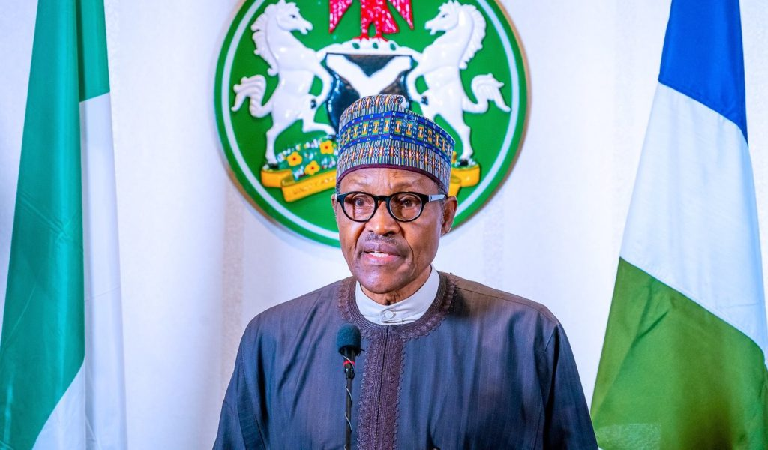
“I am aware that this new monetary policy has also contributed immensely to the minimization of the influence of money in politics,” Buhari noted.

“The new naira policy is a positive departure from the past and represents a bold legacy step by this administration, towards laying a strong foundation for free and fair elections.”

Indeed, he does not care even if that will hurt him. This man could have redeemed Nigeria with that steely mindset over the last seven years. From El-Rufai (who dares Buhari by declaring old naira notes legal tender in Kaduna, full text on click) to Tinubu (direct appeals which remain unanswered) and indeed everyone (House Speaker speakerism – “The Speaker of the House of Representatives, Femi Gbajabiamila, has described the pronouncement by President Muhammadu Buhari on the naira policy as “disregard” of rule of law because it is short of the order of the Supreme Court”, etc), Buhari has shown an uncommon trait many public commentators have never attributed to him. Indeed, this man belongs to all,  but to none. If you think otherwise, explain to me why he wants to make his party a minority party days to a national election.

.My dear people of Kaduna State,

1. With just about 100 days before leaving office, and elections just round the corner, it was my intention to host another media chat to interact with the people of our state in the next few days. While I still hope to do so, I feel the need to address you all today due to the unprecedentedly cruel situation our people and their livelihoods have been thrown into, particularly in the last two to three weeks by the decisions, actions and inactions of the Federal Government of Nigeria.

2. On behalf of the government of Kaduna State, I wish to express my deepest regret at the needless suffering you are enduring as a result of the prolonged fuel shortage and the difficulties occasioned by the so-called “currency redesign” policy of the Central Bank of Nigeria. We understand your pain. I assure you that as your State Governor, I have been working with my other colleagues to do everything in our power to end these pains.

3. While publicly supporting what appeared to be a beneficial policy, we innocently engaged privately with the President and the leadership of the Central Bank of Nigeria to review the implementation of the policy so as to reduce its negative impact on the lives and livelihoods of our people, and end the pain being inflicted on citizens. In the absence of any progress to modify implementation on the part of the architects, we were forced to go public about two weeks ago, with our concerns and demand that this suffering must stop.

Comment on Feed

Comment 1: Very rarely, if ever actually, have I read a post of yours that began with sarcasm: I have to laugh.

But when you said, “I mean, there is no place in the history of humans where a president has scored own-goals, de-marketed his party, and caused pains to his team, in the way he has orchestrated for APC due to the new Naira policy.” Well, there certainly is and arguably he has done worse. That person being Cyril Ramaphosa of South Africa. Under his watch South Africa and his party, the ANC, are crumbling. But that’s there not here; Nigeria that is.

In relation to the currency fumbling there should have been a gradual removal from circulation of the old notes. For example here in Canada as new notes were added to the circulation the notes were gradually removed through time (like through a couple years). Once the drop dead date approached there was massive marketing and advertising advising people still in possession of the old notes to take them to ANY bank to exchange them for new notes…no questions asked.

I’m sure that method is a best-practice – so why couldn’t the same process be followed?

Anyway make sure you all get-out and vote next week.

My Response: while Cyril Ramaphosa could do more, what he is fighting in South Africa did not start today and the issues are not things he can fix on a simple broadcast. Buhari’s case was invented by him and he can end it in 30 seconds, unlike what Cyril is going through. The issues in South Africa have been normalized in Nigeria; they say they have light 6-12 hours in a day; in Nigeria, who has up to 3 hours in a day?

Comment 1R: Ndubuisi Ekekwe ok I’ll give you that. But Cyril made things worse, albeit through years, and he can’t end it in seconds that’s for sure, it’ll take years or a decade or even longer. As you said Buhari can fix it (end it) in 30 seconds. Electricity availability is another beast altogether however.

Comment 2: I already got my popcorn and kunu as I watch this Nigerian movie. I think there’s another twist in this plot. We will see how it all ends. I hope and pray that it will end well for Nigerians. We all need peace and prosperity.

My Response: Indeed, I am truly flummoxed because many things do not make sense

Comment 3: We all claim to be objective (a trait any adult human is incapable of). We all process information via diverse filters. As unpartisan as you try to make your posts to be, the trend, your leaning, doesn’t really do a great job hiding itself. We hear you louder than you intended.

My Response: “your leaning, doesn’t really do a great job hiding itself. We hear you louder than you intended.” – you are 100% wrong. I know the connotation is that Ndubuisi is anti-APC or Tinubu. The fact is this: my village in Abia State is represented by APC 100%. My senator is APC, my House Rep is APC. My state house is APC. My village voted APC in governor (PDP won though). So, your call is flatly wrong. If I change my name to Femi Kunle, you will read new meanings to my post. The issue is that you see “Ndubuisi” before you begin to read! I am apolitical and non-partisan.

Comment 4: Ndubuisi Ekekwe Sir, there are too many explanations political analysts have come up with about the way and manner of Mr. President’s policies. I won’t bore you with them.

There is a higher power in control of Mr. President and that is why he acts the way he does. It is beyond being a man who does things his way. No not all!

Let everyone that cares to know read thus God will yet again show Himself mighty in Nigeria. All hope is not lost. Nigeria shall rise again

El-Rufai Dares Buhari, Declares Old Naira Notes Legal Tender in Kaduna (full text)
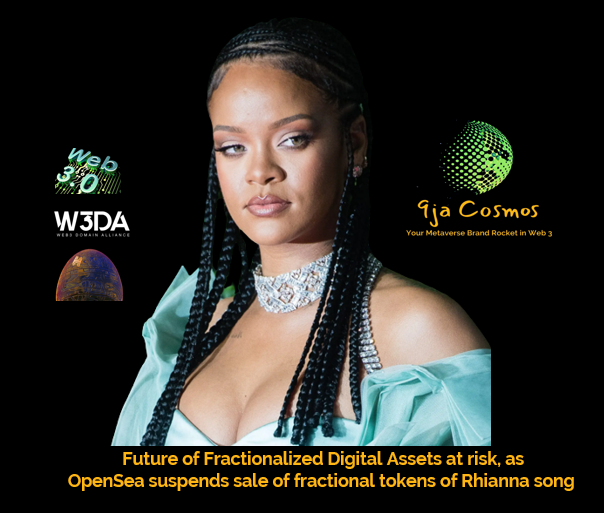
Why Rhianna’s song delisting on OpenSea could impact everything from Art Galeries to Crowdfunding.

0

The background of Fractionalization in Blockchain

Non blockchain fractional ownership in art  started at the same time as the financial crisis. Between 2008 and 2012, the Chinese art market rapidly grew, driving government policies that set the cultural industry as one of the key drivers of economic growth.

I first wrote about fractional ownership through blockchain tokenization in 2021.

In a Tekedia article, I was debating the future trajectory of digital assets in the global marketplace, and speculating on how Nigeria and some other African countries could benefit through remote access.

Curiously, the concept began with ‘bricks-and-mortar’ art galleries looking for innovative ways to fund themselves without having to purchase expensive works or pay fees to exhibit them.

The idea was, that they would divide the purchase price of a targeted artwork into an ‘affordable’ equal investment fractions for allocation. The atomic units that represent a portion of ownership would be minted to a blockchain and a token would represent each unit. Members of the global public could buy any number of the tokens as they wish.

The gallery would retain the artwork, while the ‘fractional owners’ would retain their token(s) as their proof of ownership. Token ownership would allow them free access to the gallery within agreed terms.

These terms, and the gallerys’ entitlement for to admit non token holders at a cost, varied according to the implementation model and tokenomics  (if any).

From late 2020 forward, several variations on a theme began to appear promoting services involving fractional art ownership.

On October 5, 2021, Masterworks, which was already an up-and-running gallery with fractional owners,  raised $110 million in Series A funding at a valuation north of $1 billion.

The confusion that arose around ‘Fractionalization’ and ‘NFTs’

The advent of fractionalization caused a stir in digital tokenization discussions at the time, around what can be considered ‘Fungible’ or ‘Non-Fungible’.

Some argued that since the fractionalization resulted in a subsidiary unit to the whole work, that unit was in itself atomic. Pundits make similar arguments about ‘Satoshis’ the ‘minor currency’ to a Bitcoin.

This really isn’t important. Fungibility (or the lack thereof) rests on the ability to trade and exchange at arbitrary decimal fractions of a unit. That it has an atomic unit is irrelevant. Even all FIATs have an atomic unit.

Both FIATs and Cryptocurrencies are considered ‘Fungible’

Whether tokens themselves are considered NFTs or not, that is not down to the asset at all, and is down to the intent and execution of the Token Protocol used in token minting. I’ll discuss that in my next article on ‘Ordinal’


Back to the latest news, and our Feature Image of Rhianna

A ‘portion’ of Rhiana’s song, “Bitch Better Have My Money”, had been fractionalized, and sold as 300 equi-valued tokens on the Ethereum ecosystem.

Each token is more than just a deed to a collectable such as a Bored Ape, because it can earn royalties. It therefore has what is called ‘utility’.

OpenSea, the biggest blockchain asset sale platform by volume, yesterday halted secondary sales of the token collection.

Secondary Markets are the only practical way owners can dispose of such digital assets after whatever initial offering, or acquisition process.

The collections’ creation is down to one Jamil Pierre who co-produced the song in 2015 and owns a share of it as a result of the production contract. There is no evidence that Rhianna was involved in the tokenization project, or even knows about it.

An independent statement said OpenSea has a policy which does not allow NFTs that “appear to be promising fractional ownership and future profit based on that ownership.”

This could be the thin edge of a wedge which cuts off a very useful option in digital and blockchain investment opportunities, particularly if other digital token marketplaces follow suit.

Crowdfunding for example is particularly amenable to being executed through the sale of blockchain tokens representing fractional units of assets, either real or virtual.

Indeed, 9ja Cosmos is already looking at Crowdfunding through fractionalization and blockchain tokens as a means of raising future funds.

9ja Cosmos is here…

Get your .9jacom and .9javerse Web 3 domains  for $2 at:

.9jacom Domains

.9javerse Domains


All reference sites accessed between 15-16/02/2003

luxuo.com/culture/art/a-new-fractional-way-to-own-artworks.html

decrypt.co/121410/opensea-halts-trading-rihanna-music-nfts

yieldstreet.com/investing-in-art/

fractional.art/

techcrunch.com/2021/10/05/masterworks-raises-110m-to-push-fractional-shares-of-physical-art-not-nfts-into-investor-portfolios/?guccounter=1

widewalls.ch/magazine/fractional-ownership-art


Naira Scarcity May Compound Nigeria’s Forex Crisis – Fitch Ratings

0

Amid scarcity of naira notes, orchestrated by the newly-introduced currency redesign policy of the Central Bank of Nigeria (CBN), Fitch Ratings, a global credit ratings agency, has warned that the situation may aggravate Nigeria’s forex crisis.

Fitch, in its report titled: ‘Nigeria’s Economic Challenges Highlight Importance of Post-Election Policies’, said the cash scarcity emanating from the naira redesign policy may trigger frugal reaction from Nigerians that will impact the economy. The organization said the policy may reduce consumer spending and boost demand for foreign currency.

The CBN said the naira redesign policy initiative is aimed at boosting its cashless policy among others. But Fitch said it was not yet clear whether there would be long-term economic benefits of the policy, such as greater use of the formal banking system or enhanced use of digital payment systems.

“The Nigerian Supreme Court’s suspension of a 10 February deadline for exchanging old banknotes into new eases, at least temporarily, the risk of intensifying cash shortages,” the agency said, adding the demonetization drive is still likely to be disruptive in the near term.

“Associated cash shortages may hit consumer spending and boost demand for foreign currency, aggravating foreign-exchange shortages,” it added.

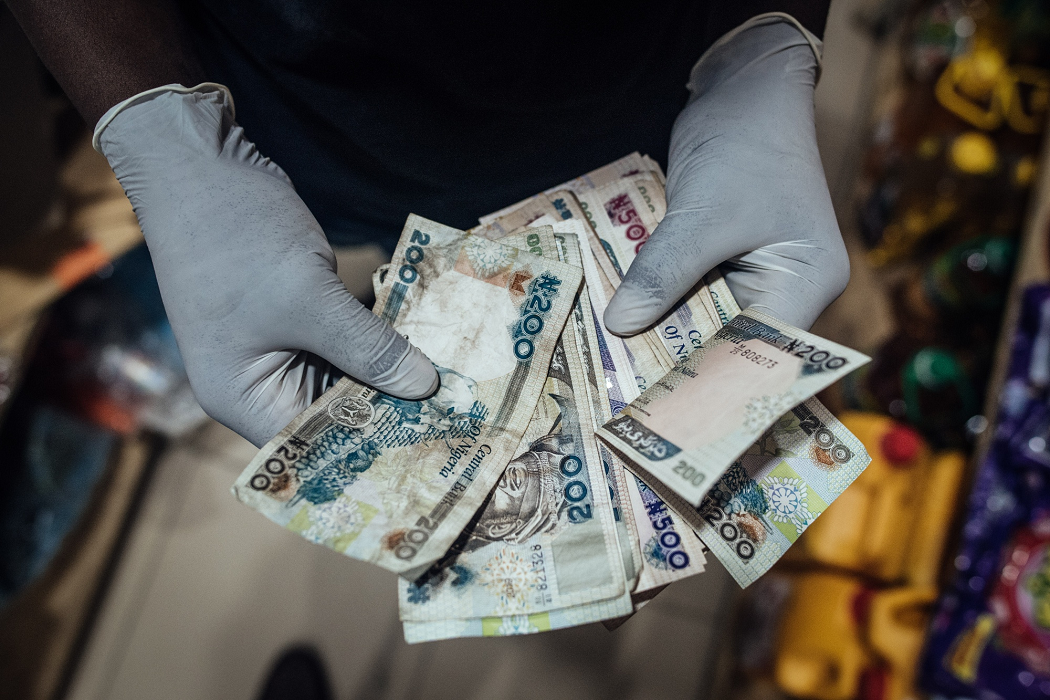
The CBN’s move to replace the old N200, N500 and N1,000 notes with the redesigned notes within a short period of few months, unleashed unprecedented currency scarcity that has heavily impacted many sectors of the economy, especially the informal sector. This came along as Nigeria grapples with insufficient forex liquidity that has seen international organizations operating in the country struggle with repatriation of funds.

The forex crisis which is largely tied to fuel subsidy payments and insufficient oil output has significantly weakened the naira, compounding inflation as Nigeria takes to borrowing to fill revenue shortfalls. With inflation at over 21%, declining consumer spending was expected to see a boost during the election period.

Given its current economic situation, Fitch said that Nigeria is faced with major economic challenges ahead of elections due on 25 February, and policy choices by the incoming administration could have a significant impact on the country’s credit profile.

Nigeria’s growing public debt profile has scuttled its debt-service to revenue ratio, put at 80.7% by the Minister Finance Zainab Ahmed in January. Fitch said it downgraded Nigeria’s rating to ‘B-’ from ‘B’ in November 2022, with a stable outlook, as a reflection of the country’s continued deterioration in debt servicing costs and external liquidity.

The agency added that Nigeria’s fiscal profile is expected to remain weak in the medium term due to poor revenue growth and rising debt.

“General government interest/revenue is extremely high (47 percent in 2022 by Fitch’s estimate) and we expect it will remain so given constraints on revenue mobilization, increasing debt and high interest rates,” the agency said.

It added structurally low non-oil revenue; spending pressures and weak economic growth imply substantial fiscal financing needs as other factors contributing to Nigeria’s poor credit rating.

“The government faces external debt amortizations of $2.5 billion in both 2023 and 2024, an increase on recent years, although the majority is bilateral and multilateral debt service,” it said.

Fitch lays emphasis on Investor and Exporter window, Nigeria’s official exchange rate as key to the country’s positive credit rating. It said the prospects for the “overvalued” exchange rate reform would be influenced by the outcome of the presidential election, and could increase under a new central bank governor.

“The incumbent’s term ends in 2024, but an incoming administration could push for earlier change,” the agency said.

“A more flexible exchange-rate regime would likely be a long-term positive for Nigeria’s credit profile, although the initial economic adjustment could present macro-fiscal risks.”

However, President Muhammadu Buhari, in his broadcast on Thursday, directed the CBN to allow old N200 note to co-circulate with the new one until April 10. The move is expected to cushion the shortage of the new naira notes and ameliorate its impact on the economy.

Buhari Approves the Use of Old N200 Notes Until April 10, 2023

0

President Muhammadu Buhari has directed the Central Bank of Nigeria (CBN) to extend the use of old N200 notes beyond the earlier February 10 deadline issued for the phasing out of the old N200, N500 and N1,000 notes.

The CBN had late last year, announced the redesign of the above naira notes as part of its monetary policies geared toward the fight against inflation, corruption, terrorism financing and as the general elections draw near – vote-buying.

Buhari gave the directive during his national address on the challenges of implementing the policy on Thursday morning.

“To further ease the supply pressures particularly to our citizens, I have given approval to the CBN that the old N200 bank notes be released back into circulation and that it should also be allowed to circulate as legal tender with the new N200, N500, and N1000 banknotes for 60 days from February 10, 2023 to April 10 2023 when the old N200 notes ceases to be legal tender,” Buhari said.

The central bank fumbled the implementation of the naira redesign policy as scarcity of the new notes stalled circulation, forcing Nigerians to rely largely on the old notes for transactions. The situation, which has significantly affected economic activities, resulted in lawsuits, protests and attacks on commercial banks as cash-strapped Nigerians besieged banks for money.

About 10 states have dragged the federal government to the Supreme Court in a bid to have the policy reversed. Although the apex court had in an ex parte order last week, asked the federal government to allow both the old and new notes to coexist pending the determination of the matter, which has now been adjourned to February 22, the CBN insists that the old notes are no longer a legal tender.

While acknowledging the suffering the policy has brought upon Nigerians, Buhari appealed for their “understanding and patience during this transient phase of implementation.” He said the evaluation and feedback mechanism set up has revealed that gains have emerged from the policy initiative.

“I have been reliably informed that since the commencement of this program, about N2.1 trillion out of the banknotes previously held outside the banking system, had been successfully retrieved,” he said.

Buhari had pointed at excess money in circulation as part of critical points underpinning the naira redesign policy decision. He noted that in 2015, when his administration commenced its first term, Currency-in-Circulation was only N1.4 trillion, but has grown to about 100%, distorting the government’s effort to tame inflation.

“The proportion of currency outside banks grew from 78% in 2015 to 85% in 2022. As of October 2022, therefore, currency in circulation had risen to N3.23 trillion; out of which only N500 billion was within the Banking System while N2.7 trillion remained permanently outside the system; thereby distorting the financial policy and efficient management of inflation,” he said.

The president added that the huge volume of Bank Notes outside the banking system has proven to be practically unavailable for economic activities and by implication, retard the attainment of potential economic growth, an assertion that PwC Nigeria chief economist, Andrew Nevin, described as “absolute economic nonsense.”

Buhari further stated that in addition to assisting the CBN in mopping up excess money in circulation, the new policy has also contributed immensely to the minimization of the influence of money in politics. He urged Nigerians who still have old naira notes to redeem them at the CBN and designated points.

“Considering the health of our economy and the legacy we must bequeath to the next administration and future generations of Nigerians, I admonish every citizen to strive harder to make their deposits by taking advantage of the platforms and windows being provided by the CBN,” he said.

Puffery and deception in Advertisements

0

To what extent should you take advertisements or commercials seriously?

If a company advertises that if you purchase their products you will earn some points that will qualify you to earn some gift items, will you take that seriously or will you assume that it is just a bluff or puffery? 

For instance, if MTN NG advertises that if you subscribe to their network service you will be eligible to win a car, house or even an aeroplane; to what extent will you take such advertisements seriously?
Well, the answer to this issue is not a straightforward one, what the court has determined in a series of cases that borders on similar issues like this is that the content of the commercials and the messages passed will be examined to determine if it is to be taken seriously or to be a regarded as a puffery or a bluff made just to capture attentions; but where do advertisers draw the line because there is a thin line between puffery and deception.

In a landmark case, which is popularly known as “the Pepsi Points case or the Harrier Jet case”,  a commercial where a company promised to give out Harrier Jet to their customers was held to be a puffery and was never to be taken seriously by the viewers or consumers of the products.

Here are the summary facts of the case; In 1996, Pepsi company ran a commercial, the catchy message in the commercial is that customers could earn Pepsi points by buying or consuming the Pepsi beverage, these points could, in turn, be traded for physical gift items like branded T-shirts, face caps, leather jackets and even a Harrier Jet.

The option of possibly winning a Harrier jet was what drew a lot of attention to the advert. The plaintiff in this case, John Leonard, a young lad in his early twenties saw the commercial and swore to himself that he must win the Harrier jet. He was able to convince a rich close friend of his to lend him some money which he used and purchased the Pepsi Points at 10¢ per point totalling $700,008.50.

He delivered this cheque to PepsiCo and then demanded that he should be given the jet in return. 

PepsiCo told Leonard that there was no jet anywhere to be given to anybody, moreover, Harrier Jet is Military equipment which a civilian like John or any other private individual is prohibited from owning, therefore, the advert to give out Harrier Jet was just a puffery and a bluff just to draw attention. The Pepsi company also claimed that the commercial constitutes no offer and as it is the principle of the law of contract, where there is no offer there won’t be any corresponding acceptance.

Leonard then sued PepsiCo, in an effort to enforce the offer and acceptance perceived by Leonard to be made in the advertisement.

The court held in favour of PepsiCo stating that the commercial was merely bluff and frivolous and that it cannot constitute an offer in the law of contract.

This case is reported in: Leonard v. Pepsico, Inc., 88 F. Supp. 2d 116, aff’d 210 F.3d 88