DD
MM
YYYY

PAGES

DD
MM
YYYY

spot_img

PAGES

Home Blog Page 4413

Reviewing Past Crypto Airdrops and How to Position for Future Gems

0

Crypto Airdrop is a promotional activity typically performed by blockchain-based startups to help bootstrap a virtual currency project. ENS Probably was the first airdrop that really kicked things off in the land of NFTs. The Ethereum Name Service (ENS) is a distributed, open, and extensible naming system based on the Ethereum blockchain. ENS’s job is to map human-readable names like ‘alice. eth’ to machine-readable identifiers such as Ethereum addresses, other cryptocurrency addresses, content hashes and metadata.

A crypto airdrop is a promotional activity typically performed by blockchain-based startups to help bootstrap a virtual currency project. Its aim is to spread awareness about the cryptocurrency project and to get more people trading in it when it lists on an exchange as an initial coin offering (ICO). (investopedia)

Before the airdrop, most people thought securing a name on the blockchain was reserved for overly passionate ETH maxis, this changed on November 8th 2021. Anyone who registered an ENS domain name before the 31st of October, 2021 was able to claim ENS tokens. The airdrop was worth around six figures depending on your allocation size and exit price— there have been discussions about a second airdrop on their forum.

The SOS claim went live on Christmas Day, everyone was talking about it on twitter as it was a much-needed morale boost during a boring time for NFTs. The way it calculated the size of your airdrop was by looking at your Opensea activity.
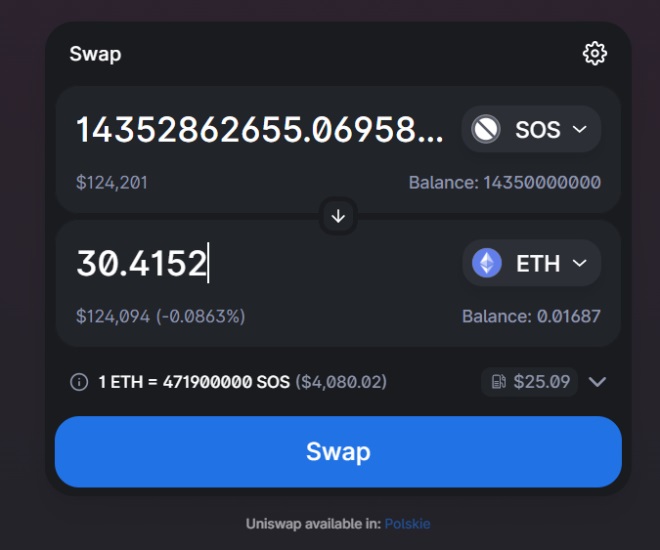
It took two key metrics into account:

  1. i) Amount of dollars spent on Opensea
  2. ii) Number of Opensea transactions

As you can see, for many this was a significant amount of money.

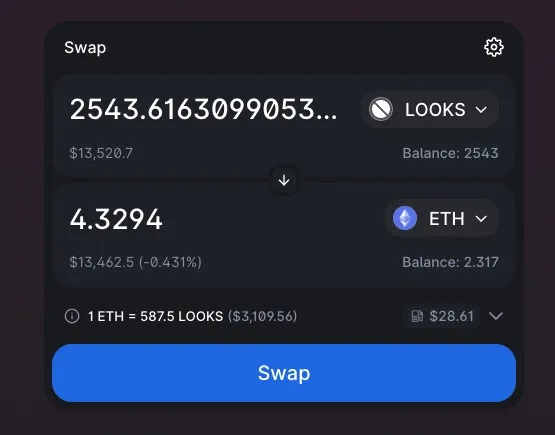
LooksRare was an attempt to take down the 500 pound gorilla in the land of NFTs, Opensea. They came onto the market Jan, 2022 blazing with new features like collection offers and lower marketplace fees.

On top of that, you could also stake your $looks to earn a portion of the platform fees. User, creator and platform incentives aligned, sounds good right. The airdrop’s value wasn’t bad either —Many people received $looks worth north of $10k.
Here’s your 3-step game plan for all future airdrops

i) Airdrops usually peak a few days after release (maybe don’t sell right away)

ii) Airdrops go to 0 long term (don’t hold long term)

iii) Profits are rotated into NFTs (buy NFTs with upcoming catalysts).

As always the most valuable thing you can gain is experience. Take the trade, test every theory and try to learn something each time. Ultimately, developing your gut instinct will be more valuable than anything you have read.

Falana Scolds CBN for Disobeying Supreme Court Order on Naira Swap Policy

0
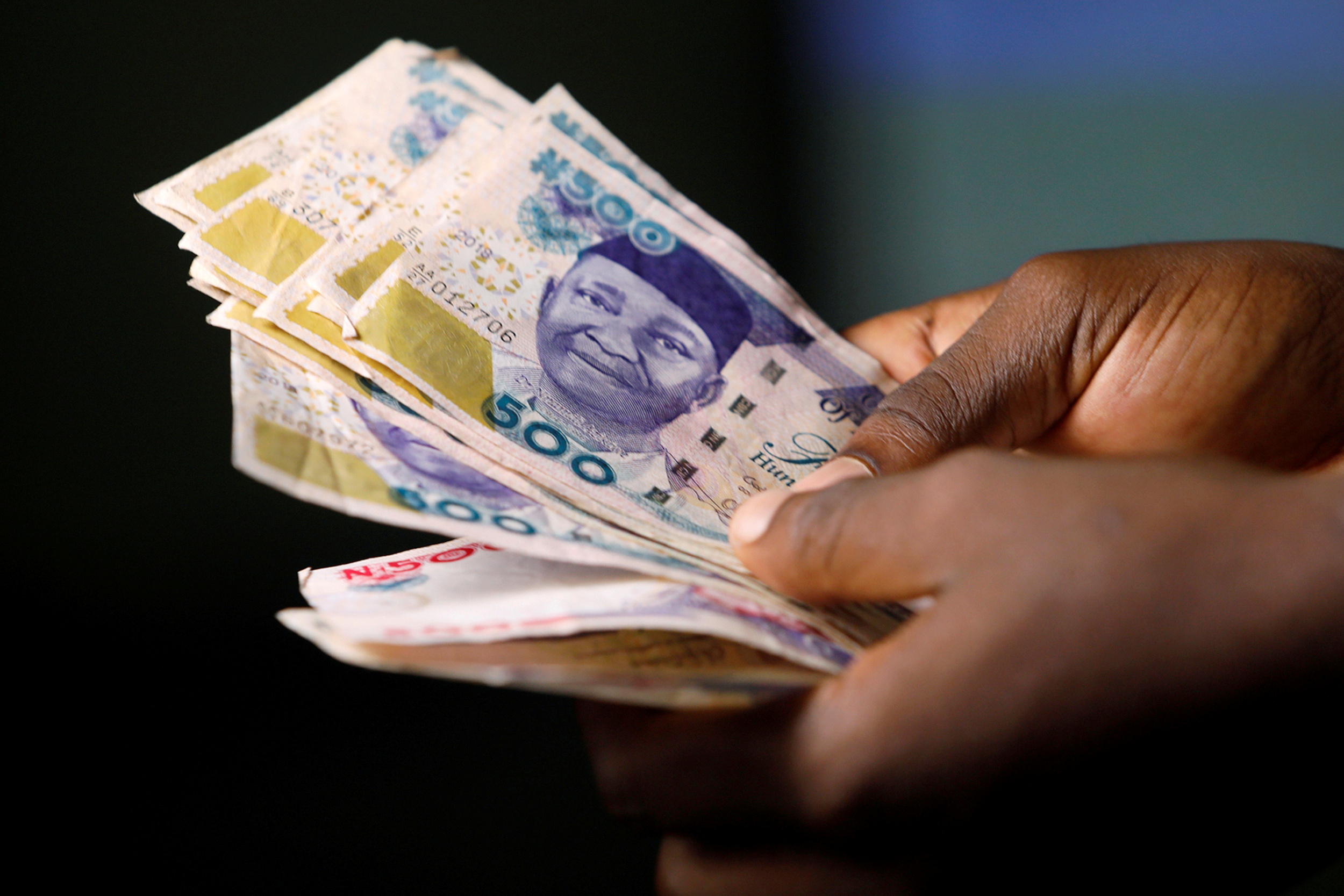
Nigerian naira banknotes are seen in this picture illustration, September 10, 2018. REUTERS/Afolabi Sotunde/File Photo

Human rights lawyer, Femi Falana, SAN, has called the Central Bank of Nigeria (CBN) out for disobeying the ex parte order issued by the Supreme Court last week, restraining it from enforcing the February 10 deadline earlier set to phase out old N200, N500 and N1,000 notes, following their redesign.

The central bank had on Tuesday announced that the old notes have ceased to be legal tender despite the Supreme Court’s order, prompting questions about the application of rule of law in Nigeria.

The CBN governor Godwin Emefiele said on Tuesday there is no need to shift the deadline because the over-the-counter payment adjustment made early this month is mitigating the scarcity that has characterized the naira swap policy.

“The situation is substantially calming down since the commencement of over-the-counter payments to complement ATM disbursements and the use of super-agents.

“There is, therefore, no need to consider any shift from the deadline of February 10,” Emefiele said during a visit to the Ministry of Foreign Affairs to discuss the monetary and currency redesign policy.

Emefiele said this despite the assurance of the Attorney General of Federation (AGF) Abubakar Malami that the federal government will obey the ex parte order in respect for the rule of law.

In his response to the CBN decision to disobey the Supreme Court’s order, Falana scolded the apex bank, saying things like that only happen in banana republic. He said that during a live interview on Channels TV’s ‘The 2023 Verdict’ on Tuesday, adding that the central bank wouldn’t disobey the Supreme Court where rule of law exists.

“In a country where the rule of law operates, once the Supreme Court has determined a matter or given an order, it is expected that all and sundry – everybody – will comply with the order.

“[A] statement was credited to the Central Bank that since it was not a party to the case, it’s not going to comply with the order. I thought that could only happen in a banana republic.

“I expected the Central Bank to have issued a statement following the order of the Supreme Court: ‘all actions are stale until the 15th of February,” he said.

The federal government is notorious of flouting court orders, setting a precedent believed to have emboldened others.

Falana said that the law needs to be invoked to deal with those who are deliberately flouting the orders of the court and sabotaging the rule of law in Nigeria.

“For me, an example has to be made this time around, so that nobody will feel that he’s above the law in our country,” he said.

Recently, Nigerian courts have committed several prominent persons heading big institutions in the country, including the Inspector General of Police and the head of the anti-graft agency EFCC, to prison for contempt of court. Though their committal was later set aside, the development signals a shift from the culture of impunity that has ridiculed rule of law in Nigeria for years.

Insurtech Platform Curacel Raise $3 Million in Seed Funding, Plans Expansion Into North Africa

0

Nigerian insurtech platform Curacel has raised $3 million in seed funding as it plans to expand its operations into North Africa, starting with Egypt and Morocco.

The startup aims to drive insurance penetration in emerging markets via APIs enabling insurers to connect with digital distribution channels and administer their claims. The seed funding round included many local and global investors.

Speaking on the recent funds raised, Curacel Chief Executive Officer and Co-founder Henry Mascot disclosed that the startup is looking forward to delivering more technology solutions to drive up insurance inclusion.

In his words, “We are bullish on the potential of the right technology in the right places to close the protection gap across Africa and emerging markets.

“It is an exciting time for us as we secure the capital to deliver the vision and onboard the people who have built these technologies at scale in more mature markets, and we are looking forward to delivering more technology solutions to drive up insurance inclusion.”

Founded in 2019 by John Dada and Henry Mascot, Curacel is an AI-powered platform for claims processing and fraud management. It automates the insurance claims process, allowing staff to process claims volumes quickly and efficiently, and automatically vets claim to detect fraud, waste, and abuse.

Many insurers’ processes in Africa are time-consuming, expensive, and prone to fraud and waste because they use paper and antiquated technology, which has resulted in billions lost by African Insurers yearly to fraudulent practices.

Hence insurtech startup Curacel is focused on providing technology to help insurers mitigate losses while digitizing and settling more legitimate claims. The company’s co-founder Henry Mascost in an interview stated that in late 2019, Curacel started solving a problem for health insurance companies around the infrastructure for digitizing claims.

The startup is building the rails to make insurance work for the next billions of Africans and empowering businesses everywhere with the technology to embed insurance for their users.

With Grow, Curacel’s embedded insurance product, more than 100 banks, fintechs, logistics companies, and other tech-enabled companies, including ALAT (Nigeria’s first digital bank), Palmpay, Float, Providus, etc, are empowered to increase their recurring revenues by offering digital insurance products that are seamlessly embedded into their existing products and services, driving much-needed insurance penetration and customer loyalty.

The startup has processed more than $100 million worth of claims, working with more than 20 insurers and more than 5 000 service providers in 8 countries across the continent. In 2022, it grew its transaction volume by 600% and increased its revenue by 500%.

What do you think about Ordinals on the BITCOIN NETWORK?

0
Bitcoin is soaring

Basically the ERC-721 standard on Bitcoin Network allows you to “Inscribe” individual Satoshi’s with data known as the Ordinals [Bitcoin NFTs]. Anyone still bullish on what this can do for BTC Adoption, will this new discovery taint the original digital P2P cash that Bitcoin started as, I don’t know but it’s pretty wild what’s going with the Ordinals trends in the Crypto and NFT space and its great to see builders building amazing blockchain infrastructures.

Since this new meta launched weeks ago, Ordinals NFT transactions has been limited to spreadsheet OTC trading— due to a non availability of marketplace to process trades. Interestingly, Mark Hendrickson of the Hiro Wallet Project, announced on microblogging platform Twitter that; “Hiro Wallet has begun rolling out support for Bitcoin, and Ordinals for a truly cross-protocol Bitcoin Web3 experience.”

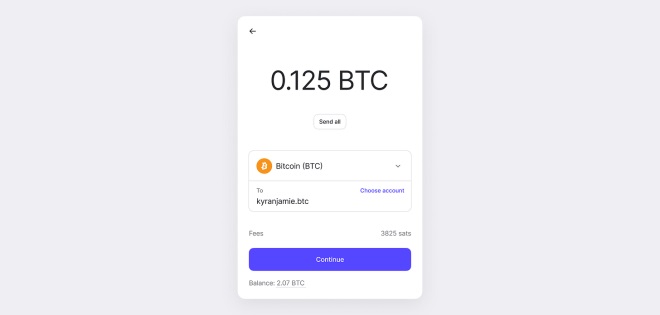
With the new bridge, Extension users can send Bitcoin from their Hiro Wallet using the same Secret Key or Ledger device for managing their STX and other assets (such as BNS names and NFTs) across accounts. Send to all Bitcoin address types, with additional support for sending to BNS names coming soon.

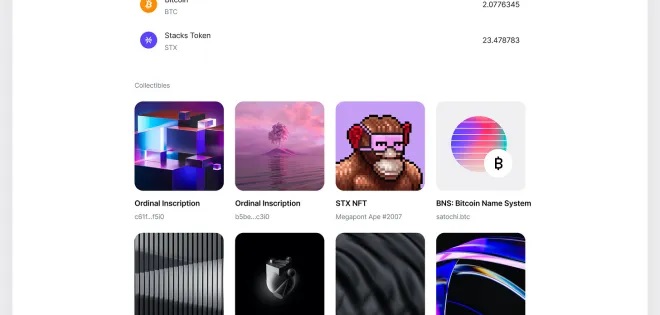
Users can view their BTC holdings as stored on the account’s Native SegWit address under “Balances”. They can also copy this address under “Receive” and soon reveal Taproot addresses for the deposit of Ordinal inscriptions (more on that below!). All inbound and outbound Bitcoin transactions appear within the “Activity” tab, alongside other Stacks activity such as contract executions and deployments. You can access this Bitcoin functionality now for testing by switching your network to “Testnet” with the latest version (v3.34.0) of the Hiro Wallet extension. Mainnet activation is expected soon later this week.

Meanwhile, the fun is only getting started as we roll out expansive support for both Stacks-based NFTs and Ordinal inscriptions. By connecting Hiro Wallet to apps like Gamma, you’ll be able to pay for new inscriptions and deposit them directly into your account as “Collectibles” Mark stated.

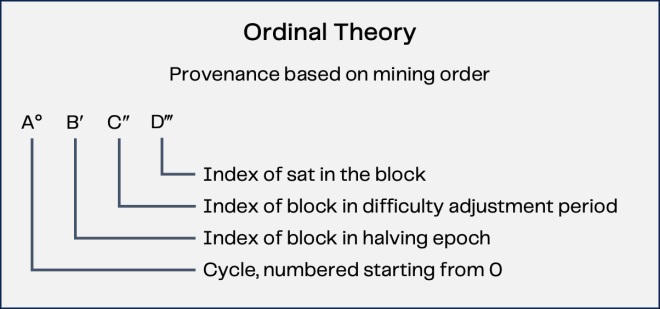
The simplest way to describe Ordinal Theory according to ChainLeft, an early advocate of Ordinal Theory — Is to track the provenance of fungible sats on Bitcoin and assign a “non-fungible” value to them. It’s up to the collectors to subscribe to accept this method and find value in it. Different methods to track provenance aren’t new in Blockchain’s.

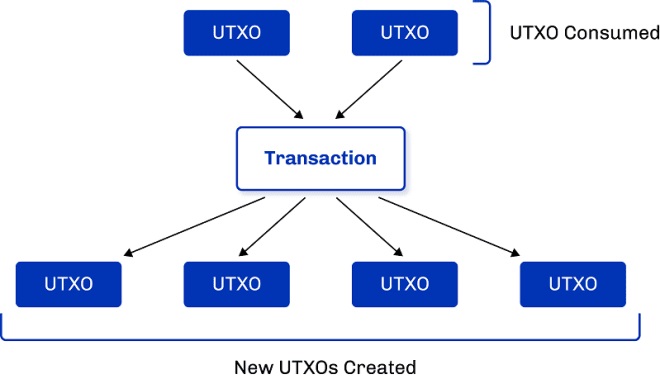
Counterparty (XCP) tracks provenance through linked UTXOs in transactions.

Namecoin (NMC) tracks provenance through name identifiers.

Ethereum (ETH) tracks provenance through smart contracts

Ordinals are actually “sats”, not the images you see shared around. With ordinals, you could philosophically assign a “non-fungible” value to technically fungible satoshis (1/100 millionth of a $BTC). Here’s alpha: I think in the future these early sats will have a lot of value.

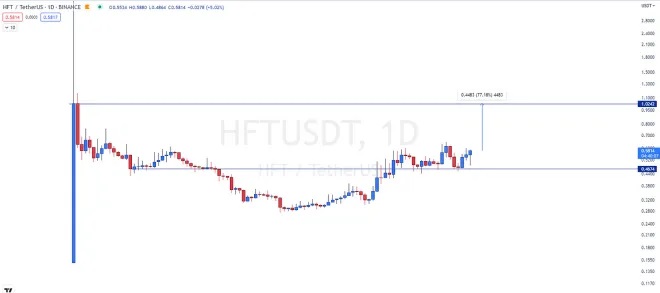
In a different twist, a closely followed crypto strategist is predicting a huge upside for one under-the-radar Ethereum (ETH) altcoin. Pseudonymous analyst Cantering Clark tells his 159,800 Twitter followers that he has his eye on Hashflow Token (HFT).

The last tickerless chart I shared did a 3x this week. I have been building a spot position in this one patiently because the setup is looking like it has quite a move ahead of it. Three things in its favor.

New coin and new chart effect.

Not microcap but not overweight already.

Low unit bias.

Although, Cantering Clark initially shared a tickerless chart, he eventually unveiled the name of the low-cap altcoin on his radar. “This is not a microcap but smaller never the less so be mindful, but HFT looks like it is going to push much higher before what is probably a long corrective re-accumulation period. I am long.”

Hashflow is the 262nd-ranked crypto asset with a market cap of $110.87 million. At time of writing, HFT is trading for $0.62, up more than 20% in the last 24 hours. Looking at the analyst’s chart, he believes HFT could rally to as high as $1.02. The blockchain project recently announced a roadmap for 2023, which includes plans to launch the Hashverse, Hashflow’s gamified, storyverse-driven decentralized autonomous organization (DAO) that allows users to stake tokens, complete quests and earn non-fungible tokens (NFTs).

Hashflow is built on the Ethereum network for interoperability, zero slippage and miner extractable value (MEV)-protected trades. Decentralized exchanges (DEXes) traditionally rely on automated market markers (AMMs) to enable on-demand trading of assets, but Hashflow uses a request-for-quote (RFQ) model that allows for professional market makers to manage liquidity pools. Next, Cantering Clark says a key price range for Bitcoin ($BTC) is around $22,200, where he notes that the king crypto could either find resistance or break through it with momentum.

Coca-Cola Reports A Surge in Revenue in the Fourth Quarter, Beat Analysts’ Expectations

0

Giant beverage company Coca-Cola in its quarterly report, witnessed a surge in revenue in the fourth quarter, beating analysts’ expectations.

The company whose share price rose 1% in premarket trading, disclosed that its recent increase in revenue was as a result of increase in the prices of its drinks.

Coca-Cola reportedly raised prices to offset inflation and said it didn’t affect demand for its drinks during the fourth quarter. Pricing and the mix of beverages contributed 12% to revenue growth, while concentrate sales rose 2%.

But those higher prices have hurt demand for coke products like simply Orange Juice and Fairlife Milk. Coke revealed that its unit case volume, which strips out the impact of currency and price changes, fell 1% in its fourth quarter.

The Zacks Consensus Estimate for the company’s fourth-quarter revenue was pegged at $10.01 billion, suggesting 5.7% growth from the prior-year quarter’s reported figure.

The estimate for the company’s 2022 revenue was pegged at $42.9 billion, suggesting 10.9% growth from the prior-year quarter’s reported figure. For 2022 earnings, the consensus mark for earnings was pegged at $2.48, suggesting growth of 6.9% from the year-ago quarter’s reported figure.

Coca-Cola reported 45 cents earnings per share, the same as Wall Street expectations. The company’s revenue rose to 7%, reporting a revenue of $10.13 billion, compared to the $10.02 billion Wall Street expectations.

The beverage giant reported fourth-quarter net income attributable to the company of $2.03 billion, or 47 cents per share, down from $2.41 billion or 56 years per share a year earlier.

Coca-Cola said its net income fell 16% to $2 billion for the October-December period, partly because the strong U.S. dollar impacted overseas profits.

Unit case volume was flat in North America and slipped 5% in its Europe, Middle East, and Africa segment. Chief Executive Officer of the company James Quincey said last quarter that European consumers were changing their behavior in response to soaring inflation.

Both Coke’s sparkling soft drinks segment and its water, sports, coffee, and tea division reported flat volume for the quarter, although there were some bright spots. Coke Zero Sugar’s volume climbed by 9%, and its coffee business saw a volume increase of 11% as the company expanded its Costa brand.

The weakest spot was Coke’s juice, value-added dairy, and plant-based beverages segment, which saw its volume shrink by 7% in the quarter. The company said the suspension of its Russian business weighed on the division.

For 2023, Coke projects comparable revenue growth of 3% to 5% and comparable earnings per share growth of 4% to 5%. Wall Street was forecasting revenue growth of 3.9% and earnings per share growth of 3% for the year.