DD
MM
YYYY

PAGES

DD
MM
YYYY

spot_img

PAGES

Home Blog Page 4419

Bitcoin NFTs Trades for Six Figures amid OTC Trading on Spreadsheet

0

Lately there has been buzz on the Ordinals Bitcoin NFTs. Rodarmor, a prolific blockchain developer created the ‘Ordinals’ on Satoshi script a week ago on the Bitcoin network, presumably many believed Bitcoin is meant for processing payments and not as fungible tokens but through this new discovery, NFTS can now be inscribed on the chain with many notable derivatives such the original CryptoPunks and Bored Apes launching on the Ordinals protocol with high trading volumes, floor and bidding price.

The average price of a floor CryptoPunks NFT on the Ethereum mainnet is around 60 Eth or $90,000 but it is way more expensive on the Bitcoin chain, with Bitcoin Punks trading around six figures as most trades are executed on Spreadsheet via OTC trading.

Interestingly, Leonidas an NFT Historian wrote an extensive Twitter thread explaining why he ventured into the Bitcoin NFTs narrative and what prompted him in spending 3.2 BTC (45 ETH) or $73,600 on Bitcoin Jpegs.

To put it simply, I’ve fallen in love with the ordinals protocol. It’s elegant, opinionated, and strives to bring digital objects to Bitcoin in a way that honors its ethos and values. I got to meet the founder back in September and am so proud of him. For those who don’t know, every Bitcoin can be subdivided into 100,000,000 satoshis.

Recently, Rodarmor found a way to associate a unique number with every satoshi so that they can be individually tracked and transferred. Then he took it a step further by developing a method for inscribing arbitrary data onto a satoshi. When you put all of this together it means that you can store any content that you want directly on Bitcoin and then transfer it to others. Want your art on Bitcoin? Just inscribe the JPEG. What about a song? Just inscribe the MP3. A website? Just inscribe the HTML. A video game? No problem, somebody already inscribed a fully functional game of Doom which you can play.

So far there are ~38,000 inscriptions and this number has been roughly doubling every day for the past week. However, interacting with the ordinals protocol is currently cumbersome as you need to run a full Bitcoin node and have minor technical skills.

But this is changing quickly, which is part of the reason why I’m so excited about the future of ordinals. An organic ecosystem is forming and IMO it is inevitable that the infrastructure needed to onboard several orders of magnitude more people will get built out. Explorers, collections, inscription tools, wallets with a GUI (currently only has a CLI), and trustless marketplaces with a GUI (currently all trades are OTC) are all actively being developed.

This brings me to the Bitcoin Punks. As a Historical NFT collector, my thesis is that value will accrue asymmetrically to the collections that are early. I’m not interested because they are punks (they could be anything) rather I care because they are low number inscriptions. Bitcoin Punks are 10,000 of the first 34,400 ordinal inscriptions. As a collector, this narrative resonates strongly with me.

My theory is that the more successful the ordinals protocol becomes, the more inscriptions there will be and thus the more rare and desirable the earliest inscribed collections will become. I think some people are missing the point by paying attention to the art/collection. In the future, quality will matter a lot more, just like it does for Ethereum, however, the ordinals market is currently predicated on low inscriptions having long-term collectible value. I believe that collectors will value the permanence of having art backed up forever to the Bitcoin blockchain, and think the high-end cryptoart market will eventually come to value what the Bitcoin brand adds to a collection but for now it’s all about low inscription numbers.

However, Davis KOL an ardent Bitcoin and Crypto Experimentalist at BasedKarbon, is not really happy with the Bitcoin NFT meta currently buzzing Twitter, he noted Bitcoin NFTs priced in eth, based on eth NFTs, and being wrapped in emblem vaults to sell on opensea has to be the stupidest nft meta we’ve had so far;

Priced in eth and emblem wrapped wouldn’t be that dumb if the projects were original. I’d understand the need to make the experience accessible and familiar. But copies of punks, a ripoff of a failed punk derivative, moonbird, Clones kinda clear which group is doing these gifts.

Bitcoinooooors have spent the last years alternately mocking NFTs and trying to get ETH regulated out of existence ex-post facto as a security, and now they want all the ETH NFT folks to basically seed them on their development of a Bitcoin NFT architecture.

Polygon Surpasses Dogecoin on Market Capitalization

0

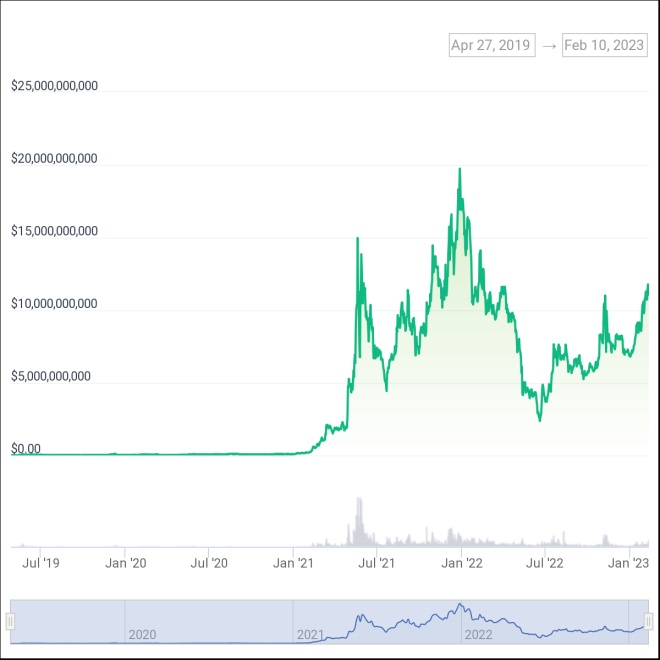
Polygon [MATIC] is continuing to increase in value despite the ongoing crypto bear market. The project’s native token MATIC has surpassed Dogecoin (DOGE) in terms of market cap and is now the ninth largest crypto token.

MATIC’s market capitalization is currently at $11.52 billion, according to data from CoinGecko. That’s higher than Dogecoin’s (DOGE) with a $11.33 billion market cap. This the highest market capitalization MATIC has seen since March of last year.

Polygon is also not far away from taking over Cardano (ADA), which currently has a $12.72 billion market cap. MATIC’s all-time high market capitalization is almost $19 billion, which it reached at the height of the last crypto bull market in December of 2021. Despite the harsh crypto winter that saw multiple tokens reach their all-time lows, MATIC is still up over 40,000%, from its all-time low of $0.003, and is currently trading at $1.28.

While there are lots of reasons why MATIC has been so successful in holding its value over the past year’s, the rumors of its zkEVM scaling solution launching soon on Ethereum mainnet have probably contributed to Polygon’s recent success the most.

Polygon has been recently hyping up its zkEVM scaling solution, something that very few teams are currently working on. That’s because zkEVMs are notoriously hard to develop. ZkEVM stands for zero-knowledge Ethereum Virtual Machine and is considered to be the holy grail of Ethereum scaling. zkEVMs improve throughput and decrease gas prices by computation and storage off-chain and generating zero-knowledge proofs to verify the validity of off-chain transaction batches. There are currently no zkEVMs that are deployed on Ethereum mainnet but Polygon’s co-founder Sandeep Nailwal tweeted on January 17 that the team developing Polygon’s zkEVM has set a launch date and that it’s “soon.”

On top of that, Eduardo Antuña, Polygon zkEVM’s core developer, on Thursday said that Polygon has managed to increase its zkEVM’s proving time and costs. Really excited about our results on the Polygon zkEVM Prover, Batchproof 2:30 (2min soon) ~500 or ~250 ERC20 tx/batch On a spot m6id.metal prover’s cost: $0.064/proof ($0.0001/tx) The fastest ZK tech and the first production-ready zkEVM. The prover is no longer a bottleneck. All of this indicates that Polygon’s zkEVM, at least in theory, will soon be deployed on Ethereum mainnet. That would be an achievement like none other and potentially take MATIC to new highs.

The Next Two Pillars for Success in Africa’s Fintech Sector

0
Fintech community will have some adjustments

Africa is moving into the next phase of the fintech universe. Yes, merely building products and services to enable people and companies to receive and send money, will not deliver outperforming-value to stakeholders (investors, merchants, communities, users, etc). The future of African fintech will be anchored on two pillars, besides the requirements of seamless transfer of funds: ecosystems for merchants and partnerships.

On the ecosystems, you must offer, besides the ability to receive/send funds, tools to help your customers run their business operations. And those tools include bookkeeping, invoicing, domain training, and other adds-on. Indeed, besides helping them move money, you need to help them also make money!

For partnerships, it is hopeless to think you can do it alone. To thrive as a fintech, you must partner with others in your sector and outside your sector. For example, you can partner with a payroll company to integrate its APIs so that your merchant can also do payroll within your platform. The same goes with specialized training which can help the merchants do better in the market. Of course, there is another dimension of partnership which involves integrating with companies in other countries to expand your reach.

In my keynote during  an Africa Fintech Festival, in Uganda, I explained fintech as “the new growth operating system in Africa” because at the end of all in the market, it is about money, with the ability to pay and be paid.

The destination: this video explains.

n this videocast, I discuss the need to build a truly pan-African digital remittance/transfer banking product which is agnostic of location or currency in Africa. None of the products we have today meets that standard. Largely, I envisage a situation where all you need to buy and sell across Africa is one bank account in just one African Union country. With that, you do not have to even think about the specific currency of that account as technology will seamlessly make it possible to access other African markets for payments, transfer, etc. The banks or fintech companies must still comply with all regulations related to international transfers, forex, etc. The only difference is that customers will not see them as they will be hidden with technology.

From “there was nothing we did not try” to focusing on “what we know best” – perspectives from Aliko Dangote

0

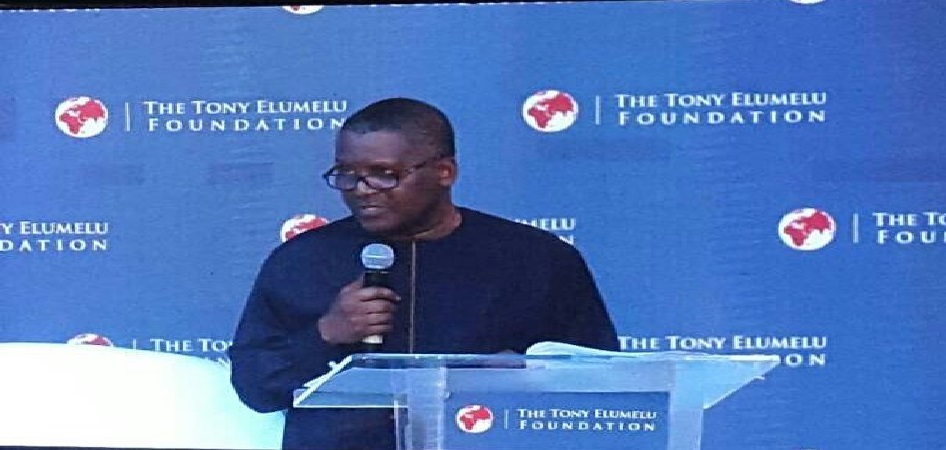
It was a weekend of entrepreneurial carnival. Chairman Tony Elumelu had asked me to fly from the United States to speak a day before. Here, Aliko Dangote is making a long  presentation, chronicling his experiences in business. The Vice President of Nigeria (Prof Osinbajo), Chairman Jim Ovia of Zenith Bank, and  leaders of corporate Nigeria were at the event. As Dangote spoke, I took note.

Dangote dropped many lines: “I tried banking but was not as lucky as Oba Otudeko [former chair of First Bank of Nigeria’s parent company FBN Holdings]”. And he added:  “there was nothing we did not try”.  Then,  when Dangote could not find success in banking and some other areas he journeyed, he returned back to building an industrialized conglomerate which according to him was “what we know best”… One of those key areas he focused on was cement production.

As he spoke, I summarized everything under a strategic vision of accumulation of capabilities: building moats which make it harder for competitors, by improving efficiency across all segments of operations. And when he finished, I concluded: Ovia, Otudeko and Elumelu had accumulated capabilities in banking with moats to defend their banking castles; Dangote found those moats impenetrable with his Liberty Merchant Bank, Dangote Capital, etc. He gave up, and decided to deepen his moat in the cement business to make it also impenetrable for others. Case for organizational competitiveness and strategy!

You can read my long note on this topic here.

Comment on Feed

Comment 1: Warren Buffet would say ” I never invest in anything that I don’t understand”

Dangote tried investing in the banking sector but he failed, he tried pasta and could not succeed either, he then used the lessons learnt to strengthen what he understood better and he built for himself a strong foundation and wall impenetrable just like that of his competitors in the pasta(noodles) and banking sector.

Understanding your business and investing in “what you know best” is one of the secret ingredients to succeed as an entrepreneur. Thank you Prof Ndubuisi Ekekwe .

Comment 2: When you fail, it’s because you are incompetent and clueless, and when you succeed, it’s because you are protected by the government, and you receive preferential treatment.

However things turn out for you, just know that you will always have critics, the world is not a very nice place. But in all you do, work hard to be successful. It’s better to be accused of succeeding because of preferential treatments, than being a failure, only to be dismissed as ne’er-do-well.

Comment 3: Businesses try to differentiate themselves with a competitive advantage, but most never find or sustain one. A rare few will discover an “unfair” competitive advantage. The best of the best create what we call the “ultimate unfair competitive advantage.”

But no company begins with the ultimate unfair competitive advantage. It emerges in stages with the accumulation of data, the advancement of analysis techniques, and the creation of novel applications.

Comment 4: Where are the promoters of “monopoly theory”? People hardly ever believe that Dangote failed in some businesses. Instead they despise his successes and brand it “monopoly from government support”.
Dear Prof Ndubuisi Ekekwe thank you for teaching us that if someone is doing better than us in business, there’s something he knows that we don’t know. I am learning from you all the time.

Comment 5: Indeed. The moat is an often overlooked element of business and strategy formation. Some might confuse it for a “value proposition” but they are quite different.

Simply put, a value proposition is an element that a business offers its customers. Whereas a moat is what protects a company from competition. So one being customer focused and the other being competition focused.

Comment 6: Generally speaking, finding out what your rivals are up to is one of the trickiest tasks of running a business. Most companies or organizations gather intelligence by talking to their salespeople and customers and by reading industry publications. Collecting promotional literature and putting competitors to an actual test are ways to expand the scrutiny.

Moreover, people aren’t stupid. If you’re doing something right and it works, then sooner or later they’re going to figure it out and come after you. Can your people respond? Can you keep innovating? Can you stay ahead? These are the real questions you should be dealing with.

My Response: “If you’re doing something right and it works, then sooner or later they’re going to figure it out and come after you.” – absolutely. They can even hire your team. The key is having that moat to protect that company.

Crypto Weekend Roundup

0

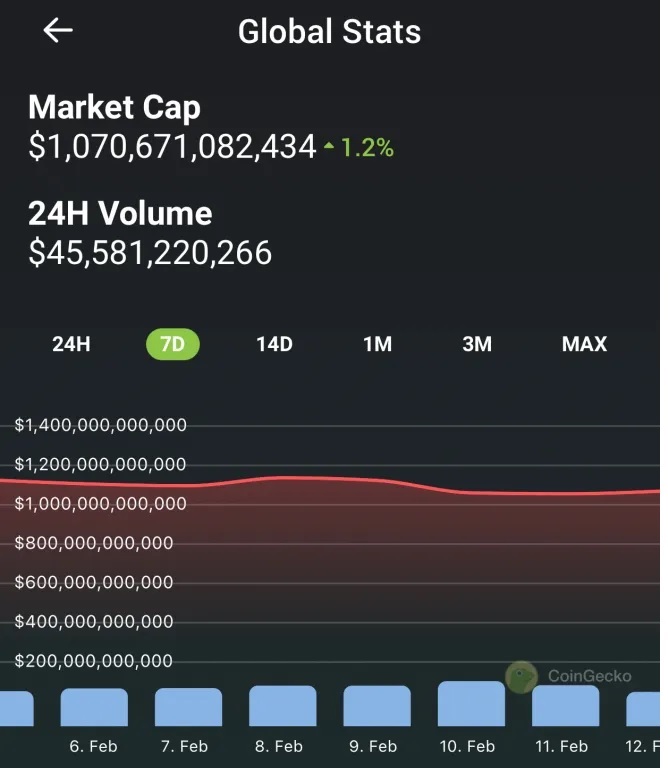
The Crypto Industry during the week plummeted along the red zone with the world leading digital assets Bitcoin and Ethereum losing grasp on its $24,000 and $1,700 high over last weekend with the price of Bitcoin and ETHEREUM currently trading at $22,900 and $1535 respectively. The circulation of Institutional funds witnessed a decline owing to the Security and Exchange Commission overhang on Crypto Staking Services which spurred many CEXs to discontinue providing the services. The global crypto market capitalization is seated at $1.Trillion up 1.2% in the 24 hours zone but down 2.2% on the seven days global chart.

Ethereum Shanghai Fork

$25B in Ethereum is about to be unstaked as soon as the Shanghai upgrade goes live. A recent report by JPMorgan has revealed that the upcoming Shanghai upgrade, slated to be applied in March, might bring more capital to the network. The investment bank estimates that Shanghai will bring Ethereum’s stake percentage to the number of other popular proof of stake networks that have more than four times the ether currently staked.

Assuming the staking rate converges over time to the 60% average of other large networks, the number of validators could increase from $0.5 million to$ 2.2 million and the annual yield in ETH would fall from 7.4% today to around 5%.

14% of the issuance of ether is currently staked, and cannot be withdrawn until the Shanghai update is finally applied. Other protocols, like Solana and Cardano, have approximately 70% of their issuance staked, according to data from Staking rewards.

Kraken is about to exit its Crypto Staking Service due to SEC Overhang

On Thursday, the SEC and Kraken, one of the largest crypto exchanges globally, announced a settlement under which Kraken agreed to discontinue its staking-as-a-service program in the U.S. and pay a $30 million fine. While Brian Armstrong’s umpire Coinbase Exchange does not seem to see an immediate threat to its Earn program as a result of Thursday’s settlement, our sense is that the market believes recent SEC action is not a one-off event. Accordingly, the bigger question for Coinbase and its peers moving forward will be around what other products and services the agency may seek to regulate next, with near-term headline uncertainty spooking investors,” the analysts stated.

ZK and AI Trends

How to make crazy return in crypto is by identifying trends. Just like the AI trend, here is another fresh trend coming up on crypto now. Name is “Zero Knowledge Proof Coins” (ZK) . In the coming days, coins on this section will see some pump.

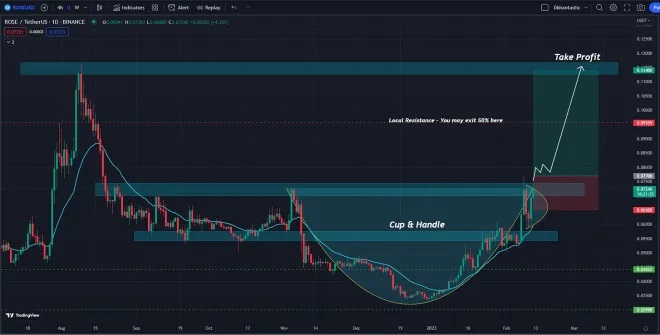
During the week, AI and ZK— alike tokens did amazing run, among the Layer-2 and ZK coins this one coin $ROSE from Layer-1 caught my attention. It successfully formed Cup and Handle formation which indicates a bullish trend.

It will face a small local resistance and if the market condition is good we may soon reach the profit target. Searching for lowcap with great utility is the best way to maximum profits in since ZK trends is making wave.

Binance Upgraded Proof of Reserves

Binance recently upgraded its Proof of Reserves system with zk-SNARKS. Over the last few months, Binance’s dev team has been hard at work building advanced proof-of-solvency solutions. Such tools have become critical for centralized crypto exchanges amid the crisis of trust that engulfed the industry in the wake of the FTX collapse. User funds stored on Binance are backed at a 1:1 ratio, plus reserves, and finding a way to prove this to the public seamlessly has become a major part of Binance’s plan to restore industry trust.