DD
MM
YYYY

PAGES

DD
MM
YYYY

spot_img

PAGES

Home Blog Page 4441

Year 2022 Marked The Worst Year on Record For Crypto Hacks

0

According to a recent analysis from Chainalysis, the year 2022 was the biggest year ever for crypto hacks, with $3.8 billion stolen from cryptocurrency business, up from $3.3 billion in 2021.

March and October witnessed huge spikes in hacking activities, with the latter becoming the biggest single month ever for cryptocurrency hacks, as $775.7 million was stolen in 32 separate attacks.

Reports reveal that on October 6, hackers hit a blockchain associated with the world’s biggest crypto exchange Binance, making away with $566 million in BNB. The exploit targeted the cross-chain bridge BSC Token Hubs, as these hackers essentially conjured tokens out of nothing using artificial withdrawal proofs.

It was first reported that $100 million was hacked, and then the number went up drastically, which saw about 2 million tokens of BNB worth about $570 million withdrawn.

Binance co-founder and CEO Changpeng Zhao commonly known as “CZ”, announced that the hack happened on a cross-chain bridge where users transfer digital assets from one blockchain to another. The hackers were able to create 2 million BNB tokens out of thin air.

The attacker was able to exploit a vulnerability in the Binance Bridge, and they sent themselves one million BNB tokens twice in a row. He revealed that the hack happened because of a bug in the smart contract where hackers could forge transactions and transfer funds into their wallets.

Also, crypto investors lost nearly $4 billion to hackers in 2022, which saw early crypto investor and the general partner at Fenbushi Capital, Bo Shen lose $42 million in a wallet hack.

The cryptocurrencies stolen from his wallet include USD Coin, Tether, Ether, and Bitcoin, which occurred as a result of the compromise of the wallet’s recovery phrase.

Most of the hacks that occurred in 2022, stemmed from cross-chain bridge protocols specifically. Cross-chain bridge protocols are technologies that allow for the transfer of assets of information between different blockchain networks.

In the last crypto hack reported, it was revealed that decentralized finance (DeFi) protocols in the year 2021 became the primary target of crypto hackers, which intensified in 2022.

Defi, which is one of the fastest-growing, most compelling areas of the cryptocurrency ecosystem, largely due to its transparency, accounted for 82.1% of all cryptocurrency stolen by hackers, a total of $3.1 billion, up from 73.3% in 2021. And of that $3.1 billion, 64% came from cross-chain bridge protocols specifically.

According to the report, the majority of the digital funds stolen were from cross-chain bridge applications. Also, reports reveal that North Korea-linked hackers such as those in the cybercriminal syndicate Lazarus Group have been by far the most notorious cryptocurrency hackers over the last few years.

In 2022, they shattered their records for theft, stealing an estimated $1.7 billion worth of cryptocurrency across several hacks we’ve attributed to them. Most experts suggest that the North Korean government is using the stolen funds to fund its nuclear weapons programs.

Wallet hacks and digital theft are significant concerns for individuals and businesses who transact with cryptocurrencies. As a result of its meteoric rise in value over the years, the cryptocurrency market has caught the eye of both legitimate investors and malicious hackers.

Hacking has become a common challenge in crypto, while different players in the crypto industry continue to evolve and innovate new ways to curb these thefts, crypto traders are being advised to desist from storing all their single assets in a single wallet. To be on the safe side, they can decide to use one wallet for transactions and one wallet for saving, to mitigate their losses in case a hack occurs.

Also, crypto traders/ investors are advised to be cautious about clicking any suspicious links or emails, as Cybercriminals often use this method to steal cryptocurrency from those who are not aware of this method.

Tekedia Mini-MBA Begins Tomorrow – Pick a Seat Here

0

Greetings. The academic festival begins tomorrow at Tekedia Mini-MBA. If you want to join, now is the time to get the ticket. I will open it tomorrow with the Mission of Firms and Building Category-King Companies.

What is your vision? What is your playbook? How is that leadership ascension coming? Etc. At Tekedia Mini-MBA, we will co-learn to advance professionally and accelerate progress in firms, communities.

Pick a seat here.

The CryptoSphere is an Event Driven Market

0

Understanding that the Crypto-Sphere is an event driven market which hedges to spot narratives, catalysts, potential gems early before it gains wide traction. Being or positioning early on a project is the greatest skill a Crypto degenerate should possess. Let’s dissect how to use the Twitter App and other tools to find or scout for early crypto gems.

Information asymmetry is the best strategy you can have in this event-driven market. You’ve got to make the strategy yours too, evenalthough there are tons of informational tools. Twitter as a social media holds the most important information on Crypto as projects drop product nuggets timely there.

Here are four strategies I’ve highlighted and have proven to work consistently over time in positioning early in the Crypto space.

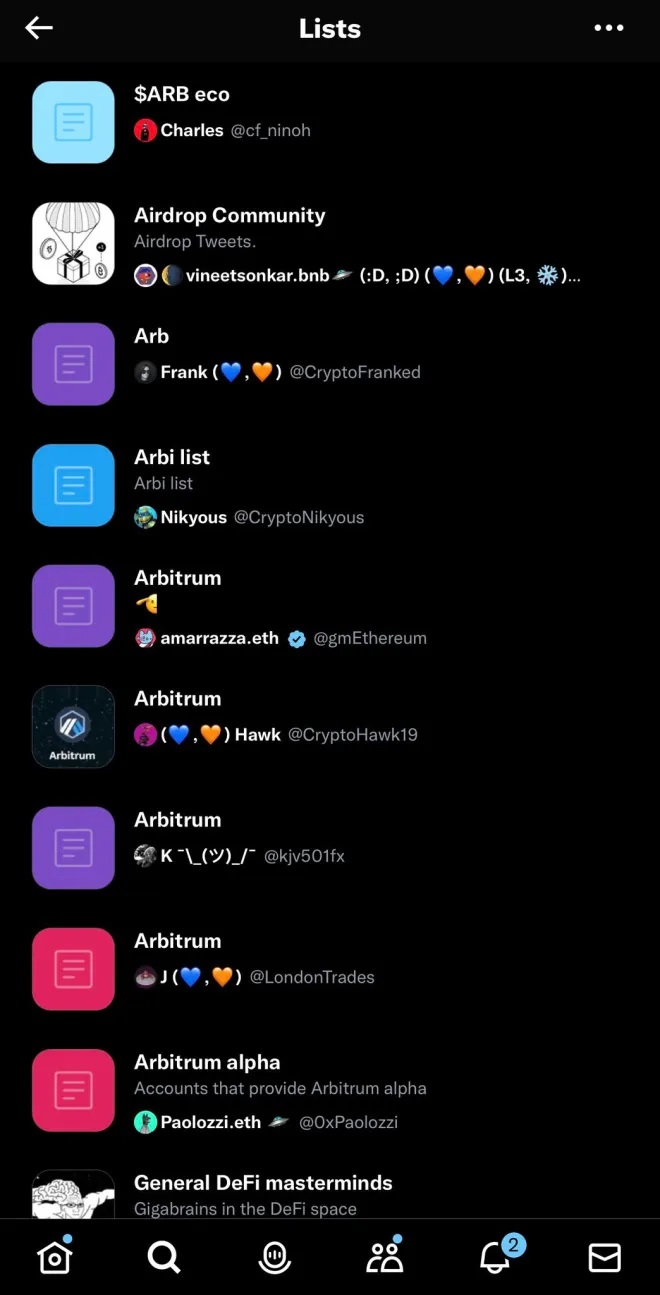
Twitter Lists

Your Twitter lists or the list of your favorite influencers in the crypto space are home to a lot of credible information and catalyst. They are organized and contain other accounts that they follow or they get informational materials from.

The lists get you an organized view of the Projects they’re interested in; Narratives in trend or they expect to come; Potential catalysts to a particular project which you get to be early on it.

CASH-TAGS ($)

Cash-tags are names of tokens that carry $ prefix. They represent a token’s identity. E.g $BTC, $ETH or $Matic. Searching for a particular cash-tag on Twitter can open doors to more cash tags of various other tokens. They could either be of the same narrative, or hint at the next potential Gem.

Whichever it may be, you get to see them much more earlier, you also have to understand the concept of DYOR. Different projects may have similar cash-tags— A project may also have a dual token system.

Venture Capitalists Page

Venture Capitals are a group of investors in the cryptocurrency space, e.g. BinanceLabs, A16Z et al. They talk about projects they’re incubating or actively investing in, they are catalysts of their own.

CEX Announcement Page

CEX- Centralized Exchanges are primary source for transacting cryptos seemingly; they actively post news updates, listing information, industry’s trending market movers for example Gateio Startup, KuCoin Updates, Binance Feed et al talks about; New listings; Upcoming events Buy competitions; and Giveaways. Central Exchanges serve as catalysts, especially CEXs with a large customer base and Venture connections.

Binance Acquires South Korea-Based Crypto Platform GOPAX

0

Binance, the world’s leading cryptocurrency exchange, is returning to South Korea by acquiring a majority stake in the troubled South Korea-based platform GOPAX, this is coming after months of speculation, the Crypto Exchange has confirmed to operate again in South Korea. Yibo Ling, Binance chief business officer, noted that Binance has acquired a “meaningful” equity position at Gopax, without disclosing the terms of the deal.

The funding for the acquisition came from a finance-initiated investment project known as the Industry Recovery Initiative, to which Binance pledged $1 billion. CZ- Binance noted that;

The Industry Recovery Initiative was created to support promising companies that were negatively impacted by the events of last year. We hope that taking this step with GOPAX will further rebuild the Korean crypto and blockchain industry.

Gopax was one of the victims of Genesis Trading which filed for Chapter 11 Bankruptcy. Gopax exchange was facing a shortfall of $471M which was locked out, thus leading to bankruptcy. Binance?exchange as committed, used the IRI to save the Gopax investors.

However, Binance exited the South Korean Cryptocurrency market two years ago due to low usage and regulatory issues, Binance returning and acquiring a majority stake in Gopax is a major milestone in the crypto world. Can’t wait to see the impact th investment in Gopax will have on the market. With the new capital, Binance plans to enable client withdrawals and interest payments for the GoFi performance product.

Press release from Binance

Binance, the world’s leading blockchain ecosystem and cryptocurrency infrastructure provider, has invested in GOPAX, a leading South Korean cryptocurrency exchange licensed to provide fiat-to-crypto services to customers, as part of its Industry Recovery Initiative (IRI).

In November 2022, GOPAX halted the withdrawal of principal and interest payments in its decentralized finance (DeFi) service GoFi as a consequence of the upstream challenges experienced by Genesis Global Capital, LLC. Since then, GOPAX has been working closely with local regulators and industry partners in an effort to raise funds to make affected users whole.

Binance recognizes GOPAX’s commitment to its users and shares its goal of raising user protection standards by fostering a sustainable and responsible environment for cryptocurrency investments and trading in South Korea. As part of this transaction, Binance will inject capital into GOPAX with the objective of securing in full any potential GoFi users’ withdrawal requests against all staked deposits, including interest.

Binance will also work closely with GOPAX to improve user education and blockchain awareness through Binance Academy, an open access blockchain and crypto learning portal that provides free educational resources to users. Binance is committed  to collaborating with the South Korean regulators and virtual asset stakeholders to explore how Binance can leverage its technology and liquidity to support the local ecosystem.

Changpeng “CZ” Zhao, founder and CEO of Binance, said, “Binance has a responsibility to protect our users, as well as our industry. The Industry Recovery Initiative was created to support promising companies that were negatively impacted by the events of last year. We hope that taking this step with GOPAX will further rebuild the Korean crypto and blockchain industry.”

Launched at the end of 2022, the IRI is a co-investment opportunity for organizations wishing to contribute to the future of Web3 by supporting industry players negatively impacted by market forces. Select organizations must show a dedication to innovation and long-term value creation, have a clearly delineated and viable business model, and focus significantly on risk management. In addition to the financial support, the IRI also provides recipients with a comprehensive support plan to help them build a stronger organization.

A Simple Reconfiguration for Nigerian Bank Transfer Failures in POS, ATMs, etc to Disappear

2
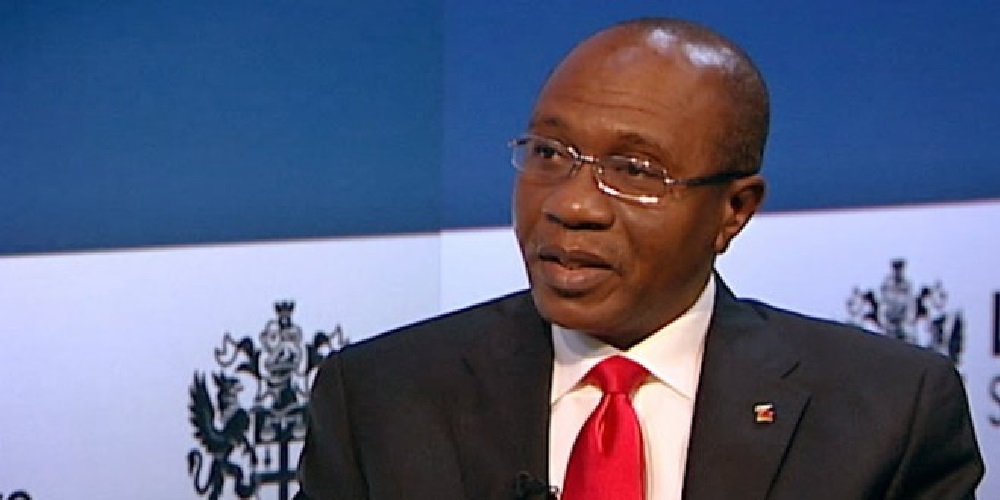
Godwin Emefiele (CBN governor)

How your bank configures its ATM systems can help you model the trust factor in the land. In Nigeria, the bank debits you before the ATM dispenses money. If the seconds between debiting you and dispensing money, a technical glitch happens, you will go home with no cash even though you have been “paid” according to the bank’s general ledger.  So, you need to return to the bank hall to clear it up. That happens in POS terminals: the payment fails with the merchant only to notice later that you were actually debited. In Nigeria, it is Debit and then Pay.

In the US, they actually “lock” your money, then pay before they debit you, making sure under no circumstances would you be debited with no dispensing of cash. But they have something working for them: they have access to your credit file, and that means even if they have paid and you do not have cash, you cannot run away; they will mess up your credit. 

Bank transfers via ATMs, POS, etc are failing in Nigeria. In this piece, I explain how we can fix this paralysis. Simply, move from our current system of debiting before releasing cash or value, to one that follows “lock” value, release value to the recipient and then debit the originating account. 

The implication is clear: you will never visit a restaurant where the owner tells you that your debit card payment failed only to receive a debit alert from your bank in 4 hours. Why? Before the bank can debit you, it has to have established that the recipient has received the value. 

Yet, technically, there is no way they can pay you when you have no cash because the systems that check balances and release cash are entwined. And 99.99% of the time, the tech does not fail due to many layers of warehousing and redundancies built in. Everyone is happy and technical glitches do not cause bad customer experiences.

So as Nigeria struggles with the current mess where banks debit and do not deliver value to recipients, a simple solution could be to reconfigure ATMs, POS and evolve how we do business: “lock” value in originating account, release value to destination and debit the originating account. If you cannot lock value, then, do not follow the subsequent phases. And if you lock value, irrespective of anything, including technology glitch, go ahead and release value. Later, you can debit the account.

The failures we are experiencing are not just about tech. The Service Level Agreements with the customers are not well designed and that requires another stack layer.

They have to move higher to technology stacks if they want to prevent that nightmare experience where after customers have eaten in a restaurant, and try to pay via POS, and are informed that the payments have failed, only later to receive successful debit alerts after they have left the restaurant (after substituting with cash payment), on the same failed POS payments.

In the US, they lock the value, and give credit to the restaurant (the merchant), and then debit the bank customer. In other words, there is no way you can have a failed payment for a transaction that was successfully debited. Once they have paid the merchant, they will debit the locked value later. What this means is that a technology glitch will not affect the sequence of events and at the end of the whole process, superior service is delivered.

Nigeria needs a Lock, Release and Debit sequence to avoid this mess!

Addition: in US banking, there is a PENDING state (you see that in your online account) before any debit as the bank “warehouses” the fund, making sure the payer cannot re-use it. Notice that it has already sent value to the recipient. Once it establishes the recipient has the value, it moves from PENDING to DEBIT. Where it is unable to deliver value, it aborts that process and returns money to the payer. By doing this, it cannot debit you without serving your purpose; a great system design which works irrespective of network speed. This whole thing takes a short time.

Comment on Feed

Comment 1: Dear Prof. Ndubuisi Ekekwe quite a number of Fintechs that offer Agency Banking services have similar functionality in place already. The transaction amount is placed on hold in the customer’s account while the Banks are left to pass manual debit later on. One of the problems of this method is its impact on customer experience; particularly the spike in customer complaints that occur after the manual debits despite SMS notifications with clear transaction description.

However, the actual problem currently encumbering the channels appear to be capacity related rather than methodology.

To improve e-channel related service offering in Nigeria will require developing a conscious road map to drastically improve infrastructure in the chain of services that support these channels.
Case in point using POS: Telcos provide the connectivity for transmitting this data from the POS devices, there is the data traffic that takes place at the payment gateways, there is the data verification and exchange at the switch, data exchange between switch and host (Banks where the accounts are domiciled). Each of these nodes of information exchange needs to ramp up capacity to be able to handle the volume of transactions.

My Response: Sure, but I do not understand why a bank should be posting “manual debits” . If that is the case, that should be stopped. Nigeria has the capacity to build end-to-end closed look system which ensures you ONLY DEBIT after the recipient has value. Note – that happens in seconds. It seems the Nigerian stacks do not have a closed feedback. That has to be fixed.

Comment 1R: Ndubuisi Ekekwe – Prof. I agree that debiting after value has been given can be achieved.

What you are proposing would work in a manner similar to how automated charges are taken from accounts- a service that debit accounts without manual intervention. However, I can confirm to you that such services also fail intermittently. When it does, then the fall back would involve manual debits using uploads.

I still insist that the fundamental challenge has more to do with capacity rather than methodology.

Comment 2:

Ndubuisi Ekekwe What you just explained has been in existence for years in other countries but only applies to international transactions initiated by cardholders in Nigeria.

There is a single and dual message system of processing transactions which 99% of the banks in Nigeria don’t use the dual message for processing local transactions. It involves placing a hold of the fund in the customer’s account and then taking the fund after certain criteria has been met to move funds to the merchant(Pos agent/Bank).

The reason why banks run away from this method is because it is not cost friendly and also it requires a lot of system configuration.

At one point in 2019 the CBN mandated banks/merchant acquirers to apply the dual message system to POS transaction processing but the full compliance was never adopted.

It is something that can be done if we want to. https://www.cbn.gov.ng/Out/2019/PSMD/Circular%20on%20Pre-Authorisation%20of%20Cards%20in%20Nigeria.pdf