DD
MM
YYYY

PAGES

DD
MM
YYYY

spot_img

PAGES

Home Blog Page 4453

The Promise of ChatGPT In Media as Buzzfeed Stock Soars 325%

0

ChapGPT is going to transform many sectors including the media industry; Buzzfeed has a playbook.

BuzzFeed is joining a burgeoning group of tech companies and publishers in embracing artificial intelligence. The media company is relying on ChatGPT creator OpenAI to write copy, enhance quizzes, personalize content and play a role in editorial output, according to The Wall Street Journal. A company representative also confirmed the news to Reuters and The Verge. In an internal memo viewed by WSJ, CEO Jonah Peretti suggested that the technology would be used initially to augment BuzzFeed’s writer-generated content. But in the future, it could “create, personalize, and animate the content itself.”

The company stock soared 200% after it announced that it would partner with Facebook parent company (Meta) and use ChatGPT and other AI systems created by OpenAI, to create and personalize contents: “BuzzFeed shares jumped this week, soaring as much as 200% on Thursday following the news and reports of a deal with Meta Platforms.” That has cumulatively toped 325% increase in days.

Yet, not everyone thinks it will work: some “people are divided on the use of AI, after digital technology publisher CNET recently received flak for using AI to create explainers with factual errors.”

Shares of BuzzFeed Inc (BZFD.O) jumped on Thursday on reports of a deal with Meta Platforms Inc (META.O) and plans to use artificial intelligence to personalize and enhance the digital media firm’s online quizzes and content.

The stock was 19% higher in extended trading, after more than doubling in value earlier in the day as a Wall Street Journal report said it would use ChatGPT creator OpenAI for its content.

[…]

“In 2023, you’ll see AI inspired content move from an R&D stage to part of our core business, enhancing the quiz experience, informing our brainstorming, and personalizing our content for our audience,” BuzzFeed Chief Executive Jonah Peretti said in memo to employees reviewed by Reuters.

New Naira Notes: Banks to Work Saturday and Sunday to Help Customers Beat CBN Deadline

0

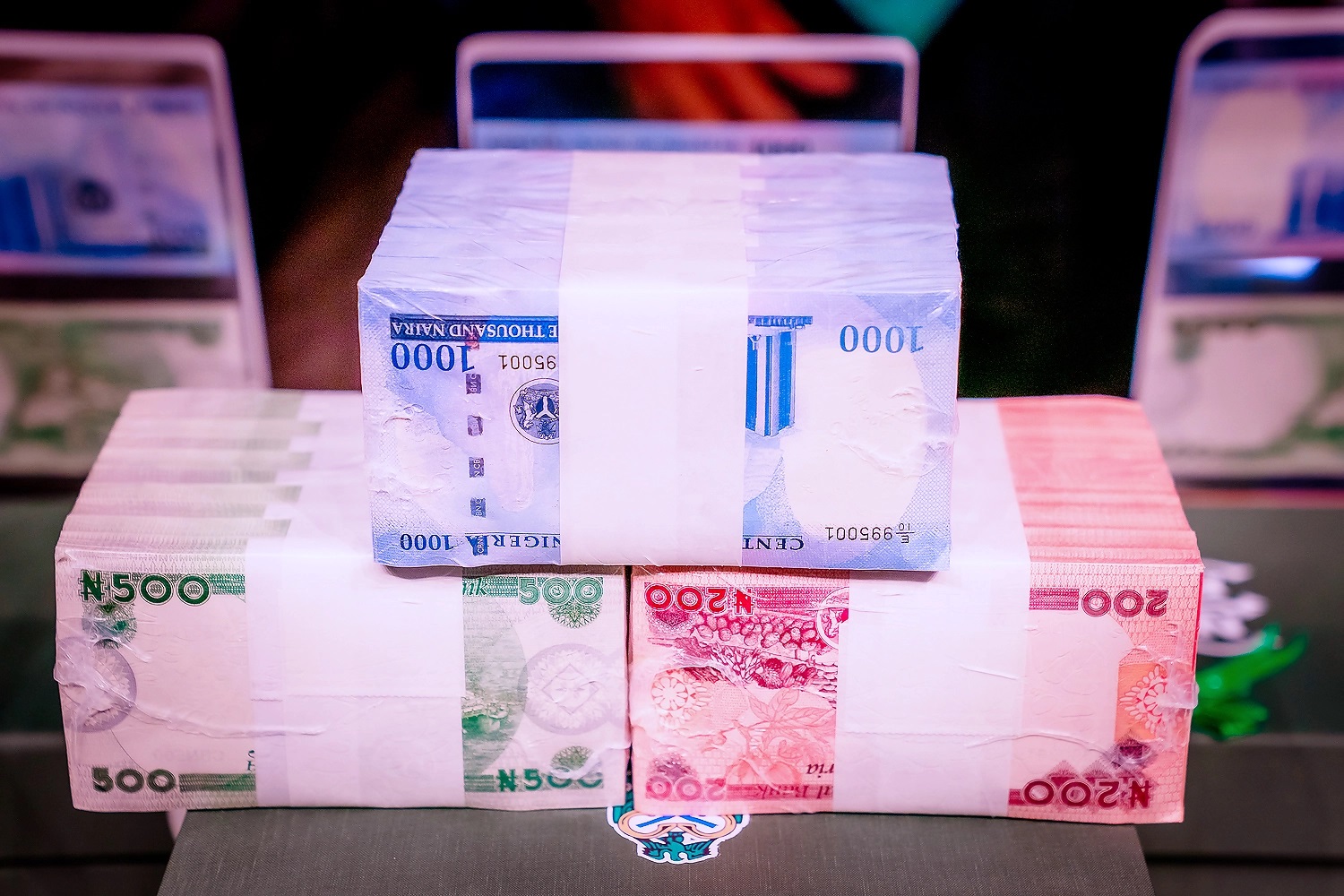
Against the race to beat the deadline given by the Central Bank of Nigeria (CBN) for old naira notes to be returned to banks, making way for the circulation of the redesigned N200, N500 and N1,000 notes, Nigerian banks announced Friday they will run weekend operations.

The banks said their branches nationwide will be open to receive and change old naira notes, in a bid to help their customers beat the January 31 deadline.

The CBN had introduced sensitization campaigns to ensure that rural dwellers meet the deadline. The apex bank has sent agents to remote places across the country to help those who lack access to financial inclusion swap their old naira notes for the new ones.

But the challenge remains in urban areas too, mainly due to scarcity of the new naira notes. As of Friday, some banks ATMs were still dispensing the old naira notes. Many bank customers also said they were issued old naira notes through over-the-counter withdrawal.

These come on the heels of CBN’s reiteration that the deadline will not be extended.

To help those who still have the old notes, the banks said they will be available to receive deposits from customers on Saturday and Sunday.

“In line with our drive to always put You First, our branches nationwide will be open this Saturday, 28 January 2023 and Sunday, 29 January 2023 to receive your old Naira notes from 10 am – 2 pm,” First Bank said in a message to customers, adding that there will be no charges for cash returned or paid into customers accounts within the period.

Similarly, UBA promised that its branches will be in operation to attend to customers this weekend.

GTBank is another commercial bank to make the announcement to its customers. The bank, in a message to account holders, urged them to “save time! Avoid the last-minute rush by depositing your old Naira notes today at any of our branches.”

“Our branches will be open on Saturday January 28 and Sunday January 29, 2023 from 10.00am to 3.00pm to receive your cash deposits only,” it said.

The CBN introduced the new naira notes late last year as part of its efforts to mop up excess old notes in circulation, which is believed to be exacerbating Nigeria’s inflation. The central bank governor Godwin Emefiele lamented that the amount of the old naira notes in circulation rose from N1.4 trillion to N3.2 trillion in seven years.

However, the implementation of the new policy has suffered setbacks due to poor circulation of the new naira notes. Empty ATMs have marked the exercise in its final days, creating concern as Nigerians seek the redesigned naira notes to spend. In a few ATMs dispensing the new notes, withdrawal is limited to N20,000 per day for individuals.

The CBN has accused banks of hoarding the new notes, threatening to sanction anyone caught doing so. Based on this, the major challenge to the implementation of the new CBN’s policy is said to be reliant on the circulation of the new naira notes, not on deposits of the old notes into banks. Nigerians say commercial banks should focus on making sure that the redesigned notes are available to their customers.

Pi Network App Wallet on DAPPs; MoonPay and BitPay Partner on Crypto Payment

3

The Pi Network Core Team is updating its payment option for Decentralized Application [DAPPs] developers. The mobile mining platform will roll out “App Wallet” soon.

Pi Network is a novel cryptocurrency and developer platform that allows mobile users to mine Pi coins without draining the device’s battery. Pi blockchain secures not only economic transactions via a mobile meritocracy system but also a full Web 3.0 experience where community developers can build decentralized applications (dApps) for millions of users.

The App Wallet feature will enable users to make in-app payments in mainnet. Pi Chain Mall’s official Twitter page on January 20th unveiled Pi Network’s plans for the innovative App Wallet integration.

According to the Pi Network announcement, App Wallets are not available for dApps in mainnet yet. However, developers would soon be able to apply for the feature through the “Developer portal.” The update is good news for developers and Pioneers in the industry. Users could pay for services using $Pi when the feature goes live, and developers would receive payments. Further, it may also pave the way for fiat payments in the future.

Pi Network’s Community-Sourced KYC Solution

Nicholas Kokkalis, Co-Founder at Pi Network, stated Pi designed its native KYC solution, Pi KYC, in response to the lack of scalability, financial accessibility, and global reach from other third-party market solutions. Combining scientific and human truths, Pi KYC combines machine automation (AI) with crowdsourced, “hyperlocal” human verification to accomplish accurate and efficient KYC for more than 35 million global members already on its mobile platform.

Machine automation is responsible for image processing, text extraction, fake ID detection, liveness check, and image comparison. Human verification, meanwhile, is processed by pre-approved individuals who check the redacted data of other members’ KYC applications, thus preventing individuals from creating fake accounts.

To solve the problem of scalable KYC, Pi KYC now boasts a robust, self-sustaining human validation workforce in more than 200 countries worldwide (areas that represent about 92.6% of the global population). The network is continually expanding with over 125,000 trusted Validators, validating KYC applications globally, whose efforts are rewarded in Pi.

Beyond preventing spam accounts and keeping out bad actors, Pi KYC helps the network to comply with legal regulation while frictionlessly growing its thriving community. In the age of AI, Pi Network has built a decentralized scalable KYC solution that combines machine automation with crowdsourced human verification for an efficient and responsive solution.

Harnessing the best of both worlds, Pi KYC allows the Network to build a legally compliant crypto community that is optimized for accuracy, privacy, and global accessibility. And best of all — it’s truly human at its core.

MoonPay and BitPay’s Partnership Growing Crypto Payments Processor

BitPay, the cryptocurrency payments processor, has teamed up with crypto payments company MoonPay to strengthen BitPay’s crypto services. Thanks to this collaboration, customers using BitPay to buy crypto will have an improved experience when using the platform.

By combining the resources of these two industry giants, BitPay customers will have near-instant access to a variety of cryptocurrencies. BitPay’s innovative marketplace platform provides buyers with access to different rates, allowing them to select the most advantageous exchange rate at the time of purchase. Also, with a processing fee of only 1%, this service is significantly cheaper than fiat gateways.

BitPay’s business model is attractive to many retailers since it allows them to receive payments in fiat currency rather than the cryptocurrency preferred by their customers.

With the recent MoonPay partnership, customers can also use their favourite payment method like a credit card, debit card, Google Pay, Apple Pay, or bank transfer.

The partnership also allows BitPay users to transact in over 60 crypto assets. In celebration of the new partnership, all cryptocurrency purchases made by first-time buyers will be free of transaction fees for a limited time. MooonPay is now integrated with BitPay, allowing users to buy cryptocurrency directly from BitPay.com and BitPay Wallet app.

Although not quite present worldwide, BitPay does support crypto payments in 38 countries and 8 different currencies. Additionally, the company has shown considerable interest in broadening its international presence. For invoicing, https://www.zintego.com/ works also.

This week, the firm inked a deal with renowned online retailer Jomashop, which houses well-known names in the fashion and luxury industries. The partnership allows customers to shop on the platform and pay for luxury watches using cryptocurrency. Additionally, the company has forged an alliance with Porsche to enable buyers to use BitPay to purchase Porsche vehicles.

The Computer Hacks of Old And Getting ChatGPT to Do More

0

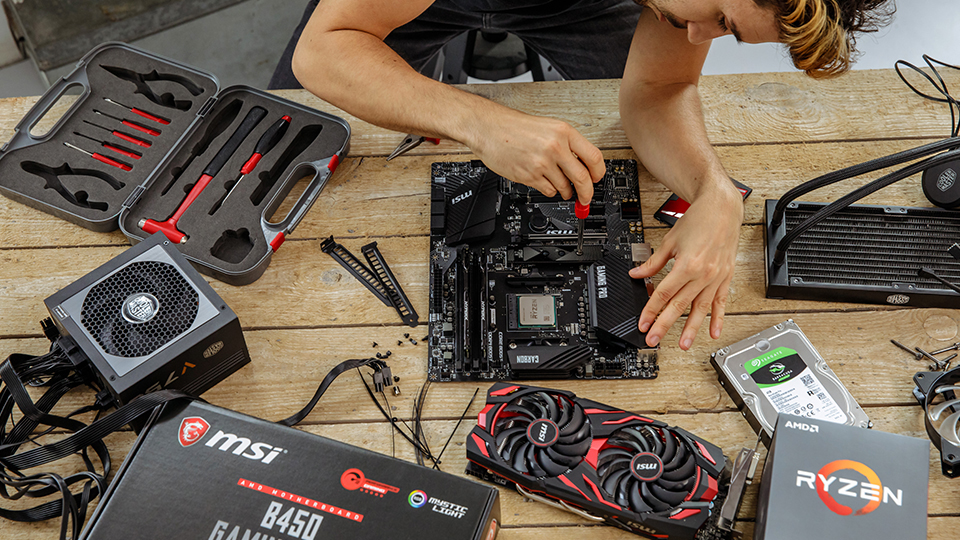
We’re now in the AI-first era, out of just the mobile-first one – and ChatGPT is ahead. That takes me back to those days when one had to buy every piece of device to assemble a computer: the motherboard, RAM, HDD, etc. When all was done and coupled, you needed the BIOS/firmware to come up so that your boot disk could pick from there, making it possible to begin the installation. Few more steps, you will see “Windows is installing…” as you’re now at the operating system level.

Just like that,  you have moved from the machine language to the assembly language to the human-level language. Happily, your applications will begin to run in ways that everyone can understand; the DOS commands are masked and the computer is ready for use.

Fast forward today, you buy a new computer, you charge it for a few minutes to get juice, you press a button and everything happens at once: no RAM fix, no startup disk, and absolutely nothing required. They have masked everything and taken users straight to the human-level language’s application layer.

That takes me to the hacks many are doing now to get ChatGPT to work on many things like WhatsApp. It seems like the decades-old experiences of coupling and installing things in computers. But I will say, wait for 3-4 years, the geeks of today, who have APIs advantages the people of old time did not have, to streamline things.

Yet, be careful with those GitHub things before you install your “future” away!

Update: as I was writing this piece, Intel which was making most of the microchips used during that time came to mind. These days, Intel is struggling:

A slow computer market continues to hurt Intel’s bottom line. The chipmaker lost US$664 million in the fourth quarter and reported about $14 billion in revenue, off 32% from the same period last year and below Wall Street estimates of $14.5 billion. The company is reeling from both a post-pandemic drop in chip demand and a pullback in consumer spending. It’s also struggling to keep pace with competing Asia-based chipmakers, The Wall Street Journal notes. Intel’s stock tumbled 10% after the earnings miss. Intel doesn’t expect a comeback anytime soon, forecasting US$10.5 billion to $11.5 billion in sales for the current quarter. Analysts were expecting US$13.9 billion. (LinkedIn News)

Comment on Feed

Comment 1: Yeah, the advice is awesome : “Yet, be careful with those Github things before you install your” future” away! ”

Apart from the few repositories on Github that offer this integration, a few ready-made extensions have also been made for this purpose. We need to be careful as we accept this advances, else, our data will be at risk!

Comment 2: “Yet, be careful with those GitHub things before you install your “future” away!”
Well stated! Funny though.

Comment 3: I’ve spent the last one month trying to hack my way through this, I was able to integrate it using #Twilio Api as the only available option for now, however in few months time, I’m expecting more market dominator from other api competitor and providers.

The future is suprising sometimes.

How To Integrate ChatGPT With WhatsApp – A GitHub Hypothesis [video]

3

ChatGPT has been buzzing around the technology world for a while now. The Artificial Intelligence [AI] backed chatbot has become a go to tool for many industries and sectors.

ChatGPT is a chatbot which is built on top of OpenAI’s GPT-3.5 family of large language models, and is fine-tuned with both supervised and reinforcement learning techniques, But 99% of people don’t know how to harness its full potential.

Want to integrate the chatbot with your WhatsApp account so that you can access it faster?

Do note that there is no official or direct way to incorporate ChatGPT into your WhatsApp account. However, there are other methods where you can try your hands at. Now, there are essentially two methods through which you can integrate ChatGTP with WhatsApp.

One way is to make a WhatsApp bot and link it to ChatGPT. Another method involves setting your WhatsApp number using a Python script and launching ChatGPT simultaneously. Let’s take a look at both these methods one-by-one.

Method 1

First step involves building a WhatsApp bot. To do so, register WhatsApp Business Programming interface (API) and create a flow for the chat. Then use a chat developer>follow your chatbot and put the API chatbot on your phone.

Next step requires you to get an OpenAI API. For this, make an OpenAI account and visit its programming interface key page. Here, create a secret key.

Third and final step is to use OpenAI API to connect to the WhatsApp bot you created. Do note that there are chances that WhatsApp may end up blocking you, if it did not find the integration genuine. So this step must be done at your risk.

Method 2

This technique was created by a researcher named Daniel. In order to integrate ChatGPT with WhatsApp, download the code from GitHub> Execute server.py in the terminal, followed by a couple of other steps to integrate ChatGPT into your WhatsApp account.

  • Download the code from GitHub

  • Click ‘download zip’ to download the file

  • Next, execute the ‘Whatsapp-gpt-principal’ file in the terminal

  • Execute ‘server.py’ record in the terminal

  • Now, enter ‘Is’ and hit enter

  • Enter ‘python server.py’. Your phone will be automatically configured to OpenAI visit page

  • Next step is to verify that you are a human. Check the I’m a human box

  • Go to your WhatsApp account and you will find OpenAI ChatGPT integrated there.