DD
MM
YYYY

PAGES

DD
MM
YYYY

spot_img

PAGES

Home Blog Page 4457

My individual LinkedIn Journey and why launching 9ja Cosmos changes things.

0

Some of you may have noticed a change in my behaviour and content on LinkedIn recently. I’ve had a few DMs about impact from various connections.

Surprisingly most comes from people who tune into my content from time to time, but I actually don’t know well, and never met.

So I am going to set out what has had to change and why.


I’m over twelve years on LinkedIn.

My primary interest used to be finding new ‘intrepreneural’ salaried leadership opportunities in the West African Market, predominantly Nigeria.

I wasn’t hugely interested in building a network out beyond current and former colleagues, and industry contacts.

My mission was to ‘hammer’ my feed into shape so it would be telling me things that I need to know about… breaking opportunities, cutting edge technologies, major geo-market shifts.

Just because a contact’s skills and experience suggested a fit didn’t guarantee they would usefully contribute to my feed. The content a lot of people produce isn’t topical in the context of what their profile says about them.

As my feed began to lose focus, I found I had to ‘unfollow’ a lot of people.

Since releasing the first Web3 Top Level Domain in the world. (.9jacom for Nigeria), and the brand 9ja Cosmos – focus has had to change.

Reach has since risen in importance. I therefore need to pivot how I spend my time in order to achieve more reach.

Changing to Creator Mode.

The first shift was with my profile by changing to creator mode.

Where it previously said a catchy single line that summarized me, this has been replaced to ‘Talks about #web3, #nigeria, #datatransport, #fmcgmanufacturing, and #telecommunications’

Content: I will still write to assist build the Tekedia Institute Content Library, however, there will be a visible shift towards Web 3 and issues beneficial to 9ja Cosmos. I will still delve into other areas covered by my ‘Talks about’ hashes from time to time.

I will still provide sporadic insights as comments on other people’s posts. It is only fair. I think its unreasonable for members to expect traction with their content and no quid quo pro by themselves engaging with the posts of others.

I won’t be servicing comments I make on third party posts as long though. Once a comments I make on a third party post gets to be a few days old, it’s likely I won’t get to reply or even see additional comments made on it.

Tagging: A few people have become a bit bemused with tagging engagement lately. So I will set it out:

My Tagging: I tag people because I think they will appreciate what I am tagging them into. More often it is my own posts. Very occasionally, it might be a third party post or a comment I made on one.

Nobody is obliged to react or comment. Those that choose to comment, I would prefer they engage with the content rather than thanking me for the tag. While I appreciate the politeness, it may obscure a topical comment from someone else. NB –  A tag is never targeting someone, or suggesting aforementioned content is making a point about them.

Tags aren’t organised in any specific order, and I don’t tag the same people all the time. A second year STEM student could randomly appear in the list in front of a government minister, conglomerate leader, or senior professor. I try to keep my tag choices relevant, but it isn’t an exact science. I rarely tag people below 1st degree. I know notifications tab can be overwhelming for those with more mature networks. If it is getting too much, please just message me rather than abruptly disconnecting, unfollowing or ranting in the post thread.

Your Tagging: The LinkedIn Algorithms are changing all the time, and one of the things they need to do as more people join, and as networks get bigger, is  they need to balance load from notifications and other automated activity.

It is getting increasingly harder for content to get reach passively. When I started, a post from  a 300 contact network owner was guaranteed to reach even their second degree contacts. Now, even a 10k network is no guarantee of traction with even first degree contacts without taking active steps.

RELEAVANT AND TOPICAL tagging will improve traction and I, like most people on here, will be ok with getting a tag. One of the benefits of creator mode is that I am making it clear the hashtags I am interested in, starting with web3 as the top priority.

When I get copied into content outside the scope of my hashes, it will have the expected effect (or lack thereof). So with #web3, #nigeria, #datatransport, #fmcgmanufacturing, and #telecommunications as my hashes, if I get tagged on something to do with real estate, insurance policies, or Brazilian hair, its predictable how that will end.

I also tend to ignore content that is too ‘human’, personal or vague. If I want to see drama, I can always turn on African Magic and close LinkedIn (though that’s probably never!).

Content also needs to be sufficiently exclusive to the claimed topic. I’ve seen a lot of short posts claiming to be about web 3 project planning, how to get your next web 3 job… how to build web 3 communities… how to produce ‘great’ web 3 content… etc etc etc.. and its so vague it could be applied to chocolate making, or fashion entertainment. pretty much anything.

I can’t be wasting my time with stuff better filed under ‘The Ministry of No Sh** Sherlock’. Definitely don’t end such posts with … ‘you can thank me later’… heard of bulls and red flags?

As long as its discriminant, tagging should be fine.

LinkedIn Network Development:

Since the advent of ‘Creator Mode’ new invitation recipients with the feature active, are immediately added to the inviter’s network as someone being followed. This is irrespective of whether they later choose to accept the invitation or not.

I follow ONLY companies I have worked for, had contractual dealings with, or some other kind of engagement. I don’t ‘follow’ individuals. I will be increasing the frequency with which I dump people with temporary follow status from me, moving forward. The window for connection acceptance before I withdraw invitations will be reduced drastically. This again, is just a time management and network efficiency measure. There is no need for content to be showing up in my feed when the reciprocal route for exposure of my own content, is not available to that authors profile.

Podcasts:

I will be pulling back from attending all and any podcasts. There just isn’t enough time in the day. Those that see value in including me as a panellist, doing interviews, or otherwise giving me a platform upon which to talk about my experience with launching 9ja Cosmos; with the Handshake Ecosystem, and generally around where Web 3 domains are going, maybe something that can be arranged. As a general attendee, I will be cancelling those already agreed for 2023, and not agreeing to any further.

There may be some more tweaks later in the year. I will see how it goes. However, 9ja Cosmos has fundamentally changed the way I operate, and how my LinkedIn engagement happens has to move with the times!

Thanks to those who have stuck with me through the years!
ChatGPT May Kill Google in Two Years – Gmail Creator, Paul Buchheit

1

As ChatGPT wave garners momentum, the belief that it poses a big threat to Google is rapidly growing. Gmail creator, Paul Buchheit, is one of the believers that the web search giant doesn’t stand a chance when the AI-powered chatbot is fully developed.

Buchheit said ChatPGT has the potential to destroy Google in two years at max. He said Google’s downfall will come from the depletion of its search-based revenue, which is the most profitable part of the tech giant’s business.

“Google may be only a year or two away from total disruption. AI will eliminate the Search Engine Result Page, which is where they make most of their money,” Buchheit wrote on Twitter, adding that “even if they catch up on AI, they can’t fully deploy it without destroying the most valuable part of their business!”

His assessment is based on the quality of responses given to queries by ChatGPT. The chatbot imbibes GPT-3.5, a large language model released last year, to generate answers and authentic-looking responses to queries about all topics. It also enables users to accomplish tasks such as creating poems, composing college essays and writing code.

“The way I imagine this happening is that the URL/Search bar of the browser gets replaced with AI that autocompletes my thought/question as I type it while also providing the best answer (which may be a link to a website or product),” Buchheit said.

ChatGPT set off an alarm when it was launched in November 2022, racking up more than one million users within its first month. The AI-powered machine has triggered concern across sectors, putting educators on high alert as its widening impact threatens critical thinking. But Google seems to be the only company in the tech industry being rattled by the chatbot.

Microsoft made a whopping $1 billion investment in OpenAI, ChatGPT’s parent company, in 2019, and has increased funding early this year with additional investments worth billions of dollars. Microsoft’s investment in OpenAI includes deal to incorporate ChatGPT with its search engine, Bing.

Google, which reportedly issued “code red” following the unprecedented rise of ChatGPT, has been exploring ways to deal with the chatbot’s emergence. CEO Sundar Pichai is said to have reached out to the company’s founders, Larry Page and Sergey Brin to help accelerate AI projects at Google. The company is reported to be also working on plans to “demonstrate a version of its search engine with chatbot features this year” and is developing more than 20 AI products to seemingly counter ChatGPT, per New York Times.

Financial Express reported that more details of the plans are expected to be revealed during the upcoming Google I/O 2023 developer conference.

But ChatGPT is grappling with shortfalls impeding its reliability. It only has information of events that took place post 2021. OpenAI cofounder and CEO Sam Altman said the chatbot cannot be trusted at this time because it is still prone to misinformation and biases. But it recently announced that it’s working to expand ChatGPT, creating a professional version that will correct its lapses.

However, Buchheit said ChatGPT’s abilities pose existential threat to Google, and will potentially kill it just as Google did to Yellow Pages, a dominant pre-internet business.

“The old search engine backend will be used by the AI to gather relevant information and links, which will then be summarized for the user. It’s like asking a professional human researcher to do the work, except the AI will instantly do what would take many minutes for a human,” he said.

“One thing that few people remember is the pre-Internet business that Google killed: The Yellow Pages!

“The Yellow Pages used to be a great business, but then Google got so good that everyone stopped using the yellow pages. AI will do the same thing to web search,” he added.

Osun Election Tribunal: INEC Said BVAS Data Obtained by APC Incomplete

0

The Independent National Electoral Commission (INEC) has weighed in on last week’s judgment of Election Petitions Tribunal, which declared Oyetola Adegboyega of All Progressive Congress (APC), the winner of July 16, 2022, Osun State’s governorship election.

But the judgment, which was based on over-voting, has questioned the integrity of the Bimodal Voter Accreditation System, BVAS, a new tech system that the electoral umpire is relying on to conduct credible elections in 2023.

The tribunal nullified thousands of votes credited to Peoples Democratic Party candidate, Ademola Adeleke, who was declared the winner of the election by INEC.

But during his appearance on ChannelsTV’s program, Sunrise Daily, on Monday, a former Director, Voter Education and Publicity, INEC, Oluwole Osaze-Uzzi, said the discrepancy that resulted in the over-voting scandal does not discredit the BVAS.

Osaze-Uzzi said the avoidable discrepancy happened because the APC obtained a certified copy of the initial server report before some of the data had been transmitted by the BVAS hardware.

He noted that the situation created two sources of information – the BVAS server and its printout, which he indicated to be the reason while the jury was not unanimous in the verdict.

“The second [tribunal] member – the honourable justice who dissented from his two colleagues – said, ‘I would rather use the primary source of this information, and the primary source of this data is actually the machine itself,’” the INEC official said.

“It is basically a computer. So, rather than go to the server where it transmitted data, I would use the printout from the machine itself.

“The machines were tendered, so were the reports from the server, and there ought not to have been a discrepancy, but somewhere along the line, not all the data had been transmitted at the time the APC obtained the certified copy of the initial server report.”

The Osun State’s governorship election was a test-run of the BVAS, which INEC has touted as a solution to rigging that had characterized Nigerian elections in the past. However, the issue of over-voting has cast doubt on the machine’s ability to help the electoral body deliver election results that would not be contested.

Speaking on that, Osaze-Uzzi said the BVAS exposed the discrepancy, which is a validation that the hardware will play a big role in enhancing the electoral process.

“It was BVAS that exposed that as it were, and the fact that the BVAS report was relied on. But we have to be careful; which of the BVAS reports was relied on? Was it what was transmitted to the server – to the back-end – or was it the BVAS itself?” he asked.

Talking more about the judgment, Osaze-Uzzi said there is a need to break the verdict of the tribunal. He explained that the transmission of data from the BVAS created a discrepancy that resulted in different opinion of the three-man panel. According to him, the chairman and the second member of the tribunal relied on the initial report and the initial report of the back-end, duly certified by INEC.

“It was downloaded from the server [after it was] transmitted. But a couple of days later – INEC used the word ‘synchronised’, I’m not too sure I like that word, but – you synchronise it and say, ‘Have all the results been transmitted – has all data been transmitted from the machine, BVAS itself, to the server?’

“The machine is a physical one and then it transmits to a physical one. It now went, checked and said, ‘There’s a problem here.’ The BVAS report now downloaded itself, [we] now brought it out and examined each BVAS machine and now found out that no, some data was not transmitted to the server,” Osaze-Uzzi said.

The judgment, which has stirred mixed reactions from many quarters, is expected to be looked into by higher courts. Adeleke said he is going to challenge the judgment at the Court of Appeal.

Sam Bankman-Fried through FTX Precipitated Celsius and 3AC’s Bank-Run

0

On 6th of August 2022, two mystery wallets withdrew $75M+ of stETH from FTX. They then proceeded to market-sell everything, kicking off a “de-peg” event seen as one of the contributing factors to Celsius’s bankrun and the demise of Three Arrow Capital [3AC].

We know today as per revelations emanating from FTX Implosion that Sam Bankman-Fried and Alameda Research was behind these sales prompting the winding off of Celsius and 3AC.

The stETH depeg event of last year led to a significant stress in the Crypto market, and many rumors of Celsius liquidity problems created holes for Institutional Investors. Celcius announced just four days after the Alameda stETH sales, that it was halting withdrawals. Alameda Research was suspected of playing a role in the June depeg but there wasn’t much verifiable proof onchain.

Alameda Reservation previously doxxed wallets publicly withdrew liquidity and sent stETH to FTX. Many sharp traders like HsakaTrades had their suspicions.

Nansen also reported on these wallets as contributing to the depeg, but wasn’t able to identify them or their intention. Today we can be certain that Alameda/SBF owned them. These mysterious wallets both recently sent ETH and stETH to the FTX Estate in January.

TL;DR

Whilst stETH is strictly speaking, not required to trade on par with ETH, many players had build up leveraged stETH-ETH positions on Aave which puts them at risk of liquidation if the price ratio deviates too much from the 1:1 “peg”

  • Our on-chain investigation revealed that contagion stemming from the de-peg of UST and subsequent collapse of the Terra ecosystem was likely the main factor for stETH deviating away from this 1:1 ratio
  • As stETH cannot be redeemed for ETH until after the Merge, the primary way to obtain liquidity on large stETH positions is through Curve
  • Large quantities of stETH (in the form of bETH) which were deposited in Anchor were almost entirely bridged back to Ethereum mainnet in a matter of days, increasing the selling pressure and causing uncertainty among participants
  • During the Terra collapse (May 7-16), the main liquidity pool on Curve lost more than half its TVL (3AC and Celsius alone withdrew almost $800m combined), resulting in a classic “liquidity crunch” as reflected in the pool’s imbalance which left the stETH price “vulnerable”

Given the poor market backdrop post-Terra’s collapse, both pool imbalance and liquidity on Curve for stETH failed to recover; the drying up of liquidity meant that there was no other avenue for significant stETH holders such as Celsius to cover their positions, culminating in the widely publicized events that occured on June 11-13.

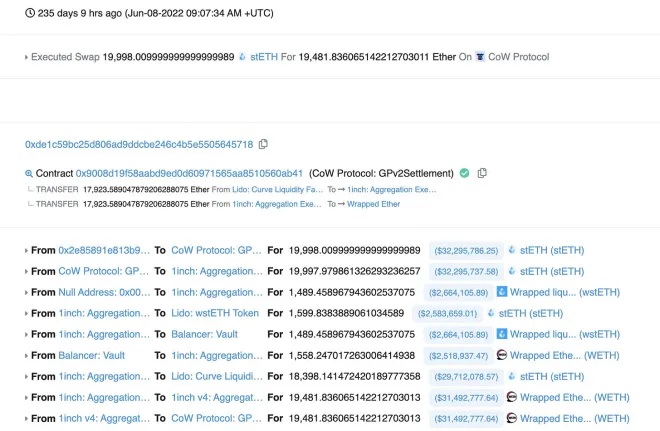
Alameda took seven figures in slippage in the largest single swap of a crypto trade I’ve ever seen them do on chain. There were certainly savvy enough to understand the slippage impact which makes me think they had motives outside of best-price execution.

Alameda Research could have processed this trade OTC on behalf of Celsius last year or another big party. Not sure this makes sense given;

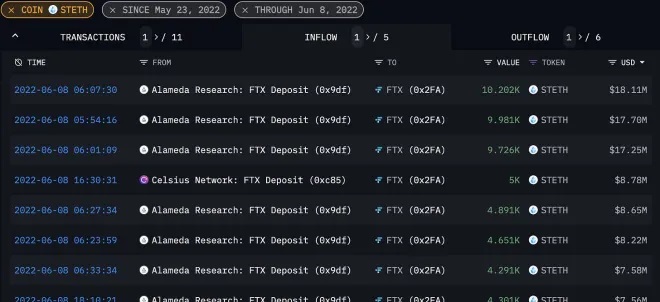
A. stETH inflows into FTX were all Alameda that week. Celsius only deposited ~$5M of stETH into FTX AFTER the depeg ?

B. What kind of OTC slippage is that?

China’s Crypto Tax Provides Clear Regulatory Frameworks for Investors and Businesses

0

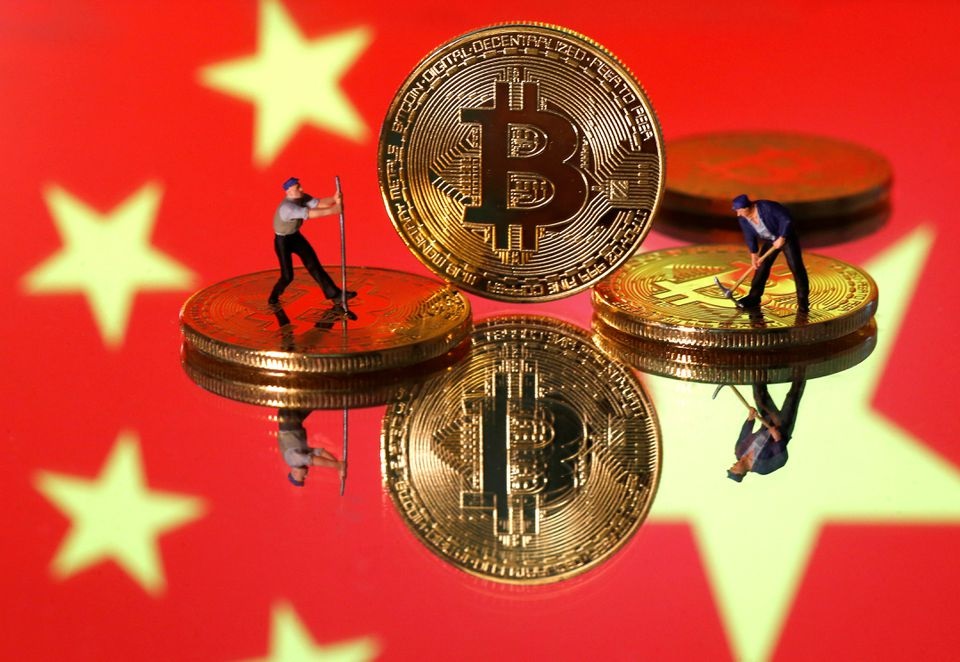
Local Tax Authorities in China have begun imposing a 20% personal income tax on the investment profits of individual crypto investors and Bitcoin miners, China currently has strict regulations on illegal financial activities. Within the current legal framework, China does not prohibit individuals from holding Bitcoin and cryptocurrencies under the ‘Invalid Civil Act’.

Governments around the world are growing concerned by the amount of power it takes to mine Crypto which prompted an initial ban from China, and Russia banning it outrightly on concerns bordering on Climate Change and Energy Consumption used for Cryptocurrency mining.

Experts argue that the need to tax cryptocurrencies may have the potential to force the legalization of the crypto industry in China.

Interestingly, China has revealed a CBDC (digital currency) with expiration dates that force people to spend instead of saving. Don’t you think that sounds like the exact opposite of freedom? The solution is in Crypto. CBDC aren’t cryptos, they are just dystopian in my opinion— nothing decentralized about it.

Huw Van Steenis, Vice Chair at Oliver Wyne noted that;

The rage for central bank digital currency is waning. The live pilots in the Bahamas and China are yet to be successful and the fear of missing out on crypto has collapsed. Most central bankers at Davos are sticking to desk exercises only.

HE, Justin Sun, Tron Blockchain Founder and Huobi Global Advisor noted on microblogging platform Twitter that China has taken a big step towards cryptocurrency regulation with the implementation of a tax on crypto transactions. This signals the country’s increasing embrace of cryptocurrencies.

The tax on crypto transactions is a clear indication that the Chinese government views cryptocurrencies as a legitimate form of wealth and wants to ensure its proper taxation. The tax policy is expected to boost the adoption of cryptocurrencies in the country, as it provides a clear regulatory framework for individuals and businesses.

With the increasing use of cryptos in China, it is expected that the government will further regulate the crypto industry, providing further legitimacy and stability. The crypto tax in China is a positive development for global cryptocurrency market and may set a precedent for other countries to follow.

Floki Inu stated that;

We believe that China (and Asia) will contribute greatly to the next phase of explosion in crypto adoption, and we have some special developments for our Chinese Vikings.

More details will be revealed in the Floki roadmap which will be released SOON.

In an interesting perk, Little Red Book, (XiaohongShu), the Chinese version of Instagram integrates Conflux Network as permissionless blockchain allowing users to showcase NFTs minted on Conflux on their profile page in the digital collection section called ‘R-Space’.

The platform has more than 200 million active monthly users and this integration brings NFTs a step closer to mass adoption, where people are actively using Web3 technology on a daily basis within a Web2 system.

Large internet players in China have initiated efforts embracing Web3 transition. Conflux Network is starting to become the major bridge connecting the two worlds and take the leadership role to expand Web3 technologies into traditional Web2 industries, Ming WU— CTO at Conflux.

Yes, as US continues to battle China, everyone must pay attention on Chinese asset classes:

The U.S. has stopped providing American suppliers licenses to export to Huawei, with the idea of potentially cutting the Chinese telecom giant’s access to U.S. tech altogether, various outlets report, citing anonymous sources. The proposed move would involve all U.S. suppliers, including Intel and Qualcomm, which Bloomberg considers a “hardening of stance” compared with the previous administration. The U.S. has long considered Huawei a national security threat, and the Commerce Department added the firm to its Entity Listin 2019. Huawei has denied that its products pose a national security risk.  China is “deeply concerned” about the escalation, a foreign ministry spokesperson says.