DD
MM
YYYY

PAGES

DD
MM
YYYY

spot_img

PAGES

Home Blog Page 4476

SEC is a Regulatory Agency with an Enforcement Division, not an Enforcement Agency

0

US Securities and Exchange Commission [SEC] Commissioner, Hester Peirce, recommended against disregarding Crypto in a speech “Don’t Swipe Left” at the Duke Conference. She believes that the Crypto Industry must also self-regulate to a degree.

Peirce highlighted on lessons learnt from crypto in 2022 and how regulators should approach policy in 2023.

We tell people to come down to the office to talk to us about their projects, plug the information they give us into our proprietary security-identifying algorithms, and then send people home with a court date.

After all, if we continued with our regulation-by-enforcement approach at our current pace, we would approach 400 years before we got through the tokens that are allegedly securities.

Bank of America makes about $100 Billion a year, FINRA finally fined them $5 Million for more than a decade of options reporting failures. How much money did retail lose because of BofA’s actions? Why did it take so long?

The story fails to mention the catalyst for the overreach which is chair Gary Gensler. His track record to date is dismal at best. He boasts of judgements against the likes of Kim Kardashian, met numerous times with Sam Bankman- Fried but missed FTX Crypto Market manipulations and investors overrides.

Herb Welch, a Twitter user said; If you think Gensler is bad, Hester Pierce is much much worse. She works in favor of Wall Street not Main Street and could care less about her fellow Americans and will look the other way as The crooks on Wall Street continue to lie, cheat and steal.

Ken Griffin made $16 billion last year in the market because he can see in-depth level trades that no one else can. He is the stock market. He has material insider information. And the failing SEC refuses to investigate him.

Peirce in a reply tweet on SEC’s Jan.5, post on microblogging platform Twitter stated that the SEC is a regulatory agency with an enforcement division, not an enforcement agency. Why are we leading with enforcement in crypto?

Relatively, on his recent CoinDesk interview ‘What Was Gary Gensler Really Doing?’ Tom Emmer — a US House Majority Whip said;

Crypto is here to stay. I will keep advocating for policies that advance crypto innovation and adoption in the United States because crypto is more than a financial investment: it’s about restoring liberty and choice to individuals.

So why is he so bullish on crypto? “It’s not about crypto,” says Emmer, clarifying that it’s about what crypto is facilitating – the movement towards Web3, or what he prefers to call the “ownership economy.”

That goes to everything I believe in,” he says, “which is restoring the individual’s right to make his or her decisions about what they want to do in the marketplace. Or who they want to do it with. Or how they want to get that done. And they don’t have to have a middleman.” Ultimately, this is about “restoring liberty and choice to individuals.

With the economy expected to slip into recession, the coming Crypto regulatory tsunami far exceeds the excesses of the post-financial-crisis period. Nowhere are the current regulatory excesses more evident than at the Securities and Exchange Commission.

The SEC’s mandate is vital but limited. Securities laws empower the commission to combat market abuses and fraud and to ensure that investors have material information to make their own investment judgments.

SEC now proposes to substitute its own judgment for that of investors, corporate directors and managers. Its recent set of proposed rules, many of which go beyond any statutory remit, have little to do with preventing abuse or fostering transparency.

The SEC has taken on the role of telling companies how to run themselves and investors how to invest. In the process, the SEC is eviscerating the vital barrier in our market-driven economy between the limited and legally constrained responsibilities of the public sector and the primacy of the private sector.

In a different twist, Coinbase Executive accuses Binance Exchange of Crypto price manipulation, “a pattern of Binance front-running over 18+ months”. Every single exchange manipulates the price. Why wouldn’t they when it is profitable and no one is watching, right?

Exchanges make profit on spreads and many other avenues. Also how can anyone prove inside trades? Eg Binance buys a token. Then forced a rally, them dumps?

Ethereum’s Shanghai Mainnet ‘Shadow Folk’ Goes Live

0

Software developers for Ethereum, the world’s second-largest blockchain, on Monday said they successfully deployed a copy of the blockchain — or “shadow fork” — to run tests of the upcoming Shanghai hardfork upgrade scheduled for March.

The shadow fork was applied successfully, with only a few minor glitches on Geth clients — software used by nodes to operate the blockchain — according to Marius Van Der Wijden, a software developer at the Ethereum Foundation. The glitches have since been corrected, he said.

A shadow fork is a copy of the blockchain used to run tests before creating the public testnet. As part of this shadow fork, data will be copied from the protocol to a testing environment through a number of test forks. The public testnet for Shanghai will go live in the coming days.

The Shanghai upgrade will be the first hardfork on Ethereum since the “Merge” took place in September last year, when the blockchain transitioned from a “Proof-of-Work” (PoW) consensus mechanism to a “Proof of Stake” (PoS) method.

This upgrade will allow the roughly 16 million Ether (roughly US$26.6 billion) that has been staked into the network to be unlocked, according to Etherscan.

There is some concern within the crypto industry that once the Shanghai upgrade goes live there will be increased sell pressure on the token from the sudden availability of 16 million unlocked Ether.

The argument against that is that 16 million Ether represents only 13.2% of the total circulating supply of the cryptocurrency, far lower than many other tokens that use a PoS method. Additionally, other staking options for Ether have been available to investors for quite some time.

Exited validators can withdraw ETH, and active validators can automatically “skim” rewards from active validators whose balance exceeds 32ETH. Rewards can also be skimmed to a new withdrawal address, which is interesting. To avoid large fluctuations in the validator set from epoch to epoch, about 7 validators can exit per epoch, it estimated that it would take a year if all 500k validators exited at once.

You’re Invited to Tekedia’s Festival of Innovation Which Begins Feb 6

0

Cape Town and Johannesburg have treated me very fine for years; their big banks and large companies have consistently provided  platforms to do what professors do – and get paid. I have been so connected with those markets that South Africa’s African Innovator Magazine chronicled me and  wrote:

‘On the front cover… readers are asked “What is Innovation?”, a recurring theme throughout the edition. There are several articles that deal with innovation in-and from Africa, including profiles on Ndubuisi Ekekwe “A doctor of innovation” … as well as South African born innovator and inventor Elon Musk.’ Count your blessings if you are mentioned in the same sentence with Elon Musk, the generation’s finest innovator.

That tradition of innovation is what I do. I invite you to a great festival of innovation which begins Feb 6 here

African Innovator Magazine Calls Dr. Ndubuisi Ekekwe “A Doctor of Innovation”

Nigeria’s Most Efficient Bureaucracy Breaks Record with N10 trillion Haul

1
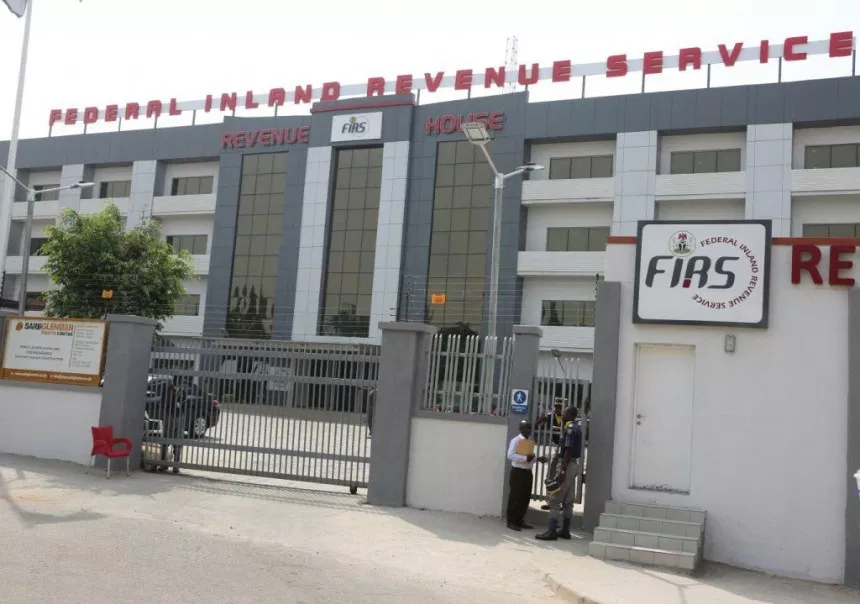
FIRS signpost

Nigeria continues to innovate in one area we have done well: tax collection. Yes, “the Federal Inland Revenue Service (FIRS) said it generated N10.1 trillion in 2022, a record revenue for the agency and the highest in Nigeria’s tax history.” If you run a company in Nigeria, you will understand how digitally transformed and efficient they have become. 

“N146.27 billion is the total value of certificates issued by the Service to private investors and NNPC for road infrastructure under the Road Infrastructure Development Refurbishment Investment Tax Credit Scheme created by Executive Order No. 007 of 2019.

“The report also stated that the N10.1 trillion is exclusive of tax waived on account of various tax incentives granted under the respective laws, which amounted to N1,805,040,163,008,” the tax agency said in a statement on Monday.

In the past, I have written thus:  “As I have noted here many times, the most innovative unit in Nigeria’s bureaucracy is the tax agency. I mean, give those men and women credit; they are innovating and moving really fast to hit revenue collection milestones. You are free to call them wizards of finding what belongs to the commonwealth!”

There was an email they sent on January 2, 2023 to companies. When I received it, I was like “really, the government is already up and running on Jan 2”. People, if Nigeria deploys 100% of the commitment it has put on collecting taxes from companies to help those companies grow, our GDP should be up by 50% now from the 2010 number.

I commend FIRS for breaking tax collection records even as I challenge it to also work with its sister agencies to deepen the enabling environments so that the companies can make more money to be taxed.

Indeed, a world where companies in Nigeria pay about 74 different taxes and fees will not help FIRS in the long-term as most of the firms will die.

The Chief Consultant of B. Adedipe Associates Limited, Dr Biodun Adedipe, said that Nigerian manufacturers are confronted with about 74 different taxes from their factory to the market and down to the final consumer.

Adedipe disclosed this while speaking at this year’s edition of the FirstBank Nigeria Economic Outlook.

He also used the occasion to urge the Federal Government to do something about the ease of doing business to make the country more globally competitive.

Nigeria’s Tax Agency, FIRS, Said it Generated Historic N10.1trn Revenue in 2022

Nigeria’s Tax Agency, FIRS, Said it Generated Historic N10.1trn Revenue in 2022

0

The Federal Inland Revenue Service (FIRS) said it generated N10.1 trillion in 2022, a record revenue for the agency and the highest in Nigeria’s tax history.

The groundbreaking tax revenue was announced by the Service through the “FIRS 2022 Performance Update” report signed by its Executive Chairman Muhammad Nami. The report, which was released on Monday following Nami’s briefing with President Muhammadu Buhari, said non-oil tax contributed 59% more to the revenue generated by the FIRS.

“The FIRS, in the year 2022 collected a total of N10.1 trillion in both oil (N4.09 trillion) and non-oil (N5.96 trillion) revenues as against a target of N10.44 trillion.

“Companies Income Tax contributed N2.83 trillion; Value Added Tax N2.51 trillion; Electronic Money Transfer Levy N125.67 billion and Earmarked Taxes N353.69 billion.

“Non-oil taxes contributed 59% of the total collection in the year, while oil tax collection stood at 41% of total collection,” the report said.

Though it falls short of the N10.44 trillion tax revenue target, the record is a milestone that the service is expected to build on to fill the revenue gaps created by oil shortfalls. The FIRS said the revenue value is exclusive of tax waivers granted under various schemes of the government.

“N146.27 billion is the total value of certificates issued by the Service to private investors and NNPC for road infrastructure under the Road Infrastructure Development Refurbishment Investment Tax Credit Scheme created by Executive Order No. 007 of 2019.

“The report also stated that the N10.1 trillion is exclusive of tax waived on account of various tax incentives granted under the respective laws, which amounted to N1,805,040,163,008,” the tax agency said in a statement on Monday.

In 2021, the Service recorded a threshold of N6.405 trillion, the highest in history. This is the second consecutive year that the tax agency will be toppling its past revenue record. Nami said the FIRS reached the milestone through “dogged implementation of strategic reforms over the past two years; a renewed commitment by officers of the Service, accompanied with a boosted morale; as well as the innovative deployment of technology for automation of both tax administration and operational processes.”

Speaking on the outlook for 2023, the tax boss stated that the FIRS would build on the current reforms, achieve full automation and continue to establish a resilient Service that would continue to provide sustainable tax revenue to fund the government.

However, Nigeria’s 2022 Budget suffered a huge deficit despite the historic tax revenue. The N17.126 trillion budget incurred a deficit of N7.157 trillion, accounting for 12.07%, as the finance ministry conducted 7.18% downward review of the revenue projection, from N10.74 trillion to N9.97 trillion.

The revenue deficit forced the federal government to take to borrowing, increasing Nigeria’s public debt profile to more than N42 trillion.

Nigeria earned N11.5 trillion from crude oil in the first half of 2022.

However, it is not clear how much the FIRS remitted to the government’s purse from the N10.1 trillion tax revenue. The tax agency enjoys “cost of collection” percentage, which under the 2023-2025 Medium Term Expenditure Framework (MTEF) and Fiscal Strategy Paper (FSP), means that the Service and other revenue-generating agencies will be given a fixed percentage of their revenue as “cost of collection.”

Under the provisions of the Fiscal Responsibility Act, which was heavily abused, revenue-generating agencies are allowed to use their discretion in spending but are expected to remit 80% of the operating surplus. This has led to bloated spending and poor revenue remittance from the agencies.