
DD
MM
YYYY

PAGES

DD
MM
YYYY

spot_img

PAGES

Home Blog Page 4481

Walking through a Lifetime Tech Journey in just 3 Metres

0

Some may not know this about me…

Web 3 Domains is not my first technology rodeo.

Nor was leading the defence of the first recertification audit for the first company in Africa to be TL9000 certified.

Nor was project managing the first ever industry CRM/ERP for UK Construction (Safebuild)

… and many other things that I’m going to just stop talking about for fear of being accused of blowing my own trumpet too much.. which would probably be fair!

No.. the first technology I mastered was when I was around eight years old, and it was what was called a PoW (Prisoner of War) Radio.

If you check online you will find lots of examples of what were called ‘Foxhole’ radios featuring a razor blade, but actually the very first such radios were made using coke.

Many of you may have heard of Silicon valley in the US, where there is a high concentration of semi-conductor related businesses and the phrase ‘silicon chip’
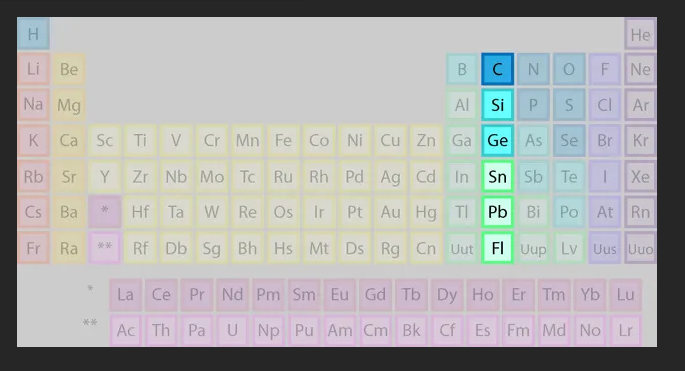
Carbon, Silicon and Germanium in the same Periodic Table grouping.

Carbon is in the same group in the ‘Periodic Table of Elements’ to Silicon and so has properties it shares with Silicon. This ‘family’ of elements, have a unique ‘half full, half empty’ outer orbit electron configuration which makes them equally able to form covalent chemical bonds (poor conductor) and ionic chemical bonds (good conductor) giving them ‘semi-conductor’ properties. This means electricity can be made to flow one way in the substance and not the other way. This is the basic principle of ‘amplification’ circuits.

Coal burning was common throughout the periods of the major world wars and coke is the carbon residue that is left over after coal burning. In even the most severe of PoW camps, coke was distributed on pathways to stop them from getting muddy, so it was easy for someone to pick up a piece off the ground without looking suspicious.

Brass cup washers like what were in the book illustrations

I found a book written in the 1950’s in my Grandads attic, describing how to make several electronic circuits. It started with a ‘coke’ radio.

Moving on, through my late childhood and teens, I made many circuits and small devices.

I was always scrounging parts here and there, and never had the ideal component for a job as the book illustrated. I had parts from abandoned TV’s, radios, and various other devices. Once I had a power transistor that I salvaged from a fluorescent light assembly. Illustrations all involved brass screws and cup washers, and as the projects began to become more complex, and screws easily loosened, I had to acquire a soldering iron, some solder, and some blank printed circuit boards.

The first soldering iron I had, I also found in my Grandad’s attic. It was like the one right of picture. I think the heating coil inside used to expand when hot and touch the metal casing, as I used to get electrical shocks off it sometimes.

So while the technology I learned of started with a PoW Radio, my skillset started with soldering.

This brings me to today, where a few days ago, I was at a local event in Ireland addressing enthusiasts about the prospects in Web 3 Domains. The location was a modular unit inside an educational institute.

Blank circuit boards

When I came out at the end of the event, I could get the whiff of melting rosin core solder from outside the adjacent unit. I got in a conversation with someone standing outside, who turned out to be an instructor for ‘enterprise training’.

Comparing early life notes, the instructor invited me to come in and give a short impromptu talk to a group who seemed to be learning electronic circuitry basics.

Having walked around and noticing what they were doing, I noticed a lot of ‘cold joints’, so I choose to focus on that as a topic.

A reel of Rosin Core solder

Cold Joint.

Lets take as example, a simple audio jack plug with two connection lugs at the back with holes. You need to solder a two core wire to the plug. The ‘solder target’ is a wire threaded through the hole on one of the lugs (terminals) at the back of the plug.

A cold joint happens when the ‘solder target’ is too cold for the molten solder which is being applied to it, intending to form a joint. The solder in this case just sits on the ‘solder target’ creating poor or intermittent contact. The solder often has a ‘globule’ like appearance, and after a bit of handling, it may fall off the joint entirely and the wire will become loose.

Cold joints are often formed as a result of melting solder off the iron, and allowing it to run onto the  ‘solder target’.

Notice the tip of the soldering iron is applied to the joint area, aka ‘solder target’. The transfer of heat is keeping the solder targets ambient temperature high enough to melt the solder and form the joint. The solder isn’t touching the iron directly.

The right way to make a joint is to use the tip of the iron to raise the ambient temperature of the ‘solder target’ so that the solder can melt, not off the iron, but off the target area itself.

This will create a good joint.

I had a lot of fun demonstrating how to make a good joint.

Encountering the dawn of my technological journey right next to my current point in the path around fifty years later, in two adjacent business units  was a surreal experience.


Meanwhile,

 9ja Cosmos is here…

Get your .9jacom and .9javerse Web 3 domains  for $2 at:

https://www.encirca.com/handshake-9jacom/

https://www.encirca.com/handshake-9javerse/


Other Reading:

www.testandmeasurementtips.com/why-silicon-and-germanium-are-semiconductors

spectrum.ieee.org/germanium-can-take-transistors-where-silicon-cant

en.wikipedia.org/wiki/Carbon_group

laurelleaffarm.com/item-pages/antique-heavy-copper-soldering-iron-lot-vintage-electric-soldering-irons-Laurel-Leaf-Farm-item-no-s251.htm

www.utmel.com/blog/categories/semiconductor/silicon-carbide-sic-the-third-generation-semiconductor-material

www.pcbdirectory.com/community/what-is-a-cold-solder-joint

HR Experts Offer Perspectives on HR & Future of Work Trends

0

What does the future of work look like?  This is probably the most prevalent question in the HR and work domain in recent times.

Pre-covid 19, different theories emerged about the future of work, all attempting to speculate how people, the workplace, and hiring will transform the future. As we witnessed, the pandemic sped up some of those speculations by accelerating the adoption of remote work across companies globally. Post-2020, many traditional companies evolved to hybrid working conditions, some retained the fully remote culture, especially for distributed teams, and a few re-instituted on-site resumptions.

The year 2022 saw major layoffs across organisations globally, especially those within the technology space. Several other companies initiated a hiring freeze till 2023, sending waves of uncertainty and leaving Human Resource professionals with piles of work on their desks – to ensure that outgoing employees navigate their transition smoothly and implement improved internal conditions for the remaining team members.

While experts credit the global economic downturn for the massive layoffs actions, it does stir up other mind-blogging concerns. Are skills no longer sufficient to hold one’s job, or is there a global dearth of required skills? Are young talents not living up to expectations? Whatever may be the case, one thing is certain, HR professionals have a lot of work to do.

As 2022 wrapped up, HR experts were confronted with making decisions that will likely shape the retention of talents as they continue to manage investments in people and technology while creating a positive culture for employees. We sample the thoughts of top human resource managers, Heads of People and Culture, Chiefs of Staff, C-Suite Executives and CEOs on HR trends industry leaders need to watch out for in 2023.

Workplace trends: What will shape the modern workplace and future of work in 2023?

According to Leul Girma, COO at Gebeya, Africa’s leading freelance and talent sourcing platform, “As 2022 comes to a close, it is clear that the future of work is online and on-demand. This quarter’s massive layoffs at several large tech firms show that organisations are looking to scale down their teams and reduce costs. Businesses looking to scale have needed to shorten their hiring timelines and augment their teams in order to leverage resources as they need them. The typical 2-3 months hiring cycle that requires sifting through hundreds of resumes don’t work for immediate hiring needs and short-term projects. Flexible, nimble team structures are an organisation’s superpower.”

Gebeya Inc. is a venture-backed Pan-African Freelance Talent Marketplace company headquartered in Addis Ababa, Ethiopia, with remote teams in Kenya, Senegal, North America, and the UK. The company aims to become an active contributor to Africa’s digital transformation and build a booming Africa by leveraging continental and global job opportunities for African talent. Its vision is to be the most trusted and reliable source of skilled talent that showcases Africa’s competitiveness.

Jemima Karugu, Head of Talent & Human Capital GrowthAfrica Foundation, Nairobi, says Employee well-being is paramount to the future of work in 2023. “In the wake of the pandemic, many employees are more aware and demand well-being as a minimum from their employers; well-being is divided into three buckets. First, is mental, which involves leveraging solutions to provide mental support to struggling employees with a greater emphasis on work-life balance. Second is financial, compensation as a trend is making a comeback due to the global inflation currently being experienced and the need to feel financially secure in case of any eventuality. The third is physical, employees are looking for more inclusive workspaces, that promote well-being and healthy habits.”

HR trends: Key trends that will shape the HR landscape in Africa, come 2023

Folasele Vincent Akinloose, Team Lead, Faculty Management at FCMB, Nigeria’s leading commercial bank highlights two key trends. “Reshaping Workplace Learning and Development – with increased workforce mobility and the depletion of the skilled talent pool in Africa, there exist a need for HR to rise to this challenge through strategic hiring and continuous training. Organisations should start investing in L&D.”

“Diversity, equity, and inclusion – this is one of the behavioural HR components attracting global attention, and also capable of boosting engagement and reducing turnover. HR needs to develop and execute flawlessly the DEI policy,” he explained.

According to Adesola Awofeso, HR Lead at Axxela Group, sub-Saharan Africa’s leading gas and power portfolio company, “Quiet quitting might become predominant, especially as many skilled talents are fixated on migrating for more reasons not limited to the quality of life and economic gains.”

To navigate this trend, however, Dominic Ryan, Managing Director of DWR Expatriate & Executive Search – Ghana, Nigeria & West Africa noted that “The nurturing of the domestic market to bring executives up to a higher standard, thus reduce the need for external placements (ex-pats), coupled with the expansion of the economy in certain sectors, and foreign investment which will encourage growth in domestic employment opportunities.”

People trends: How can people leaders prepare for the future of work?

As Girma, COO Gebeya explained, “a healthy feedback culture is critical. Understanding global trends in compensation, benefits, and remote work are important to stay competitive; but being in tune with the specific needs of your own workforce is important to stay relevant. Keep in mind personal and lifecycle factors like age, the pursuit of higher education, and parental status that might mean your employees crave benefits like tuition/ daycare assistance, or a salary advance to move into their first home. These perks are only worth investing in if your team members want and can take advantage of them.”

Also commenting, Tosin Ajayi, HRBP at Reelfruit added, “Irrespective of the number of years an employee stays on a job, people leaders should ensure that employees have good employee experience that will help their brand. Organisations should see training intervention as a contribution such that this would enrich the overall professional market with competent hands. People will keep scouting for better opportunities, but you could keep them as your veterans.”

Marketing Automation Platform Mailchimp Hacked For The Second Time in Six Months

0

Marketing automation platform and email marketing service Mailchimp has disclosed that the platform was hacked.

The security team at the company disclosed that an intruder was detected last week while accessing one of its internal tools used by its customer support and account administration.

The hacker was reported to have targeted Mailchimp employees and contractors with a social Engineering attack by using manipulated techniques to gain private information like passwords.

MailChimp disclosed that the hacker used those compromised employees passwords to gain access to data on 133 MailChimp accounts, which the company notified of the intrusion.

The company also announced that the hacker compromised the account of Yuga labs, a block chain technology company that develops NFTs and digital collectibles, meanwhile the company has confirmed that the NFTs are safe.

Yuga labs therefore took to its Twitter handle to notify users of the recent hack on its MailChimp account, by confirming that it had only used the service a few times and for limited purposes but wished to share the information out of caution.

The company wrote on Twitter,

We recently learned that Mailchimp, a popular email platform, had a data breach and our account was one of many compromised. We have only used that service a few times, and for limited purposes, but out of an abundance of caution we wanted to share what we know.

Important note: The data contained in our Mailchimp account was information from a couple of email campaigns involving a limited number of people. Mailchimp is strictly used for email communications, not mints.

“Next steps: We are continuing to look into this matter and will contact you from a Yuga Labs email address (@yugalabs.io) if we believe your data may have been impacted by this Mailchimp breach.

In the meantime: Stay safe and vigilant. As a reminder, there will be no surprise mints and we will never DM you requesting sensitive information. Announcements should always be cross-checked with the Yuga News site news.yuga.com and the brand channels”.

Also, one of those targeted accounts belongs to e-commerce giant WooCommerce, an open-source flexible software solution built for WordPress-based websites

In a note to its customers, WooCommerce said it was notified by Mailchimp a day later that the breach may have exposed the names, store web addresses, and email addresses of its customers, though it said no customer passwords or other sensitive data was taken.

Recall that on March 26, Mailchimp identified a malicious actor accessing a tool used by its customer support and account administration teams.

The company disclosed that access was gained following a successful social engineering attack, a type of attack that exploits human error and uses manipulation techniques to gain private information, access, or valuables.

Amazon Fined $60,000 For Violation of Workers’ Safety at Warehouses

0

E-commerce giant Amazon has been fined the sum of $60,000 after Federal Regulators from Occupational Safety And Health Administration (OSHA) found it guilty of violating workers safety.

OSHA disclosed that three of the company’s warehouse facilities violated legislation designed to require employers to provide safety working environments.

After thorough investigations, it was discovered that workers at the e-commerce company were vulnerable to back injuries and other musculoskeletal disorders (Mass) especially in warehouse environments that prioritise speed over safety.

Reports disclose that this is the fourth violation Washington has filed against Amazon in the previous year.

While commenting on the risk Amazon workers are being exposed to, an assistant secretary at OSHA Doug Parker said, “While Amazon has developed impressive systems to make sure its customers’ orders are shipped efficiently and quickly, the company has failed to show the same level of commitment to protecting the safety and well-being of its workers”

OSHA in December last year, disclosed that six Amazon facilities had failed to record and report worker injuries and illnesses as there are still ongoing investigations of the company’s facilities in Colorado, Idaho and New York.

In its findings, it discovered a pattern of employee injuries at the company such as Stuck-by injuries while handling objects over 50 pounds. Despite the fact that Amazon has on-site clinics for employees known as “Amcare”, OSHA claims that these facilities can be prohibitive to workers receiving adequate medical care.

The company has therefore been mandated to pay a fine for violations at its warehouses in Deltona, Florida, Waukegan, Illinois, New Windsor, and New York.

Reacting to OSHA claims, a spokesperson at Amazon said, “we take safety and health of our employees very seriously, and we strongly disagree with these allegations and intend to appeal. We have cooperated fully, and the government’s allegations don’t reflect the reality of safety at our sites. Over the last several months we have demonstrated the extent to which we work every day to mitigate risk and protect our people, and publicly available data show we’ve reduced injury rates nearly 15 percent between 2019 and 2021”.

Amazon further disclosed that the company has invested in engineering innovations that can reduce the need for workers to bend, Twist, and reach in ways that can cause injury while noting that warehouse workers also take part in stretching groups called “huddles”.

Meanwhile, the company is set to commence its largest-ever layoffs in history as it plans to let go of 18,000 employees. In a memo sent to staff, the company plans to cut jobs in U.S., Canada, and Costa Rica.

Amazon’s CEO Andy Jassy disclosed that several teams will be affected by its proposed layoffs, which will include the human resources department and Amazon stores.

He further stated that the layoffs were necessary as they will help the company to pursue long-term opportunities with a stronger cost structure.

Federal officials say Amazon’s speedy and “free” Prime shipping has a human cost. The Occupational Safety and Health Administration issued several citations against the e-commerce giant this week after discovering safety violations at three of its warehouses, The Wall Street Journal reports. According to OSHA and some former and current employees, the speed at which warehouse staff is required to work makes them vulnerable to injuries. The company received similar violations at six of its warehouses last month. Amazon says it will appeal the decisions, which “don’t reflect the reality of safety” at its facilities. (LinkedIn News)

Lagos State Announces Four Work-free Days for Civil Servants to Collect Their PVCs

0

The Lagos State Government has announced work-free four days for civil servants in the state to get their Permanent Voter Cards (PVCs), following approval by the governor Babajide Sanwo-Olu.

A circular released Wednesday by Hakeem Muri-Okunola, Lagos State’s head of service, said the holiday will commence on Tuesday, January 24, and end on Friday, January 27, for different grade levels of workers.

“Consequent upon the extension of the collection of permanent voters cards by the Independent National Electoral Commission, it is hereby notified for the general information that all public servants who are yet to collect their permanent voter cards from designated INEC centers are encouraged to do so before Sunday, January 29, 2023, as it is a civic responsibility to vote.

“To this end, Mr governor has graciously approved a work-free day to enable public servants to collect their PVCs from their respective local government/local council development areas as presented in the table below.

“The dates include Tuesday, January 24, 2023, for grade levels 01, 03, 07, and 15; Wednesday, January 25, 2023, for grade levels 02, 04, 08, and 13; Thursday, January 26, 2023, for grade levels 05, 09, 12, and 17; and Friday, January 27, 2023, for grade levels 06, 10, 14 and 16.

“Consequently, accounting officers and all public servants are to ensure compliance whilst giving this circular the service-wide publicity it deserves,” the circular reads.

The move follows the decision of the Independent National Electoral Commission (INEC) to extend the window for PVC collection across the country. INEC had last week, announced the extension of the deadline for the PVC collection to January 29, adding eight days to the initial January 22 date.

Other states such as Borno, have earlier given work-free days to civil servants to collect their PVCs while the window for collection is still open.

INEC said it has become necessary to extend the deadline because of developments that have hampered the collection exercise.

“The Commission is determined to ensure that registered voters have ample opportunity to collect their PVCs ahead of the forthcoming election. For this reason, the timeframe for the collection of PVCs is extended by eight days.”

“Instead of ending on Sunday 22nd January 2023, the collection of PVCs will continue until Sunday 29th January 2023. At the moment, the period of collection is 9.00 am – 3.00 pm daily (including Saturdays and Sundays),” the Commission said.