Crypto lender Genesis has filed for bankruptcy in the U.S., after the FTX contagion took a huge toll on the company.
Genesis, Chapter 11. Cryptocurrency lender Genesis Global Capital filed for bankruptcy Thursday, joining a growing list of digital asset companies decimated by the drop in token prices and fallout from FTX’s collapse. The lending arm of billionaire Barry Silbert’s Digital Currency Group said in bankruptcy filings that it owes at least $3.4 billion to more than 100,000 creditors. The move comes two months after Genesis suspended withdrawals, largely due to major losses from the demise of crypto hedge fund Three Arrows Capital and FTX-affiliated trading firm Alameda Research. (Fortune newsletter)
The company yesterday filed for chapter 11 bankruptcy protection with a court filing, estimating lenders assets and liabilities to both be in the range of $1bn- $10bn, while also listing over 100,000 creditors.
Genesis also listed a $765.9 million loan payable from Gemini, as well as other sizeable claims that include a $78 million loan payable from Donut, a high-yield, decentralized platform, and a VanEck fund, with a $53.1 million loan payable.
The company’s parent group Genesis Global Holdco and lending unit Genesis Asia Pacific also filed for bankruptcy protection.
Recall that on November 21, after the FTX collapse, Genesis disclosed that it had no plans to file for bankruptcy imminently, but has since appointed an external party to advise on its financial predicament.
Meanwhile, the company struggled to stay afloat which saw the DCG intervene, by providing a cash injection of $140 million. But despite multiple DCG bailouts, Genesis failed to escape the FTX fallout as it finally succumbed to bankruptcy filing.
Following its recent bankruptcy filing, Genesis CEO Derar Islim said in a statement, “We look forward to advancing our dialogue with DCG and our creditors’ advisors as we seek to implement a path to maximize value and provide the best opportunity for our business to emerge well-positioned for the future.”
Also, the company via a statement disclosed that it has taken strategic actions to achieve a global resolution to maximize value for all its clients and stakeholders as it seeks to strengthen its business for the future.
Recall that during the collapse of FTX last year, Genesis halted withdrawals on its platform in November and had been negotiating with creditors while trying to secure fresh capital since.
The company revealed that it had a $2.5 billion exposure to Alameda, though that position was closed out in August. After FTX’s bankruptcy in November, Genesis said that about $175 million worth of its assets were locked on FTX’s platform.
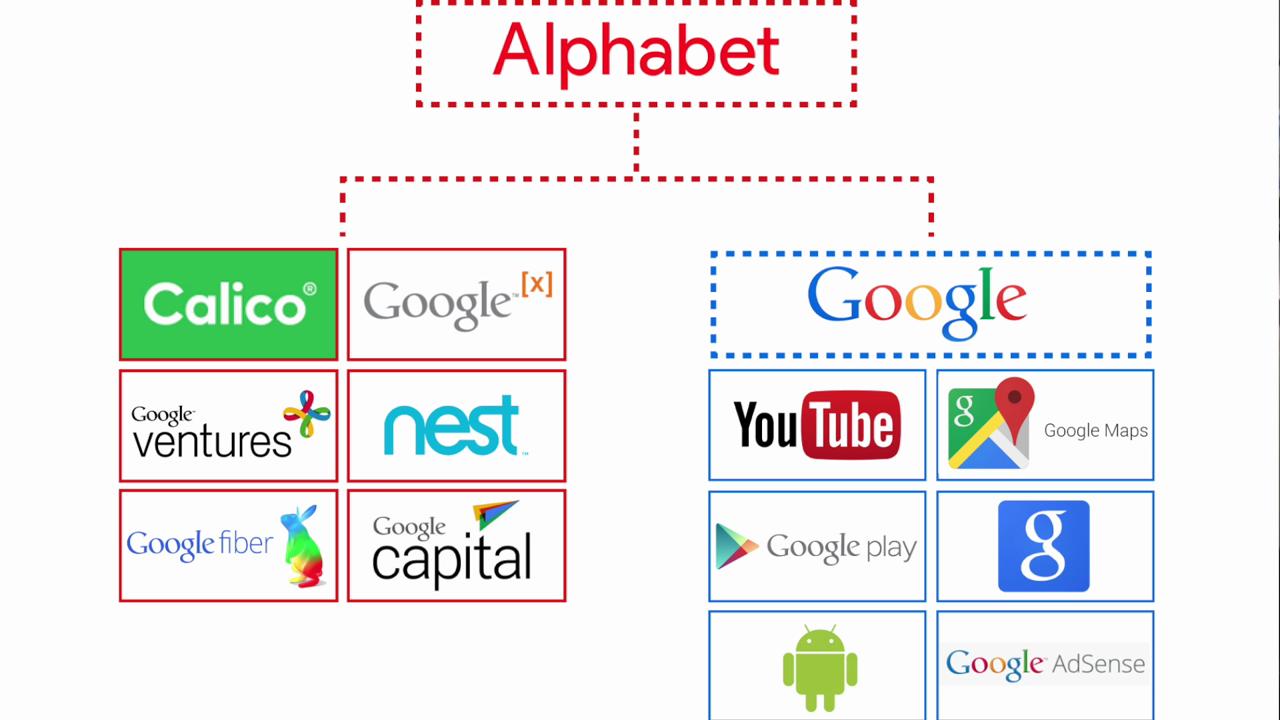
Genesis, which is backed with investments by Softbank and Alphabet, had also been exploring the sale of assets to pay back more than $3bn owed to creditors, which saw the company also laid off about 30 percent of its workforce.
Genesis is the latest crypto exchange platform to be impacted by the FTX collapse. The company joins the likes of other crypto exchanges such as BlockFi, FTX, Voyager, and Celsius that have filed for Bankruptcy.
Since the FTX filed for chapter 11 bankruptcy in November, it has sent shocking waves to the crypto industry as there has been a growing list of other companies filing for bankruptcy due to their exposure to the company.
The FTX’s collapse also shook the volatile crypto market, which lost billions at the time, falling below a $1 trillion valuation.
Alphabet, Google’s parent company has announced it’s cutting 12,000 jobs worldwide, the latest company in the series of layoffs that have characterized the tech industry over the past one year.
The cuts were announced by CEO Sundar Pichai in a memo to employees, which was later published on the company’s blog.
“I have some difficult news to share. We’ve decided to reduce our workforce by approximately 12,000 roles,” he said, adding that affected employees in the US have been informed.
The tech industry is grappling with economic headwinds that have forced many companies to cut workforce.Microsoft announced days ago it’s laying off about 10,000 workers, joining others likeMeta,Twitter andAmazon, forced to reduce headcount.
The 12,000 employees account for 6% of Alphabet’s global workforce. Pichai said the change, which cuts across many areas of the company, was orchestrated by the decisions earlier made based on the dramatic growth of the past two years. To match and fuel that growth, we hired for a different economic reality than the one we face today, he said.
“I am confident about the huge opportunity in front of us thanks to the strength of our mission, the value of our products and services, and our early investments in AI,” he said. “To fully capture it, we’ll need to make tough choices. So, we’ve undertaken a rigorous review across product areas and functions to ensure that our people and roles are aligned with our highest priorities as a company. The roles we’re eliminating reflect the outcome of that review. They cut across Alphabet, product areas, functions, levels and regions.”
Pichai said employees in the US will receive the following support: payment during the full notification period (minimum 60 days); severance package starting at 16 weeks’ salary plus two weeks for every additional year at Google, and at least 16 weeks of GSU vesting. He said they’ll be paid 2022 bonuses and remaining vacation time, and will be offered 6 months of healthcare, job placement services, and immigration support for those affected.
“Outside the US, we’ll support employees in line with local practices,” he added.
The American tech sector is facing a different reality from when many companies, spurred by thee pandemic-induced economic growth, made the decision to expand their headcounts. Global economic downturn, compounded by the Russia-Ukraine conflict, has severely dented the industry’s economic outlook.
Among the many challenges currently facing the sector is rising interest rates as countries tighten economic policies to battle inflation over the past year. The result has been consequential to the industry’s growth as tech shares take pounding, forcing advertisers to cut back on online ad spending.
As CNBC noted, the gloomy macroeconomic climate has in turn piled pressure on those companies, forcing them to cut their workforces.
Update: This is how Apple has avoided job losses unlike other big tech: “As layoffs sweep across the tech industry, Apple has so far managed to avoid workforce cuts. But how? There are many factors, The Wall Street Journal writes, but some of them are simple and straightforward. Apple didn’t hire at the same clip as its rivals, and it “tends to run lean,” with fewer employee perks than elsewhere in Silicon Valley. The iPhone maker hasn’t emerged from this difficult period unscathed, however. Next month it’s expected to report a decline in quarterly sales for the first time in more than three years, WSJ reports.”
There seems to be no slowing down in layoffs going on in the tech industry, as Google’s parent company Alphabet trims its workforce by 6%.
This recent layoff by the tech company will see about 12,000 jobs being eliminated from the company, which will affect various sections such as the recruiting and corporate functions, as well as some engineering and product teams.
The company has already sent a separate email to employees in the U.S. who are affected while noting that in other countries, this process will take longer due to local laws and protection.
In anopen letter published by Google and Alphabet CEO Sundar Pichai, he wrote, “I take full responsibility for the decisions that led us here. We have undertaken a rigorous review across product areas and functions to ensure that our people and roles are aligned with our highest priorities as a company.
“The roles we are eliminating reflect the outcome of that review. They cut across Alphabet, product areas, functions, levels, and regions.
“Over the past two years, we’ve seen periods of dramatic growth. To match and fuel that growth, we hired for a different economic reality than the one we face today.”
Alphabet Stock stock has fallen more than 30 percent over the previous year. In October, the company reported a 27 percent drop in third-quarter net profit on an annual basis.
Also, its net profit dropped to about $13.9 billion in the three months through to the end of September, compared with the same period in 2021.
Alphabet’s operating income dropped 19 percent on an annual basis in the third quarter to about $17bn. Its earnings for each share dropped 24 percent yearly to $1.06, missing analysts’ estimates of $1.25.
Google services business which includes advertisements, Android, Chrome, hardware, Maps, Search, Google Play, and YouTube accounted for nearly 90 percent of the company’s total sales.
After it announced plans to lay off about 6% of its workforce, the share price jumped by about 2 percent during premarket trading to $94.67 on Friday.
Alphabet joins the likes of other big tech companies that have laid off part of their workforce. Earlier this week, tech giant Microsoft announced 10,000 job cuts, affecting nearly 5% of its workforce, which is followed by Amazon’s move to cut 18,000 jobs or 1.2% of its global headcount.
Also, Facebook’s parent company Meta, in November last year, announced a plan to lay off 11,000 members, which will impact about 13% of its workforce.
Meanwhile, in all of these layoffs going on in tech companies, Apple has been revealed as the only tech company that has not announced any layoffs. Reports reveal that the tech giant has not appreciably increased its rate of hiring over the last two years.
While a review of SEC filings shows how rapidly the other biggest tech companies grew during the pandemic.
This is very strange: the Nigerian stock exchange is not reacting to the drama between the governor of Nigeria’s central bank and the law enforcement agencies. This clearly shows that Nigeria is not run on data, and investment in our public market is not based on near-real time market information. Do you know that by now, the stock exchange would have collapsed in the US if the Fed Chairman (America’s central bank governor) is under a high-voltage searchlight of law enforcements, accusing him of financing terrorism, corruption, etc.
But here in Nigeria, markets did not blink, parrying everything as political hacks against the high priest of Nigeria’s economy. The problem is that when people do not care about the high priest, it means the temple has lost relevance.
The Central Bank of Nigeria (CBN) should be concerned that people do not even care that the governor has joined a tales-by-moonlight game: catch the governor if you can as he runs around the circles in US, Nigeria and beyond. This is not how to run a country!
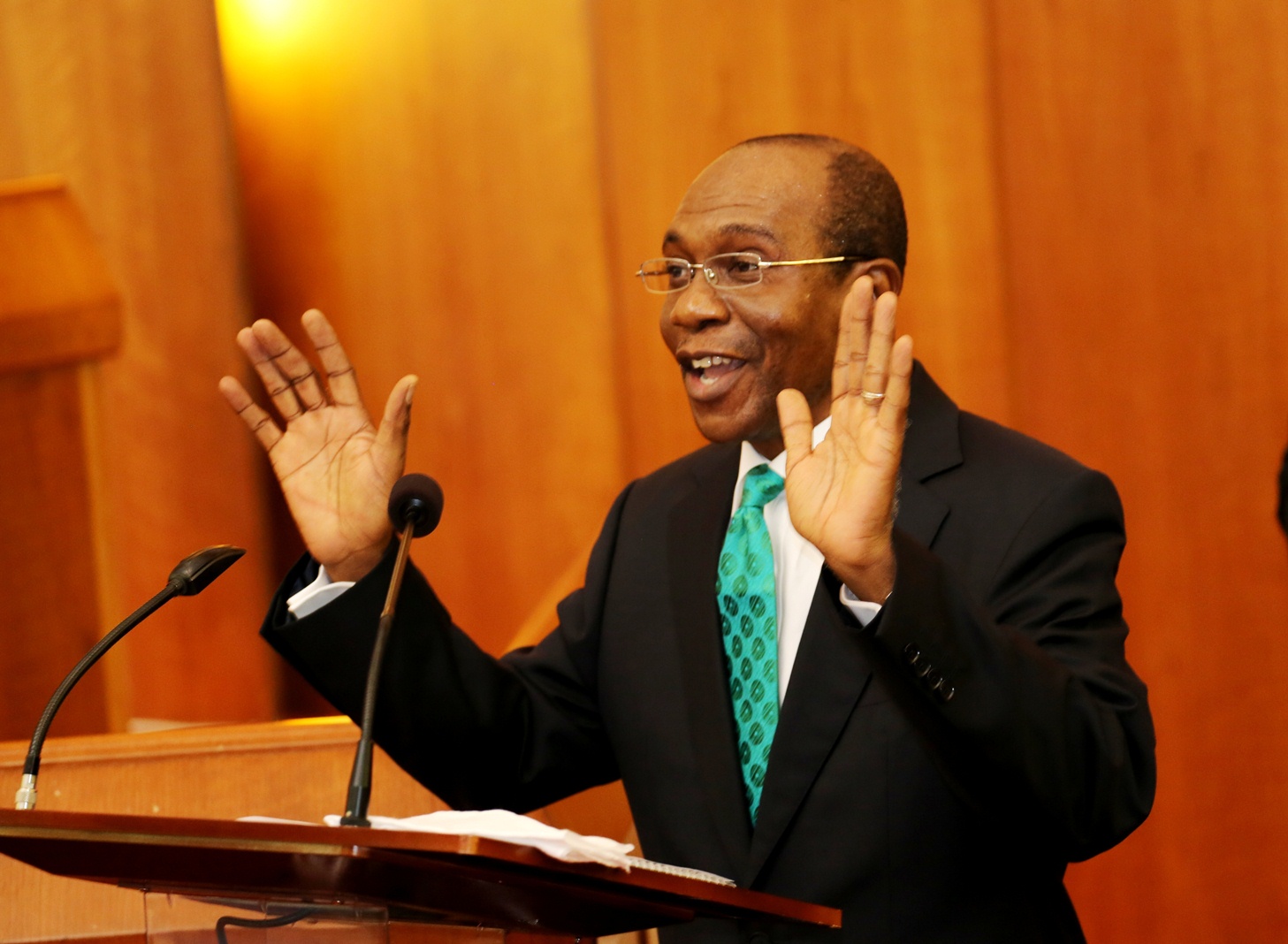
President Muhammadu Buhari on Thursday met with the embattled governor of the Central Bank of Nigeria (CBN), Godwin Emefiele, as the interest of concerned parties in the banking sector heightens over the fate of the nation’s topmost banker.
The duo met at the Presidential Villa, Abuja, in what is believed to be their first meeting this year, according to the News Agency of Nigeria.
Mr Emefiele arrived the villa at about 14:30 GMT and had a closed-door meeting for about 25 minutes with Mr Buhari. However, reports said the apex bank governor declined questions and comments from state house correspondents after the meeting.
Mr Emefiele joined a delegation of the Arab Bank for Economic Development led by its Director General, Sidi Tah, to the state house. The apex bank chief was reportedly received by Mr Buhari, who welcomed him back to the country.
“The Central Bank Governor, you are welcome back. I am grateful you are well received,” Punch newspaper quoted Mr Buhari as saying.
In recent weeks, Mr Emefiele has been in the eye of the storm amid moves by Nigeria’s secret police to arrest him over several allegations of professional misconducts.
Comment 1: “He that is down needs fear no fall”.
The stock market has largely underperformed in the last 8 years of the current leadership. Only a few individual stocks have done well. I think the market has factored so many negatives into the current price ranges already. Also, last I checked many FDIs had left the market… Current players are majorly local investors. So, in my opinion, only a major shock (like COVID) could cause the kind of collapse you expected.
Comment 2: Oh so powerful…. “When the people do not care about the high priest, it means the temple has lost relevance”. Oh how we need good leadership now more than ever before.
Comment 3: Good commentary. The dynamics of stock market is not as easy as you postulate. It is better you study what stock market is. And it is better to tell ourselves that the economy in Africa is not economy in American. Understanding of these things will moderate our criticisms and assumptions.
Emefiele has done extremely well.
Comment 4: “Do you know that by now, the stock exchange would have collapsed in the US if the Fed Chairman (America’s central bank governor) is under a high-voltage searchlight of law enforcements….” I’m not sure about that. Perhaps trading would be temporarily halted on the various exchanges pending investigations. The system is much bigger than any one person.
My Response: “Perhaps trading would be temporarily halted on the various exchanges pending investigations. ” – you arrived at the same conclusion as I did. If you announce that the FBI is looking to arrest the Fed Chair, the US bond, TB, stocks, etc market will be rattled and exchanges will suspend trading to avoid a collapse. Where you decide NOT to suspend, the selloff will accelerate because the reason you “suspend” is to avoid panic selling. Contrast Nigeria, there was no need to “suspend” because no one even noticed! Read it again, I think your conclusion is the same as mine.
Alphabet, the parent company of Google, has announced a massive round of job cuts, about 12,000 roles (6% of its global total). This dance step has become very common with Microsoft, Meta (Facebook’s parent), Amazon, Twitter, and many other big tech companies participating. The rapid hiring during the pandemic ephemeral boom created unsustainable headcounts which these firms are trying to normalize.
Google parent companyAlphabet announced Friday that it is cutting around 12,000 jobs, or 6% of its global workforce. Thecompany stated that while the layoffs would occur in all regions and hit most units, they may affect teamssuch as recruiting more. Alphabet follows tech giants such as Microsoft (LinkedIn’s parent company),which announced layoffs earlier this week, as well as the likes of Meta and Amazon. Many of Big Tech hired extensively during the pandemic to cope with enormous demand, and are now contending with an uncertain economic climate and record-high inflation, forcing most to tighten their belts. (LinkedIn News)
Yet, it goes beyond blaming decisions made during the pandemic. The real deal is that markets and companies are evolving. In this decade, we are moving into the dawn of application utility age and many combinatorial systems are converging to reshape the workforce. The implication is that even tech cannot save itself from tech avalanche. In other words, as automation hits the workplace, tech will also take jobs away from tech.
The Wave 2 of the innovation society with AI and autonomous systems evolving at rapid pace from laboratories and garages will transform our world (see video below). With blockchain providing a deeper level of order, the workplace will be radically different in years and we will not need many people for many things.
The message is clear: even tech skill will not save any person from tech layoffs these days. This also means that most business models will collapse (yes, those training techies to feed American and European big tech companies). What will save a career is the ability to adapt and learn the next big thing, because the tech innovations of today will create opportunities for new tech skills of tomorrow. That is why we must never stop learning! If we have that spirit, we will all be fine.
Of course, the economy remains in a state of fluid as I have noted: “Of course, we cannot decouple from the war in Russia. As this war continues, we are re-learning that Russia is indeed a very powerful country in the world. Without the war, the UK might not have changed its prime ministers, Germany its defense minister, and many other exogenous and endogenous events within Europe and beyond, would not have happened. Unfortunately, the war is still ongoing, creating problems for everyone, with Ukraine paying with blood and others with wallets and pulses. I hope they find a solution because it is the root cause of most things, from inflation to poverty in some lands.”
Tech’s allure may be dimming, according to new data from LinkedIn’s Economic Graph. The industry’s appeal as a career destination declined in the fourth quarter from a year earlier in consumer services (-40.1%), administrative and support services (-39.4%), government administration (-35.2%), manufacturing (-31.1%) and retail (-30.8%). Across the board, employees in these industries are less likely to be leaving for tech jobs. (LinkedIn News)
I have some difficult news to share. We’ve decided to reduce our workforce by approximately 12,000 roles. We’ve already sent a separate email to employees in the US who are affected. In other countries, this process will take longer due to local laws and practices.
This will mean saying goodbye to some incredibly talented people we worked hard to hire and have loved working with. I’m deeply sorry for that. The fact that these changes will impact the lives of Googlers weighs heavily on me, and I take full responsibility for the decisions that led us here.
Over the past two years we’ve seen periods of dramatic growth. To match and fuel that growth, we hired for a different economic reality than the one we face today.
I am confident about the huge opportunity in front of us thanks to the strength of our mission, the value of our products and services, and our early investments in AI. To fully capture it, we’ll need to make tough choices. So, we’ve undertaken a rigorous review across product areas and functions to ensure that our people and roles are aligned with our highest priorities as a company. The roles we’re eliminating reflect the outcome of that review. They cut across Alphabet, product areas, functions, levels and regions.
To the Googlers who are leaving us: Thank you for working so hard to help people and businesses everywhere. Your contributions have been invaluable and we are grateful for them.
While this transition won’t be easy, we’re going to support employees as they look for their next opportunity.
Update: Meanwhile, the U.S. Department of Justice is after Google advertising business, accusing it of anti-competitive practices, LinkedIn News reports: “The U.S. Department of Justice and eight states have filed an antitrust lawsuit against Google, calling for a breakup of the search-giant’s advertising technology business. The lawsuit argues that Google has “corrupted legitimate competition” by taking control of a “wide swath of high-tech tools used by publishers, advertisers and brokers to facilitate digital advertising.” Filed in a federal court in Virginia on Tuesday, the suit calls for the unwinding of Google’s “anticompetitive acquisitions,” such as its 2007 purchase of ad-tool maker DoubleClick. The company is expected to earn about $66 billion in digital ad revenue in the U.S. this year, more than a quarter of the market. Google said the lawsuit “attempts to pick winners and losers in the highly competitive advertising technology sector.”
Comment 1: In summary, Automation tends to Absolute Efficiency and Jobs tend to Zero, but they never really get there, at least not in this century. They just simply tend to absolute efficiency and zero respectively.
As the Job Era closes, the Employment Era begins. We’re not in competition with technology as the development and application of technology are socioeconomically calibrated. AI Tech would enable new enterprise cultures different from what we know today. Yes, your future employment may not be a typical corporate 9-5 job, but that doesn’t mean you wouldn’t be employed. Things would just be different, very different.
Comment 2: Globalisation gives us a sneak peek into the future as people living in Developing Nations. I dare to depict these global trends as preparing for the future and not as anxieties to be bothered by in the present because the implications of some global trends do not apply directly to our macro economy, simple because there are many cases where we still to have to go through many more phases before we reach some points of inflection.
I beg to differ that running robust AI models for example is still more expensive than using humans in this part of the world in many areas both from a literal and especially a policy point of view.
That said, a big deal to give more attention to is to train African youths to learn the technical and business side of Tech rather than to mainly aim to become offshore talent source or even migrants.
Needless to say, the peculiarities of our society in many areas already mean that many of our problems can only be tangentially and not directly solved by many solutions that are intended primarily for Developed Nations.
Our problems need our people to create our solutions with other benefits like getting more cut from the value chain of the entire lifecycle of such ìbíl?? (local) solutions!
My response: I am not sure many still believe in globalization looking at the experiment from Russia. China is looking inwards. US is cutting chips from China. The message is clear: no one wants to lose and globalization will not change that fact.
Comment 3: Thanks for this piece prof Ndubuisi Ekekwe but we may also need to deep dive into the details of the impacted roles for these lay offs. Yes, they are tech enabled companies with both tech units / departments and non-tech departments
For instance, I realized that the layoffs at Amazon affected mostly if not all non-tech departments / the retail unit
True, everything keeps evolving and we all need to continue to unlearn and relearn to remain relevant
My Response: In Google, do you really have non-tech roles? I understand that someone can say, I am in HR. But check what that person does, there is a high dose of tech in HR. They are all techies but offering services in many domains, from sales to HR to admin. The DNA is tech just as in Nigerian banking, every person is a banker but check deeper, less than 20% studied accounting/banking/finance in college.
So, when we say that a bank fired 100 bankers, that does not mean they are in credit or marketing. Some are engineers. That is how I look at Google and big techs. Everyone is a tech but you can be assigned to do anything under the tenet of tech.