
DD
MM
YYYY

PAGES

DD
MM
YYYY

spot_img

PAGES

Home Blog Page 449

Trump’s $100,000 H-1B Fee Pits Startups Against Big Tech: What the Policy Should Be, According to Box CEO

0

President Donald Trump’s newly proposed $100,000 fee for each H-1B visa has reignited debates in tech about how to balance protecting American labor with maintaining access to global talent.

The measure has drawn sharp criticism across the industry, with founders warning it risks tilting the hiring battlefield toward Big Tech giants at the expense of startups.

On a recent episode of the “A16z Podcast,” Box CEO and cofounder Aaron Levie joined three Andreessen Horowitz partners to sketch out what an industry-designed policy might look like. The policy, they argued, should prioritize clarity of purpose, the highest merit, rising wages, protection of industries, inclusion of junior talent, and affordability—especially for startups.

Levie said the first step would be clarity. “What are we optimizing for?” he asked. “Are we optimizing for, we don’t want to have wages go down? Are we optimizing for just ensuring that we only have the highest merit people on the planet coming here? Those are all totally different goals.”

His own answer was unambiguous: the system should be optimized to attract “the absolute best in the world.” Unlike today’s capped lottery system, Levie argued there shouldn’t be a fixed number of visas granted each year.

“Some years there might be 5,000, some years there might be 50,000, some years there might be 80,000,” he said.

The debate over access to H-1B visas has long split policymakers and industry. Critics charge that the program suppresses wages and displaces American workers. Data from the Department of Labor shows that 30% of H-1B workers earn $100,000 or less annually, while 10% make over $200,000. Levie said the program should flip that narrative.

“We probably want them to be net positive to wages,” he said. “Let’s agree that, in any given industry or locale, wages should go up with this talent pool as opposed to down.”

He also cautioned against allowing employers to “exploit the talent pools” in ways that could devastate entire industries, citing Detroit IT jobs as an example. At the same time, Levie rejected the idea that only elite, world-class specialists deserve entry. He pointed to a state university graduate who becomes an AI engineer — not commanding a $100 million Meta contract, but still an essential contributor.

“It’s all positive sum,” he said. “It makes us more competitive.”

The sticking point for startups remains cost. Trump’s $100,000 fee, which applies annually, would force early-stage companies to choose between talent and survival. “Startups would be directly impacted,” Levie warned, saying the policy could drive international hires straight into the arms of Google, Meta, or Amazon, which can absorb the expense.

Andreessen Horowitz partner Martin Casado added that Khosla Ventures’ Keith Rabois had floated a more measured approach: a $20,000 fee per worker. Levie endorsed the idea.

“There’s a way to do that without overly putting constraints in the system that make it so a startup wouldn’t be able to economically viably participate,” he said.

A Long History of Shifting U.S. Visa Policy

Trump’s six-figure fee marks one of the sharpest departures in recent years, but it is not the first time H-1B reform has exposed tensions between worker protections and tech’s demand for global talent. In 1998, under President Bill Clinton, Congress raised the annual H-1B cap temporarily from 65,000 to 115,000 to address the dot-com boom’s labor shortages. Later, under President George W. Bush, the cap was pushed even higher, to 195,000 in 2001, before being reduced again.

In contrast, President Barack Obama resisted major changes but emphasized enforcement, pushing for audits of outsourcing firms that critics said were misusing the program to undercut wages. More recently, under President Joe Biden, the focus shifted toward “modernizing” the visa program to align with emerging fields like AI and quantum computing, while maintaining pathways for high-skilled immigrants.

Trump’s $100,000 fee sits in sharp contrast to those earlier approaches. Rather than expanding supply or tightening enforcement, it effectively raises a financial barrier to entry. Where Clinton and Bush sought to open the gates during boom times, and Biden emphasized alignment with national priorities, Trump’s measure reflects a protectionist view — discouraging reliance on foreign workers by pricing them out of startups’ reach.

That sets up a familiar clash for Silicon Valley: the desire to recruit globally without restriction versus policymakers’ perennial concern that such openness harms domestic workers. As Levie and the A16z partners framed it, the danger this time is not just wage suppression or displacement, but the potential risks of innovation being throttled when only the largest corporations can compete in the global talent wars.

Analysts See Potential For Final Bitcoin Bullish Surge Amid Steep Decline

0

Bitcoin is facing intense selling pressure as September draws to a close, with the flagship cryptocurrency shedding 7% from its monthly peak and flirting with a second straight losing month.

BTC extended its recent slump on Friday, briefly dipping below $109,000, a level last seen in early September, signaling a potential second consecutive losing month. The crypto asset currently trades at $109,574 price as at the time of writing this report.

This price decline has triggered a wave of fear across the market, sending sentiment to its lowest level since April. Also, this has resulted in a clash between fear-driven selling and quiet institutional accumulation and has set the stage for a decisive moment in Bitcoin’s ongoing journey.

According to data from Cointelegraph Markets Pro and TradingView, Bitcoin’s price action showed vulnerability as order-book liquidity remained dense on both sides of the spot price. This created a tug-of-war effect, with upside and downside “magnets” influencing momentum.

On Binance, buy orders were concentrated around $108,200, while short liquidations were positioned near $110,000, per CoinGlass data.

Sentiment Crashes as Fear Dominates Market

The latest decline in BTC price has had a swift and profound impact on market sentiment. The Crypto Fear & Greed Index fell to 28/100 on Friday, its lowest reading since April 11, plunging 16 points in just one day. This shift indicates that “fear” now dominates the market mood.

Crypto analyst Michael Pizzino highlighted an emerging divergence between price and sentiment, noting that previous similar readings preceded significant Bitcoin rebounds. Historical data shows that the last time the index fell below 30/100, BTC was trading around $83,000, shortly after bouncing back from $75,000 lows.

Retail Bearishness vs. Institutional Accumulation

While retail traders have grown increasingly bearish, research platform Santiment reported that large-volume traders have been quietly adding to their Bitcoin positions during the recent downturn. Santiment’s data also revealed a “high amount of impatience and bearishness emerging from the retail crowd,” a phenomenon that has historically signaled the potential for upward price movement.

Meanwhile, traders have become more risk-averse, with some eyeing potential declines toward $100,000 as their next price target.

Bitcoin is hovering just above its support level, noted crypto investor Ted Pillows, reflecting the cautious sentiment across the market.

While retail traders grow increasingly bearish and brace for further declines, some analysts remain optimistic. They argue that the current downturn is a temporary pause in a larger bullish cycle, with one final surge potentially pushing Bitcoin to new all-time highs before a true bear phase begins.

Popular crypto chartist Egrag Crypto remains optimistic. He argues that Bitcoin is still firmly within a bull market, describing the current pullback as part of a repeating pattern that has been in play since December 2022.

According to Egrag, Bitcoin follows a predictable cycle which includes; a surge upward, Retest support, Bounce back, Slight correction, and the Formation of a new local high. The most critical level to watch now, he says, is $103,000. As long as Bitcoin stays above this threshold, the broader bullish structure remains intact.

Egrag projects that the current cycle still has one final surge left, potentially driving BTC prices to $150,000 – $175,000 before a true bear phase begins. “Despite loud voices calling the bull run over, the cycle is still alive,” Egrag emphasized, describing the ongoing dip as a pause before a major upward breakout.

Notably, several other well-known crypto enthusiasts continue to predict a much longer-term, exponential rise for Bitcoin.

Cathie Wood of ARK Invest believes BTC could hit $1.5 million by 2030 in her firm’s “bull case” scenario.  Michael Saylor, co-founder of MicroStrategy, has repeatedly said Bitcoin will reach $1 million once Wall Street institutions hold 10% of their reserves in BTC.

Robert Kiyosaki, author of Rich Dad Poor Dad, shares similar sentiments, also projecting a $1 million price target by 2030, framing Bitcoin as a hedge against inflation. Experts note that for Bitcoin to reach $1 million, 20%–40% of the world’s population would need to adopt the cryptocurrency. This level of adoption requires significant progress in infrastructure, regulatory clarity, and education.

As of 2025, roughly 900,000 Bitcoin addresses hold at least 1 BTC, while only about 4% of the global population owns any Bitcoin. A large portion of BTC supply remains concentrated among a small group of wealthy investors and institutions.

Outlook

While Bitcoin currently struggles with a sharp pullback and weakened sentiment, analysts remain divided on its near-term direction. If BTC manages to hold above $103,000, Egrag’s bullish scenario could play out with a final parabolic run toward new highs. However, failure to maintain this level could push prices lower, reinforcing fears of a deeper correction.

For now, Bitcoin stands at a critical juncture, balancing between retail pessimism and institutional accumulation, with the next few weeks likely to determine whether the leading cryptocurrency

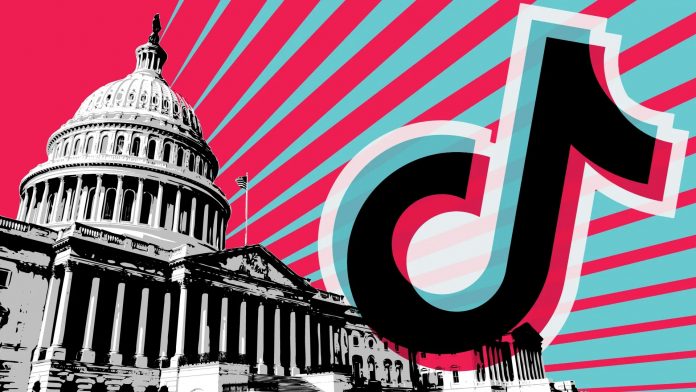
Ex Meta Global Affairs Chief Warns Against Tech-Politics Fusion Following Trump’s TikTok Deal

0

Nick Clegg, the former global affairs chief at Meta, has sounded a warning over the growing entanglement of politics and technology, describing it as a troubling development for the internet’s future.

Speaking Friday on CNBC’s Squawk Box, Clegg argued that innovation and governance are best kept apart.

“I generally don’t think that politics and tech innovation mixes very well,” he said. “I think it’s quite good when they kind of keep each other at a certain, respectful distance.”

His caution came at a moment when President Donald Trump’s new agreement with China over TikTok has once again placed a consumer app at the center of a global power struggle. The deal, announced in an executive order on Thursday, creates a joint-venture company to manage TikTok’s U.S. operations, with Oracle tasked to control cloud services and oversee security.

A Forced Sale Born Out of Politics

TikTok’s future in the U.S. has been contested for years. Washington lawmakers have long argued that ByteDance, TikTok’s Chinese parent company, poses national security risks because of potential access to American user data. During his first term, the Trump administration escalated those concerns into action, threatening to ban the app outright unless it was placed under U.S. oversight. The Joe Biden administration upheld the move with the signing of legislation designed to force TikTok’s divestment.

That ultimatum effectively forced ByteDance to accept a restructuring — widely seen as a political maneuver as much as a security measure. Oracle, a company with longstanding ties to Washington, emerged as a trusted custodian of TikTok’s U.S. data. The arrangement was designed to calm fears of surveillance while preserving the app’s availability to millions of American users.

ByteDance and Chinese officials have so far refrained from commenting on Trump’s latest executive order, but the lack of response underscores the delicate balance Beijing must strike: defending a successful global product without appearing to capitulate to U.S. pressure.

Clegg highlighted two critical areas where scrutiny is needed: the safety of American data and control of TikTok’s algorithm. The latter, he argued, will be “quite difficult” to share or replicate, given how closely algorithms are tied to a company’s intellectual property.

He also warned that government-driven efforts to silo data risk triggering a global domino effect. Citing India’s “hard data localization” law, Clegg said if every country starts demanding that data remain within its borders, “the open data flows that drive the internet will start eroding.”

Tech and Nationalism: A Growing Collision

The TikTok saga underlines a wider trend of national security increasingly becoming inseparable from technology policy. Both Washington and Beijing have embraced nationalist tech agendas. The U.S. has poured billions into reshoring semiconductor production and restricting Chinese access to advanced chips, while China has doubled down on state-driven programs to achieve self-reliance in areas like artificial intelligence and cloud infrastructure. Beijing has also restricted the operations of many U.S. tech companies in China.

This rivalry makes neutrality nearly impossible for global tech firms. Companies that once operated on the premise of borderless innovation are now forced to align with the strategic priorities of the nations where they operate. The TikTok case is just one in a series of battles — from Huawei’s exclusion from Western telecom networks to U.S. restrictions on Nvidia’s chip exports to China — that show how deeply entangled national security and technology have become.

Clegg pointed to India as a potential turning point in the global debate. He described the image of Prime Minister Narendra Modi standing alongside Chinese President Xi Jinping as “striking,” warning that if India follows China’s lead in walling off its digital ecosystem, the vision of a free and open internet could unravel.

“If India starts emulating China and starts trying to sort of cut off India, much like China has done from the rest of the internet … I think that would be terrible for the kind of global open principles that the internet was based on,” Clegg said.

The Internet’s Future in Question

Trump’s TikTok deal may address Washington’s immediate concerns, but it leaves unanswered questions about the direction of the global internet. Analysts note that each forced restructuring, ban, or localization effort nudges the web further away from its founding principles of openness.

Clegg believes the major risk is that political imperatives will continue to outweigh technical neutrality. In that scenario, technology firms — no matter how innovative — will be pulled into the gravitational field of state power, eroding the very openness that made the internet transformative in the first place.

6 Best Free Cloud Mining Apps of 2025: FY Energy – High Profit, Low-Risk Crypto Mining

0

As Bitcoin mining profits increase dramatically in 2025, more investors are looking for free cloud mining apps that will allow them to make crypto money without costly hardware or their electricity bill. These apps have become a success way that opens the passive income stream for both new and seasoned users.

FY Energy is the one that tops all of them. The company with a $20 free trial, daily payouts, and clean mining locations is changing the mining for free cloud apps to a new business model. Comparison to other platforms is shown below.

1. FY Energy — The Leading Free Cloud Mining App

FY Energy is a safe choice for a user as it was ranked the top mining app of 2025. It creates a winning scenario and caters to professionals by offering them a trial with zero risk and powerful high-yield contracts additionally.

Strengths: $20 free trial, multi-asset mining (BTC, ETH, DOGE, LTC), FinCEN registration, renewable energy centers, and profits up to 4% daily.

How FY Energy Wins Here: FY Energy is different from other apps as it allows trial mining combined with high-profit scalable contracts, making it possible to have the best of both worlds.

Advantages of FY Energy

  • Risk-Free Start: $20 free trial mining with no deposit required.
  • High Daily Profits: Contracts generate 32% to 4% daily, higher than most competitors.
  • Multi-Crypto Mining: BTC, DOGE and LTC mining all at once.
  • Eco-Friendly Operations: Completely renewable energy used for the operations.
  • Safe and Regulated: FinCEN registration gives security, McAfee® and Cloudflare® help with the encryption.
  • VIP & Affiliate Rewards: Get money not only from referrals but also from the VIP level.

FY Energy Contract Packages

Contract Name Contract Amount (USD) Duration (Days) Daily Earnings (USD) Total Earnings (USD) Daily Rate
LTC Free Experience Miner $20 1Day $0.8 $0.80 4%
DOGE Beginner Experience Miner $100 2Days $4.00 $8.00 4%
DOGE Miner ElphaPex DG1+ $620 5Days $8.37 $41.85 1.35%
BTC Miner SealMiner A2 Pro Air $3,100 12Days $45.26 $543.12 1.46%
BTC Miner WhatsMiner M63S++ $5,300 15Days $83.74 $1256.10 1.58%
BTC Miner Bitmain Antminer S21 XP+ Hyd $10,500 20Days $183.75 $3675.00 1.75%
BTC Miner ANTRACK V2 $50,000 25Days $1,075.00 $26,875.00 2.15%
BTC Miner ANTSPACE HW5 $250,000 26Days $6,275.00 $163,150.00 2.51%

Four Steps to Start: Register ? Deposit ? Earn ? Withdraw

The FY Energy mining method is simple and a beginner can easily understand it

2. StormGain — Built-in Exchange but Limited Free Mining

StormGain is a platform for trading that has an integrated wallet and mining feature.

  • Strengths: User-friendly app, wallet integration, and instant exchange access.
  • Weaknesses: Free mining is limited every day, with very low returns.
  • How FY Energy Wins Here: FY Energy’s $20 free trial offers a true daily profit, that is, a daily income far more than the one you get from the free mining.

3. Genesis Mining — Established but Outdated

Genesis Mining is the company that started cloud mining the longest time ago, and it still operates data centers all over the world.

  • Strengths: Brand with a history, clear and long-term contracts.
  • Weaknesses: No free trial, very few coins (BTC), and contracts usually freeze your money for a long time.
  • How FY FY Energy Wins Here: FY Energy has multiple coins and short-term contracts that create instant user access and risk-free trial participation.

4. NiceHash — Marketplace Flexibility but Hardware Dependent

NiceHash is a platform that links up the purchasers and the vendors of computational force.

  • Strengths: Large marketplace, many supported algorithms.
  • Weaknesses: It is necessary for users to have their mining rigs or to lease a hash power in order to make it too complicated for the beginners.
  • How FY Energy Wins Here: FY Energy’s application has no requirement for hardware, no need for any technical skill, and no setup—profits just start automatically.

5. CudoMiner — Multi-Coin but High Energy Costs

CudoMiner is mining software for the desktop that maximizes the user’s profits through coin switching.

  • Strengths: The software has good functionalities like multi-coin support, payout flexibility, and optimization features.
  • Weaknesses: The program works in a manner that it requires users to have powerful PCs, and the electricity consumption is high and the results vary with market conditions.
  • How FY Energy Wins Here: FY Energy provides daily payouts that are known in advance and come from renewable-powered data centers—there are no electricity costs for the users.

6. MinerGate — Beginner-Friendly but Unprofitable

MinerGate is an intuitive application that users are allowed to mine collectively.

  • Strengths: Easy setup, a large number of altcoins supported.
  • Weaknesses: The problem with mining is that the earnings are extremely low and the hardware is still required.
  • How FY Energy Wins Here: FY Energy offers real profits from cloud mining contracts even during the free trial, unlike MinerGate whose returns are negligible.

Conclusion

The first-hand strength of each of the platforms StormGain, Genesis Mining, NiceHash, CudoMiner, and MinerGate is unarguably their respective well-roundedness. While this may be true, these platforms still struggle with the problem of restricted free mining, hardware dependency, as well as issues with the level of profitability being too low.

In every aspect, FY Energy is superior to them with its free trial, high-profit contracts, renewable-powered data centers, and guaranteed daily payouts, the best free cloud mining app in 2025.

Start your FY Energy Passive Income Journey Today and from Your first Day, Enjoy Daily Passive Income.

Website: https://fyenergy.com/

Email: info@fyenergy.com

App download: https://fyenergy.com/index/index/app.html


#crypto mining

#cloud mining

#Blockchain

#Best earning platform

#High profit platform


Google Expands Cheaper AI Plus Plan to Over 40 Countries, Undercutting Rivals in Global AI Subscription Race

0

Google has rolled out its new, lower-cost AI Plus plan to more than 40 countries, aiming to bring advanced AI features to markets where its standard $20 monthly subscription has been out of reach.

The plan, first introduced in Indonesia earlier this month at Rp 75,000 (about $4.50), is priced at around $5 per month in most countries. In select markets such as Nepal and Mexico, Google is offering a 50% discount for the first six months.

The rollout includes countries across Africa, Asia, and Latin America, with Angola, Bangladesh, Cameroon, Côte d’Ivoire, Egypt, Ghana, Indonesia, Kenya, Mexico, Nepal, Nigeria, Philippines, Senegal, Uganda, Vietnam, and Zimbabwe among those named.

What Google’s AI Plus Plan Offers

Subscribers get access to Gemini 2.5 Pro, Google’s most advanced model, alongside creative tools such as Flow, Whisk, and Veo 3 Fast for image and video generation. The plan also unlocks more capabilities on NotebookLM, Google’s AI research assistant, allows AI use inside Gmail, Docs, and Sheets, and includes 200GB of cloud storage.

The bundle highlights Google’s push to make AI not just an optional add-on, but a seamless part of daily productivity and entertainment.

A Direct Counter to OpenAI

The move comes just one day after OpenAI expanded its sub-$5 ChatGPT Go plan to Indonesia, intensifying competition between the two companies. Both still offer their $20 per month flagship subscriptions, but the cheaper tiers are designed to attract users in markets where affordability drives adoption.

One conspicuous omission from Google’s rollout is India, where OpenAI launched ChatGPT Go earlier this year. Industry analysts note that India remains one of the most critical growth markets for generative AI, though regulatory and infrastructure concerns may explain Google’s delay.

Two Different Strategies: Bundling vs. Pure AI

Google’s approach is built around ecosystem lock-in. By weaving AI into widely used services like Gmail, Docs, and Sheets—and pairing it with cloud storage—Google is tying generative AI to tools that already have billions of users. The strategy mirrors its playbook with Android and Google Workspace, where integration made switching costs high for users and enterprises alike.

OpenAI, by contrast, has focused on a “pure AI” approach. Its ChatGPT products are positioned primarily as conversational assistants and productivity enhancers without a broader ecosystem of default tools. The model allows OpenAI to innovate rapidly in AI capabilities, but leaves it dependent on partnerships—such as its multibillion-dollar tie-up with Microsoft—for distribution and integration.

Emboldening the contrast, Google is betting on breadth, embedding Gemini across everything from email to spreadsheets to creative tools, while OpenAI is betting on depth, doubling down on ChatGPT’s conversational and reasoning abilities as the centerpiece.

Why Emerging Markets Matter

Both companies appear to be converging on the same conclusion: to dominate the AI subscription market, they must first win in emerging economies, where hundreds of millions of potential paying users are price-sensitive.

This mirrors the smartphone wars of the past decade, when affordability in markets like Africa, Asia, and Latin America shaped global leaders. Adoption in these regions could decide which company sets the standard for everyday AI use worldwide.

Google’s bundling strategy may give it a stickier advantage, especially in places where Gmail and Docs are already widely used. OpenAI, meanwhile, will need to convince users that ChatGPT alone is compelling enough to justify the subscription—even without an ecosystem of tools built around it.