DD
MM
YYYY

PAGES

DD
MM
YYYY

spot_img

PAGES

Home Blog Page 45

‘You Cannot Tax Your Way Out of Poverty’: CPPE, Peter Obi Warn of Economic Risks in Nigeria’s Tax Reform Push

0

As Nigeria presses ahead with one of the most far-reaching tax overhauls in decades, concerns are mounting that the reforms, if poorly sequenced and aggressively enforced, could end up weakening the economy they are meant to strengthen.

The Centre for the Promotion of Private Enterprise (CPPE) is now joined by a growing chorus of critics, including former Anambra State governor Peter Obi, who argue that taxing an economy dominated by the informal sector and hardship risks deepening poverty rather than unlocking growth.

In a statement issued on Sunday, CPPE’s Chief Executive Officer, Dr. Muda Yusuf, warned that Nigeria’s tax reform drive could undermine the informal sector if it fails to reflect the realities of how most Nigerians earn a living. While acknowledging that reform is necessary to shore up government revenue and improve fiscal sustainability, Yusuf stressed that Nigeria’s economic structure demands caution, inclusiveness, and careful sequencing.

Nigeria’s informal economy is not a fringe segment; it is the backbone of employment and income generation. Yusuf pointed out that the country has an estimated 40 million micro, small, and nano enterprises, with more than 80 percent operating outside the formal system. Data from the National Bureau of Statistics Labour Force Survey show that over 90 percent of jobs are in the informal economy, underscoring its centrality to social stability and household survival.

Against this backdrop, CPPE argues that reforms built around mandatory filing, defined record-keeping standards, strict penalties, and presumptive taxation risk alienating the very businesses policymakers hope to formalize. Most informal operators, Yusuf said, lack structured accounting systems and have a limited understanding of tax concepts such as company income tax, value-added tax, personal income tax, and withholding tax. Many operate largely in cash, on thin margins, with limited literacy and digital capacity, making compliance with technically complex tax rules both costly and intimidating.

The organization warned that without deliberate sequencing, taxpayer education, and transitional support, these measures could discourage voluntary compliance and push businesses further into the shadows. Instead of widening the tax net sustainably, the reforms could shrink it by driving economic activity away from visibility.

One provision that has triggered particular anxiety among small and medium-sized enterprises is the requirement for banks to report quarterly transactions of N25 million and above to tax authorities. CPPE noted that many SMEs handle pass-through or custodial funds that do not represent actual income. In such cases, high turnover does not equate to high profitability, yet these firms could be subjected to audits, disputes, and compliance costs that overwhelm their capacity.

Beyond SMEs, CPPE highlighted broader macroeconomic risks. The proposed increase in capital gains tax from 10 percent to 30 percent has unsettled investors in the stock market and real estate sector, even with assurances around thresholds. At a time when confidence remains fragile, Yusuf warned that such a sharp increase could dampen investment appetite and slow capital formation.

The organization also questioned the adequacy of the N500,000 annual rent relief cap, arguing that it no longer reflects the reality of housing costs in major urban centers. With rents surging across cities, CPPE said the cap offers limited relief and could further squeeze middle-class disposable income, with negative implications for consumption and economic momentum.

Concerns also extend to the wide enforcement powers granted to tax authorities and the severity of penalties embedded in the new tax laws. CPPE cautioned that excessive enforcement in an economy dominated by small and informal businesses could stifle enterprise growth and deepen distrust between taxpayers and the state. Yusuf argued that trust-building, clarity, and gradual integration into the formal economy should take precedence over punitive enforcement.

These concerns are not limited to the private sector advocacy community. Former Anambra State governor and presidential candidate Peter Obi has also decried the direction of Nigeria’s tax reforms, framing the debate in stark moral and economic terms.

“Prosperity cannot come by taxing poverty,” Obi said, urging the government to rethink its approach if it is serious about economic growth, national unity, and shared prosperity. He argued that taxation without growth risks turning fiscal policy into a tool that punishes survival rather than rewards productivity.

“The purpose of sound fiscal policy is not merely to raise revenue; it is to make the people wealthier so that the nation itself becomes stronger,” Obi said. “Yet today, Nigerians are asked to pay taxes without clarity, explanation, or visible benefit.”

Obi’s critique goes to the heart of a broader concern: that revenue mobilization is being prioritized over wealth creation. He argued that the foundation of a sustainable tax system lies in empowering small and medium-sized enterprises across communities. When businesses thrive, he said, jobs are created, incomes rise, and the tax base expands naturally.

“You cannot tax your way out of poverty — you must produce your way out of it,” Obi said, warning that overburdening struggling businesses and households could weaken social cohesion and undermine long-term growth.

The warnings come even as President Bola Tinubu has made clear that the reforms will proceed as planned. In December, the president reaffirmed the Federal Government’s commitment to implementing the new tax laws, despite calls for suspension or review. He said the reforms, signed into law on June 26, 2025, and taking effect from January 1, 2026, are central to rebuilding Nigeria’s fiscal framework and reducing reliance on borrowing.

The tax acts represent one of the most comprehensive overhauls of Nigeria’s tax system in decades, aimed at boosting non-oil revenue and improving compliance. However, critics argue that ambition alone will not guarantee success. Without sensitivity to Nigeria’s economic realities, clearer communication, and policies that prioritize growth and productivity, the reforms risk widening the gap between fiscal intent and economic outcome.

The message, which has been chorused by economists, is that a tax system divorced from the lived realities of citizens, especially those in the informal economy, may raise short-term revenue but undermine the long-term goal of economic growth.

Bitcoin Surges Above $93,000, Market Optimism Returns as Traders Maintain Bullish Bets

0

Bitcoin has started the new year with renewed momentum, extending its recovery as investor sentiment improves across global markets.

The world’s largest cryptocurrency has surged above $93,000 price, after it climbed as high as $93,344 on Wednesday, reflecting a broader resurgence in risk assets.

Market observers attribute the move to what some describe as an “everything rally.” Min Jung, a research associate at Presto Research, noted that Bitcoin’s advance mirrors gain in Asian equity markets, with indices such as South Korea’s Kospi and Japan’s Nikkei rising more than 2%. The alignment suggests crypto markets are once again responding to broader macro risk sentiment rather than moving in isolation.

Nick Ruck, Director of LVRG Research, echoed this view, pointing to renewed investor participation as businesses reopen for the new year. He added that continued institutional accumulation during Bitcoin’s recent consolidation phase has helped underpin the latest rally.

“Traders are closely monitoring key resistance levels around $95,000 for signs of a sustained breakout, alongside potential impacts from broader macroeconomic shifts and ETF flow dynamics in early 2026,” Ruck said.

Meanwhile, long-time Bitcoin critic and gold advocate Peter Schiff has dismissed the crypto rally, arguing that the era of digital asset “mania” is over. Schiff pointed instead to a sharp rally in precious metals, highlighting gold’s surge above $4,400, alongside strong gains in silver, platinum, and palladium. He attributes the move to inflation concerns, rate-cut expectations, and rising geopolitical risks.

However, current market data shows both narratives unfolding simultaneously. While precious metals benefit from safe-haven demand, Bitcoin has also climbed above $90,000, challenging his view that capital is rotating exclusively out of digital assets.

Sentiment Improves, But Caution Persists

Market psychology has shown notable improvement. The Crypto Fear & Greed Index has climbed from 29 last week to 40, signaling a move away from “Extreme Fear,” a zone often associated with capitulation. While sentiment remains cautious, the shift suggests growing confidence among participants.

Geopolitical developments continue to shape the narrative. Reports surrounding U.S.–Venezuela tensions remain in focus, particularly amid claims that Venezuela may be holding a substantial Bitcoin reserve. Intelligence reports cited by Whale Hunting researchers Bradley Hope and Clara Preve suggest the Venezuelan government may have accumulated between $56 billion and $67 billion worth of Bitcoin and stablecoins.

According to these reports, the accumulation began around 2018, when Venezuela allegedly sold gold from the Orinoco Mining Arc and converted part of the proceeds into Bitcoin. As U.S. sanctions intensified, oil buyers were reportedly required to settle transactions using USDT (Tether), with portions later converted into Bitcoin to reduce the risk of address freezes.

Additional sources of crypto holdings are believed to include seized mining operations and crude-for-crypto arrangements between 2023 and 2025. Combined estimates suggest Venezuela could control 600,000 BTC or more, potentially placing it among the largest Bitcoin holders globally, alongside institutions such as BlackRock and MicroStrategy.

Despite the positive momentum, volatility is expected to persist. Traders are closely watching key U.S. economic data this week, including ISM Services, JOLTS, and Friday’s Non-Farm Payrolls and wage growth figures, all of which could influence Federal Reserve rate-cut expectations.

From a technical standpoint, Bitcoin remains constructive if it holds above $91,500. Immediate resistance sits near $93,200, followed by $93,500 and $94,000. A sustained close above $94,000 could open the door for a test of $94,650, with further upside toward $95,000, $95,500, and potentially $95,800.

Outlook

While Bitcoin’s strong start to the year reflects improving sentiment and supportive risk conditions, caution remains warranted. The Fear & Greed Index is still firmly within “Fear” territory, underscoring lingering uncertainty around Federal Reserve policy following hawkish signals from December’s FOMC minutes. Additionally, the recent rebound may partly reflect technical repositioning after year-end tax-loss selling rather than a decisive shift in long-term conviction.

Looking ahead, Bitcoin’s near-term direction is likely to be shaped by macroeconomic data, ETF flow dynamics, and geopolitical developments. A confirmed break above the $95,000 resistance zone could reinforce bullish momentum, while failure to hold key support levels may reintroduce volatility as markets reassess risk in early 2026.

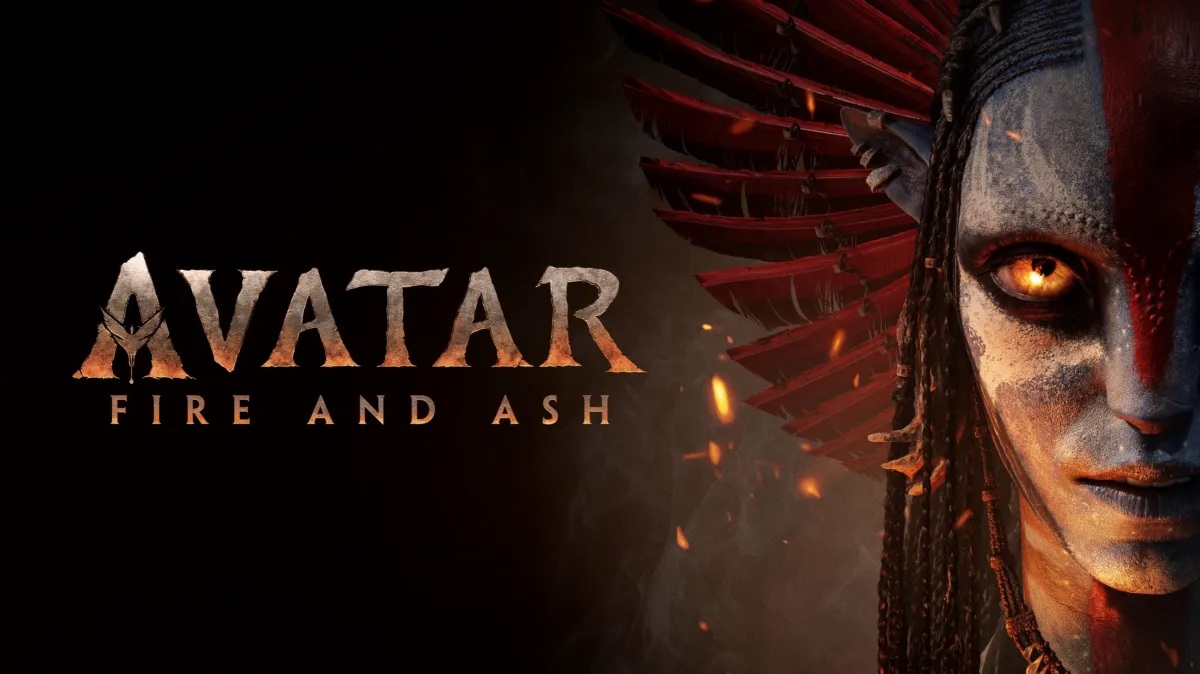
Avatar: Fire and Ash Tops $1bn, Reaffirming James Cameron’s Rare Box Office Power in a Fragile Cinema Market

0

James Cameron has again achieved what few modern filmmakers consistently manage: pulling global audiences back into movie theaters at scale. Avatar: Fire and Ash, the third installment in the science-fiction saga, has crossed $1 billion in worldwide box office receipts, reinforcing both the commercial durability of the franchise and Cameron’s singular standing in Hollywood.

Walt Disney Studios said the film has generated about $1.03 billion globally, making it Cameron’s fourth movie to clear the billion-dollar threshold after Titanic, Avatar, and Avatar: The Way of Water. In an era when even established franchises struggle to sustain momentum beyond opening weekends, the performance of Fire and Ash stands out as a notable exception.

The film’s global skew is particularly striking. International markets accounted for roughly $777.1 million of total revenue, compared with $306 million from the U.S. and Canada. That imbalance highlights the franchise’s deep appeal outside North America and underscores how critical overseas audiences have become for large-scale studio releases. For Disney, the results mark a truly global property, justifying the kind of long production cycles and budgets that Avatar demands.

Fire and Ash continues the narrative from The Way of Water, centering on Jake Sully and Neytiri as they navigate loss and escalating conflict on Pandora. While the emotional through-line is darker than in earlier installments, audiences have responded strongly to Cameron’s blend of spectacle and character-driven storytelling. Industry analysts note that the Avatar films benefit from being designed first and foremost as theatrical experiences, particularly in premium formats such as IMAX and 3D, where ticket prices are higher and margins stronger.

“These movies consistently draw audiences to the movie theater,” said Paul Dergarabedian, head of marketplace trends at Comscore, pointing out that Cameron’s visual approach is uniquely suited to large screens.

That distinction matters at a time when studios are grappling with streaming competition and shortened theatrical windows that have eroded the perceived value of cinema releases.

The latest milestone also adds to the extraordinary cumulative performance of the Avatar franchise, which has now earned about $6.35 billion globally. The original Avatar, released in 2009, remains the highest-grossing movie of all time in nominal terms at roughly $2.9 billion, according to Comscore. While it trails Gone With the Wind when adjusted for inflation, its impact reshaped Hollywood’s approach to 3D filmmaking and visual effects-driven blockbusters.

Thirteen years later, Avatar: The Way of Water demonstrated that the franchise had not lost relevance, grossing more than $2.3 billion worldwide and winning an Oscar for visual effects. The success of Fire and Ash now suggests that Cameron’s long-term bet on building a multi-film saga, developed over decades rather than annual release cycles, continues to pay off.

Beyond Cameron’s personal achievements, the film’s performance carries broader implications for the industry. It strengthens the case that event films with clear theatrical value can still thrive, even as mid-budget titles and less distinctive franchise entries struggle to break through. It also provides Disney with a rare source of box office certainty at a time when studios are under pressure to rein in costs and focus on fewer, higher-impact releases.

Cameron’s track record further sets him apart from his peers. Titanic, released in 1997, earned nearly $2.3 billion globally and held the all-time box office record for more than a decade. That same pattern of skepticism followed by overwhelming success has repeated itself with each Avatar release, reinforcing the director’s reputation for delivering commercial results that justify his ambitions.

With additional Avatar sequels already in development, Fire and Ash serves as both a validation of the franchise’s staying power and a signal to Hollywood that, under the right conditions, audiences remain willing to commit time and money to the shared experience of cinema.

Flutterwave Acquires Mono in $25–$40 Million All-Stock Deal to Deepen Africa’s Open Banking Infrastructure

0

Flutterwave, a leading African fintech providing payment infrastructure for global merchants and payment service providers, has acquired Nigerian open banking startup Mono in an all-stock transaction valued between $25 million and $40 million, according to sources familiar with the deal.

Founded in 2020, Mono powers Africa’s digital economy by providing financial data, identity verification, and direct bank payments for businesses. This enables financial institutions to analyze income flows, spending patterns, and repayment capacity, which have become foundational to modern lending, costs, and embedded finance.

The acquisition marks a strategic shift for Flutterwave as it looks beyond payment rails to address deeper structural challenges within Africa’s financial ecosystem.

Moving Beyond Payments to Trust and Interoperability

Africa’s financial system has long been characterized by fragmented infrastructure and disconnected platforms. While Flutterwave has played a major role in building payment bridges across the continent, the company says unlocking Africa’s full digital economy requires going deeper into data, trust, and interoperability.

By integrating Mono’s open banking and account-based payment infrastructure into its ecosystem, Flutterwave says it is not merely adding a new product, but upgrading the core engine that powers its platform. The combined infrastructure is expected to make payments more inclusive, interoperable, and scalable for businesses and consumers across Africa.

Flutterwave CEO Olugbenga ‘GB’ Agboola described the acquisition as a bet on the next phase of Africa’s fintech evolution.

He said, “Payments, data, and trust cannot exist in silos. Open banking provides the connective tissue, and Mono has built critical infrastructure in this space.”

Also commenting, Mono CEO and co-founder Abdul Hassan described the deal as a strategic move to accelerate a shared vision.

In his words, “This acquisition is not just a milestone for our company; it’s a strategic move to accelerate our shared vision. By combining Flutterwave’s scale and network with Mono’s pioneering technology, we are positioned to deliver one of the most comprehensive financial stacks for SMEs, enterprises, and developers across Africa.”

Mono claims its infrastructure is used by nearly all digital lenders in Nigeria. The company says it has powered over 8 million bank account linkages, representing roughly 12% of Nigeria’s banked population, delivered more than 100 billion financial data points to lending companies, and processed millions of dollars in direct bank payments.

What the Deal Means for Flutterwave Merchants

For merchants using Flutterwave, the acquisition is expected to significantly reduce friction, particularly around onboarding and customer verification.

With Mono’s APIs integrated directly into Flutterwave’s systems:

  • KYC processes that previously took days could be completed in seconds

  • Transaction intelligence is expected to improve through better customer verification and risk assessment

  • Scalability will increase, enabling merchants to explore new business models and markets

In an increasingly competitive digital economy, speed is becoming a defining advantage, and the combined platform aims to deliver it at scale.

Unlocking Growth for SMEs

Small and medium-sized enterprises remain the backbone of Africa’s economy, yet many have struggled with rigid systems that make customer verification and access to financial data complex and costly.

Flutterwave says the acquisition changes that dynamic by lowering barriers to entry and simplifying how trust is established between businesses and their customers. Faster onboarding, clearer customer visibility, and access to modern financial tools could help SMEs scale more efficiently. The company argues that enabling SME growth has a multiplier effect driving employment, innovation, and broader economic development across the continent.

Beyond merchants and SMEs, the integration is expected to improve everyday payment experiences for consumers. By embedding open banking deeper into payment flows, transactions such as bank transfers and service payments could become faster and more seamless, with technology operating largely in the background.

At an ecosystem level, Flutterwave and Mono say the combined infrastructure will strengthen Africa’s “payments superhighway” connecting banks, fintechs, and businesses while enabling faster innovation in payments, lending, and embedded finance.

Together, both companies aim to expand the potential of open banking across Africa, positioning local businesses to build globally competitive financial products and participate more fully in the global digital economy.

Ozak AI Post-Listing Forecast: $1 in 2026, $5 in 2027, $10 in 2028 — A Potential 700× Roadmap for Early Investors

0

Ozak AI ($OZ) continues to establish itself as one of the most promising AI-crypto projects of the decade, blending advanced artificial intelligence with a decentralized physical infrastructure network (DePIN) to create a powerful ecosystem for predictive analytics, automation, and cross-chain intelligence. As the market looks ahead to the next major AI cycle, Ozak AI’s growth trajectory, rapid presale progress, and expanding list of strategic partnerships are positioning the token for a breakthrough listing in 2026 with long-range valuations suggesting the possibility of transformative returns for early adopters.

Presale Momentum Strengthens Ahead of Major Listing Milestones

The project is currently in Phase 7, with the presale accelerating at a pace not seen in most AI-driven launches this year. The token is priced at $0.014, marking a dramatic climb from its earliest stage, creating a multi-hundred-percent increase for the earliest supporters. Sales continue to surge, with 1.07 billion $OZ already sold, bringing the total funds raised to $5.38 million. With a $1 listing target, the upside potential remains significant, especially when compared to Phase 1 pricing and the strong demand observed as the ecosystem expands.

What Sets Ozak AI Apart — The Technology That Powers Its Growth

The fusion of AI-powered infrastructure with DePIN architecture forms the heart of Ozak AI’s momentum. In this design, it is possible to have real-time analytics, cross-chain automation, and decentralized intelligence working in a unified environment. Users benefit from predictive AI tools, data-driven execution, and full dApp integration across blockchains. The $OZ token plays a central utility role through staking, governance, and ecosystem incentives, while the project’s audit verification ensures a high level of transparency and security, a rare combination during presale stages.

Partnerships Fueling Ozak AI’s Expansion Across AI, DeFi, and Web3

Ozak AI’s rapid rise is closely coupled with its expanding ecosystem of partnerships, each reinforcing the technical strength and cross-industry relevance of the project. The alliance with SINT enhances automation by enabling Ozak AI’s market signals to execute through one-click autonomous agents, voice-enabled systems, and cross-chain bridges. Its partnership with Hive Intel (HIVE) gives Ozak AI direct access to deep blockchain data including wallet behavior, NFT movements, and liquidity flows improving predictive accuracy significantly. The integration with Weblume extends Ozak AI’s capabilities into a no-code environment, enabling users to embed live market intelligence into dashboards and decentralized apps instantly.

Expanding its decentralized infrastructure, Ozak AI’s collaboration with Meganet taps into a network of more than 6.5 million nodes, providing scalable compute and data distribution crucial for next-generation AI systems. Additionally, the project reinforces its security and transparency by an audit from @sherlockdefi, reaching zero unresolved issues. Collectively, these partnerships are forming a strong bedrock for high-value adoption and a long-term technological relevance of the project.

Forecasting the Post-Listing Path — Why Analysts Believe $1, $5, and $10 Are Realistic Milestones

With AI adoption accelerating globally and decentralized intelligence emerging as a core blockchain trend, Ozak AI is positioned to benefit from both narratives simultaneously. If Ozak AI lists at $1 in 2026, the growth would already mark a significant multiplier compared to the current $0.014 presale price. Projections indicate that sustained user adoption, expanded cross-chain deployment, and ecosystem growth could push the token toward $5 in 2027, especially if the broader AI market enters another expansion cycle. Long-term models suggest that by 2028, a $10 valuation becomes attainable if infrastructure integrations deepen and predictive-AI usage scales across industries. For early investors participating at today’s presale pricing, the potential 700× roadmap emerges from this multi-year expansion offering a rare asymmetric opportunity during a period of rising global interest in AI-native assets.

Conclusion

Amidst the sea of fleeting fads that characterize the market, Ozak AI is on a different trajectory. With its combination of AI innovation, DePIN infrastructure, strategic partnerships, and strong presale momentum, a foundation is laid out that not only aligns with long-term blockchain and AI development cycles but also one from which early investors could see their value progress from $1 to $5 to $10-not as some theoretical model, but as a realistic pathway carved out by adoption, utility, and execution. With the project inching closer to its major exchange listing, Ozak AI is continuing to make its case as one of the most impactful AI tokens of the coming decade.


For more information about Ozak AI, visit:

Website: https://ozak.ai/

Twitter/X: https://x.com/OzakAGI

Telegram: https://t.me/OzakAGI