DD
MM
YYYY

PAGES

DD
MM
YYYY

spot_img

PAGES

Home Blog Page 45

U.S. Treasury Yields Held In A Narrow Range As Investors Digest Economic Data

0

U.S. Treasury yields held in a narrow range on Thursday, as investors parsed a steady flow of economic data while keeping one eye on an increasingly complex mix of trade signals, geopolitics, and political developments in Washington.

The benchmark 10-year Treasury yield edged higher by just over one basis point to 4.265%, a move that signaled caution rather than conviction. The 30-year yield was largely unchanged at 4.873%, while the policy-sensitive 2-year note climbed by more than a basis point to 3.61%. The muted shifts pointed to a market struggling to reconcile strong domestic fundamentals with rising uncertainty around policy direction.

Early trading leaned slightly bearish for bonds after new labor market data reinforced the view that the U.S. economy remains on a firm footing. Initial jobless claims for the week ended January 17 fell to 200,000, below the 208,000 forecast by economists surveyed by Dow Jones. Claims were marginally higher than the prior week after an upward revision, but the broader trend continues to show limited stress in the labor market.

For bond investors, the implication was straightforward: an economy still generating jobs at a solid pace reduces the urgency for aggressive interest-rate cuts. Chris Rupkey, chief economist at FWDBONDS, said the data fit a pattern of economic growth running well above 3%, with labor indicators pointing to a potentially strong January employment report.

In his view, the resilience of growth and hiring suggests that the economy is performing well without additional intervention. That assessment matters for Treasuries, as expectations around Federal Reserve policy remain one of the dominant drivers of yields, particularly at the front end of the curve.

Later in the session, attention shifted to inflation, where the Commerce Department reported that both headline and core personal consumption expenditures price index readings for November matched expectations. The PCE index is closely followed by Federal Reserve officials, and the absence of any upside surprise helped calm fears that inflation pressures were re-emerging after months of gradual easing.

Still, the data did little to move yields decisively. Investors appear increasingly sensitive not just to economic releases, but to how those figures interact with political signals coming from the White House and the Federal Reserve.

One such signal came from President Donald Trump, who said in an interview with CNBC at the World Economic Forum in Davos that he may have already selected his nominee to replace Jerome Powell as Fed chair. Trump said the shortlist had narrowed sharply, suggesting that a final decision was effectively settled in his mind, though he declined to identify the candidate.

The comment injected an additional layer of uncertainty into markets. Even though Powell’s term still has time remaining, early speculation about the next Fed chair raises questions about the future policy stance of the central bank, particularly at a moment when investors are debating how long rates will remain elevated.

That uncertainty is compounded by scrutiny surrounding Powell himself. The Fed chair recently said he was under investigation by the Department of Justice in connection with the $2.5 billion renovation of the Federal Reserve’s headquarters in Washington. While the issue has not altered policy operations, it has added political noise at a time when markets are highly sensitive to any hint of instability at the central bank.

Geopolitical developments also played a role in shaping sentiment. Trump said he had reached what he described as a “concept of a deal” on Greenland, following earlier remarks that he would not pursue control of the Danish territory through military means. In a subsequent post on Truth Social, he said tariffs announced last week on eight European countries opposing a U.S. takeover would not take effect.

The decision eased immediate trade-related anxiety that had weighed on markets earlier in the week. Tariff threats had contributed to sharp swings across equities, currencies, and bonds, with Treasuries initially benefiting from a flight to safety. Thursday’s pause in escalation removed one source of pressure, leaving yields to drift rather than trend.

The combination of firm economic data, steady inflation readings, and shifting political signals left the Treasury market in a holding pattern. Shorter-dated yields continued to show sensitivity to labor strength and Fed policy expectations, while longer-dated yields suggested investors remain uncertain about the long-term path of growth, inflation, and fiscal policy.

Currently, the bond market appears to be waiting for a clearer catalyst. A stronger-than-expected jobs report could push yields higher by reinforcing the case for rates to stay elevated. On the other hand, renewed trade tensions or sharper political uncertainty could revive demand for safe-haven assets. Until one of those forces asserts itself, Treasury yields look set to remain range-bound, even as the list of risks facing investors continues to grow.

At Tesla, Proof Beats Pedigree as Musk Asks Applicants to Keep Resume and Show Results

0

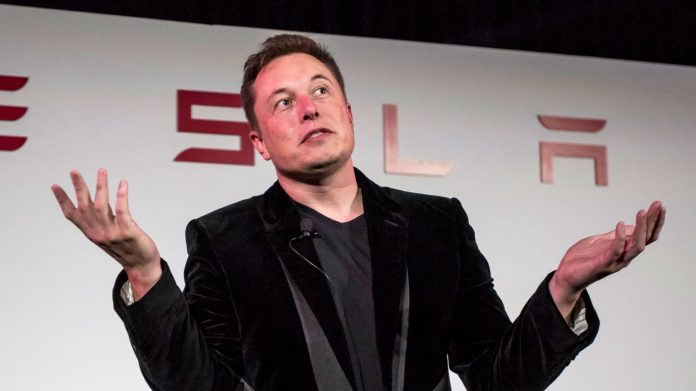
Elon Musk has never been sentimental about hiring rituals, but his latest recruitment call strips the process down to its bare essentials. If you want to work on Tesla’s Dojo3 AI chip, he does not want your résumé front and center. He wants three bullet points. Specifically, the toughest technical problems you have solved.

The request, posted this week on X, is less a quirky billionaire flourish than a window into how elite tech hiring is tightening under pressure. Musk’s message was blunt: email three bullets describing hard problems conquered. No flowery cover letters. No sprawling résumés polished to perfection. Just outcomes.

For recruiters watching Silicon Valley’s recalibration, the subtext is unmistakable. Companies are no longer hiring for potential narratives. They are hiring for demonstrated impact.

“He’s basically just trying to cut through the noise of the job market,” Business Insider quoted Michelle Volberg, a longtime recruiter and founder of Twill, a startup that pays tech workers to recommend peers for hard-to-fill roles, as saying.

In her view, traditional résumés and LinkedIn profiles often obscure more than they reveal, especially in technical fields where job titles can mean wildly different things from one company to the next.

Asking candidates to spell out a small number of hard-won victories forces clarity. It moves the conversation away from buzzwords and toward evidence. For hiring managers drowning in applications, that matters.

The timing is not accidental, as tech hiring is emerging from a period defined by excess. Pandemic-era overexpansion, followed by mass layoffs and a surge in AI investment, has produced a market where headcount is tightly controlled, and expectations are unforgiving. In that environment, the premium is on people who can show, not tell.

Volberg said she hears growing frustration from hiring managers about résumés that appear engineered for applicant-tracking systems rather than for humans. Some are so tailored that they reveal little about how candidates actually think or solve problems.

“They don’t want to see fluffy résumés that have been written by ChatGPT,” she said.

Musk’s approach fits neatly into a broader shift toward what HR professionals describe as skills-based hiring. Instead of leaning on credentials, pedigree, or years of experience, employers are increasingly probing how candidates arrive at answers, how they navigate ambiguity, and how they perform under pressure.

In Musk’s case, the emphasis on outcomes is also consistent with his long-held skepticism of formal qualifications. He has repeatedly said that a college degree is not a prerequisite for working at Tesla, arguing that evidence of exceptional ability matters more than where someone studied or whether they studied at all.

This is not the first time he has used bullets as a filter. BI reports that in 2025, while overseeing recruitment tied to the Department of Government Efficiency, Musk issued a similar call for “world-class” engineers and product managers, asking applicants to submit two or three bullets showcasing exceptional ability, alongside a résumé. The pattern suggests a philosophy rather than a one-off stunt.

From a hiring perspective, the bullet test raises the stakes for candidates. Volberg said it quickly exposes exaggeration. Anyone claiming to have solved complex technical problems must be prepared to unpack them in detail. In interviews, it becomes obvious who actually did the work and who merely inherited the credit.

“If you say you’ve solved these three things, you’d better be able to talk about them,” she said. Candidates who cannot often do not just lose the opportunity; they risk damaging their reputation with recruiters.

Still, the approach is not without its blind spots. David Murray, chief executive of performance management startup Confirm, cautioned that asking applicants to self-select their greatest wins may disadvantage quieter contributors who are less inclined to market themselves. Technical excellence does not always correlate with confidence or self-promotion.

There is also the risk of overconfidence skewing the pool. The Dunning-Kruger effect, where weaker performers overestimate their abilities while stronger ones underplay theirs, could mean that some of the most capable engineers do not shine in a three-bullet self-assessment.

“What he is asking people to do is to market themselves,” BI quoted Murray as saying.

Yet even those caveats underline the larger point. Musk is not trying to design a universally fair hiring system. He is optimizing for speed, signal, and intensity in one of the most competitive corners of AI development. Dojo3, Tesla’s in-house AI chip effort, sits at the heart of the company’s ambitions in autonomy and robotics. The margin for error is slim.

In that sense, the bullets are less about minimalism than about accountability. They force candidates to anchor their claims in reality. They also signal to the market that, at least at Tesla, the era of hiring on credentials alone is fading.

For job seekers, the implication is sobering but clear. The story you tell about yourself matters less than the problems you can prove you have solved. In Musk’s world, results are the résumé.

Former Google Engineers Bet on Interactive AI to Rethink How Children Learn With Sparkli

0

Big technology companies and a growing crop of startups are racing to use generative artificial intelligence to build software and hardware for children.

Most of those efforts, however, still lean heavily on text or voice-based interfaces — formats that often struggle to hold a child’s attention. Three former Google employees believe that gap is precisely where their new startup, Sparkli, has an opening, according to TechCrunch.

Founded last year by Lax Poojary, Lucie Marchand, and Myn Kang, Sparkli is an AI-powered interactive learning app designed to turn children’s questions into immersive, multimedia “expeditions.” The founders say the idea emerged from a practical frustration they experienced as parents.

“Kids, by definition, are very curious,” Poojary said in an interview. “My son would ask me questions about how cars work or how it rains. I would try using tools like ChatGPT or Gemini to explain these concepts to a six-year-old, but that’s still a wall of text. What kids want is an interactive experience.”

The team behind Sparkli brings deep experience inside Google’s ecosystem. Before this venture, Poojary and Kang co-founded Touring Bird, a travel aggregator, and Shoploop, a video-focused social commerce app, both developed within Google’s Area 120 internal incubator. Poojary later worked on shopping products across Google and YouTube. Marchand, now Sparkli’s chief technology officer, also co-founded Shoploop and went on to work at Google.

That background shapes Sparkli’s core pitch: generative AI should not just answer questions, but create experiences. Poojary explains the evolution this way: years ago, a child curious about Mars might have been shown a picture; later, a video. Sparkli aims to let children explore and interact with what Mars might feel like, rather than passively consuming information.

At a time when many education systems struggle to keep pace with rapid technological change, Sparkli is positioning itself as a supplement rather than a replacement for classrooms. The app focuses on topics that are often underrepresented in traditional curricula, including financial literacy, entrepreneurship, and design skills. Each topic becomes an AI-generated learning journey, built on demand.

Children can choose from predefined subjects or ask their own questions, which the system then turns into a structured learning path. Each topic is broken into chapters that combine audio narration, text, images, video clips, quizzes, and games. The app also features daily highlighted topics to encourage regular exploration, as well as “choose-your-own-adventure” style paths that remove the pressure of right-or-wrong answers.

Under the hood, Sparkli relies heavily on generative AI to produce its content in real time. The company says it can generate a complete learning experience within about two minutes of a child asking a question, and that it is working to shorten that turnaround further. This on-the-fly approach allows the app to adapt to a wide range of interests without relying on a fixed content library.

The founders are careful to draw a distinction between Sparkli and general-purpose AI assistants. While chatbots can explain concepts, Poojary argues they are not designed with children’s cognitive development in mind. To address that, Sparkli’s first hires included a PhD-trained specialist in educational science and AI, as well as a classroom teacher. The goal, the company says, is to ensure that pedagogy — not just technology — shapes how content is delivered.

Safety is another central concern, particularly as AI tools for children face growing scrutiny. OpenAI and Character.ai are among the companies facing lawsuits from parents who allege their products encouraged harmful behavior. Sparkli says it has taken a more restrictive approach. Certain topics, such as sexual content, are entirely blocked. When children ask about sensitive issues like self-harm, the app shifts toward teaching emotional intelligence and encourages conversations with parents, rather than attempting to handle the issue autonomously.

So far, Sparkli’s early traction has come through schools. The company is piloting the app with an educational institute that serves a network of schools reaching more than 100,000 students. Its current target audience is children aged five to twelve, and it tested the product in more than 20 schools last year.

To support classroom use, Sparkli has built a teacher module that allows educators to assign content, track progress, and set homework. Teachers can use the app to introduce a topic at the start of a lesson, then transition into discussion, or to extend learning after class. According to Poojary, feedback from these pilots has been encouraging, with teachers using Sparkli both as a teaching aid and as a way to gauge student understanding.

The app borrows engagement mechanics from consumer platforms such as Duolingo, including streaks, rewards, and personalised avatars. Children earn quest cards linked to their avatars as they complete lessons, an approach the company hopes will make learning feel closer to play than to homework.

For now, Sparkli plans to focus on partnerships with schools globally. Consumer access, allowing parents to download the app directly, is expected to follow by mid-2026.

The startup recently raised $5 million in pre-seed funding led by Swiss venture firm Founderful, marking the firm’s first investment focused purely on education technology. Founderful’s founding partner, Lukas Wender, said the decision was driven by both the team’s technical background and the perceived gap in what children are taught.

“As a father of two kids in school, I see them learning interesting things, but not topics like financial literacy or innovation in technology,” Wender said. “From a product point of view, Sparkli gets them away from video games and lets them learn in an immersive way.”

Sparkli’s bet is that the future of learning for children will depend less on answers and more on experiences — and that making AI engaging, safe, and pedagogically sound may be the real challenge ahead.

PhonePe’s IPO Lays Bare the Exit Playbook as Tiger Global and Microsoft Head for the Door

0

When PhonePe files for a public listing, it will not just be testing investor appetite for India’s largest digital payments platform. It will also be offering one of the clearest case studies yet of how global venture capital firms are finding the exit after a bruising reset in tech valuations.

An updated IPO prospectus filed on Wednesday shows that Tiger Global and Microsoft are preparing to sell their entire stakes in the Walmart-backed fintech, while Walmart itself plans only a partial sell-down, retaining control of the company it has quietly shaped into a cornerstone of its India strategy. Up to 50.66 million shares are being offered, creating a long-awaited liquidity event for early and late-stage investors alike.

The structure of the offer is striking for what it leaves out. There are no founder sell-downs. Management is not cashing out. Instead, the selling pressure is coming almost entirely from financial and strategic investors, underscoring how the IPO is being used as a release valve for capital deployed during the peak of the venture boom.

Tiger Global and Microsoft, two of the most prominent backers of global tech over the past decade, are offering their full holdings. Walmart, by contrast, is selling up to 45.9 million shares, roughly 9% of the company, while keeping its majority stake intact, according to TechCrunch.

This means for Walmart, PhonePe remains a strategic asset; for others, it is time to move on.

PhonePe was last valued at around $12 billion in a January 2023 funding round. The company is now targeting a market capitalization of about $15 billion, a step-up that could allow it to raise as much as $1.5 billion in the IPO, according to people familiar with the matter. In a market still wary of richly priced tech listings, that valuation will be closely scrutinized, particularly given the company’s widening losses.

Founded in 2015 by Sameer Nigam, Rahul Chari, and Burzin Engineer, PhonePe was acquired by Flipkart just a year later, long before India’s payments revolution gathered full steam. What followed was a steady, methodical build-out rather than the blitz-scaling that defined many global fintech peers. The company anchored itself in digital payments through the Unified Payments Interface, then expanded into stockbroking, mutual funds, insurance distribution, and even an Android app store positioned as an alternative to Google Play.

That diversification has helped PhonePe entrench itself at the center of India’s consumer internet economy. It is the largest player in the country’s UPI ecosystem by transaction volume, consistently outpacing Google Pay. In December 2025 alone, PhonePe processed about 9.81 billion transactions worth roughly ?13.6 trillion, according to data from the National Payments Corporation of India. Google Pay, its closest rival, handled 7.50 billion transactions worth around ?9.6 trillion over the same period.

Yet scale has not translated into profitability. For the six months ended September 2025, PhonePe reported revenue from operations of ?39.19 billion, up 22% year on year. Over the same period, losses widened to ?14.44 billion from ?12.03 billion a year earlier. The figures highlight a familiar tension in fintech: dominance in usage does not automatically deliver earnings, particularly in a market where digital payments are largely free for consumers and margins remain thin.

The company’s corporate journey also mirrors the evolution of India’s startup ecosystem. PhonePe was spun out of Flipkart after a partial split announced in December 2020, with the separation completed in December 2022. Walmart emerged from that process as the dominant shareholder, doubling down on the view that payments, data, and financial services are central to its long-term ambitions in India.

The exit comes after a period of retrenchment for Tiger Global. Once one of the most aggressive investors in global tech, the firm has spent the past two years trimming exposure and returning capital as higher interest rates and public market volatility reshaped the venture landscape. Microsoft’s decision to sell its stake in full also signals a shift from minority investments toward partnerships more tightly aligned with its core cloud and AI businesses.

PhonePe’s IPO, then, is about more than one company going public. It is a window into how the excesses of the last funding cycle are being unwound, deal by deal, through public markets rather than blockbuster acquisitions. It also raises a sharper question for investors: whether India’s most dominant fintech platforms can convert unmatched scale into sustainable profits, or whether market leadership alone will have to suffice.

Wall Street Rallies on Trump’s Greenland Deal Signals as Tariff Fears Ease

0

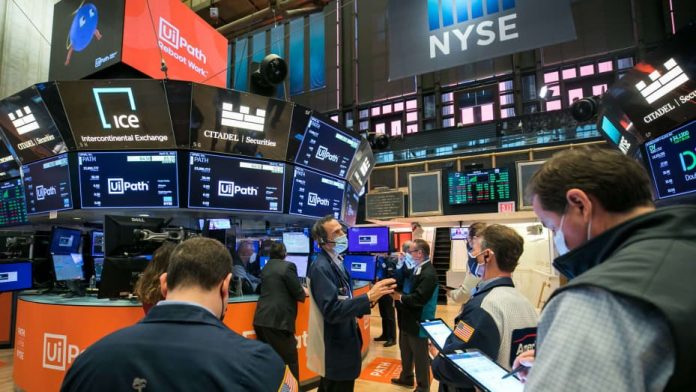
U.S. stocks staged a late-session rally on Wednesday, closing sharply higher after President Donald Trump said he had reached what he described as a “framework of a future deal” on Greenland, easing fears of an imminent escalation in trade tensions with Europe.

The market rebound followed a post by Trump on Truth Social after a meeting with NATO Secretary General Mark Rutte, in which he said the understanding would remove the need for tariffs that had been scheduled to take effect on February 1.

“This solution, if consummated, will be a great one for the United States of America, and all NATO Nations,” Trump wrote. “Based upon this understanding, I will not be imposing the Tariffs that were scheduled to go into effect on February 1st.”

The president had earlier threatened to impose a 10% tariff on goods from eight European countries, with the levy set to rise to 25% by June if no agreement was reached. That threat, delivered earlier in the week, triggered a sharp sell-off on Tuesday that erased about $1 trillion from the S&P 500, as investors rushed to reprice the risk of a wider transatlantic trade confrontation.

Details of the Greenland framework remained sparse, but the lack of clarity did little to slow Wednesday’s buying spree. Investors moved quickly back into equities, reversing much of the prior session’s losses and signaling renewed confidence that the administration may be stepping back from its most aggressive trade posture.

Market strategists quoted by Business Insider pointed to the episode as a textbook example of the so-called TACO trade — shorthand for “Trump Always Chickens Out” — a phrase that has gained traction among traders who believe the president often uses maximalist threats as leverage, only to soften his stance once negotiations begin.

“The comments addressed two of the biggest headwinds hanging over markets,” said Art Hogan, chief market strategist at B. Riley Wealth Management. He noted that Trump’s remarks appeared to defuse both tariff risks and geopolitical anxiety. “Walk softly and carry a big stick, and you get that TACO reaction and the market can finally unclench. It’s an exhausting process, and this is the exact news investors were hoping to hear — some form of resolution.”

The sense of relief had already begun to build earlier in the day, when Trump told delegates at the World Economic Forum in Davos, Switzerland, that he would not use military force to take control of Greenland. That statement helped calm nerves after earlier rhetoric raised questions about how far the administration might push its territorial ambitions.

As equities rallied, other elements of what some traders have dubbed the “Sell America” trade began to unwind. The benchmark 10-year U.S. Treasury yield fell four basis points, signaling renewed demand for government debt, while the U.S. Dollar Index firmed modestly to 98.82, suggesting stabilizing confidence in dollar-denominated assets.

“President Trump’s statement that he won’t use military force to control Greenland is sparking a relief rally on Wall Street on the heels of yesterday’s sell-off,” said Jos Torres, senior economist at Interactive Brokers.

He described the market reaction as pent-up positioning being released once investors sensed a shift in tone.

“Traders piled into shares and Treasuries once the U.S. leader delivered a more conciliatory message than expected.”

For many analysts, the episode fits a familiar pattern. Matthew Ryan, head of market strategy at Ebury, said Trump’s use of tariffs remains largely tactical.

“As we know from recent history, Trump uses these tariffs as a blunt instrument and a negotiating lever to pull to get his way on the world stage,” Ryan wrote, adding that his base case remained a compromise between the U.S. and Denmark, with the TACO trade resurfacing as a dominant market theme.

The term gained prominence last April after Trump walked back some of his tariff proposals for Liberation Day, triggering a record-breaking rally in U.S. stocks. Chatter around the trade intensified again on Tuesday as markets absorbed the Greenland-related tariff threats, only to reverse course a day later.

Analysts at JPMorgan said they were interpreting the administration’s latest moves through what they called an “Art of the Deal” lens, arguing that Trump’s strategy often involves creating urgency through aggressive positioning.

“Trump creates noise and throws in a maximal stance designed to trigger negotiation and create leverage,” the bank wrote in a note to clients, adding that an eventual agreement with Denmark appeared the most likely outcome.

Other research firms echoed that view. BCA Research estimated there was a 40% chance the new tariffs would not be implemented at all, possibly due to what it described as Trump’s own retreat. Chief geopolitical strategist Matt Gertken said a familiar sequence could follow, with markets initially rattled, only for the administration to change course, as it did after Liberation Day.