DD
MM
YYYY

PAGES

DD
MM
YYYY

spot_img

PAGES

Home Blog Page 450

Aster Overtakes Hyperliquid With Surge in Open Interest As Live Crypto App Emerges As Best Crypto To Buy Now

0

As the crypto market prepares for the upcoming “uptober” rally, certain coins are showing potential for strong gains. Analysts forecast that the value of Ripple could soar to the $4.00 mark.

Meanwhile, Binance Coin is expected to rise to $1,500. Also, analysts say Digitap ($TAP), the growing presale sensation, could soar by 5x, giving early investors huge returns. This hidden crypto gem has raised almost $200k in its ongoing presale and is targeting $500k.

XRP Stays Above Key Support, Will XRP Rally or Dip?

The Ripple price has been testing the $2.80 key support level in the past few days, per CoinMarketCap. However, the overall trend shows bearish momentum, as indicated by the MACD line (-0.01402) being below the signal line, confirming downward pressure.

This is supported by the Awesome Oscillator (AO) at -0.04273 which has negative bars, which means that the selling momentum is more than the buying momentum. A short-term reversal may be feasible in case the Ripple price remains above the level of 2.80.
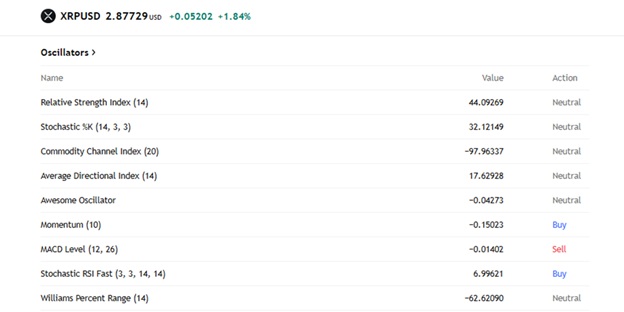
Nonetheless, the Ripple coin will probably continue to fall if the bearish trend continues. The Ripple price could drop to $2.70 if this bearish sentiment rises.

Maxi forecasts that the Ripple coin could soar to $4.00 in the coming weeks. Another expert, Money Rules, explained on YouTube that the Ripple price pump could make people very rich. He adds that based on a price prediction from BlackRock, the price of Ripple may rally to $32.

 

Binance Coin (BNB) Shows Resilience: How Long Will It Last?

The Binance Coin token has reclaimed the $1,000 level after bouncing off the $975 support mark. BNB is among the top 10 crypto coins that have weathered the bearish sentiment in the market.

As CoinMarketCap shows, the Binance Coin price has increased by 6.5% on the 7D chart and 16.2% on the 30D level. The price trades above the 20-SMA ($944.06), which is a bullish sign.

On the technical charts, the Bollinger Bands indicate that the price is close to the upper band, which indicates that it may be overbought, yet it can still increase. Also, the Chaikin Money Flow (CMF) at 0.09 indicates positive buying pressure, as the value is above zero.

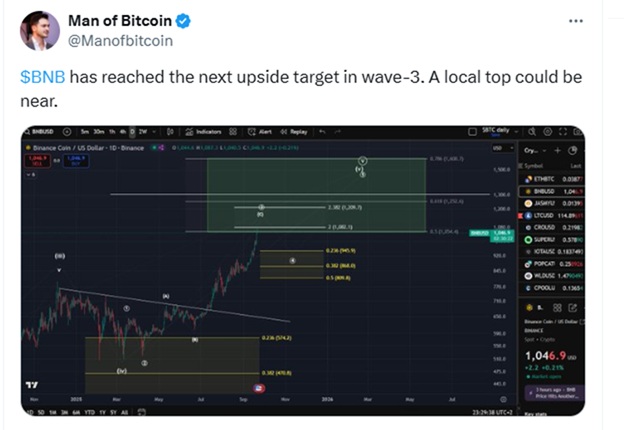
If BNB holds above the $1,000 mark, further upward movement is likely. ZYN forecasts that the Binance Coin price might pump to $2,000 before the end of this year. Another market watcher, Man of Bitcoin, told his followers that Binance Coin could soar to $1,500.
Digitap’s ($TAP) Staking and Rewards: High Returns for Crypto Investors

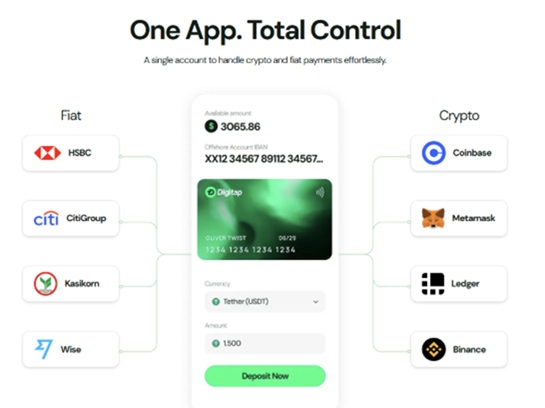
Digitap ($TAP) is the first omni-bank that seeks to make cross-border payments more efficient and cost-effective. This approach could place the project among the highest market holders in the cross-border payment sector, which is expected to hit $290 trillion by 2030.

Unlike traditional platforms, Digitap does not have a KYC procedure. This implies that investors need to enter the platform using just an email and a wallet address. In the meantime, Digitap has been making headlines with its high-yield staking rewards, with up to 124% APR to users who hold its native token, $TAP.

The staking model of DigiTap provides investors with a clear incentive to retain their tokens, which will generate passive income and may increase in value. In addition, the staking rewards are supported by a deflationary model, in which transaction fees purchase back and burn $TAP tokens, decreasing supply as time passes.

This strategy positions DigiTap for potential long-term growth, aligning with its vision of becoming a major player in the cross-border payments sector.
Can Digitap Challenge the Best Altcoins?

Digitap’s $TAP token offers a new opportunity with substantial upside potential. With its $290 trillion market at its feet, Digitap has ample room for growth when compared to Ripple or Binance Coin.

If Aster, a recent crypto that hit $2 billion in market cap within just a week, can achieve such rapid growth, Digitap, entering an even bigger market with strong early traction and a lower entry point, it could mirror similar success.

In a bullish scenario, Digitap could soar by 5x in the short term and 10x in the long run. The $TAP coin currently trades at $0.0125 with $190k in funding. As demand for decentralized, low-fee transactions continues to rise, $TAP is one of the best cryptos to buy now and a strong contender for 2025.

USE THE CODE “DIGITAP15” FOR 15% OFF FIRST-TIME PURCHASES

What Are the Best Cryptocurrencies To Invest In Before Uptober

As Uptober draws near, Ripple, Binance Coin, and Digitap have emerged among the altcoins that are expected to see huge growth. While Ripple eyes $4, Binance Coin is targeting $1,500. Analysts expect the utility-driven Digitap to see up to a 5x increase, positioning among the top 10 cryptos to buy now.


Discover the future of crypto cards with Digitap by checking out their live Visa card project here:

Presale  https://presale.Digitap.app

Social: https://linktr.ee/DigiTap.app


Meta Title: Ripple Price Forecast, Binance Coin Targets $1,500, DigiTap Eyes 5x ROI

Meta Description: Ripple aims for a $4.00 target. Meanwhile, Binance Coin aims for $1,500 and DigiTap targets a potential 5x ROI, drawing investor attention to high-growth opportunities.
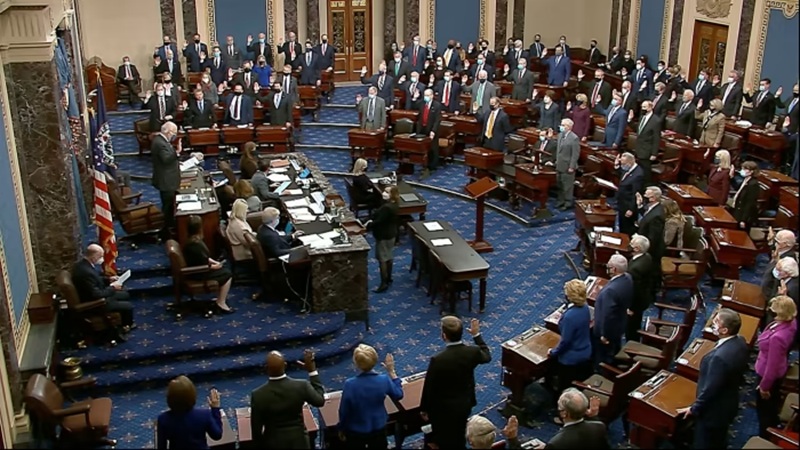

 

US Senate Has Scheduled Hearing on Crypto Taxation By October 1st

1

The US Senate Finance Committee has scheduled a public hearing titled “Examining the Taxation of Digital Assets” for October 1, 2025, at 10:00 a.m. ET.

The session will take place in Room 2154 of the Dirksen Senate Office Building in Washington, D.C., and will be livestreamed via the committee’s website. Chaired by Sen. Mike Crapo (R-Idaho), the hearing aims to address longstanding ambiguities in how cryptocurrencies and other digital assets are taxed under current IRS rules, which many in the industry argue are outdated and hinder innovation.

Crypto taxation has been a flashpoint since the IRS began treating digital assets as property in 2014, requiring users to report capital gains or losses on every transaction—even small ones like buying a coffee with Bitcoin.

This has led to compliance burdens for the estimated 50 million US crypto users and a $2.5 trillion market. Recent legislative efforts, including the 2021 Infrastructure Investment and Jobs Act’s expansive “broker” definition, have amplified calls for reform by potentially forcing miners, DeFi developers, and wallets to report unfeasible data.

The hearing builds on broader 2025 crypto regulatory momentum: The House passed the GENIUS Act (stablecoin regulation) and CLARITY Act (SEC/CFTC jurisdiction) earlier this year. Sen. Cynthia Lummis (R-Wyoming), a vocal crypto advocate, introduced a comprehensive bill on July 3, 2025, to revise the Internal Revenue Code.

It proposes clearer definitions for digital assets, deferral of taxes on mining/staking rewards until sale, elimination of double taxation, and a de minimis exemption for transactions under $300. Sen. Crapo emphasized in a press release that the hearing offers a “critical opportunity to hear directly from stakeholders navigating today’s unclear tax environment.”

Potentially influencing future policy amid the White House’s push to treat digital assets as a distinct class. The panel will feature experts from industry, law, and accounting to discuss challenges and reforms. Here’s a breakdown:

Testimony is expected to highlight issues like taxing staking rewards as income upon receipt (vs. upon sale) and the need for thresholds to exempt routine, low-value transactions. Reforms could reduce reporting headaches, boost adoption, and prevent “double taxation” on rewards.

A de minimis rule might exempt everyday crypto spending from capital gains taxes. Clarity could fuel institutional inflows and a “bull market” by aligning US rules with global standards, though delays from Senate disputes or a potential government shutdown loom.

Exchanges like Coinbase (NASDAQ: COIN) may face short-term compliance costs but long-term gains. This ties into ongoing Senate Banking Committee work on market structure bills, with optimism for passage by year-end under leaders like Sen. Tim Scott (R-SC).

The hearing signals Washington’s pragmatic pivot toward crypto amid national debt concerns, with stablecoins eyed as a Treasury demand booster. Watch for post-hearing announcements on Lummis’s bill.

The Senate Finance Committee’s hearing on crypto taxation could significantly shape the regulatory landscape for digital assets in the US. Current IRS rules treat every crypto transaction as a taxable event, requiring users to track capital gains/losses even for small purchases.

A proposed de minimis exemption could eliminate reporting for everyday spending, reducing paperwork and tax burdens for the 50 million US crypto users. Proposals to tax staking or mining rewards only upon sale rather than receipt would prevent “double taxation,” making these activities more financially viable and encouraging participation in decentralized networks.

Clearer definitions for digital assets could resolve ambiguities around airdrops, forks, and stablecoins, helping users avoid unexpected tax liabilities. Revising the 2021 Infrastructure Act’s broad “broker” definition could exempt miners, DeFi platforms, and wallets from unfeasible IRS reporting requirements, fostering innovation and reducing compliance costs.

Clear, crypto-friendly tax rules could attract institutional investors and boost market liquidity, potentially sparking a “bull run.” Exchanges like Coinbase could benefit long-term, though short-term costs may arise from implementing new reporting forms like Form 1099-DA set for 2025-2026.

Aligning US tax policy with jurisdictions like the EU or Singapore could prevent capital flight and keep the US a hub for blockchain innovation. The hearing could accelerate bills like Sen. Lummis’s July 2025 proposal, which seeks to codify tax reforms. Success here might pave the way for broader crypto laws, such as the GENIUS Act (stablecoins) or CLARITY Act (SEC/CFTC roles).

Policymakers see stablecoins as a tool to increase demand for US Treasuries, potentially easing national debt concerns. Tax clarity could amplify this, positioning crypto as a fiscal asset. A potential government shutdown or Senate gridlock could delay reforms, prolonging uncertainty. Conversely, bipartisan support from figures like Sens. Crapo and Lummis could drive swift action by year-end.

Simplified rules and thresholds could improve compliance rates, reducing the IRS’s enforcement burden while increasing tax revenue from a growing crypto market. The rollout of Form 1099-DA will require exchanges to report user transactions, but clearer guidelines could minimize errors and disputes.

User-friendly tax policies could boost mainstream crypto adoption, driving demand for blockchain services and related stocks. Announcements post-hearing could move crypto prices, especially if reforms signal a pro-innovation stance.

By encouraging stablecoin use, tax reforms could indirectly support Treasury markets, as stablecoin issuers hold significant US debt as reserves. Even if reforms are proposed, IRS rulemaking and industry adoption could take years, leaving users in limbo.

With 2025 budget talks and a potential shutdown looming, crypto tax reform might be deprioritized. Stakeholders should monitor the October 1 livestream on the Senate Finance Committee’s website and follow witness testimony.

ethOS Announces the Ethereum-Powered dGEN1 Crypto Phone Amid Crypto Millionaire Surging 40%

0

Freedom Factory—the developers behind the Ethereum-centric ethOS operating system—unveiled the dGEN1, a pioneering hardware device billed as the “first onchain everyday carry.”

This isn’t your standard smartphone; it’s a mobile gadget optimized for seamless interactions with decentralized applications (dApps), DeFi protocols, and Ethereum transactions, running on ethOS v4.0, a LineageOS-based fork of Android infused with native blockchain capabilities.

Built-in Nimbus Light Client and allows users to validate transactions independently without relying on third-party RPCs, enhancing privacy and decentralization.

Supports IPFS and .eth domains for direct Web3 access, plus a secondary screen for real-time transaction notifications and metadata. Combines hardware wallet functionality with support for Ethereum and Layer 2 networks like Base, enabling crypto messaging and onchain activities in just a few taps.

A quirky built-in laser feature, and no traditional telecom capabilities—it’s purely for onchain life. Pre-order via minting an NFT on Base for 0.2 ETH (around $500 at launch), with only 1,000 units available. Holders get a share of a $14,000 airdrop pool, and the device shipped worldwide in Spring 2025 after FCC approval.

Users are launching ERC-20 tokens directly on the device using tools like Clanker, with some allocating up to 50% of supply to dGEN1 owner airdrop pools—fostering a “degen” community vibe. As of September 25, 2025, ethOS continues to push updates, positioning dGEN1 as a tool for “onchain freedom” amid growing crypto hardware interest.

Crypto Millionaire Count Surges 40%

In a sign of cryptocurrency’s maturing role in global wealth, the number of crypto millionaires has exploded by 40% year-over-year to 241,700 as of mid-2025, according to Henley & Partners’ Crypto Wealth Report. This boom coincides with the total crypto market cap surpassing $3.3 trillion—a 45% jump—fueled by Bitcoin’s rally and institutional inflows like $60.6 billion into U.S. spot BTC ETFs.

Bitcoin dominates, accounting for over half of millionaires, but the report highlights a “watershed year” for institutions and portability—crypto’s borderless nature is reshaping high-net-worth mobility. Compared to the 60 million traditional millionaires worldwide, crypto’s elite still represent just 0.4%, but the surge underscores a shift toward digital assets over legacy ones like real estate.

These developments paint a vibrant crypto landscape: Hardware like dGEN1 lowers barriers to entry, while wealth metrics show real economic impact. If you’re eyeing a dGEN1 or stacking for that millionaire status, the onchain era feels more accessible than ever.

The dGEN1 represents a step toward purpose-built devices for decentralized ecosystems, potentially normalizing Web3 interactions like using dApps or managing crypto assets as easily as texting. Its integration of a Nimbus Light Client and native support for Ethereum and Layer 2 networks could set a precedent for future crypto-native devices.

By enabling users to validate transactions independently via a light client, dGEN1 reduces reliance on centralized intermediaries (e.g., Infura). This could push competitors to prioritize privacy-focused features, accelerating the shift toward self-sovereign tech.

With only 1,000 units and an NFT-based pre-order model, dGEN1 tests the viability of limited-edition, community-driven hardware. Success could inspire similar experiments (e.g., Solana Saga’s follow-ups), while failure might highlight limits to crypto hardware demand.

The 40% surge in crypto millionaires (to 241,700) and a $3.3 trillion market cap signal crypto’s growing role in wealth creation. Bitcoin’s dominance and ETF inflows suggest institutional and retail investors are increasingly treating crypto as a legitimate asset class, potentially drawing capital from traditional markets like stocks or real estate.

Crypto’s borderless nature, highlighted by seed-phrase portability, lowers barriers for wealth mobility, especially in regions with unstable currencies or restrictive financial systems. This could reshape global wealth distribution, empowering individuals in emerging markets.

The “degen” culture tied to dGEN1 (e.g., airdrop pools, token launches) and rapid millionaire growth underscore crypto’s speculative appeal. This could fuel volatility, regulatory scrutiny, or bubbles, especially if retail investors chase hype without understanding risks.

Devices like dGEN1, designed for “onchain freedom,” promote a cultural shift toward living on blockchain—think crypto messaging, NFT-based access, or decentralized social platforms. This could foster communities prioritizing digital sovereignty over traditional tech ecosystems (e.g., iOS, Android).

While crypto creates new millionaires, the concentration of wealth among 450 centimillionaires and 36 billionaires may exacerbate perceptions of inequality, especially if gains remain tied to early adopters or institutional players.

The surge in crypto wealth and devices facilitating onchain transactions could draw tighter regulations. Governments may target tax evasion or illicit use, potentially stifling innovation or driving it to jurisdictions with lighter oversight.

The dGEN1’s NFT pre-order and airdrop model reinforces the trend of gamifying crypto adoption. This could drive engagement but risks alienating non-crypto-native users if the process feels too complex or exclusive.

The 70% rise in Bitcoin millionaires and ETF inflows suggest institutions are shaping crypto’s trajectory. This could stabilize markets but dilute the decentralized ethos, as corporate interests prioritize profit over ideology.

With 590 million global crypto users (+5% YoY), crypto’s role as a hedge against inflation or fiat instability grows, especially in high-net-worth circles. This could pressure central banks to accelerate CBDC development or regulate crypto more aggressively.

The dGEN1 and the crypto millionaire surge signal a maturing crypto ecosystem, blending tech innovation with financial disruption. They promise greater accessibility to decentralized systems and wealth creation but raise challenges around regulation, inequality, and market stability.

For users, dGEN1 could make Web3 as intuitive as a smartphone app, while the wealth boom underscores crypto’s transformative potential—though with risks of hype-driven volatility. Expect a tug-of-war between innovation and oversight as these trends evolve.

Fold Launches Bitcoin Rewards Credit Card in Partnership with Stripe and Visa

1

Fold Holdings, Inc. (NASDAQ: FLD), a Bitcoin-focused financial services company, has partnered with Stripe and Visa to introduce the Fold Bitcoin Credit Card—a rewards card that pays exclusively in Bitcoin (BTC) on everyday purchases.

This marks a significant step in mainstreaming Bitcoin accumulation by integrating it directly into traditional spending habits, without the need for staking tokens, managing categories, or maintaining an exchange account.-

Rewards Structure: Unlimited 2% BTC back on all purchases, credited instantly. Additional up to 1.5% BTC back when you pay off your balance using a Fold Checking Account. Up to 3.5% BTC back on every transaction.

Its offers up to 10% BTC back at select merchants like Amazon, Target, Home Depot, Starbucks, Uber, DoorDash, and Best Buy through Fold’s rewards network. Powered by Stripe Issuing for backend infrastructure, enabling seamless card issuance and management.

Runs on Visa’s global network for widespread acceptance and security. Rewards are automatically deposited in real Bitcoin—no conversions, lock-ins, or complexities. Aimed at beginners and long-term holders alike, allowing passive BTC stacking while shopping anywhere Visa is accepted.

Fold has already distributed over $83 million in Bitcoin rewards and processed $3.1 billion in transaction volume across its existing products like debit cards and gift cards. This credit card extends that ecosystem, positioning Fold as a “Bitcoin-first” alternative to traditional finance.

According to Will Reeves, Fold CEO and Founder “Our credit card offers clear and compelling value and makes bitcoin easily accessible to everyone… just real bitcoin, earned automatically with every purchase.” Cuy Sheffield, Head of Crypto at Visa: “Fold’s Bitcoin rewards, paired with Visa’s scale and security, give consumers a safe, simple way to earn Bitcoin as they shop.”

Sateesh Kumar Srinivasan, Head of Money Management Product at Stripe: The partnership serves as a “blueprint for rolling out innovative financial products without requiring companies to handle the complexities of direct program management.”

This launch comes amid growing crypto adoption in payments, with Visa piloting Web3 rewards and Stripe expanding into stablecoin-linked cards. However, Fold’s stock (FLD) dipped about 14% on the announcement day, possibly due to broader market volatility rather than the news itself.

It’s worth noting that Fold previously launched a Bitcoin rewards card earlier in 2025 also with Visa, but this iteration simplifies and scales it via Stripe. The card is set to launch later in 2025, making Bitcoin rewards more accessible than ever.

By offering Bitcoin rewards on everyday purchases via a Visa credit card, Fold lowers the barrier to entry for Bitcoin ownership. Consumers can accumulate BTC without needing to understand crypto exchanges, wallets, or technical complexities, fostering “earn first, learn later” adoption.

Integrating Bitcoin rewards into a widely accepted payment network like Visa normalizes cryptocurrency as a reward mechanism, similar to traditional cash back or points-based systems. This could shift public perception of Bitcoin from a speculative asset to a practical, everyday currency.

The unlimited 2% BTC cash back (up to 3.5% with Fold Checking) and up to 10% at select merchants provide a compelling incentive for consumers to use the card, potentially increasing spending and loyalty to Fold’s ecosystem.

For users who view Bitcoin as a store of value, earning BTC rewards encourages passive accumulation, aligning with the “stacking sats” philosophy. This could appeal to long-term holders (HODLers) seeking to grow their Bitcoin holdings without active trading.

Bitcoin’s volatility means the value of rewards could fluctuate significantly. Consumers may need to weigh the potential upside of holding BTC against the risk of price drops, which could impact the perceived value of the card’s rewards.

Stripe’s involvement via its Issuing platform highlights its growing influence in enabling innovative financial products. This partnership could serve as a blueprint for other fintechs to launch crypto-linked cards without building complex infrastructure.

Visa’s participation reinforces its commitment to bridging traditional finance and crypto, following its Web3 rewards pilots and stablecoin experiments. This could push competitors like Mastercard to accelerate their crypto offerings.

Fold strengthens its position as a leader in Bitcoin-focused financial services, building on its $3.1 billion in processed transactions and $83 million in distributed BTC rewards. However, its stock dip (~14%) on the announcement day suggests investors may need more clarity on profitability or market reception.

Both Stripe and Visa gain a foothold in the growing crypto payments space, potentially attracting more partners to their platforms. This could accelerate the development of crypto-friendly financial infrastructure.

In many jurisdictions, Bitcoin rewards may be treated as taxable income based on their value at the time of receipt. This could complicate the user experience unless Fold provides clear tax guidance or tools.

Widespread adoption of the card could increase Bitcoin’s circulation in everyday transactions, potentially boosting its demand and price over time. However, macroeconomic factors (e.g., interest rates, crypto market trends) will influence its impact.

While the card simplifies Bitcoin earning, its success depends on consumer awareness and willingness to embrace crypto rewards over traditional cash back or points. High reward rates could strain Fold’s margins, especially if Bitcoin’s price rises or if transaction volumes underperform.

By embedding Bitcoin into everyday spending, Fold contributes to a cultural shift where crypto becomes a practical tool rather than a niche investment, aligning with the ethos of financial sovereignty.

The Fold Bitcoin Credit Card, powered by Stripe and Visa, is a pivotal step toward mainstreaming Bitcoin through seamless integration with traditional finance. It offers consumers an easy way to earn BTC, challenges competitors to innovate, and strengthens the infrastructure for crypto payments.

However, its success will hinge on user adoption, regulatory clarity, and Bitcoin’s market performance. For consumers, it’s a low-friction way to stack sats; for the industry, it’s a bold move to bridge fiat and crypto worlds.

What Crypto to Invest In Right Now? BlockDAG Leaves Bitcoin & Worldcoin Behind With Testnet Awakening Launch & 2900% ROI!

0

With over $410 million raised, 26.4 billion coins sold, and a 2900% ROI since its first batch, BlockDAG (BDAG) is quickly separating itself from legacy networks and speculative experiments. Currently in batch 30 with a presale price of just $0.0016, BlockDAG’s infrastructure is not only operational, it’s setting a new benchmark.

While Bitcoin (BTC) price prediction discussions focus on long-term store-of-value utility and Worldcoin (WLD) price prediction models attempt to tie biometric onboarding to digital identity, neither project is currently delivering a full-spectrum rollout of miner integration, blockchain tooling, and throughput testing like BlockDAG is. The question of what crypto to invest in is becoming less about name recognition and more about verifiable execution, and on that front, BlockDAG is pulling ahead.

Bitcoin (BTC): Value Over Utility

Bitcoin (BTC) price prediction models still capture long-term investor interest, particularly around halving cycles and ETF-related inflows. As of now, BTC sits around $46,000 with many bullish forecasts pushing beyond $100,000 in future cycles. However, from a technology standpoint, Bitcoin is essentially frozen in time. Core upgrades are rare, often divisive, and focused on small efficiency gains rather than real architectural advances.

Bitcoin’s scaling solution continues to rely on external layers like Lightning Network, which, while functional, are not part of the base protocol. There are no integrated explorer advancements, miner-level tooling updates, or account abstractions coming from Bitcoin Core. For those asking what crypto to invest in, Bitcoin offers predictability, but it also limits exposure to cutting-edge tech development.

Worldcoin (WLD): Identity Without Infrastructure

Worldcoin (WLD) price prediction discussions often center around the controversial use of biometric data through their Orb devices. Valued as a futuristic identity protocol, Worldcoin is betting on global adoption of its proof-of-personhood mechanism. But while the narrative is bold, the underlying chain is far less advanced.

Current network metrics show that Worldcoin’s throughput lags behind established Layer-1 chains, and smart contract interoperability remains underwhelming. Most of the project’s visibility is tied to marketing and biometric hardware, not to actual improvements in blockchain infrastructure. There are no explorer interfaces showcasing block-level transparency, no miner networks syncing to real devices, and no proof-of-work performance statistics.

Hardware + Mobile Mining: BlockDAG’s Dual Engine

One of the strongest differentiators for BlockDAG is its multi-tiered mining infrastructure. The X1 mobile miner has already crossed 3 million users, each mining up to 20 BDAG daily with zero hardware costs. At the same time, the X10, X30, and X100 miners are live-shipping, with reviews and unboxing videos confirming their plug-and-play performance.

These aren’t promotional concepts; these are devices already generating earnings. With the X10 capable of $10/day, X30 at $30/day, and X100 projecting $100/day once the network goes live, BlockDAG’s mining system functions at the intersection of accessibility and profitability. This tangible infrastructure stands in sharp contrast to Bitcoin’s industrial-scale mining oligopoly or Worldcoin’s biometric onboarding, which offers no yield-generating utility to users today.

BlockDAG’s presale is already among the most successful of the year, raising over $410 million and selling more than 26.4 billion coins. At a $0.03 batch price, the coin has a projected listing value of $0.05, but for a limited time, it’s being offered at just $0.0016, unlocking significant upside.

Presale participants aren’t buying blind; they’re engaging with Dashboard V4, which offers real-time trading simulation, leaderboard tracking, bonus calculators, and wallet insights. It’s a true presale trading environment, not a static purchase form.

BlockDAG’s “Awakening Testnet” is officially live, representing more than just a code deployment. It marks the full activation of the core chain, the introduction of real-time explorer tools, and the start of miner synchronization using the Stratum Protocol. Given all these milestones, BlockDAG remains one of the top crypto coins to buy right now.

Quick Recap

The decision of what crypto to invest in comes down to three factors: execution, accessibility, and upside. Bitcoin offers long-term security but little innovation. Worldcoin offers a bold identity vision but lags in technical delivery.

BlockDAG, in contrast, has launched its testnet, integrated real-time tooling, activated miner sync, and delivered hardware and mobile solutions all before exchange listing. It is not a concept in progress, but a working model with presale pricing still below $0.002 and a projected ROI already exceeding 2900%. For investors who are looking beyond narratives and into the substance of blockchain utility, BlockDAG currently offers the strongest answer to the question: what crypto to invest in.

Presale: https://purchase.blockdag.network

Website: https://blockdag.network

Telegram: https://t.me/blockDAGnetworkOfficial

Discord: https://discord.gg/Q7BxghMVyu