DD
MM
YYYY

PAGES

DD
MM
YYYY

spot_img

PAGES

Home Blog Page 4510

Nigeria’s Electoral Commission Extends Deadline for PVC Collection to Jan 29

0

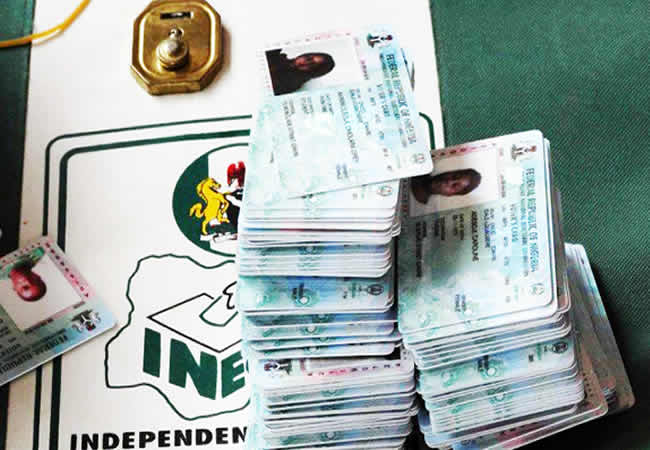
The Independent National Electoral Commission (INEC) has extended the deadline for the collection of Permanent Voters Cards (PVCs) until Sunday 29th January 2023, as complaints continue to trail the exercise.

INEC moved the deadline by eight days after a meeting on Thursday, extending the period of the exercise for millions of voters yet to collect their PVCs. The electoral umpire had earlier fixed Sunday, January 22 as the deadline, but saw reasons to move the date up as the collection goes slower than expected.

In a statement signed by the INEC National Commissioner, Festus Okoye, the Commission said the decision has become necessary following developments that have hampered the collection.

“The Commission is determined to ensure that registered voters have ample opportunity to collect their PVCs ahead of the forthcoming election. For this reason, the timeframe for the collection of PVCs is extended by eight days.”

“Instead of ending on Sunday 22nd January 2023, the collection of PVCs will continue until Sunday 29th January 2023. At the moment, the period of collection is 9.00 am – 3.00 pm daily (including Saturdays and Sundays),” he said.

Speaking further on the new deadline, Okoye explained that the development signals a consequential adjustment of the collection by location as follows:

Collection at the Registration Area (Ward) level is extended by one a week from Monday 16th – Sunday 22nd January 2023.

Collection at the Local Government level will resume on Monday 23rd – Sunday 29th January 2023.

There have been reports of inconsistencies at the collection centers, including allegations that INEC officials are demanding bribes from the electorates, while some officials are said to be doing the bidding of dubious politicians who don’t want people from certain zones of the country to have their PVCs.

Okoye said that the reports of INEC officials extorting Nigerians at PVC collection centers are being investigated by the Commission.

“Those found culpable will face disciplinary action and/or prosecution.

“Similarly, the Commission is disturbed by allegations of discriminatory issuance of PVCs in some locations. This is against the law. All bonafide registrants are entitled to their PVCs and to use them to vote on Election Day in any part of the country where they are registered.

“Resident Electoral Commissioners (RECs) have been directed to ensure that no such practices occur nationwide and take immediate disciplinary action against violators,” he said.

Troubles of Nigeria’s Winningest Party – How Non-Voters Party Wins But Yet to Rule

2

The population of Lagos State is about 27 million people. Out of that number, at least 15 million are qualified to vote, being over 18 years (and meeting other requirements), in my model. In 2019, about 6.5 million registered to vote in Lagos State. But out of that number, about 1 million actually voted. 

If you run the math, less than 7% of qualified citizens made the call. Then move to Abia State, Oyo State and across most parts of Southern Nigeria, you will notice one thing: if we have a party, Non-Voters Party, which will receive all registered voters who did not vote, that party will win all elections in Nigeria, from local to the federal.

Now you get the whole idea: fanatical party members – yes, the bulk of that 7% – are making the calls. Consider that as you plan to watch Zee World or play video games next month when you could have gone out to vote.

Comment on Feed

Comment 1: You’re right Professor Ndubuisi Ekekwe . Voter apathy is one of the challenges facing Nigeria’s electoral system. Very few of eligible voters actually participate in the electoral exercise, which only favours the political class. Surprisingly, large percentage of eligible but non-voting citizens are the educated elites who criticize Govt on the internet and at road junctions everyday. But we are going to see a significant positive change in this coming election. The truth is, no matter how we look at it, the Nigerian electoral system is maturing and by 2039 the participation of electorates will be significant that it will be difficult to bribe one’s way to political office. The future is bright.

Comment 2: Ndubuisi Ekekwe, Sometimes I wonder why grown ups will decide to stay at home and allow their next four to eight years be decided by others. It is unfathomable for me. I hope we get it right this time, else we all pay the heavy price for at least another four years.

Final Results of Nigeria’s 2019 Presidential Election by States – APC (19), PDP (18)

Despite Decline in Crypto Transaction Volumes, Crypto Crimes Surged in 2022

16

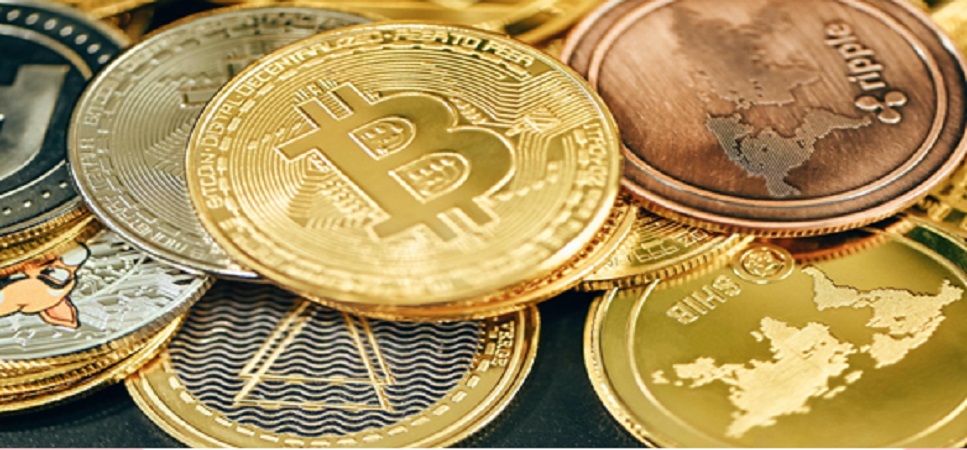
Recent reports reveal that illicit criminal activity in the crypto market rose, despite the decline in crypto transactions.

This saw the criminal use of cryptocurrencies hit a record $20.1 billion in 2022, as transactions involving companies targeted by U.S. sanctions skyrocketed.

2022 crypto crime saw a 7% increase from $14 billion recorded in 2021.

According to American blockchain analysis firm Chainanalysis, it disclosed that the market downturn may be one reason for the increase in crypto theft.

The firm said, “The market downturn may be one reason for this. We’ve found in the past that crypto scams, for instance, take in less revenue during bear markets.

Chainalysis disclosed that its $20.1 billion estimate only includes activity recorded on the blockchain, and excludes “off-chain” crimes such as fraudulent accounting by crypto firms while noting that transactions associated with sanctioned entities increased more than 100,000-fold in 2022 and made up 44% of last year’s illicit activity.

Also, Blockchain analytics tool provider, Crystal Blockchain disclosed that Crypto theft was responsible for Over $ 2 billion in Losses in 2022.

In its report, it stated that 2022 saw a significant increase in the number of large-scale hacks, scams, and other crimes using crypto. Due to this trend of incessant crypto theft, a range of authorities and regulators took big steps toward regulating crypto.

Recall that last year, the United States imposed sanctions on cryptocurrency mixing services Blender and Tornado Cash, which it said were being used by hackers, including from North Korea, to launder billions of dollars worth of proceeds from their cyber crimes.

Reports disclose that Tornado Cash was used to launder more than $96 million of malicious cyber actors’ funds derived from the June 24, 2022, Harmony Bridge Heist, and at least $7.8 million from the August 2, 2022, Nomad Heist.

Following the sanction on the platform, The U.S department of treasury wrote in a statement, “Today, Treasury is sanctioning Tornado Cash, a virtual currency mixer that launders the proceeds of cybercrimes, including those committed against victims in the United States.

“Despite public assurances otherwise, Tornado Cash has repeatedly failed to impose effective controls designed to stop it from laundering funds for malicious cyber actors on a regular basis and without basic measures to address its risks. The Treasury will continue to aggressively pursue actions against mixers that launder virtual currency for criminals and those who assist them.”

The U.S. Treasury has continued to work tirelessly to expose components of the virtual currency ecosystem, like Tornado Cash and Blender.io, that cyber criminals use to launder proceeds from illicit cyber activity and other crimes.

Binance Gains Regulatory Clearance in Sweden

0

Binance has gained Institutional clearance to offer Crypto services to its Swedish customers. The decision from Sweden’s financial authority followed regulators in France, Bahrain, Spain and Dubai granting similar approvals for Binance in 2022.

Binance announced its registration with the Swedish Financial Supervisory Authority on 10 January 2023, making Sweden the seventh EU member state to which Binance has been authorized, following France, Italy, Lithuania, Spain, Cyprus and Poland.

In the News 

  • Binance received a license in Sweden.
  • Voyager Digital received approval to sell assets to BinanceUS.
  • FTX returned more than $5 billion.
  • ConsenSys will lay off 100 or more employees.
  • Quasar Finance raised $5.4 million in a round led by Shima Capital.
  • Venom Ventures Fund with partners will invest $1 billion in Web3 applications.

As the world’s largest digital asset exchange, this registration means that Swedish residents will now be able to access Binance’s broad range of crypto and Web3 services, including popular euro deposits and withdrawals, crypto buying with euro, trading, staking and the Binance Visa Card.

Apparently, Binance CEO CZ at a Conference in St. Moritz Switzerland, spoke about the company’s 2023 vision in adding more job opportunities for professionals into its ecosystem.

In terms of plans for 2023, CZ stated that the essential focus is on making the exchange more efficient, which includes improving the technology as well as focusing on investing in customer care support.

Richard Teng, Head of Europe and MENA at Binance, said;

Binance continues to demonstrate its commitment to work closely with regulatory agencies to uphold global standards. Our registration in Sweden is the result of many months of diligent, hard work from our team, underpinning our commitment to the Swedish market and our users. We are deeply grateful for the support from the Swedish Financial Supervisory Authority throughout the application process and for the approval. Sweden is now amongst the growing list of global jurisdictions that have granted regulatory approval to Binance.

Consequently, Binance has gained court approval to acquire bankrupt crypto lender Voyager Digital. For context: FTX bought a bunch of insolvent companies right before its immediate collapse to make it look like their balance sheet and investment thesis was fully intact.

Despite incessant FUD Binance Exchange have been doing well and was able to process over $60B in customer’s Withdrawal request during the Yuletide with hitting a bank run.

Google Research Introduces MUSE to Enmesh Share on OpenAI Models

0

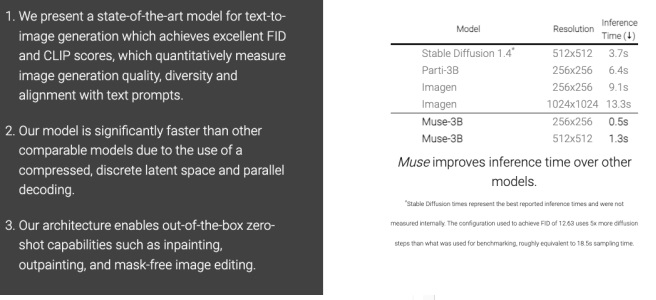
We are starting the year 2023 with a new model for generating images from Google Research. Google has released MUSE, a 3 billion param Text-To-Image Generation via Masked Generative Transformer. A new competitor to Stable Diffusion and the like that has a few very interesting properties.

On Google Muse, the Transformer model for text-to-image generation is significantly faster than existing diffusion and autoregressive models and provides state-of-the-art image generation capabilities which enables inpainting, outpainting and mask-free editing without model fine-tuning or inversion.


One of the most interesting properties of this model, which it shares with Parti (also from Google) is its ability to GENERATE readable TEXT. A limitation that we know all currently available business models have, Muse can.

Another very important quality where the other models fail is when interpreting quantities or the distribution of elements at the prompt: “Put me 2 baseballs to the left of 3 tennis balls”, Google Muse also seems to be more compliant with these types of prompts.

Another very cool thing that this model has learned automatically is to be able to MANIPULATE IMAGES only by modifying the prompt. This allows you to modify an image in seconds respecting its composition and style, super helpful.

We finished last year with Point·E and we start this new year with Dream3D, yet another text-to-3D model. Compared to other sota models this one generates a high-quality 3D shape from text, uses the shape for a NeRF before it gets textured by a text2image diffusion model.