DD
MM
YYYY

PAGES

DD
MM
YYYY

spot_img

PAGES

Home Blog Page 4532

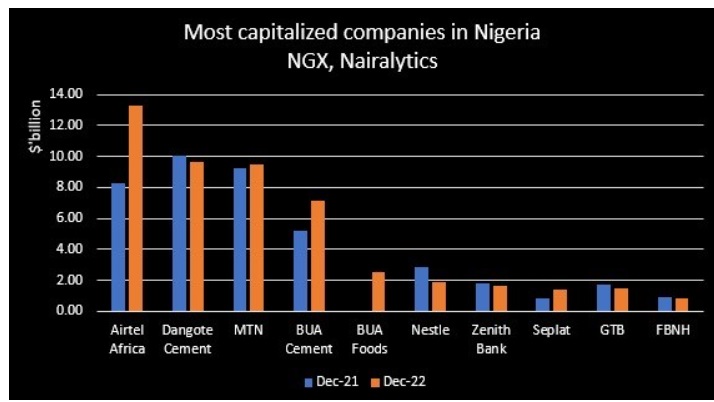
Nigeria’s Largest Public Companies as at Dec 31 2022

1

According to Nairametrics data, these are the largest public companies in Nigeria as at Dec 31 2022. Dangote Cement actually lost momentum there, possibly investors repriced it and went for BUA Cement. The founder of BUA Group is evidently a king in the market now, when you see that BUA Foods and BUA Cement are well represented.

Nairametrics determines the valuations of listed companies using their market value which are publicly available. This is unlike the valuations of many privately-held companies which are often based on venture capital or private equity.

What the data is saying: The Nigerian equities market, represented by its All Share Index, ended December with a total market capitalization of about N27.9 trillion.

The most revealing is that despite using a favourable exchange rate, no Nigerian bank is valued more than $2 billion. We really need to do better in Nigeria.  Did you notice that all the three there lost momentum from 2021?  (South Africa’s Standard Bank Group is worth about $17 billion).

If these banks do not have strong market cap numbers (leave the balance sheets), how do you expect them to fund the promises of the future? What this means is clear: Nigeria needs to build a banking institution that can fund catalytic projects, instead of rent-seeking institutions, which feed on transaction fees at the downstream of the economic space.

There are massive opportunities at the upstream in the economy (think of funding roads, bridges, dams, etc) but if investors do not see value therein, the resources required may not come. People, Nigeria needs a really modern banking system.

Comment on Feed

Comment: nteresting chart by the way. Without the benefit of further in-depth research, I can see a lot of insights besides your succinct analysis.

  1. It’s almost as if BUA foods jumped out of obscurity in relative terms. Must be interesting knowing what the 2022 play book was.
  2. Wonder what kind of promise Airtel Africa made to its staff during the 2022 operating period for the gross dwarfism MTN witnessed in relative terms?
  3. Kudos to Seplat for salvaging the dwindling image of oil and gas ? in Nigeria.

Like you have posited, our financial institutions need to upgrade their operating models, perhaps a more aggressive similitude of Soludo’s 2004 capitalization drive would force the dial to move.

My Response: I think Nairametrics picked the market caps of these companies on Dec 31 2022 and put in a chart.  They made all of us better. To your comments:

  1. On BUA Foods, it was listed last year as a public company. So, no data existed for prior years
  2. Airtel Africa includes other countries unlike MTN Nigeria. So, as Nigeria struggled, some other African countries did just well. Largely, MTN Nigeria might have done better than Airtel Nigeria (absolutely did better I am sure) but Airtel Africa is what is listed.

Comment: Interesting. Quick question Ndubuisi Ekekwe do we need more big banks to create more big companies or more big companies to create big banks. Which comes first?

My Response: I am not sure you need BIG companies to create big banks. My understanding is that your need a solid credit base/funding base/liquidity base/etc to fund opportunities of the future. Since “banks” are the vehicles, we need banks with war chests to ramp up economic growth.

Those opportunities of the future should not be driven by one company. The goal is to expand the economy and not necessarily to have big companies. In my part of Nigeria, men divide their assets to support people. What happens is this: you will not have extremely rich people, but you will have a dynamic community where everyone is fine but none is super-rich.

Sure – the banks are companies. At the end, it comes down to government policies. The policies can get those banks to become bigger but asking them to combine to be in positions to do useful and bigger things over collecting rent-transaction-fees.

Salesforce to Cut Global Workforce by About 10%

0

Salesforce on Wednesday announced a plan to cut about 10% of its workforce and reduce its real estate footprint, joining the growing number of companies laying off employees as the tech industry confronts widening economic headwinds.

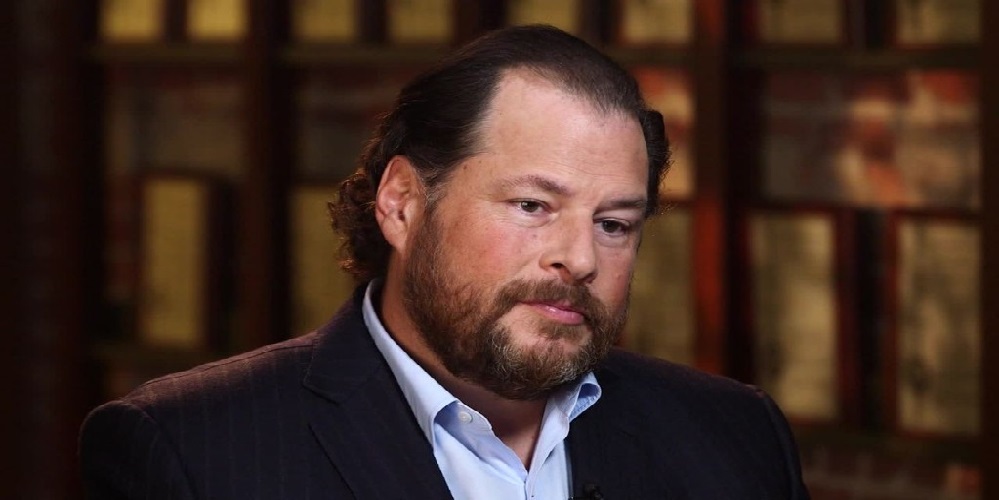
The company’s chair and co-CEO, Marc Benioff, said most of the layoffs will take place in the coming weeks. He explained in his letter to employees that Salesforce grew headcount too much during the pandemic, compounding its financial strains as revenue eventually declined.

“I’ve been thinking a lot about how we came to this moment. As our revenue accelerated through the pandemic, we hired too many people leading into this economic downturn we’re now facing, and I take responsibility for that,” Benioff wrote.

Between January and October 2022, Salesforce reported a headcount of 73,541 and 79,824 global employees, per CNN.

Salesforce was not alone though. Several other companies in the tech sector upped their headcount following the pandemic-induced economic boom that forced a shift to digital life. But it was short-lived. As life returns to normal, the companies begin to face the reality of declining revenue. That was exacerbated by the recent Russia-Ukraine war that has triggered inflation and potential recession across economies globally.

The situation has created a buoy for layoffs by a growing number of companies in the tech sector. On Wednesday, video-sharing platform Vimeo said in a regulatory filing that it would cut approximately 11% of its workforce.

Meta, Twitter, Amazon and other firms have also announced cutting workforce as consumer demand dwindles. Their CEOs, just like Benioff, admitted miscalculating the pandemic boom that they based their decision to increase headcount on.

Following the announcement, Shares of Salesforce surged more than 3% in early trading Wednesday.

In his letter Wednesday, quoted by CNN, Benioff said impacted employees in the United States will “receive a minimum of nearly five months of pay, health insurance, career resources, and other benefits to help with their transition.” He added that those outside the United States “will receive a similar level of support.”

“The employees being affected aren’t just colleagues. They’re friends. They’re family. Please reach out to them. Offer the compassion and love they and their families deserve and need now more than ever. And most of all, please lean on your leadership, including me, as we work through this difficult time together,” Benioff said.

Besides layoffs, firms in the tech sector are taking stringent measures, including operational changes, to cut cost. CNN reported that Salesforce made a significant change to its C-Suite and co-CEO and Vice Chair Bret Taylor said he is stepping down from his roles at the company at the end of January.

Salesforce is planning to trim employee numbers by 10%, amid concerns over the current economic climate. In a regulatory filing on Wednesday, the software company, which counts around 80,000 staff, said it hired more people than it needed during the pandemic and had already been hit by changes in customers’ spending habits. Its workforce restructuring is expected to finish by the end of the 2024 fiscal year and cost the company up to $2 billion. Salesforce previously laid off hundreds of people in November, mainly from sales. (LinkedIn News)

Why Long-term Career Plan May Not be Efficient in this Era

1

Do not be fixated on a long-term career plan. In this age, it may not be the right call. As technology reshapes markets and industrial sectors, committing yourself to an 8-year, 10-year, etc plan could be a mistake.

My suggestion is to have a long-term view with a plan in bursts of say 2, 3 years. That long-term is the aspirations of what you want to become (the vision) while the short plans are the missions to it. Before the pandemic, there were no jobs like Chief Remote Officer and  Remote Staff Manager; today, those positions are available. If you are fixated on unalloyed fixed plans, you may miss emerging opportunities.

Remember that Lagos taxi sticker: “My car stops wherever there is a good party”. Indeed, as the parties open up with opportunities in new energy, cryptocurrency/blockchain, climate change, fintech, etc, the flexibility to adapt would be critical for your career. You must get into that party!

Recall… in the past, resumes and CVs were like classified documents. We did those because companies kept their words: they provided jobs, long-term, and rarely laid people off. But when they started firing with reckless abandon, the people revolted and LinkedIn provided a platform to say “I am posting my resume on LinkedIn since I cannot trust company A to provide me a job for life; company B I am here”. Magically, that classified resume is available to the whole world. So, in summary, the world has changed and those 10-year career plans may not be optimal.

Sure, I understand the challenge – society sees humans on what they do and where they work. Thank goodness, that is changing. The YouTube millionaires in Nigeria have become influential, and daily, society is accepting the construct of entrepreneurial capitalism. What that means is clear: that career plan must not be company-specific or industry-specific because new vistas are emerging.

Comment on Feed

Comment 1: Thanks for sharing this Ndubuisi Ekekwe. I recently did a post titled “what am I?” Where I reflected on how the different roles people handle in the course of their careers could lead to a loss of professional identity if not properly managed. It’s easy for someone who has only handled sales roles over a 10 year period to describe him/herself as a salesperson. But if that same person has handled multiple roles in product commercialisation, project management, delivery advisory even digital transformation then it’s possible for that individual to have some difficulty putting a descriptor on his or her self. However the reality of our times is that sticking to and developing expertise in just one function can be risky for one’s career, especially in an age of robotics, machines and remote work. How does one craft a unique identity as one build multiple skillset and expertise through new (and sometimes different) job roles?

Comment 2: What is needed is not any long-term career plan, but rather a knowledge acquisition plan, and with that – you can always make a stop wherever a good party is taking place.

It is absence of new knowledge that makes people to cling to and ferociously defend knowledge/skill that is going obsolete. If the plan is to continously acquire relevant knowledge and deepen capabilities, you won’t get stuck or feel threatened whenever the labour landscape changes, because you are equally sailing along.

Don’t just grow, but also develop, the latter is very dynamic.

Comment 3: When someone thought in this line and spoke to our peers about it they termed us “ndi nzuzu” . Thank you Prof for this masterspiece.

It’s a confirmation that someone is on the right track..

Work, get experience, mobilise the resources needed for your dream, make the right network that share same value with you. Start small while in your job and keep building your brainchild.

I just love the reality check you are giving us here sir.

Comment 4: Prof Ndubuisi Ekekwe this is a very insightful revelation. I am just thinking about the implication of this reality for employers. In my view, I think that companies should come to the reality that the average length of stay for a staff will be 2- 4 years. Then, adopt structures that will approach the execution of the firm’s long-term goal in the form of interim milestones of say 2 – 5 years. That way, the company can match its staff requirement to the exact skills and knowledge base required to get them from point A to point B in their long-term plan.

Additionally, HR must innovate to find creative ways to help their companies to be more efficient and effective in terms of average recruitment cost, time to fill, and candidate to job suitability.

Response to 4 from member: Regrettably, most businesses cannot function this way. They have to budget and plan to access funding from lending institutions and shareholders. As soon as investors loose confidence, such businesses immediately become obsolete, leading to more job seekers in the market

Response to 4 from member: Employers can:
– promote a culture of internal employee growth, or
– accept the market with individuals changing regularly.

Both methods can work, but there are costs/benefits with each. The company’s strategic intake plan needs to have a grip on whether or not a desired skill can be done by any honest person, by someone who has specialized training, or by an individual between those two extremes.

Comment 4 writer: [] you have raised very solid points. Indeed, each of the pathways present cost/benefit. It also, places more responsibility on HR to be me more attentive to testing methods, learning quickly and making necessary adjustments so as to maximize benefits and minimize cost.

My Geography Class and Cristiano Ronaldo’s “Coming to South Africa”! [video]

0

In secondary school, Mazi Orji, the man who taught us Geography in Secondary Technical School Ovim, forced us to know the world’s countries and their capitals. He demanded the maps of Chicago, Boston, London and those special places in the world. And the textbook we used – Human and Physical Geography – which WAEC recommended, was written by Goh Cheng Leong, possibly a professor in America. Indeed, it was like a class in Baltimore!

In the map reading section of Geography, they presented the contours of the Everest, Mississippi River, etc and largely nothing about Africa. Magically, we knew so much about America and Europe, including the weather system, that we came up with codes: Summer JJA, Autumn SON, Winter DJF and Spring MAM (those codes represent the first alphabets of the months; you needed those codes to know the months. For harmattan and rainfall seasons – our weather cycle in Nigeria – no one had that in the syllabus).

So, I was very happy that Cristiano Ronaldo had a similar experience: they possibly taught him more about Africa than Europe and  Saudi Arabia, offering equal opportunity flip: “Cristiano Ronaldo has just completed a move to Saudi Arabian club Al Nassr, but made a slip up during his official presentation in Riyadh on Tuesday when mistakenly saying he had “come to South Africa.” Lol. Yes, it is news!

We wish CR more goals as he begins his journey in Saudi Arabia. This is beyond football, Saudi has one of the world’s leading image makers money can buy. But he needs to attend more Geography classes. Mazi Orji is available!

Perhaps the Portugal great was disorientated by the whirlwind nature of his arrival at his new club, which saw him fly out to Saudi on Monday night, before undergoing a medical the next morning and then being greeted by thousands of cheering fans at Al Nassr’s Mrsool Park stadium.

“For me it is not the end of my career to come to South Africa,” Ronaldo said at a news conference before stepping out on the field at the 25,000 capacity stadium. “I really don’t worry about what people say. I took my decision and I have responsibility to change that, but for me I’m really, really happy to be here.”


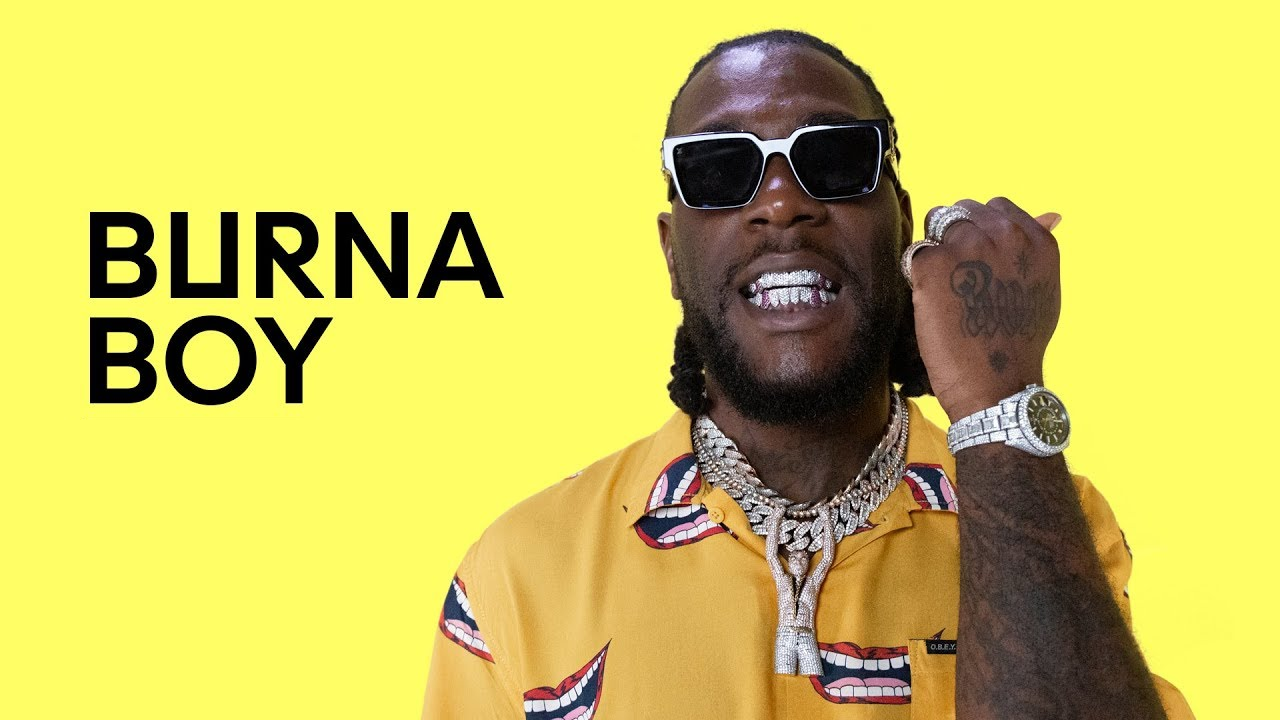
Burna Boy “Lagos Loves Damini” Case Study: Music performance is a contract for service

0

The incessant cases of Nigerian entertainers refusing to show up at the last minute or showing up late for events they have been billed to perform is getting out of hand.

The entertainers should know that when they are billed to perform they have entered into a legally binding contract for service and they are expected to carry out the requirements and contents of such contract to the last detail, if not they can be held for breach of contract.

Nigerian A-list musicians are notorious for breaching terms of contracts; they will be paid to perform in a concert and they will show up late and sometimes refuse to even show up at all after they have pocketed the money they were paid.

Some of them even boast that they will refund the money they were paid, little do they know that refunding the money for the service you were paid and you didn’t render is not all there is in ameliorating breach of contract; after you have refunded back the money, you will have to as well pay for damages your breach caused to assuage the damage you have done.

Burna Boy in his New Year, Lagos Loves Damini Music Concert showed up several hours late and thereby breached the contract. Wizkid some weeks back also breached his contract by refusing to show up for a show he was paid to headline in Accra, Ghana without an apology or explanation. Kizz Daniel some months ago as well breached his contract when he refused to perform in Zanzibar after he had been paid and flown to the venue by the organizers of the show.

This is now looking like a trend amongst A list Nigerian musicians; Enter a contract with show organizers and promoters, agree to the terms, sign the contract paper, collect payment for the service and on the day of the performance they breach the contract by either showing up late or refusing to show up at all. 

What then is a contract for service?
A contract for service is an agreement between an employer and an employee where one party who is the employer hires the other party who is the employee to render some services. In a contract for service, an independent contractor, such as a self-employed person or vendor, is engaged for a fee to carry out an assignment or project.

A contract for services is formal and legally binding and every party to the contract is expected to live up to the contract terms and perform what is expected of him or he can be sued for breach of contract.

A contract for a live performance or singing or recording a song is a contract for service and it is a formal contract, when an artiste has been paid and he had agreed either orally or in writing to perform, he is expected to perform to the satisfaction of those that employed him to render such service if not he will be sued for breach of contract.

Legal advisers and lawyers to Nigerian entertainers need to be letting those entertainers know this because ignorance of the law is never an excuse.