DD
MM
YYYY

PAGES

DD
MM
YYYY

spot_img

PAGES

Home Blog Page 454

Top 3 Meme Coins to Invest in as Shiba Inu (SHIB) Returns to Bullish Momentum

0

After consolidating for a long time, SHIB is showing renewed momentum. It’s seeing strong support around $0.00001230–$0.00001350. A falling wedge pattern is forming beneath resistance near $0.000017. This suggests SHIB may be building toward a breakout. However, as SHIB gears up, the smartest money is shifting toward tokens that offer bigger upsides. Below are the top three meme coins to invest in as Shiba Inu returns to bullish momentum.

Little Pepe (LILPEPE): The Meme Coin Set to Redefine the Market

When it comes to meme coins, hype usually drives the story. But Little Pepe (LILPEPE) is rewriting the script by building the world’s first Layer-2 blockchain designed entirely for meme coins. This isn’t just a playful concept. It’s a major innovation that could reshape how meme tokens launch, trade, and thrive in 2025. Unlike other meme projects that depend solely on community strength, Little Pepe adds real infrastructure. Its Layer-2 is engineered to be the fastest and cheapest chain on the market, with a unique launchpad that helps new meme tokens grow in a fair, bot-resistant environment.  A major selling point is its built-in protection against sniper bots. This feature ensures fair launches and prevents manipulation that often plagues meme coin presales. This combination of culture and utility makes LILPEPE a pioneer in the space. Investors enthusiasm regarding this project has now translated into presale momentum.

The presale has already raised $26 million, with 16 trillion tokens sold, highlighting confidence in the project’s vision.  Furthermore, LILIPEPE has secured listings on two top-tier centralized exchanges at launch. These early moves give it an advantage that most meme coins can only dream of before launch. It has also cemented its identity as a credible meme  through an early Coinmarketcap listing and a successful Certik audit.  Backed by strong fundamentals, unique technology, and a rapidly growing community, LILPEPE is being positioned as a meme chain powerhouse. At under $0.30, it combines affordability with explosive upside. Many analysts now see it as the top meme coin to watch for a 20x run in 2025.

Bonk (BONK): Solana Meme Token with Hard Catalysts

Bonk is showing strong signs of institutional interest and structural upgrades. Nasdaq-listed Safety Shot has acquired over 228.9 billion BONK tokens. This represents 2.5% of the circulating supply, valued at $0.00002184, which translates to approximately $55 million.

BONK/USD 1D Price Chart|Source: TradingView

The token is set to undergo a major burn of one trillion BONK tokens once BONK reaches 1 million on-chain holders. This is a milestone it’s closing in on.  Meanwhile, Bonk.fun, the launchpad in the ecosystem, now uses part of its platform fees for BONK buybacks or burns, further tightening supply. Perhaps the most bullish potential trigger is the approval of BONK ETFs. With the SEC easing the rules around approval, one might materialize soon.  At press time, BONK is consolidating around $0.000020–$0.000024 as support and resistance zones. With momentum likely to increase if the burn triggers and ETF get approved, BONK could see massive gains.

Pepe Coin (PEPE): Veteran Meme Coin Poised for Breakout

Pepe Coin (PEPE) is showing signs of renewed strength. It currently trades around $0.000011. The token recently broke above a key resistance level at $0.0000115.

PEPE/USD 1D Price Chart|Source: TradingView

Meanwhile, on-chain data indicates a rising count of whale accumulation and declining exchange balances. This suggests lower selling pressure and growing long-term holder conviction.  Technical patterns suggest that the next resistance level may be around $0.00002. However, it has to clear resistance near $0.0000120–$0.0000138. Analysts estimate a potential move of +200-300% under favorable conditions.  In the long term, PEPE could deliver even higher targets if community sentiment stays strong. This makes it a top meme coin to invest in as Shiba Inu returns to bullish momentum.

Conclusion

As Shiba Inu regains bullish momentum, it’s clear that meme coins are once again pulling investor attention. However, the opportunities extend far beyond SHIB. Little Pepe (LILPEPE) stands out as the most ambitious new contender, combining meme culture with real infrastructure through its Layer-2 Pepe Chain.  Bonk (BONK) benefits from Solana’s vibrant ecosystem while Pepe Coin (PEPE) continues to prove its staying power with whale accumulation pointing toward a breakout. Together, these three meme coins represent the top meme coins to invest in as Shiba Inu returns to bullish momentum.  Find out more about the Little Pepe on the official website.  You can also join the community on Telegram or X for regular updates.

For more information about Little Pepe (LILPEPE) visit the links below:

Website: https://littlepepe.com

Whitepaper: https://littlepepe.com/whitepaper.pdf

Telegram: https://t.me/littlepepetoken

Twitter/X: https://x.com/littlepepetoken
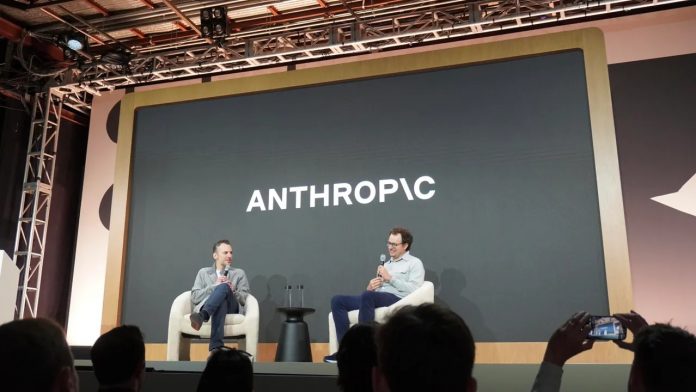
Anthropic to Triple Workforce As It Ramps Up Global Expansion As Enterprise AI Race Heats Up

0

Anthropic, the $183 billion artificial intelligence startup behind the Claude family of models, is stepping up its international ambitions as enterprise adoption of AI reaches a pivotal moment.

In just two years, the company has grown its business customer base from fewer than 1,000 to more than 300,000 worldwide, with nearly 80 percent of its usage now coming from outside the United States. On a per-capita basis, adoption in markets such as South Korea, Australia, and Singapore has already surpassed that of the U.S.

To meet this demand, Anthropic announced on Friday that it will triple its international workforce and expand its applied AI team fivefold in 2025. The expansion is part of a broader push to scale operations beyond the U.S. and intensify competition with rivals OpenAI, Microsoft, and Google.

Paul Smith, the company’s Chief Commercial Officer, told CNBC that Anthropic’s global momentum has exceeded expectations, with major customers coming online even before the company established a physical presence in their regions. He pointed to rapid adoption in life sciences and sovereign wealth management as evidence of Claude’s enterprise traction. At Novo Nordisk, the Danish pharmaceutical company behind Ozempic, Claude helped reduce a drug development reporting cycle from three months to just a few days.

The company is now preparing to recruit country leads for India, Australia and New Zealand, Korea, and Singapore, while expanding further across the U.K., northern and southern Europe, Germany, Austria, and Switzerland. Its first Asia office will open in Tokyo, alongside more than 100 new roles in Dublin and London, and a research hub in Zurich. Additional locations are planned in the months ahead.

Anthropic’s global expansion will be led by Chris Ciauri, the newly appointed managing director of international. Ciauri previously served as CEO of Unily and held senior roles at Google Cloud and Salesforce, where he helped grow EMEA revenue from $200 million to more than $3 billion.

“G20 governments are approaching us about doing really, really interesting things at a citizen enablement level,” he said, noting that large enterprises across Europe and Asia are also now engaging with Anthropic on industry-specific deployments.

The push abroad comes at a moment when the enterprise AI market is entering a more competitive phase. Anthropic recently achieved a $5 billion revenue run-rate, up from $87 million at the start of 2024, driven by surging demand for Claude in enterprise workflows. The milestone places it in direct competition with incumbents.

OpenAI, for instance, has launched an $850 billion global infrastructure expansion with Oracle, Nvidia, and SoftBank. Microsoft and Google, meanwhile, are embedding AI into every layer of their productivity and cloud ecosystems, making tools like Copilot and Gemini easily accessible for enterprise customers.

Anthropic is betting on a different approach: offering a pure-play AI experience that provides direct access to Claude’s frontier models, rather than delivering AI through productivity suites or legacy platforms. Smith emphasized that most large organizations are pursuing hybrid strategies, combining direct Claude access with integrations via AWS, Google Cloud, and other providers.

“There’s a very good reason why, if you’re an AWS customer, you should also consume Anthropic through Bedrock — and if you’re a great Google customer, through Vertex,” he explained, adding that these partnerships are additive rather than competitive.

Central to the strategy is the expansion of Anthropic’s applied AI team, which will grow fivefold next year to help enterprises implement Claude at scale. The company is investing heavily in data sovereignty infrastructure, 24/7 enterprise support, and industry-specific solutions.

“You need the applied AI team that understands their particular industry context,” Smith said, highlighting domains like pharmaceuticals, telecoms, financial services, and government.

Claude is already embedded in some of the world’s largest organizations. At Norway’s Norges Bank Investment Management, the world’s largest sovereign wealth fund, Claude has saved 213,000 hours of work — a 20 percent productivity gain across 9,000 portfolio companies. Novo Nordisk cut clinical documentation time from more than 10 weeks to 10 minutes and halved its review cycles. In Korea, SK Telecom used Claude to boost customer service quality by 34 percent. The European Parliament digitized millions of historical documents, making them searchable and translatable. The Commonwealth Bank of Australia halved scam losses with Claude’s help.

The company’s Claude Code product, launched in May, has already become a $500 million line of business, with usage growing tenfold in just three months. Smith described it as “one of the fastest-growing products that’s ever been launched,” calling it an important entry point into the enterprise market.

Localization is another differentiator Anthropic is leaning on. Ciauri pointed to Panasonic’s Claude deployment in Japan, where the company tailored its models to the local language and cultural context.

“That’s a super important differentiator as you think about how you really maximize results for enterprise,” he said.

However, questions remain over whether AI tools are truly delivering long-term productivity gains. A recent MIT study found that many enterprise deployments have so far shown little measurable impact. But Anthropic insists Claude is already transforming core operations in ways that go far beyond experimentation.

“The demand signal we’ve got is unprecedented,” Smith said. “It’s like nothing I’ve ever seen. There isn’t a single enterprise in the world where they don’t have some kind of software development backlog.”

As competition among AI heavyweights intensifies, Anthropic’s international surge signals that the enterprise AI race is no longer a U.S.-centric contest. With governments and companies worldwide moving to embed AI into critical systems, Claude’s global adoption may prove decisive in shaping the next chapter of the industry.

Deutsche Bank Says The U.S. Economy Is Floating on AI Bubble

0

The global economy is increasingly leaning on artificial intelligence as its next great growth engine, but warnings are piling up that the boom is unsustainable and could collapse into one of the most significant financial bubbles of the modern era.

Deutsche Bank, in a note to clients this week, cautioned that the U.S. economy is being kept afloat largely by massive capital spending from Big Tech on AI data centers. George Saravelos, the bank’s Global Head of FX Research, said the United States would likely be close to a recession this year without this AI-driven surge in investment.

“The AI machines are literally saving the U.S. economy right now,” Saravelos wrote, pointing to the tens of billions flowing into new data centers and chip orders. “The bad news is that in order for the tech cycle to continue contributing to GDP growth, capital investment needs to remain parabolic. This is highly unlikely.”

Currently, much of the growth is being captured in construction and labor, as human workers build sprawling facilities. The AI sector itself — the technology and services that are meant to deliver long-term productivity gains — has yet to contribute meaningfully to GDP.

Market exposure has reached dizzying levels. Deutsche Bank noted that around half of the gains in the S&P 500 index this year have come from tech-related stocks. Torsten Sløk of Apollo Management issued a similar warning, saying equity investors are “dramatically overexposed” to AI bets.

Bain & Co. added further context, calculating that by 2030, the global economy will need $2 trillion in annual AI revenues to sustain projected demand for computing power. Even under optimistic scenarios, revenues will fall short by at least $800 billion, raising questions over whether the math behind the AI boom ever adds up.

Yet the spending spree continues. Nvidia, the backbone supplier of AI accelerators, recently pledged $100 billion to OpenAI for a 10-gigawatt expansion of computing power. OpenAI itself is pressing ahead with plans for a vast network of new data centers. CEO Sam Altman has acknowledged that AI investors are behaving irrationally, and that some will inevitably lose “significant sums of money” before the hype normalizes.

Baidu CEO Robin Li was even more blunt, predicting that “99 percent of so-called AI companies will not survive the bubble.” He warned that many firms are wasting both capital and productivity potential by hastily rebranding routine business workloads as “AI projects” to attract funding.

Echoes of the Dot-Com Bubble

The warnings have revived memories of the dot-com bubble of the late 1990s, when a rush to embrace the internet triggered a similar frenzy of infrastructure buildouts and sky-high valuations. Then, as now, investors piled into companies promising to redefine the future, often with little more than an idea and a website.

Back then, telecom giants spent billions laying fiber optic cables and building networks in anticipation of explosive internet growth. While the internet eventually transformed the world, most of the companies that drove the bubble went bust, leaving investors with catastrophic losses. The Nasdaq index famously lost nearly 80 percent of its value when the bubble burst in 2000.

Today’s AI economy shows striking parallels. Once again, market gains are heavily concentrated in a handful of companies — Nvidia, Microsoft, Alphabet, and Meta — whose valuations have soared to levels some analysts say are disconnected from reality. And once again, trillions are being poured into infrastructure, with the long-term revenue model still uncertain.

The difference, analysts note, is that this time the technology is more advanced and adoption is already widespread, from chatbots to copilots to automation tools. But as Deutsche Bank and others warn, the sheer scale of capital needed to sustain the AI boom may test the limits of even the largest tech firms.

While the AI buildout is propping up investment and stock indices, the central question remains: will AI deliver productivity and revenue fast enough to justify the trillions being poured in — or will history repeat itself with another painful correction?

Trump’s $100,000 H-1B Fee Pits Startups Against Big Tech: What the Policy Should Be, According to Box CEO

0

President Donald Trump’s newly proposed $100,000 fee for each H-1B visa has reignited debates in tech about how to balance protecting American labor with maintaining access to global talent.

The measure has drawn sharp criticism across the industry, with founders warning it risks tilting the hiring battlefield toward Big Tech giants at the expense of startups.

On a recent episode of the “A16z Podcast,” Box CEO and cofounder Aaron Levie joined three Andreessen Horowitz partners to sketch out what an industry-designed policy might look like. The policy, they argued, should prioritize clarity of purpose, the highest merit, rising wages, protection of industries, inclusion of junior talent, and affordability—especially for startups.

Levie said the first step would be clarity. “What are we optimizing for?” he asked. “Are we optimizing for, we don’t want to have wages go down? Are we optimizing for just ensuring that we only have the highest merit people on the planet coming here? Those are all totally different goals.”

His own answer was unambiguous: the system should be optimized to attract “the absolute best in the world.” Unlike today’s capped lottery system, Levie argued there shouldn’t be a fixed number of visas granted each year.

“Some years there might be 5,000, some years there might be 50,000, some years there might be 80,000,” he said.

The debate over access to H-1B visas has long split policymakers and industry. Critics charge that the program suppresses wages and displaces American workers. Data from the Department of Labor shows that 30% of H-1B workers earn $100,000 or less annually, while 10% make over $200,000. Levie said the program should flip that narrative.

“We probably want them to be net positive to wages,” he said. “Let’s agree that, in any given industry or locale, wages should go up with this talent pool as opposed to down.”

He also cautioned against allowing employers to “exploit the talent pools” in ways that could devastate entire industries, citing Detroit IT jobs as an example. At the same time, Levie rejected the idea that only elite, world-class specialists deserve entry. He pointed to a state university graduate who becomes an AI engineer — not commanding a $100 million Meta contract, but still an essential contributor.

“It’s all positive sum,” he said. “It makes us more competitive.”

The sticking point for startups remains cost. Trump’s $100,000 fee, which applies annually, would force early-stage companies to choose between talent and survival. “Startups would be directly impacted,” Levie warned, saying the policy could drive international hires straight into the arms of Google, Meta, or Amazon, which can absorb the expense.

Andreessen Horowitz partner Martin Casado added that Khosla Ventures’ Keith Rabois had floated a more measured approach: a $20,000 fee per worker. Levie endorsed the idea.

“There’s a way to do that without overly putting constraints in the system that make it so a startup wouldn’t be able to economically viably participate,” he said.

A Long History of Shifting U.S. Visa Policy

Trump’s six-figure fee marks one of the sharpest departures in recent years, but it is not the first time H-1B reform has exposed tensions between worker protections and tech’s demand for global talent. In 1998, under President Bill Clinton, Congress raised the annual H-1B cap temporarily from 65,000 to 115,000 to address the dot-com boom’s labor shortages. Later, under President George W. Bush, the cap was pushed even higher, to 195,000 in 2001, before being reduced again.

In contrast, President Barack Obama resisted major changes but emphasized enforcement, pushing for audits of outsourcing firms that critics said were misusing the program to undercut wages. More recently, under President Joe Biden, the focus shifted toward “modernizing” the visa program to align with emerging fields like AI and quantum computing, while maintaining pathways for high-skilled immigrants.

Trump’s $100,000 fee sits in sharp contrast to those earlier approaches. Rather than expanding supply or tightening enforcement, it effectively raises a financial barrier to entry. Where Clinton and Bush sought to open the gates during boom times, and Biden emphasized alignment with national priorities, Trump’s measure reflects a protectionist view — discouraging reliance on foreign workers by pricing them out of startups’ reach.

That sets up a familiar clash for Silicon Valley: the desire to recruit globally without restriction versus policymakers’ perennial concern that such openness harms domestic workers. As Levie and the A16z partners framed it, the danger this time is not just wage suppression or displacement, but the potential risks of innovation being throttled when only the largest corporations can compete in the global talent wars.

Analysts See Potential For Final Bitcoin Bullish Surge Amid Steep Decline

0

Bitcoin is facing intense selling pressure as September draws to a close, with the flagship cryptocurrency shedding 7% from its monthly peak and flirting with a second straight losing month.

BTC extended its recent slump on Friday, briefly dipping below $109,000, a level last seen in early September, signaling a potential second consecutive losing month. The crypto asset currently trades at $109,574 price as at the time of writing this report.

This price decline has triggered a wave of fear across the market, sending sentiment to its lowest level since April. Also, this has resulted in a clash between fear-driven selling and quiet institutional accumulation and has set the stage for a decisive moment in Bitcoin’s ongoing journey.

According to data from Cointelegraph Markets Pro and TradingView, Bitcoin’s price action showed vulnerability as order-book liquidity remained dense on both sides of the spot price. This created a tug-of-war effect, with upside and downside “magnets” influencing momentum.

On Binance, buy orders were concentrated around $108,200, while short liquidations were positioned near $110,000, per CoinGlass data.

Sentiment Crashes as Fear Dominates Market

The latest decline in BTC price has had a swift and profound impact on market sentiment. The Crypto Fear & Greed Index fell to 28/100 on Friday, its lowest reading since April 11, plunging 16 points in just one day. This shift indicates that “fear” now dominates the market mood.

Crypto analyst Michael Pizzino highlighted an emerging divergence between price and sentiment, noting that previous similar readings preceded significant Bitcoin rebounds. Historical data shows that the last time the index fell below 30/100, BTC was trading around $83,000, shortly after bouncing back from $75,000 lows.

Retail Bearishness vs. Institutional Accumulation

While retail traders have grown increasingly bearish, research platform Santiment reported that large-volume traders have been quietly adding to their Bitcoin positions during the recent downturn. Santiment’s data also revealed a “high amount of impatience and bearishness emerging from the retail crowd,” a phenomenon that has historically signaled the potential for upward price movement.

Meanwhile, traders have become more risk-averse, with some eyeing potential declines toward $100,000 as their next price target.

Bitcoin is hovering just above its support level, noted crypto investor Ted Pillows, reflecting the cautious sentiment across the market.

While retail traders grow increasingly bearish and brace for further declines, some analysts remain optimistic. They argue that the current downturn is a temporary pause in a larger bullish cycle, with one final surge potentially pushing Bitcoin to new all-time highs before a true bear phase begins.

Popular crypto chartist Egrag Crypto remains optimistic. He argues that Bitcoin is still firmly within a bull market, describing the current pullback as part of a repeating pattern that has been in play since December 2022.

According to Egrag, Bitcoin follows a predictable cycle which includes; a surge upward, Retest support, Bounce back, Slight correction, and the Formation of a new local high. The most critical level to watch now, he says, is $103,000. As long as Bitcoin stays above this threshold, the broader bullish structure remains intact.

Egrag projects that the current cycle still has one final surge left, potentially driving BTC prices to $150,000 – $175,000 before a true bear phase begins. “Despite loud voices calling the bull run over, the cycle is still alive,” Egrag emphasized, describing the ongoing dip as a pause before a major upward breakout.

Notably, several other well-known crypto enthusiasts continue to predict a much longer-term, exponential rise for Bitcoin.

Cathie Wood of ARK Invest believes BTC could hit $1.5 million by 2030 in her firm’s “bull case” scenario.  Michael Saylor, co-founder of MicroStrategy, has repeatedly said Bitcoin will reach $1 million once Wall Street institutions hold 10% of their reserves in BTC.

Robert Kiyosaki, author of Rich Dad Poor Dad, shares similar sentiments, also projecting a $1 million price target by 2030, framing Bitcoin as a hedge against inflation. Experts note that for Bitcoin to reach $1 million, 20%–40% of the world’s population would need to adopt the cryptocurrency. This level of adoption requires significant progress in infrastructure, regulatory clarity, and education.

As of 2025, roughly 900,000 Bitcoin addresses hold at least 1 BTC, while only about 4% of the global population owns any Bitcoin. A large portion of BTC supply remains concentrated among a small group of wealthy investors and institutions.

Outlook

While Bitcoin currently struggles with a sharp pullback and weakened sentiment, analysts remain divided on its near-term direction. If BTC manages to hold above $103,000, Egrag’s bullish scenario could play out with a final parabolic run toward new highs. However, failure to maintain this level could push prices lower, reinforcing fears of a deeper correction.

For now, Bitcoin stands at a critical juncture, balancing between retail pessimism and institutional accumulation, with the next few weeks likely to determine whether the leading cryptocurrency