DD
MM
YYYY

PAGES

DD
MM
YYYY

spot_img

PAGES

Home Blog Page 455

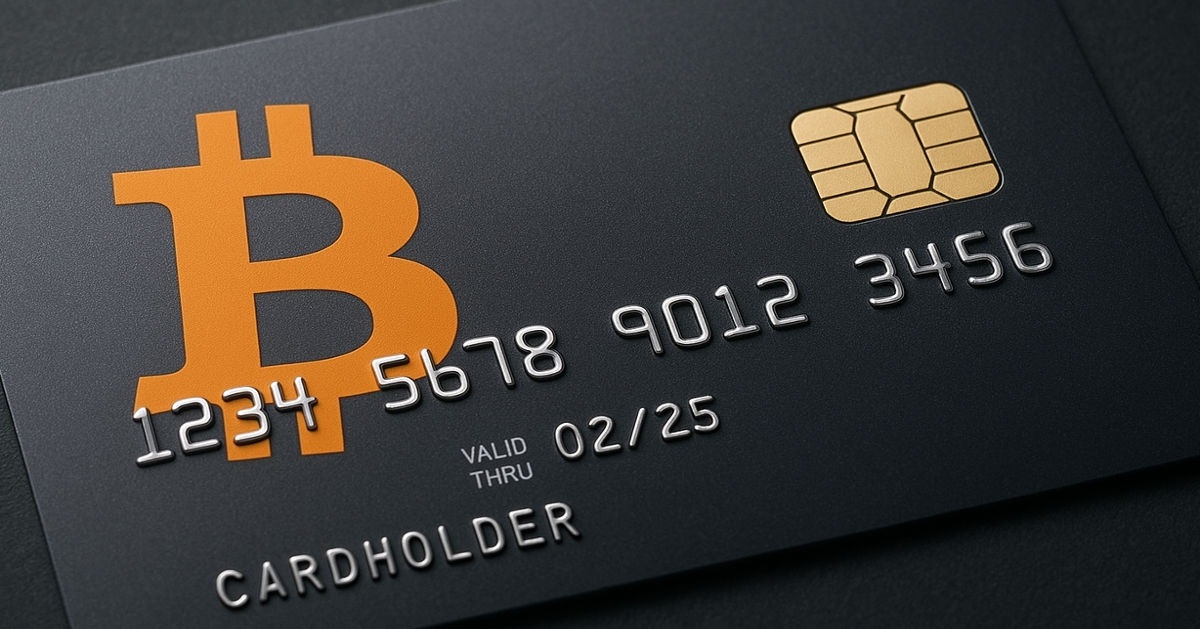
Fold Launches Bitcoin Rewards Credit Card in Partnership with Stripe and Visa

1

Fold Holdings, Inc. (NASDAQ: FLD), a Bitcoin-focused financial services company, has partnered with Stripe and Visa to introduce the Fold Bitcoin Credit Card—a rewards card that pays exclusively in Bitcoin (BTC) on everyday purchases.

This marks a significant step in mainstreaming Bitcoin accumulation by integrating it directly into traditional spending habits, without the need for staking tokens, managing categories, or maintaining an exchange account.-

Rewards Structure: Unlimited 2% BTC back on all purchases, credited instantly. Additional up to 1.5% BTC back when you pay off your balance using a Fold Checking Account. Up to 3.5% BTC back on every transaction.

Its offers up to 10% BTC back at select merchants like Amazon, Target, Home Depot, Starbucks, Uber, DoorDash, and Best Buy through Fold’s rewards network. Powered by Stripe Issuing for backend infrastructure, enabling seamless card issuance and management.

Runs on Visa’s global network for widespread acceptance and security. Rewards are automatically deposited in real Bitcoin—no conversions, lock-ins, or complexities. Aimed at beginners and long-term holders alike, allowing passive BTC stacking while shopping anywhere Visa is accepted.

Fold has already distributed over $83 million in Bitcoin rewards and processed $3.1 billion in transaction volume across its existing products like debit cards and gift cards. This credit card extends that ecosystem, positioning Fold as a “Bitcoin-first” alternative to traditional finance.

According to Will Reeves, Fold CEO and Founder “Our credit card offers clear and compelling value and makes bitcoin easily accessible to everyone… just real bitcoin, earned automatically with every purchase.” Cuy Sheffield, Head of Crypto at Visa: “Fold’s Bitcoin rewards, paired with Visa’s scale and security, give consumers a safe, simple way to earn Bitcoin as they shop.”

Sateesh Kumar Srinivasan, Head of Money Management Product at Stripe: The partnership serves as a “blueprint for rolling out innovative financial products without requiring companies to handle the complexities of direct program management.”

This launch comes amid growing crypto adoption in payments, with Visa piloting Web3 rewards and Stripe expanding into stablecoin-linked cards. However, Fold’s stock (FLD) dipped about 14% on the announcement day, possibly due to broader market volatility rather than the news itself.

It’s worth noting that Fold previously launched a Bitcoin rewards card earlier in 2025 also with Visa, but this iteration simplifies and scales it via Stripe. The card is set to launch later in 2025, making Bitcoin rewards more accessible than ever.

By offering Bitcoin rewards on everyday purchases via a Visa credit card, Fold lowers the barrier to entry for Bitcoin ownership. Consumers can accumulate BTC without needing to understand crypto exchanges, wallets, or technical complexities, fostering “earn first, learn later” adoption.

Integrating Bitcoin rewards into a widely accepted payment network like Visa normalizes cryptocurrency as a reward mechanism, similar to traditional cash back or points-based systems. This could shift public perception of Bitcoin from a speculative asset to a practical, everyday currency.

The unlimited 2% BTC cash back (up to 3.5% with Fold Checking) and up to 10% at select merchants provide a compelling incentive for consumers to use the card, potentially increasing spending and loyalty to Fold’s ecosystem.

For users who view Bitcoin as a store of value, earning BTC rewards encourages passive accumulation, aligning with the “stacking sats” philosophy. This could appeal to long-term holders (HODLers) seeking to grow their Bitcoin holdings without active trading.

Bitcoin’s volatility means the value of rewards could fluctuate significantly. Consumers may need to weigh the potential upside of holding BTC against the risk of price drops, which could impact the perceived value of the card’s rewards.

Stripe’s involvement via its Issuing platform highlights its growing influence in enabling innovative financial products. This partnership could serve as a blueprint for other fintechs to launch crypto-linked cards without building complex infrastructure.

Visa’s participation reinforces its commitment to bridging traditional finance and crypto, following its Web3 rewards pilots and stablecoin experiments. This could push competitors like Mastercard to accelerate their crypto offerings.

Fold strengthens its position as a leader in Bitcoin-focused financial services, building on its $3.1 billion in processed transactions and $83 million in distributed BTC rewards. However, its stock dip (~14%) on the announcement day suggests investors may need more clarity on profitability or market reception.

Both Stripe and Visa gain a foothold in the growing crypto payments space, potentially attracting more partners to their platforms. This could accelerate the development of crypto-friendly financial infrastructure.

In many jurisdictions, Bitcoin rewards may be treated as taxable income based on their value at the time of receipt. This could complicate the user experience unless Fold provides clear tax guidance or tools.

Widespread adoption of the card could increase Bitcoin’s circulation in everyday transactions, potentially boosting its demand and price over time. However, macroeconomic factors (e.g., interest rates, crypto market trends) will influence its impact.

While the card simplifies Bitcoin earning, its success depends on consumer awareness and willingness to embrace crypto rewards over traditional cash back or points. High reward rates could strain Fold’s margins, especially if Bitcoin’s price rises or if transaction volumes underperform.

By embedding Bitcoin into everyday spending, Fold contributes to a cultural shift where crypto becomes a practical tool rather than a niche investment, aligning with the ethos of financial sovereignty.

The Fold Bitcoin Credit Card, powered by Stripe and Visa, is a pivotal step toward mainstreaming Bitcoin through seamless integration with traditional finance. It offers consumers an easy way to earn BTC, challenges competitors to innovate, and strengthens the infrastructure for crypto payments.

However, its success will hinge on user adoption, regulatory clarity, and Bitcoin’s market performance. For consumers, it’s a low-friction way to stack sats; for the industry, it’s a bold move to bridge fiat and crypto worlds.

What Crypto to Invest In Right Now? BlockDAG Leaves Bitcoin & Worldcoin Behind With Testnet Awakening Launch & 2900% ROI!

0

With over $410 million raised, 26.4 billion coins sold, and a 2900% ROI since its first batch, BlockDAG (BDAG) is quickly separating itself from legacy networks and speculative experiments. Currently in batch 30 with a presale price of just $0.0016, BlockDAG’s infrastructure is not only operational, it’s setting a new benchmark.

While Bitcoin (BTC) price prediction discussions focus on long-term store-of-value utility and Worldcoin (WLD) price prediction models attempt to tie biometric onboarding to digital identity, neither project is currently delivering a full-spectrum rollout of miner integration, blockchain tooling, and throughput testing like BlockDAG is. The question of what crypto to invest in is becoming less about name recognition and more about verifiable execution, and on that front, BlockDAG is pulling ahead.

Bitcoin (BTC): Value Over Utility

Bitcoin (BTC) price prediction models still capture long-term investor interest, particularly around halving cycles and ETF-related inflows. As of now, BTC sits around $46,000 with many bullish forecasts pushing beyond $100,000 in future cycles. However, from a technology standpoint, Bitcoin is essentially frozen in time. Core upgrades are rare, often divisive, and focused on small efficiency gains rather than real architectural advances.

Bitcoin’s scaling solution continues to rely on external layers like Lightning Network, which, while functional, are not part of the base protocol. There are no integrated explorer advancements, miner-level tooling updates, or account abstractions coming from Bitcoin Core. For those asking what crypto to invest in, Bitcoin offers predictability, but it also limits exposure to cutting-edge tech development.

Worldcoin (WLD): Identity Without Infrastructure

Worldcoin (WLD) price prediction discussions often center around the controversial use of biometric data through their Orb devices. Valued as a futuristic identity protocol, Worldcoin is betting on global adoption of its proof-of-personhood mechanism. But while the narrative is bold, the underlying chain is far less advanced.

Current network metrics show that Worldcoin’s throughput lags behind established Layer-1 chains, and smart contract interoperability remains underwhelming. Most of the project’s visibility is tied to marketing and biometric hardware, not to actual improvements in blockchain infrastructure. There are no explorer interfaces showcasing block-level transparency, no miner networks syncing to real devices, and no proof-of-work performance statistics.

Hardware + Mobile Mining: BlockDAG’s Dual Engine

One of the strongest differentiators for BlockDAG is its multi-tiered mining infrastructure. The X1 mobile miner has already crossed 3 million users, each mining up to 20 BDAG daily with zero hardware costs. At the same time, the X10, X30, and X100 miners are live-shipping, with reviews and unboxing videos confirming their plug-and-play performance.

These aren’t promotional concepts; these are devices already generating earnings. With the X10 capable of $10/day, X30 at $30/day, and X100 projecting $100/day once the network goes live, BlockDAG’s mining system functions at the intersection of accessibility and profitability. This tangible infrastructure stands in sharp contrast to Bitcoin’s industrial-scale mining oligopoly or Worldcoin’s biometric onboarding, which offers no yield-generating utility to users today.

BlockDAG’s presale is already among the most successful of the year, raising over $410 million and selling more than 26.4 billion coins. At a $0.03 batch price, the coin has a projected listing value of $0.05, but for a limited time, it’s being offered at just $0.0016, unlocking significant upside.

Presale participants aren’t buying blind; they’re engaging with Dashboard V4, which offers real-time trading simulation, leaderboard tracking, bonus calculators, and wallet insights. It’s a true presale trading environment, not a static purchase form.

BlockDAG’s “Awakening Testnet” is officially live, representing more than just a code deployment. It marks the full activation of the core chain, the introduction of real-time explorer tools, and the start of miner synchronization using the Stratum Protocol. Given all these milestones, BlockDAG remains one of the top crypto coins to buy right now.

Quick Recap

The decision of what crypto to invest in comes down to three factors: execution, accessibility, and upside. Bitcoin offers long-term security but little innovation. Worldcoin offers a bold identity vision but lags in technical delivery.

BlockDAG, in contrast, has launched its testnet, integrated real-time tooling, activated miner sync, and delivered hardware and mobile solutions all before exchange listing. It is not a concept in progress, but a working model with presale pricing still below $0.002 and a projected ROI already exceeding 2900%. For investors who are looking beyond narratives and into the substance of blockchain utility, BlockDAG currently offers the strongest answer to the question: what crypto to invest in.

Presale: https://purchase.blockdag.network

Website: https://blockdag.network

Telegram: https://t.me/blockDAGnetworkOfficial

Discord: https://discord.gg/Q7BxghMVyu

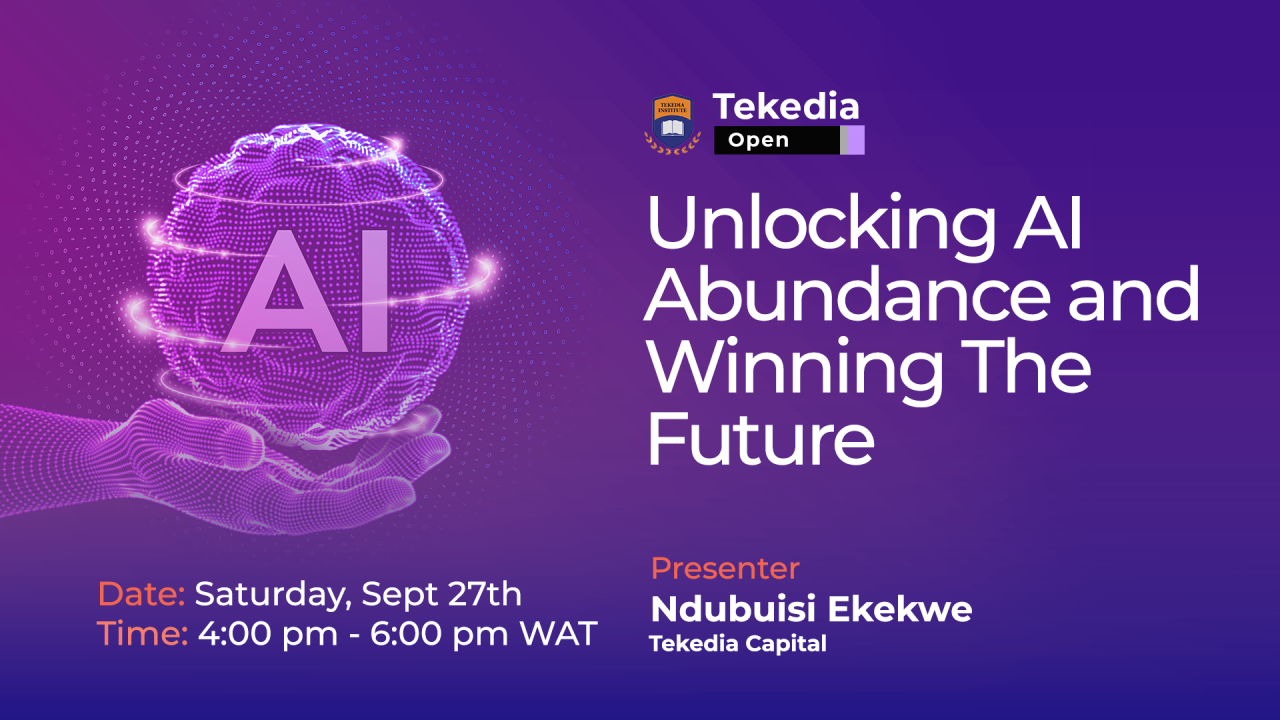
Attend TEKEDIA OPEN on Sept 27: Unlocking AI Abundance and Winning The Future by Ndubuisi Ekekwe

0

Artificial Intelligence is not just another wave of technology; it is the new operating system of modern economies. From factories to farms, hospitals to banks, AI is redesigning how we work, live, and build prosperity. The promise is not in the codes or the algorithms alone, but in the abundance they unlock. AI transforms scarcity into opportunity—making doctors more available through telemedicine, teachers more accessible through digital learning, and markets more efficient through intelligent automation. This is the wealth of nations in the 21st century: the ability to harvest knowledge and scale it at the speed of silicon.

Yet, unlocking this abundance requires vision. Companies and nations must move beyond consumption into capability accumulation. It is not enough to download an app or buy a platform; we must learn to build, adapt, and deploy AI solutions tailored to our own frictions. When Africa, for instance, applies AI to agriculture, we are not copying Silicon Valley—we are solving hunger. When we apply AI to capital markets, we are not imitating Wall Street—we are deepening inclusion. Innovation wins the future when it is contextualized, domesticated, and owned by the people it seeks to serve.

That is why Tekedia Capital is hosting Tekedia OPEN: Unlocking AI Abundance and Winning the Future. At Tekedia OPEN, we will explore AI not as an abstract possibility but as a practical enabler of enterprises, careers, and nations. The mission is clear: to provide a roadmap for individuals and institutions to tap into the abundance AI promises, and to create frameworks through which prosperity can be democratized.

We organize Tekedia OPEN ahead of an investment cycle in our community. It is 100% open and free to attend. The next investment cycle begins on Oct 6, 2025.

Good People, All Nations: AI is the lever, but human imagination remains the fulcrum. The abundance is real, but the winners will be those who align strategy, talent, and execution with the boundless possibilities AI offers. The future belongs to those who build it, and with AI, we now hold in our hands the tools to redesign destinies.

Join Tekedia OPEN and let us discuss how to unlock AI abundance and win the future, via use AI, create AI, invest in AI, or combine the three options.

  • Event: Tekedia Capital Open
  • Topic: Unlocking AI Abundance and Winning The Future
  • Date: Saturday, Sept 27, 2025
  • Time: 4pm – 5.30pm WAT
  • Zoom link (free and open) here
  • Contact: capital@tekedia.com

Next Tekedia Capital Investment Cycle Begins Oct 6 2025

ChatGPT Introduces Pulse, A Proactive AI Assistant for Personalized Daily Updates

0

Artificial Intelligence company OpenAI has launched a new feature called “ChatGPT Pulse”, which is designed to make the AI assistant more proactive and personalized.

Traditionally, ChatGPT has operated reactively, responding only when users ask questions. With Pulse, the platform becomes a proactive assistant that works in the background, delivering relevant updates and research without waiting for a prompt.

Announcing the release, OpenAI wrote via a blogpost. Part of it reads,

“Today we’re releasing a preview of ChatGPT Pulse to Pro users on mobile. Pulse is a new experience where ChatGPT proactively does research to deliver personalized updates based on your chats, feedback, and connected apps like your calendar.

“You can curate what ChatGPT researches by letting it know what’s useful and what isn’t. The research appears in Pulse as topical visual cards you can scan quickly or open for more detail, so each day starts with a new, focused set of updates.”

The new feature currently available in preview for Pro users on mobile, automatically conducts asynchronous research each night. It uses information from a user’s memory, chat history, and direct feedback to generate a curated set of updates delivered the next morning.

These updates may include follow-ups on topics the user often searches about, suggestions for a relationship, and actionable steps toward long-term goals, among others. To provide an even richer context, Pulse can connect with apps like Gmail and Google Calendar.

When connected, it can generate helpful outputs such as meeting agendas, birthday gift reminders, or restaurant suggestions for upcoming trips. However, these integrations according to OpenAI are optional and can be enabled or disabled at any time.

Each morning, Pulse delivers its findings in the form of visual cards, offering a quick way for users to scan updates or explore topics in greater detail. Updates are available for that day only, unless the user saves them to their chat history or requests follow-up information.

Users play a crucial role in refining Pulse. By tapping the “curate” option, they can request specific updates for future editions such as a Friday roundup of local events, learning tips for a new skill, or targeted news like professional tennis updates. Feedback tools like thumbs up and thumbs down allow users to guide the system, which continuously improves based on this input.

In a test conducted with college students through the ChatGPT Lab, valuable insights were provided for development. One notable finding was that the feature becomes most useful once users actively share what they want to see, prompting OpenAI to enhance feedback options.

While Pulse represents a major advancement, OpenAI warns that it remains in preview and may not always be perfectly accurate. Users might occasionally receive outdated or irrelevant suggestions, but they can directly guide Pulse to improve future results.

Looking Ahead

Pulse is just the first step toward a broader vision for ChatGPT. OpenAI aims to integrate more apps and expand Pulse’s capabilities, allowing it to research, plan, and take actions on behalf of users.

With personal and everyday application now dominating ChatGPT usage, Pulse could offer real-time support by merging conversation and memories, giving users proactive responses that matter most.

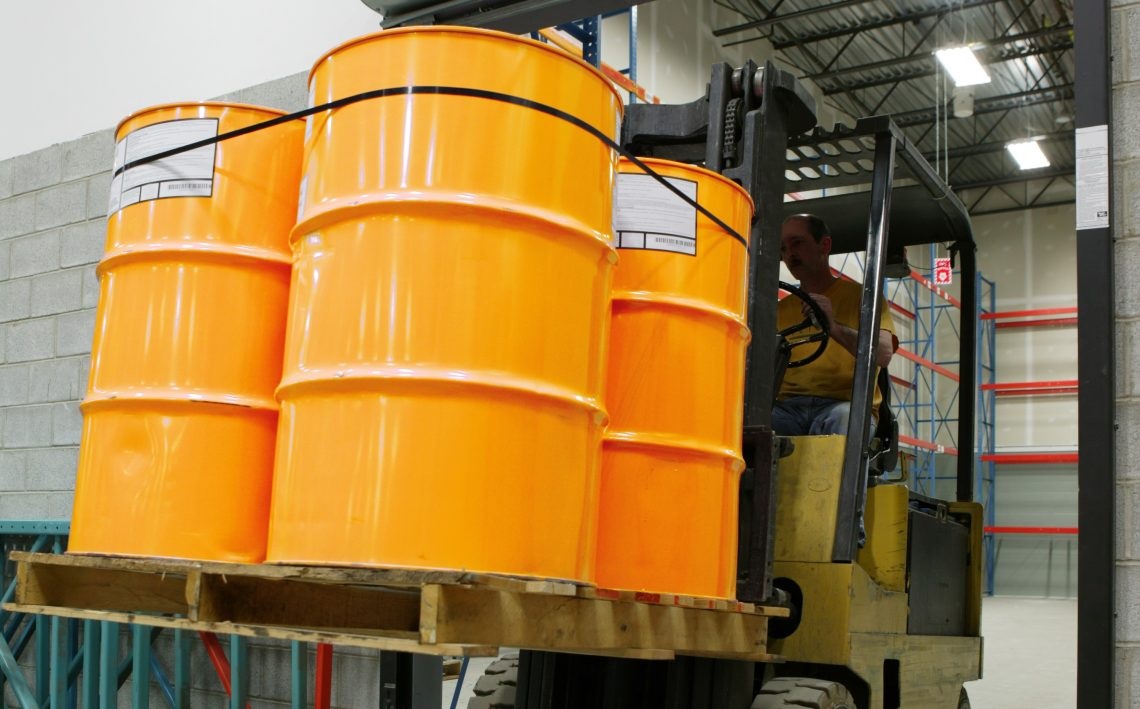
Shale Executives Say Trump’s Push for Cheap Oil Is Gutting U.S. Industry

0

Shale oil executives are warning that President Donald Trump’s policies are undermining investment in the U.S. oil patch, deepening uncertainty over the future of an industry that only a few years ago turned the country into the world’s largest crude producer.

Their anonymous comments were captured in the Federal Reserve Bank of Dallas’ quarterly survey of oil and gas companies, released this week, and reported by CNBC. The survey polled 139 firms across Texas, northern Louisiana, and southern New Mexico, regions that together form the backbone of America’s shale industry.

Trump has long cast himself as a champion of fossil fuels, frequently attacking the renewable energy industry. His One Big Beautiful Bill Act, signed into law in July, delivered a sweeping package of tax breaks, regulatory relief, and subsidies that oil lobbyists had sought for years. But executives say his simultaneous push for lower crude prices, higher tariffs, and sudden, unpredictable policy shifts is destabilizing the sector.

“Twilight of shale”

Nearly 80% of respondents told the Dallas Fed they have delayed investment decisions because of heightened uncertainty over the future price of oil and rising production costs.

“We have begun the twilight of shale,” one executive said, pointing to layoffs numbering in the thousands and consolidation under giants such as Exxon Mobil. “The writing is on the wall.”

Another was even blunter: “Drilling is going to disappear,” the person said, citing Trump’s target of $40 per barrel crude oil while steel tariffs simultaneously drive up input costs. At $65 per barrel—just above most producers’ breakeven level—companies are already struggling to sustain drilling.

Industry squeezed from both sides

Executives described a sector battered by politics from both ends of Washington. “The shale industry has been gutted over the course of the Biden and Trump administrations,” one respondent said.

Political hostility from President Joe Biden chased away capital, while what they called “economic ignorance” from Trump is now “finishing the job.”

“The U.S. shale business is broken,” the executive added.

Several also accused Trump of tacitly siding with OPEC+, whose decision to increase supply has further depressed global oil prices.

“The administration has effectively aligned itself with OPEC+, kneecapping U.S. producers in the process,” one manager said.

“Guided by a Department of Energy that tells them what they want to hear instead of hard facts, they operate with little understanding of shale economics,” another added.

White House defends record output

The Trump administration rejects the criticism. A White House spokesperson said the president is “rolling back burdensome regulations that were killing the industry,” crediting his policies with record production levels in June. Energy Secretary Chris Wright has repeatedly argued that cutting red tape is making drilling cheaper.

But the Dallas Fed’s data shows otherwise: 57% of executives said regulatory changes since January have reduced their breakeven costs by less than $1 per barrel—far too small to offset volatility in global markets and rising capital costs.

Long-term risks

Several executives also warned that Trump’s attacks on renewables could backfire on the fossil fuel sector in the long run. Investors, wary of policy volatility and the “stroke of pen” risk that Trump wields over energy projects, are pulling back from energy entirely, they said.

“Life is long, and the sword being wielded against the renewables industry right now will likely boomerang back in 3.5 years against traditional energy,” one respondent warned, predicting harsher methane penalties, tighter permitting rules, and tougher environmental reviews if Democrats return to power.

The outlook

The survey underscores the precarious state of U.S. shale. Once hailed as the engine of America’s energy independence, the sector is now squeezed by weak prices, high costs, political uncertainty, and dwindling investor confidence.

With Trump pressing for cheaper crude to keep inflation in check, executives fear that the very policies billed as pro-oil could hasten the industry’s decline.