DD
MM
YYYY

PAGES

DD
MM
YYYY

spot_img

PAGES

Home Blog Page 455

Swiss Startup Corintis Raises $24m, Adds Intel CEO Lip-Bu Tan to Board as AI Spurs Cooling Race

0

Corintis, a Swiss semiconductor cooling startup, has raised $24 million in fresh funding and brought Intel’s new CEO, Lip-Bu Tan, onto its board, as surging demand for artificial intelligence chips fuels the hunt for more efficient ways to manage heat.

The Lausanne-based company, spun out of Switzerland’s Federal Institute of Technology in 2022, develops rapid liquid-cooling systems designed to keep increasingly power-hungry chips from overheating. Unlike conventional methods that pump cold air through data centers, or liquid systems that cool only the chip’s surface, Corintis channels liquid directly through tiny etched pathways inside the chip itself. The company says the approach reduces hot spots, improves efficiency, and consumes less water and energy.

Tests by Microsoft, a Corintis customer, have shown the system can be up to three times more efficient than standard cooling techniques. Demand for such solutions is growing as AI chips from Nvidia and other manufacturers consume unprecedented amounts of power, straining both chip performance and global power grids.

“Right now we are able to produce around 100,000 cold plates per year. Next year we are ramping up to around 1 million cold plates per year,” co-founder and CEO Remco van Erp told Reuters.

Corintis manufactures its cold plates in Europe and uses custom software to automate design, enabling the systems to serve as drop-in upgrades to existing liquid-cooling setups or be built directly into chips.

The latest Series A round, led by venture capital firm BlueYard Capital, valued Corintis at around $400 million, a source familiar with the matter said. Other backers include Founderful, Acequia Capital, Celsius Industries, and XTX Ventures. The round brings Corintis’s total funding to $33.4 million, including a pre-seed raise.

The company also bolstered its leadership with high-profile industry figures. Lip-Bu Tan, who became Intel’s CEO in March after years leading Walden International and serving as Cadence Design Systems’ chairman, joined Corintis’s board earlier this year. Geoff Lyon, founder and former CEO of liquid-cooling pioneer CoolIT, also joined as a director.

Corintis plans to use the fresh capital to expand its team from 55 to 70 employees by the end of 2025, scale up its manufacturing capacity, and establish U.S. offices to support its growing base of customers there.

The investment comes amid a broader scramble for next-generation cooling technologies. As AI adoption accelerates, hyperscale data centers are grappling with soaring electricity costs and mounting climate concerns. Traditional cooling methods, long designed for CPUs running at lower power levels, are increasingly inadequate for advanced GPUs and AI accelerators running at hundreds of watts each.

Analysts say startups like Corintis could play a crucial role in redefining the infrastructure of AI computing. Liquid cooling isn’t just about keeping chips from melting anymore — it’s about sustaining the economics of AI. Thus, it is believed that without breakthroughs in cooling, the power demands of next-generation chips risk outpacing what data centers and power grids can deliver.

Looking ahead, having Intel’s chief executive on Corintis’ board underscores the strategic importance of its technology. The company is entering a fiercely competitive space that includes established liquid-cooling providers and experimental approaches from chipmakers themselves. But if its etched-in cooling channels scale as promised, Corintis could become a vital enabler for the next wave of AI hardware.


White House Signs Off on TikTok U.S. Sale; Oracle, Silver Lake, MGX, and Others Poised to Lead New Ownership

0

President Donald Trump on Thursday issued an executive order approving a sale of TikTok’s U.S. operations to a U.S.-led investor consortium, clearing a major legal and political hurdle that has shadowed the short-form video app’s future in the United States.

Vice President J.D. Vance said the deal would value TikTok U.S. at “around $14 billion,” though important details and approvals remain outstanding.

The White House framed the move as a national-security solution that keeps the app operating in the U.S. while shifting control to American investors. Under the announced framework, Oracle will audit and operate the U.S. algorithm, which White House officials say will be “retrained and operated in the United States outside of ByteDance’s control.”

Oracle, Silver Lake, and Abu Dhabi’s MGX fund are reported to be the main investors, together holding roughly 45% of the new U.S. entity, while ByteDance-related investors and new holders would own about 35%, according to reporting cited by CNBC. ByteDance itself would retain less than 20%.

“We want this to be American operated all the way,” President Trump said at the signing, singling out Oracle and its founder Larry Ellison as playing “a very big part.”

Vice President Vance described the buyers as a “blue chip group of investors” and named Michael Dell and Rupert Murdoch among those expected to participate.

White House spokesperson Karoline Leavitt said U.S. users will continue to view and share content with creators abroad and that Oracle will perform ongoing audits of the algorithm. The administration also said it expects to collect a fee for facilitating the transaction; the U.S. government will not take an equity stake.

Deal architecture, participants, and lingering unknowns

Reported ownership and governance plans leave several moving parts:

  • Oracle is slated to oversee security operations and supply cloud infrastructure for the spun-off TikTok U.S. unit.
  • A consortium that may include Larry Ellison, Michael Dell, Silver Lake, and MGX is widely reported to be involved; President Trump also mentioned Rupert and Lachlan Murdoch.
  • ByteDance investors, including firms like General Atlantic, Susquehanna, and Sequoia, are expected to roll some equity into the U.S. entity.
  • ByteDance itself would hold a minority stake below 20%, satisfying the statutory threshold in the U.S. divestiture law that threatened an effective ban.
  • The administration said China’s leader, Xi Jinping, had “given us the go-ahead,” but Beijing has not publicly confirmed approval, and Chinese regulatory sign-off remains a necessary and uncertain step.

The executive order prevents the Department of Justice from enforcing the divestiture law until Dec. 16, buying time to consummate a deal.

Despite the publicity, no formal purchase agreement was presented at the White House signing. ByteDance did not send representatives to the ceremony and has not publicly acknowledged a transaction.

In a reported valuations conflict, Vance’s $14 billion figure sits well below prior analyst estimates that placed TikTok’s U.S. business in a $30–$35 billion range, and below earlier, larger valuations attached to ByteDance itself.

Practical questions for advertisers, employees, and the product

However, a host of operational questions remain unanswered: Advertising partners will want clarity about whether global ad buys will still route through a single platform or become siloed; marketers depend on broad reach and unified measurement. TikTok Shop and other commerce initiatives face a strategic crossroad: will new owners double down on social commerce or focus on immediate revenue generation?

Employees worry about restructuring and priorities. Some U.S. TikTok staff told BI they fear layoffs or deprioritization of teams such as e-commerce. Others questioned how a “retrained” U.S.-operated algorithm will compare to the current model developed by ByteDance engineers.

Legal and geopolitical hurdles

The deal is designed to satisfy a U.S. national-security law that required ByteDance to divest TikTok or face an effective ban. Key legal obstacles remain. China’s approval is essential; Beijing must amend or permit transactions under its own foreign-investment and export-control regimes to let a sale proceed. Negotiations over ByteDance’s retained stake and intellectual-property arrangements could be complex. The timing and terms of any Chinese sign-off will likely determine whether the transaction closes and on what timetable.

The administration’s extension of the enforcement deadline and the pledge of a facilitation fee do not eliminate these diplomatic and legal hurdles. Markets and technology partners will be watching for final purchase agreements, regulatory filings, and Chinese government statements.

If consummated, the deal would shift ownership and operational control of TikTok’s U.S. arm to an American-led investor group, addressing the core national-security argument about foreign control of the algorithm and U.S. user data. Oracle’s role as algorithm auditor and cloud provider is central to the administration’s assurances that the algorithm will be under U.S. oversight.

At the same time, a transaction that leaves ByteDance with a minority stake preserves value for existing investors and may ease Beijing’s acceptance. But it also creates an unusual governance structure: a U.S.-operated platform with continuing economic ties to a Chinese parent. That setup could spawn future frictions over data flows, content moderation policy, and product development.

For the broader tech ecosystem, the sale could set a precedent for how national-security concerns are resolved through ownership changes rather than outright bans or stricter regulatory controls. It may also reshape M&A norms for other China-origin platforms operating in the U.S.

What to watch next

  • Chinese approval. Beijing’s public sign-off is both necessary and unpredictable. Officials in Beijing have yet to issue a formal confirmation.
  • Definitive purchase agreement. The market needs detailed transaction documents showing price, ownership percentages, governance, and the mechanics for algorithm retraining and data custody.
  • Regulatory filings and antitrust review. Federal and state regulators could review aspects of the deal, especially if it affects competition, advertising markets, or data practices.
  • Employee and product roadmaps. Signals from the new owners about investment priorities—commerce, creator monetization, and moderation—will shape staff morale and advertiser confidence.
  • Enforcement timeline. The DOJ’s enforcement pause runs to Dec. 16; if key approvals are not secured by then, the administration’s options will narrow.

Bottom line: The president’s executive order moves the U.S. closer to resolving a years-long uncertainty over TikTok’s future in America by signaling approval of a U.S.-led takeover. The announcement answers some political questions but raises many commercial, legal, and technical ones. The deal’s fate now depends on a complex mix of corporate negotiation, regulatory review, and international diplomacy.

Seedify Fund Hacked By DPRK Linked Operation

0

Seedify Fund—a Web3 gaming incubator and launchpad—suffered a major exploit on its cross-chain bridge infrastructure.

Hackers linked to North Korea’s state-affiliated groups (commonly known as DPRK or Lazarus Group) compromised a developer’s private key, enabling them to modify the Omnichain Fungible Token (OFT) bridge contract on Avalanche.

This allowed the unauthorized minting of approximately 8.8 million fake SFUND tokens, which were then bridged and dumped across multiple networks, draining liquidity and causing the token’s price to crash dramatically.

The attack is tied to the “Contagious Interview” campaign, a DPRK operation that has targeted over 230 entities in recent months, according to blockchain analytics from SentinelLABS and investigator ZachXBT.

Binance founder Changpeng Zhao (CZ) publicly stated on X that the incident “looks like North Korea DPRK,” noting that major centralized exchanges (CEXs) had blacklisted the attacker’s addresses. SFUND’s price plummeted 99.99% from ~$0.43 to under $0.01, before partially recovering to around $0.21–$0.25.

Early inflated estimates reached $9M–$40M in losses, but confirmed figures settled at $1.2M–$1.7M. This incident underscores persistent DeFi vulnerabilities, especially in bridges, which have seen rising attacks in 2025 amid DPRK’s record $1.3B+ in crypto thefts this year.

How the Exploit Unfolded

Attackers gained access to a Seedify developer’s private key, likely through social engineering or phishing tactics common in DPRK operations. Using the key, they altered the bridge contract settings on Avalanche which had previously passed audits to enable unauthorized minting of SFUND tokens.

The fake tokens were bridged to Ethereum, Arbitrum, Base, and BNB Chain. Liquidity pools (e.g., on PancakeSwap) were drained by swapping the counterfeit SFUND for real assets like BNB and ETH.

Most proceeds—estimated at $1.2 million—were sold on BNB Chain, impacting around 64,000 holders there alone. Initial reports inflated losses to $8.8 million, but confirmed figures settled at $1.2–1.7 million after on-chain analysis.

The core protocol, user wallets, and Seedify’s website remained unaffected, as the breach was isolated to the bridge’s minting permissions. The exploit triggered a massive panic sell-off, with SFUND’s price plummeting from around $0.42–0.65 to as low as $0.04–0.05 within minutes—a drop of up to 99%.

It has since partially recovered to approximately $0.24–0.28, but remains down 35–60% in the last 24 hours, 50% monthly, and 80% year-to-date. The crash erased roughly $40 million in market cap temporarily and affected tens of thousands of wallets.

Seedify paused all bridges, revoked compromised permissions, blacklisted attacker addresses across chains, and halted trading on CEXs to prevent further dumping.

Worked with sleuths like ZachXBT and security firms (e.g., Cyvers) for tracing. Offered bounties for fund recovery. CZ confirmed $200,000 in stolen funds frozen at HTX; other CCEXs like Binance followed suit with blacklists.

Advised against buying SFUND on affected chains until cleared; emphasized no risk to core liquidity. Seedify founder Meta Alchemist expressed devastation on X, noting the hackers “took everything we built over 4.5 years in one hack.”

The team has committed to full transparency and audits, with bridges expected to resume after fixes. This incident underscores ongoing risks in DeFi bridges, a frequent target for DPRK hackers funding state programs (e.g., weapons development, per UN reports).

It echoes past exploits like Ronin (2022), where similar tactics stole $625 million. For users: Revoke unused approvals regularly, avoid unverified bridges, and monitor for phishing. Seedify, despite the hit, has a strong track record in gaming launches and BNB ecosystem ties—recovery depends on swift restitution and regained trust.

Goldman Sachs’ Petershill Partners to Delist from LSE as Firms Flee for Higher Valuations Abroad

0

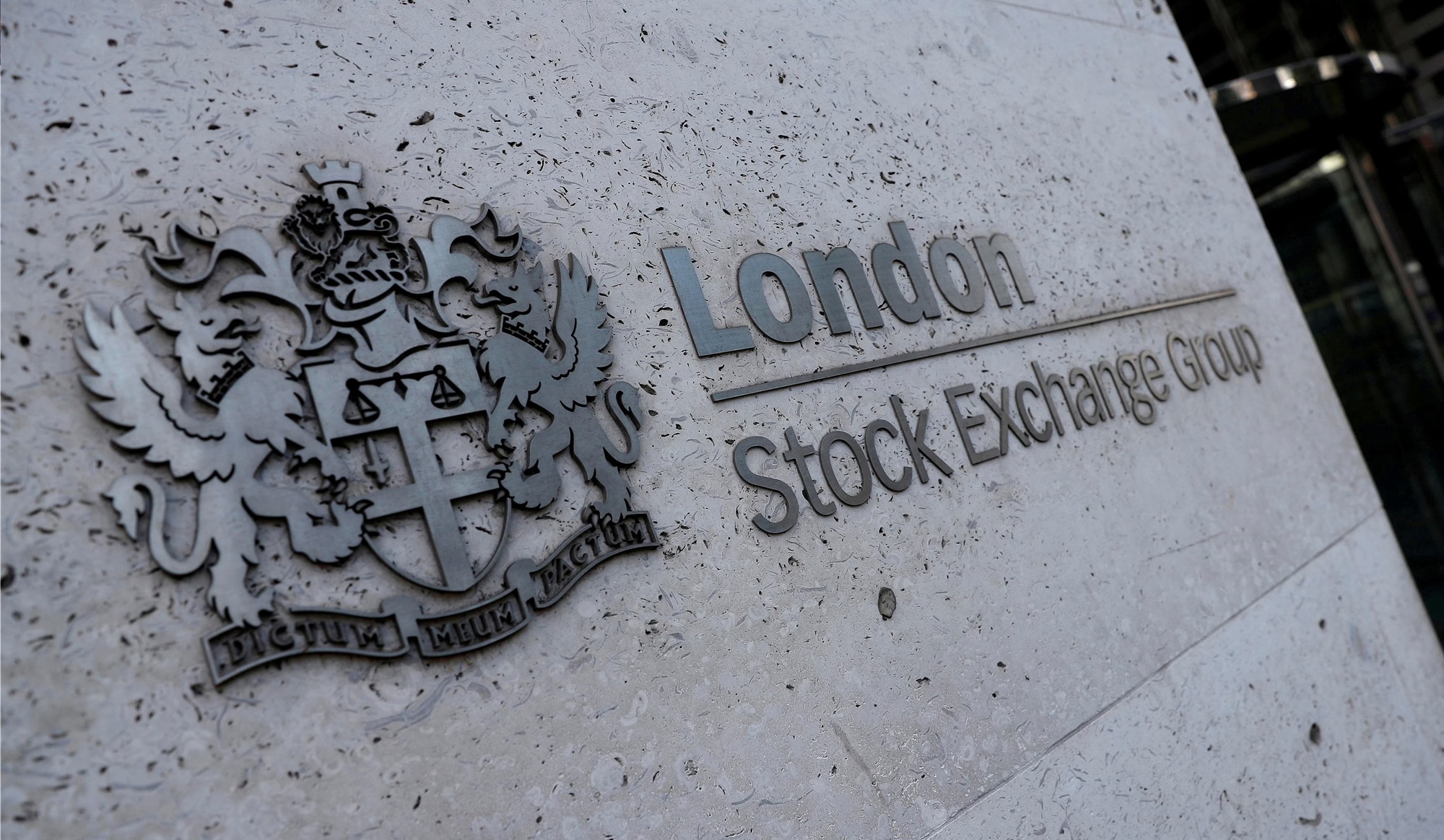
British investment group Petershill Partners announced on Thursday that it will delist from the London Stock Exchange (LSE) and return capital to its shareholders, citing persistent disappointment with its share price performance and valuation.

The decision, which values the Goldman Sachs-backed firm at $4.5 billion, marks another high-profile setback for London’s stock market, which has struggled to keep companies from leaving amid concerns about low valuations and dwindling investor interest.

Petershill, majority-owned by Goldman Sachs, was established in 2007 with a strategy centered on acquiring minority stakes in hedge funds and other alternative asset managers. The group went public in London in September 2021, touting the listing as a gateway for investors to access the fast-growing alternative investment industry. Chairman Naguib Kheraj described it at the time as a “unique opportunity” for public market investors to gain diversified exposure to private markets.

Since then, Petershill has expanded significantly, with assets under management rising from $187 billion at the time of its IPO to $351 billion as of June 2025. Yet its shares have consistently underperformed, trading at steep discounts to both book value and comparable listed peers. Even strong operational and financial results failed to lift sentiment, leaving the company’s valuation lagging well behind the industry it sought to showcase.

Under the delisting proposal, free-float shareholders will receive $4.15 per share in cash, alongside an interim dividend of $0.052 per share, totaling $4.202. The offer represents a 35% premium to the stock’s last closing price, prompting shares to jump as much as 34% on Thursday. Goldman Sachs-managed private funds, which control 79.49% of Petershill’s stock, will not participate in the capital return but have agreed to support the move. Approval from free-float shareholders representing at least 75% of votes cast at court and general meetings scheduled for November is required.

Analysts at Jefferies described the decision as “perfectly reasonable,” noting that Petershill had undertaken numerous initiatives over the past 18 months to close the valuation gap with little success. The delisting, they said, offers clarity for investors and acknowledges that London’s market has failed to reward Petershill’s scale and performance.

The move is part of a broader pattern that has deepened worries about London’s status as a global financial hub. Ireland-based building materials giant CRH shifted its primary listing to New York in 2023, citing the deeper capital pools and higher valuations available there. British semiconductor design champion Arm Holdings opted for a Nasdaq IPO the same year, despite heavy lobbying by UK officials to keep it in London. Flutter Entertainment, owner of Paddy Power and FanDuel, also moved its primary listing to New York this year to tap U.S. investors.

These exits, combined with a thinning pipeline of new listings, have left the LSE grappling with what many see as an identity crisis. Even after reforms to simplify listing rules, London continues to suffer from a reputation for depressed valuations compared with New York or even European markets such as Amsterdam. Petershill’s decision, despite its growth and ties to Goldman Sachs, underscores that London is struggling to retain firms even in sectors where it once held an advantage.

For Petershill, the delisting is a way to reconcile strong operating performance with a market that never seemed to buy into its promise, while it underlines the continuing exodus that risks eroding the role of LSE as Europe’s premier financial center.

Asian Online Gaming Trends: BC Game Indonesia & Wild Bounty Showdown

0

Trends in Asian Online Gaming

The Asian online gaming market has shown remarkable growth in recent years. Countries across the region are adopting new platforms, expanding payment methods, and fueling the demand for slot games with localized narratives. This article examines the main development directions and highlights projects that shape industry trends.

Beyond entertainment, online gaming also plays a growing role in regional economies, creating new opportunities for developers, payment providers, and digital service platforms. At the same time, the market’s rapid expansion demands constant innovation to meet diverse user expectations and regulatory challenges.

BC Game Indonesia as a Reflection of Local Features

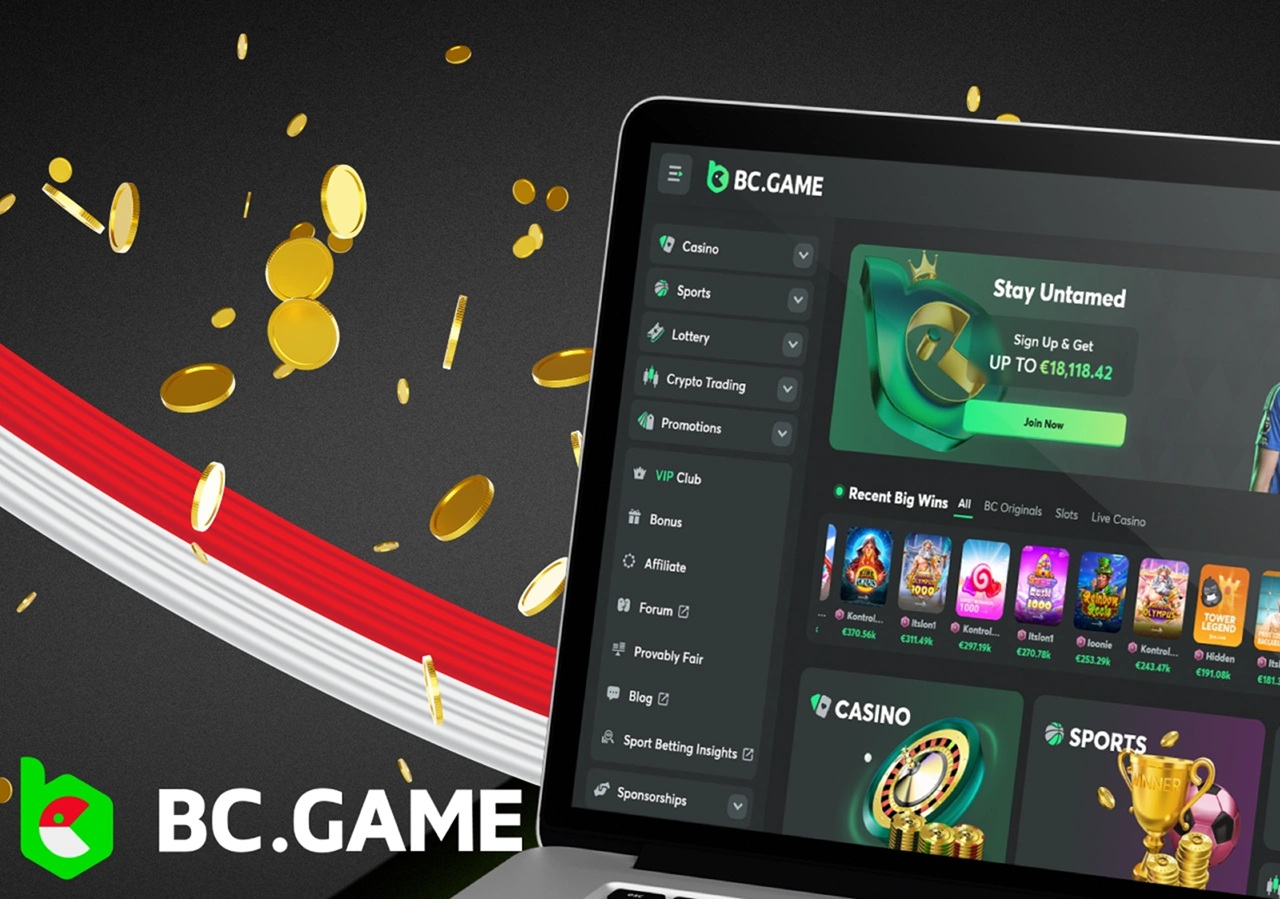
Indonesia stands out among Southeast Asian countries for its dynamic player growth. The BC Game Indonesia platform tailors its services to local needs, integrating regional payment systems, optimizing the interface for mobile devices, and ensuring accessibility even under strict regulatory conditions. Such adjustments enable the platform to secure a loyal audience and adapt to a competitive environment.

Why Localization Matters in Indonesia

The Indonesian market is unique due to its combination of high smartphone penetration, diverse payment ecosystems, and strict legal frameworks. Players demand seamless transactions through regional e-wallets and bank transfers, while at the same time seeking platforms that guarantee both speed and transparency. BC Game addresses these needs by:

  • integrating payment options widely used in Indonesia
  • adapting its user interface to low- and mid-range devices
  • providing multilingual support for better accessibility

This localized approach not only fosters trust but also makes the platform more resilient against market fluctuations and regulatory changes. By prioritizing usability and cultural relevance, BC Game positions itself as a leading choice for Indonesian players.

Thematic Slots and User Interest

Demand for games with ethnic and adventure-based themes remains consistently strong. A notable example is demo Wild Bounty Showdown, developed by PG Soft. The slot combines a Western-inspired design with mechanics that offer high win potential. Players often try the demo mode first before transitioning to real-money play, reducing risks and providing time to explore game features.

Key Features of Wild Bounty Showdown

What makes Wild Bounty Showdown stand out is its balance between engaging storytelling and technical precision. The Western theme, enriched with bounty-hunting visuals, creates a cinematic atmosphere, while bonus mechanics increase replay value. For many players in Asia, the ability to test the demo version before real wagers is essential, as it builds confidence in the gameplay and helps evaluate volatility.

Feature Value
Provider PG Soft
Theme Western, bounty hunting
Game Modes Demo and real play
Extra Features Free spins, multipliers
Volatility Level High

This combination of thematic depth and technical features illustrates why PG Soft titles resonate with Asian audiences. By offering both demo and real-money options, Wild Bounty Showdown bridges casual interest with serious gameplay, making it a strong representative of how localized themes can drive sustained player engagement.

The Role of Mobile Solutions

In Asia, smartphones dominate as the primary device for both betting and slots. Platforms invest heavily in mobile optimization: faster load times, simplified interfaces, and seamless payment methods. Mobile-first design is no longer an option but a necessity, as many users rely exclusively on handheld devices for access to online gaming.

How Mobile Experience Shapes Player Preferences

The quality of mobile performance directly affects player loyalty. A well-optimized app or browser version can determine whether a user stays on a platform or switches to a competitor. Smooth navigation, quick access to favorite games, and reliable payment gateways are now the foundation of customer retention.

Players in the region tend to prioritize functionality and reliability over promotional offers. The main criteria they consider when choosing a platform include:

  • availability of convenient deposit and withdrawal methods
  • full optimization for mobile devices
  • transparent and fair game mechanics
  • diversity of themes and bonus features

Industry reviews often highlight how mobile platforms improve accessibility and payouts. For a detailed example of how mobile performance influences the gaming experience, you can read more here.

Future Prospects for the Industry

The Asian gaming market is expected to grow further, driven by three key factors: wider access to mobile internet, a growing young demographic, and rising competition among developers. Studios are already experimenting with hybrid genres, merging slot mechanics with RPG elements to increase engagement and provide new gaming experiences.

Additionally, cryptocurrency integration is forecast to expand. For regions with limited access to traditional banking, digital wallets and crypto transactions are becoming essential tools for deposits and payouts.

Industry Outlook

The Asian gaming industry reflects a unique blend of cultural preferences and technological innovation. BC Game Indonesia exemplifies the value of localization, while Wild Bounty Showdown by PG Soft showcases the appeal of compelling storytelling. Looking ahead, mobile solutions and regional adaptation will remain the defining pillars of success.