DD
MM
YYYY

PAGES

DD
MM
YYYY

spot_img

PAGES

Home Blog Page 457

OpenAI, Oracle, and SoftBank Announce $400bn Expansion of U.S. AI Infrastructure Under Stargate Platform

0

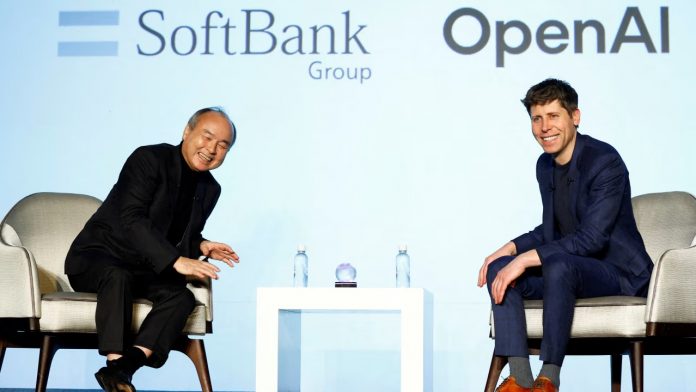
OpenAI, Oracle, and SoftBank have unveiled five new large-scale artificial intelligence data center sites across the United States under Stargate, OpenAI’s flagship infrastructure program.

The announcement, which cements the consortium’s role at the heart of America’s AI race, pushes the initiative to nearly 7 gigawatts of planned capacity and more than $400 billion in secured investments over the next three years.

With this milestone, Stargate is now on course to meet—and possibly surpass—its $500 billion, 10-gigawatt target by the end of 2025, ahead of the original schedule announced in January.

Expansion Across Texas, New Mexico, the Midwest, and Ohio

In July, OpenAI and Oracle deepened their partnership with a deal to deliver up to 4.5 gigawatts of new capacity. That agreement, valued at over $300 billion across five years, marked one of the largest corporate partnerships in AI infrastructure to date.

As part of this phase, three sites have now been selected: Shackelford County, Texas; Doña Ana County, New Mexico; and a soon-to-be-announced Midwest location. Alongside a potential 600-megawatt expansion at the flagship Abilene, Texas, Stargate campus, these facilities are projected to add more than 5.5 gigawatts of compute power. Collectively, they are expected to generate over 25,000 direct onsite jobs and tens of thousands of additional roles in supporting industries nationwide.

Meanwhile, SoftBank will spearhead two additional projects. In Lordstown, Ohio, the Japanese conglomerate has already broken ground on what it calls an advanced data center design, expected to go live in 2026. Another site in Milam County, Texas, will be delivered in partnership with SB Energy, SoftBank’s renewable energy subsidiary, which is building the powered infrastructure to support rapid deployment. Combined, the SoftBank sites will add up to 1.5 gigawatts within 18 months, with room for multi-gigawatt scaling.

The five sites were chosen from more than 300 proposals submitted by over 30 U.S. states following a nationwide competition launched in January. The rigorous selection process prioritized scale, energy infrastructure, and speed to deployment. Officials say further U.S. sites will be announced in the coming months as the partnership accelerates beyond its $500 billion goal.

Oracle, which is delivering cloud infrastructure for Stargate, confirmed that its Abilene campus—already operational on Oracle Cloud Infrastructure (OCI)—is seeing rapid progress. The company began delivering NVIDIA’s GB200 racks in June, marking a major leap in AI computing.

OpenAI has since started running early training and inference workloads on the system, signaling that the infrastructure is already feeding into next-generation model development.

Leaders Emphasize Scale, Speed, and Access

OpenAI CEO Sam Altman described compute infrastructure as the “key” to ensuring AI delivers benefits at scale.

“AI can only fulfill its promise if we build the compute to power it. That compute is the key to ensuring everyone can benefit from AI and to unlocking future breakthroughs. We’re already making historic progress toward that goal through Stargate,” Altman said.

Oracle’s Clay Magouyrk highlighted the speed of deployment, saying: “Oracle’s reliable, scalable, and secure AI infrastructure is helping OpenAI rapidly scale its business. To meet this enormous demand, we continue to expand OCI’s footprint at an unrivaled pace to deliver the most performant and cost-effective AI training and inferencing.”

Backdrop of U.S. AI Industrial Strategy

The Stargate initiative was first unveiled in January at the White House alongside President Donald Trump, framed as a cornerstone of the Administration’s drive to expand U.S. AI infrastructure and compete globally. Administration officials have credited Trump’s industrial policy framework for accelerating both domestic investment and foreign partnerships in the sector.

With Oracle, SoftBank, and other partners, OpenAI is translating its $500 billion promise into large-scale physical infrastructure that brings jobs, regional development, and computing capacity critical to powering the next wave of AI breakthroughs.

Executives say Stargate is not just about meeting current AI demand but building the foundation for a trillion-dollar future where compute availability advances artificial intelligence to advance humanity.

“Stargate is harnessing SoftBank’s innovative data center design and energy expertise to deliver the scalable compute that powers AI’s future. Together with OpenAI, Arm, and our Stargate partners, we are paving the way for a new era where AI advances humanity,” SoftBank Chairman, Masayoshi Son, said.

Uber CEO Admits Self-Driving Cars Pose Job Threat to Drivers, Calls It a “Societal Question”

0

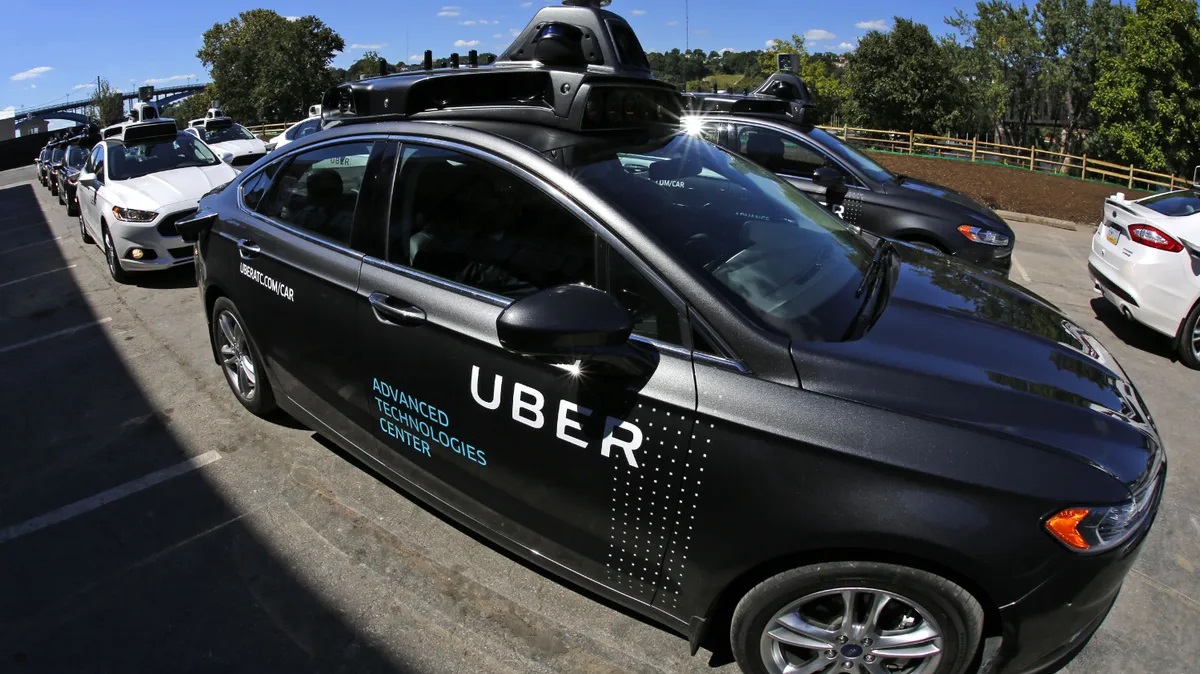
Uber CEO Dara Khosrowshahi has been blunt about what autonomous vehicles could mean for the millions of people who have built livelihoods on ride-hailing platforms.

Speaking at an All-In podcast summit, Khosrowshahi said human drivers will remain a major part of Uber’s network for the next five to seven years, but warned that “10 to 15 years from now, this is going to be a real issue,” adding that he has no “neat answer” for the social dislocation that could follow.

The company is already experimenting with autonomous options through partnerships such as its work with Waymo, but Khosrowshahi did not shy away from the human and political complexities ahead.

“For the next five to seven years, we’re going to have more human drivers and delivery people, just because we’re going so quickly,” he said. “But, I think, 10 to 15 years from now, this is going to be a real issue.”

He highlighted Uber’s efforts to create alternative on-demand work—labeling and other tasks to help train AI—as one way the company is trying to soften disruption, but acknowledged those roles require different skills than driving.

The Robotaxi Race: Who’s Launching, Who’s Partnering, and How They’re Trying to Scale

The industry is no longer hypothetical. Multiple firms are moving from labs and piloting to paying customers and app integration—often through deals with incumbent ride-hail apps—that aim to accelerate adoption while lowering unit economics.

Waymo, Alphabet’s autonomous-driving unit, is perhaps the farthest along in mainstream deployment. It now operates paid robotaxi services in several U.S. cities and has broadened coverage and product offerings aimed at business users, including a corporate bookings product that plugs Waymo into company travel programs. Waymo is expanding its footprint—now serving cities such as San Francisco, Phoenix, Los Angeles, Austin, and Atlanta—and completes more than a million autonomous rides per month, positioning itself as the most mature commercial robotaxi operator.

Rather than always building its own consumer brand, some AV developers are striking partnerships with large ride-hail platforms to gain immediate network scale. Waymo’s multi-city agreement to run its Waymo One fleet within the Uber app in selected markets is a clear example: Uber handles dispatching and payment while Waymo provides the fully driverless vehicles. That integration model lets robotaxi operators reach riders without having to build a consumer business from scratch.

Legacy automakers and start-ups have also formed alliances. Motional has run a long-standing commercial robotaxi service with Lyft, notably in Las Vegas, and maintains partnerships aimed at wider rollouts. The Motional–Lyft relationship exemplifies how AV companies are relying on incumbent ride-hail networks to reach real riders at scale.

New commercial tie-ups continue to surface. This month, a Lucid–Nuro–Uber arrangement took a visible step forward with the first delivery of a Lucid Gravity vehicle to be retrofitted for autonomous use, a milestone in plans to deploy thousands of robotaxis in the coming years under collaborations that involve vehicle makers, autonomy software firms, and ride-hail platforms. These industrial partnerships aim to solve manufacturing, retrofitting, and fleet economics in parallel.

Tesla remains a wild card. CEO Elon Musk has long promised a “robotaxi” future driven by Tesla’s Full Self-Driving (FSD) software. Tesla’s approach differs: instead of selling a standalone robotaxi fleet, Tesla plans a distributed model where consumer vehicles with FSD capabilities can be pooled as on-demand robotaxis. That model has sparked regulatory scrutiny and public confusion about what “robotaxi” means in Tesla’s terms—because many of Tesla’s public statements conflate supervised FSD features with fully driverless service.

Regulators have warned that supervised systems are not the same as true Level-4 robotaxis.

Risk, Regulation, and the Crash Test for Commercialization

Ambition runs headlong into regulatory reality. Cruise’s early charge into multiple cities and a rapid launch trajectory became a cautionary tale after safety incidents triggered permit suspensions and intense regulatory review. That episode showed how quickly public confidence and approvals can be jeopardized—forcing some operators to pause, re-test, and re-engage with regulators to restore trust and permissions.

Cities and state regulators are wrestling with how to certify and oversee robotaxis. Approvals vary widely across jurisdictions, and companies must navigate local requirements for testing, insurance, safety reporting, and human-supervision fallback strategies. That patchwork creates friction for scaling nationally and incentivizes partnership strategies—teaming with a local dispatch brand or proving reliability in a small set of cities first.

Even where regulators have green-lit services, city geography and user behavior shape the economics. Operators are focusing first on concentrated corridors—airport links, downtown commutes, and business travel—where predictable demand can be monetized while the systems accumulate safety data and learning. Waymo’s focus on airport connectivity and business accounts, for example, is a deliberate effort to capture high-value trips and predictable usage patterns.

Pilot data from commercial services suggest robotaxis can exceed many human drivers on efficiency metrics and utilization, but they still struggle with edge-case scenarios that human drivers manage easily—bad weather, unusual construction, and chaotic urban interactions. Some drivers told Business Insider they are skeptical that robotaxis can handle potholes and messy street conditions today; that skepticism helps explain why human drivers are not panicking yet. But efficiency gains from driverless fleets—if sustained—represent a structural pressure on labor economics for ride-hail platforms. (This dynamic was one of Khosrowshahi’s central points.)

What This Means for Uber and Drivers

For Uber, the short-term playbooks are straightforward: keep human drivers productive and pay them for demand that still requires human judgment; integrate robotaxi supply where regulators and partners allow; and expand alternative income streams on the platform (labeling, data work) to soften displacement.

“We’re expanding into other kinds of on-demand work as well to be able to adjust the kind of work available to people who want to earn on our own platform,” he said.

However, Khosrowshahi warned that there is no simple fix for the long run.

“This is a big, big societal question that we’re going to have to struggle with, and lots of others are going to struggle with too,” Khosrowshahi said.

In practice, that means Uber will run hybrid networks for years: human drivers handling most trips while robotaxis serve targeted corridors and scale gradually through partnerships (e.g., with Waymo) and vehicle supply deals. If robotaxis reach the scale their backers promise, the labor question moves from operational to societal—requiring public policy, reskilling programs, or new social supports to mitigate displacement.

Plasma Launches Plasma One A Stablecoin Neobank Amid WLFI’s Card and Retail App Quest

0

Plasma, a Layer 1 blockchain designed specifically for stablecoin payments and backed by Bitfinex—Tether’s sister company and investors like Peter Thiel, announced the launch of Plasma One.

Marketed as the world’s first stablecoin-native neobank, this super-app integrates saving, spending, earning yields, and transfers into a single platform, targeting users in emerging markets where access to digital dollars is limited.

Plasma One addresses key barriers in stablecoin adoption, such as fragmented interfaces and reliance on centralized exchanges, by offering localized support, peer-to-peer cash integrations, and borderless services.

CEO Paul Faecks emphasized that “the dollar is the product,” aiming to provide permissionless access for the financially excluded. Early access is staged, starting with high-stablecoin-penetration areas like the Middle East. Plasma’s native token, $XPL, will also debut on September 25, with listings on platforms like Binance Alpha.

A waitlist is now live on plasma.to for interested users. This launch positions Plasma as a full-stack stablecoin platform, blending DeFi efficiency with consumer-friendly tools, and coincides with growing stablecoin demand—USDT supply recently hit new highs signaling market optimism.

World Liberty Financial Prepares Debit Card and Retail App Launch

During Korea Blockchain Week, co-founder Zak Folkman revealed that World Liberty Financial (WLFI)—a DeFi platform launched in September 2024 with backing from the Trump family—will soon roll out a debit card and retail app.

These products aim to mainstream WLFI’s USD1 stablecoin by enabling everyday spending and blending payments with trading, without building a proprietary blockchain. Folkman stressed a “chain-agnostic” approach, focusing on cross-platform distribution.

The announcements follow WLFI’s MOU with South Korea’s Bithumb exchange to explore joint opportunities, though specifics remain unclear. This push into consumer tools could accelerate USD1 adoption, positioning WLFI as a bridge between DeFi and traditional finance amid rising stablecoin interest.

These launches prioritize financial inclusion in underserved regions, where stablecoins already serve as lifelines against inflation and currency volatility. Plasma One targets emerging markets like Istanbul, Dubai, and Buenos Aires, offering zero-fee USDT transfers and 10%+ APY yields to exporters and store owners reliant on cash shops for dollars.

WLFI, with its USD1 stablecoin, extends this via Apple Pay-integrated debit cards for seamless crypto-to-fiat spending at retailers worldwide. Collectively, they could accelerate stablecoin circulation, boosting U.S. Treasury holdings as stablecoins are often backed by T-bills and indirectly lowering global interest rates by increasing dollar liquidity.

Both platforms emphasize seamless integration, but Plasma One stands out as a vertically integrated Layer 1 solution with its mainnet beta launching September 25, 2025 and native $XPL token for governance and staking.

This enables omnichain USDT0 for fee-free bridging, enhancing DeFi efficiency without added risk. WLFI, conversely, adopts a “chain-agnostic” strategy, avoiding its own blockchain to leverage existing ecosystems like Ethereum and Solana for broader interoperability.

Plasma could pioneer specialized stablecoin rails, while WLFI’s app fosters a super-app model blending Web2 familiarity (e.g., Apple Pay) with DeFi, potentially onboarding non-crypto natives faster.

Stablecoin neobanks invite scrutiny under frameworks like the U.S. GENIUS Act and EU’s MiCA, which mandate reserves and licensing to curb illicit finance. Plasma’s Tether ties and $423M funding bolster compliance credibility, but high yields could draw yield-sustainability probes.

WLFI faces amplified risks from Trump family involvement, potentially fueling perceptions of political favoritism or conflicts amid U.S. elections—exacerbated by its $550M+ raise and Bithumb MOU for Korean expansion. Both amplify illicit finance concerns if not monitored, yet their consumer focus could set positive precedents for regulated innovation.

These entries intensify competition in a $172B+ USDT-dominated space, where stablecoin supply signals bull runs. Plasma’s $XPL debut pre-market $4.5B-$7.6B valuation and DeFi integrations position it as a full-stack contender against fragmented apps, potentially capturing 150M+ merchant spends.

WLFI’s tools could revive its underperforming $WLFI token by adding real utility, differentiating from memecoin hype via audited USD1 backing. Together, they validate stablecoins as “the product” for global finance, spurring rivals like EtherFi’s neobank pivot.

In sum, these launches could mainstream stablecoins as borderless dollars, empowering the excluded but testing ecosystems’ resilience. Plasma leans infrastructural for long-term scalability; WLFI bets on accessibility for rapid uptake.

A Look At Vitalik Buterin’s Comparison of Low-Risk DeFi to Google Search Breakthrough

0

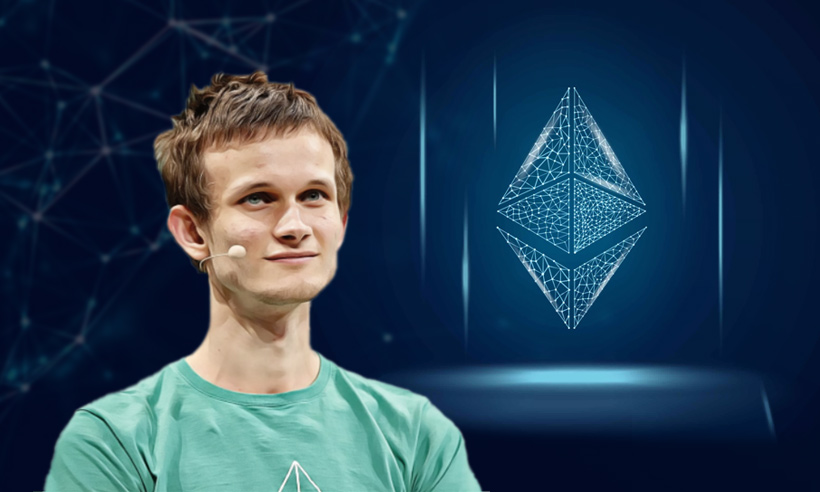
Vitalik Buterin, Ethereum’s co-founder, has compared low-risk decentralized finance (DeFi) to Google Search, suggesting it could be a pivotal moment for crypto adoption.

He means that accessible, secure DeFi platforms could simplify and mainstream crypto usage, much like Google Search made the internet navigable for millions. Low-risk DeFi focuses on reducing vulnerabilities like smart contract bugs, hacks, or volatility, offering stable yields or services akin to traditional finance but decentralized.

Recent posts on his X page echo this optimism, highlighting DeFi’s potential to disrupt finance with lower fees and broader access, though some warn of lingering risks like regulatory hurdles or stablecoin instability. DeFi’s growth—$80B+ in total value locked as of late 2025—driven by safer protocols and better UX.

However, challenges like scams and complex interfaces persist, and Vitalik’s vision hinges on making DeFi as intuitive and trustworthy as Google’s search bar. Just as Google Search made the internet accessible to the masses, low-risk DeFi could democratize finance by offering user-friendly, secure alternatives to traditional banking.

This could bring billions into crypto, especially in underbanked regions, as DeFi eliminates intermediaries and reduces costs. Low-risk DeFi prioritizes safer protocols (e.g., audited smart contracts, over-collateralized lending) and stable yields, addressing concerns like hacks or volatility. This could rebuild trust in crypto, attracting institutional and retail users wary of past DeFi failures.

A “Google Search” moment suggests scale, which could invite stricter regulations. Governments may target DeFi for AML/KYC compliance, potentially stifling innovation or pushing projects to decentralized jurisdictions. Widespread low-risk DeFi could challenge traditional finance, offering cheaper loans, higher savings yields, and borderless transactions.

For example, DeFi lending protocols like Aave or Compound already offer 2-5% APY on stablecoins, often surpassing bank rates. To achieve this, DeFi must improve UX (simpler interfaces), scalability (e.g., Ethereum’s layer-2 solutions like Optimism), and security (e.g., formal verification of contracts). This could spur innovation in blockchain infrastructure.

Despite “low-risk” branding, DeFi isn’t foolproof. Stablecoin depegging (e.g., USDC’s 2023 scare), oracle failures, or unforeseen exploits could undermine confidence. X posts highlight ongoing scams and rug pulls as persistent threats.

With $80B+ in DeFi TVL (as of late 2025), low-risk DeFi could empower the 1.4B unbanked globally, offering access to savings, credit, and insurance without traditional gatekeepers. Buterin stresses community-driven progress, with the Ethereum Foundation (EF) targeting ~15% treasury spend in 2025 to steward these efforts sustainably.

Buterin’s plan accelerates Ethereum’s rollup-centric scaling, ensuring DeFi apps can handle mass adoption without compromising decentralization. Short-term: Fusaka hard fork with PeerDAS for 48/72 blob targets, increasing L2 data availability 10x.

More blobs in 2026, moderate EVM/gas limit boosts for L1-heavy DeFi (e.g., proofs, deposits/withdrawals). For DeFi, this means cheaper, faster cross-L2 transfers—critical for liquidity pools, lending, and yield farming across chains.

Milestones include trustless L2 asset transfers, proof aggregation, and faster settlements via erasure coding and three-stage finalization (3SF). A “simple L2 security and finalization roadmap” targets universal light-client verification, reducing bridging risks that plague DeFi today.

Privacy is a 2025 cornerstone, with Buterin advocating a “maximally simple L1 privacy roadmap.” This includes integrating tools like Railgun into wallets for shielded balances, dApp-specific addresses to obscure activity, and ZK tech for private ETH use.

L1 enhancements cover “privacy reads/writes” for payments, voting, and DeFi ops, protecting against frontrunning, liquidation sniping, and coercion. DeFi gains immensely: Low-risk protocols become default-private, beating European fintech rates while minimizing hacks. Buterin notes regulatory barriers and smart contract risks have “greatly improved,” positioning DeFi as a global alternative to traditional finance for millions.

In a September 2025 blog post, Buterin proposes low-risk DeFi—stable, high-yield assets like Aave vaults or flatcoins—as Ethereum’s foundational driver, mirroring Google’s search revenue. This shifts from speculation to stability: Platforms offering “higher-yielding low-risk assets than TradFi” could fund experimental apps like prediction markets or social networks.

Synergies include privacy for anti-frontrunning and account abstraction (AA) for seedless wallets, enabling normies to farm yields safely. EF’s 45k ETH deployment into DeFi (Spark, Aave, Compound) underscores this: It’s a “DeFi machine” generating sustainable income without excesses.

Buterin’s personal 2025 focuses: L1 roadmap (single-slot finality, statelessness, VM evolution), cryptography/open-source OS, and bio-defense. The “Lean Ethereum” blueprint targets quantum-resistant crypto, formal verification, and bloat reduction—ensuring a “stable, trustworthy foundation” for DeFi.

Pinkfong’s Memecoin Launches on Story Protocol

0

Pinkfong—the South Korean entertainment company behind the global phenomenon “Baby Shark” YouTube’s most-viewed video with over 16 billion views—made waves in the crypto space by tokenizing its iconic IP on Story Protocol.

This move launched an official IP-backed memecoin, $PINKFONG, on the ip.world platform, allowing fans and creators to “remix and expand” the brand through on-chain contributions, licensing, and community-driven growth.

Pinkfong’s massive reach—boasting 240 million+ YouTube subscribers and 140 billion+ total views—has long made it a cultural juggernaut, and this blockchain integration aligns incentives by letting the company hold a portion of the token supply while rewarding community participation.

Built on Story Protocol, a blockchain layer for intellectual property (IP) management, the token leverages automated royalties, verifiable ownership tracking, and remix tools to turn cultural assets into programmable, monetizable ones. ip.world, a degen-focused launchpad on Story, facilitates these IP-backed memecoins.

$PINKFONG serves as a memecoin with built-in IP mechanics—holders can stake, remix content (e.g., fan art or videos), and earn from ecosystem growth, all while Pinkfong retains control over licensing.

The token exploded on launch, surging to a $500 million market cap within hours, drawing comparisons to viral memecoin runs like $SLERF or $SPX. As of the latest updates, it’s hovered around $220–500M amid high volatility, with trading volume spiking due to the brand’s mainstream appeal.

This isn’t just another hype-driven pump; it’s a blueprint for bridging traditional entertainment with Web3. Licensed IPs like Pinkfong add legitimacy to memecoins, potentially shifting them from pure speculation to revenue-generating assets (e.g., via royalties from remixes or merchandise).

Story Protocol’s ecosystem—already powering projects like Aria tokenizing music rights from Blackpink and Justin Bieber and ip.world (which has paid out $200K+ to meme creators)—positions it as a leader in the $80T IP market.

Community buzz highlights the “mainstream entry” potential: “Baby Shark got a memecoin before GTA 6,” with aligned incentives between Pinkfong and holders fueling long-term upside.

Pinkfong’s move validates the potential for globally recognized IPs to integrate with blockchain, turning cultural assets into programmable, monetizable entities. This could inspire other major brands (e.g., Disney, Pokémon) to tokenize IPs, leveraging blockchain for fan engagement and revenue.

Unlike purely speculative memecoins (e.g., $DOGE), $PINKFONG’s IP backing ties it to real-world value royalties, licensing. This could shift memecoins toward utility-driven models, attracting institutional interest and reducing perceptions of crypto as a “scam” space.

Story’s infrastructure—handling automated royalties, remix rights, and ownership tracking—sets a precedent for scalable IP management on-chain. Its $80T addressable market global IP could draw more creators and brands, making tokenized IPs a new asset class.

Fans can now remix Pinkfong content (e.g., Baby Shark fan art, videos) and earn via staking or royalties, aligning incentives between the brand and its community. This could redefine how fandoms interact with IPs, fostering co-creation over passive consumption.

Story Protocol’s payout of $200K+ to meme creators since August 2025 shows a viable model for rewarding contributions. This could attract digital artists, musicians, and influencers to Web3, boosting adoption.

Pinkfong holding a portion of the token supply raises questions about control. If the brand exerts too much influence (e.g., over licensing), it could undermine the decentralized ethos, alienating crypto-native users.

The $500M market cap spike later stabilizing around $220–500M highlights memecoins’ speculative nature. While Pinkfong’s brand lends credibility, price swings could deter risk-averse investors or fans unfamiliar with crypto.

Royalties from remixes and merchandise tied to $PINKFONG could create sustainable income for Pinkfong and holders, unlike traditional memecoins reliant on hype. This could stabilize token value over time.

The success of $PINKFONG may spur similar launches on ip.world, driving competition among IP-backed tokens. This could grow the memecoin market beyond its current $50B+ valuation, with Story Protocol as a key player.

Tokenizing IP introduces regulatory uncertainty, especially around cross-border licensing and copyright enforcement. Unclear laws could lead to disputes over remix rights or royalty distribution.

Pinkfong’s kid-friendly audience may raise scrutiny about marketing crypto to minors or unsophisticated investors. Regulators like the SEC could impose stricter rules, impacting adoption.

Tokenizing a cultural phenomenon like Baby Shark shows how brands can gamify engagement, turning passive fans into active stakeholders. This could lead to metaverse-like ecosystems (e.g., a Baby Shark NFT universe).

Pinkfong’s 240M+ YouTube subscribers expose a mainstream audience to Web3. If even 1% engage, it could onboard millions to crypto, accelerating blockchain adoption.

The success of ip.world’s “degen” launchpad (akin to Pump.fun) suggests memecoins can be a gateway for serious IP projects, blurring lines between meme culture and enterprise-grade blockchain use cases.

Memecoin volatility could erode trust if $PINKFONG crashes, damaging Pinkfong’s brand and Web3’s reputation. Crypto’s complexity may alienate Pinkfong’s casual fanbase, limiting participation to tech-savvy degens.

Pinkfong’s $PINKFONG launch could be a tipping point, proving that IP-backed memecoins can merge entertainment, fandom, and finance. If successful, it may spark a wave of tokenized IPs, from Hollywood franchises to music catalogs, reshaping how creators and brands monetize culture.

However, navigating volatility, regulation, and user onboarding will be critical to sustaining momentum. Expect more brands to experiment, potentially leading to a “Web3 IP renaissance” or, if mishandled, a cautionary tale of overhyped crypto ventures.