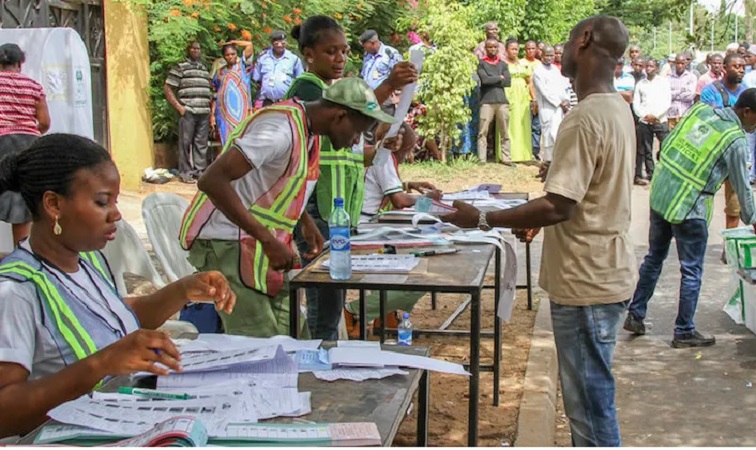
Research has shown that one of the major causes of political apathy in Nigeria is electoral violence. People would rather prefer to sit at home on Election Day than going out to die at polling stations. Nobody would want to go out to cast his or her vote on Election Day or go out to support his or her candidate during political campaigns when he is not sure that his safety will be guaranteed while at it. No matter how much I love my country or how patriotic I claim to be, I will not in every reasonable ground go to any polling unit to cast my vote when I know that thugs have been sponsored and positioned to disrupt the electoral process, harass and intimidate voters.
This is the reason why some states will record a high number of registered voters but on the Election Day, those that voted will be a fragment number of the registered voters. It happens because people are scared to come out to vote due to the fear of the unknown and the fear of being attacked by thugs with opposing political views.
I am not a prophet of doom but by every indication, this is what that will likely be experienced in some states of the South Eastern Nigeria like Imo, Abia, Anambra and Ebonyi, especially in Imo because there have been series of coordinated attacks on INEC offices and their facilities in that state and this have induced great fear in the mind of registered voters in the state and they can only expect the worst on Election Day, only few will risk it going out to cast their votes.
The fact that most of the time, most of those that are caught to be involved in electoral violence are not prosecuted to the full arms of the law is the catalyst that is still speeding up electoral violence in Nigeria.
Electoral violence is a serious crime in Nigeria; disruption of political campaigns is a form of electoral violence, attack on INEC offices and facilities is a form of electoral violence, harassment and intimidation of voters is a form of electoral violence etc and all these carry a serious punishment under the Nigerian laws and if peradventure someone get killed as a result of the electoral violence, those involved will not just be prosecuted for the crime of electoral violence, they will also be prosecuted for the crime of murder which according the Nigerian laws, the punishment for murder is death sentence.
The crimes that those involved in electoral violence can be charged and prosecuted for include; disruption and disturbance of public peace, incitement, destruction of materials, causing hurt and mischief, etc, this will be added with the electoral violence crime and all those crimes carry jail terms.
It is election and not war, election is not a do or die affair or an affair thousands of innocent citizens will lose their lives over. Election is one of the approved ways people in civilized society choose those that will lead them especially in a system that practices democracy and those against election or that always look forward to disrupting elections are not just enemies of peace but also enemies of the state and should be treated as such.
YOU are the best – and you’re Tekedia Person of the Year. You provided great assists for a village boy to discover the ladders to the upper castle, through your comments, tags, likes – and sometimes verbal attacks. That discovery led to scoring many strategic goals. This is our best year in business, yet. Thank YOU.
– Ndubuisi Ekekwe
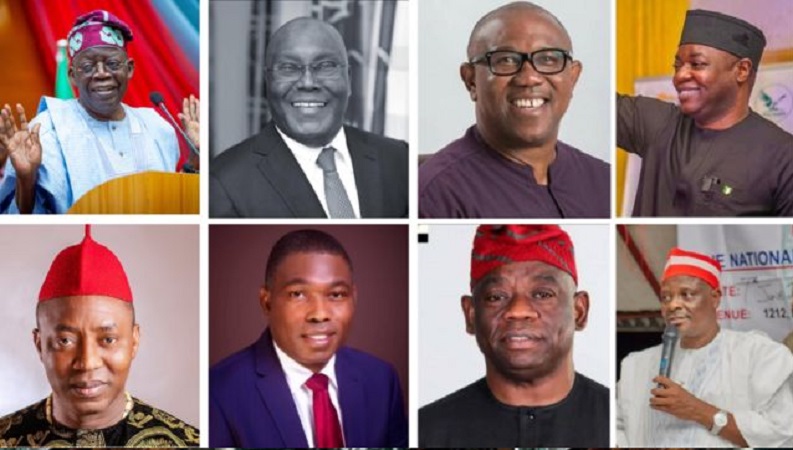
From opinionated to scientific formats, people and organisations have expressed their views about the 2023 presidential election in Nigeria. The views have attracted and still attracting mixed reactions across the country. Like what our analyst said in one of the previous pieces on the place of opinion polls in shaping voters’ decisions or choice during the election, in this piece, he takes a look at the recent results of the polls conducted by the NOI Polls, which was commissioned by the Anap Foundation, and concludes that all the candidates remain floating signifiers. Both organizations are non-governmental organizations that seek to generate research-based evidence for policymakers, businesses, and individuals in order to promote sustainable governance and development in Nigeria and other African countries.
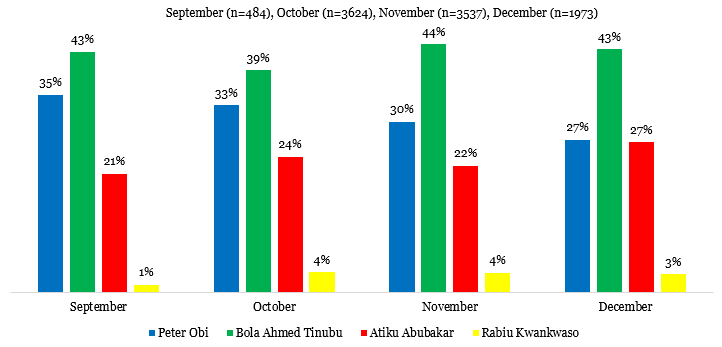
NOI Polls conducted its most recent polls using a question that was similar to the one used in earlier polls to gauge public opinion about the presidential, governorship, local government, and by-elections; suppose the presidential election is being conducted today, who are you likely to vote for? The Labour Party’s presidential candidate, Mr. Peter Obi, is placed ahead of other strong contenders, according to a statement from the Anap Foundation.
“While this Poll result shows some significant trends, it is key to note that the battle ahead lies in the hands of the undecided/swing voters as they would ultimately decide which candidate takes the lead to emerge as the President of the Federal Republic of Nigeria in the 2023 presidential elections.
“It is worthy of note that 73% of those aged 18-25, 82% of those aged 26-35, 85% of those aged 36-45, 86% of those aged 46-60 and 82% of those aged 61+ responded that they would definitely vote in the coming elections. The age groups that expressed the greatest willingness to vote were those between 36-45 and 46-60 years.
Furthermore, the data summarizes the top five reasons why voters are more inclined to vote in the forthcoming elections, these include: – The need to tackle insecurity (35%), Economy (26%), Unemployment (10%), Poverty alleviation (7%) and Education (6%).”
Anap Foundation & NOI Polls and Our Approach
These outcomes are based on 1, 000 respondents against previous polls conducted before December, which had 2, 000 and 3,000 respondents. Though the foundation notes that the difference in the results was not statistically significant, our analyst notes that there is a need to compare the results, which were primarily derived from “small” data collected via survey, with public searches conducted via the Internet. The searches provide us with large amounts of data from people who were interested in learning more about the candidates and understanding their manifestos between September 28 and December 21, 2022.
One of the most compelling reasons for using “big data polls” is the ongoing debate about how technology has reshaped how information flows during the Nigerian election cycle. In other words, through the use of the Internet, people can gain access to a variety of information about how parties, candidates, and other stakeholders are performing, allowing them to make better decisions or choices. Considering this position, as well as the NOI Polls’ observation that a high percentage of participants were of youth age, our analyst concludes that those participants sought information about the candidates and their programmes. As a result, public searches as “big data polls” cannot be ruled out in predicting public voting behaviour ahead of the election.
NOI Polls notes in its documentation of poll limitations that 29% and 23% of respondents were undecided and refused to answer the main question, respectively. According to our analyst, this indicates that using the results with caution is necessary because 48% of the sampled 1,000 respondents is insufficient to draw appropriate conclusions about who will be elected or not. The limitation of the “big data polls” is that Google Trends counts search twice. For example, if a user searches one of the candidates several times, the tool continues to add it up to reach the required threshold of (0-100). As a result, it is possible for one person to conduct multiple searches rather than just one while seeking information about the candidates.
Our main data source, Google Trends, offers several formats that allow for the normalization of public search interests over a given period of time. As previously mentioned, our analyst gathered the searches using all categories, campaigns and elections formats between September 28 and December 21, 2022. The tool’s all categories serve as a conduit for all public searches related to all facets of socioeconomic and political life, while the campaigns and elections format is specifically designed to gather public interest in political campaigns and the complexities of Nigerian elections.
The Key Results
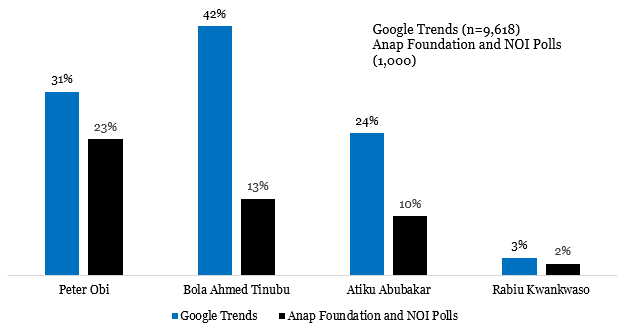
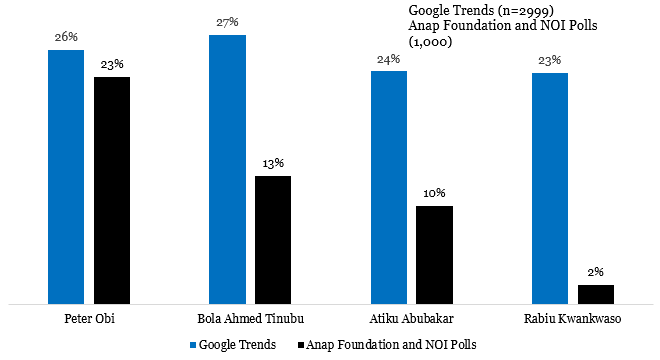
Senator Bola Ahmed Tinubu, presidential candidate of the All Progressives Congress, was the most searched candidate month after month, according to a month-by-month analysis in all categories format. This indicates that as the campaign progressed, the public became more interested in understanding him and his programmes in relation to various issues. Mr Peter Obi, the Labour Party candidate, was close behind him, with Alhaji Atiku Abubakar in third place (see Exhibit 1). When our analyst compared this result to the Anap Foundation & NOI Polls’ results, he discovers that “Big data polls” favour all candidates more than the two organizations’ polls (see Exhibit 2). However, minor differences in campaign and election formats were discovered for APC, LP, and PDP candidates, while a significant difference was discovered for the NNPP candidate (see Exhibit 3).
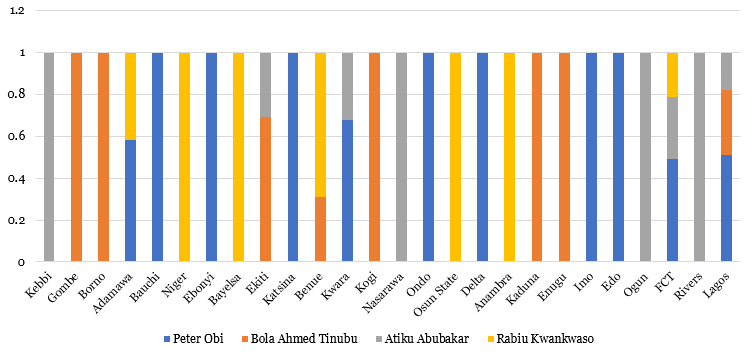
Our analyst discovers some states where no searches were made within campaigns and elections format about the candidates between September 28 and December 21, 2022, similar to the undecided and those who refused to mention candidate they would vote for during the election in Anap Foundation & NOI Polls’ survey. Abia, Akwa Ibom, Cross River, Jigawa, Kano, Oyo, Plateau, Sokoto, Taraba, Yobe, and Zamfara are the states (see Exhibit 4).
Exhibit 1: Public interest in the candidates within all categories of information on the Internet
Source: Google Trends, 2022; Infoprations Analysis, 2022
Exhibit 2: Public interest in the candidates within all categories of information on the Internet versus Anap Foundation & NOI Polls’ results
Source: Google Trends, 2022; Infoprations Analysis, 2022
Exhibit 3: Public interest in the candidates within campaigns and elections’ information on the Internet versus Anap Foundation & NOI Polls’ results
Source: Google Trends, 2022; Infoprations Analysis, 2022
Exhibit 4: Candidates’ state dominance within campaigns and elections’ information according to public interest
Source: Google Trends, 2022; Infoprations Analysis, 2022
From the results of the two polls, it is obvious that technology will play a larger role in voters’ decisions and choices than physical channels of communication, especially among young people who use the Internet the most. Also, it is clear that undecided voters and refusers could be found on the two polling types, indicating a challenging task for the political actors in the run-up to the election.
Recently conducted poll by the business data firm Morning Consult in conjunction with Bloomberg and World Bank shows, more than half of Nigeria and Turkey’s adult populations trade cryptocurrency monthly.
Furthermore, India had the largest population involved in crypto, with approximately 300 million people, although this figure represents 29% of India’s entire adult population. China ranked second with 93 million active crypto traders, but the figure is only 8% of China’s population.
Africa’s most-populous nation showed more interest in cryptocurrencies than any other country since the digital assets began to decline in April, according to a study by price tracker CoinGecko.
Nigeria scored 371 in the study that looked at Google Trends data for six searches such as “buy crypto” or “invest in crypto” that were then combined to give each English-speaking nation a total search ranking. The West African country was followed by the United Arab Emirates and Singapore.
On the other hand, Nigeria and Turkey have 56% and 54% of their adult population actively trading crypto each month. The survey concluded that one in every seven adults, equivalent to 900 million people globally, regularly deals with the blockchain ecosystem.
Nigeria and India are among the few countries that have embraced Central Bank Digital Currency (CBDC). Recently, the Nigerian Central Bank (CBN) proposed to ban ATM cash withdrawals over $225 a week to enforce the use of CBDC.
The Nigerian apex bank issued the instruction to financial institutions in a circular on December 6, indicating that individuals and companies would henceforth be limited to withdrawing $45 (20,000 NGN) per day and $225 (100,000 NGN) each week from ATMs, but the Central Bank of Nigeria has retraced the decision which has generated heated arguments.
On the other hand, the Reserve Bank of India (RBI) released a 50-page concept note in October establishing a retail CBDC for individuals and businesses and a wholesale CBDC to simplify interbank transactions.
Shortly after, the RBI invited eight commercial banks to participate early this month in the CBDC launch trial stage. The financial institutions include the State Bank of India, ICICI Bank, Yes Bank, and IDFC First Bank in four cities across the country.
The Nigerian stock exchange said in June it planned to start a blockchain-enabled platform next year to deepen trade and lure young investors to the market. That came after its central bank in early 2021 ordered commercial lenders to stop transactions or operations in cryptocurrencies, citing a threat to the financial system.
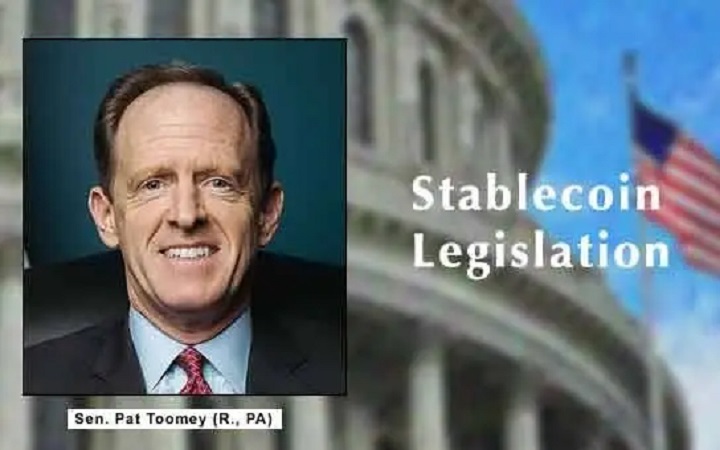
A U.S. senator has introduced a bill to “establish the first federal regulatory framework for payment stablecoins.” The lawmaker explained: “This bill will also ensure the Federal Reserve, which has displayed significant skepticism about stablecoins, won’t be in a position to stop this activity.
U.S. Senator Pat Toomey (R-PA), ranking member of the Senate Committee on Banking, Housing, and Urban Affairs, introduced the “Stablecoin Transparency of Reserves and Uniform Safe Transactions Act of 2022” on Wednesday. The bill is also known as the “Stablecoin TRUST Act of 2022.”
The Stablecoin TRUST Act — the acronym stands for Transparency of Reserves and Uniform Safe Transactions —would require all stablecoins, a type of digital currency designed to be pegged to a fiat money, to be fully backed by liquid assets and would authorize several types of regulated entities to issue stablecoins
According to the lawmaker, the legislation would “establish the first federal regulatory framework for payment stablecoins and guide Congress towards a path for sensible regulation of cryptocurrencies.” Senator Toomey opined:
I hope this framework lays the groundwork for my colleagues to pass legislation next year safeguarding customer funds without inhibiting innovation … This bill will also ensure the Federal Reserve, which has displayed significant skepticism about stablecoins, won’t be in a position to stop this activity.
“Stablecoins are an exciting technological development that could transform money and payments. By digitizing the U.S. dollar and making it available on a global, instant, and nearly cost-free basis, stablecoins could be widely used across the physical economy in a variety of ways,” Toomey noted.
The lawmaker from Pennsylvania will be retiring from the Senate at the end of his term in January next year.
The bill “encourages competition by authorizing several types of regulated entities to issue payment stablecoins,” the Senate Committee on Banking, Housing, and Urban Affairs described, adding that it “enhances financial stability by requiring that all payment stablecoins are fully backed by high-quality liquid assets.” Furthermore, the bill “establishes transparency by subjecting all payment stablecoin issuers to standardized disclosure requirements and attestations by registered accounting firms,” the Senate committee further detailed.