DD
MM
YYYY

PAGES

DD
MM
YYYY

spot_img

PAGES

Home Blog Page 458

Beyond Economies of Scale, Understand Economies of Scope, as BigTechs Scale to Everything

0

In secondary school economics, they taught us the doctrine of specialization and core competencies. The wisdom was simple: find what you do well, sharpen it, and dominate your niche. But in today’s digital age, that mantra is being redefined. Technology has altered the cost structures of industries. The barriers to entering new markets are thinner, and firms are no longer confined to narrow lanes.

They taught us in the economics class that companies have to specialize and build core competencies.  They need to do things really well and be the best possible in their chosen domains. But today, especially in native tech companies, we think that does not overly make sense as technology has changed the cost of entering into new domains.

For technology companies, everyone is doing everything, even at top-level. Alphabet, Google parent company, is a car company, a search company, a medical company, an advertising juggernaut, fintech, etc. Amazon.com is an e-commerce firm, a publisher, a movie producer, a drone maker, and pharmacy chain.

Native technology companies embody this redesign—Google’s Alphabet is simultaneously a car company, an advertising titan, a health player, and a fintech. Amazon, from humble bookseller, is now a publisher, a studio, a logistics empire, and even a pharmacy. The new orthodoxy is this: in the digital economy, boundaries blur.

Indeed, when you examine IBM, the question is not what it does, but what it does not do. With Watson branching into finance, health, real estate, and beyond, “core competency” looks more like an expansive ecosystem of adjacencies. Yes, the economics of scope, and not just the economics of scale, is the playbook.

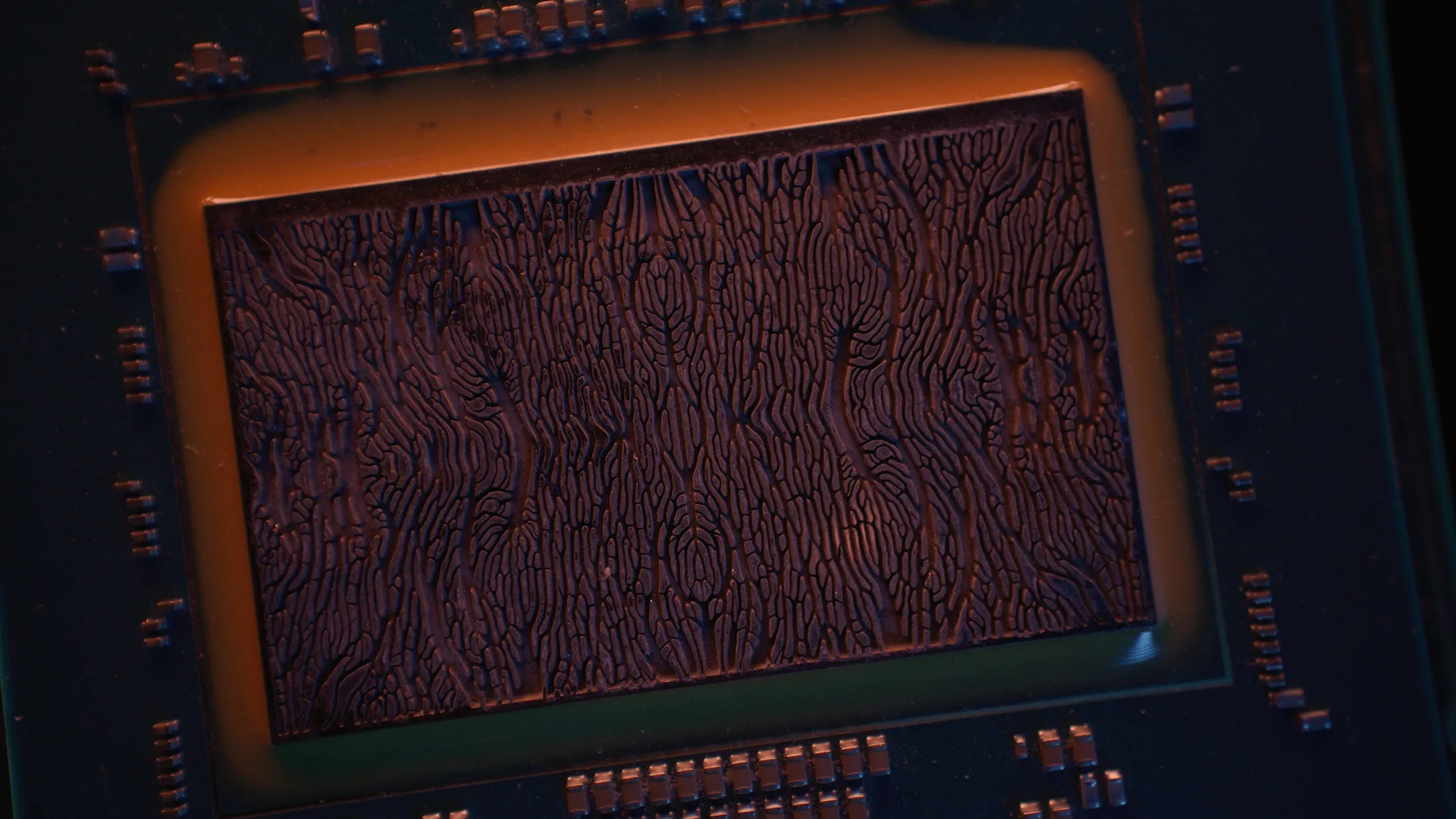
It is within this construct that Microsoft is pioneering new possibilities—solving problems not just in software but in the physics of silicon itself. AI workloads are colliding with the thermodynamic limits of chips, and the challenge of heat is real. Microsoft’s introduction of in-chip microfluidic cooling—tiny etched channels bringing coolant directly to the source—demonstrates how firms are redesigning not just markets, but nature’s constraints.

The implications are profound. By cooling chips more efficiently, Microsoft unlocks the promise of denser datacenters, cheaper computation, and new architectures like 3D chip stacking. This is more than engineering; it is strategic advantage in the age of AI.

And as Microsoft signals openness—inviting the world to adopt microfluidics—the lesson deepens: success in modern business is no longer about standing guard over a fortress of one competency. It is about orchestrating systems, shaping ecosystems, and reimagining boundaries. In this era of frenemies and convergence, the most innovative companies are not defined by what they do best, but by what new possibilities they can make feasible. And that connects back to the One Oasis which exists in all great firms

Microsoft Unveils Breakthrough in Chip Cooling to Power the Next Wave of AI

Web to Print. How This Technology is Changing the Printing Industry

0

What is Web to Print?

Web to Print (W2P), also known as Web 2 Print, is a modern technology that enables businesses and consumers to create, personalize, and order printed products online. With W2P, processes like designing business cards, flyers, posters, and custom apparel have become simpler and faster, eliminating the need for traditional intermediaries and enabling full automation. This benefits both printing companies and their customers, as they can enjoy full customization without leaving their homes.

How Does Web to Print Work?

Web to Print leverages online platforms that allow customers to design products using graphic editors available in web browsers. Users can choose from ready-made templates, modify text, colors, images, and other elements to create a unique design. Once the design is complete, users can immediately place an order, and the entire production process is fully automated. This seamless integration of design and production streamlines the entire workflow, making it more efficient and less prone to human error.

Benefits of Web to Print Technology

Web to Print solutions offer numerous advantages for businesses in the printing industry. One of the main benefits is cost reduction. By automating processes and reducing the need for manual intervention, companies can lower their operational costs. Additionally, Web to Print allows for greater time efficiency. Automation speeds up order processing and product fulfillment, enabling businesses to focus on growth rather than getting bogged down in administrative tasks. Finally, W2P enhances the customer experience. The intuitive interfaces and real-time previews provide a user-friendly environment that can increase customer satisfaction and conversion rates.

Web to Print for Different Industries

Web to Print technology is highly adaptable and can be used across various industries. For example, in the apparel sector, businesses can offer customers the ability to design their own T-shirts, hoodies, and other clothing items. Similarly, in the marketing industry, companies can quickly produce customized flyers, brochures, and posters tailored to specific campaigns. The flexibility and scalability of Web to Print solutions make it ideal for businesses of all sizes, from small shops to large corporations.

Why Choose Web to Print for Your Business?

Choosing Web to Print solutions for your business can significantly enhance operational efficiency, reduce costs, and improve customer engagement. With features like customizable templates, real-time previews, and automated workflows, businesses be a game-changer for your business. By embracing this technology, companies can streamline their operations and offer a more personalized and efficient service to their customers.

The Future of Web to Print

As the demand for customized products continues to grow, Web to Print technology is likely to evolve even further. Advancements in artificial intelligence, machine learning, and automation will continue to shape the industry, offering businesses even more powerful tools to enhance personalization, optimize production processes, and deliver faster turnaround times. In the future, Web to Print could also integrate with more advanced digital marketing strategies, allowing businesses to offer hyper-targeted products and campaigns to individual customers based on their preferences and behavior.

From $0.012 to $10? Ozak AI Could Deliver 83,000% Returns Like Early Shiba Inu

0

Ozak AI is becoming one of the most notable AI-powered blockchain projects of 2025, and its presale token price has already increased to the record of $0.012 out of the starting price amounting to a mere $0.001 at the beginning of development. This huge growth has investors hugging at the prospect of being able to get returns comparable to such a legendary project as Shiba Inu, which has given over 80,000 percent returns during its initial years of development. It is an opportunity that will see anyone who wants to ride on the next techno-wave of AI and blockchain integration with a combination of innovative technology, strategic partnerships with industry heavy-hitters like Pyth Network and Dex3, and a rapidly expanding ecosystem of its own, including the Ozak AI Rewards Hub.

Presales Performance and investment potential

The presale of Ozak AI has been through several phases starting with a token price of $0.001 and moving to the next successive price of $0.002, $0.003, $0.005, $0.01, and now in Stage 6, it is $0.012. More than 916 million tokens have been sold, which have already raised over 3.39 million. There are 10 billion tokens in total; 30 percent of the amount is reserved for the presale and another 30 percent for the community and ecosystem development that encourages the liquidity and interaction.

Those who invested in the tokens at $0.001 have already earned a profit of more than 1,100 percent. It is expected that the token will be valued at $1 when it becomes public on exchanges, which presupposes the viability of over 8,000 percent returns with the current value of $0.012 and an unbelievable 83,000 percent return with the initial presale price, which was comparable to the early Shiba Inu experience. To put it into perspective, a $500 investment at the current price of $0.012 might become a $50,000 investment should the token reach $1.20 and even higher should it reach the vicinity of $10.

Important Collaborations to Promote Growth

Ozak AI has already developed very meaningful partnerships that enrich its platform capabilities and position in the marketplace:

  • Pyth Network: Combines live financial data feeds of more than 100 blockchains, with Ozak AI predictive analytics continuously fed on high-quality live data. The collaboration significantly enhances accuracy in market predictions of crypto, stocks, and forex.
  • Dex3 Tech: Advanced trading experience liquidity solutions This allows easier and more efficient token swaps and automated trading in the Ozak AI ecosystem.
  • Ozak AI Rewards Hub: This live platform will launch staking, governance, and reward systems that will encourage token holders to interact with the ecosystem in a sustainable way that will entice sustained usage and subsequent expansion of the network effect.

Such strategic alliances do not only offer hype but also actual utility and make Ozak AI stand out from the many speculative tokens.

Cutting-Edge Features and Functionalities

Ozak AI is dedicated to providing both developers and traders with innovative AI-driven applications and integrations that are user-friendly and easy to use. The major functionality features are

  • Financial Markets Predictive Signals: Ozak AI is an AI-based predictive indicator and intelligent trade suggestions platform in crypto, stock, and forex markets, which uses AI models like ARIMA, linear regression, and neural networks.
  • Real-Time Data Integration: With Pyth Network, users can get real-time and trusted financial data feeds and improve the quality of decisions.
  • One-Click AI Upgrades through SINT: Simplifies user experience through giving easy voice interfaces and quick AI improvements.
  • Cross-Chain Bridges: Enables a smooth movement and communication of tokens across blockchain ecosystems.
  • Weblume No-Code Integration Tools: Weblume allows users to build AI dashboards and trading bots with no programming and make AI technology more accessible.
  • Staking and Governance: It will be managed through the Rewards Hub, which allows the token holders to participate in the project by earning rewards and voting on the future direction of the project.
  • Advanced Analytics: Empowering more intelligent investment decisions with the help of multifaceted data.

Launch and Future Outlook

As the presale of Stage 6 is about to finish at $0.012, Ozak AI will be launched at an exchange, which is estimated to be approximately $1, which means that it has immense potential for upside. The rapid pace of the ecosystem development, along with the strong interest of the investors and practical application, indicate that the project is not another hype coin but a strong competitor within the AI-blockchain industry.


In short, from its initial token value of $0.001 until the present value of $0.012 and potential future goals of $10.00, Ozak AI has the potential to yield revolutionary profits. It has strategic collaborations with Pyth Network and Dex3, which is a live rewards and staking system, as well as advanced AI features to become a rare opportunity that resembles early success like Shiba Inu. Ozak AI is a company that should be looked at by investors in the AI crypto space as it continues to forge its way into 2026 and beyond.


For more information about Ozak AI, visit the links below

Website:https://Ozak AI.com
Twitter/X:https://x.com/Ozak AI
Telegram:http://t.me/Ozak AI

AVAX Price Prediction: What’s Next After 20% Weekly Gain? Experts Suggest Pivoting to SUI and New No KYC Crypto Card

0

Following a substantial weekly rally, ChillonValue’s AVAX price prediction targets $50 next. Despite this, smart investors’ focus has shifted to other altcoins with higher upside potential. The SUI coin, primed to break out above its January ATH, is on their radars. Also on their list of the best altcoins to buy now is Digitap ($TAP), a novel DeFi-TradFi payment protocol that requires no KYC.

AVAX Price Prediction: Can It Go Higher?

The AVAX price skyrocketed by over 20% on the weekly chart to $35. Next on its radar, according to ChillonValue, a top analyst, is $50, positioning it among the altcoins to watch. Further, they target $100 to $150 if a general bull market breaks out.

At the same time, Vuori Trading, another leading expert on X, sees the AVAX price ranging between $237 and $667 at the peak of this bull cycle. They cited a weekly RSI close to a major ascending resistance, with a breakout expected to ignite a massive rally.


However, many experts will consider the above Avalanche price prediction as ambitious. With a $15 billion market cap (a top 15 cryptocurrency by size), AVAX has limited upside potential compared to new altcoins like $TAP, making the latter more attractive.

Watch Out for a New SUI Coin ATH

Lourenço’s bold SUI price prediction has been stirring a lot of buzz on CT. According to their forecast, a breakout above “the top of the bull market support” would ignite a rally toward $8.5 and $10, surpassing its January ATH of $5.3.


At the time of writing, the SUI coin price hovers around the $3.8 mark. According to CoinMarketCap, the price has risen by 5% and 10% on the weekly and monthly charts, respectively, indicating growing bullish momentum.

Additionally, TradingView data paints a promising outlook. The 20-VWMA and 9-HMA suggest a SUI coin price rally, especially if backed by strong volume. A key level to watch is $3.9, its 30-day high, with a breakout poised to spark a bigger upswing.

Digitap ($TAP): The Best Cryptocurrency to Buy Right Now?

Besides being the best cheap crypto to buy at $0.012 in the first presale round, Digitap ($TAP) is backed by utility and designed to solve real-world financial problems. As a result, adoption is imminent, with experts hailing it as the future of finance.

This global payment app stands out for combining the compliance and familiarity of traditional banks with the speed, transparency and global reach of blockchain. Hence, it will be the world’s first omni-bank. It stands out even more by addressing the challenges around the tracking and sale of users’ financial data.

With no KYC option, offshore accounts and end-to-end encryption for true financial privacy, Digitap is positioning itself as an industry leader. Considering its utility coin, $TAP, is in its early stages and has a lower market cap compared to SUI and AVAX, it is a more lucrative investment opportunity.

Closing Thoughts

The $TAP presale price is expected to jump to $0.015 in the second round, driving massive demand. In just a few days, over $110,000 has been raised in funding, highlighting growing investor interest. Despite the bold AVAX price predictions and the anticipated SUI coin price rally, Digitap’s smaller market cap makes it a better bet.


Discover how Digitap is unifying cash and crypto by checking out their project here:

Presale: https://presale.digitap.app 

Social: https://linktr.ee/digitap.app

Microsoft Unveils Breakthrough in Chip Cooling to Power the Next Wave of AI

0

The chips driving the latest breakthroughs in artificial intelligence are running up against a physical wall: heat. Unlike earlier generations of silicon, the new processors powering massive AI workloads generate far more heat, and current cooling technologies are approaching their limits.

Microsoft believes it has found a way past that wall. The company announced it has successfully developed and tested in-chip microfluidic cooling, a technique that channels liquid coolant directly onto silicon to draw out heat far more effectively than today’s widely used cold plate systems.

The company’s lab-scale tests showed microfluidics removed heat up to three times better than cold plates. In one case, the technology reduced the maximum temperature rise of a GPU’s silicon by 65 percent.

“With each new generation of AI chips becoming more powerful, they generate more heat,” said Sashi Majety, senior technical program manager for Microsoft’s Cloud Operations and Innovation. “In as soon as five years, if you’re still relying heavily on traditional cold plate technology, you’re stuck.”

Inside the Technology: Cooling Chips from Within

Unlike cold plates, which sit atop chips and are separated by layers that trap heat, microfluidics etches microscopic channels directly onto the back of silicon chips. Liquid coolant flows through these grooves, sweeping heat away from hotspots at the source.

The engineering challenge was steep. The channels are hair-thin, requiring precise etching that balances depth and strength—deep enough to move coolant, but not so deep that the chip risks cracking. Microsoft engineers ran four design iterations in just the past year, working through issues like leak-proof packaging, coolant formulas, etching methods, and chip-manufacturing steps.

AI played a role in refining the design. Partnering with Swiss startup Corintis, Microsoft used machine learning to test bio-inspired channel patterns resembling leaf veins or butterfly wings, which proved more efficient at cooling hotspots than straight-line grooves.

“Systems thinking is crucial when developing microfluidics,” said Husam Alissa, director of systems technology at Microsoft. “You need to understand interactions across silicon, coolant, server, and datacenter.”

Why It Matters for AI and Datacenters

Microsoft put the new system to the test by simulating a Teams meeting running across core services on a server. Teams is made up of roughly 300 interdependent services, each stressing different parts of a server. During peak demand—like when meetings begin at the top of the hour—servers often risk overheating.

The breakthrough means Microsoft could safely overclock servers to handle spiky workloads without frying chips.

“Microfluidics would allow us to overclock without worrying about melting the chip down,” said Jim Kleewein, technical fellow for Microsoft 365 Core Management. “There are advantages in cost, reliability, and speed.”

Cooling also carries broader implications for datacenter efficiency. Liquid cooling is already more efficient than air, but microfluidics takes it further by bringing coolant directly into contact with silicon. That means coolant does not need to be as cold, reducing the energy required to chill it and potentially improving power usage effectiveness (PUE), a key metric for datacenter efficiency.

It could also allow for denser server packing, since heat currently limits how close servers can sit. More compute in less space translates to lower costs and fewer new datacenter builds—critical at a time when Microsoft is spending over $30 billion this quarter on AI-related capital expenditures.

Unlocking Future Chip Designs

Beyond boosting current GPUs, microfluidics could unlock entirely new chip architectures. Researchers see potential in 3D chip stacking, where layers of silicon are piled vertically like a parking garage. Today, the heat makes this approach impractical. But Microsoft’s prototype design envisions coolant flowing between cylindrical pins in stacked chips, dramatically cutting latency while keeping temperatures in check.

“Anytime we can do things more efficiently and simplify, this opens up opportunities for new innovation,” said Judy Priest, corporate vice president and chief technical officer of Cloud Operations and Innovation.

More powerful, smaller datacenters may also be within reach. Removing heat limits could mean more cores per chip and more chips per rack, boosting compute performance while shrinking datacenter footprints.

Microsoft plans to integrate microfluidics into future versions of its own Cobalt and Maia chips, while also working with fabrication partners to explore production-scale adoption. The company stresses that microfluidics is part of a larger systems-level push—optimizing not just chips, but servers, racks, and software together.

“If microfluidic cooling can use less power to cool datacenters, that will put less stress on energy grids to nearby communities,” said Ricardo Bianchini, corporate vice president for Azure, specializing in compute efficiency.

For Microsoft, the breakthrough is both a technical leap and a competitive one. Its rivals—Google, Amazon, and Nvidia—are also pouring billions into cooling and infrastructure to sustain the AI boom.

But Microsoft is signaling that it doesn’t want microfluidics to remain proprietary. “We want microfluidics to become something everybody does, not just something we do,” said Kleewein. “The more people that adopt it, the faster the technology develops.”

However, Microsoft’s success in embedding microfluidics directly into chips may represent the most significant advance in cooling since the introduction of liquid-cooled plates. As AI workloads surge and chips get hotter, the technology could prove decisive—not only in keeping datacenters running but in shaping the very architecture of future processors.