DD
MM
YYYY

PAGES

DD
MM
YYYY

spot_img

PAGES

Home Blog Page 4583

SEC Nigeria approves NGX Technology Board Listing Rules; Expects Tech Startups to IPO in Nigeria

1

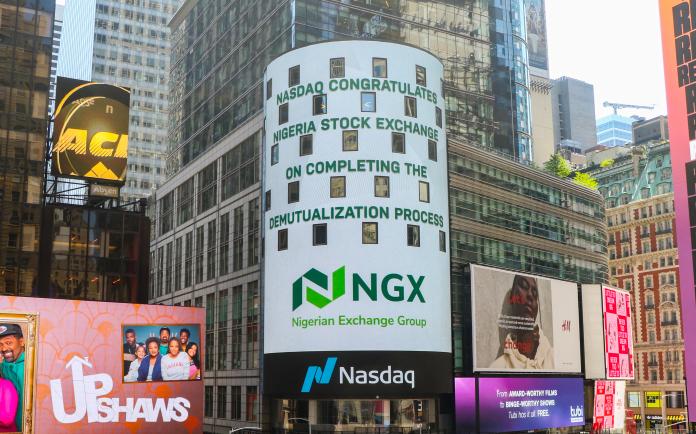
This is a massive one and it is coming just as 2022 closes. Yes, the Securities and Exchange Commission has approved the rules for listing on Nigeria Exchange’s new Technology Board. With this playbook, companies like Flutterwave, Interswitch, Touch and Pay, etc can have a clear destination to the public market without buying flight tickets to London and New York.

 Of course, the main issue besides the opportunity is the investors: how would they price these companies?  Indeed, when I see that eTranzact International Plc is valued at $53 million, I conclude that NGX retail investors need more lessons on tech and opportunities therein.

Yet, this is a step in the right direction: we need to have our own NASDAQ in Nigeria. In a world with Omatek Plc, Courteville Business Solutions Plc, NCR Plc, Chams Plc, Computer Warehouse Group (CWG) Plc,
Tripple Gee & Company Plc, Airtel Africa and MTN Nigeria, we can to add new species therein.

===Press release

Nigerian Exchange Limited (“NGX or “The Exchange”) is pleased to announce that the Securities and Exchange Commission (SEC) approved the Rules for Listing on NGX Technology Board on 15 December 2022.

The NGX Technology Board is a specialised platform for technology-based companies to list and raise capital on The Exchange. Through the Board, NGX aims to encourage investments in indigenous technologically inclined companies and others across Africa, provide greater visibility to these companies and ultimately deepen the Nigerian capital market. Securities listed on NGX Technology Board will be accessible to qualified institutional investors, retail investors, and high-net-worth investors.

Commenting on the approval of the Rules, the Chief Executive Officer of NGX, Mr. Temi Popoola said, “This is a landmark achievement that will position the Exchange as an attractive destination for capital formation by companies within the Technology Sector. It also attests to NGX’s dedication to deepening the Nigerian capital market. On behalf of the Board and Management of NGX, I would like to express our appreciation to the SEC for approving the Rules. I would also thank the Board of NGX for their invaluable contribution during this process. We are confident that NGX Technology Board will encourage start-ups, both Nigerian-founded and from other African countries, to list on the Exchange as they work towards meeting their financing needs.”

The CEO of NGX RegCo, Ms Tinuade Awe on her part said, “The approval comes after deliberation on the draft Rules by the Regulation and New Business Committee (RNBC) of NGX RegCo and the consideration of stakeholders’ comments on the exposed draft rules, followed by the subsequent submission to and approval by the Board of NGX RegCo. We are much obliged to the SEC for its quality input and approval of NGX Technology Board Rules.”

NGX, the sustainable exchange championing Africa’s growth, is committed to stimulating the technological transformation of the capital market and the development of Africa’s technology sector.

Doyin Okukpe and his Money Laundering Saga and why he is not in jail

0

The Director-General of the Labour Party Presidential Campaign Council and the former Senior special assistant on Media to the former President of Nigeria, President Goodluck Jonathan, Dr. Doyin Okupe, has been sentenced to two years jail term on Monday by her Lordship, Justice Ijeoma Ojukwu for breaching the Money Laundering (Prevention and Prohibition) Act of 2011.

The background of the case; Dr. Doyin Okukpe whilst he was an aide to the then President of Nigeria, President Goodluck Jonathan was accused and subsequently arraigned by the operatives of the Economic and Financial Crimes Commission (EFCC) for receiving over N200 million in cash from the former National Security Adviser (NSA), Col. Sambo Dasuki which contravenes S.1 of the Money Laundering Act of 2011 thereby making him guilty of the financial crime of money laundering.

The Money Laundering (Prevention and Prohibition) Act, 2011 provides in its section 1 that no individual or organization shall receive any sum above N5 million and N10 million respectively in cash without passing through commercial banks or other government-registered financial institutions.

The full provisions of S. 1 of The Money Laundering (Prevention and Prohibition) Act, 2011 read thus;

1. No person or body corporate shall, except in a transaction through a financial institution, make or accept cash payment of a sum exceeding

(a) N5,000,000 or its equivalent in the case of an individual or

(b) N10,000,000 or its equivalent in the case of a body corporate.

Mr. Doyin Okukpe was subsequently found guilty of this financial crime of receiving in cash a lump sum above N5,000,000 without passing it through the financial institutions which is tantamount to money laundering by Justice Ijeoma Ojukwu the presiding judge on Monday, the 19th December 2022.

He was therefore sentenced to two years jail term by Justice Ijeoma Ojuwku with an option of N500, 000 fine on each of the 26 count charges he has arraigned on and found guilty of amounting to a total fine of N13,000,000 for the 26 counts charge and was released afterward he made the payment of the fine of N13,000,000 to the court.

Readers should therefore note that some sentences carry the option of a monetary fine, i.e. when the court sentences a person who is found guilty to jail, he can be given the option to pay a monetary fine especially when the offense the accused person is found guilty of is not a capital offense. This is why Mr. Okukpe was given the option of a fine which he quickly paid hence why he is not currently in jail as ordered by the court

Auto Executives of EVs Predict Decline in Sales, Over Concerns of Inflation, High-Interest Rates, Etc

0

Automotive executives of Electric Vehicles (EVs) have predicted a decline in sales over concerns about inflation, and high-interest rates, among several other factors.

This recent prediction by executives is the opposite of what they had earlier proposed a year ago, in which they disclosed that more than half of U.S car sales will be EVs by 2030.

With the recent inflation and high-interest rates, reports disclose that automotive executives are less confident about the surge in sales of EVs in the U.S and globally.

In a recent survey conducted by accounting firm KPMG, the estimation of new Electric vehicles being sold stood at 10% to 40% in this year’s survey, a decline from 20% to 70% a year ago.

In the U.S, the median expectation for EV sales was 35% of the new vehicle market, down from 65% a year ago.

KPMG’s global head of automotive Gary Silberg while commenting on the recent survey, disclosed that EV automakers are however optimistic of increased sales in the long term, however with the recent socio-economic challenges, they are not confident that there will be a surge in sales.

In his words,

There’s still a sense of optimism long term, and yet, most importantly, there’s a sense of realism in the near term. You see this realism throughout the entire survey.

“You can be long-term optimistic, but near term, you’ve got to be very realistic. It’s not rainbows and butterflies and euphoria anymore, it’s game on.”

Asides from the inflation and high-interest rate, the proposed tax credits of up to $7,500 for electric vehicles in this unfriendly economy according to a few analysts could pose a serious challenge to the sales of EVs.

The EV tax credit is a federal incentive designed to encourage people to purchase EVs. Residents who meet the income requirements, and who buy a vehicle that satisfies the price, battery, and assembly restrictions, are eligible to receive up to $7,500 from the government in the form of a tax credit.

Although, some of these provisions, however well intended, may have unintended results, with some industry commentators concerned that no current vehicles will qualify for the revised EV tax credit due to its strict price limits and the made-in-America requirements that will go into effect in January 2023.

Depreciating Tenets of Decentralized Autonomous Organizations

0

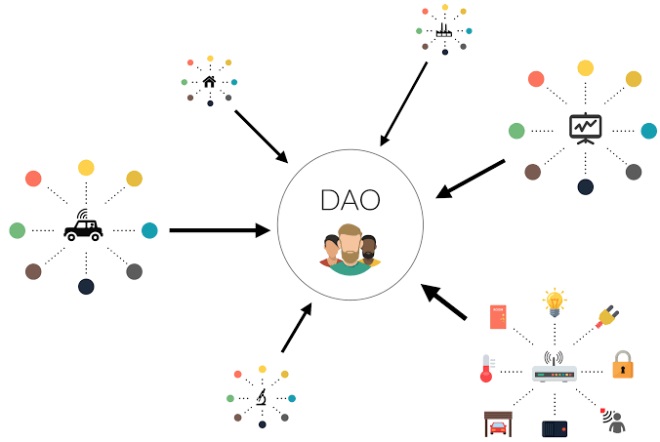
At a high level, a DAO is a decentralized autonomous organization that is governed and controlled by its community. They are made possible by the blockchain and by the monetary incentives that exist in Web3.

In a perfect world, DAOs would have no central leaders — its fate determined only by its community through democratic means.

The Ethereum docs describes them as follow:

Think of them like an internet-native business that’s collectively owned and managed by its members. They have built-in treasuries that no one has the authority to access without the approval of the group. Decisions are governed by proposals and voting to ensure everyone in the organisation has a voice.

There’s no CEO who can authorise spending based on their own whims and no chance of a dodgy CFO manipulating the books. Everything is out in the open and the rules around spending are baked into the DAO via its code.

What DAOs are today

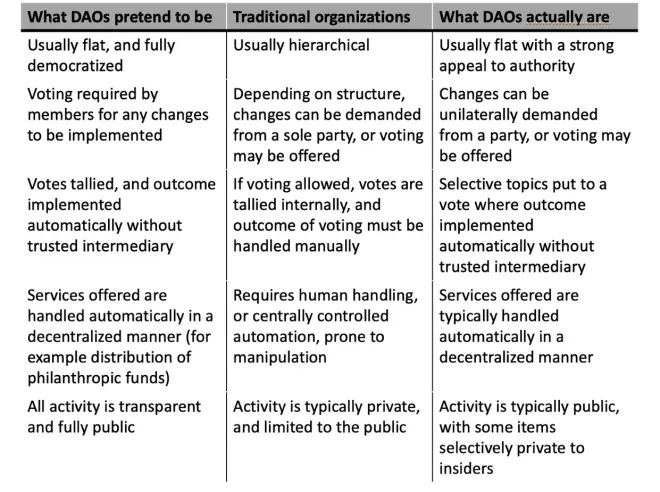
DAOs in their current manifestation are anything but the ideal they are trying to promote. They are just a feel good tool used by their creators-insiders to push the crypto/blockchain narrative of decentralization while staying in the shadows.

The mask and anonymity that blockchain and DAOs provide is dangerous when you consider that money is the incentive to keep interests aligned.

But even DAOs whose creators are public are susceptible to centralization— at least at the start. As unfortunate as it is, the appeal to an authority is very human— especially in topics where we know little about.

In the case of blockchain projects, there is no authority figure better than the creators themselves.

That’s fine as long as monetary incentives are aligned between the public and the DAO creators. But when that changes, then the incentive for the creators/insiders is to put their interest above that of the public.

Moreover, as much as we want to believe that community participation is good governance, it has limits.

I’ve seen quite a few projects where the original creators passed on authority to a DAO, or so they say. Often, they state that all decisions will be community driven. But then that begs the question:

Why is it that some decisions are voted on by the DAO, while others are decided by the creators?

If the creation of a token is put to a community vote, why is the price of that token unilaterally decided?

why are investors selected by the creators?

why is it that information can be withheld by the creators from the community?

If the tenets of DAOs is full Decentralization— transparency in the public, how can it be that material information is withheld from the community and public ?

DAOs pretend that they are community driven, open and transparent. The reality is that DAOs are just traditional organizations masquerading as something they are not. They are wolves in sheeps clothes. At least traditional organizations are transparent about what they are — DAOs not so. Which is ironic if you really think about it.

Make Tekedia Learner Investment and Management Program Your 2023 #1 ToDo

0

As 2023 arrives, please have Tekedia Learner-Managed Investment Fund and Portfolio Management program, designed to provide learners with theoretical and hands-on experience in the universe of investment, as a do list. Many have already registered since we unveiled it yesterday.

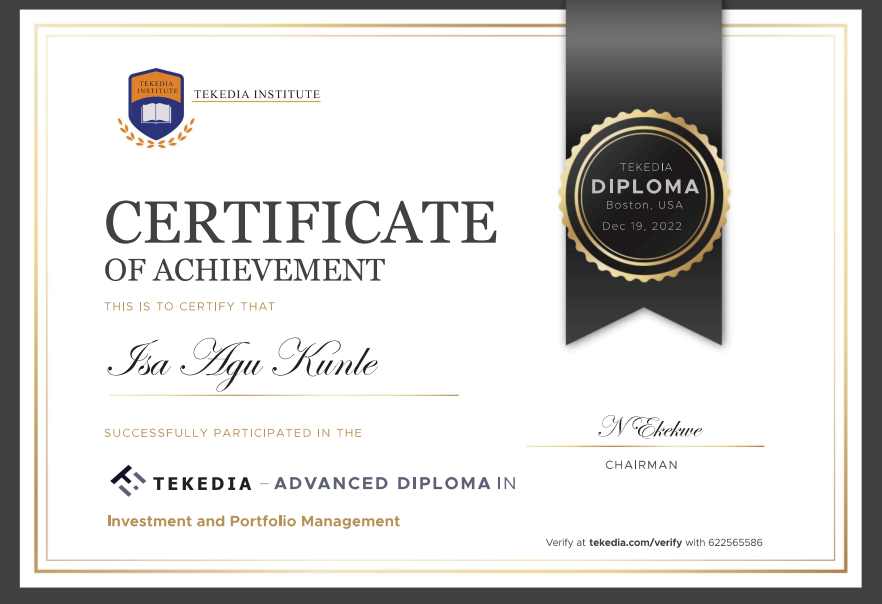
As an ex-banker (a really good one), and a doctoral degree holder in banking and finance, you will learn so much from me – and from our other faculty members.  And when we are done, besides the knowledge, we will issue this certificate: Advanced Diploma in Investment and Portfolio Management. 

From Meta to Santander to Google, more and more companies are hiring Tekedia graduates. This morning, we completed a couple. I am very confident that this course will open opportunities for many in the financial sector. Cost is N180,000 (or $400).

Learn more and join us here.