DD
MM
YYYY

PAGES

DD
MM
YYYY

spot_img

PAGES

Home Blog Page 4594

The Regulatory Framework Governing the PAPSS System in Nigeria

0

The Pan-African Payment and Settlement System, PAPSS, framework was created by the Afreximbank in collaboration with the West African Monetary Institute (WAMI) as a test-run initiative and was introduced in Nigeria by virtue of the Central Bank of Nigeria CBN Guidelines passed on October 11, 2021.

This article will be talking about this payment system that is actually geared towards seamless electronic payments across borders and the main focus areas will be :-

  • The objectives of the PAPSS payment framework.

  • The features of the PAPSS payment framework.

  • The implications of the PAPSS payment framework for authorised dealers in Nigeria.

What are the objectives of the PAPSS payment framework?

The PAPSS framework was created for the sole objective of achieving faster settlements and payments in support of cross-border transactions within Africa at a reduced cost with the aim of significantly boosting Intra-African trade.

What are the features of the PAPSS payment framework?

The features of the PAPSS payment framework are as follows :-

  • The option of supported initiation of cross-border retail payments in local currencies of sending parties and the receipt of funds in the local currencies of beneficiaries within West Africa while Inter-Bank settlements will be in US Dollars based on a multilateral netting arrangement.
  • The net settlement model which defines the PAPSS payment framework is based on prefunding by participating financial institutions through the domestic RTGS system.
  • The Afreximbank will be the settlement agent and each Central Bank of signatory states under the PAPSS arrangement will maintain a US Dollar settlement account with it to settle eligible transactions from its country on a net basis.
  • Each central bank shall determine eligible transactions for which they will provide foreign exchange.
  • Commercial banks may maintain a US Dollar settlement account with the Afreximbank to settle obligations for payments that may fall outside the eligible transactions for which the central bank will not provide foreign exchange.

What are the implications of the CBN Guidelines on the PAPSS payment framework for authorised dealers in Nigeria?

The CBN Guidelines on the adoption and operation of the PAPSS payment framework in Nigeria have the following implications for authorised dealers :-

  • The eligible payment of imports and the receipt of export proceeds by the CBN shall be restricted to trade-backed transactions.
  • Export proceeds repatriated to the CBN under the PAPSS framework shall be subject to certification by respective processing banks as being repatriated by the exporter.
  • The provisions of all existing guidelines, circulars and directives on the operations of the foreign exchange market shall apply.
  • For the settlement of PAPSS transactions by the CBN, authorized dealers shall obtain CBN approval for US Dollar covers before initiating payments on the framework. The request for PAPSS transaction settlement should be forwarded to the CBN.
  • Only transactions deemed eligible by the CBN shall qualify for payments via the PAPSS framework. Items classified as “not valid for foreign exchange” shall remain ineligible.

 

As Some Reject New Naira Notes, Nigeria Must Address Its Weakest Development Link

1

Nigeria’s biggest problem is that most of the citizens have not been fundamentally educated to a level which will make it possible for them to be effectively governed. Indeed, from election to monetary policy, we are faced with issues which to a large extent are systemic. And until we fix those paralyzes, the economic ascension we expect will not come. I am very sorry to write that.

China has 99% primary education enrollment with less than 10% university attainment. They put all the best money in basic education (primary and secondary school levels), making sure that it is really great. For the university, they don’t really care that much. The US follows a similar pattern where basis education is largely free; take a loan if you want to go to college.

For China and the US, with a strong literate base, it is easier for the government to implement most policies. Yes, people can read ballot papers and vote. People can read and follow government enactments.

But when it comes to Nigeria, with a double digit illiterate rate, it is extremely tough for the government to implement most policies, contributing to most policy failures. Consider this: “According to multiple reports, the newly designed naira notes which are gradually going into circulation have been surrounded by tales of widespread rejection. Some reports reveal that several businessmen and women are reluctant to accept the new notes as legal tender, as they have decided to stick with the old notes pending the deadline given by the Central Bank of Nigeria (CBN) to phase out the old notes. Some have expressed concerns about the authenticity of the new notes, stating that it will be very difficult to identify fake ones.”

I sympathize with these citizens since most use colors to model the value of currency notes, and when the color-scheme is confusing, problems are expected. Yes, this CBN policy is noble even though  the design  was poorly executed. Nonetheless, the government should stay the course and provide support through education and awareness via churches, markets, mosques, etc. As that happens, Nigeria must invest to deal with its #1 development problem – mass illiteracy in many communities – if the nation hopes to move to the next level.

Comment on Feed

Comment 1: Illiteracy in Nigeria doesn’t have to deal with school attendance but seriously our belief system, I got a message via WhatsApp that I should not accept the new notes because of it might be fake and some will go with the conspiracy theory not because they didn’t go to school but because they tend to believe anything that comes from anywhere, I then heard a government hospital is not accepting the new notes just on the basis of this conspiracy theory.

Prof. here in Nigeria not all who are educated are literate, the minds of Nigerians needs to develop into the evolving world before we can really get rid of illiteracy

Comment 2: I once rented a house that had bad water. When I grumbled to the Landlord. His response were ” i promised water but not clean water”. Did you not see water? Is this Landlord not a Nigerian? The CBN promised new notes, there it is. I think the issue is not education but mistrust of the political class by the citizens. Any of the social contracts with the political class been met? Tell me any of the political parties that has kept to her manifestos? Country that tells her citizens that, there is no money but the citizens see how monies are wasted. Our legislatures are among the highest paid in the World while other civil servants are still fighting for implementation of 30,000 NGN minimum wage . The political class children lives in affluence in midst of poverty of other citizens. Is this not a country that hides palliatives meant for the citizens? How then do you expect the citizens to believe in the new notes?

Comment 3: As someone who had been in the education space, I feel so bad about what our primary and secondary schools have become. I’m sorry but I have to say this, our leaders and government are terribly irresponsible, from the presidency to the local council.

Nothing worthwhile is going on in our primary and post primary public schools yet the government does nothing. Many profit-focused terrible private schools are being opened here and there yet the same government cannot effectively regulate them to see that they are meeting up with the required standards.

Apart from making primary and secondary school compulsory for every child, the government have to invest in these schools and show genuine seriousness in seeing that our children are receiving the right education.

These things are not rocket science.

I used to tell my students “if you feel you aren’t receiving the right education in any school you find yourself SCREAM.

Comment 4: Perhaps it was the fault of the national government for not educating the masses about the new notes before being released into circulation. Months should have been spent showing pictures/images of the new notes before they were released – in Canada when one and two dollar paper notes were replaced with equivalent coins we were told many months in advance. Also when new faces are added to existing notes we are similarly informed months, if not longer, in advance.

Nevertheless, primary education needs to be free for all, relevant in modernity, and compulsory at least to the age of sixteen. Many nations go further and provide post secondary education for free – I wish I got mine for free!

There are so many brilliant people in Nigeria – it should be way more prosperous than it currently is…..but you are trying hard to change the narrative Ndubuisi- all the more power to you Professor.

Newly Designed Naira Notes Faced With Widespread Rejections as Many Seem Unaware

Newly Designed Naira Notes Faced With Widespread Rejections as Many Seem Unaware

1

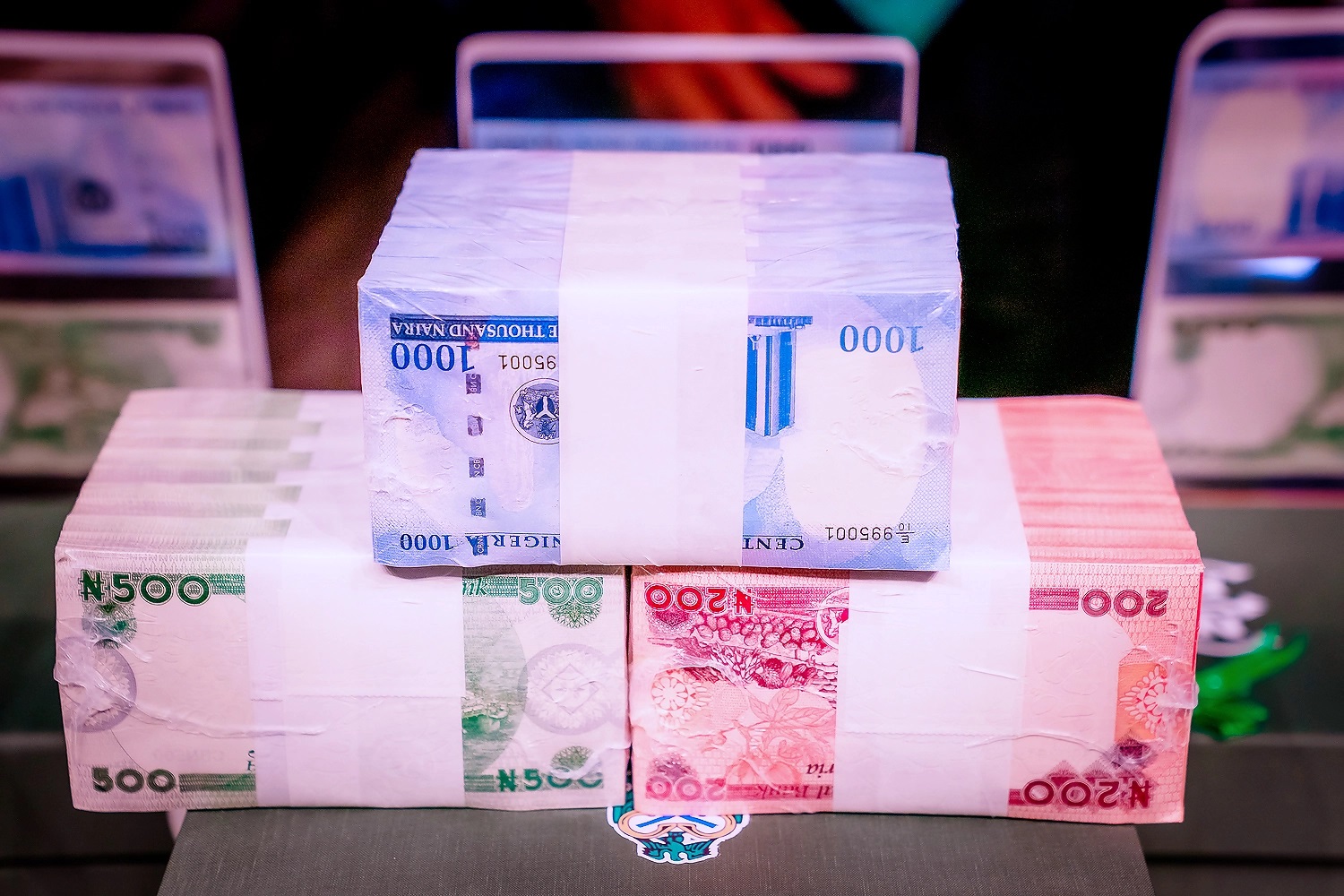
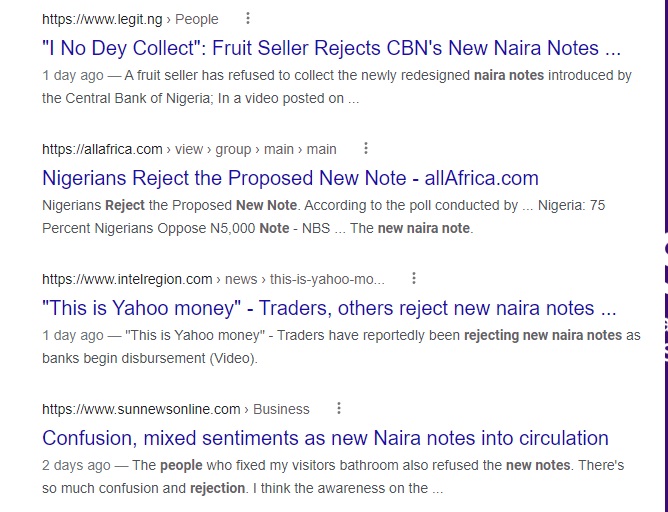
According to multiple reports, the newly designed naira notes which are gradually going into circulation have been surrounded by tales of widespread rejection.

Some reports reveal that several businessmen and women are reluctant to accept the new notes as legal tender, as they have decided to stick with the old notes pending the deadline given by the Central Bank of Nigeria (CBN) to phase out the old notes.

Some have expressed concerns about the authenticity of the new notes, stating that it will be very difficult to identify fake ones.

In a recent viral video, a trader refused to collect the newly designed N1,000 naira note from a customer, insisting that the money is a fake note which is often used by internet fraudsters commonly known as “Yahoo boys”.

The confused customer had to call the attention of passersby to help convince the trader that the money presented to her was legit.

Despite persuasion from onlookers, she remained adamant that she is not familiar with the new note. It however had to take the intervention of a truck driver who called the customer to give him the old note in exchange for the new note.

In another video, a traffic cold drink vendor was reluctant to collect the new naira note from a customer, as he was spotted staring at the new note in awe for a few seconds before rejecting it.

This spurred other passengers in the moving vehicle to convince him to accept it, stating that it was the newly designed naira note. But the hawker persisted that he wasn’t going to accept it. In his words, “No o please, I can’t take the money”.

Reacting to the viral videos, some Nigerians have disclosed that the CBN has failed to conduct a proper sensitization on the introduction of the new notes, which is the reason for the widespread rejection.

Recall that the CBN in October introduced the newly designed naira notes, as the CBN governor Godwin Emefiele disclosed that the introduction of the new Naira banknotes marked a major milestone in CBN’s efforts to solve the numerous challenges facing the management of the nation’s currency.

However, the release of the newly designed notes was followed with mixed reactions as a lot of Nigerians have expressed concerns over the poorly designed note, with a major concern about the circulation of counterfeits.

However, the president of the Federal Republic of Nigeria Muhammadu Buhari doused the worry of counterfeit notes by stating that the newly redesigned notes have unique security features which makes it difficult to counterfeit.

On the other hand, barely two months and a few days to the January 31, 2023 end date for the high-denomination old bank notes, the Central Bank of Nigeria (CBN) have expressed worry over the low response by Nigerians and commercial banks towards the return of the old notes.

The bank director in charge of currency, Ahmed Bello Umar said at a post-Monetary Policy Committee media briefing in Abuja, “Up to now, there is no serious uptick in the deposits that customers are doing”.

My Life in a Software Society

0

Nobody anticipates it. Nobody genuinely accepts it. Nobody is aware of how access to the public sphere will be restricted for a number of days, months, and years (s). Everyone was restricted when the virus arrived. It took longer than expected for it to be given the name COVID-19. Not that viruses have never existed in the world. However, because human movement was completely restricted, it became the most talked-about and feared virus. People’s freedom was constrained, and a number of previously unknown or underutilized hardware and software technologies became lifesaving tools. Many people came to understand the value of the mobile and stationary technologies they own or have access to during the time.

System, application, and utility software became useful for everything from communication to business. During the pandemic, I was forced to use some of the forgotten mobile applications, just like the rest of the world. For example, after years of ignoring Zoom meeting and only using Skype infrequently, the two applications became dominant tools as well as instruments for business and interpersonal communication.

However, living in a society where there is no pandemic opens up new perspectives on how to interact with people and move around using locally developed applications. My experience has taught me that we should always be grateful to God for endowing some people with the ability to create software.

As I previously stated, various technologies aided us prior to and during the pandemic, and they continue to do so in the post-pandemic era. Therefore, when we benefit from software-enabled technologies, we should remember that the first piece of software was written by Tom Kilburn, a computer scientist, and was run at 11 a.m. on June 11, 1948, at the University of Manchester in England.

Tom Kilburn and other software developers have made our lives easier in a variety of ways. For example, my recent experience demonstrates that a society without technologies and utility software is difficult to live in. Arriving in a society that is completely different in terms of language and culture forces me to consider voice recognition and navigational technologies as indispensable companions.

When I need to communicate with locals who do not speak English, I must use locally developed voice recognition software. They converse with the application, and their voices are easily translated into English. This is absolutely necessary if I do not want to be isolated for several hours.

Because the majority of publicly displayed communication channels contain information in the local language, it is critical to use the application’s translation feature. The channels must be snapped and the information in English must be waited for a few minutes. Aside from interpersonal communication, map applications are useful for navigation. These applications are not only popular among foreigners.

There is hardly any citizen who does not have the applications on their mobile phone or other gadgets such as a laptop. As I continue to live in this society, I ask myself every time I use an application; what would life be like without these apps?

Nigeria Needs To Prevent The Incessant Fires In Our Open Market

0
TEHRAN, IRAN - JULY 19: (RUSSIA OUT) Russian President Vladimir Putin leaves his presidential plane during the welcoming ceremony at the airport, on July 19, 2022 in Tehran Iran. Russian President Putin and his Turkish counterpart Erdogan arrived in Iran for the summit. (Photo by Contributor/Getty Images)

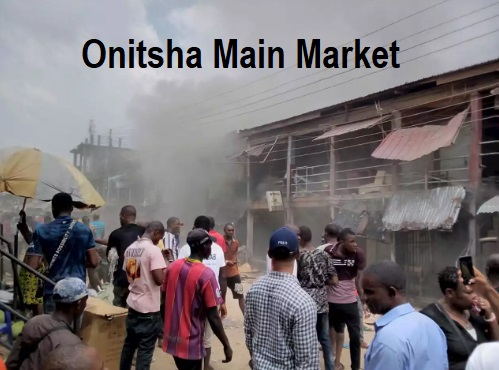
What is going on in Onitsha Main Market these days: “At about 1.02 a.m. on Saturday [Dec 17, 2022], the Anambra State Fire Service received a distress call of a fire outbreak at No 4 Ajasa Street, Ose Main Market, Onitsha, where they sell chemicals”?

There is hardly a month that we do not have a fire outbreak in Africa’s largest open market. Just before the pandemic, I was with His Imperial Majesty, Ezeuzu of Awka, and we discussed extensively how to deepen knowledge in this market along with traders in Awka. It was on that strength that Tekedia Institute signed the strategic partnership we have with Nnamdi Azikiwe University.

In that market, many proudly wear our Tekedia Mini-MBA t-shirts because they come here to take a course we specifically created with them in mind – “Personal Finance and Wealth Management”. Yes, we want that paralysis where Eze Ego (the king of money) becomes a beggar, just years after retirement, because he did not plan ahead, to end. We also went ahead and developed the Igba BOI (Igbo apprenticeship system) course to deepen best practices and strengthen operations.

I like containers, trading and I am calling the federal and state governments to find a lasting solution to these incessant fire outbreaks in this market. Help these open markets; Kano is also having its dose of fire outbreaks.


  • The statement reads, ‘’At about 1.02 a.m. on Saturday, the Anambra State Fire Service received a distress call of a fire outbreak at No 4 Ajasa Street, Ose Main Market, Onitsha, where they sell chemicals.
  • “We immediately deployed our fire trucks and our ever-ready and fearless firefighters to the fire scene. We swift into action, battling the fire, controlled and fought it to a standstill.
  • “The cause of the fire was unknown as nobody was there when it started. Although, the fire destroyed about three shops no life was lost during the heavy fire”, he said.
  • ”A lot was saved as we prevented the fire from spreading to other shops around the fire incident scene.
  • “It is important to know that we must always switch off of our electrical and electronic appliances especially when it is not in use.
  • “We must also know that we are at the peak of the harmattan. Avoid anything which can cause fire outbreak at this season.” 

Director/Fire Chief of Anambra Fire Service, Mr. Martin Agbili

Comment on Feed

Comment 1: Poor electrical maintenance and installation with I don’t care attitude of chops owners are the major causes of fire ? outbreak 

My Response: I do not buy that argument. A market is owned by the state/LGA and there is no reason that the government cannot enforce standards. Do we need regular inspections then?

Comment 2: Most of the chemical traders are not aware of the reactivity of the chemicals when they are put together, they don’t understand it is not all chemicals that should be parked together, they need a good awareness, it breaks my heart anytime they loose money through avoidable fire outbreak. Safety must be put first.

Comment 3: Once we realize that anything can be a fuel, we must then take heed.

Fire needs three conditions

1. Fuel. A burning material (fuel, meaning anything can be a fuel. Some are more better than others. For example a bed mattress with foam is highly flammable more faster than some wood). Sure, in dry season the moist content is less, so easier to burn or get heat up.

2. Oxygen. (mostly in the air, but other material like water can easily or slowly by heat reaction produce more oxygen to add more flame).

3. Ignition/Heat . A single spark. A single increase in temperature. A single collision or pressure.
All of these go together in complex ways cause fire. (If not intentionally caused).

Firstly, periodic electrical systems check are needed, and rules must be complied by all users, from main to consumer point.

Second. A regulation or survey based on the inventories of different shop members is needed to sort the arrangement and organization of possible ignition and easily flammable material.

Thirdly, we don’t only need security guards, but also FIRE GUARDS (constantly to be stationed with technical knowledge of flames and it’s safety). For example, they might be always checking the quality of extinguishers, hose.. etc.?