DD
MM
YYYY

PAGES

DD
MM
YYYY

spot_img

PAGES

Home Blog Page 4597

POS Operators Petition Buhari, National Assembly, Over New CBN’s Cash Withdrawal Policy

0

Public outcry has continued to trail the newly introduced policy by the Central Bank of Nigeria (CBN), that limits over the counter and ATMs withdrawal to N100,000 per week for individuals and N500,000 for corporate organizations.

The policy also affected Point of Sale (POS) operators. POS withdrawal was limited to N20,000 per day for individuals and N100,000 for corporate bodies, greatly downsizing the operators’ turnover.

Consequently, a group under the aegis of Point of Sale (POS Operators) has in protest over the policy, petitioned President Muhammadu Buhari and the National Assembly.

Speaking to journalists in Abuja on Friday, the National President of Association of Mobile Money and Bank Agents in Nigeria (AMMBAN), Victor Olojo, said that if the central bank proceeds to implement the policy, more than 1.4 million bank agents will lose their jobs.

In the petition dated 16 Dec. 2022, the group asked that the policy be reviewed upward, allowing the maximum withdrawal limit of N500, 000 weekly for individuals and N3 million for corporate organizations.

“AMMBAN believes the cashless policy in its current state hasn’t provided for Mobile Money and Bank Agents in Nigeria adequately.

“Even as the CBN Governor made reference to the fact that Mobile Money and Bank Agents are spread across the country is one of the reasons why he strongly feels the country is ready for the cashless policy, the document puts the jobs of over 1.4million agents on the line in its present state.

“This and many other germane reasons informed the decisions of the Association to engage the CBN, the National Assembly and other relevant stakeholders.

“This is to ensure that while we show support for the cashless policy of the government through the CBN, the policy should recognize the categorization of Agents’ accounts as it does individuals and corporate entities,” he said.

But AMMBAN’s concern has been noted by the National Assembly. The House of Representatives had last week, summoned the CBN governor, Godwin Emefiele, to answer relevant questions respecting the cash withdrawal policy. The House had asked the governor to suspend the policy in order to protect Small and Medium Enterprises (SMEs), especially in rural areas.

“I do not know how my people will go and change this money, I do not know where my people will go and get it; the best we have is the POS, our people still deal in physical cash.

“The issue affects everyone, most of our people are in rural areas and everything is being done in Naira and cash and somebody will wake up and make a policy that will start tomorrow, no consultation.

“People have forgotten that 80 to 90 percent of our people are in the rural areas, we must do something to save the situation, if there were enough banks and facilities, why not, it will work,” Rep. Rep. Aliyu Magaji lamented.

On Wednesday, the Senate similarly asked the central bank to considerably adjust the cash withdrawal limits. Although Emefiele had acknowledged the possibility of the withdrawal limits being adjusted upward, the CBN governor did not honor the summon of the National Assembly to give further details about it.
Regulatory Framework Governing Digital Financial Services (DFS) Awareness in Nigeria

0

The Central Bank of Nigeria (CBN) has in recent times been more deliberate in seeing to fruition the National Financial Inclusion Strategy, in this case through the promotion of Digital Financial Services or DFS as a priority.

To this end, the CBN passed the Guidelines on Digital Financial Services (DFS) Awareness on the 5th of July,2022. 

These guidelines were developed to address gaps in consumer knowledge and practices through DFS which is seen as a potential means of expanding access to financial services for the Nigerian population and boosting innovation in the financial services industry.

This article will thus be looking at the DFS awareness principle provisions of these guidelines, their applicability scope and their objectives. 

What is the applicability scope of the DFS Guidelines?

The DFS Guidelines apply to all institutions providing DFS including :- 

  1. Deposit money banks.
  1. Merchant banks.
  1. Other Financial Institutions (OFIs).
  1. Payment Service Banks (PSBs).
  1. Other payment service institutions licensed by the CBN.

What are the objectives of the DFS Guidelines?

The objectives of the DFS Guidelines are :-

  1. To set Digital Financial literacy standards for Digital Financial Service Providers (DFSPs).
  1. To align product development, promotion and Consumer awareness to DFS providers.
  1. To enhance transparency and proper disclosures in the rendering of Digital Financial Services.
  1. To ensure evidence-driven approaches to DFS.
  1. To drive a targeted DFS approach to the financial service-underserved segments of the population.

What are the notable DFS awareness principles espoused in the DFS Guidelines?

The most notable DFS awareness principles espoused under the CBN DFS Guidelines are :-

DFS Awareness & Education Promotion

DFSPs are to :-

– Conduct outreach initiatives to underserved populations regarding DFS options available to them.

– Provide information on products in simple English and local languages.

Disclosure, Transparency & User Privacy upon Service Adoption

DFSPs shall :-

– Disclose all items, conditions, fees & other associated charges on product offerings prior to enrolment.

– Ensure data privacy and protection into internal policies.

Product Visibility & Market Testing

DFSPs shall :-

– Ensure that products deployed are suitable for the target customers.

– Test product usability with end-users and modify as is necessary to reduce transaction errors.

Fraud Prevention

DFSPs shall :-

– Provide fraud prevention messages for consumer awareness and product usage.

Awareness & Access To Redress & Complaints Handling

DFSPs shall :-

– Disclose information on consumer complaints channels, resolutions and Service Level Agreements (SLAs) in product enrolment materials.

Monitoring & Evaluation

DFSPs shall :-

– Put in place strategies to assess their policies on raising consumer awareness and product use.

– Develop indicators and performance measuring to assess changes in awareness and usage.

Understanding the Concept of ‘Your Keys, Your Coins’

0

Digital Wallet (commonly known as a Cryptocurrency Wallet) is an essential item that holds all of your digital tokens and connects you directly to blockchain technology. Think of it like your physical Wallet, but built for the digital Web3 world.

Your Keys, Your Coins

Your Keys, Your Coins, is a popular saying that highlights the primary feature of all Digital Wallets, ‘self-custody’. Self-custody means that everything kept inside of your Digital Wallet, is yours and only yours. Think of a real Wallet that holds your bank cards, these bank cards have a pin number that only you know. This is similar to a Digital Wallet, only you can access the assets in your Digital Wallet using what’s called a Private Key.

Everything stored inside your Digital Wallet is actually stored on the blockchain, whenever you want to access your assets in your Digital Wallet, you access them using a Private Key that only you know.

Your private key proves your ownership of your digital assets and this key allows you to sign for transactions. You must always keep your private key safe and secure, If you lose your private key, you lose access to your digital assets in your digital wallet.

What can I do with my Digital Wallet?

Securely store your own private keys.

Manage all your digital assets in one secure place.

Interact with decentralized protocols like Uniswap.

Use your digital wallet in any shop that accepts cryptocurrency.

Send and receive digital assets to any wallet anywhere in the world.

How digital wallets work

Different digital wallets use different technologies to process payments:

  • Near Field Communication, or NFC: This allows two devices to exchange information if they’re placed close to each other. Apple Pay and Google Pay use this technology. To use one of these digital wallets, the merchant must have compatible card readers at checkout.
  • Magnetic Secure Transmission, or MST: This generates a magnetic signal, much like when you swipe the magnetic stripe on a credit card. The signal is transmitted to the payment terminal’s card reader. Samsung Pay uses both MST and NFC technology.
  • QR codes: These are barcodes you can scan with your smartphone’s camera. In the PayPal app, for example, you can generate a QR code that lets you use your account to pay for an item in a store.

While the digital wallet examples above can be used at any merchant that accepts them, there are also “closed” digital wallets, like the Starbucks app, that are designed to be used only at a specific store. The above functionality’s is also prevalent using Crypto Digital Storage but with slight Cryptographic modifications.

Digital Wallet Choices

There are dozens of digital wallets that you can download for free, many of them come with unique features, but all of them provide the same service of storing your digital assets safely and securely. The most popular Digital Wallets include:

Metamask.

Coinbase Wallet.

Trust Wallet.

Core App.

Hot (Software) Wallet

A hot wallet is a type of digital wallet that stores private keys on a device connected to the internet, such as a smartphone or PC. Hot wallets are generally very convenient and are perfect for actively participating in decentralized finance (DeFi) protocols, minting non-fungible tokens (NFTs), and interacting with smart contracts.

Hot wallets usually come in the form of a browser extension or a smartphone application. This makes them very similar to traditional banking applications but comes with its own set of risks. Being connected to the internet means that hot wallets are a perfect target for malware and hackers.

These risks can be decreased by using antivirus software and generally being careful around the internet, but they are never completely eliminated. For those who want extra protection from potential risks, cold wallets are suitable alternatives.

Cold (Hardware) Wallet

A cold wallet usually comes in the form of a dedicated device that isn’t connected to the internet. Private keys are stored on the cold wallet device itself and never leave it. This means it is at a far lower risk from potentially being hacked and having the assets stolen.

The drawback is that Cold Wallets make interacting with decentralized protocols and transferring assets more difficult, since it can’t be done with just a phone or a computer.

Cold Wallets are often used as long-term storage options due to their security. Ledger and Trezor are the most popular cold wallets. They connect to a computer through USB and require users to physically approve each transaction on the device.

CZ-Binance Replies MITH on Claims of its List Deposits Refund

0

A decentralized social network project called Mithril (MITH) was recently delisted from Binance and in return, the crypto project asked for the 200,000 Binance Coin (BNB) it had to deposit as insurance for listing on the exchange.

Binance CEO, Changpeng Zhao responded to MITH’s demand on Twitter with a screenshot of their contract that suggests if the listed token price falls below a certain threshold, the exchange has the right to deduct the insurance fund partially or fully as an additional fee.

With this situation, it appears Binance  creates artificial demand for $BNB by requiring Listing deposit of BNB instead of USD. Removes sell pressure by never giving back the deposit. Look at the amount of shitcoins on Binance. Why do they all need to buy BNB to get listed on Binance?

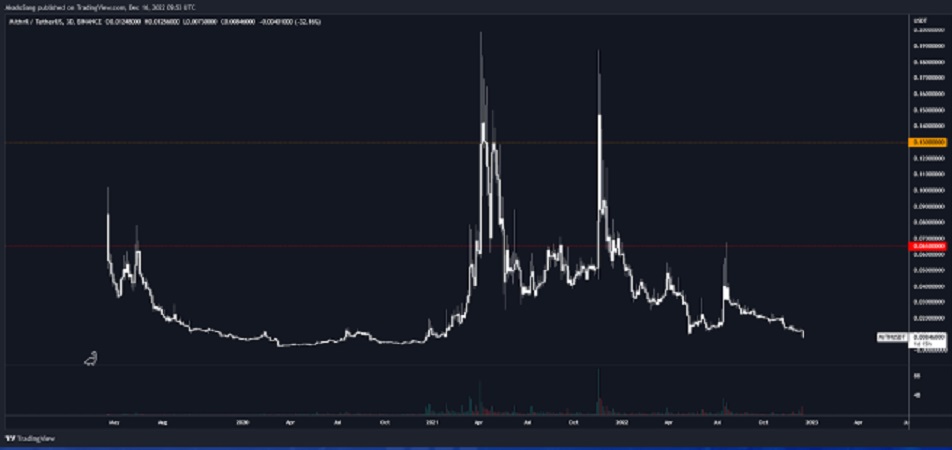
The trigger price of $MITH is $0.15. The maximum level reached when the trade was opened is $35 and the price is now $0.42. Is it enough just for the $HashFlow team to tweet? don’t Binance see the huge manipulation of the price? What more needs to happen? Is it necessary to drop 200x?

Binance, tolerate so much manipulations on its Exchange, Hashflow is constantly adding and selling supplies and Binance tolerates it. The price has fallen 87x for 39 days and it is still falling. It is no different from Luna.

Now we have the proof of reserves so know how Binance will survive the bear market. Most tokens will get a 80-90% correction and Binance gets the deposit fees. Mystery solved, Binance is safe and solvent but not a good transparent look on CZ and Binance.

Thus, Part A will be protected from any material adverse effect, and the users (holders) will be screwed up, without any prior warning.

Blockchain project Mithril said it deposited 200,000 BNB to Binance in 2018 — about $1 million at the time — as part of the exchange’s listing process. But the project fell out of favor and was delisted yesterday which prompted Mithril’s Team to demand for a refund of its listing deposit.

$0.13 and $0.065 are quite high levels given opening price. Is this how Binance engineers shitcoin listing pumps?

AkadoSang’s Twitter.

One would expect trigger levels to be quite low for a delisting requirement, instead they seem to be quite high. Imagine if getting a publicly listed equity/stock on a stock exchange was pay to win without any regulatory oversight. This is what crypto casinos are— Now you know.

Dibby, a Blockchain attorney— posted on Twitter, If the price of the Token on any exchange falls below 50% of $0.13 on a continuous basis, or in connection with the Token or the Project, Party A believes that it will have or will have a material adverse effect on Party A and/or its users; If other events exist.

Three skillsets for a growth entrepreneur

0

You have successfully taken your business from stage zero to the first stage. Now you have a product live in the market, some customers, maybe a couple of partners, and even a financier. What next? It is now time to move the business to the next stage – thousands of customers, millions of dollars in revenue, a larger team, maybe more financiers, and so on.

Note first that there is no saying how long the startup stage would or should last. It can be a year, two years, five years, or even more. It is evident to everyone on the team when it is time to move on to the growth stage.

Here are three skills you need to grow your business from the launch stage to become a successful company.

Sales

You must work on sales to grow revenue from hundreds of thousands into millions. Get more customers, increase your market share, expand into new areas, and boost sales. You will need the skills to execute these at the growth stage.

Customer service

This is closely linked to the former. As you onboard new customers, you must develop a customer service culture that will keep your customers glued to you. There will be constant competition with other brands upping their game to give as much or even more than you do. It may require you to upgrade your solution to keep up. They become your evangelists if you can keep your customers happy and satisfied.

Team building and people management

You will work with a larger team than you did at the beginning. Depending on your model, this may be completely remote, physical, or hybrid. It will take more from you to manage a team of 100 people than to manage a group of 10. That is why I mentioned in a previous post that one person might not have all the skills, but in some cases, they do. You may be good at building and working very well with a team of 10 people, but not a group of 100.

One thing you should keep in mind is creating a sense of mission that brings them together. A lot at this stage will depend on the culture you built with a more minor team. How you develop and treat your team members is very important.

There are other skills you will need as you gradually grow your business from the launch stage to become a successful company. Things like risk management, resource management, and so on. Most of them may have team members with that expertise, but you have to be directly involved in sales and people management. You should know what is going on with your sales team at every point because the business is going nowhere if there are no sales.