DD
MM
YYYY

PAGES

DD
MM
YYYY

spot_img

PAGES

Home Blog Page 46

IBM Stock Not A Buy, Jim Cramer Says After Shocking 25% Stock Plunge

0

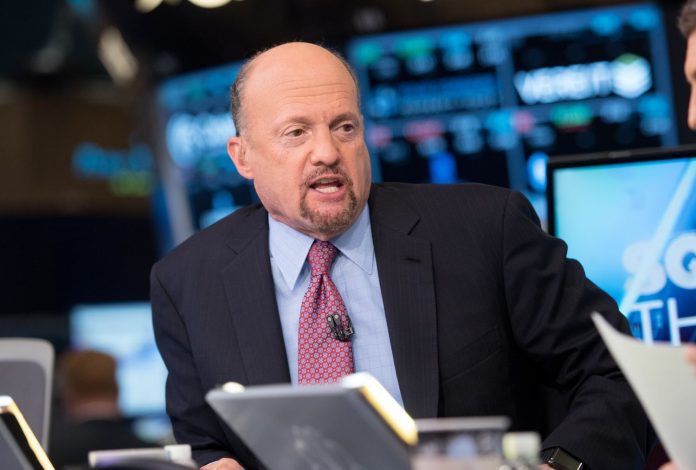
CNBC’s Jim Cramer says IBM’s disappointing second-quarter preannouncement reflects a broader shift underway in enterprise technology spending, noting that the company is increasingly finding itself on the wrong side of the artificial intelligence investment boom.

IBM shares plunged about 25% after the company unexpectedly warned that second-quarter revenue, earnings, and software growth would fall short of Wall Street expectations ahead of its scheduled earnings release next week.

The sharp selloff erased billions of dollars in market value and marked one of IBM’s steepest single-day declines in years, underscoring investor concerns that the company is struggling to capture the wave of AI spending reshaping the technology industry.

Speaking on CNBC’s Mad Money, Cramer said the disappointing results signal more than a company-specific execution issue.

“That’s the new reality, and I have no idea when it will change, which is why I can’t recommend IBM, not even after today’s severe decline,” he said.

IBM Chief Executive Arvind Krishna acknowledged the company “faltered” during the quarter after several large customer contracts failed to close as expected.

While IBM characterized the weakness as delayed deal closures rather than lost business, Cramer argued the results highlight how corporate technology budgets are being fundamentally reallocated in the AI era.

According to Cramer, enterprise customers are increasingly concentrating spending in three critical areas:

Artificial intelligence infrastructure and AI model usage (“tokens”)
Cybersecurity
Hardware required to support AI deployment

As organizations race to deploy generative AI across their operations, those priorities are absorbing a growing share of IT budgets, leaving traditional software upgrades, consulting projects and other digital transformation initiatives facing delays or outright cancellation.

“Unfortunately for IBM, they have too many products and services that fall into the ‘other types of spending’ categories, even if they also have a decent overall AI narrative,” Cramer said.

Across the technology industry, companies with direct exposure to AI infrastructure—including Nvidia, Broadcom, TSMC, ASML and hyperscale cloud providers—continue to post strong growth, while vendors focused on legacy enterprise software or traditional IT services face slower customer spending.

IBM has invested heavily in positioning itself as an AI company through its watsonx platform and its acquisition strategy, but investors have questioned whether those initiatives are translating into meaningful revenue growth compared with rivals that benefit directly from surging AI infrastructure investment.

Cramer acknowledged that Krishna deserves credit for taking responsibility for the disappointing quarter and noted that IBM still possesses several attractive long-term businesses. The stock’s decline has pushed its dividend yield above 3%, making it more attractive from an income perspective.

However, he argued that those positives are outweighed by concerns that enterprise spending patterns are undergoing a structural rather than temporary change.

“We’re at the point in the year where IT managers are putting together their budgets for 2027, and you have to assume that these three priorities I just identified will continue to dominate, which means anything outside of them has a real problem,” he said.

Corporate IT budgeting typically influences technology spending over the following year, making that observation particularly significant. If AI infrastructure, cybersecurity and computing hardware remain the dominant priorities, companies like IBM that generate substantial revenue from consulting, enterprise software and hybrid cloud services could continue facing pressure.

The results also reinforce growing investor scrutiny of enterprise software companies’ AI strategies. While nearly every major technology vendor now markets AI products, investors are distinguishing between firms directly benefiting from AI capital spending and those whose AI offerings have yet to materially offset weakness in their traditional businesses.

Cramer said he hopes IBM’s delayed contracts ultimately close rather than disappear altogether, but he cautioned investors against assuming that outcome.

“I hope that IBM truly is just seeing its deals get delayed, and not canceled,” he said. “But I can’t tell you to buy a stock because I hope something is true.”

IBM’s results are likely to be watched closely when the company reports full quarterly earnings next week, as investors look for evidence that customer demand is merely shifting into future quarters rather than reflecting a deeper erosion of spending priorities. The report will also provide another gauge of how the AI investment cycle is reshaping enterprise technology spending, with companies being forced to choose between funding AI initiatives and maintaining traditional IT projects.

IBM Warns AI Infrastructure Spending Is Squeezing Software Budgets, Triggering Historic Stock Plunge And Raising Fresh Concerns For Enterprise Tech

0

IBM has delivered one of the clearest warnings yet that the artificial intelligence investment boom is reshaping corporate technology spending, saying customers are diverting billions of dollars from software projects to secure scarce AI infrastructure.

The warning sent its shares tumbling and rattled the broader software sector.

The technology giant said it had “faltered” in keeping pace with the rapid shift in enterprise spending toward AI infrastructure, forecasting weaker-than-expected second-quarter revenue and earnings after large customers redirected capital expenditure to servers, storage systems, networking equipment and memory chips.

The warning wiped about 25% off IBM’s share price on Tuesday, putting the stock on track for its worst single-day decline since the 1987 Black Monday market crash. At those levels, the company was poised to lose roughly $70 billion in market value from its capitalization of $272.8 billion, while the sell-off spread across the enterprise software sector.

Shares of Microsoft, ServiceNow, Salesforce and Intuit all fell between 2% and 5% as investors reassessed whether the AI investment cycle is cannibalizing spending on traditional enterprise software.

IBM Chief Executive Arvind Krishna said the spending shift accelerated unexpectedly during the final weeks of June as customers rushed to secure hardware before anticipated price increases and ongoing supply shortages.

“In the last few weeks of June, we saw clients shift their quarterly capex spend toward servers, storage, and memory purchases to secure supply-constrained infrastructure ahead of expected price increases,” Krishna said in a letter to investors.

“While we anticipated some supply-chain related impact in our expectations, we did not anticipate the magnitude of the capex reprioritization.”

Krishna added that numerous large customer contracts expected to close before the end of the quarter were delayed as companies redirected budgets toward AI infrastructure purchases.

The comments suggest enterprises are making difficult trade-offs rather than simply increasing overall technology spending. Instead of expanding IT budgets across all categories, many organizations are postponing software upgrades and consulting projects to ensure they secure access to scarce AI computing resources.

IBM’s warning provides another indication that the AI boom has entered a new stage. During the early phase of generative AI, software companies benefited from enthusiasm surrounding AI-powered applications and productivity tools. Now, however, investment appears increasingly concentrated on the physical infrastructure required to train and deploy AI models.

Cloud providers, governments, and enterprises are investing hundreds of billions of dollars in graphics processors, high-bandwidth memory, advanced networking equipment, storage systems, and data centers. With supply still constrained, companies are prioritizing securing hardware even if it means delaying spending elsewhere.

Recent earnings from companies across the semiconductor supply chain have reinforced that trend. TSMC, ASML, Samsung Electronics and SK Hynix have all reported exceptionally strong demand driven by AI infrastructure expansion, while hardware suppliers continue to announce capacity increases to meet customer orders extending well into the coming years.

IBM’s results suggest those gains are increasingly coming at the expense of parts of the enterprise software market.

Mainframe Business Bears The Brunt

IBM said the weakness was concentrated in its mainframe division, which supplies high-performance computing systems used by banks, airlines, insurers and governments to process millions of daily transactions. The company has spent years attempting to reduce its dependence on the cyclical mainframe business by expanding higher-margin software offerings, particularly through Red Hat following its $34 billion acquisition in 2019.

However, even those efforts were insufficient to offset customers’ sudden reallocation of spending toward AI infrastructure.

The warning indicates that even large enterprises with mission-critical IT systems are delaying software purchases while prioritizing investments viewed as essential for competing in the AI era.

While software spending generally weakened, IBM said cybersecurity remained a priority as businesses respond to increasingly sophisticated AI-powered cyber threats. The company pointed to growing concerns following advances in AI systems capable of identifying software vulnerabilities and exposing weaknesses in existing security infrastructure.

Organizations are therefore continuing to allocate capital toward cybersecurity even while delaying other software investments, making security one of the few segments of enterprise technology that continues to attract strong spending alongside AI infrastructure.

IBM forecast second-quarter revenue of approximately $17.2 billion, representing annual growth of just 1% and falling short of analysts’ consensus estimate of $17.86 billion, according to LSEG.

If realized, the performance would mark the company’s weakest revenue growth in more than a year.

The company also projected adjusted earnings of $2.93 per share, below Wall Street’s expectation of $3.02 per share.

The disappointing outlook amplified investor concerns that IBM’s business transformation remains vulnerable to shifts in enterprise technology spending.

Analysts said IBM’s warning could signal broader challenges across enterprise software.

“This is an ugly moment for IBM and software stocks,” said Chris Beauchamp, chief market analyst at IG Group.

“The big question will be how long the shift to infrastructure and cybersecurity lasts. A few more months might be bearable, but more than that and serious questions will be asked all over again about software stocks.”

The concern extends beyond cyclical spending patterns. Software companies are simultaneously confronting two structural pressures: customers are reallocating budgets toward AI infrastructure, while AI itself is beginning to automate software development, coding, and other enterprise workflows.

That combination has raised questions about how quickly software vendors can generate returns from their own AI investments.

Betting on Quantum Computing

Seeking to reassure investors, IBM highlighted its longer-term strategy centered on quantum computing, where it has committed more than $10 billion toward building the first large-scale commercial quantum computer by 2029.

Interest in quantum computing has increased following U.S. government efforts announced in May to strengthen domestic quantum technology supply chains, with IBM among the companies expected to play a leading role.

IBM also continues expanding partnerships in artificial intelligence, including collaborations with OpenAI, as it seeks to position itself in the next generation of enterprise computing.

However, those initiatives remain in their early stages and are not yet generating enough revenue to offset weakness in IBM’s traditional businesses.

IBM’s announcement weighs heavily because it offers one of the first concrete examples of how the AI infrastructure race is reshaping enterprise technology spending. Rather than lifting all segments of the industry equally, the boom is creating clear winners and losers.

Semiconductor manufacturers, equipment makers, memory suppliers and data center operators continue to benefit from record demand as organizations race to build AI capabilities. Meanwhile, parts of the software industry now face the prospect that customers will defer upgrades and new deployments until the current infrastructure buildout stabilizes.

Oil Climbs as U.S. Escalates Iran Strikes, Dollar Steadies, Gold Falls, and Treasury Yields Drop After Soft Inflation Data

0

Oil prices edged higher in volatile trading on Wednesday after the United States launched another wave of military strikes against Iran and reinstated a naval blockade of Iranian ports, reigniting concerns over crude supplies from the Middle East.

U.S. West Texas Intermediate crude for August delivery rose 0.45% to $79.70 a barrel, while Brent crude for September delivery gained 0.68% to $85.31 a barrel as investors weighed the growing geopolitical risk premium against softer-than-expected U.S. inflation data.

The latest advance followed a significant escalation in the conflict after U.S. Central Command (CENTCOM) said American forces carried out a seven-hour operation targeting dozens of Iranian military sites near the Strait of Hormuz and along the country’s southern coastline.

According to CENTCOM, the operation involved fighter aircraft, naval vessels and unmanned aerial systems that struck missile launch sites, drone facilities, naval assets and coastal defense infrastructure used by Iran to threaten commercial shipping.

The strikes came hours after Washington reinstated a naval blockade covering vessels traveling to and from Iranian ports, marking a renewed effort to restrict Tehran’s maritime operations after the collapse of last month’s interim ceasefire agreement.

CENTCOM Commander General Brad Cooper said Iran had deliberately targeted civilian shipping during the previous week, attacking seven commercial vessels and leaving about a dozen crew members dead, injured, or missing.

The latest military developments have significantly reduced expectations that normal shipping through the Strait of Hormuz will resume anytime soon.

“The latest escalation shows how expectations of a rapid opening of the Strait were premature,” said Saul Kavonic, senior energy analyst at MST Marquee.

“The hostilities and reimposed blockade set the conflict back on an escalatory trajectory.”

Kavonic warned that crude prices could revisit $100 per barrel if current military operations continue for several weeks, with the risk of substantially higher prices should attacks spread to oil production facilities or export infrastructure across the Gulf.

The renewed conflict is once again shifting the market’s focus from physical supply balances toward geopolitical risk.

Although some Gulf producers have partially restored exports through alternative routes, the Strait of Hormuz remains the world’s most strategically important oil chokepoint, carrying a significant share of global crude oil and liquefied natural gas shipments. Any prolonged disruption increases transportation costs, tightens physical supplies, and raises insurance premiums for tanker operators.

The military escalation also complicates the inflation outlook for central banks.

Higher energy prices threaten to offset recent progress in reducing inflation, particularly if sustained increases in crude prices begin feeding through to gasoline, diesel, transportation, and manufacturing costs.

Treasury Yields Declined

Those concerns come just one day after U.S. inflation data surprised markets on the downside.

Consumer prices rose 3.5% year over year in June, while the headline Consumer Price Index fell 0.4% on a monthly basis, marking the first monthly decline since April 2020 as energy prices eased during the survey period.

The softer inflation report prompted investors to scale back expectations for another near-term Federal Reserve rate increase.

Treasury yields fell sharply following the data, with the two-year Treasury yield dropping about nine basis points from a 16-month high as traders reassessed the outlook for monetary policy.

“The market was building a conviction that the Fed was going to hike in September and it’s certainly injected a bit of doubt into that now,” said Chris Turner, head of global markets at ING.

He cautioned, however, that policymakers would likely require additional evidence of moderating inflation before abandoning the possibility of further tightening later this year.

“Short-term, these Fed tightening expectations are going to hang around a bit, so I think the dollar can stay stable, depending on what happens with energy prices,” Turner said.

Federal Reserve Chair Kevin Warsh amplified that message during testimony before the House Financial Services Committee, saying the central bank has “no tolerance” for persistently elevated inflation and would remain committed to maintaining price stability despite political pressure.

Markets are now pricing roughly a 65% probability of a September rate increase, while expectations for an increase later this month have largely disappeared.

Dollar Remained Steady

The evolving interest-rate outlook kept the U.S. dollar broadly steady on Wednesday after its largest daily decline in nearly two weeks.

The dollar index, which measures the U.S. currency against six major peers, held around 100.9, while the euro rose 0.1% to $1.1428 and sterling gained a similar amount to $1.3406. Against the Japanese yen, the dollar traded at 162.24.

Currency markets also reacted to slowing economic momentum in China after second-quarter growth slowed to 4.3%, its weakest pace in more than three years. The weaker growth figures strengthened expectations that Beijing could introduce additional fiscal and monetary stimulus to support economic activity.

Gold Fell Again

Meanwhile, precious metals retreated as rising oil prices revived inflation concerns.

Spot gold fell 0.7% to $4,027.49 per ounce after briefly climbing above $4,100 following Tuesday’s softer U.S. inflation report. U.S. gold futures for August delivery declined 0.9% to $4,034.

Analysts said the rebound in oil prices has quickly altered market sentiment by increasing the likelihood that inflation could remain elevated even as broader price pressures begin easing.

“Higher U.S. crude, gasoline and diesel prices will result in high inflation numbers in the next print in August, that could keep the tone of some Fed officials on the hawkish side, which is not helping gold,” UBS analyst Giovanni Staunovo said.

“In the near term, oil and U.S. gasoline prices will continue to influence gold, as they remain key drivers of U.S. inflation.”

Investors are now turning their attention to the U.S. Producer Price Index, which is expected to provide additional insight into pipeline inflation pressures and help determine whether Tuesday’s softer consumer inflation reading represents the beginning of a broader disinflation trend or merely a temporary pause before higher energy prices feed back into the economy.

SBI Funds’ IPO Fully Subscribed as Investors Bet on India’s Expanding Mutual Fund Market

0

SBI Funds Management’s $1.03 billion initial public offering (IPO) was fully subscribed on the second day of bidding on Wednesday, indicating strong investor confidence in India’s largest asset manager and growing optimism about the country’s rapidly expanding mutual fund industry.

The IPO, which values the company at about 1.17 trillion rupees ($13.6 billion), or roughly 38 times its projected fiscal 2026 earnings per share, attracted bids for approximately 212 million shares against 124.56 million shares on offer by 1:33 p.m. IST, according to exchange data.

Retail investors subscribed to 68 million shares, representing 1.26 times the portion reserved for them, signaling healthy participation from individual investors alongside strong institutional demand.

The offering closes on Thursday, with shares expected to debut on Indian exchanges on July 21.

The IPO follows a successful anchor investor round in which SBI Funds Management raised $278.5 million from marquee global investors, including BlackRock and sovereign wealth funds from Singapore, Abu Dhabi, and Norway. The participation of some of the world’s largest institutional investors has strengthened confidence in the listing and underscores continued international interest in India’s long-term asset management story.

SBI Funds Management, a joint venture between India’s largest lender, State Bank of India (SBI), and European asset management giant Amundi, managed assets worth 12.5 trillion rupees ($131 billion) as of March 2026, making it India’s biggest mutual fund manager by assets under management (AUM).

Investor interest in the IPO reflects growing confidence that India’s mutual fund industry remains in the early stages of a structural expansion, supported by rising household financial savings, increasing participation from first-time investors and the continued shift away from traditional savings products toward market-linked investments.

One of SBI Funds Management’s biggest competitive advantages is its extensive nationwide distribution network through State Bank of India, which has more than 22,000 branches and one of the country’s largest customer bases. That gives the asset manager unparalleled access to retail investors across both metropolitan and smaller cities.

Analysts say this footprint has become increasingly valuable as India’s mutual fund industry expands beyond major financial centers.

“Smaller cities are contributing more heavily to growth in assets under management for fund managers, and that puts SBI Funds Management in a strong position,” said Ambareesh Baliga, a Mumbai-based market analyst.

The company is also well positioned to capitalize on the sustained growth in systematic investment plans (SIPs), which have become the primary driver of retail participation in Indian equity markets. Monthly SIP inflows have remained resilient even during periods of market volatility, helping India’s mutual fund industry record 64 consecutive months of net inflows through June 2026.

Industry executives expect continued financialization of household savings, supported by rising incomes, greater digital adoption and expanding financial awareness, to drive further growth in mutual fund assets over the coming years.

The listing marks India’s biggest IPO so far this year and could signal improving sentiment in the country’s primary market after fundraising activity slowed during the first half of 2026.

Earlier in the year, higher crude oil prices following the Iran conflict weighed on investor sentiment and raised concerns about inflation, India’s import bill, and economic growth, leading several companies to delay listing plans.

Market participants now expect IPO activity to accelerate in the second half of 2026 as geopolitical tensions ease and equity markets remain near record highs.

The SBI Funds Management offering is widely viewed as a bellwether for investor appetite ahead of several anticipated blockbuster listings, including those of Reliance Jio and the National Stock Exchange (NSE), both expected before year-end.

The strong response also boosts India’s standing as one of the world’s most active equity capital markets, supported by robust domestic liquidity, increasing retail participation and continued foreign institutional interest despite global economic uncertainty.

Welcome Ikechukwu N. S. Dozie, New VC of FUTO

0

Great FUTOites,

Please join me in congratulating and welcoming our new Vice Chancellor, Professor Ikechukwu N. S. Dozie, as he assumes the responsibility of leading our great institution to even greater heights.

Our immediate past Vice Chancellor, the distinguished Professor Nnenna Oti, elevated service, leadership, and institutional excellence to an enviable level, earning FUTO widespread respect across Nigeria. I am confident that Professor Dozie will build on that remarkable foundation and further strengthen FUTO’s reputation on the global stage.

I have already exchanged messages with our new Vice Chancellor, and I conveyed a simple commitment: “We are here whenever there is anything you may need from us.”

To fellow FUTOites around the world, if you are in a position to facilitate international partnerships, research collaborations, faculty exchanges, industry engagements, innovation programs, or global opportunities, remember that there is FUTO. Let it be your first option. If there is any way I can help create connections or facilitate introductions, please let me know. Together, we can continue to open new doors for our alma mater.

For me, everything began at FUTO, Africa’s finest university of technology by far! lol. I arrived from my Ovim village with dreams, but it was FUTO that began the true liberation of my mind. It provided exactly the right intellectual environment, delivered at exactly the right time. Looking back, I can only say: thank you, FUTO, for a peerless academic experience.

I still remember one of my earliest lectures by Rev. Fr. Prof. Ashiegbu on Logic and Philosophy. His opening exploration of the timeless question – “What is the world made up of?” – was transformative. At that moment, I realized I was no longer a student of Secondary Technical School Ovim. I had entered a different world. I had become an undergraduate, embarking on a lifelong journey of inquiry, discovery, and innovation.

That is the enduring mission of a great university: not merely to transmit knowledge, but to liberate minds. Professor Dozie, together with the faculty and staff, now carries that noble responsibility, to inspire the next generation of engineers, scientists, innovators, entrepreneurs, and leaders who will shape Nigeria, Africa, and the world.

We wish him wisdom, strength, and tremendous success as he leads our beloved university into its next chapter.

Great FUTOites.

The Greatest. And Still the Greatest.