DD
MM
YYYY

PAGES

DD
MM
YYYY

spot_img

PAGES

Home Blog Page 4602

Making that A+ in School and the Universal A+ which delivers career success

1

Young People, believe me, making As in school helps. But As are not the destinations. The real ultimate barometer for success is the processes you used to get the As. To make As, you must have had an A-lifestyle on managing your time and other things. Those are great signs that you can get things done since everyone desires to make an A. Yes, right there, you were able to get that A you had aimed at. 

How do you manage the small budget you have in school? Before the mobile phone era and fintech age, running out of money was basically leaving school to go back home to reload. What is the opportunity cost?

Do not diminish the process to an excellent grade. A is a letter but the process is a career-in-making. Statistically, if you follow the same principle you used to make A when you start work, you will likely succeed over someone who made Bs because his processes were sub-par. But note, someone can have a great process but end up with C. Magically, that C student will thrive in life; he failed the medical board exam but went on to build a great grocery chain business!

In summary,  we can find success in life irrespective of whatever letter grades we have, provided we use the best processes for those grades. The processes are universal while letter grades are not, and that is why as you develop, keep deepening your processes because those define success more.

A student with talent to make A but ends up with C may struggle in life  (unless he changes attitude) than one whose talent is best for E but ends up with D with superior processes and determination. Go for the A+ in your processes because processes are graded universally while letter grades are largely localized; your A+ with Mr Ben may be B with Ms Ken.

I wish you all A+ grade in your process; if you do it, this world will reward you. That student who attacked Calculus with absolute determination, perseverance and hardwork, but ended up with C will likely score A in something in life which may not be related with Calculus using those principles. Check, he may open a business and build it up because he scores A+ in the subjects of life success.

Comment on Feed

Comment: Subject matter is well presented and delivered however, it is noteworthy that the difference between school and life is that processes in school is regimented and pre envisaged by curriculum developments while in life it is largely undefined, uncharted and collectively personal (collective due to communities, professionals and political). Thank you for your efforts in sharing practical knowledge Sir.

My Response: You are correct but the fundamental unit of any process at work, life and school is the same, just like a cell is the unit of life even though it gives tissues, organs and systems. There are deadlines at work. There are deadlines in school. If you break school and life to the basic unit, there is a convergence.  Go back to your university days, look at those students who slept when everyone was going to class. Check where they are today. If you do not believe in time in school and you take that attitude to “life”, it will give the same result.

But check those students in your class. They were not academically talented but they worked really harder than everyone. It is possible they employ many people today because that hardwork has been transferred to something even if the school path was challenging.

Those days in the bank, we used to give applicants 150 questions to answer in 25 minutes knowing NO HUMAN would complete it. During the grading, if you fail 2 consecutive questions, we stop there. What was being tested? Ability to be correct under severe pressure, not even if you can do those maths because they were REALLY EASY. But under that pressure, do you have the process to count N40 million naira and balance the ledger in hours and still be alert not to sign the bank away. That was the skill required for that bank job: speed and accuracy.
U.S. SEC Charges Bankman-Fried with Fraud Over FTX Collapse

0

Sam Bankman-Fried, the embattled co-founder and former CEO of collapsed crypto exchange, FTX, has been charged by the US Securities and Exchange Commission (SEC) for fraud.

The SEC filed the charges on Tuesday following the arrest of Bankman-Fried in Bahamas where he was expected to appear before a magistrate court. The charges said Bankman-Fried defrauded regulators in “a house of cards” style, raising more than $1.8 billion from equity investors since May 2019 by promoting FTX as a safe, responsible platform for trading crypto assets.

In addition, the civil complaint says that Bankman-Fried diverted customer funds to Alameda Research LLC, his privately-held crypto fund, without telling them. The complaint also says Bankman-Fried commingled FTX customers’ funds at Alameda to make undisclosed venture investments, lavish real estate purchases, and large political donations.

“We allege that Sam Bankman-Fried built a house of cards on a foundation of deception while telling investors that it was one of the safest buildings in crypto,” said SEC Chair Gary Gensler in a statement.

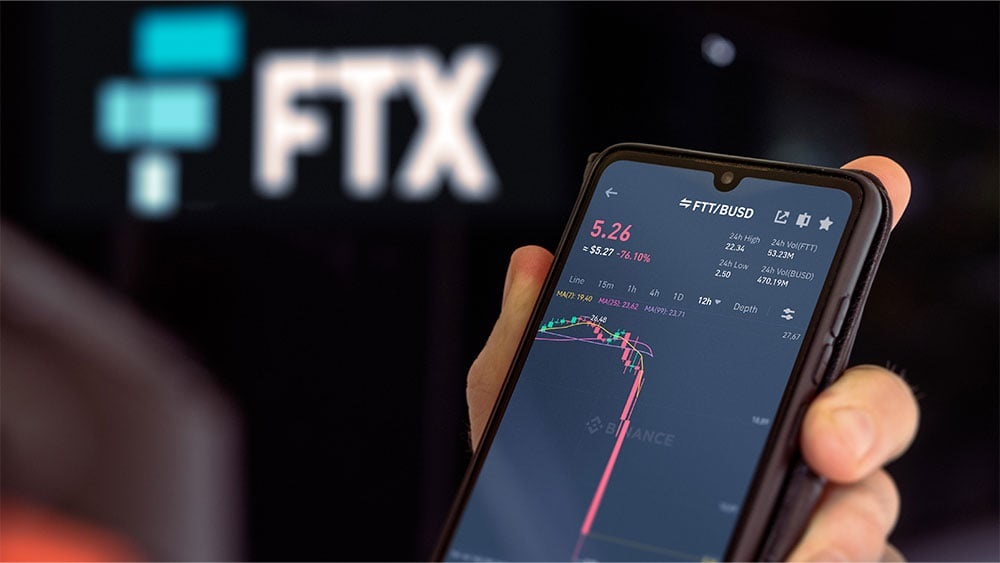
Bankman-Fried has been under investigation by the US authorities following the collapse of FTX last month. The multibillion dollar exchange filed for bankruptcy on November 11 after it failed to raise a bailout fund as traders rushed to withdraw $6 billion fund in 72 hours.

The former CEO has blamed the company’s implosion on ignorance and oversight, maintaining that he committed no fraud even as more information emerged – pointing to potential fraudulent transactions.

The SEC said separate charges would be announced by the U.S. Attorney’s Office for the Southern District for New York and the Commodity Futures Trading Commission later on Tuesday.

In a statement, the SEC said it would seek a director and officer bar and a penalty against Bankman-Fried, and to prevent Bankman-Fried from participating in future securities purchases, offers and sales except for his personal account and a civil penalty, among other actions.

Police in the Bahamas, where FTX was based, said the 30-year-old was arrested after 6 p.m. on Monday (2300 GMT) at his luxury gated community called the Albany in the capital, Nassau.

Damian Williams, the U.S. Attorney for the Southern District of New York, said in a statement on Monday evening that the arrest came at the request of the U.S. government, a day he’s expected to testify before Congress.

Though he claimed not to have enough information on what really led to FTX’s collapse, Bankman-Fried had agreed to testify before the House Financial Services Committee at the request of the chairwoman Rep. Maxine Waters.

The Committee is expected to proceed with the hearing despite his arrest. But Rep. Waters said she was “disappointed” that the American public, and FTX’s customers, would not get to see Bankman-Fried testify under oath.

The Bahamas’ attorney general’s office said it expects him to be extradited to the United States.

FTX’s implosion has once ignited calls for the regulation of the crypto industry. Gensler said “the alleged fraud committed by Mr. Bankman-Fried is a clarion call to crypto platforms that they need to come into compliance with our laws.”

FTX Saga Takes A New Twist, Bankman-Fried Likely to Face Extradition to The U.S

0

The FTX saga has taken a new twist as the CEO of collapsed crypto exchange platform FTX Sam Bankman-Fried has been arrested in the Bahamas by the royal Bahamas police force, with a possible extradition to the U.S.

His arrest comes following a series of investigations and interviews after prosecutors in the United States filed criminal charges against him.

Following his arrest, the Bahamas Prime Minister Philip Davis said in a statement, “The Bahamas and the United States have a shared interest in holding accountable all individuals associated with FTX who may have betrayed the public trust and broken the law.

“While the United States is pursuing criminal charges against SBF individually, The Bahamas will continue its own regulatory and criminal investigations into the collapse of FTX, with the continued cooperation of its law enforcement and regulatory partners in the United States and elsewhere.”

Also, the Securities and Exchange Commission (SEC) disclosed in a statement that it had authorized charges relating to Bankman-Fried’s violations of its securities laws.

The criminal charges against him included wire fraud, wire fraud conspiracy, securities fraud, securities fraud conspiracy, and money laundering, said a person with knowledge of the matter.

The Attorney General of the Bahamas via a statement disclosed that Bankman-Fried would remain in their custody until a federal request for his extradition is made.

His arrest has given several U.S. lawmakers a feeling of ecstasy who expressed satisfaction, applauding both the Justice Department and Bahamian law enforcement for holding the FTX CEO accountable.

The FTX saga is visibly not ending anytime soon, as FTX industry peers have also filed for a lawsuit against the CEO.

Also, investors who have lost their funds in the company have gone ahead to file a lawsuit against FTX endorsers, the likes of Basketball players Steph Curry, Shaquille O’Neal, comedian Larry David, and Japanese Tennis star Naomi Osaka amongst others.

Lawyers involved in the case, however, expressed dissatisfaction at the suddenness of his arrest due to the fact that he was slated to testify remotely about the FTX collapse in a hearing in front of the House Financial Services Committee on Tuesday.

The chair of the Financial Services Committee Maxine Waters said “The American public deserves to hear directly from Mr. Bankman-Fried about the actions that have harmed over one million people.

The public has been waiting eagerly to get these answers under oath before Congress, and the timing of this arrest denies the public this opportunity.”

The FTX CEO  Sam Bankman-fried on November 11, 2022, filed for bankruptcy after the company was faced with a liquidity crisis.

Following the FTX collapse, more than $1.3 trillion of value has been reportedly wiped off the crypto market this year, according to analysts.

The crypto exchange native utility token FTT has since collapsed alongside the centralized cryptocurrency exchange, as it plunged by 90%, wiping out over $2.6 billion.

The collapse has no doubt affected investors’ confidence in the crypto industry as there are fears of a ripple effect that might befall other crypto exchange platforms, due to reports that some are contemplating filing for bankruptcy.

The Liberation of Cryptos Is Coming As SEC Draws the first Sword

0

The real government did something yesterday – and the Bitcoin and crypto world rejoiced. Forget the illusion that Bitcoin is decentralized. If indeed it was that decentralized, the FTX collapse would not have triggered the massive value destruction. Being decentralized technically but centralized at exchanges should not confuse – a bird that flew from the ground only to perch on an ant hill is still very much on the ground.

Yes, the movement now is well correlated on how the US government handles what happens at the trading exchanges. Why? If the hodlers see actions, they will continue to believe. And the government drew the first sword yesterday, and that could be great for this sector!

Sam Bankman-Fried, the founder of cryptocurrency exchange FTX, was arrested in the Bahamas on Monday, according to a press release from the Royal Bahamas Police Force. The note states that the arrest came after US authorities filed criminal charges against Bankman-Fried. Now it is expected that the businessman will soon be extradited to the US, his home country.

The arrest of the founder of FTX took place at the request of the US authorities; the expectation is that SBF will return to the US to be tried for the possible crimes he committed.

Bahamian Attorney, General Ryan Pinder said the United States has filed unspecified criminal charges against Bankman-Fried and “will likely seek his extradition.” This was made available via a Post on Twitter by SDNYNews. The full note on SBF’s arrest can be read below:

(As I have disclosed, I do not believe in hodling Bitcoin and cryptos. But I believe in using them as a means of payment, especially in places the normal payment system does not work seamlessly.)

Comment on Feed

Comment 1: Where did some people get the notion that humans will always act in good faith, without laws and enforcement? Even with those constraints, people still misbehave, yet some expect them to behave better without ordinances! The moral quotient of most creatures roaming the face of the earth is nowhere near such level.

You can build a fortress, well fortified all round to prevent criminals from invading or plundering, but how about the criminals already living within the fortress? Internal threat is the most difficult to deal with, if humans don’t fail you, nothing else can.

Just few months ago, the man SBF was a mega billionaire, doling out money to politicians and charities, now he’s in detention, with more or less zero networth. Bonkers!

Time to redefine what it means to be wealthy or rich, these poor souls cannot continue to lay claim to being billionaires; they are too fickle to qualify as one.

Comment 2: I believe in crypto as a store of value. Just like any other asset, garri for example. 1 cup of garri is always equal to 1 cup of garri any day, anytime. That is to say, 1 BTC is always equal to 1 BTC anyday, anytime.

Volatility is present in the market price of any asset and how volatile depends on the risk and other prevailing factors.

What you are concerned about is the dollar price pair. Which isn’t what trully defines whether something is centralized or not.

NOBODY determines the price of Bitcoin. Its purely driven by the forces of demand and supply. You will agree with me that both internal and external factors influence the choice of demand/supply for any asset. That doesn’t mean centralization as participating traders or market makers are stimulated by the prevailing PESTEL factors surrounding their environment.

Technologically per say? BTC is decentralised

Fundamentally? BTC is decentralised

Commercially? Its arguable. But boils down to the distributed account and who controls the x% supply. BTC circulating supply is technically controlled by the miners/CEX custodial vaults.. not like they are killing the price as US govt is killing dollar with their stimulus and reliefs packages. No one prints BTC for free or whenever they like.

It’s an open market.. you can buy as much BTC as you want and push the price to a new ATH i.e if you have the adequate purchasing power to overcome the selling pressure. You don’t complain when others sell because they similarly bought from the market as well.

My Response: “NOBODY determines the price of Bitcoin. Its purely driven by the forces of demand and supply. ” The SEC determined it today by making it clear that it will enforce its laws on exchanges. Over the last 4 months, the FED determined the price when it pushed the interest rate high. If FED begins to reverse course, borrowing becomes cheaper and people will have funds to hodl. 

Everything which happens in Bitcoin is affected by the ease people get money or spend it (legally, commercially, technically, etc). If you regulate that process, people with $2 billion may be interested. Today, many of those pension funds, PEs, etc cannot trade on BTC because in their prospectus, they have “we only invest in regulated assets”. So with regulation, someone will determine the price of Bitcoin because it will bring big rainmakers into it. My point is this:  you use real money (Naira, USD, Euro, etc) to buy BTC and what happens to that real money will affect BTC.

VPN: What Can It Do For You?

0

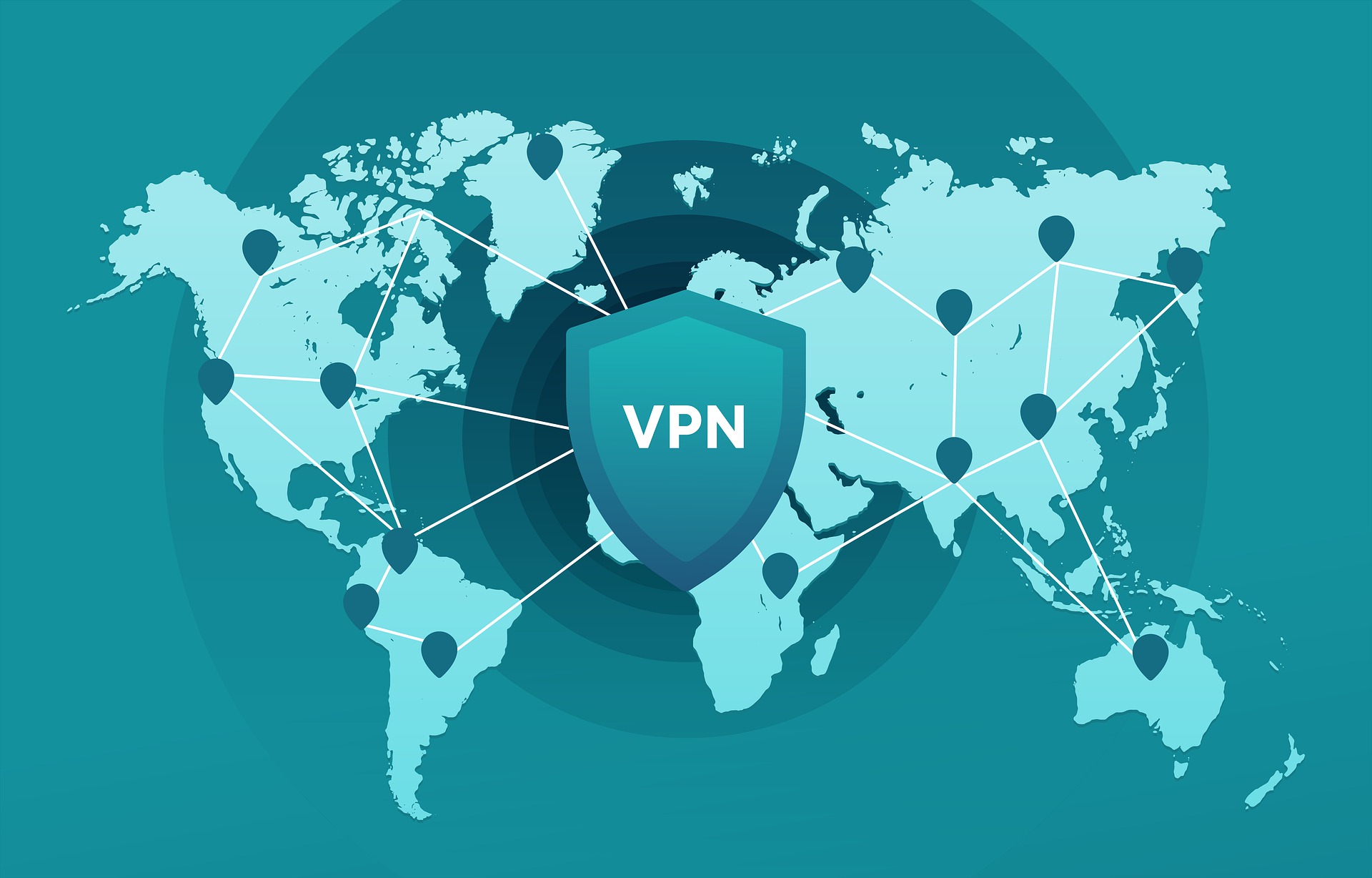
Exactly what is a virtual private network? You’ve probably heard about it before, but do you know what it means? The acronym “VPN” refers to the virtual private network that allows users to connect securely across a public network.

Virtual private networks encrypt data transmissions and mask users’ information. A safe and reliable VPN provider will make it harder for hackers to keep tabs on your online movements and steal your information.

To safely connect your device to the Internet, you can use a virtual private network. You may use this encrypted link to access remote servers for business or play without worrying about prying eyes.

A VPN is an excellent option that can be used in conjunction with other security measures to boost online security and privacy. Read on for more information on virtual private networks and how they might help you!

1.  VPNs encrypt your traffic.

Virtual private networks (VPNs) primarily function by encrypting data in transit. Connecting to a virtual private network encrypts all your traffic and makes it far more difficult for anyone to snoop on your online activity.

A decryption key is required to decipher the information. Without it, a machine attempting a brute-force assault would need millions of years to crack the code. A virtual private network allows you to remain anonymous when using public Wi-Fi.

2.  VPNs can mask your IP address.

Another way that VPNs function is by hiding your IP address. Your IP address is a unique identifier issued to your computer when you connect to the internet. Virtual private networks give you a new IP address and redirect your traffic through their servers. You’ll be much harder to keep tabs on in the virtual world.

3.  VPNs can help you access blocked websites.

Virtual private networks can allow you to bypass regional restrictions on the use of certain websites. As an illustration, a VPN may be used to bypass censorship by connecting to a server in a nation where your target website is accessible. This would be useful, for instance, if you were attempting to access a website from China but were barred from doing so. Content on the internet that is exclusive to a region is not necessarily available worldwide. Sometimes, some regions of the world are restricted from accessing particular services and websites. When you use a regular connection, your location is determined by servers located within your country. This implies you will be unable to see stuff from your home country while abroad, and vice versa. Through the use of a virtual private network, you may shift your online presence to another nation.

4.  VPNs can improve your privacy.

Virtual private networks (VPNs) can shield your internet activity from spying eyes. Whenever you connect to a website, your browser normally communicates some information to the server you are visiting. However, while using a VPN to access the web, all this data is transmitted to the VPN service’s servers. This makes it more difficult for non-trusted entities to keep tabs on your web browsing habits.

5.  VPNs can increase your security.

A strong VPN verifies each user’s identity using multiple authentication factors. A code might be delivered to your phone once you enter a password, for instance. This makes it more challenging for anyone who isn’t authorized to do so to gain access to your private network.

Lastly, virtual private networks (VPNs) improve safety by shielding users from online threats. Someone else on a public Wi-Fi network could be spying on your traffic or injecting harmful malware into the websites you visit. But with a virtual private network, you may avoid this problem since your data travels over an encrypted tunnel.

A VPN can create an encrypted tunnel between your device and the VPN server. With a virtual private network, your data transmissions are encrypted before reaching their destination. When you utilize the internet, your IP address will be hidden, and your location will be concealed.

A virtual private network connection is safe from outside interference. Because only you have the key to decrypt the encrypted tunnel, no one else can read the information contained.