DD
MM
YYYY

PAGES

DD
MM
YYYY

spot_img

PAGES

Home Blog Page 463

Tech Companies are Now Using Wave Machines to Randomize Data

0

Tech companies are continually looking for new ways to randomize data. Lava lamps were once used as a way to do this, given how the principle of density changes under different temperatures. Interestingly, some companies are now using wave machines to randomize their data, with Cloudflare using them for SSL encryption.

Randomized Data’s Role in Modern Society

Randomized data has a huge role to play in modern society. Random number generators are used in cryptocurrency, with key generation, for example, as they ensure unpredictability and security. RNGs are also used in procedural generation, which is a big part of gaming, specifically in terrain generation for games.

Random seeds can also be used to create starting points in worlds. Civilization, for example, uses an RNG to determine when natural disasters occur in-game. Even in iGaming, slots use random number generators to determine the result of a reel spin, to ensure fairness. Random number generators are also used to determine when jackpots drop, with advanced technology like this helping new game variants to hit the market, including Megaways games and bonus rounds.

Even though RNGs are used in everything, from cryptocurrency to gaming, companies are still trying to find more complex ways to randomize data, especially in sectors like SSL encryption, where the SSL is only as secure as its randomness.

The Innovative Use of Wave Machines

In an attempt to find new ways to randomize data for SSL encryption, wave machines are being used. In theory, a pseudorandom number generator can generate unlimited random outputs, but at the same time, the algorithm needs new inputs of randomness. That’s where wave machines come in. Cloudflare is now using metallic materials to reflect the motion of wave machines. This, in combination with shadow, light, and movement, adds to entropy. Some companies have also explored the idea of utilising mouse movements and other creative ways to generate new and random data for software to work from. Apple, for example, uses its Secure Enclave, which is a hardware coprocessor present in every Apple device. This handles operations including encryption keys and authentication. This has its own hardware-based random number generator that is used for all cryptographic operations.

Apple uses multiple entropy sources, including timing-based jitter collected during the boot phase and from seed files.  This not only helps to make the device more secure, but it also allows the hardware to be isolated, meaning it is much more difficult for it to be tampered with at a later date. It’s not just Apple who are finding new ways to create RNG, either.

Some companies have gone as far as to use true random number generators that use beta radiation, something that has been explored in IOT applications in the past. This again shows how innovative companies are when it comes to ensuring the safety of things, but also to make sure that more is done to find new ways to generate truly random numbers. As time goes on, we are bound to see more complex creations as well.

How Tong It Game Integrates with Filipino Online Gaming Culture

0

Tong It is one of the most beloved and enduring card games in the Philippines. It has been played for decades across all sorts of social settings, including family gatherings, neighborhood meetups, and casual home games. This game, deeply woven into Filipino social life, continues to bring people together and provide enjoyable competition. In recent years, however, Tong It has undergone a significant transformation. Moving beyond traditional physical cards and face-to-face play, it has found a new home online. This evolution preserves the cultural essence of the game while adapting it to modern technology. It now thrives in digital spaces, becoming a vital part of the Philippine online gaming scene.

Timeless Appeal Rooted in Skill and Connection

At its essence, Tong It game depends heavily on skill, observation, and strategic thinking. Unlike games based mostly on luck, Tong It requires players to watch carefully, remember played cards, and decide quickly on their best moves. The game exercises mental agility, rewarding players who can anticipate their opponents and plan accordingly. These demands make Tong It not only fun but also intellectually challenging—a combination that accounts for its lasting popularity.

Tong It is also more than just a game of cards; it is a social experience. The fun generated by laughter, friendly teasing, and moments of suspense during play is a big part of what makes the game special. Whether played at a family gathering or with neighbors, the social dynamics and close bonds formed during Tong It matches turn it into a cultural ritual, deeply embedded in Filipino life.

From Physical Tables to Virtual Platforms

As technology grew more accessible and widespread, the way people play recreational games began to shift dramatically. The Tong It game has followed this trend, moving from physical card tables into online formats available on smartphones and computers. This transition has expanded the game’s reach, allowing players to compete whenever and wherever they choose.

Where once players had to coordinate schedules and meet in person, now online Tong It removes these constraints. A player in Manila can challenge someone in Cebu without delay, and a game can happen at any hour. This digital migration has made Tong It a much more flexible pastime, accessible to wider audiences and adaptable to modern lifestyles.

This shift also highlights the Filipino ability to blend traditional customs with new technology. While the core of the game remains unchanged, its digital version opens up exciting possibilities without sacrificing cultural significance.

GameZone’s Central Role in Digitizing Tong It

One of the key players in bringing Tong It to the online crowd is GameZone. This platform is known for offering a variety of card games tailored to Filipino tastes, ensuring that cultural elements endure in the digital experience.

GameZone’s version of the Tong It game balances ease of use with engaging features. The site supports multiplayer matches, real-time chat, and social interaction tools that replicate the lively environment of traditional gameplay. These community features are important because they keep alive the sense of camaraderie and competition that define the game.

By providing a smooth and accessible platform, GameZone encourages players to connect, socialize, and enjoy the game as they always have—now enhanced by the benefits of modern technology.

Why Tong It Stands Out in Online Gaming

Online gaming is a highly competitive space with countless titles vying for player attention. Tong It thrives in this environment because it excels in several areas linked closely to Filipino culture and player needs:

  • Cultural Foundations: Tong Its deep roots in Filipino society create an immediate connection and familiarity that online players appreciate.
  • Accessibility: The game’s straightforward rules and low device demands make it available to people without specialized gaming hardware or expertise.
  • Social Engagement: Online versions keep the game’s social core intact, letting players chat, joke, and form friendships as they compete.
  • Replay Variety: Every game feels different thanks to the constantly changing dynamics, sustaining excitement for casual players and dedicated enthusiasts alike.

These qualities help Tong It game retain not only a nostalgic appeal but also a lively, evolving role in the online community.

Modern Enhancements and Gameplay Evolution

The online adaptations of Tong It includes appealing graphics, sound effects, and reward systems that enhance player motivation. These upgrades improve the sensory experience compared to physical games, offering fresh excitement alongside the familiar gameplay mechanics.

The fundamental rules, however, remain the same. Whether played physically or virtually, the goal is to outmaneuver opponents and discard cards first. This careful balance between retaining tradition and embracing innovation has kept Tong It relevant and engaging in today’s fast-paced digital environment.

Beyond Gameplay: GameZone as a Social Hub

GameZone is more than simply a site to play Tong It online; it is a social platform where players of varying skill levels gather. Beginners receive support and guidance, while experts find a competitive arena. The platform nurtures a sense of community based on shared interest and mutual respect.

More than just fun, GameZone stresses responsible play. Features like time limits and fair play procedures promote a healthy gaming environment where enjoyment and ethics coexist. This responsible approach enhances the overall experience, making GameZone a trusted venue for Filipino gamers.

Looking Ahead: The Future of Tong It Online

Tong It’s successful transition into the digital space demonstrates how Filipino culture can evolve hand-in-hand with technology while maintaining its essence. The game’s ability to bring traditional entertainment into a modern context ensures that it will continue to play a key role in the online Filipino gaming landscape.

With ongoing innovations from platforms like GameZone, Tong It game offers appealing options for newcomers eager to learn and veterans seeking to reconnect with a beloved pastime. Its inclusive nature unites diverse players and generations, bridging the gap between the nostalgic past and the digital future.

Tong It as a Lasting Cultural Bond

In the end, Tong It represents much more than a set of cards and rules. It is a living cultural artifact that connects the Filipino community across time and space. Whether around a traditional table or on a mobile screen, the game captures Filipino values of fun, connection, and adaptability.

The continued growth of Tong It in digital form celebrates how tradition and technology can coexist, enriching the gaming experience for years to come. By preserving its cultural heart while embracing innovation, Tong It game remains a vibrant and integral part of Filipino online gaming culture.

Pedagogy vs Andragogy: How Business Simulations Transform Active Learning in Higher Education

1

Why Traditional Teaching Isn’t Enough Anymore

Let’s be honest, getting today’s college students excited about lectures is like trying to run a startup without Wi-Fi… nearly impossible.

Professors and deans are facing a new reality: students juggle jobs, family responsibilities, and digital distractions while sitting in classrooms built for another era. The result? Low engagement, dwindling motivation, and a gap between theory and the real-world business strategies they’ll actually need.
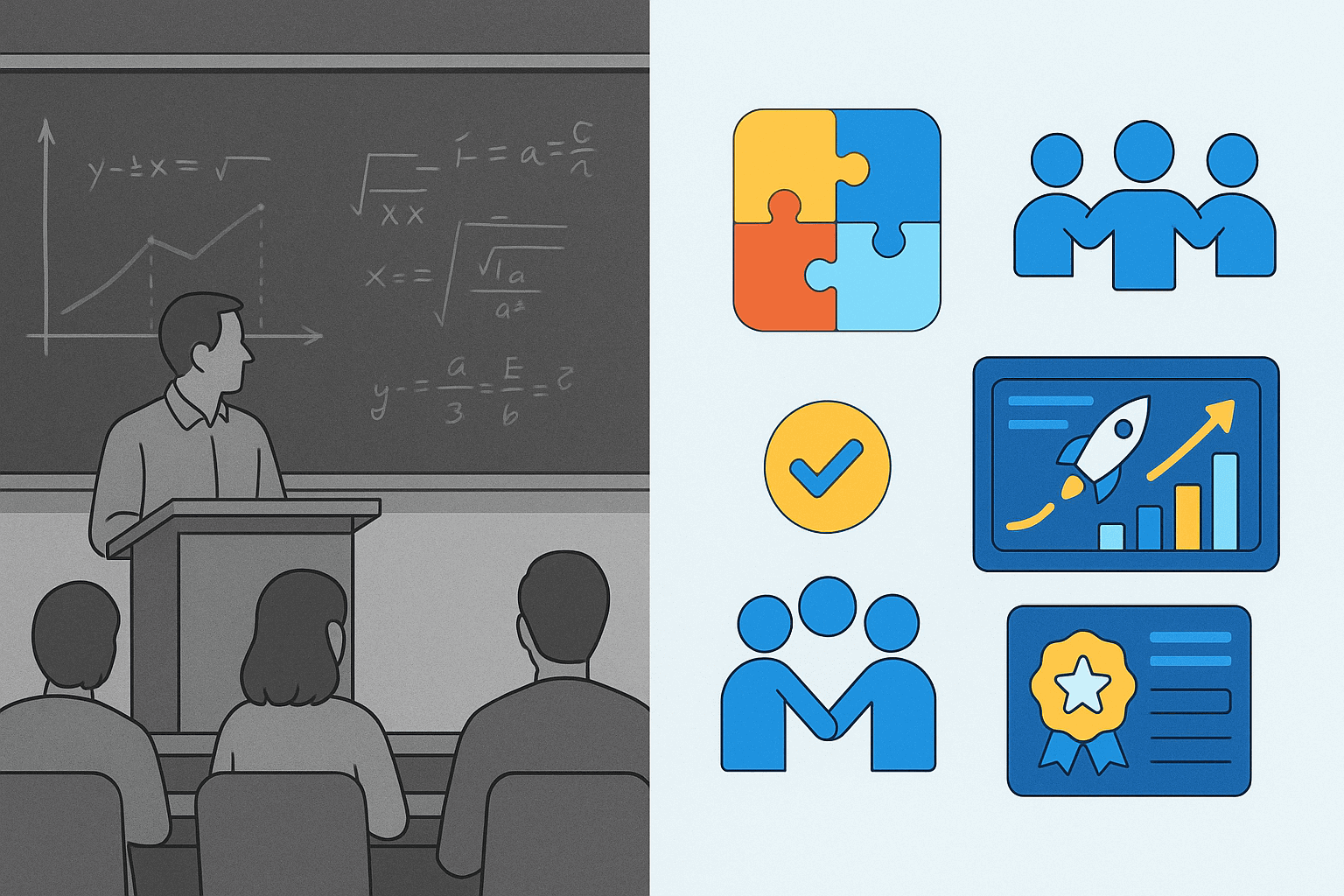
To close this gap, universities can no longer rely only on conventional education or traditional learning models. Students today expect interactive teaching methods and proven student engagement strategies that connect lessons to their lives and careers.

That’s why Malcolm Knowles’ Adult Learning Theory (Andragogy) offers such a useful lens. Unlike pedagogy, which focuses on children, andragogy recognizes that adults, yes, even today’s undergraduates, learn best when education is self-directed, relevant, and problem-centered.

This is where experiential learning and hands-on learning come in. Imagine students not just memorizing concepts, but running a startup simulator, testing decisions in a business simulation game, and managing the ups and downs of a small business. With scenarios that feel real, students suddenly lean forward, debate choices, and reflect on outcomes.

Thanks to modern online education platforms and accessible simulation software, universities can now deliver flexible, career-focused experiences that truly prepare students for entrepreneurship and leadership. The classroom becomes a digital business lab, where mistakes become lessons instead of penalties.

Pedagogy vs Andragogy: Why the Difference Matters in Higher Education

Pedagogy vs. Andragogy: The Key Difference

The key difference between pedagogy and andragogy is that pedagogy refers to teaching methods designed for children, which are teacher-centered and structured, while andragogy refers to approaches for adult learners, which are self-directed, experience-based, and problem-centered. In higher education, students increasingly align with andragogy because they value autonomy, practical application, and active learning strategies.
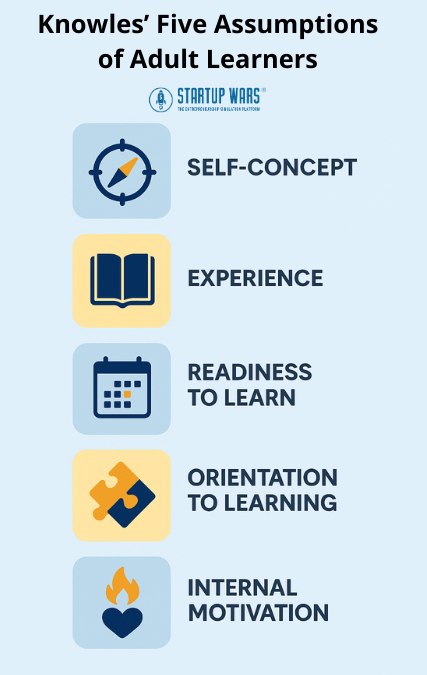
 Knowles’ Five Assumptions of Adult Learners

  1. Self-Concept ? Students want control, not spoon-feeding. A senior majoring in entrepreneurship may prefer to build her own project plan instead of following a rigid outline.
  2. Experience ? They bring valuable real-world baggage. A student who’s worked part-time in retail can use those insights to explore customer behavior through a simulation.
  3. Readiness to Learn ? Motivation grows when lessons feel relevant. For instance, students prepping for internships are far more eager when case studies align with career goals.
  4. Orientation to Learning ? Problem-solving beats busywork. Solving a supply chain issue sparks curiosity more than memorizing definitions.
  5. Internal Motivation ? Grades matter, but career goals matter more. Students show up when they believe what they’re learning connects to launching a startup or contributing to entrepreneurship.

Why This Matters in Higher Education

Today’s students already act like adult learners. Many work while studying, some support families, and nearly all expect flexibility. Professors see it daily: “I can see my students scrolling TikTok during lectures, it’s not that they don’t care, it’s that the format doesn’t resonate.”

That’s why experiential learning in higher education, supported by active learning strategies and modern teaching tools, isn’t just a trend, it’s essential for student success.

The Challenges Professors and Deans Face

Being a professor or dean today isn’t easy. Higher ed is evolving fast, and the classroom is no exception.

  • Limited Time ? With syllabi, grading, and committees, creative teaching often gets squeezed out. Finding time to design interactive lessons feels like a luxury, even when the need is clear.
  • Theory vs. Practice Gap ? Students crave relevance. They want to know how marketing models or finance tools actually connect to real-world business strategies. If they can’t see the connection, interest fades fast.
  • Disengagement ? PowerPoints alone don’t cut it anymore. Students raised on simulation games and mobile apps expect active learning techniques instead of passive learning. Without it, attention drifts to phones or laptops.
  • Technology Gaps ? Some thrive on online education platforms, others struggle with access or skills, creating uneven experiences in the same classroom.

These challenges ripple out. Students feel unprepared for careers in entrepreneurship or small businesses. Institutions risk weaker retention and satisfaction, while leaders face reputation risks.

But here’s the hopeful part: combining andragogy + business simulation teaching gives professors and deans a fresh playbook. Instead of fighting distractions, you meet students where they are, through interactive teaching methods, practice-based learning, and student engagement techniques that actually stick.

Business Simulations: Bringing Theory into Practice
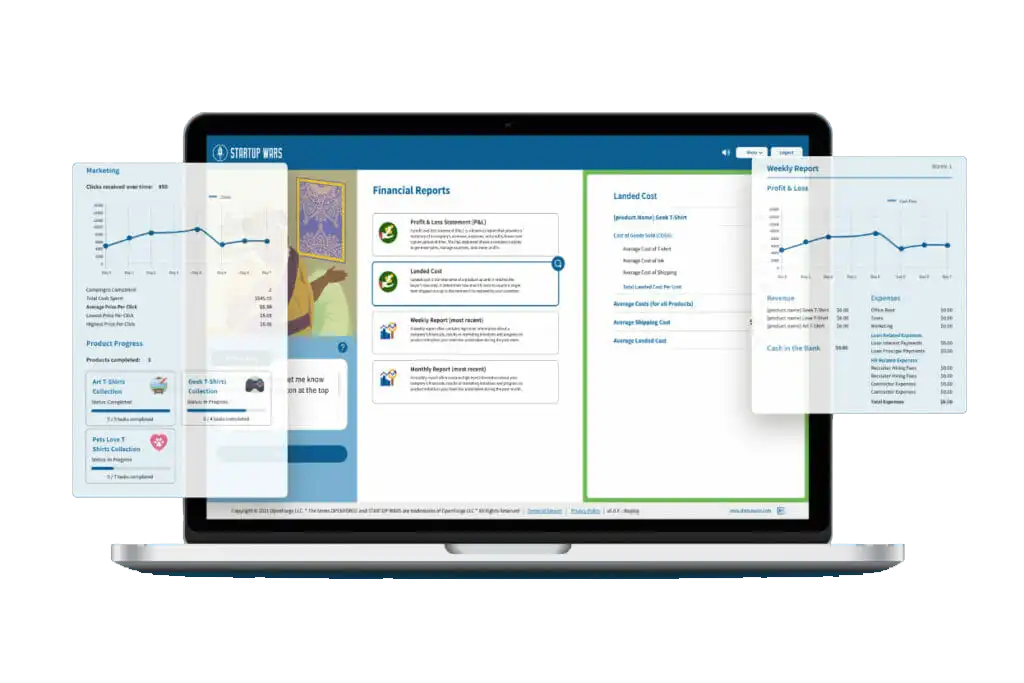
So, what exactly are business simulations? In simple terms, a business simulation is an interactive tool where students practice decision-making in a safe, risk-free space. Rather than just reading about finance or management, they experience it by running a simulated company. The classroom becomes an arena where concepts are tested, not just recited.

Meanwhile, business simulation games add gamified elements: competition, collaboration, and instant feedback. Students enjoy it because it feels familiar, like the educational business games they already play recreationally, but this time, the skills carry into their careers.

Benefits Aligned With Knowles’ Principles

  • Self-directed learning ? Students take the wheel, deciding pricing, staffing, and strategies, then experiencing the outcomes.
  • Problem solving ? Learners wrestle with dilemmas like launching products, managing budgets, or facing new competitors.
  • Hands-on learning ? Instead of only studying financial reports, they manage them in real time.
  • Relevance ? Every scenario connects directly to startups and small businesses, so students see why it matters.

Case in Point: Startup Wars Simulator

Startup Wars is a next-gen simulation software designed for business & entrepreneurship education. It lets students run a virtual startup simulator, where they pitch, plan, and manage ventures from start to finish. They practice entrepreneurship, sharpen business strategies, and develop resilience as their simulated company navigates market ups and downs.

For professors, Startup Wars is a classroom ally. It boosts engagement, creates room for debates, and serves as an assessment tool, you can track not just participation, but the quality of decisions. The impact is broader: stronger motivation, improved retention, and graduates who step into the workforce ready for business leadership.

This isn’t just theory, it’s simulation-based learning, gamification in education, and decision-based learning rolled into one. Startup Wars shows how gamifying curriculum can transform classrooms into incubators of creativity and innovation.

In short, simulations like Startup Wars bridge the gap between traditional training methods and the unpredictable reality of entrepreneurship. That’s the kind of experiential learning activities higher education needs to stay relevant, competitive, and impactful.

The Future of Learning Starts Here

Here’s the real takeaway: students don’t just want to know, they want to do.

Knowles’ Adult Learning Theory shows us that learning sticks when it’s practical, relevant, and problem-centered. Business simulations bring that to life, turning lectures into dynamic experiences where students test ideas, make choices, and build the confidence to lead.

For professors, simulations energize classrooms and provide practical teaching tools. For deans and institutional leaders, they offer measurable improvements in student learning outcomes, motivation, and career readiness. And for students, they provide something invaluable: the chance to practice entrepreneurship in a safe, engaging environment.

That’s why platforms like Startup Wars matter. With its startup simulator, professors can spark curiosity, institutions can elevate performance, and students can leave classrooms ready to turn ideas into action.

The future of higher education isn’t about more slides or thicker textbooks. It’s about adopting modern teaching tools, student engagement strategies, and business school simulations to prepare students for tomorrow. And right now, professors and deans have the opportunity to lead that transformation, with business simulation games like Startup Wars at the center of it all.

Intel in Talks With Apple for Investment as Chipmaker’s Rescue Drive Gains Momentum

0

Intel Corp. has entered early talks with Apple over a potential investment and expanded cooperation, according to a Bloomberg News report on Wednesday that cited people familiar with the matter.

The discussions are preliminary and may not yield a deal, but the development alone lifted Intel’s stock by 6% at Wednesday’s close.

The iPhone maker and Intel are exploring ways to work more closely together, Bloomberg reported, with the potential investment coming at a time when Intel has been drawing billions in support from an unusual coalition of backers ranging from government to foreign investors — and even industry rivals.

Just days earlier, Nvidia announced a $5 billion investment in Intel for roughly a 4% stake. That pact involves collaboration on PC and data center chip development, though it notably stops short of involving Intel’s foundry division manufacturing chips for Nvidia — an area where Intel has struggled to compete. The Nvidia tie-up drew widespread attention not only because it brought fresh capital to Intel, but because it represented a striking shift: the world’s most valuable chipmaker and Intel’s fiercest rival injecting funds into the very company it has outpaced in the artificial intelligence boom.

Intel CEO Lip-Bu Tan has been aggressively seeking such alliances as part of his plan to revive the Santa Clara-based company. Once the undisputed leader that “put the silicon in Silicon Valley,” Intel has steadily lost ground to faster-moving competitors like Nvidia and Advanced Micro Devices, particularly in AI and high-performance computing.

The dealmaking frenzy around Intel reflects a broader rescue effort that has seen billions of dollars flow into the company in just the past two months. The Trump administration took the most extraordinary step, converting $11.1 billion in Chips Act funding into a 9.9% government equity stake in Intel. The unusual arrangement, unveiled in August, effectively made U.S. taxpayers partial owners of the company while ensuring Intel receives around $10 billion to build or expand factories on American soil.

The administration framed it as a move to secure U.S. leadership in critical chipmaking at a time of geopolitical tension with China.

Following that, Japan’s SoftBank Group injected $2 billion into Intel last month, further fueling momentum. The combined support has pushed up investor sentiment, helping Intel’s shares surge more than 40% since mid-August.

Apple’s potential participation would mark another major vote of confidence. The company was once one of Intel’s biggest customers before abandoning Intel chips in 2020 for its own custom-designed silicon, manufactured primarily by Taiwan Semiconductor Manufacturing Co. (TSMC). For Apple, an investment in Intel could serve a dual purpose: diversifying its supplier base away from overreliance on TSMC, and shoring up its U.S. chip ties amid growing concerns that China could destabilize Taiwan.

The move would also dovetail with Apple’s domestic commitments. Though its supply chain remains largely global, Apple has pledged about $600 billion to U.S. initiatives over the next four years. An Intel partnership on American soil would strengthen the company’s alignment with the Trump administration, which has placed semiconductor security at the heart of its economic agenda.

Responding to a Reuters query on whether the Trump administration had conversations with Intel or Apple regarding the talks, White House spokesperson Kush Desai said: “The U.S. Government is not involved in Intel’s day-to-day operations. The taxpayer has an equity stake in Intel succeeding, and the Administration supports iconic American companies like Intel doing what’s best to cement American tech dominance.”

Analysts note that Intel’s revival hinges on two fronts: attracting external partners willing to use and fund its factories, and restoring its credibility in advanced chip design. To that end, Intel has been in contact with several potential investors and partners, according to Bloomberg. Apple’s involvement, if it materializes, would be the most symbolic yet — signaling that Silicon Valley’s most valuable hardware maker sees a future role for Intel in a rapidly consolidating semiconductor race.

Morgan Stanley To Begin Crypto Trading Via ETRADE Starting in 2026

0

Morgan Stanley confirmed that it will launch cryptocurrency trading for retail clients via its ETrade platform in the first half of 2026.

This marks a significant step for the Wall Street giant in bridging traditional finance with digital assets, potentially unlocking access for millions of ETrade users over 5 million accounts to trade crypto alongside stocks and other securities.

Expected to go live in early-to-mid 2026, with preparations already underway. Trading will start with Bitcoin (BTC), Ethereum (ETH), and Solana (SOL). Expansion to additional tokens and services (like wallets and tokenized assets) is planned as a “tip of the iceberg” for broader integration.

Morgan Stanley is collaborating with Zerohash, a digital asset infrastructure provider handling liquidity, custody, and settlement. Zerohash recently raised $104 million in funding at a $1 billion valuation, with Morgan Stanley as an investor alongside Interactive Brokers and SoFi.

ETrade, acquired by Morgan Stanley in 2020 for $13 billion, serves a retail-focused audience average user age ~52, average account size $100K+. This could channel substantial traditional investor capital—potentially up to $1.3 trillion in trading volume—into crypto markets.

Morgan Stanley’s move aligns with a wave of institutional adoption, fueled by favorable U.S. regulations under the Trump administration, including the GENIUS Act for stablecoins. The bank has been ramping up crypto exposure since August 2024, when it allowed wealth advisors to pitch spot Bitcoin ETFs to clients.

This positions Morgan Stanley ahead of peers like Charles Schwab which offers crypto ETFs but not direct trading and ahead of rivals like Robinhood, which derives ~20% of revenue from crypto. The crypto market, valued at ~$3.9 trillion (BTC at $2.25T, ETH at $506B), stands to benefit from this influx, potentially driving bullish momentum as Wall Street liquidity enters.

The news has sparked excitement, with users highlighting it as a “historic bridge between Wall Street and Web3” and predicting accidental boomer buys of Bitcoin next to Apple shares. This development underscores crypto’s maturation as an asset class, but remember: trading involves high volatility and risks.

With ETrade’s potential to channel up to $1.3 trillion in trading volume based on user base estimates, crypto markets could see significant capital inflows, driving price appreciation. For context, Bitcoin’s market cap is ~$2.25 trillion, and the total crypto market is ~$3.9 trillion.

A Wall Street titan like Morgan Stanley managing $6.6 trillion in assets entering retail crypto trading validates digital assets, potentially reducing stigma and encouraging other institutions to follow.

Morgan Stanley’s move puts pressure on rivals like Charles Schwab limited to crypto ETFs, Fidelity offers Bitcoin trading but smaller retail reach, and JPMorgan focused on institutional stablecoin services. Competitors may accelerate their own crypto offerings to avoid losing market share.

Retail investors can integrate crypto into traditional portfolios stocks, bonds on ETrade, simplifying allocation strategies. This could shift how advisors recommend assets, with crypto becoming a standard portfolio component for risk-tolerant clients.

Morgan Stanley’s compliance-heavy approach, backed by Zerohash’s regulated infrastructure, sets a model for other banks to navigate U.S. regulations (e.g., SEC, CFTC oversight). This could streamline future approvals for crypto products.

New retail investors, less familiar with crypto’s volatility (e.g., Bitcoin’s 20-30% drawdowns), could amplify price swings if they panic-sell during dips or FOMO-buy during rallies. Starting with BTC, ETH, and SOL may boost these assets’ dominance, potentially sidelining smaller altcoins.

Morgan Stanley’s use of Zerohash for custody, liquidity, and settlement highlights the growing role of specialized crypto infrastructure providers. This could spur innovation in secure, scalable trading systems. Morgan Stanley’s mention of wallets and tokenized assets suggests a roadmap for DeFi integration.

As a global bank, Morgan Stanley’s U.S.-based crypto trading could influence international markets, especially in regions with growing crypto adoption (e.g., EU, Asia). However, stricter jurisdictions (e.g., China) may resist similar moves.

Crypto’s high volatility (e.g., Bitcoin’s 50%+ yearly swings) poses risks for retail investors, especially those new to the asset class. Morgan Stanley may face reputational risks if clients incur significant losses.

Crypto custody remains a target for hacks (e.g., $3.7 billion stolen in 2022). Zerohash’s infrastructure must prove robust to maintain trust. Morgan Stanley’s 2026 crypto trading launch via ETrade is a pivotal moment for crypto adoption, bridging traditional finance with digital assets.

It could drive market growth, legitimize crypto, and reshape portfolio strategies, but it also introduces risks of volatility, regulatory hurdles, and security challenges. Investors should approach with caution, conduct thorough research, and monitor regulatory developments.