DD
MM
YYYY

PAGES

DD
MM
YYYY

spot_img

PAGES

Home Blog Page 4634

CBN 3-Tier Know-Your-Customer (KYC) Framework, Modalities on IMTOs/ Diaspora Remittances in Nigeria

1

The CBN 3-tiered KYC requirements were issued on the 18th of January, 2013 and remain one of the most effective benchmarks for Banking and Finance compliance services in Nigeria.

These requirements are aimed at ensuring socially and financially disadvantaged persons do not get precluded from opening banking accounts or financial services due to a lack of valid identification brought about by existing CBN Anti-Money-laundering & Combating the Financing of Terrorism (AML/ CFT) regulations.

These requirements remain necessary considering that at the time of their publication by the CBN, about 56.3 million Nigerians had zero access to financial services as a result of irregular income sources, unemployment, long distances from accessible banking & financial services and problematic account opening requirements.

This article will be looking at the following topics:-

– The rationale behind the 3-tiered CBN KYC system.

– The characteristics of each KYC category or tier.

– The limitations of each KYC category or tier.

What is the rationale behind the 3-tiered KYC regime?

The CBN 3-tiered KYC system aims to implement flexible account opening requirements for low-value & medium value account holders subject to caps & transaction restrictions.

As a result & in recognition of the wide disparity in socio-economic circumstances among various segments of the Nigerian population as well as the relevant provisions of CBN AML/CFT regulations, the KYC requirements were thus created to address this problem by :-

– Allowing 3rd parties with valid means of identification to identify or guarantee socio-economically disadvantaged persons.

– Requiring Financial Institutions to adopt a risk-based approach in the operation of accounts owned by such disadvantaged persons.

– Requiring Financial Institutions to create written policies on financially disadvantaged customers and prescribe the type of documentation acceptable for the identification to be provided by 3rd party identifiers.

– Requiring higher monitoring standards for such accounts and their 3rd party identifiers as well as ensuring the rendering of AML monthly returns.

The KYC requirements were created with the aim of implementing risk-based approaches to Customer Due Diligence (CDD) in compliance with relevant FATF recommendations as well as having the aim or reducing administration costs for Financial Institutions via digital account opening processes.

What are the KYC categories and their characteristics?

The categories in the CBN 3-tier KYC system and their characteristics are :-

Level 1 (Low-level) Accounts

Description 

– Subject to close monitoring by Financial Institutions and less scrutiny by bank examiners.

– Can be opened by customers at branches of Financial Institutions or banking agents.

– Require no amount for account opening.

– Such accounts cover mobile banking products issued in accordance with the CBN Regulatory Framework for mobile payment services in Nigeria.

– Deposits can be made by account holders and 3rd parties while withdrawal is restricted to account holders only.

– Can be linked to mobile phone accounts.

– Can only be operated in Nigeria.

– ATM transactions are allowed for accounts in this category.

– No International fund transfers allowed on accounts on this level.

– Strictly savings accounts.

Amount Limitation

– Maximum single deposit amounts of 20 Thousand Naira & maximum cumulative balances of 200 Thousand Naira at any point in time.

Mobile Banking

Maximum transaction limits of 3 Thousand Naira and daily limits of 30 Thousand Naira subject to the CBN Regulatory Framework For Mobile Payment Services in Nigeria.

Customer Identification Requirements

– Passport photographs.

– Bio-data (name, gender, place & date of birth).

– Contact details.

– Evidence of information provided by the customer or the verification of same is not required.

This information may be sent electronically or submitted inside  a bank’s branch or a banking agent’s office.

Level 2 (Medium-Value Accounts)

Characteristics

– Can be opened face-to-face at any branch of a bank by agents of enterprises (used for mass payroll purposes) or by the account holder.

– Evidence of basic customer information is required at this level as well as identification and monitoring by Financial Institutions are required also.

– Accounts can be contracted by phone or at the Financial institution’s website.

– Can be linked to a mobile phone.

– For fund transfers within Nigeria only.

– Strictly savings accounts.

– No amount required for opening accounts in this KYC category.

Threshold/Amount Limit

– A maximum single deposit of 50 Thousand Naira and a minimum cumulative balance of 400 Thousand are allowed at any time.

– Where cross-checking of client’s identification information is not completed at the point of account opening, withdrawals should be denied.

Mobile Banking Products

– Maximum transaction limits of 10 Thousand Naira and daily limits of 100 Thousand Naira.

– Subject to the CBN Regulatory Framework for Mobile Payments in Nigeria.

Account Opening Requirements

– Passport photographs.

– Bio-data (name,place and date of birth, gender, address).

– This information may be forwarded electronically or submitted on-site in bank branches or in the offices of banking agents. 

– Customer information obtained is to be verified against similar information contained in official databases e.g. the National Identity Management Commission (NIMC).

Level 3 (High-Value Accounts)

Characteristics

– Banks are required to obtain, verify and maintain copies of all the required documents for opening of accounts.

– Accounts are to be opened at the bank branches by the physical presence of the prospective customer.

– These accounts could be savings or current accounts.

– No amount is required for the opening of accounts in this category.

Threshold/Amount Limits

– No limit on cumulative balance.

Mobile Banking Products

– Maximum transaction limits of 100 Thousand Naira and daily limits of 1 Million Naira.

– Such products are subject to the CBN Regulatory Framework for Mobile Payment in Nigeria. 

Account Opening Requirements

– Customers are required to comply with KYC requirements contained in the CBN AML/CFT Regulations.

The CBN is to ensure the establishment of appropriate processes and procedures for the purpose of monitoring compliance with this Regulatory Framework.

Analysis of the CBN Modalities on IMTOs/ Diaspora Remittances into Nigeria

The CBN modalities on payments of diaspora remittances were released on 22nd of January, 2021 as a follow-up to the CBN circular on the receipt of diaspora remittances – additional operational guidelines.

This article will be looking at the provisions of these modalities and their effects on the licensing framework for International Money Transfer Operations (IMTO) in Nigeria.

What are the most important provisions of the CBN modalities on diaspora remittances in Nigeria?

The modalities provide that :-

– Diaspora remittances must be received by beneficiaries in foreign currencies and not in Naira.

– Only licensed IMTO firms are allowed to carry on the business of facilitating diaspora remittances into Nigeria.

– IMTO firms are not permitted to disburse diaspora remittances in Naira (cash or transfer) either through Naira remittance settlement accounts or via any other payment platforms within or outside Nigeria.

What do these CBN directives mean for the Nigerian Fintech sector going forward, especially for Start-ups?

What the CBN directives mean is that Start-ups in Fintech, especially diaspora remittances will have to seek ways of securing CBN licensing and avoiding remittance disbursements in Naira.

This also means that going forward, 3rd party remittance transactions may no longer be possible without risking sanctions of some sort.

However, legal alternatives still exist without contravening the CBN directives. Any Fintech start-up desirous of engaging in the facilitation of diaspora remittances into Nigeria will need to consult a lawyer on these available legal alternatives.

What are the consequences for flouting these CBN directives if any?

Flouting these directives open offenders to a number of sanction risks that include :-

– License withdrawals for IMTO firms.

– For unlicensed operators, the CBN can authorize the closure of their accounts and barring them from accessing banking services in Nigeria.

TSMC Announces Plan to Triple U.S. Production to $40 Billion

0

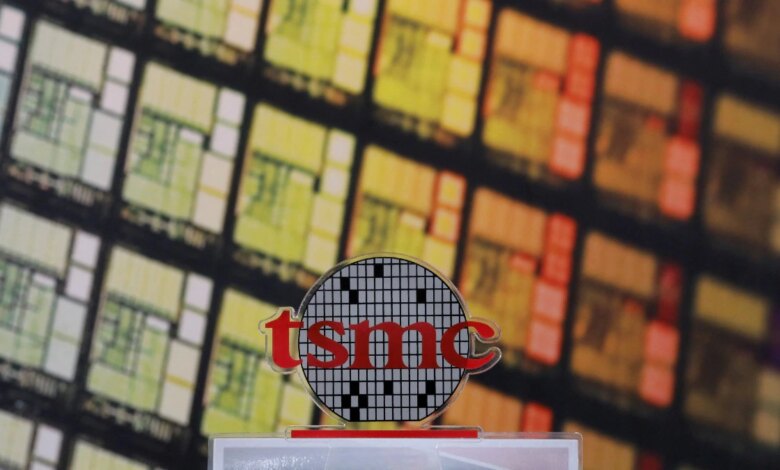
U.S. push to boost local production of semiconductor has got a reprieve following an announcement by Taiwan Semiconductor Manufacturing Co. (TSMC) on Tuesday to increase its investment in the North American country.

TSMC said it will more than triple its investment in the U.S. to $40 billion and bring the world’s most advanced chip production technology to the country by 2026.

The tech industry was heavily impacted by global chip shortage following the outbreak of covid-19. The United States has been pushing for production of semiconductor companies on its soil. Thus, TSMC’s announcement is a glad tiding to America’s quest to dominate the chip industry by far.

The world’s biggest contract chipmaker, said it will increase its investment in Arizona, where it is currently building a $12 billion chip facility, to $40 billion in order to build a second, even more advanced plant there, Nikkei Asia reports.

The announcement came ahead of an equipment installation ceremony at the first facility scheduled for later in the day, which U.S. President Joe Biden and numerous tech industry executives were expected to attend.

The additional facility will begin operation by 2026 and will be the first plant in the U.S. to make 3-nanometer chips, the most advanced currently available, a White House official said. In line with the expansion, TSMC will increase its workforce in Arizona to 4,500, from an initial plan of 1,600, the company said.

Nanometer size refers to the distance between transistors on a chip — the smaller the number, generally speaking, the more powerful the chip. As the “brains” of electronic devices, such chips are vital for everything from smartphones and autonomous vehicles to supercomputers and AI technologies.

TSMC’s first plant, which is slated to begin production in 2024, will produce 4-nm chips of the kind currently used for iPhone 14 Pro processors. Once that plant and the 3-nm facility are operating at full capacity, TSMC’s total output in Arizona will be 60,000 wafers per month, triple its original plan of 20,000.

“When complete, TSMC Arizona will be the greenest semiconductor manufacturing facility in the United States producing the most advanced semiconductor process technology in the country, enabling next generation high-performance and low-power computing products for years to come,” TSMC Chairman Mark Liu said in a statement released Tuesday. “We are thankful for the continual collaboration that has brought us here and are pleased to work with our partners in the United States to serve as a base for semiconductor innovation.”

Apple and chipmakers AMD and Nvidia will be among the first customers buying chips from TSMC’s Arizona plant, according to an announcement by the company and the White House, confirming an earlier Nikkei Asia report. AMD told Nikkei Asia that it “looks forward to having its most advanced chip products built in TSMC’s Arizona fabs.” Nvidia’s CEO Jensen Huang said in a statement that “bringing TSMC’s investment to the United States is a masterstroke and a game-changing development for the industry.”

Biden’s decision to attend the equipment installation ceremony on Tuesday underscores the importance of TSMC to Washington’s chip ambitions. He is set to be joined by a who’s who of the tech industry, including CEOs from companies such as Apple, Nvidia and AMD as well as top chipmaking tool companies Applied Materials and Lam Research plus other chip-related players such as Entegris, Synopsys and Arm.

TSMC founder Morris Chang, Chairman Mark Liu and CEO C.C. Wei will all attend the event.

The companies represented at the ceremony are worth at least $4 trillion, making the event the most important gathering in the semiconductor industry in the post-pandemic era.

In the chip industry, a tool move-in event signals that the installation of essential equipment has begun and is a significant milestone for a chipmaking facility to become operational.

TSMC’s announcement comes as Washington is pushing hard to onshore vital production of semiconductors. In addition to their economic importance, chips are also seen as vital to national security — a sentiment reflected in the latest round of export controls Washington imposed on China in an attempt to curb its semiconductor advancement.

Their importance was further brought home by a global chip shortage sparked by the pandemic and supply chain disruptions, hitting a range of industries.

Rising political tensions between China and Taiwan, the self-ruled democratic island where TSMC is based and which Beijing views as part of its territory, have further accelerated Washington’s push to diversify chip production.

Currently, the majority of the world’s cutting-edge chips are built in Asia by TSMC and Samsung Electronics of South Korea.

The U.S. is hoping to change this by offering incentives for companies to build chip capacity on American soil. In July, lawmakers passed the $52.7 billion CHIPS and Science Act package to boost the domestic semiconductor industry, though allocation of the funds will not be decided until next year, a White House official said.

In addition to TSMC’s expanded investment plans, Samsung is building a $17 billion plant in Texas, while top U.S. chipmaker Intel is spending at least $40 billion to build chip plants in Arizona and Ohio.

Currently, only TSMC, Samsung and Intel are building or attempting to build chips as advanced as 3-nm, and all aim to put even more advanced 2-nm chips into production by 2025.

The world’s biggest contract chip maker, TSMC, has more than tripled its investment plans for Arizona. The Tapei-based company has agreed to build a second semiconductor factory for chips in the state with 3-nanometer technology — equivalent to the smallest and speediest chips available — for customers such as Apple. TSMC’s total investment, bolstered by U.S. incentives under the CHIP bill passed this year, will be $40 billion, up from $12 billion. (LinkedIn News)

IFC Provides Airtel Africa with $194m Loan Facility to Expand Mobile Internet Connectivity

0

International Finance Corporation (IFC) has announced a $194 million loan to Airtel Africa aimed to support universal and affordable broadband penetration in Africa.

The loan is designed to boost internet connectivity in six countries across the continent, upsetting the deficit that has resulted in low mobile internet access in Sub-Saharan Africa.

A report from GSMA, a mobile internet info analysis firm, said that as at the end of 2021, less than half of sub-Saharan Africa’s population had access to mobile services, while only 28 percent of the population had access to mobile internet. GSMA also estimates that by 2025, the value added by mobile technology and services is expected to reach almost $155 billion annually.

The new financing facility, which will help to connect millions of Africans to mobile internet, is in line with Airtel Africa’s strategy to increase debt within its operating companies.

“I am very excited to announce the signing of this new facility with IFC. Not only does this facility align with our focus on improving our balance sheet through localizing debt within our operating companies, but it also supports our commitment and our ability to meet very strict ESG criteria in demonstration of the continued execution of our sustainability journey,” said Segun Ogunsanya, Airtel Africa CEO. “I look forward to working closely with IFC in the coming years and to exploring further opportunities to cooperate together to support the economies and communities where we operate.”

According to IFC, the financing facility has a tenor of eight years and will be used to support Airtel Africa’s operations and investments in Democratic Republic of Congo, Kenya, Madagascar, Niger, Republic of Congo and Zambia, where the banking landscape and access to local funding remains largely underdeveloped.

“The COVID-19 pandemic made mobile connectivity even more urgent for both social and economic development. Helping more people connect to affordable and fast internet networks is a priority for IFC in Africa, especially in the continent’s lower-income countries. The partnership with Airtel Africa will help achieve this,” said Sérgio Pimenta, IFC Vice President for Africa.

IFC said the loan is supported by co-financing from institutional investors through IFC’s Managed Co-Lending Portfolio Program (MCPP). IFC’s loan in Zambia is supported by the Local Currency Facility of the International Development Association’s (IDA) Private Sector Window, the World Bank’s investment arm said.

IFC has been supporting digital innovations in Africa by partnering with existing companies and organizations to provide funding for ideas that promote financial inclusion, economic growth etc.

The investment firm said that as part of the loan facility, Airtel Africa has committed to comply with the applicable requirements of IFC’s Performance Standards on Social and Environmental Sustainability and has put in place a dedicated Environmental and Social Action plan. This will further strengthen the company’s commitment to transforming lives across the communities in which Airtel operates and will provide clarity on how Airtel can help address inequality and support economic growth across Africa, it added.

IFC’s digital strategy in Africa aims to enable ubiquitous, reliable, and affordable connectivity. This includes investing in the growth of independent tower operators, data centers and broadband, as well as supporting mobile operators primarily in fragile and conflict situations (FCS) and Low-income International Development Association countries (LIC-IDA).

Fuelfact Provides Revenue Assurance in Downstream Oil & Gas Sector [video]

0

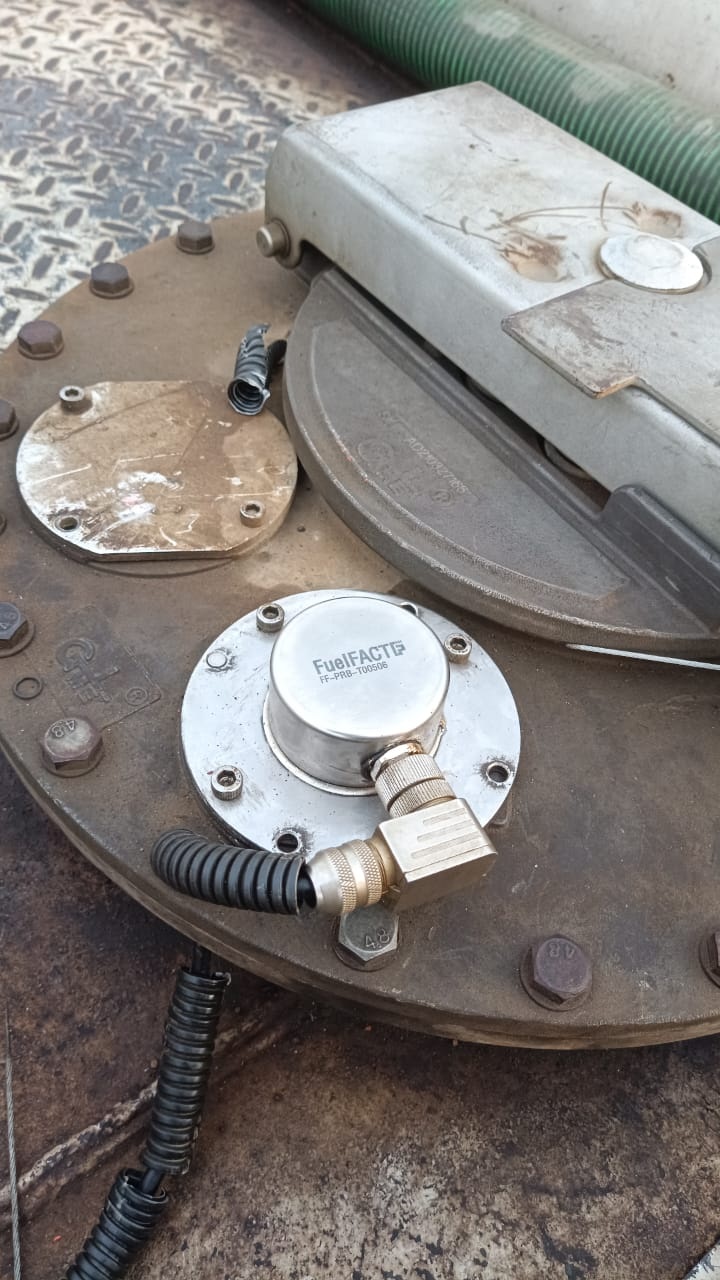
With our Fuelfact technology, we offer 100% fuel/revenue assurance, from the fuel depots, through the trucks, to the storage tanks, and to the dispensing attendants. Our sensors and technologies work with multiple gateways (GSM, satellite, etc) making it possible that you can be in London, Kano, Uyo, etc,  and know the total volume in those trucks or those storage tanks, in any part of Nigeria. And when the fuel is sold, we reconcile it in real time.  We build the sensors, we provide the payment gateway, unifying a system which used to be disparate.

If you own a filling station (or gas station or fuel station), and you want 100% revenue assurance by the most affordable technology, connect with us. Fuelfact, a Tekedia Capital portfolio company, is a leader in measurement, metering and payment in the downstream sector of oil and gas.

Learn more on Fuelfact http://fuelfact.com/ and Tekedia Capital https://capital.tekedia.com/

(video, Fuelfact tech on a truck. The sensors track the location of the truck and the total liquid content in the truck in real time. The truck owner in their office knows at each location the total volume being carried. Once the truck dispenses to storage tanks, the system reconciles.)

Elon Musk’s Acquisition of Twitter Sam Bankman-Fried CZ Binance Top 20 FORBES

0

The Goats in the game of Finance

On April 14, 2022, it was announced that Tesla and SpaceX CEO Elon Musk will start to acquire Twitter. This acquisition is a game-changer for the world of WEB3 and memecoins. Let’s take a closer look at what this means for the community. CZ Binance made a hefty investment in the Twitter deal banking $500,000,000, wow this is huge for all of you web3 crypto lovers out there. So What is all the fuss about over Sam Bankman-Fried and did CZ Binance cause his demise?

The Tweet What caused Toon Finance to go viral?

CZ Binance was a friend of Sam Bankman Fried, both gentlemen are owners of Cryptocurrency exchange sites that bank millions and billions of dollars in per year. These two gentlemen are very wealthy and well known in the crypto industry. This is one of the most prominent and iconic moments for crypto and the future of centralized exchanges.

CZ Binance founded and owns what is known as the Binance Exchange, the world’s leading crypto exchange by volume and users. CZ Binance heard that Bankman-Fried’s FTX exchange was having some issues with their LP which is basically the nuts and bolts of the entire business.

Without the liquidity to back it there would be no actual funds for its users to cash out and technically those are the user funds for the most part. It is similar to running a bank, in reality the bank borrows its clients money and pays it back to them when they wish to withdraw it and if the bank does not have the money then insurance pays the customer.

This is very rare and only happens when a bank goes completely bankrupt. Is this the case for Sam Bankman-Fried? Is he and his FTX exchange going bankrupt? That seems to be the word on the street as he scrambles to find over 2 Billion in user funds. This caused the exchange to crash and users are now flocking to decentralized exchanges like Toon Finance.

What is WEB3?

WEB3 is the third generation of the World Wide Web. It is a decentralized network that allows users to interact directly with each other without the need for intermediaries. This new generation of the internet is powered by blockchain technology and decentralization. With WEB3, users have more control over their data and are able to interact with each other in a more secure environment.

What are Memecoins?

Memecoins are digital tokens that can be used to purchase goods and services on the WEB3 platform. They are similar to traditional cryptocurrencies but have additional features that make them more suitable for use on the WEB3 platform. For example, memecoins can be used to reward content creators on WEB3 platforms. This incentivizes content creation and helps to grow the WEB3 community.

What Does This Mean for the Community?

The acquisition of Twitter by Elon Musk is a huge win for the community of WEB3 and memecoins. With Twitter, Musk now has access to a large audience that he can use to promote WEB3 and memecoins.

This will help to increase awareness of these technologies and grow the community even further. Additionally, Twitter is already integrated with many popular blockchain projects, which will make it easier for Musk to promote WEB3 and memecoins on this platform.

Elon Musk’s acquisition of Twitter is a big deal for the community of WEB3 and memecoins. With Twitter, Musk now has access to a large audience that he can use to promote these technologies.

This will help to increase awareness of WEB3 and memecoins and grow the community even further. Additionally, Twitter is already integrated with many popular blockchain projects, which will make it easier for Musk to promote WEB3 and memecoins on this platform.

Top 3 Memecoins to Invest in this Year

Dogecoin: The Classic & Original

Dogecoin is a cryptocurrency that was introduced in 2013. It was inspired by the “doge” meme that was popular at the time. Dogecoin quickly gained popularity due to its low price and friendly community. However, Dogecoin may be in trouble due to its old blockchain technology.

What is Dogecoin?

Dogecoin is a cryptocurrency that was created as a joke in 2013. It was inspired by the “Doge” meme, which featured a Shiba Inu dog. Dogecoin quickly gained popularity due to its low price and friendly community. However, Dogecoin may be in trouble due to its old blockchain technology.

Dogecoin’s Popularity

Dogecoin was created as a joke in 2013 but it quickly gained popularity. As of January 2021, Dogecoin has a market capitalization of $1.2 billion and is the 35th largest cryptocurrency. Dogecoin’s popularity is due to its low price and friendly community.

The Problem with Dogecoin

However, Dogecoin may be in trouble due to its old blockchain technology. The Dogecoin blockchain is based on Litecoin, which itself is based on Bitcoin. This means that Dogecoin is behind both Bitcoin and Liteoin when it comes to adopting new technologies.

For example, Bitcoin has already adopted Segwit, while Liteoin is currently testing Segwit. This puts Dogeoin at a disadvantage because it will take longer for new technologies to be adopted by the currency.

Dogeoin is a popular cryptocurrency that may be in trouble due to its old blockchain technology. The currency is based on Litecoin, which itself is based on Bitcoin. This means that new technologies will take longer to be adopted by Dogeoin. Although the currency has a friendly community and low price, this may not be enough to keep it afloat in the long term unless it can modernize its technology.

Shiba Inu: The “Sister” Project of DOGE

Shiba Inu is a cryptocurrency that was created in August 2020. It is a fork of the popular Dogecoin and itself is based on the Ethereum blockchain. The token was created with the intention of being used as a meme coin but has since gained popularity among investors and traders. However, Shiba Inu may face challenges in the future due to its reliance on old blockchain technology.

What is Shiba Inu?

Shiba Inu is a cryptocurrency that was created in August 2020. It is a fork of the popular Dogecoin and itself is based on the Ethereum blockchain. The token was created with the intention of being used as a meme coin but has since gained popularity among investors and traders. However, Shiba Inu may face challenges in the future due to its reliance on old blockchain technology.

The name “Shiba Inu” comes from the Japanese breed of dog of the same name. The face of the Shiba Inu dog is featured on the coin’s logo. As of May 2021, there are over 10 billion SHIB tokens in circulation with a total market capitalization of over $6 billion.

How Does Shiba Inu Work?

Shiba Inu works similarly to other cryptocurrencies like Bitcoin or Ethereum. Transactions are recorded on a public ledger called a blockchain. blockchains use cryptography to secure transactions and prevent fraud. Each transaction is verified by nodes on the network before it is approved and added to the blockchain.

However, unlike Bitcoin or Ethereum, which use proof-of-work (PoW) consensus algorithms, Shiba Inu uses a proof-of-stake (PoS) algorithm. This means that users can earn rewards for holding SHIB tokens in their wallets instead of mining them like PoW coins.

SHIB tokens can be used to purchase goods and services online or traded on cryptocurrency exchanges like Binance or Huobi Global for other digital assets like Bitcoin or Ethereum.

What’s Next for Shiba Inu?

While Shiba Inu has been successful so far, it faces some challenges in the future. One obstacle it will need to overcome is its reliance on an old blockchain platform like Ethereum. While this gives SHIB some existing infrastructure and developer support, it also exposes it to potential problems down the line if Ethereum experiences any issues or decides to change its roadmap in a way that doesn’t mesh with Shiba Inu’s goals.

Another thing to keep an eye on is transaction fees; because SHIB transactions are processed on Ethereum’s network, they are subject to Ethereum’s high gas fees which could make using SHIB impractical for small purchases down the road.

Overall, I think Shiba Inu has some potential despite its challenges. I like that it has low transaction fees and that it can be used to buy goods and services online. I think its reliance on Ethereum could be problematic though so I’ll be keeping an eye on how that develops. Are you holding any SHIB? Let me know your thoughts in the comments!

Toon Finance Cooks up a new DEX swap for it’s users

Toon Finance, a relatively new player in the DeFi space, has already shown great promise with the successful conclusion of their stage 1 presale. Now that they are entering stage 2, the team’s main focus is on marketing and getting the word out there with an aggressive plan to put up 70 billboards. But they are not neglecting their product development side, making sure that their goal is to create the best protocol in all of WEB3.

Toon Finance’s Road to Stage 2

Toon Finance’s journey to stage 2 started with a very successful stage 1 presale, which showed that there is definitely demand for their product. Now that they are entering stage 2, the team’s main focus is on marketing and getting the word out there with an aggressive plan to put up 70 billboards.

Additionally, they are also continuing to work hard on the product development side to make sure that their protocol is the best in all of WEB3. By doing this, they hope to achieve mainstream adoption and become the go-to protocol for dapps and DeFi projects.

Toon Finance also announced that they will be purchasing the Billboard that lies directly across the street from $50 Billion Dollar Twitter Headquarters. That is right, you heard it correctly, they will be getting one of the most iconic billboards in the world.

This is huge progress for the new ICO that is still in pre sale phase 2 shooting for a whopping 25 million USD.

DeFi dominance

With so many projects gunning for a slice of the DeFi pie, it is becoming increasingly difficult for any one project to stand out from the rest. This is where marketing comes in. Toon Finance recognizes that in order for them to become the dominant player in WEB3, they need to get exposure for their project and let people know about what they are creating.

That is why their main focus right now is on putting up 70 billboards across key cities around the world. Additionally, they are also active on social media and are working on building strategic partnerships with other projects in the space.

Toon Finance is definitely a project to watch out for in the coming months. With a strong focus on marketing and product development, they are well positioned to become one of the top protocols in WEB3. Be sure to follow them closely as they continue their journey towards DeFi dominance!

Investors are understandably bullish on meme coins due to their recent success. For example, Dogecoin has seen its price increase by 800% since January 2021. And Shiba Inu’s price has increased by 3,700% since January 2021. Given the current investing environment, it’s not surprising that investors are flocking to meme coins in droves.

If you’re looking for an investment with high potential upside, you may want to consider investing in meme coins like Dogecoin, Shiba Inu, or Toon Finance. While there’s no guarantee that these coins will continue to outperform other investments in the future, they have shown remarkable growth so far and could continue to do so for years to come.


To participate in Toon Finance’s presale, here are the links below:

Website: https://toon.finance/

Presale: https://buy.toon.finance/

Twitter: https://twitter.com/ToonSwapFinance

Telegram: https://t.me/ToonSwapFinance

CoinMarketCap: https://coinmarketcap.com/currencies/toon-finance/

DEX SWAP : https://swap.toon.finance