DD
MM
YYYY

PAGES

DD
MM
YYYY

spot_img

PAGES

Home Blog Page 4649

Nigeria-based Foodtech Startup, Orda, Raises $3.4m in Seed Round

0
TEHRAN, IRAN - JULY 19: (RUSSIA OUT) Russian President Vladimir Putin leaves his presidential plane during the welcoming ceremony at the airport, on July 19, 2022 in Tehran Iran. Russian President Putin and his Turkish counterpart Erdogan arrived in Iran for the summit. (Photo by Contributor/Getty Images)

Orda, a Nigerian food tech startup that provides digital operating systems for restaurants, has secured $3.4 million in seed funding co-led by emerging market investor Quona Capital and New York-based FinTech Collective.

The funding was backed by other investors that include existing ones such as LoftyInc Capital, Enza Capital and Norrsken Foundation, as well as new venture capital firms like Outside VC and Far Out Ventures.

The platform, co-founded two years ago by Guy Futi, Fikayo Akinwale, Mark Edomwande, Kunle Ogungbamila and Namir El-Khouri, serves small, independent restaurants – helping them to make a shift from their manual style of operation to faster and more efficient digital management.

With a $50 billion industry made up mostly of small restaurants – which form the largest part of Orda’s target market, the startup has a pool of potential clients that is accelerating its growth.

Orda’s tech-based services have recorded a tremendous increase in the number of restaurants embracing the platform for its reconciliation and inventory management. The rapid growth is believed to be part of the reasons investors are betting big on the startup. Orda has raised $4.5 million this year, including the $1.1 million it raised in January.

Orda said it plans to use the investment to onboard payments feature and also expand its network of restaurants across Africa, with Ivory Coast and South Africa being the next target.

The startup’s operating system offers digital features that allow businesses to handle parts of their business online. The system also offers other features that enable clients access to kitchen display systems, accounting software and integrations with food aggregators such as Bolt Food, Glovo Chowdeck.

“When a restaurant owner moves from pen and paper to a fully automated digital platform, it’s incredibly empowering. Suddenly they have insights available to them that can improve their productivity and margins, enabling them to grow their businesses. A solution like Orda can have an outsized impact on small and medium-sized restaurants and the livelihoods of those who operate them,” Kofoworola Agbaje, senior investment associate at Quona Capital, said.

Guy Futi, Orda’s chief executive officer, told TechCrunch in an interview that the company’s software-powered processes have inspired the tremendous adoption it is recording right now.

“We take an interesting approach to software and helping restaurant owners set up. Our software digitizes the process of those who write things in hand and helps them figure out their inventory management and recipe yields,” Futi said.

Futi added that Orda has reached product-market fit already with the number of vendors (600) it has recorded in Nigeria and Kenya, its two markets, since last year.

The chief executive told TechCrunch that there are “hundreds more” in the pipeline waiting to be onboarded, as Orda plans to serve more than 1,000 restaurants by the end of Q1 2023. The company’s increase has been notable in the number of orders it processes weekly for clients.

Futi said that Orda now processes over 50,000 orders weekly for its vendors, 5x what it recorded as of this January, with its gross merchandise value (GMV) increasing 30% month-on-month. He added that the startup is “seeing fast-paced growth in Nigeria and Kenya with a retention rate of above 95%.”

Orda offers vendors a flexible model with varying prices that Futi said has increased the company’s revenue growth by 30% month-on-month. The pricing model, per TechCrunch, allows restaurants to choose between three payment plans: N1,000 (~$1.54), N5,000 (~$7.69) and N20,000 (~$30.76) to access different parts of the software, ranging from order management and an omnichannel to integrations with food aggregators and delivery platforms and setup personnel.

Besides its digital process services for restaurants, Orda wants to add more features to accommodate its plan to expand financial products – building on an existing platform that Futi said it already processes payments for 10% of its vendors.
Russia to Implement New Digital Payment Systems For Cross-Border Transactions

0

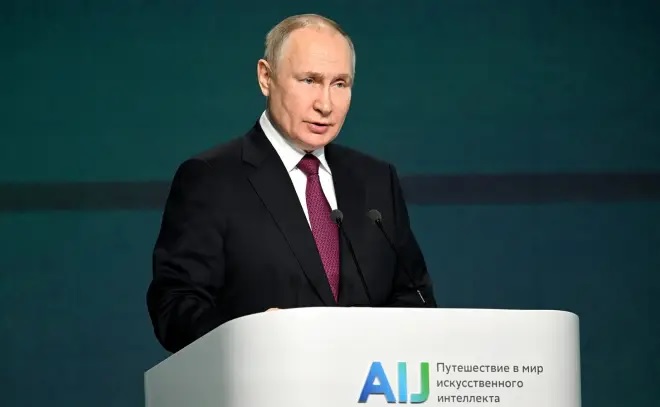
Russia’s President Vladimir Putin, shares the necessity for a new digital payment system for international settlements. The new payment system is said to be independent of third-party involvement and banks.

The details were revealed by local media outlets. As mentioned, the new digital payment system can be curated using distributed ledgers and digital currency technology.

Putin, shared the news while speaking at an artificial intelligence conference hosted by Sberbank. Gas prices have officially fallen below the levels they were at before Putin invaded Ukraine, falling 2.5 cents per gallon.

“International settlements” = central banks mostly trading currencies. It’s a trillion dollar market, Bitcoin and Ethereum blockchain can’t really handle this. Russia & Co could build a better blockchain, however. And if they all create digital currencies it could succeed theoretically. Currency only has value if anyone wants to use it and it can be traded for other currencies.

Putin, emphasized the Need For New International Payment System Based on Digital Currency Technologies, He however criticized the monopoly in global financial payment systems and dependence on big banks.

The President gave the nod to the hawala remittance system, which works in parallel to the banking system. He believes that digital currency and distributed ledger technology will make cross-border payments “much more convenient.”

Putin’s comments at a Sberbank AI conference are a victory for the pro-crypto Finance Ministry figures. It could also place Putin on a collision course with the Central Bank chief Elvira Nabiullina who opposes Crypto and almost resigned over the war.

German Gref, noted that the country’s- business tech community is providing an excellent example of self-organisation. An alliance of companies has been established in artificial intelligence, Ethical principles for the development and introduction of this technology have been drafted at its initiative. Over 120 participants have already joined this Code of Ethics.

Vladimir Putin: There, two years ago. I am pleased to note that this alliance is working. I will mention several times in my speech how well it is working. We took a very important step towards creating the right atmosphere. I consider you, my colleagues, reliable and effective partners of the state on technological development issues. I am confident it will be so in the future as well. Owing to our joint work, we are making rapid progress in all areas of the National Strategy for the Development of Artificial Intelligence, supporting education and science, introducing measures to support companies, and adjusting legal regulation. These efforts are producing practical, tangible results.

Vladimir Putin succinctly said; Businesses should not incur large costs in the process of introducing innovations. To avoid this, starting from January 1, 2023, businesses buying and deploying Russian-made solutions, including AI-enabled ones, can take advantage of tax incentives and direct additional funds to technological upgrades. For example, an amount 50 percent greater than the company actually spent on advanced Russian systems will be excluded from its income tax base.

Court Sentences Nigeria’s Inspector General of Police to Three Months in Prison for Contempt

0

The Inspector General of Police, Usman Baba, has been sentenced to three months in prison for contempt of the court.

The ruling was handed down by Justice Mobolaji Olajuwon on Tuesday, in response to a suit filed by Patrick Okoli, a former police officer who was unlawfully and compulsorily retired from the Nigerian police force in 1992, according to the affidavits supporting the suit.

A Bauchi High Court had in February 19, 1994, quashed the compulsory letter of retirement in a judgment delivered in favor of Okoli. The high court also ordered that the applicant be reinstated with all rights and privileges.

In accordance with the High Court’s ruling, the Police Service Commission (PSC) in a letter dated October 13, 2004, directed the then-IGP to reinstate the applicant and issue a recommendation for his promotion.

But the Nigerian Police failed to obey the order of the High Court and didn’t follow the recommendation of the PSC, prompting Okoli to file a lawsuit.

In a suit marked FHC/ABJ/CS/637/2009 at the Abuja federal high court, Okoli prayed for an order of mandamus to compel the enforcement of the order of the Bauchi state high court and the directives of the PSC. And once again, on October 21, 2011, the Abuja High Court delivered its judgment in favor of the applicant.

Efforts by the office of the IGP to quash the case were unsuccessful. The office of the IGP’s appeal to the judgment of the Abuja High Court was dismissed yet it did not honor the judgment, prompting the applicant to take further steps by approaching the House of Representatives and as a last resort, hired a law firm to commence a committal proceeding against the respondent.

Based on these series of contempt by the office of the IGP, Justice Olajuwon ruled that the IGP should be committed to prison until he obeys the judgment of the court.

“It is unfortunate that the chief enforcer of the law is one who has deliberately refused to comply with the same law. It is important to state that obedience to orders of court is fundamental to the good order, peace and stability of a nation.

“It is a duty which every citizen, who believes in peace and stability of the Nigerian state, owes the nation and the court has a duty to commit the individual who has failed to carry out the order of the court for contempt, so as to prevent the authority and administration of law from being brought to disrespect and to protect the dignity of the court.

“The terms of the Orders of this Court are clear and unambiguous. This court is satisfied that the respondent (presently and those before him) has had proper knowledge of the Orders of this Court, there is no denial of such knowledge and the receipt of Forms 48 and 49.

“The respondent filed a counter affidavit, was duly represented in court by different counsel, who stated how they had written several legal opinions which were not attended to.

“The refusal and failure of the respondent to comply with the orders of this court has been proved in this case. The respondent, in this case, the inspector-general of police, in the person of Usman Alkali Baba, is to be committed to prison and detained in custody for a period of three months or until he has obeyed the order of this court, made on the 21st October, 2011, in all things that are to be performed, whichever period is shorter.

“If at the end of the three months, the contemnor remains recalcitrant and still refuses to purge his contempt, he shall be committed for another period and until he purges his contempt,” the judgment said.

The ruling comes the same month that the chairman of Nigeria’s anti-graft agency, the Economic and Financial Crimes Commission (EFCC), Abdulrasheed Bawa, was sentenced to prison for contempt of court.

But like Bawa, who appealed the judgment that committed him to prison and was pardoned on the ground that he was not the EFCC’s chairman at the time of the ruling, the IGP is expected to be acquitted following an appeal.

However, the courts’ judgments denote a shift from the Nigerian judicial system, which previously seldom committed prominent public office holders, especially in the executive, to prison.

How To Earn Crypto For Free Playing In-App Games

0

Play-to-earn (P2E) games have become more popular as the crypto world has emerged. You can make money playing free online games, as many of the early internet users had feared.

Playing a blockchain-based game is a great way for you to get your hands on NFTs, as your in-game assets are registered on the blockchain. You will need these items if you want to continue playing the game, but you can probably sell them if you decide you no longer want to.

NFT and blockchain games can be excellent investment vehicles and revenue generators for this very reason. Players can earn money by playing free online games and receive payment in virtual currency under this business model.

What Are Play To Earn Games?

Native tokens support the game economies in these unique games. These in-game currencies are used to buy, sell, trade, and play. Some games, on the other hand, are free to play, while others are paid for in advance.

When compared to traditionally top-level PlayStation and Xbox titles, the graphics in most of these games look like they are still in the early stages of development. So if you are hoping for a visually appealing cryptocurrency game, you’ll have to wait a few more years.

But if you keep your eye on the bottom line, the rewards can keep you coming back for more.

Steps To Start Earning Crypto For Playing Games

  • Create a crypto wallet
  • Sign up for free for crypto games
  • Advance in rank, level, or stage
  • Reach minimum token withdrawal limit
  • Withdrawal of accumulated crypto earnings to your wallet
  • Convert tokens to Bitcoin or Ethereum
  • Withdraw crypto into your local bank account

1. Create A Crypto Wallet

Cryptocurrency wallets are a safe place to keep your winnings from gaming.

A few of the most popular types of cryptocurrency wallets include hosted wallets, non-custodial wallets, as well as hard drive-based storage devices.

Depending on what you plan to do with your cryptocurrency and how much security you need, you may want to use one or the other.

This guide will show you how to create a non-custodial wallet so that you can withdraw your winnings directly from the gaming platform.

How To Set Up A Non-Custodial Wallet

  • Download a wallet app
  • Create a personal account
  • Ensure to write and keep your private key: this is presented in the form of a 12-word phrase. Ensure that it is kept in a safe place. You won’t be able to access your crypto if you misplace or forget this 12-word phrase
  • Transfer crypto wallet into your wallet: when buying crypto with a non-custodial wallet, you may not be able to use fiat currencies (such as US dollars or Euros), so you will have to transfer crypto from another location

2. Sign Up Or Download For Free To Earn Crypto Games

The term “play-to-earn” refers to a type of cryptocurrency game in which players can earn virtual currency by simply playing the game.

Completing tasks such as missions and battles are all part of the process. Tokens earned on Defi can be exchanged for cryptocurrencies like Bitcoin, Dogecoin, Ethereum, etc.

You can use the money you earn from playing these games to fund your bitcoin wallet or to make additional purchases in-game.

Use them to buy non-fungible tokens (NFTs). Some of these games also use NFTs as their in-game currency.

The best and highest-paying P2E crypto games are as follows:

  • Battle of Guardians
  • Plant Vs. Undead
  • Defi Kingdoms
  • MetaWars
  • Axie Infinity

3. Advance In Rank, Level, And Stage

This step comes with the play of any P2E game you have downloaded and installed.

Meanwhile, you will have to climb through the hurdles of different stages, have a weapon upgrade, fight little battles, improve beyond ranks, and be victorious in battles against villains to progress in the game.

The amount of tokens you receive for completing each of these tasks is determined by the difficulty of the level, rank, battle, and/or villain.

4. Reach Minimum Withdrawal Limit

For the most part, P2E crypto games have a minimum withdrawal threshold.

Depending on the game, this could be anywhere from 500 to 1500 tokens. Tokens can only be obtained by defeating monsters, capturing new territory, progressing through the game’s levels, and rising through the ranks.

To proceed to the next step in this guide, you must first meet the gaming platform’s minimum token withdrawal limit.

5. Withdraw Accumulated Earnings

A withdrawal can be made into the crypto wallet you created earlier in this guide once you’ve amassed enough tokens to do so.

This number can range from 500 to 1500 tokens, depending on the platform. Withdrawal policies vary from platform to platform. A 48-hour withdrawal period is possible under some of these rules. To make a withdrawal, you must wait at least 48 hours.

However, once you withdraw your tokens from these platforms, you will be able to see your money in your wallet.

Why Most Nigerians Remain Poor Despite Nigeria Earning $742 Billion in 21 years from Oil

2
Nigeria leaders

Check most faded ancestral kingdoms, they failed not because of lack of resources, rather, due to the poor utilization of their people. Typically, the people become enterprising, build wealth and after passing an inflection point, they pause – and lose their minds. Over time, another kingdom takes over.

As early as 1961, most European countries have written out any support to Nigeria because they saw a nation with a dynamic and pragmatic agricultural policy which if built upon could make it a respected nation in the world. In Belgium, they argued that any financial help to Nigeria was stupidity as the nation was already in a virtuoso cycle to greatness. Unfortunately, that did not happen and has not happened. Let me take you to economic systems for why:

Country A generates aggregate economic output (GDP) via agriculture of $5 billion but employs 1 million doing that. But it does not have a lot of money, just $0.5 billion, in the foreign reserves.

Country B generates output of $1 billion via crude oil sector but employs 100,000 people doing it. But  it has $20 billion in foreign reserves from the sale of the oil. 

Many people will say that Country B is in a better shape. Possibly, if that $20 billion is not mismanaged or stolen. But structurally, Country A has a stronger positioning provided it can keep getting more productive. It has found a way to employ its 1 million citizens and it has a decent reserve.  

In Country B, the citizens are under stress with largely zero economic participation, implying that risk is concentrated on what leaders do with that $20 billion. When you have bad leaders, you have the Nigerian case. When you have better ones, you have UAE (Dubai).

This explains why Nigeria has 133 million extremely poor people despite having earned $741.48bn  from oil & gas in 21 years. The curse of oil is not that oil is bad. The curse is that you can be partying in Abuja, drinking kunu, eating nkwobi and amala, and your bank balance will be growing in New York via oil sales. But when you look around, only few are in that party with the majority dying of the real curse: poverty in a land of plenty.

A National Bureau of Statistics (NBS) report has revealed that 63% of persons living in Nigeria (133 million people) are multidimensionally poor: “65% of the poor (86 million people) live in the North, while 35% (nearly 47 million) live in the South. Poverty levels across States vary significantly, with the incidence of multidimensional poverty ranging from a low of 27% in Ondo to a high of 91% in Sokoto.”