DD
MM
YYYY

PAGES

DD
MM
YYYY

spot_img

PAGES

Home Blog Page 4667

OPEN LETTER: Senator Ademola Adeleke, Time to Move Osun from Conflicting Governance to Unified Development

0

Dear Senator Ademola Adeleke,

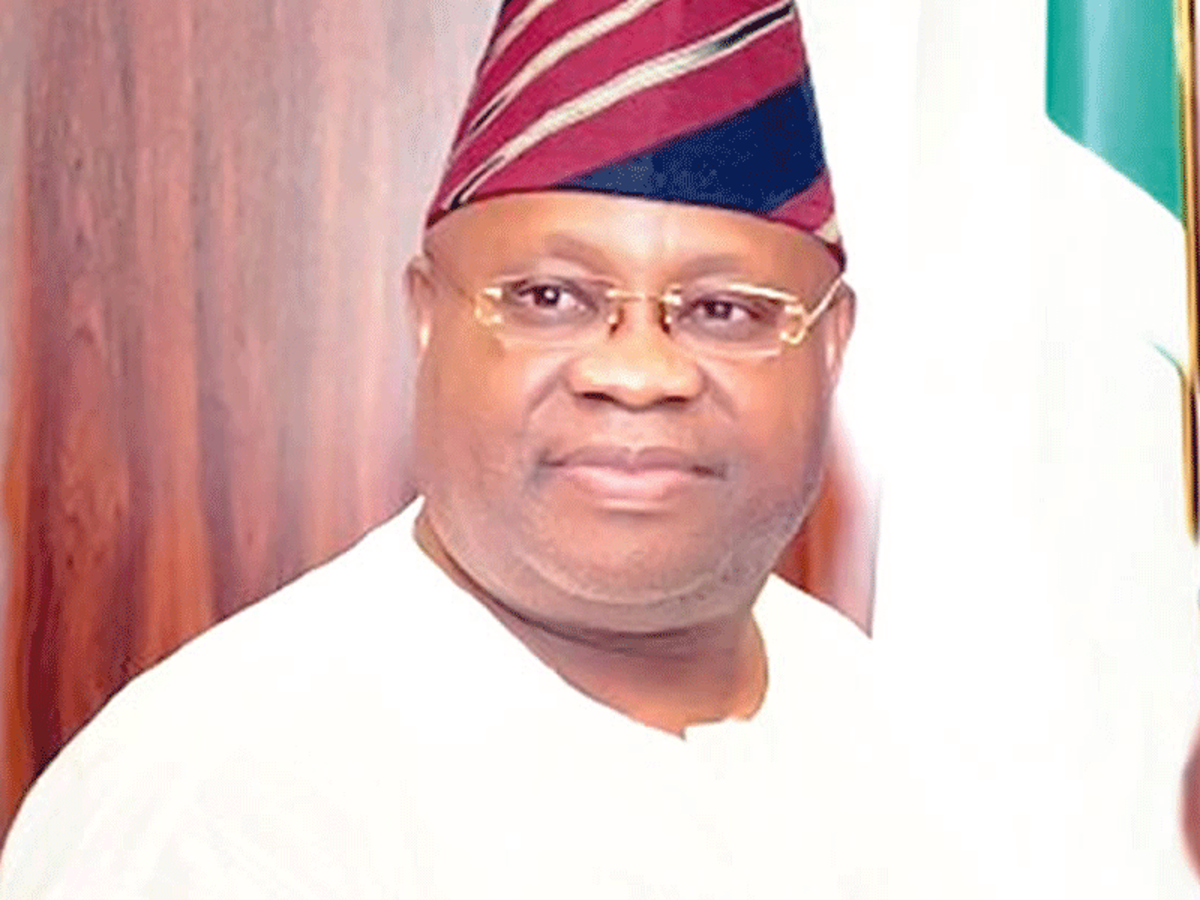
I believe that today will go down in history as one of the best days of your life, your family’s life, and the history of your city. It will be a memorable day in your life because not everyone wants you to be proclaimed the sixth governor of Osun State. It will stick with you whenever you think back on how you fought the battle between 2018 and 2022. Every member of your family will remember today in the history of Osun politics because your emergence has reaffirmed your family’s place in the statewide political game. You made history by matching your late father’s and brother’s political achievements. People in your home country (Ede) will remember this day because you are the second citizen who will govern the state from the city.

Mr. Governor, the purpose of writing this letter extends beyond recounting today’s happy event. Celebrations should be kept to a minimum. This is necessary because you must reflect on how you fought and won the battle. I and other colleagues conducted several studies on your personality and political party in relation to the nature and patterns of Osun politics between July 2018 and November 26, 2022. Throughout these years, you and your team have specifically deployed defensive and offensive warfare strategies in political campaigns and other personal engagements with the public with the goal of being pronounced governor and sworn in on a day like this.

Mr. Governor. I can say that, like other Nigerian politicians and political parties, your defensive warfare strategy entailed a lot of counterattack, intimidation, deterrence, skillful retreat, and lying low when under aggressive attack. You and your team also used offensive warfare strategy by establishing an overall goal, devising methods to achieve it, and meticulously planning the entire plan. You and your team also looked at enemies and discovered their secrets. Overall, you completed your campaign successfully and were proclaimed as the new governor of Osun State.

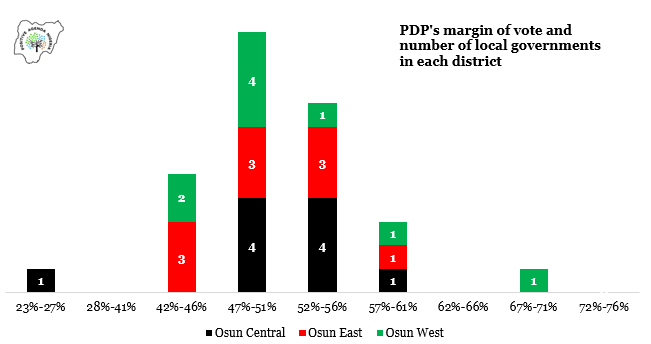
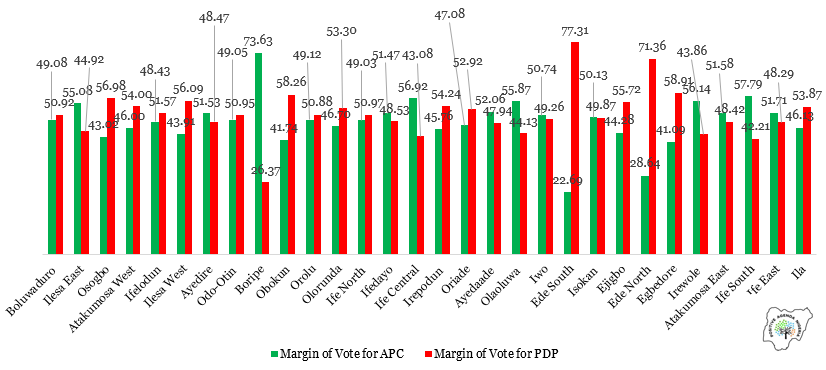
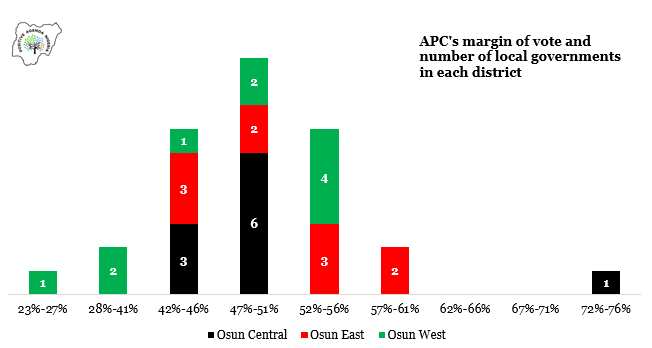
Mr. Governor, you can see from the Exhibits in this letter that your strategies paid off across the state. However, you can see that there are some areas where you and your main opponent, the immediate past governor, are tied. This indicates that the race was close. This does not surprise me because people were not normally opposed to the former governor’s personality. They voted against him and his party, in my opinion, because they felt certain socioeconomic policies and programs were failing to deliver desired public goods.
 

Providing Public Goods

On that note, Mr. Governor, I would like to walk you through the findings of an analysis of project allocation and execution during the previous administration (most of the projects were planned by administration of Ogbeni Rauf Aregbesola).

Out of 162 projects [tangible infrastructure] I found, 104 were road projects. More than 73% of these projects are rehabilitations. Fire and safety projects are 11. All the fire and safety projects are proposed as construction. One security project proposed would be done within rehabilitation solution category.

Analysis shows that Osogbo and Ilesa are the cities that have the largest share of the awarded and proposed projects for completion between 2019 and 2021. Out of 162 projects mined and analysed, 20.4% would be done in Osogbo and 11.25% in Ilesa. Analysis further shows that there are projects that lack a clear description of locations [where they would be executed].

Analysis across the category of solutions that would be executed indicates that 7.4% of 84 projects classified as rehabilitation would be executed in Ilesa while 5.6% of the projects would be done in Osogbo. Analysis also reveals that 3.7% of the projects would be carried out in Ede. Over 2% of the projects would be done in Ejigbo, Ido-Osun, Ikirun and unstated locations across the state while 1.9% are expected to be done in Iwo. Over 1% of these projects will be implemented in Gbongan, Ife, Ifon/Ilie, Ijebu-Jesa and Okuku [for each location].

Out of 22 maintenance projects, 4.9% would be implemented in Osogbo and 1.2% each in Iwo, Ilesa, Ikirun, Ife and Ede. For the 28 construction projects, Osogbo also had the largest share. Over 4% of the projects would be executed in Osogbo, 1.9% in Ilesa, 1.2% in Ikirun and 1.2% in unstated locations.

Mr. Governor, the findings indicate that your administration should consider a more strategic approach to project allocation. Your administration must also pay attention to the bottom-up approach when initiating and executing projects. I should emphasize that the analysis was completed in 2021. As a result, as of the time of writing this letter, I do not know which of these projects has been satisfactorily completed.

Mr. Governor. I know that during the campaign, you promised various public goods to individuals, groups, and communities. However, keep in mind that you are not representing a specific region of the state. As a result, you must be fair when selecting cabinet members, allocating resources, and carrying out projects. Your primary goal should be to transition Osun from conflicting governance to unified development. This thesis is proposed because there is a clear distinction between campaigning and governing. The offensive and defensive strategies you used during the campaign would not necessarily work for you when executing manifestos.

Public Engagement

Like every other administration before the immediate past governor, you need to come up with a sound proof engagement with the people. By doing this, you would have succeeded in carrying people of the state along on your programmes and policies. As a quick reminder, the first governor of the state at the beginning of this dispensation, Chief Bisi Akande introduced Labe Odan (Under the Almond Tree) as a way to involve the people in governance. Following the same step, Prince Olagunsoye Oyinlola also had a Gbagede Oro, a programme broadcast live on radio and television by the state media, it was only your predecessor that realized the need for public engagement late. He paid for it. Therefore, you are advised to communicate with the people on your programmes and policies.

Similarly, your administration should not neglect the importance of research and data in formulating and implementing your policies and programmes. As it is said, data is the new oil, it is better to use it appropriately in deciding the fate of the people of Osun. It would not only get you the needed insight, it would go a long way in making your plans fit-for-purposes.

It is also expedient to remind you that prior to the election, you enjoyed an unrivalled street credibility making the people to troop out to meet you at every of your outing. Now that you are assuming office as the governor, you need to do all so that you would not lose the earned street support. Being a candidate is different from being the elected governor. There is a high expectation that your government would deliver on all the problems facing the state. It is good you know that once you get into government, people have started reading you and your moves to give the dividends of democracy to them. Failing to do that may take the support of the people away from you. Do not forget that you would return for people’s votes again by 2026.

WBTC, SoBTC Depegs as Bitcoin’s Drawdown Margin Sustains its Position

0

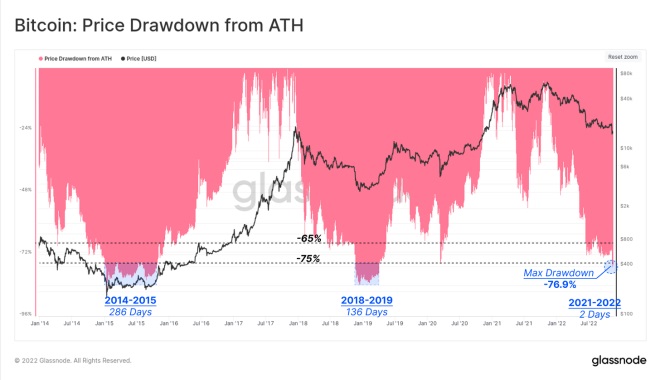
This week, the spot price of Bitcoin dropped to a multi-year low of $15,801 amidst the FTX collapse, with BTC now -76.9% below the cycle top set in November 2021. Previous generational lows have recorded >75% market devaluations from the peak, bringing this bear market in line with prior cycle drawdowns. BTC drawdowns greater than 75% have persisted for several months in previous cycles, suggesting duration may still be ahead if history rhymes.

One of the standout phenomena of the 2022 bear market is that Hashrate has not seen any significant decline towards the lower band, even with ongoing financial stress on the Crypto industry.

There’s a lot of fud lately on WBTC (WBTC Depegging). Wrapped Bitcoin (WBTC) is an ERC20 token backed 1:1 with Bitcoin. WBTC standardizes Bitcoin to the ERC20 format, creating smart contracts for Bitcoin.

This could be related to the Alameda Research and FTX crash, WBTC began to show signs of depegging on November 10, WBTC depegged to 0.9852 on November 25. WBTC and any other bridge-wrapping are old tech and risky because it’s centralized. Chain Key BTC (native bitcoin without bridge) powered by ICP is already here and it’s gonna conquer the Defi space from here onwards.

Mint and Burn WBTC

Users sends 1 BTC to Merchant, Merchant sends 1 BTC to Custodian for storage, Custodian mints 1 WBTC and sends 1 WBTC to merchant, then merchant sends 1 WBTC to the user. While Burning WBTC; User sends 1 WBTC to Merchant, Merchant sends 1 WBTC to Custodian, Custodian burns 1 WBTC and sends 1 BTC in his storage to merchant, then merchant sends 1 BTC back to the user.

Can WBTC Crash ?

There are currently 225,400 WBTC in total, and the custodian currently holds 228,734 BTC, which is enough for redemption. And you can verify the BTC kept by the custodian through the address on-chain. As long as the BTC kept by the custodian is enough to redeem WBTC, there is basically no possibility of WBTC crashing, but nothing is 100% in the Crypto Industry- compounding liabilities might lead to WBTC crashing.

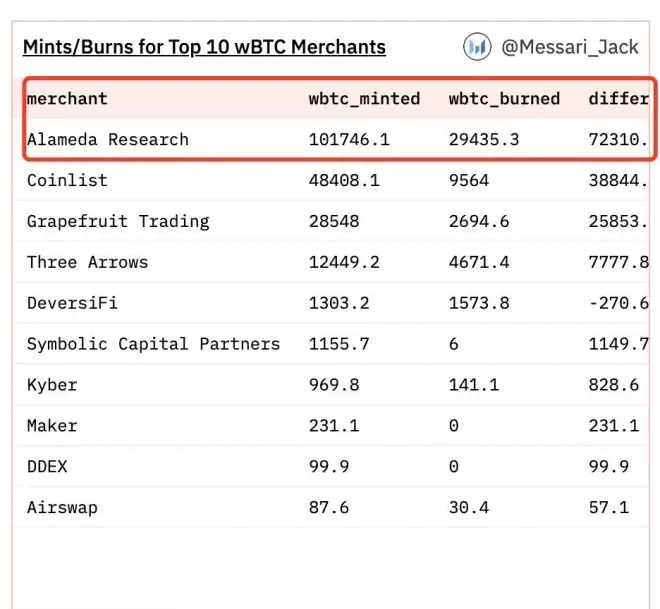
Alameda minted 101,746 WBTC and only burned 29,435 WBTC. The outcry by Influencers on Crypto Twitter are mere FUD. The problems won’t start until Bitgo and Coinlist are under pressure; we’re just getting started.

Alameda is a merchant not a Custodian, and only initiate the process of minting and burning wrapped tokens, WBTC minted through Alameda can still be redeemed through other merchants.

DCInvestor tweeted, It’s funny seeing all the WETH offers accepted in the midst of a mega Crypto retribution, PTSD is real. Zagabond, a founding member of the OxProject and the Azuki NFT said;

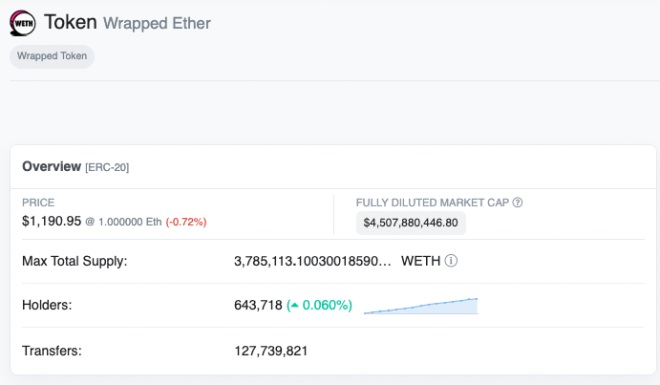
In 2017, we (@0xProject) called on the Ethereum community to establish a canonical ERC20-compliant wrapped ETH token (WETH) in the interest of standardization across dApps and safer smart contract conventions. Five years later, the WETH contract has >$4b in ETH.

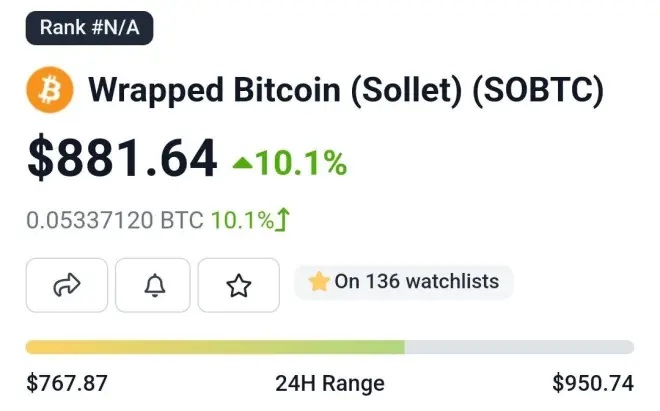
WBTC-BTC trading pair is only available on CEX, and you can’t unwrap WBTC fast like WETH. So whoever believed the fud simply ate the discount and panic dumped on CEX. Alameda minting WBTC by sending BTC to BitGo is a wholly different situation than FTX owning the entities which issue soBTC, one is arms-length transactional, the other is a forced intermingling of what should be siloed assets into customer fraud bankruptcy proceedings. The COO of BitGo, the custodian for the BTC that gets wrapped, says everything’s fine and burns are in queue. So everything should work as intended and this should be a free arb. But the market is not buying it clearly, $SoBTC keeps nuking.

The reality is that WBTC contract does not trace 1:1 locked BTC on chain. WBTC dashboard provides a proof of reserves which is great, but does not trace your locked BTC. You need to trust BitGo, same as CEX, to remain solvent to unwrap your locked BTC.

The actual Bitcoin however is held by a centralized entity, so if the actual bitcoin was ever compromised then your tokens that represents the Bitcoin’s WBTC would become worthless, there is no way currently to hold Bitcoin on Ethereum in a decentralized way.

How Governments are Funded (Tax Obligation as a Civic Responsibility)

0

The primary way governments in modern economies get the money they spend is through taxes.

Often considered a ‘necessary evil’ tax can be defined as “the compulsory exaction of money by a taxing authority, usually a government, for public purposes.”

In Section 8 of the first article of the Constitution, the United States Congress is afforded the right to lay and collect Taxes.

How the US Tax System Is Structured

The US tax system is set up at federal (national), state, and local government (county) levels.

Taxes are levied on income, payroll, sales, dividends, capital gains, property, estates and gifts.

Taxes may be imposed on individuals, business entities, trusts, estates, or other forms of organization.

Federal, state, and county taxes are separate, each with its own authority to charge taxes. The federal government has no right to interfere with state or county taxation.

Every state has its own tax system that’s separate from the other states.

Within the state, there may be several jurisdictions that also charge taxes. For instance, counties or towns may set their own school, property and utility taxes in addition to state taxes.

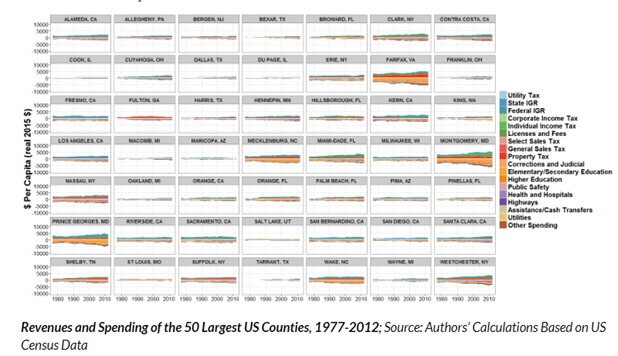
There are 3,144 counties in the United States. Counties deliver human capital-intensive services like public health, elections, and regional transit systems.

All counties in Indiana and Maryland levy a local income tax.

Tax Administration

Efficient tax administration can help encourage individuals and businesses to pay their fair share, thereby expanding the tax base and growing tax revenues.

Several tax authorities administer taxes in the United States.

There are three tax administrations at the federal level:

  • Most domestic federal taxes are administered by the IRS – Internal Revenue Service, which is part of the Department of the Treasury. The Internal Revenue Code is codified as Title 26 of the United States Code (26 USC).
  • Alcohol, tobacco, and firearms taxes are administered by the TTB – Alcohol and Tobacco Tax and Trade Bureau.
  • Taxes on imports (customs duties) are administered by CBP – US Customs and Border Protection.

The organization of state and local tax administrations varies extensively. Each state maintains a tax administration. Some states administer some local taxes in whole or part.

Most localities also maintain a tax administration or share one with neighboring localities.

What Are the Biggest Federal Revenue Sources?

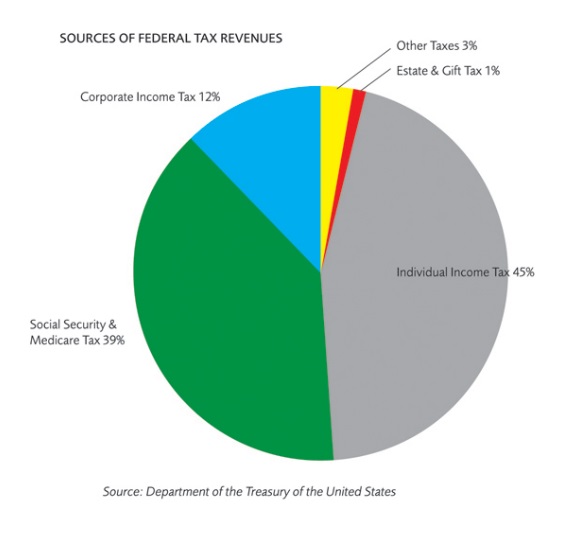
According to the US Treasury, the 3 primary sources of federal revenue are:

  • Income taxes paid by individuals
  • Corporate income taxes paid by businesses
  • Payroll taxes paid by both workers and employers

There are also a handful of other types of taxes, such as customs duties and excise taxes, but these make up very small portions of federal revenue.

The above figure shows the relative sizes of sources of federal govt tax revenues.

  • 45 percent of federal tax revenue comes from individuals’ personal income taxes.
  • 39 percent comes from Social Security and Medicare withholdings.
  • 12 percent of taxes come to the government from corporations’ incomes
  • Estate and gift taxes account for only 1 percent of federal tax revenues. These are imposed on the transfer of property inheritance either by will or lifetime donation.

NB: Since half of Social Security and Medicare taxes come directly from people’s paychecks, about 65 percent of taxes the federal government collects come from individuals.

Now let us look at each of the 3 main sources of federal taxes in detail:

  • Individual Income Taxes

When people think of tax, it’s most often income tax that immediately springs to mind.

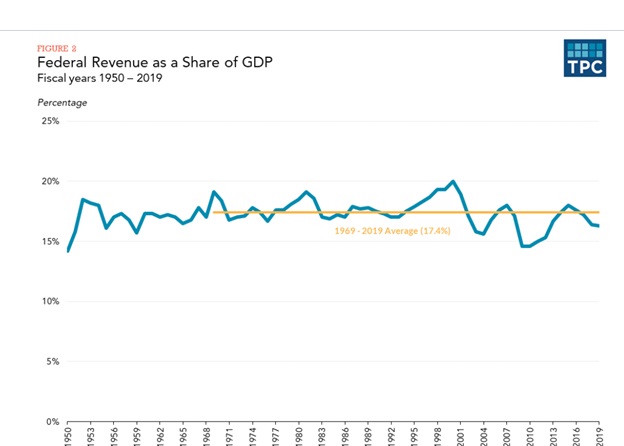
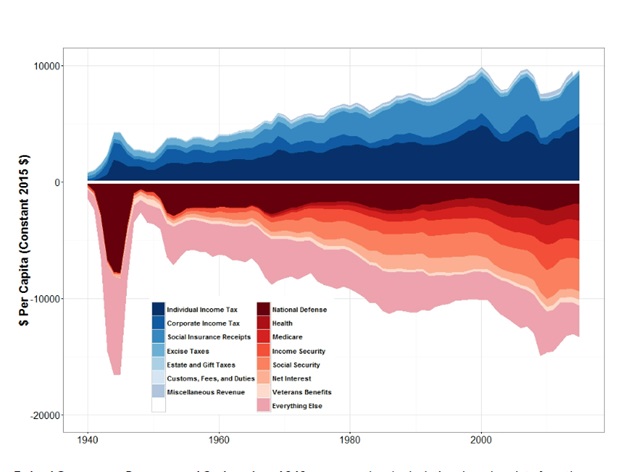
As one of the most well-known forms of taxation, income tax has been the federal government’s single largest revenue source since 1950.

If you earn income in the United States, you’ll see the deductions on your paycheck.

The income tax system is designed to be progressive, meaning that the wealthy are intended to pay a bigger percentage of their earnings than low- or middle-income earners. A progressive tax embodies the concept that individuals with high incomes should pay more of their income in taxes due to their greater ability to pay with minimal sacrifices.

But because of the complexity of the tax code, this isn’t always the way it works out. In most cases, wealthy folks end up paying a smaller portion of their income as taxes than the people who work for them.

Every state also has its own form of income tax that employers also withhold from your paycheck.

Most of the 50 states impose some personal income tax, with the exception of Washington, Texas, Nevada, Florida, Alaska, Wyoming, and South Dakota, which have no state income tax.

If you earn over a certain amount ($12,550 for single Americans, $14,250 for married folks), you must file both federal and state taxes before April 15th of each year. You can use an updated tax calculator to ensure accuracy.

NB: The United States is one of the only two countries in the world that taxes its non-resident citizens on international income in the same way and rates as residents. You may, however, be entitled to a foreign-earned income exclusion that reduces taxable income. For 2023, the maximum exclusion is $120k per taxpayer.

  • Corporate Income Taxes

A corporation created or organized in the US under United States law or under the law of any state is considered to any extent a domestic corporation, regardless of whether it does no business or owns no property in the US.

Corporations in the United States are separate legal entities and are subject to corporate tax on taxable income. Federal corporate income tax is applied with a flat rate of 21 percent to the effectively connected income (ECI). State and local governments may also impose income taxes (generally ranging between 1-12 percent). Thus, the effective tax rate (the rate a corporation actually pays in taxes) differs in each state.

Corporate tax rates are different than personal tax rates, largely because corporate earnings are subject to double taxation. What this means is that a corporation pays taxes on its earnings and on the after-tax income it pays stockholders dividends.

The dividends must be reported on the stockholders’ personal tax form and the government taxes them at capital gains tax rates.

While 21 percent is the official tax rate for most corporations, the effective tax rate varies vastly from one corporation to the other. Some big and profitable corporations (familiar names you probably recognize) can even end up paying nothing in corporate income tax.

That variation results from the complexity of the tax code and corporations’ exploitation of “loopholes” to evade paying taxes. For instance, multinational corporations are known to send profits to overseas locations to avoid paying US taxes.

Click here to learn more about corporate tax rates.

  • Payroll Taxes

Payroll taxes are imposed on employers and employees and on different compensation bases.

These taxes are designated as trust funds. A trust fund refers to an amount of money that’s set aside for a particular purpose and can’t be spent on anything else.

Imposed by the federal and all state governments, payroll taxes are usually set aside for Medicare and Social Security. Medicare is a federal program providing health care coverage to senior citizens and people with disabilities. Social Security, on the other hand, is meant to ensure that elderly and disabled people don’t live in poverty.

Payroll taxes are deducted from your paycheck before you get it and might appear on your paystub as SOCSEC, SS, FICA, or other names (for Social Security).

The deductions from your paycheck are, however, only half the story of payroll taxes. Your employer must match every dollar withheld from your paycheck.

There are also other trust funds, such as the Highway Trust Fund, which comes from fuel taxes.

Why Should We Pay Taxes?

Paying taxes is probably your least favorite government-related activity.

It’s often assumed that tax is a bad thing: that the government wants to deprive its citizens of their hard-earned money.

But paying taxes is a communal obligation. By design, taxes are a shared enterprise. They’re not the undertaking of one person. We can’t support the military, build bridges or battle natural disasters alone.

The same is true for taxes. A functioning society needs everyone to be a team member, obligated to take part in its civic duties and responsibilities. The government needs to be funded in a mutually agreed manner, based on the principles of fairness and the ability to pay. Taxes are a collective obligation, and their payment marks one of our civic duties.

Legislators have made laws on how you should fulfill this civic responsibility.

The money you pay in the form of taxes returns back to you in the form of infrastructure developments, healthcare and medical facilities, educational facilities, gas subsidies, etc.

The government does its best so that citizens can avail a bulk of facilities, which is their right and for which they pay taxes from their earnings.

Perceiving these duties, we have to appreciate our ruling bodies for providing these services.

If we want to achieve revenue increments that enable the government to provide valuable services, without unduly increasing the national debt and while distributing sacrifice equitably, diligently paying tax is the only way by which this objective can truly be achieved.

Besides raising revenue for the provision of public goods, other objectives of taxation include:

  • Redistribution of income and wealth to address poverty and inequality
  • Promoting social and economic welfare
  • Police and fire protection
  • Enhancing economic stability and global harmonization

Can’t the Government Just Print More Money?

Since the government oversees the printing of money, why can’t it just finance its spending? Well, here’s why.

Before 1933, the United States was on a gold standard. The amount of gold the US government had in its possession limited the amount of dollars it could print. What made the gold standard important wasn’t the gold, but rather the limit on the amount of dollars the government could print.

A “freshwater standard” or “land standard” that limited the number of dollars the government could print by the amount of freshwater or land the government owned would have accomplished the same effect.

The value of the object serving as the standard isn’t important. What’s important is that the object exists in a fixed quantity. Provided the quantity of the object is fixed and the amount of dollars is limited by the number of units of the object the government owns, the government will not be able to print as many dollars as it wishes.

That limitation on the government’s ability to print money was effectively removed in 1971 when the then-President Richard Nixon cut off the US dollar’s ties to gold.

The government started imposing an inflation tax.

You may be wondering, in what way is inflation a tax?

Let’s say a tank of gas costs $50; then the $50 bill in your pocket is worth a tank of gas. If the gas price rises so now a tank costs $100, then the $50 bill in your pocket is only worth half of a tank of gas. The increase in the price of gas caused the money in your pocket to lose value.

This is not only true for the money in your pocket; but also, for savings in your bank account. If the government can print money to cater to its spending and, in so doing, cause prices to rise, this causes the money you own to lose value. This means that the government has effectively taxed you to pay for its expenses.

Consider the following simple example: The money supply is $1M, the economy produces 1 million units of stuff every year, and the average price for one unit is $100. You have $500 in your wallet. With this $500 and with the price of stuff at $100 per unit, you can buy 5 units of stuff.

Suppose that the government wants to make purchases but has no money. The government prints $100,000 and uses the newly printed money to purchase some things. Since the money supply has risen 10 percent while production has remained constant, the average price of things will rise 10 percent to $110. Now, if you want to buy some things with your $500, you can only afford about 4.5 units of the things. In effect, the government has taxed you one-half of a unit of stuff to pay for the stuff it acquired.

The inflation tax is treacherous since it’s normally unseen (when inflation is moderate, you may notice it and, when you do, fail to appreciate that it is, in fact, a tax). Still, it’s impossible to avoid.

When you understand that inflation is also a tax, you’ll start to see why the only way the government can obtain money is through taxation.

Don’t Consider Paying Tax as a Burden

Many of us always try to escape situations where we’re required to pay taxes; it’s a human tendency to avoid paying taxes.

Even when tax rates are lowered, like in developing nations, there’s still a lack of desired tax culture. The general mindset of the public is stuck on the give-and-take formula leading them to ask before paying

But to echo the words of the US Supreme Court, “Taxes are the price for civilization.”

Tax evasion causes serious loss of revenue to governments. This results in an ‘unfair’ burden on honest taxpayers and the possible underfunding of public service.

In developed countries, tax evasion is frequently estimated to be at about 10-20 percent level of tax revenue. Evasion varies between occupations, with restaurants, stores and car dealers evading the most, while those in agriculture, finance, and insurance are the lowest evaders.

In developing countries, the problem appears worse, and in some cases, evasion exceeds 50 percent of tax revenue.

This could be a result of the following:

  • Weak tax collection apparatus.
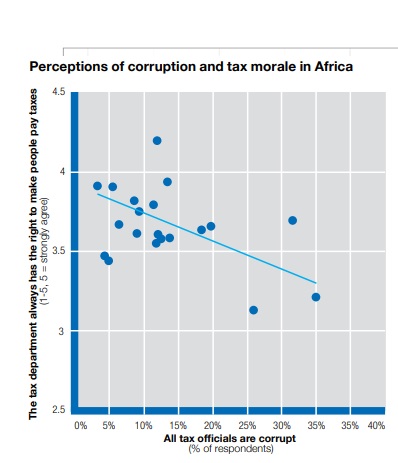
  • Corruption. Tax evasion is often associated with perceptions of corruption in public institutions, especially among tax officials.
  • People may evade taxes in part if they believe they’re receiving substandard government services.

In order to cut down on evasion, governments in developing countries may wish to:

  • Transmit clear information on the quality of their services. There’s a need to ensure that the tax system is fair and equitable.
  • Initiate strict laws against tax evasion. In the US, if you don’t file your tax returns, punishment ranges from penalties to risking jail time.

BitFlex Launches Beta Testing, To Begin Operations in 2023

0

Recently, Bitflex Ltd. (“Bitflex,” “we” or “our”), a blockchain technology company announced its official launch into the global Crypto Market as a next-generation Crypto Exchange seeking to thrill the global market.

What The BitFlex Platform Offers

How about an aesthetically pleasing interface built-in with news, notifications, and charting tools to create a superior environment for users to make the most educated trades? That is what BitFlex offers. Ee Wui Yang, CEO of Bitflex, calls it an exciting time for the crypto community as the platform is set to be rolled out to a wider audience.

Ee Yui Yang, Bitflex CEO Said;

Our cryptocurrency exchange platform has gone through multiple rounds of rigorous testing and we’re confident that it is ready to be used by a wider audience.

The launch follows a highly successful beta period, which grew its user base by over 1,000%. Bitflex meets the need for a user-friendly and accessible crypto derivatives trading platform. The Bitflex platform features new branding and an improved user interface on the platform in addition to improved liquidity, rigorous security, and 18 of the most popular linear perpetual swap trading pairs.

Leveraging an intimate familiarity with Crypto users’ pain points, Bitflex makes buying and selling crypto derivatives simple and enjoyable for both amateur and experienced crypto users who find traditional crypto trading platforms intimidating.

Bitflex, intends to use the exchange to empower every type of crypto user, regardless their experience in the crypto space. It is expected that new and old users should find the experience seamless, empowering the company’s vision that crypto is for everyone.

Built for Traders and Different from FTX

Wui Yang noted that as cryptocurrency traders the team at Bitflex has it in mind to create a platform designed specifically for crypto traders. He captures it well in the following words:

Due to the recent collapse of the world’s second-largest crypto exchange, crypto worldwide has taken a huge reputational hit. We acknowledge the challenges that our industry will face in the next few years in combating scams and fraudulent behaviors and that is why we are going back to the basics by incorporating DeFi functionalities into our platform such as our upcoming HEX feature that combines the benefits of both centralized and decentralized offerings and on-chain data analysis to assist traders to make better decisions in their positions.

“We will be launching this feature on our platform in early 2023 and we believe it will be a game-changer in the cryptocurrency exchange industry. We want to be a pioneer of the HEX exchange to help the crypto industry regain its allure in the investment world.

For its launch, the Bitflex brand adopted the slogan “Leveraging your future” to speak directly to users. The platform’s growth strategy moving forward is to motivate and assist users on their platform to build a promising future and make their dreams come true.

Ironically how much money companies like Genesis, Celsius, FTX, Alameda, etc could have made long term if they just did their job correctly at the most basic function. You can use leverage (ILO’s) to launch projects on Xchange but it’s not the same as leveraged trading. It actually solves a major problem in the crypto space right now and will bring more legitimacy and innovation in newly launched projects.

The problem is not retail trading with leverage. Its projects that use client money to trade with leverage. I wonder what’s the end goal for those projects. You built FTX, presumably 30% of Crypto traders come to your website to lose money and literally pay fees running in billions of dollars, You could just keep the website running, collect these fees and be happy for ever.

Ndubuisi Ekekwe Is Now A Brand Ambassador

0

Many years ago, just two weeks before the kickoff of the SSCE exam, I was yet to receive a card wishing me success in WAEC.  I devised a strategy: visit the post office and post one card to yourself. Within days, two cards came: the one I sent myself and the one my elder brother, now Engr Dr Okey, sent to me. With that, the deal was done: Ndubuisi had  enough wishes for WAEC. The outcome was superb – all-time school record in history, unbroken to this day..

As I remember that, I have been looking for jobs as a Brand Ambassador. But except the beer companies which have come with their proposals for me to connect my work in Harvard on Igbo Apprenticeship System and represent them, no one has found it necessary to appoint this village boy as a brand ambassador. But how can I sell beer when I do not taste alcohol? And also, the bishop will be disappointed because “no alcohol” in my world.

Luckily, today, Tekedia Institute has made an offer and I accepted. People congratulate me as the latest brand ambassador in Africa and as you do, check what Tekedia Institute has here .


Good People, may I be fair  to note that Tekedia Institute is my company!  So, your congrats are in order since I am an ambassador by fiat.

With the number of comments and views on LinkedIn and Facebook, Ndubuisi Ekekwe is an authentic brand ambassador. He is the real deal. We will take your brand to the top and switch off business-gravity so that it remains at the top.