DD
MM
YYYY

PAGES

DD
MM
YYYY

spot_img

PAGES

Home Blog Page 4703

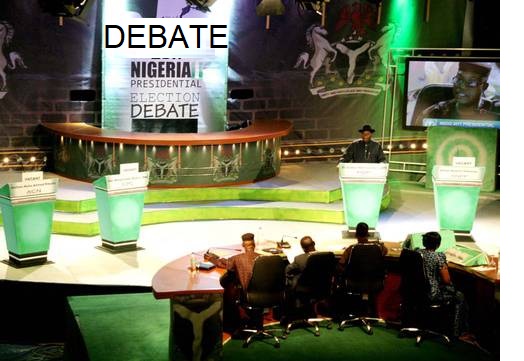
Problematisation of Normalising Political Debate in Nigeria’s Election Discourse

0

Nigerians frequently want social and political institutions to function similarly to those found in other parts of the world. They frequently refer to socioeconomic and political advances deemed positive in other countries while criticizing Nigerian actors. To them, anything good in other countries must be normalized in Nigeria, regardless of whether the country’s cultural elements support it. Any political office seeker, from media organizations to civil society actors and some political analysts, must engage in political debate.

According to several submissions and positions observed by our analyst since 2015, political parties and candidates who failed to engage Nigerians through debate during the campaign period are unprepared to be scrutinized by the public and to increase informed voting during elections.

Participation in election debate, on the other hand, is not required by the constitution, according to another school of thought. Because the 1999 Constitution makes no mention of it, this school believes there is no need to advocate for its inclusion in the country’s political discourse. As the debate rages on various platforms, our analyst presents his chosen sound bites from a virtual group dedicated to discussing both personal and national issues of great concern. This was done with the intention of bringing out counter- and alternative narratives on the normalization of the idea that is regarded as a hallmark of Western democracies.

Sound Bites from a Virtual Group

  • The is the bitter truth. The average Nigerian politician doesn’t want to engage the elite because it is perceived as a waste of time and resources. The same vote you and I have is not superior to the vote of “Musa @dgate” (one-man, one-vote).
  • While we hold the politicians accountable on one hand, we should also not allow the 4th Estate take undue advantage of their role because that will provide an excuse for already unwilling politicians.
  • They need to give a good excuse, and that’s perception management. Reality needs to be effectively packaged and managed to sway some minds, particularly such minds that are operating from the frays of events. Agreed, governance is different from electioneering. Leaders must communicate with their followers, failing which they risk being misunderstood and purposely misrepresented by the opposition.
  • What’s the media reach of Arise TV? Is that the only means of reaching the electorates? Arise TV can only, if at all, influence the undecided voters?  And what’s the average percentage of undecided voters in our election? And what fraction of undecided voters can Arise TV swing based on their 23% viewership share of the market?  These are among the statistics to be considered by political strategists, and not just jumping between media houses. He has learnt his lesson anyway, belatedly though. Democracy is a game of numbers, political strategists are more interested in these numbers and not the hysteria around it, and are willing to ply the route that will return the highest numbers. The last presentation before the Organized Private Sector seems more meaningful and impactful than 100 times appearance on Arise TV.
  • That’s Pareto’s 80/20 principle. Focusing on the 20% that controls the 80% of the economy. A political masterstroke it was. Who even stands to gain more should BAT attend an interview at Arise TV? Arise TV of course. It’s definitely going to catapult the media rating of Arise TV to high heaven.  Asiwaju is an example of a matured product, and in product life cycle you don’t use the same marketing strategy for a matured product and a newbie.  A new product needs the intensity of awareness creation more than a matured product. A new product chases after the news using sales promotions of all sorts, coming in different packaging and sizes. The matured product on the other hand chooses and picks his market. In the FMCG industry, St Louis Sugar is a good example of a matured product, it rarely advertises its strength because we all know its selling points; it doesn’t change packages, it doesn’t come in sachets, yet we all know where to find it.
  • Honestly, the only way forward is the continuous check and balance which depends on the civic consciousness of the citizen. We all have a role to play in our democracy. That is why I cannot blame those that are demanding accountability of the aspirants. One the integrity test is passed people should willingly submit their votes on trust. So, institutions are entrusted to keep the trust of the masses. Today that has become a subjective process in the light of liberal democracy.

NETNOGRAPHY: What I Discovered After Observing RantHQ for 7 Days

0
Social media

I decided to study the Rant Headquarters Facebook group because of my interest in knowing some social networking driven emerging subcultures in Nigeria. This group, known as RantHQ, was founded on August 19, 2017 by Suzan Ade Coker. It has more than a million members. My analysis of the group reveals that socioeconomic and political issues, as well as Nigerian needs, are the driving forces behind various types of conversation. Between November 4th and 11th, 2022, I studied this group with the intention of learning what was going on in the group, what members were talking about, and becoming acquainted with their activities.

During my observation of the group, I paid close attention to the posts and how members interacted with them (posts). The group has several rules that govern posting and commenting on what other members have posted. A post must be approved by the founder and some members who have been given administrator status before it can be published. Aside from general posts using Meta’s (Facebook’s creator) “what’s on your mind” feature, the group also uses announcement and event features. In this report, I present my observations by examining the values, practices, signifiers, and how members created meaning in relation to the topics of conversation through specific symbols.

Key Values and Practices

As previously stated, the group believes in discussing socioeconomic and political issues as well as member needs. However, in most cases, members discuss issues they encountered while interacting with non-members in physical settings (offline). This was deduced from posts and comments made by some members during my observation period. For example, I discovered that whenever a post was made by a member, they commented by referring to people they had met and had course of experiencing the post’s theme(s) from. According to my observations, members mostly talked about relationships, which include the lifestyles of people they have interacted with offline.

The majority of the time, the conversation centered on toxic marriages, families, and workplace challenges. “Be careful when they call you wife material. Some came not to buy material, but to cut it for a sample,” one of the posts warns.  Members were split in their reactions to the post. Some members, for example, reacted to it by focusing on the second statement, which explains how Nigerian men typically had premarital sex with ladies before marrying them. This type of conversation usually ends in personality disparagement as members discuss each other’s past experiences.

Based on the poor economic climate in the country, I found that members also used euphemism and oxymoron to describe the financial hardship people were going through in order to establish some level of self-fulfillment despite the hardship. “After all the hype, I thought I’d order some Shawarma to try it out. I was unable to eat it, as I had anticipated. I just couldn’t swallow it, so to speak. I threw it away in the trash as a result. It’s overrated, sorry!” reads one of the posts. Despite the fact that the speaker initially emphasized that the food had not been consumed, the fact that the food’s pack had been dropped into a trash proved otherwise (a picture of trash bin is attached with the post). I discovered that posts like this inspire readers to survive difficult economic times. Along with discussing the difficult economic climate, I discovered that group members organized physical events where the less fortunate were helped by being given food and household goods. To specifically improve the lives of its members and the nearby physical communities, the group also provides humanitarian services.

Signifiers and Meaning-Making

I observed how users used emojis as signifiers to establish symbolic meanings of the themes in their posts because meaning-making is “the process by which people construe, understand, or make sense of life events, relationships, and the self.” During the time I spent observing the group, I discovered 16 emojis (??, ?, ????, ?, ?, ?, ?, ?, ?, ?, ?, ?, ?, ?, ?, ?) and 6 associative symbols (?, ?, ?, ?, ?, ?). I learned that these emojis serve as signifiers that help members pay attention to posts and comments. One of the relationship-related posts, for example, states that “insulting a woman after breakups ? and exposing her past in front of others shows that you have failed as a man.” The use of ? indicates that the member who posted it believes it is improper to expose a former partner’s past bad deeds.

Some of the emojis, also known as associative symbols, aided members in better understanding of posts and comments, particularly when members wanted to be sarcastic in communicating specific topics.  This is most common when discussing relationship topics such as failed marriages and marriage proposals. One member, for example, writes: “a relationship in which your partner does not get jealous, fight or quarrel you over things.” My sister runs ????. It’s a ruse. Thank you ????????. The use of the first emoji (????) which indicates running emphasized the need to leave the relationship, while the use of ???????? (indicates walking) after the appreciative statement reinforced the need to thank the member for giving the advice.

Tech Company BLOC Set to Provide Nigerian SMEs Access to Financial Services, Partners With SMEDAN

0

Technology company that offers Fintech infrastructure to businesses, Bloc has partnered with the Small And Medium Enterprises Development Agency of Nigeria (SMEDAN), to provide SMEs with easy access to financial services.

Backed by a CBN-Issued microfinance banking license and a PSSP license, Bloc seeks to embed digital financial services into the product and services of small businesses in the country.

Following its partnership with SMEDAN, it will enable easy onboarding of these SMEs, by providing them with fintech services such as lending, Issuance of POS, industry-specific supply chain solutions, digital banking, bill payment, loyalty cards management, social commerce platforms, etc.

Speaking on Bloc’s partnership with SMEDAN, the Director-General and Chief Executive Officer of SMEDAN, Mr. Wale Fasanya disclosed that such strategic partnership will significantly increase the growth of SMEs in the country, also creating multiple inventions.

In his words, “We know this partnership with Bloc and the subsequent platforms that are being developed will benefit the SMEs that work with us by improving access to specialized services developed by the innovative FinTech sector of Nigeria.

“We have more than 4,000,000 registered FinTechs and we are always thinking of ways by which we can improve their existence. Our success is measured by how much we can do for them, and we believe we have shown our level of innovation by developing this platform with Bloc.”

Also commenting on the partnership, Bloc’s Business Development Officer, Mr. Kingsley Ikart said “As an infrastructure company that provides services to other FinTechs, we believe that this platform designed by SMEDAN and Bloc would allow some of these FinTechs to extend their brilliant services to SMEs that would otherwise not have been aware of what they do.

“He further described the partnership between Bloc and SMEDAN as a win-win situation. This is because these SMEs can now benefit from such innovations without stressing themselves and compromising the time they need to attend to their businesses”.

With so many technological advancements in the world today coupled with global adoption, consumer expectations are changing. Many SMEs are including financial technology products, which has no doubt created a significant impact on their business.

Following Bloc’s mission to provide financial services to SMEs in Nigeria, it will no doubt lead to the exponential growth of these SMEs, thereby positively impacting Nigeria’s economy due to their significant role.

Twitter Reportedly Suspends $8 Verified Checkmark, Following Impersonation Chaos

0

Twitter has suspended Twitter Blue following massive impersonation that followed the idea introduced by new owner Elon Musk earlier this week.

Musk, who completed the acquisition of Twitter at the end of October, introduced $8 verification fee as an additional means of generating revenue for the social media company. The Twitter Blue now offers anyone who pays $8 per month the opportunity to be verified.

The idea has led to increase in number of verified accounts as many pay $8 for the blue checkmark. But it also unleashed unprecedented impersonation and disinformation on Twitter, forcing the platform to halt the feature.

“Twitter has suspended the launch of Twitter Blue and is actively trying to stop people from subscribing ‘to help address impersonation issues,” Schiffer tweeted.

Schiffer said the internal note was shared on the company Slack: “An update on what we did tonight: hid the entry point to Twitter Blue, added the ‘official’ label for ONLY advertisers. Note: here is at least one way for users to sign up for Blue. Legacy Blue users can go to subscriptions and upgrade,” she quoted the note saying.

Musk’s decision to monetize Twitter verification was highly criticized. Many users believe it will defeat the purpose of the checkmark which lends credibility to user identity. But he didn’t change his mind. He only reviewed the verification fee from the $20 he wanted it to be to $8.

Now with many signing up for the blue checkmark, impersonation of public figures and firms has become prevalent on the platform. Reports said that racial abuse and bullying have also rocketed on Twitter since Musk took over.

Musk’s idea of putting an end to the impersonation is directing that parody accounts must indicate it in their bio. He warned last week that any Twitter handles engaging in impersonation without clearly specifying “parody” will be permanently suspended. On Friday, he announced new updates.

“Going forward, accounts engaged in parody must include “parody” in their name, not just in bio,” he said, adding that “We’re adding a “Parody” subscript to clarify,” he said.

With that yet to be complied with by users, as indicated by the growing number of impersonated accounts, Twitter has chosen to shut down the Twitter Blue feature until the problem is fixed.

Schiffer reported that Twitter’s note said existing subscribers will still be able to access Twitter Blue features, and that the company disabled the option to purchase Twitter Blue on iOS.

Twitter users confirmed this early on Friday, saying the sign-up for Twitter Blue was no longer available on the iOS app. The Verge reported that users who still had the option to subscribe received an error message that said, Thank you for your interest! Twitter Blue will be available in your country in the future. Please check back later.

The unprecedented crisis has put Twitter’s checkmark revenue stream on hold. Musk said it should account for half of the company’s revenue.

It is not clear if making users indicate when accounts are parody will stop the mess. Musk said on Thursday that Twitter will do lots of dumb things in coming months. “We will keep what works & change what doesn’t,” he added.

How not to talk with Africa about Climate Change – By Muhammadu Buhari

4

By Muhammadu Buhari

Part of my nation is underwater. Seasonal flooding is normal in Nigeria, but not like this. Thirty-four of the country’s 36 states have been affected. More than 1.4 million people have been displaced.

Together with drought-driven famine in the Horn of Africa, cascading wildfires across the North and wave upon wave of intensifying cyclones in the South, climate disasters in Africa form the backdrop to this year’s U.N. Climate Change Conference (known as COP27) in Egypt.

Many of my peers are frustrated with Western hypocrisy and its inability to take responsibility. Governments have repeatedly failed to meet their commitments to the $100 billion fund for climate adaptation and mitigation in the developing world — for the mess their own industries caused. According to the United Nations, Africa is the continent worst affected by climate change despite contributing the least to it. Even though the COP27’s agenda notes the need for compensation for loss and damages (as distinct from adaptation and mitigation funding), that demand has mostly been met with silence in the West.

Amid this simmering acrimony, I offer a few words of advice to Western negotiators at this year’s COP27. They should help the West avoid exacerbating what the U.N. secretary general has called “a climate of mistrust” enveloping our world. Some of the global south’s demands seem obvious. But experience of the recent past suggests they need to be reiterated.

First, rich countries should direct a greater share of funding to developing nations’ adaptation to the effects of climate change. Most financing currently flows toward mitigation projects, such as renewable energy projects, that reduce emissions. While such projects have their uses, far more money needs to go to helping Africa adapt to the effects of climate change — which seems only fair for a continent that produces less than 3 percent of global emissions.

Africa urgently needs investment in adaptation infrastructure — such as flood prevention systems — to stave off the disasters that destroy communities and cripple economies.

Second, don’t tell Africans they can’t use their own resources. If Africa were to use all its known reserves of natural gas — the cleanest transitional fossil fuel — its share of global emissions would rise from a mere 3 percent to 3.5 percent.

We are not the problem. Yet the continent needs a reliable source of power if it is to pull millions of citizens out of poverty and create jobs for its burgeoning youth population. Africa’s future must be carbon-free. But current energy demands cannot yet be met solely through weather-dependent solar and wind power.

Don’t tell Africa that the world cannot afford the climate cost of its hydrocarbons — and then fire up coal stations whenever Europe feels an energy pinch. Don’t tell the poorest in the world that their marginal energy use will break the carbon budget — only to sign off on new domestic permits for oil and gas exploration. It gives the impression your citizens have more of a right to energy than Africans.

Third, when you realize you need Africa’s reserves, don’t cut its citizens out of the benefits. In the wake of the Ukraine war, there has been a resurgence of interest in Africa’s gas. But this impulse is coming from Western companies — backed by their governments — who are interested only in extracting these resources and then exporting them to Europe.

Funding for gas that benefits Africa as well as the West is conspicuously lacking. At last year’s COP, Western governments and multilateral lenders pledged to stop all funding for overseas fossil fuel projects. Without these pools of capital, Africa will struggle to tap the gas needed to boost its own domestic power supply. Consequently, its development and industrialization will suffer. Donor countries don’t believe in the developing world exploiting its own hydrocarbons even as they pursue new oil and gas projects within their own borders.

Western development has unleashed climate catastrophe on my continent. Now, the rich countries’ green policies dictate that Africans should remain poor for the greater good. To compound the injustice, Africa’s hydrocarbons will be exploited after all — just not for Africans.

Fourth, follow your own logic. Africa is told that the falling cost of renewables means that it must leapfrog carbon-emitting industries. At the same time, Western governments are effectively paying their citizens to burn more hydrocarbons: Lavish subsidy packages have been drawn up to offset spiraling energy bills. Meanwhile, Africa is the continent closest to being carbon-neutral. It reserves the right to plug holes in its energy mix with the resources in its ground — especially when they will make almost no difference to global emissions.

The Western countries are unable to take politically difficult decisions that hurt domestically. Instead, they move the problem offshore, essentially dictating that the developing world must swallow the pill too bitter for their own voters’ palates. Africa didn’t cause the mess, yet we pay the price. At this year’s COP, that should be the starting point for all negotiations.