DD
MM
YYYY

PAGES

DD
MM
YYYY

spot_img

PAGES

Home Blog Page 4703

Naira Falls Back to N800/$ As the Rumor Driving Its Gain Dies Down

0
Naira USD

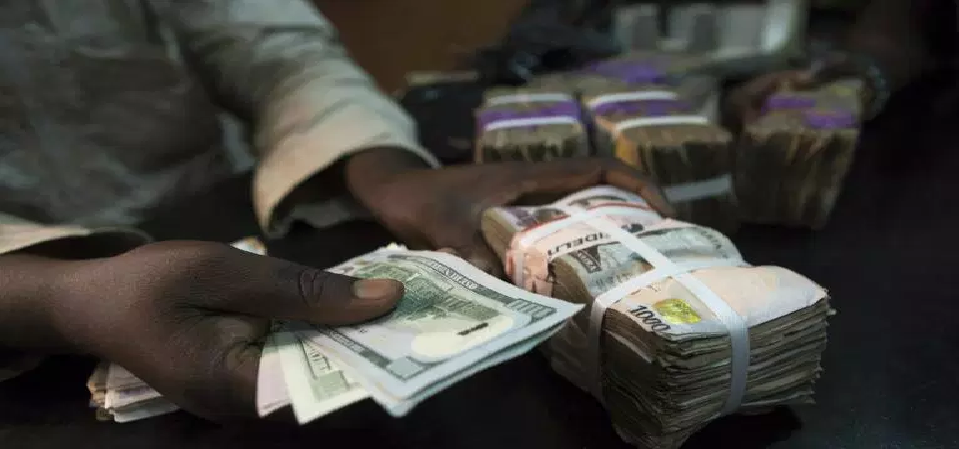
On Tuesday, the naira depreciated to N800/$1, a further drop from Monday’s N780 per dollar performance, after recording its biggest comeback in recent times last week.

Though it dangles around N766-N800 in the parallel market, the much-celebrated gain has been significantly erased in a matter of days. On Tuesday, the naira depreciated by 0.15%, exchanging at 446.67 to dollar in the Import and Export window.

The naira appreciated as much as N680/$1 following the 7.7% drop in US inflation, which forced the dollar to fall last week against other currencies. Naira’s gain was also attributed to a rumored plan by the US to redesign dollar notes from 2021, forcing hoarders to release their stockpile – inadvertently increasing liquidity in the parallel market.

However, analysts said the swift erasure of the naira’s gain underscores the fact that the currency’s value lies on productivity, export and economic strength of the country. Experts have long advocated export and production-based solutions to naira’s free fall.

Nigeria’s economy is largely based on crude oil export, but has been bedeviled by poor economic growth factors such as oil theft and non-functional local refineries. More than half of the oil produced daily in Nigeria is stolen; leaving the country with a production output short of its stipulated quota by the Organization of Petroleum Countries (OPEC).

With effect from September 2022, OPEC authorized 1.830 million barrels per day (mbpd) oil output for Nigeria. But the country could barely lift above 1mbpd. Nigeria managed to produce 1.014 mbpd for the month of October; slightly exceeding the 972,394 bpd it recorded in August and September’s 937,766 bpd, according to data from the Nigerian Upstream Petroleum Regulatory Commission (NUPRC).

The low output limits the amount of forex Nigeria could derive from oil exports. It is compounded by non-functional refineries, which forces the Nigerian National Petroleum Corporation Limited (NNPCL) to import petroleum products at international market price, spending the forex proceeds from oil exports that would have yielded enough dollar liquidity to put pressure off the naira.

Attempts by the Central Bank of Nigeria to tame the tide through monetary policies have failed as the naira continues in its downward spin.

Experts’ said one major way to boost the naira is to increase the supply of dollars by eliminating subsidies and pegs on the dollar. But hope is increasingly growing dim that the present administration will lift a finger to implement any of the experts’ recommendations.

As the 2023 presidential election draws near and the naira appears determined to touch N1,000/$1 before then, business leaders are shifting focus on the presidential candidates.

On Tuesday, the presidential candidate of Labour Party, Peter Obi, admitted during his appearance at the Lagos Business School, that this multiple exchange rate regime encourages capital flight and deters investment. He said if elected, he would remove the subsidies around the dollar to promote a single forex market.

“We will remove import and forex restrictions and insist on a single forex market. The current system penalizes exporters who bring in forex by forcing them to sell at a rate that they are unable to source for forex when they need to purchase forex,” he said.

While Nigerians now count on whoever becomes the president next year to change the fate of the naira, the troubled currency is likely going to suffer its deepest fall in history.

Law 28: Big Lessons from Carlos Ghosn

0

Law 28 of the 48 laws of power by Robert Greene entails the importance of entering into actions with boldness. The law reads:

If you are unsure of a course of action, do not attempt it. Your doubts and hesitations will infect your execution. Timidity is dangerous: Better to enter with boldness. Any mistakes you commit through audacity are easily corrected with more audacity.

Robert Greene espoused his proposition with a somewhat radical thought by Niccolo Machiavelli, adapted from the latter’s book, the Prince, which superimposes impetuousness over cautiousness. According to Machiavelli, it is better to be impetuous than to be cautious because fortune is a woman that would rather be attracted to the impetuousness of the bold than the cautiousness of the cold and timid.

Observers of the law radiate power as they hypnotize their opposition or people into their biddings. The transgressor is often ensnared into traps set by people secretly unsettled by his overbearingness. In the corporate setting, the bold manifest agile leadership and ruthless pragmatistm.

Ghosn characterizes both the observation and transgression of the 28th law of power.

Who is this man?

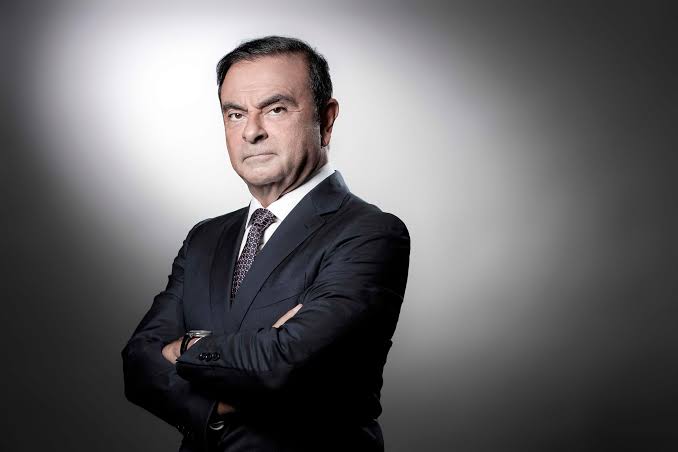
Carlos Ghosn is a Lebanese and Brazilian-born business tycoon and renowned CEO of three fortune five hundred companies, a very rare thing to find in the top 10 percent of the word’s CEOs. His is an interesting story.

With ruthless pragmatism and grace, Carlos grew his profile in the automobile industry, spanning North America, France and Japan. He started his career at Mitchelin, where he worked as Chief Operating Officer for eight years before he moved to Renault. At Renault, Goshn served as the deputy president and he was able to turn the company around from near-bankruptcy by implementing an elaborate two-years plan that helped to cut costs, reduce the workforce, and revised production processes and business models.

Due to his ability to keep an impressive book, Ghosn was named the cost killer aka “Le Cost Killer”. In the early 2000s, he earned the nickname “Mr Fix it”for orchestrating one of the auto industry’s most aggressive downsizing campaigns and spearheading the turnaround of Nissan from its near-bankruptcy in 1999.

Following the Nissan financial turnaround, in 2002 Fortune awarded him Asia Businessman of the Year. In 2003 Fortune identified him as one of the 10 most powerful people in business outside the U.S., and its Asian edition voted him Man of the Year. Surveys jointly published by the Financial Times and PwC named him the fourth most respected business leader in 2003, and the third most respected business leader in 2004 and in 2005. He quickly achieved celebrity status in Japan and in the business world and his life has been chronicled in Japanese Comics.

During the financial crisis of 2008, when many brands found themselves out of business, Carlos managed to keep the businesses that he managed above the waters, although he did not achieve this without stepping on some people’s toes. Crushing opposition and moving with compelling force was what Ghosn did very comfortably.

The Lebanese CEO may have been able to beat the economic forces and the market competition around him but his career and freedom were brought to a halt by some disgruntled co-workers.

He was accused to have underreported his earnings, and involved in other financial misdemeanors. Then he was arrested by the Tokyo Police but later released on bail. With the assistance of a friend, Ghosn defied the bail terms and orchestrated his own escape from Japan.

Hidden in a box in the cargo of the aircraft that was arranged for his escape, the cost killer fled Japan for asylum in Beruit. He claimed he would never get justice in Japan where he had built much of his reputation.

Some of his adversaries admitted to this: he was a fine executive but he was enriching himself while many of them around him were being underappreciated.

You can watch the documentary of the exploit travails of Carlos Ghosn here:


Decline in Ad Sales Compels YouTube to Upgrade Its Short-Form Video Service

0

Following the global economic meltdown that has negatively impacted some tech companies, Alphabet-owned video streaming platform YouTube has revealed plans to upgrade its short-form video service to include shopping features after its ad sales dropped.

Youtube seeks to make its platform a one-stop shopping destination while ensuring that content creators will be able to use its software to track and tag products featured in their videos.

The feature is currently being tested on different channels which will permit viewers to watch a clip and purchase products directly from YouTube through shopping tools generated and hosted by Google.

The video streaming platform has partnered with Shopify to allow creators and merchants to feature their products on their channels, which will also enable eligible content creators to link their Shopify store to their YouTube channel. 

YouTube witnessed a quarterly ad revenue decline of 1.9% year over year. In the third quarter (Q3) of 2022, the company posted revenue of $69.1 billion and earnings per share of $1.06, failing to meet Wall Street’s prediction of $70.61 billion.

The ad revenue slowdown for YouTube shows a pullback in spending by some advertisers, which was first noted by the company in the last quarter.

Some advertisers that slowed their advertising spending on YouTube came from the financial services, insurance, loans, mortgage, and crypto industries.

In a bid to diversify its revenue, the Video streaming platform is testing new commission schemes for influencers who sell products through links in videos.

This is coming after YouTube introduced “new ways for users to monetize YouTube Shorts. The platform has continued to struggle with its strong rival TikTok, over the past two years, which has seen it heavily invest in its short-form video feature.

In June 2022, YouTube Shorts had topped 1.5 billion monthly logged-in users. After tests earlier in the year, YouTube in September began running ads in Shorts, and starting in early 2023, YouTube Shorts is launching a revenue-sharing program for creators who meet certain criteria.

YouTube will also pay out 45% of revenue to Shorts creators allocated based on views, which is lower than the 55% it shares in the core YouTube Partner Program.

FTX Collapse: Nigerian Web3 Startup Negatively Impacted, Forced to Downsize Workforce

0

Following the collapse of the FTX crypto exchange platform which has negatively impacted several companies across the globe, Nigerian Web3 startup Nestcoin has been forced to lay off part of its workforce.

The one-year-old startup disclosed it used the FTX platform as a custodian to store a significant proportion of its investment, which has seen its assets held due to the collapse, noting that it necessitated the firm to downsize its workforce to be able to manage its operational expenses.

The startup CEO Mr. Yele Badamosi took to his Twitter handle to inform investors about the firm’s next move, which he shared via a statement.

The statement reads in part,

Dear investors,

“We are reaching out to share an update on the FTX incident and its impact on Nestcoin. Last year, Nestcoin raised capital from a range of investors, including Alameda Research.

For context, Alamanda’s equity is less than 1%. We used the closely-associated exchange, FTX, as a custodian to store a significant proportion of the stablecoin investment we raised- i.e our day-to-day operational budget.

However, last week’s events have had an impact on us, as we held our assets (cash and stablecoins) at FTX  to manage our operational expenses. We were not undertaking any trading but simply custodied our assets on the FTX exchange.

“While there are uncertainties, including the outcome of our assets held at FTX, we as a company have to adjust our plans, rethink our strategy and take steps to better position ourselves for the future.

Unfortunately, this means saying goodbye to some of our very talented nesters. While this is a challenging time for us and the industry as a whole – we see this as a wake-up call to focus on building a more decentralized crypto future where no one organization or person can amass enough power to influence a nascent industry that has the potential to do good.

In the past few days, I’ve strengthened my resolve and remain committed to “doing crypto” in line with its true spirit and founding ethos.

“At Nestcoin, we have a renewed sense of purpose — we realize that for crypto to truly go mainstream, we must accelerate the transition to self-custody by building compelling trustless crypt products. To succeed, we will remain relentless, resourceful, and flexible as we navigate these hard times.

“We thank you for your support and strategic advice so far. As always, if you have any questions please feel free to reach out to me directly at yb@nestcoin.com”.

While the firm has made the move to reduce part of its workforce, reports reveal that the remaining team members will have their salaries slashed by 40%.

Nestcoin builds, operates, and invests in web3 applications, which is funded by 20 investors, and has raised a total of $6.5 million in funding over 1 round, which was a pre-seed round raised on February 2022.

The collapse of the FTX crypto exchange platform which has already filed for bankruptcy  has negatively impacted a large number of people and organizations which has seen them lose a substantial amount of cash.

It has also affected the cryptocurrency market, as the price of cryptocurrencies plummeted at the news of the collapse. Bitcoin lost more than 8% in value which saw it trade at $18,000 mark, while Ethereum tumbled by more than 16% to $1,200.

It has been predicted that the prices of crypto could end up plummeting below $10,000 before the end of the year, due to concerns from investors.

Crypto.com Delays Withdrawals Amidst Insolvency Rumbling The Cryptocurrency Industry

1

Following the Bankruptcy of crypto exchange FTX, many centralized exchanges have been facing liquidity crunch. The Proof Of Reserves posted by Kris Marszalek, CEO of Crypto.com quoted Shiba Inu coin – [Memetokens] as the second biggest asset on its Proof of Reserves followed by Bitcoin.

Ethereum and stablecoins reserve on crypto.com:

  • 25-80% of ETH reserves moved four times since Sep 2022.
  • Stablecoins reserve decreased from $2.9B to $292M, -90% over the past 7 months.

This situation has opened increased withdrawal pressure on the CEX. Crypto degenerates are skeptical on how illiquid and volatile those digital assets could be. 

Seems like other market actors would like to see Crypto.com implode. I don’t see it happening. On CNBC, Kris noted he is on a mission to prove ‘Naysayers’ wrong. Meanwhile, some crypto users feel CZ-Binance is trying to eliminate competitors, and owing to the growth on $CRO native token of Crypto.com – which some per-mutate as the ‘stabler’.

Due to the insolvency of FTX and Alameda Research, many Centralized Exchanges, including Binance, have  put forward a Merkle tree proof of funds to help boost transparency and investors confidence in the Crypto Industry. Yes, that also makes it necessary for us to pay attention to our Cryptocurrency Wallet User Manuals, to understand, if necessary, when to do that trigger.

Etherscan on chain Bloockscript reveals transfer of funds within Crypto.com in an attempt to meet up with the rising standard of Showing Proof of Reserves. Apparently, there’s a conflict of interest in play, Crypto.com sent $1B to SBF ex- CEO of FTX they likely fell victim to the incredibly great APR deception an allegation Kris refuted as false but admitted Crypto.com had a $10Million Exposure to FTX.

Users are worried and want an explanation on what this $1Billion transfer is about and it’s relationship with Alameda Research running up to venting. When you answer “this is false, everything is fine ” and don’t explain, you will get the opposite reaction, SBF, Do Kwon and 3AC also said everything was ‘fine’ but tanked in the end.

Mario Nawfal, said the same auditors behind FTX also approved the “proof-of-reserve” snapshots that are coming under scrutiny at Gate and Huobi Exchanges. These snapshots look to have been fluffed up by wash transactions from crypto.com, who claims that this was a mistake, Hard to believe.

Proof of Reserves (PoR) is a point in time, hard to verify when it’s a moving target, PoR does NOT cover liabilities. Who knows where these land, verifying C of the liabilities of a CEX is probably really hard to do. Many existing partners do not understand decentralization and blockchain tech, But with key auditing knowledge they know when something doesn’t smell right.

OXFOOBAR tweeted, if crypto exchanges were car repair shops, you’d come back the next day, ask why your car was replaced with three bikes, and the response would be: “this is false. We have minimal exposure to bike shops and have only used them as a trading venue to hedge customer transportation”.

https://twitter.com/0xfoobar/status/1592370702153560064?s=46&t=VpcHJ4oX-yzDqBhCsLyl_g

If Crypto.com will survive through this storm it will be the most trustable centralized exchange after Binance. To fight the FUD, people need the right answers and proof of what is happening with many internal transactions. Currently, $KCS  and $CRO are breaking to fresh new lows while $FTT gained +23% from its low of $1.2, guess we’ll see if FTX behavior was isolated or something of a trend.

Meanwhile, Changpeng Zhao in a letter to Staff wrote “People now think we are the biggest and will attack us more,” said the Binance CEO. “We are used to being open and leaning into headwinds. In fact, we embrace scrutiny. We must significantly increase our transparency, proof-of-reserves, insurance funds, etc. A lot more to come in this area.” Because of the FTX and Alameda Research crash, some Crypto enterprises will never remain the same.