DD
MM
YYYY

PAGES

DD
MM
YYYY

spot_img

PAGES

Home Blog Page 472

Fintechnolization Is Why Stablecoin Is Part of the Future

0

Every great digital platform eventually matures with fintech component. That is the message of fintechnolization—a construct I have studied over years. Amazon began with books, Apple with devices, Grab with rides, but all found their way into payments, wallets and broad fintech. Why? Because to control ecosystems, you must also control the financial rails. Fintech is the final bus stop of digital platforms, the state of maturity every digital journey travels to.

In that redesign, stablecoins have emerged as the lubricant. Unlike volatile cryptos, they are pegged to stable assets like the US dollar, offering predictability. They cut the costs of moving money, power instant cross-border settlements, and through smart contracts, make finance programmable. In marketplaces, gaming, logistics, or insurance, stablecoins are not just tools—they are bridges connecting industries to the inevitable fintech layer of their platforms.

So, when you see industries adopting stablecoins, understand the deeper plot: fintechnolization at work. The platforms are maturing. They are finding their destiny in finance. And in this era, stablecoins have become the vehicle of that destiny. As the Igbo say, you may run, but you cannot outrun your destiny. For platforms, that destiny is fintech—and stablecoins are helping them get there. And that means: stablecoins are thus not a passing fad.


Stablecoin as the Currency of Digital Platforms

Stablecoins—cryptocurrencies pegged to stable assets like the US dollar—fit into this evolution. As digital platforms fintechnolize, they look for low-cost, borderless, and programmable money that can serve their global and multi-industry ambitions. Stablecoins provide exactly that:

  • Low-cost settlements: Cross-border remittances and trade payments can clear in seconds, bypassing expensive correspondent banks.

  • Programmability: Smart contracts enable platforms to integrate payments into their workflows automatically, from supply chain financing to subscription renewals.

  • Trust and stability: Unlike volatile cryptocurrencies, stablecoins offer predictability, making them usable for payroll, savings, and trade.

In this way, stablecoins become the preferred financial instrument that accelerates the fintechnolization process for industries.

Industries Adopting Stablecoins

  • E-commerce & Marketplaces: Platforms use stablecoins to settle international vendor payments instantly, reducing FX friction.

  • Gaming & Creators’ Economy: Stablecoins power in-game transactions and payouts to creators globally, avoiding delays in traditional banking.

  • Insurance & Finance: Firms explore stablecoin-based premium collections and claim payouts, ensuring faster liquidity for customers.

  • Logistics & Supply Chains: Stablecoins are adopted for cross-border B2B settlements, reducing dependency on fragmented banking systems.

Connecting the Dots

Fintechnolization explains why industries are turning to stablecoins: as firms mature into fintech providers, they require instruments that transcend national currencies and banking inefficiencies. Stablecoins are thus not a passing fad but a manifestation of the digital destiny Ndubuisi Ekekwe described—where every platform eventually builds fintech layers, and in today’s global internet, stablecoins serve as the lubricant of that transition.

Dangote’s free fuel plan exposes fault lines in Nigeria’s oil market

0

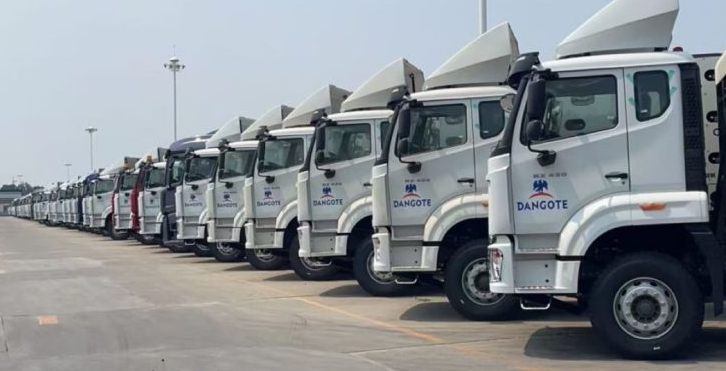
Dangote Refinery’s decision to absorb the cost of transporting petrol to selected states landed as both relief and provocation. For years, Nigerians have endured a volatile downstream market shaped by import dependence, subsidy collapses and layers of rent-seeking. The announcement that fuel would be delivered to outlets in Lagos, Ogun, Oyo, Ekiti, Osun, Rivers, Edo and Abuja without transport charges was greeted with cheers in some quarters.

The company deployed more than 1,000 compressed natural gas trucks for the operation, describing it as a way of demonstrating efficiency and commitment to easing household pressures. In parts of the South West, prices quickly fell to around ?841 a litre compared with ?865 a few days earlier. In Abuja and parts of the Niger Delta the average price dropped closer to ?851, with a gantry price set at ?820. Consumers began to sense that indigenous refining could finally influence the market after decades of reliance on imports.

Online responses reflected the mixture of relief and nationalist pride. “Imagine what ten indigenous companies like this would have done for the country. God bless Dangote Group,” wrote one user. Others cast the refinery as a “master driver” of the oil sector, while voices in the diaspora framed the move as a blow to “corrupt and greedy marketers” who had long extracted rents from the supply chain.

Associations bristle at disruption

The optimism was not universal. Unions and associations tied to petroleum logistics reacted with unease. The National Association of Road Transport Owners, whose members traditionally move products from depots to retail outlets, said the plan undermined existing contracts. Leaders warned that thousands of jobs were at risk if the refinery bypassed their services and operated a parallel delivery system.

Independent marketers were split. The national leadership of IPMAN encouraged members to register with Dangote’s online platform to qualify for allocation, emphasising that several stations in Lagos, Ogun and Ondo had already benefited. Yet within the association some questioned the sustainability of free haulage and cautioned against allowing a single company to dictate distribution practices.

Behind these tensions lies the refinery’s direct challenge to a business model that has historically enriched middlemen. By reducing the role of transport unions and depot operators, Dangote threatens entrenched interests that have survived every round of subsidy reform. To supporters, this represents long-overdue disruption. To critics, it risks handing disproportionate leverage to one industrial empire.

Exclusions fuel regional resentment

The initial roll-out excluded most Northern and South Eastern states. Abuja was covered, but Kano, a city central to Dangote’s corporate identity, was not. The omission stung. “As someone from Kano, I always believed Dangote Industries would treat Kano and the North with respect,” one resident wrote, voicing a sense of betrayal.

In the South East the anger was sharper. Commentators complained that once again their region had been overlooked, with insecurity cited as an excuse for bypassing deliveries. “Not even one southeastern state? Damn!” was a typical reaction. Others accused the company of hypocrisy, arguing that it could leapfrog South Eastern states to serve Rivers.

The controversy illustrates how fuel distribution has become a stage on which broader grievances about belonging and fairness are performed. A scheme intended as a symbol of relief instead reinforced perceptions of regional inequality.

A battle for legitimacy in the oil economy

What is unfolding is more than a logistical adjustment. It is a struggle over legitimacy in Nigeria’s oil economy. Pump prices in the South West and parts of the Niger Delta have fallen, while competitors such as MRS have quietly lowered their prices to remain relevant. Yet consumers remain sceptical. Reports surfaced that some stations, even after receiving cheaper supply, still sold at ?870, fuelling suspicion that old habits die hard.

The refinery has nevertheless forced a recalibration. For ordinary Nigerians, the clash pits an indigenous company presenting itself as a patriotic alternative against entrenched unions seen as profiteers. For investors, it signals the risks of concentrated market power. For politicians, it highlights how quickly corporate gestures can feed into narratives of exclusion.

What began as a free delivery scheme has become a national conversation about trust, power and fairness. Dangote has positioned itself as both disruptor and unifier, but it now faces the delicate task of expanding distribution without reinforcing old regional wounds or sliding into monopoly. The refinery is not just a plant on the Lekki coast. It is symbolic infrastructure, where the price of petrol carries with it the weight of national legitimacy.

How “Contact Verified” Becomes a Tool for Managing the Crypto Liquidation Crisis

2

Across the crypto world, warnings about frozen accounts, blocked withdrawals, and false fee demands have multiplied. Investors reeling from volatility or hacks nervously seek someone to trust. In the document of recent social media posts, one tweet declares: “ Withdrawals locked scammers demand fake ‘service fees’! Stop all transactions immediately. Contact verified #CryptoRecovery experts via DM for safe assistance”. Such language captures both panic and direction. The crisis is described as urgent and potentially devastating, yet the audience is offered an immediate point of action through the metaphor of contacting someone “verified.”

Verification as a Beacon in Chaos
When exchanges block access or liquidations wipe out holdings, users feel stranded. In such moments language like “SCAM ALERT #Xtbor Withdrawals blocked, accounts frozen — funds at risk! Contact verified #CryptoRecovery experts immediately for secure assistance” functions as a beacon. Verification appears to stand in for institutional trust that has collapsed. The tweet does not explain who these experts are or how they are verified, but the term reassures readers that legitimacy still exists. Verification becomes a symbolic safety net in an environment where conventional forms of consumer protection are absent.

Where the Metaphor Becomes a Promise
The phrase does more than suggest seeking help. It functions as a promise of restoration. One warning in the dataset notes: “#StakeDexk SCAM ALERT: • Lets small withdrawals through to gain trust • Blocks larger withdrawals • Demands extra deposits & fake fees  Contact verified #CryptoRecovery experts for safe assistance”. Here, “contact verified” transforms a story of manipulation into one of potential redemption. Despite the scam’s sophistication, the call to action reframes the situation as manageable, provided that a trusted actor can be reached.

The Risk of Secondary Scams
Yet this metaphorical promise is fraught with danger. Fraudsters know that liquidation crises generate fear, and fear makes victims susceptible to new traps. Several tweets in the document repeat almost word for word: “Contact verified #CryptoRecovery experts immediately for secure assistance”. This formulaic repetition hints at automation and coordinated messaging, suggesting that the very advice to seek the “verified” may itself be part of a secondary scam. Victims already harmed by blocked withdrawals may fall into further losses by trusting so-called recovery experts.

News Cases Reinforce the Stakes
Recent global events show how fragile trust remains. The U.S. Department of Justice moved to recover over 12 million USDT tied to spoofed trading platforms that blocked withdrawals through fake fees. In another case, BigONE exchange paused withdrawals after a $27 million hack but promised to cover user losses. These real events echo the warnings seen in the tweets. They remind us that whether through genuine exchange crises or fabricated scams, the promise of “verified” expertise is central to how users try to navigate turmoil.

Turning Verification from Rhetoric into Protection
For “contact verified” to serve investors rather than scammers, verification must be backed by credible systems. Right now it is a discursive shield, repeated in almost every scam warning. Without institutional frameworks, audits, or recognized standards, the phrase remains vulnerable to exploitation. The metaphor has power because it speaks to human need for order in chaos, but that power must be translated into practical safeguards that users can rely on.

For the crypto sector to build resilience, “verified” must evolve from language into mechanism. Only then will the call to “contact verified” provide more than symbolic comfort. It will instead represent a genuine pathway to security in the liquidation crisis.

BlockDAG’s $0.0016 Offer Rare Profit Window! Testnet & Buyer Battles Gain Attention, While LINK Eyes $150 & ETH Targets $10K

0

The crypto market is gaining speed as leading names and strong newcomers fuel momentum in the last quarter of 2025. Ethereum (ETH) has recovered to $4,700, with analysts pointing toward $10,000 as the next major mark, supported by ETF inflows and rising demand. Chainlink (LINK), currently trading near $25, has cleared its resistance range, with expert forecasts eyeing $150 in the near future.

Still, the buzz extends beyond these market giants. BlockDAG (BDAG) has captured attention with its Awakening Testnet, Buyer Battles presale model, and a $0.0016 limited-time entry price. These catalysts add both credibility and urgency, underlining how fresh technology and strong demand are reshaping the crypto space.

Ethereum Approaches $10K Milestone

Ethereum (ETH) has reclaimed the $4,700 level, bringing renewed optimism across the crypto market. Analysts and traders are now setting their sights on $10,000 as the next target, with institutional demand and ETF support playing a crucial role.

The SEC’s approval of spot Ethereum ETFs in 2024 has added over $11 billion in inflows, with nearly $3 billion arriving in just one week. This surge in demand has tightened supply, creating conditions that support Ethereum’s growth.

From a technical standpoint, Ethereum is now testing the $5,000 resistance. A strong breakout at this point could unlock new highs, pushing ETH into unexplored price ranges. On top of this, expected Fed rate cuts later this year may add fuel to its upward move.

Many traders view this cycle as distinct from earlier ones, with greater adoption from Wall Street driving momentum. If these factors continue, Ethereum could soon achieve five-digit pricing, cementing its role as the market’s leading digital coin after Bitcoin.

Chainlink Builds Toward $150

Chainlink (LINK) is showing resilience as it trades around $25, having broken through the tough $21 to $23 resistance zone. This structural shift has increased confidence among analysts who now project further growth.

With a market cap above $16 billion and daily trading volume exceeding $1.21 billion, LINK’s activity reflects strong engagement from both individual and institutional participants. Well-known analyst FitzoCrypto has mapped a long-term breakout pattern, suggesting LINK could climb to $150 in the coming months.

The projection is supported by consistently higher lows since 2022, a bullish MACD crossover, and growing trading volumes. Fibonacci retracement levels point toward short-term targets of $27.50 to $31.50, while mid-range checkpoints stand at $51 to $53 before the $150 goal.

Maintaining a steady price above $25 is key to preserving momentum. Suppose Chainlink can push past $30 with strength. In that case, analysts believe it could trigger a much larger rally, positioning LINK as one of the highest potential crypto opportunities to watch in the coming year.

BlockDAG’s Awakening Testnet and Buyer Battles Drive 2900% Growth

While Ethereum and Chainlink continue to show strength, BlockDAG (BDAG) is reshaping discussions with its major developments. The Awakening Testnet, scheduled for September 25, is more than just a technical update.

It will test the blockchain’s strength under live conditions, including core blockchain activation, UTXO removal for a leaner ledger, real-time explorer tools, and live miner integration through the Stratum Protocol. These features highlight maturity in infrastructure, showing that BDAG is already functioning beyond early-stage hype.

The project has also incorporated account abstraction and prepared the ground for EIP-4337, making it ready for smart accounts and advanced dApp ecosystems. These details show that BlockDAG (BDAG) is forward-looking and technically capable.

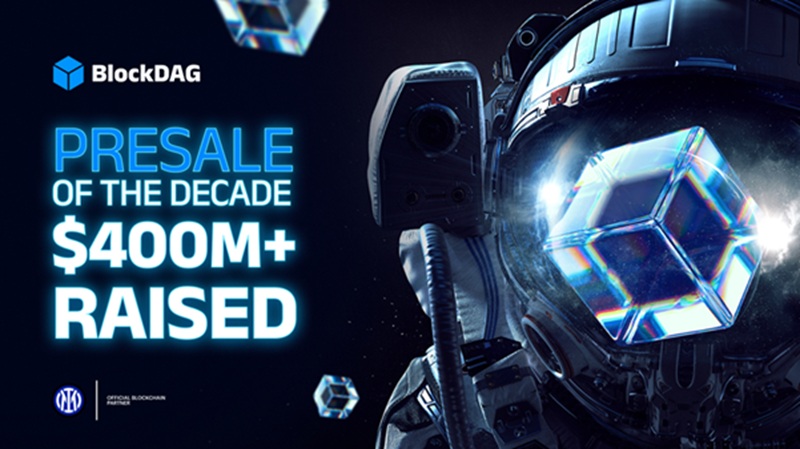
Furthermore, the Buyer Battles presale has become a driving force. Each day, 50 million BDAG coins are made available, and any unsold portion goes to the top buyer of the day. This gamified approach has created urgency and competition, driving contributions to almost $410 million. With over 26.4 billion coins sold and more than 312,000 coin holders already engaged, the numbers reflect strong momentum.

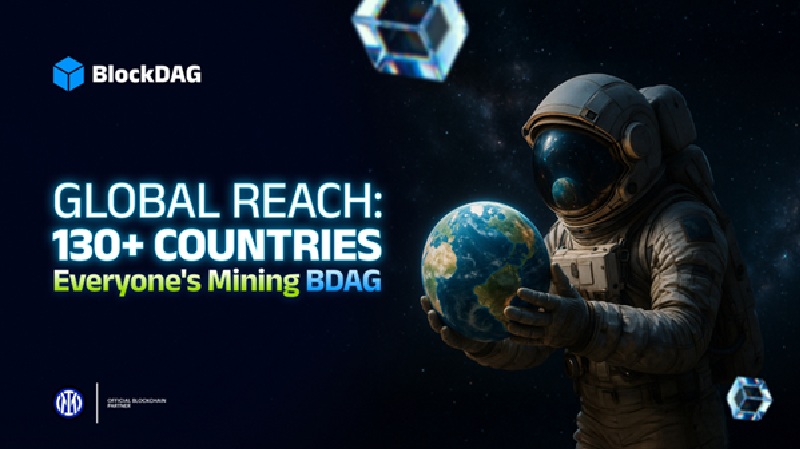
BlockDAG has also sold nearly 20,000 X-Series miners to more than 130 countries, alongside 3 million users on its X1 Miner app. The coin is currently priced at $0.0016 for a limited time.

By blending innovation, adoption, and urgency, BlockDAG has shown it is more than just another presale story. For those looking at the highest potential crypto in today’s market, BDAG is quickly proving itself as a project with unmatched credibility and growth prospects.

Closure Note

The 2025 crypto market surge shows how established projects and new challengers are reshaping opportunities. Ethereum’s path toward $10,000 underscores its role as a backbone of decentralised finance, while Chainlink’s bullish breakout points to increasing use of oracle technology and a potential move to $150.

Yet, BlockDAG has captured the spotlight as the highest potential crypto of the year. Its Awakening Testnet, Buyer Battles system, nearly $410 million raised, 26.4 billion coins sold, and growing global adoption set it apart from other presale projects.

As the Singapore Deployment event nears, BlockDAG continues to build momentum. For anyone tracking which coin leads the 2025 crypto growth story, BDAG remains the most exciting name to watch.

Presale: https://purchase.blockdag.network

Website: https://blockdag.network

Telegram: https://t.me/blockDAGnetworkOfficial

Discord: https://discord.gg/Q7BxghMVyu

Plasma Mainnet Beta and TGE Launch Slated For Thursday

0

Plasma—a Bitfinex- and Tether-backed Layer 1 blockchain optimized for stablecoin payments (like zero-fee USDT transfers at up to 1,000 TPS)—has officially announced its mainnet beta launch and native token generation event (TGE) for XPL on Thursday.

This positions Plasma as the eighth-largest blockchain by stablecoin liquidity from day one, with over $2 billion in total value locked (TVL) and integrations with 100+ DeFi protocols like Aave, Ethena, and Euler.

What to Expect at Launch

Mainnet Beta focuses on scalable, fee-free stablecoin movements, secured by PlasmaBFT consensus and EVM compatibility. It builds on Bitcoin’s security via validator-based bridging and XPL staking.

XPL Token total supply of 10 billion serves as the network’s security mechanism (for validators), governance tool, and incentive for app builders/users. Initial fully diluted valuation (FDV) hovers around $500M–$4.5B based on pre-market trading.

Plasma raised $77.5M total ($3.5M seed, $20.5M Series A, $50M public sale in July 2025 at $0.05 per token). Investors include Framework Ventures, Peter Thiel’s Founders Fund, and Paolo Ardoino (Tether CEO).

Plasma is distributing 27.5 million XPL tokens at launch to reward community involvement: 25 million XPL: To smaller depositors who verified via Sonar (by Echo) and participated in the public sale vault (launched in June 2025, which saw $373M in commitments for $50M worth of tokens).

2.5 million XPL reserved for members of the Stablecoin Collective—a community forum for stablecoin education, adoption, and contributions (e.g., OGs, early users, and verified contributors).

Non-US participants: Tokens unlock immediately at TGE. US participants: Delayed until July 28, 2026, due to regulatory compliance. To claim: Verify wallets in Plasma’s Discord over the next week (ending ~Sept. 25).

Past opportunities included Binance’s $250M stablecoin-yield campaign 100M XPL distributed in August 2025 and Galxe campaigns for badges/roles. MEXC Launchpad: XPL subscriptions ongoing until Sept. 25 at 0.35 USDT per token 1.8B allocated, with referral bonuses up to 8,000 USDT.

Plasma’s ability to process up to 1,000 TPS with zero-fee USDT transfers positions it as a game-changer for stablecoin-based DeFi. This could pressure competitors like TRON and Solana, which dominate stablecoin volume but face fee or scalability constraints.

With $2B+ in TVL at launch and integrations with 100+ protocols (e.g., Aave, Ethena), Plasma instantly becomes a top-tier chain for stablecoin liquidity. This could attract developers and users, accelerating DeFi adoption for high-frequency, low-cost transactions.

Backing from Tether (USDT issuer) and Bitfinex signals strong institutional support, potentially driving mainstream stablecoin use cases (e.g., remittances, payments) and challenging fiat on-ramps like PayPal or Circle.

The $500M–$4.5B FDV range suggests high market interest, but volatility is likely post-TGE due to airdrop unlocks (27.5M XPL) and MEXC Launchpad sales (1.8B XPL at $0.35). Early trading on exchanges like MEXC could see sharp price swings, especially with only 10% of supply initially circulating.

The 27.5M XPL airdrop (0.275% of 10B supply) targets smaller depositors and Stablecoin Collective contributors, incentivizing community retention. However, immediate unlocks for non-US participants may lead to sell pressure unless staking or governance incentives are compelling.

XPL’s role in validator security and governance could drive long-term holding if staking yields are competitive (details TBD). This aligns with trends in L1 tokens like SOL or AVAX, where utility fuels value.

Plasma’s use of Bitcoin’s security (via validator-based bridging) differentiates it from Ethereum-centric L1s. This could appeal to Bitcoin maximalists and attract projects leveraging BTC’s $1.2T market cap for DeFi innovation.

Plasma’s focus on stablecoin optimization pits it against Polygon, BNB Chain, and emerging AI/infra chains like 0G Labs (also launching this week). Its success hinges on execution and developer adoption amidst crowded L1 competition.

The airdrop and Stablecoin Collective rewards incentivize early adopters, but the tight verification window (ending ~Sept. 25) may exclude some, risking community friction. Clear communication via Discord will be critical. The delayed unlock for US participants reflects compliance caution, potentially limiting US market participation but ensuring longevity in a strict regulatory climate.

Launching alongside 0G Labs and other AI/infra projects, Plasma rides a wave of “real-world utility” narratives. This could amplify bullish sentiment in Q4 2025, especially if macro conditions (e.g., lower interest rates) favor risk assets.

Mainnet beta implies potential bugs or scaling issues, which could dent confidence if not addressed swiftly. With 200+ L1/L2 chains, Plasma must differentiate beyond stablecoin niche to avoid fading into obscurity. Immediate token unlocks for non-US holders could trigger short-term price dumps, impacting early investor sentiment.

Plasma’s launch could redefine stablecoin infrastructure in DeFi, offering unmatched scalability and liquidity. XPL’s TGE and airdrop will likely drive short-term hype, but long-term success depends on developer adoption, staking incentives, and seamless mainnet performance.