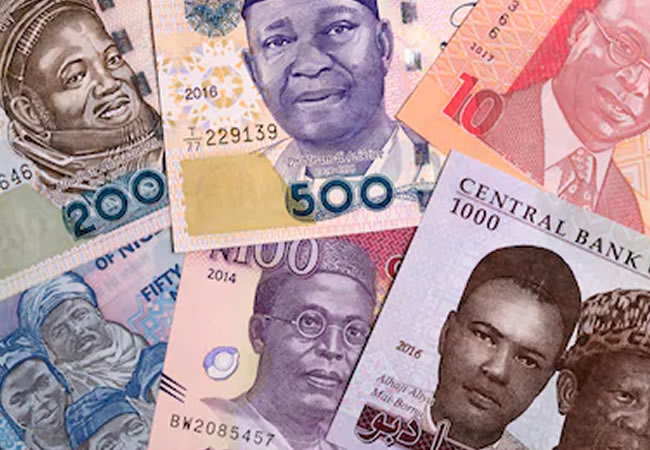
The sudden decision of the Central Bank of Nigeria (CBN) to redesign naira notes, which has generated a lot of interest in the country, appears to be pushing the embattled currency further down.
On Saturday, the naira spiraled to its lowest fall, hitting N800/$1 in the parallel market – a development attributed to spike in naira to dollar exchange by those who have naira stockpiles.
The CBN announced on Wednesday that it has redesigned N200, N500 and N1,000 notes, adding that all existing currencies will cease to be legal tender from January 2023.
The move, which was quietly carried out, is understood to be a plan by the federal government to deny terrorists, kidnappers and corrupt public office holders the opportunity to spend their illicit funds stockpiled outside the banks.
The Economic and Financial Crimes Commission (EFCC), which described the move as “a well-considered and timely response”, has been urged to work with banks to arrest and prosecute those who will deposit huge funds they can’t defend within the period stipulated by the CBN for the old naira notes to be returned to banks.
However, while the move has been applauded by a large section of Nigerians, there is concern that it will further stoke inflation as those caught in the trap will continue to run to Bureau De Change (BDC) operators to buy dollars with their ill-gotten naira.
Reports indicate that politicians are approaching BDC operators, offering them mouth-watering deals, to convert their stockpiled naira to foreign currencies before the six-week window given by the CBN closes. This means that Nigeria’s FX market is going to experience more strains that will push the naira spiraling downwards.
The central bank governor, Godwin Emefiele, who expressed optimism that the redesign of the naira notes will help tame inflation, said on Wednesday that much of the currency in circulation is outside the banks.
“To be more specific, as at the end of September 2022, available data at the CBN indicate that N2.73 Trillion out of the N3.23 trillion currency in circulation, was outside the vaults of commercial banks across the country, and supposedly held by the public. Evidently, currency in circulation has more than doubled since 2015; rising fromN1.46 trillion in December 2015 to N3.23 trillion in September 2022,” he said.
Against this backdrop, the naira has kept weakening against the dollar, pushing inflation, which stood at 20.7% as at September, further up. The CBN’s attempt to tame it with the naira’s redesign is backfiring.
On Friday, soon after the central bank announced that President Muhammadu Buhari had approved the plan to redesign the naira notes, the currency crashed to N785 against the dollar. Falling further to N800/$1 on Saturday indicates that the naira redesign may cause more harm than good for Nigeria’s economy.
The International Monetary Fund (IMF), on Friday urged Nigeria to apply caution in its plan to redesign and replace naira notes as missteps will undermine confidence in the financial system.