DD
MM
YYYY

PAGES

DD
MM
YYYY

spot_img

PAGES

Home Blog Page 4785

As American Tech Firms Layoff Workers, African Techies Have Opportunities

0

Do not panic over this layoff. Just make sure your skill is up to date. If you are in Africa with great skills, this is your time. Covid-19 enabled companies to do one experiment: many things could be done remotely. Post covid-19, a new business model is now being built around it. Yes, why hire that guy in New York, and pay him $160,000 per year, when you can find someone in Lagos who will take $25,000 and deliver near-level value?

The world is undergoing a massive corporate re-architecting but it is not just because of the Ukraine-Russian conflict, or fear of recession, but rather, new  business model evolutions!

Remember this: protect your professional castle with up-to-date skills. Great skill is your moat. The world does not have enough technical people for layoffs to cause panic for any African techie.  I expect new equilibrium points to emerge as this distribution of talent reshapes; Africa-based skilled people will thrive.

Do you know the fastest growing fintech category in Africa now? The one which helps Nigerians and broad Africans to have US bank accounts. Tekedia Capital portfolio kladot.com – a digital bank based in Texas onboarded 35k users in 30 days of launch! Those are people living in Nigeria, Ghana, Kenya, etc but working for US, UK, etc companies who want to be paid in US banks.

Global economic downturn has continued to take a toll on industries, forcing tech companies to cut down workforce. Some big players in the American tech industry, such as Tesla, had earlier in the year announced plan to lay off employees. Now others are quietly doing it.

Insider reports citing affected employees, that Microsoft quietly laid off about 1,000 employees in teams across the company – making it one of the biggest layoffs that a tech company is conducting in recent times, and it underscores how much industries are anticipating recession.

Microsoft Lays Off 1,000 Employees As the Fear of US Recession Grows

0

Global economic downturn has continued to take a toll on industries, forcing tech companies to cut down workforce. Some big players in the American tech industry, such as Tesla, had earlier in the year announced plan to lay off employees. Now others are quietly doing it.

Insider reports citing affected employees, that Microsoft quietly laid off about 1,000 employees in teams across the company – making it one of the biggest layoffs that a tech company is conducting in recent times, and it underscores how much industries are anticipating recession.

The report said the cuts appears widespread across Microsoft: conversations with people close to the company and posts on social media sites like Blind and Twitter indicate that the cuts affected everything from the Xbox console gaming division to the cutting-edge Microsoft Strategic Missions and Technology organization. KC Lemson, a longtime Microsoft veteran and a product manager in the office of the Chief Technology Officer, tweeted on Monday night that she lost her job earlier in the day.

“Like all companies, we evaluate our business priorities on a regular basis, and make structural adjustments accordingly,” a Microsoft spokesperson said. “We will continue to invest in our business and hire in key growth areas in the year ahead.”

Microsoft in July said it planned to lay off less than 1% of its 180,000-person workforce and significantly slowed hiring as the risk of a recession looms. It’s unclear whether this week’s layoffs are included in the previous figure, but one person who told Insider they have been laid off said they were first hired about a month ago.

Zach Kramer, who runs Microsoft’s Mission Engineering team, in an email viewed by Insider notified employees that the group would be “deprioritizing work already underway.”

“This is hard to do,” Kramer said in an email viewed by Insider. “There are lots of ideas that could potentially have an impact and each of us has worked very hard, but we must make tradeoffs as resources are not unlimited and time is the scarcest of them all.”

Kramer’s email did not explicitly mention layoffs, but said leaders will work with those who are “part of a prioritization change” in order to “wrap up existing work and determine next steps.” Teams on the chopping block appear to include Studio Alpha, which Microsoft once referred to as its “serious gaming initiative” for war-gaming simulations, and the Mission Expansion cloud government team, according to one insider.

This move by Microsoft follows the trend set earlier by others. Earlier this month, Meta, Facebook’s parent company, reportedly began a quiet layoff targeting about 12,000 employees. The social media conglomerate is one of the hardest hit by economic misfortune and the growing global inflation that has impacted advertising. More companies are expected to cut workforce in coming months.

Nigeria’s Core and Headline Inflation Numbers Hit 17.1% and 20.7% Respectively

0

Nigeria’s Consumer Price Index (CPI) has risen to 17.1% in the month of October, according to recent data published by the Nigerian Bureau of Statistics (NBS).

The latest rise of CPI, also known as core inflation – which results from less farm produce, is the highest the country has recorded in five years, and has pushed headline inflation further up.

Core inflation refers to inflation based on the CPI, covering the inflation of all the goods and services except the volatile food & fuel prices, excise duties, income tax, and other financial investments. It guides the governments in forecasting long-term inflation trends for a country.

According to the NBS, headline inflation also hit a new high of 20.77 percent in September, buoyed by food supply, foreign exchange crisis, and increases in import costs. This is an uptick from August’s 20.52 percent figure that marked a 17 year high.

“In September 2022, on a year–on-year basis, the headline inflation rate was 20.77 percent. This was 4.14 percent points higher compared to the rate recorded in September 2021, which was (16.63 percent).

“This indicates that in the month of September 2022 the general price level was 4.14 percent higher relative to September 2021. On a month-on-month basis, the Headline inflation rate in September 2022 was 1.36 percent, this was 0.41 percent lower than the rate recorded in August 2022 (1.77 percent),” the NBS said.

The statistics agency reported that on a month-on-month basis, core inflation rose by 1.58 percent year-on-year, repeating the same figure reported a month earlier. It has been on the rise since April, following the jump in the pump price of diesel to N700, which consequently stoked the cost of goods and services.

The NBS revealed that food inflation rose to 23.34 percent in September, year-on-year, due to increases in the price of bread, cereals, potatoes, yam, oil, fat, and other food products.

The agency further attributed the rise in headline inflation year-on-year to factors such as; the disruption in the supply of food products, increase in import cost due to the persistent currency depreciation, and general increase in the cost of production.

“Likely factors responsible for the decline in the monthly inflation rate (Month-on-month basis).

“Over the past two months, there has been a decline in headline inflation on a month-on-month basis due to a decline in the changes in the food index relative to the reference month index which is due to the present harvest season.

“Likely factors responsible for the increase in annual inflation rate (year-on-year basis). Disruption in the supply of food products, increase in import cost due to the persistent currency depreciation. General increase in the cost of production,” the agency said.

The rising core inflation has a weightier economic effect as it cripples purchasing power as people prioritize their spending to cope with the increase in the cost of living.

Experts are worried that Nigerians, whose meager disposable income has further been impacted by the rising cost of living, will have to face a multidimensional economic hardship. The situation is expected to be compounded by the flood that is currently wreaking havoc across Nigeria. So far, more than 13 states have been impacted, with major farmlands being submerged.

With factors responsible for the rocketing inflation, including forex scarcity and insecurity, yet to be addressed, Nigeria has found itself in a difficult situation. Prof. Akpan Ekpo, an economist at the University of Uyo, said that the government’s inability to address the issues, particularly, insecurity is driving food inflation up.

“If the issue of insecurity is not addressed and farmers can’t go back to work freely there will be problems, especially with the flood now-perhaps they might lift the ban on importing food.

“If they lift the ban on importing rice, that will become another problem for us, because right now, the flood has affected most of the rice-producing areas in the country.  So, I think it is more of a structural problem and supply-side issue we have to address and not necessarily a monetary phenomenon. That part is just the CBN lending to the government which is very high,” he said.

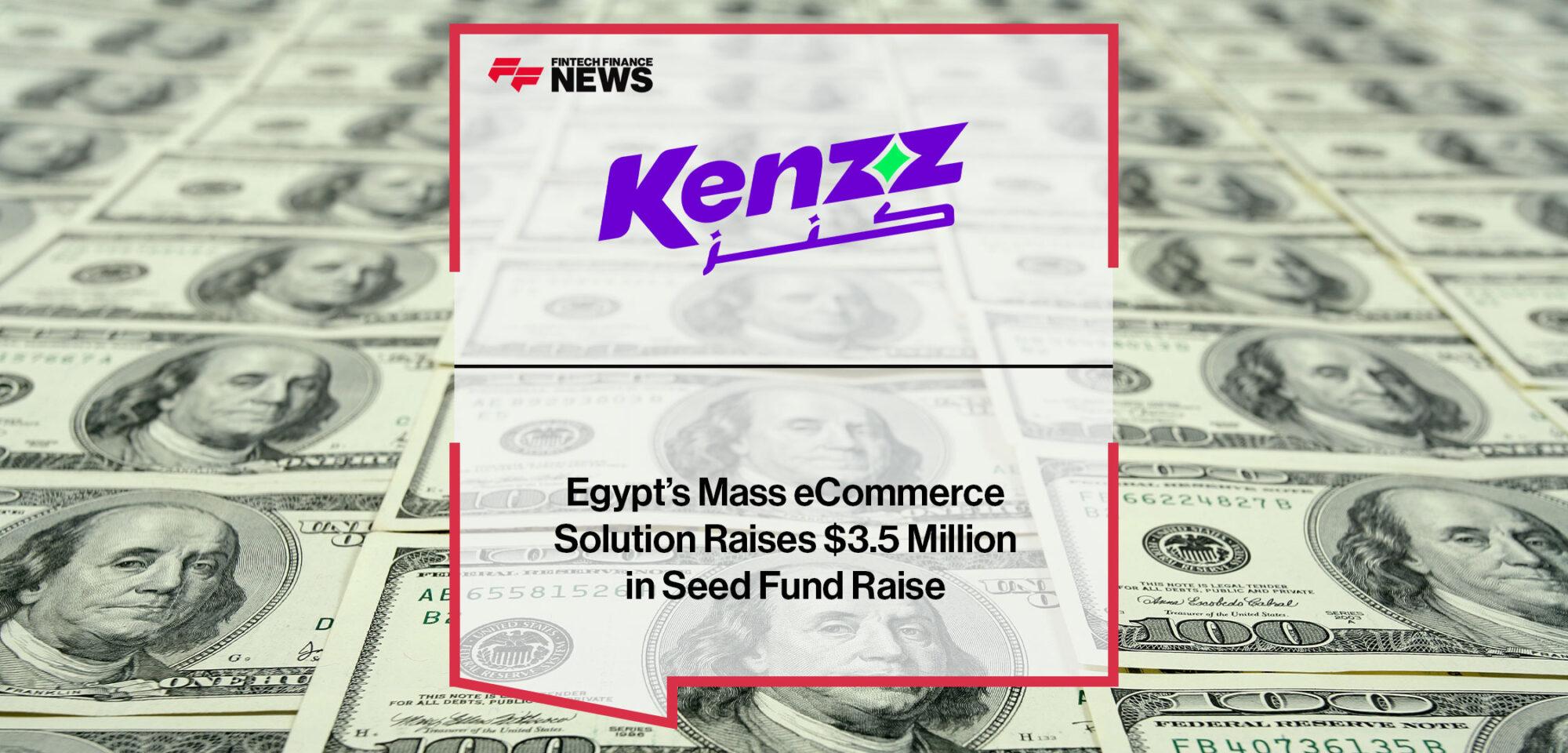
Egyptian Startup Kenzz Raises of $3.5 Million in Seed Funding

0

Egypt-based mass e-commerce startup Kenzz, has announced the raise of $3.5 million in seed funding. The seed fundraising was led by Outliers Venture Capital, HOF Capital, Foundation Ventures, Samurai Incubate, and some angel investors.

Founded in 2022, Kenzz provides e-commerce solutions to help platforms digitize the offline experience. Its model involves sourcing products directly from manufacturers and importers and offering consumers deeper discounts when they share/buy with friends and family.

The company disclosed that the new funds raised will be used to recruit new talents, grow product categories, invest in technology, and launch its new app as it seeks to deepen e-commerce adoption in Egypt.

Speaking on the recent funds raised, the Chief executive officer of Kenzz Ahmed Atef said, “We are going after a completely different segment that Amazon and the big platforms are not looking at as they are centralized in big cities and towards the people who are comfortable buying online.

“What we’re doing is bringing that experience much closer to the masses and building a reliable, trustworthy e-commerce platform that caters specifically for the mass market, solving for the barriers to buying, whether it’s trust, affordability and relevance, while capitalizing on social engagement and social interaction aspects of e-commerce.”

Kenzz mass e-commerce solution is taking a B2C approach as it removes the middleman/resellers, while it sources products directly from local manufacturers and offers them to consumers.

Through this approach, consumers know the exact brand selling to them. The platform also gives consumers discounts of up to 65% when they make collective purchases with friends and family.

According to the CEO, sourcing directly from manufacturers and importers enables it to secure the best deals for consumers, and the group buying feature facilitates more referrals, bringing down its customer acquisition costs. Group orders can also be sent to single locations to reduce consumer delivery fees and logistics costs for Kenzz.

The CEO of Kenzz also stated that the company model helps stakeholders on the other end local manufacturers and SMEs by providing data on what consumers want and access to such consumers among additional insights.

Although, the startup is yet to launch fully into the market as it is fine-tuning offerings to meet consumers’ demand, which, according to Atef, was grand when the platform soft-launched for two months.

On the other hand, Africa has been forecasted to surpass half a billion ecommerce users by 2025, which will have shown a steady 17% compound annual growth rate (CAGR) of online consumers for the market.

Fashion and electronics products have been reported to create the highest sales revenues among online shoppers in African markets, with fashion products predicted to reach $13.4 billion USD in sales and electronics predicted to reach #11.2 billion USD in annual sales by 2025.

Saving the N120 Billion on Foreign Production of Advertising

0

It is indeed very unfortunate that everything is outsourced : “The Advertising Regulatory Council of Nigeria, (ARCON) has disclosed that Nigeria’s advertising industry loses over N120 billion annually to the production of advertisements, and marketing communication materials outside the country.”

Yet, legislation or regulation will not provide a quick fix. We need to elevate the quality of our education and skill development. When that happens, those outsourcing will see pricing advantages internally. Running a business is not about 100% patriotism because in the balance sheet, there is no patriotism row. In other words, you cannot expect companies to score own-goals by giving contracts to local companies which may delay production for weeks because there is no electricity.

As an IT staff in old Diamond Bank Lagos, part of the job was making sure you have enough diesel in the generators and also managing NEPA (national grid staff). If for any reason, there is scarcity of diesel, you have to lobby for NEPA to provide light to the line where the servers are connected to avoid the IT systems being shut down.

At 1am, you go there and beg them. Beg them. Cry and cry because if they refuse, your job is gone. It is irrelevant that you were not hired to visit the NEPA office thrice in the night, lobbying for light. But one day, the bank added backup generators and extended diesel storage, making NEPA irrelevant. 

See this advertising production paralysis from that angle. We must build capacity to deepen value even as we encourage companies to look inwards. If we have that, they will. Sure, the companies are expected to be part of that solution but it cannot be by fiat because they are not running charities.

The Advertising Regulatory Council of Nigeria, (ARCON) has disclosed that Nigeria’s advertising industry loses over N120 billion annually to the production of advertisements, and marketing communication materials outside the country.

This was disclosed by the Director-General of ARCON, Dr. Olalekan Fadolapo who revealed that the exorbitant amount spent on advertising has continuously led to the huge loss of jobs which has retarded the growth and development of the Nigerian advertising industry.