DD
MM
YYYY

PAGES

DD
MM
YYYY

spot_img

PAGES

Home Blog Page 4794

Political Economy of UK 21st Century Prime Ministers’ Resignation

0

Since Prime Minister Liz Truss announced her resignation, various reactions have followed and continue to follow her actions in the UK and around the world. Many political scientists and public affairs experts have offered conflicting opinions. Our check indicates that the country’s prime ministers of the twenty-first century have a history of quitting. It all started with Prime Minister David Cameron calling a referendum on quitting the European Union. Cameron resigned following the referendum, and Theresa May took over as Prime Minister. Boris Johnson followed in the footsteps of Theresa May. Liz Truss took over as Prime Minister in place of Boris Johnson. Truss is the fourth prime minister to resign since the 2016 Brexit referendum.

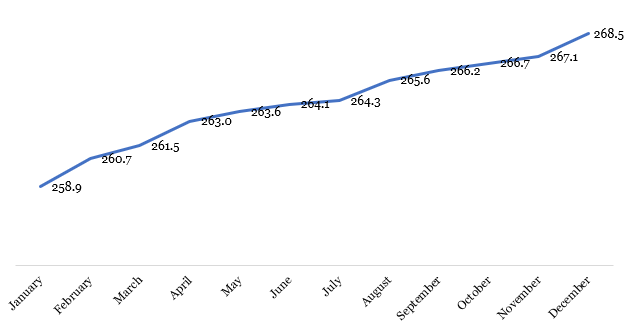
Exhibit 1: Average all items index in 12 years
Source: Google Trends, 2022; Office of National Statistics-UK, 2022; Infoprations Analysis, 2022

According to multiple sources, the resignation is motivated by national and global economic worries. The resignation has also been linked to global political uncertainty. For a better understanding of the economic aspects of the resignation, our analyst examines the inability to address growing uncertainties in the national economy cited by the resigned prime ministers (particularly Truss) using the country’s inflation rate over the last 12 years and the UK public interest in key economic concerns. Our analyst notes that when comparing the average consumer purchasing price index of all food items with the existing qualitative data, the four prime ministers’ resignations had largely occurred when the inflation rate became uncontrollable. According to our analyst, this could be traced to the ineffectiveness of policy agendas proposed before elections and multiplier effects of economic challenges in other countries, especially the country’s trading partners.

According to our analysis, the resignation’s political component may have more to do with the Brexit vote. It is obvious that the choice is having a strategic impact on the nation’s economy from Boris Johnson to Liz Truss. The country is also suffering significantly from the imbalance in the various geopolitical interests.

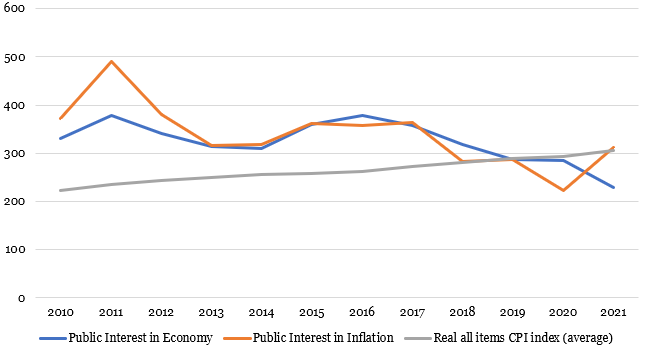
Exhibit 2: Public interest versus real all items CPI index between 2010 and 2021
Source: Google Trends, 2022; Office of National Statistics-UK, 2022; Infoprations Analysis, 2022

Further analysis of the UK public’s interest in the economy and inflation, as well as the real consumer price index for all food products between 2010 and 2021 in the context of the Prime Ministers’ varied policies, shows a strong resonation of interest in inflation in 2018 and 2019. Compared to prior years, the interest in the economy and the index during these years was more in line with the interest in inflation. Analysis, however, reveals that the UK public’s interest in understanding the economic situation increased between 2013 and 2018 as evidenced by patterns in the real inflation rate (see Exhibit 2).

The Coming of Africa’s Commodities Exchange (2)

0

Woke up thankful for everyone who has been on board for any part of Agenpo’s journey. I’m still going for every single person who ever placed a bet on me. Quick update for all those people: I’m not letting up anytime soon.

Building is hard, but we wouldn’t have it any other way at Agenpo. This is why since my last article, we’ve stripped down, rebuilt, reiterated and reorganized a bunch of things.  In all of these, the mission has remained unchanged – to make commodity producers (farmers and miners) in Africa more visible and drive more funds to them to enhance their indispensable work, while also making their produce visible and easily obtainable to those who need them as raw materials for their processing and/or manufacturing concerns. We have scheduled the product (MVP) launch for next quarter and we will keep those on our waitlist (sign up at agenpo.com) in the loop with exciting updates while also taking feedback.

What we have is a single product that accommodates key stakeholders in the commodities trading ecosystem and we’re starting from Nigeria. These stakeholders are the Producers (farmers & miners), Quality Inspectors, Manufacturers/Processors, Warehousing and Traders. Each stakeholder interacts with another without the need to know or trust them. What this means is that a Trader in Obudu in Cross River state can ‘see’, pay for and move 600 tons of grain from Kebbi state to a processor or manufacturer in Ogun state. It also means that Manufacturers and Processors who make use of such grains don’t need to have robust procurement systems (expensive) because they just have to place an order stating quantity and delivery period, then receive offers from Traders. These manufacturers/processors also bear no responsibility for anything that has not been delivered to them. Interestingly, this single platform ensures that Producers (Farmers & Miners) are not visible to only a few people, which greatly reduces their bargaining power and hence making their work unprofitable and unattractive.

There are other key things about this product that also excite me greatly. One of them is that it simplifies stakeholder segments so that people are able to get into the sector much easier. Another is that it opens up highly untapped opportunities in Real Estate and Fintech. In both instances, jobs are created and new business models spring up. In the former, a farmer can focus on farming without worrying about funding, inputs, sales or even advisory services. Traders can focus on trading without worrying about commodity sourcing or even off-takers. In the latter, everyday people are given new opportunities to engage in sectors of the economy that they would otherwise not have. I will get into more details on this in a future article.

While I am happy to write, there are people who have committed to see there’s something to write about.  Without a shadow of doubt, Lucky, Sandra, Mubarak, Odiri and Daniel deserve accolades for what they are doing. I will let them reveal themselves fully when they choose to do so but I couldn’t resist naming them.

Moving forward, we are essentially building what can best be described as a system or technological infrastructure for physical commodities trading on the African continent. Where they don’t infringe on our core values as a business, we are open to partnerships and pre-seed investment (investors can take advantage of the SEIS scheme as we are a UK-registered startup).

It goes without saying that the bottlenecks in the commodities sector in Nigeria and Africa in general are well-documented and over-flogged so I won’t bore you with all of that. Rather, I’d strongly recommend a report based on research by Agri-Logic and posted by Sanne Steemers on LinkedIn earlier this year. The (Netherlands Enterprise Agency) NEA-commissioned  report “Addressing the $200 billion demand for finance for Agriculture and Agribusiness in Nigeria” should give you an idea of what we’re dealing with. I have no doubts that we’re building a product with will address 0.5% of that in the most efficient way. Naturally, scaling that efficiency will follow.

Nigeria to Pioneer Domestic Card Payment System in Africa by January 2023

0
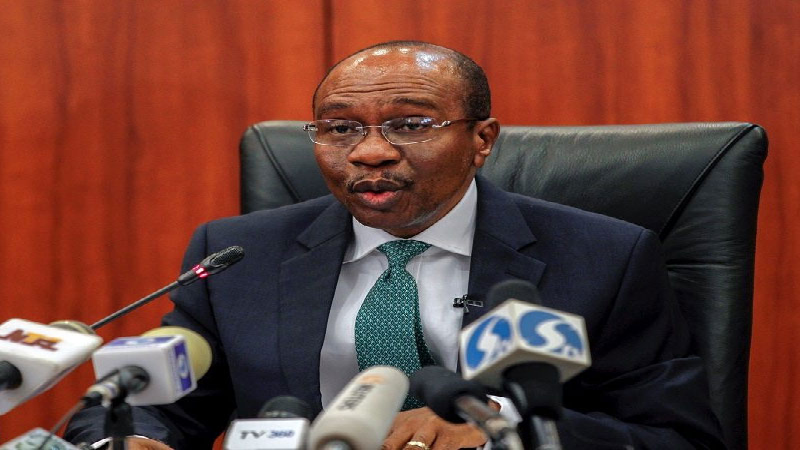
Nigeria's central bank boss

The Central Bank of Nigeria (CBN) together with other key financial players in Nigeria is set to launch Africa’s first payment card by January 16, 2023.

In a virtual press briefing which held yesterday following a Banker’s Committee meeting, the Nigerian Apex Bank has disclosed its ongoing collaboration with the Nigerian Inter-Bank Settlement System (NIBSS) and Bankers committee to implement the National Domestic Card Scheme (DCS) which will serve as a substitute to the services being provided by foreign payment platforms such as MasterCard and Visa.

The CBN has said: “Nigeria is in a vantage position to successfully launch a domestic card scheme given the significant transformation in its payments system over the past decade.” According to the Apex bank of Nigeria, “the transformation within the Nigerian financial industry has been driven by rapid digital and technological innovation, increasing mobile penetration and the proactive policy initiatives of the CBN which have spurred unprecedented adoption of digital financial services.”

The CBN highlighted several benefits of having the DCS. Some of these are: It will reduce the cost and use of foreign exchange, protect data sovereignty, enable locally relevant propositions, and make cards and payments more accessible and affordable. The scheme is an important game changer for financial inclusion in Nigeria, the CBN noted.

Corroborating the CBN’s case for the DCS, the Chief Executive Officer, NIBSS, Mr. Premier Oiwoh, stated that the DCS which has been the brainwork of the CBN would enhance financial inclusion and create solutions to improve card ecosystem innovation in Nigeria. Mr Oiwoh further revealed that part of the propositions that the DCS will be creating is that it will drive acceptance and efficiency, reduce operating costs of a card operation in the country and also enhance provision of unique, reliable services as other features or products will be layered on this card. According to him:

“Uniquely, this card will be configured to address the unique ecosystem issues that we have to help improve payments across the nation” Mr Oiwoh said, adding that the scheme “will support micropayment and credit, e-government identity management, transportation, health sector, and agriculture in terms of payment.

Also, the CBN said; “the scheme would  be leveraged “as a platform for seamless dissemination of government-to-person payments and other social impact initiatives, ultimately enhancing financial inclusion and supporting the growth of a robust digital economy.

“The scheme will foster innovation within the Nigerian domestic market and the African continent by “allowing banks and other institutions to offer a variety of solutions including debit, credit, virtual, loyalty and tokenised cards amongst others” the CBN noted.

According to the Nigerian Apex Bank, with the advent of the scheme, Nigeria will join “a growing list of countries such as India, Turkey, China, and Brazil who have launched successful domestic card schemes and harnessed the transformative benefits to their payments and financial systems, particularly for the underbanked”.

People vs Systems in Global South and North: What is the Difference?

3

The two concepts have remained the basis of understanding the socioeconomic and political progress of many countries in Africa since the classification of countries into the global north and south by many economists several years ago. From academia to industry, the issues and needs of African countries have been debated and are still being discussed in many fora. In most cases, experts and political leaders have made a case for learning from the global north. The region, which has been seen as having socioeconomic and political indices that could be picked for benchmarking similar components on the continent.

While debating existing issues and needs in relation to the global north, reference has always been made to how systems are built and allowed to work in the global south. From public to private sectors, African experts and scholars are always pointing out how educational, transportation and health systems are working in the global north but are nearly not available or functioning in many African countries.

Using Nigeria as an example of understanding Africans’ attitude and behaviour towards better systems, our analyst had earlier reported that there are micro and macro leaders but their readiness to ensure sustainable processes and future remain questionable because personal interests are being prioritised mostly above collective interests. Our analyst points out that over the years, it has been the blame game of macro leaders who are not doing well at the expense of debating the poor attitude and behaviour of micro leaders towards the ideal and shared constructive future, not a destructive one.

Based on over 2 years of analysing Nigeria’s socioeconomic and political challenges, our analyst concludes that “some reactions indicated that macro leaders should be held responsible for the bad system which has been producing bad outcomes in the public and private sectors over the years. Some reactions revealed the fact that both the macro and micro leaders are the proponents of the bad system.”

Whether a physical or technological system, its functionality depends on the people’s readiness to make it work. Several years ago, Edwards Deming noted that 95% of variation in the performance of a system (or your organisation) is caused by the system itself and only 5% is caused by the people.

Deming simply said that system governance is in charge of establishing a predictable and steady environment so that employee performance is under control. Once more, what matters is not how well people do precisely, but rather how their performance changes from day to day.

In other words, when a system is designed to deter cheating and some people are willing to carry out their oversight responsibilities honourably, people rarely succeed or sabotage it. With the experience our analyst just gained in a country in the global south, this position has recently become even stronger.

He has always treasured the opportunity to be with other Africans while sightseeing. However, his collegues consistently exhibit the swindling system’s behaviour. Thursday was chosen as the day for the long journey. Before arriving at any destination, everyone is required to use their transportation card at each point of entry into the buses or the metro.

The design of the transportation network and how people interact with it prevents the absolute exchange of money. In other words, it is virtually hard to steal from the payment. However, some people choose to forego tapping the payment terminal. Security personnel are typically stationed in key bus and metro stations to check for defaulters due to the prevalence of this among passengers.

The thought of not paying the fare was consistently discouraged by our analyst. But his colleagues thought they couldn’t be found. In certain places, his colleagues would swiftly tap the payment point when it was clear that security personnel were at bus stops inspecting defaulters. One of the colleagues encountered his waterloo on October 20, 2022. Payment cards were requested by the security officers, who then began using another computer to check them (Fraud detection machine).

However, the colleague had previously tapped the payment point machine when he noticed the security officials in the distance. Unfortunately for him, the fraud detection mechanism noticed that he paid at the point of arrival rather than the point of departure.

Ravencoin, Terra, Snowfall Protocol: Three Trending Cryptos – Should You Invest?

0

Cryptocurrencies are constantly evolving and changing. With new coins hitting the market every day, it can be difficult to keep track of which ones are worth investing in.

In this blog post, we will take a look at three trending cryptos: Ravencoin (RVN), Terra (LUNA), and Snowfall Protocol (SNW). We will discuss what each coin is about, and whether or not you should invest in them.

>>BUY TOKENS<<

Crypto #1 – Ravencoin (RVN)

As a fork of Bitcoin, Ravencoin (RVN) is a decentralized, open-source blockchain platform that focuses on the transfer of assets from one party to another. Ravencoin (RVN) was created to become the go-to platform for asset transfers.

Ravencoin (RVN) has been gaining popularity recently due to its low fees and fast transaction times. In addition, Ravencoin (RVN) is a P2P-focused blockchain, which means that there is no need for a third party to facilitate transactions.

Should You Invest? Ravencoin (RVN) is suitable for those that prefer P2P transactions and are looking for a fast and cheap way to transfer assets. Ravencoin (RVN) has a lot of potential, and its popularity is starting to grow. However, there might not be a major demand for asset transfers on the Ravencoin (RVN) blockchain in the future. Only time will tell.

Crypto #2 – Terra (LUNA)

Terra (LUNA) is a decentralized blockchain platform that focuses on providing stablecoin solutions. Terra (LUNA) was created to provide a more stable currency for daily use.

The Terra (LUNA) team has developed a unique two-token system, which they believe will help to stabilize the prices of their coins. The first token is the Terra (LUNA) token, which is pegged to the value of a fiat currency. The second token is the Luna Coin, which is used to purchase goods and services on the Terra (LUNA) network.

Should You Invest? Terra (LUNA) seems like a promising project with a lot of potential. However, due to its recent collapse, some investors might be hesitant to invest. The Terra (LUNA) team has been working hard to improve the platform, and the future looks promising, but their history might be a turn-off for some.

Crypto #3 – Snowfall Protocol (SNW)

Snowfall Protocol (SNW) is a cross-chain transfer ecosystem that enables users to swap assets across different blockchain platforms. Snowfall Protocol (SNW) was created to facilitate communication between different blockchain networks. This is like how telephones allow people to communicate with each other, regardless of location.

Snowfall Protocol (SNW) is still in its early stages, but it has been gaining popularity due to its unique bridging model which has led to the price of (SNW) increasing by more than 80%. It’s now at $0.009. With the launch date approaching, experts suggest that it will increase by another 5000% at least. It has a high potential to become the next 1000x token.

For more information about Snowfallprotocol.io’s (SNW) Pre-sale


Website: https://snowfallprotocol.io

Telegram: https://t.me/snowfallcoin

Presale: https://presale.snowfallprotocol.io

Twitter: https://twitter.com/snowfall coin