DD
MM
YYYY

PAGES

DD
MM
YYYY

spot_img

PAGES

Home Blog Page 4819

The Tekedia Playbook – Why Blog is Top, School and Fund are Subdomains [video]

2

I get this question a lot: why do you have the blog (tekedia.com) as the top domain with the school (Tekedia Institute) as a subdomain school.tekedia.com and the fund (Tekedia Capital) as another subdomain (capital.tekedia.com).

My response: in the internet age, you win by controlling and influencing demand, not just by providing supply. In other words, what our school and our fund offer are available everywhere as the Internet has scaled abundance. So, with supply being unbounded and unconstrained, what matters right now is how to hold demand (the users).

Having a course online is not enough; you need to get people to pay attention. What that means is that a professor of management in UNILAG can open a website and have the best course on management – and still fail, especially if that professor has no user base. Why? Not many people will know about that website since there are many options.

But an NYSC graduate of management with many users can launch a management training and thrive provided he offers marginal value. Why? He has demand and can convert a small percentage of those users to pay for his course.

Recall – I have noted that only companies which can win demand will thrive in the internet world. And how do we win that future? We have to elevate the blog so that when people come to read it, we can convert many for the school and the fund. That is why the blog is not a subdomain. Our thesis is that if we can get 300k links monthly, even if we convert 5% of that, we will have a great result. Google sends us 40k links monthly. Taken all together, there is no way we cannot close  2,000 sales in a month! The tekedia.com is the CNN, radio, TV and newspaper. 

Yes, the blog has no Google Ads as everything is designed to promote the School and the Fund. That is our strategy and it is working. 

If you want to win in the 21st century digital economy, you must control or influence demand, not supply. In the industrial age economy, power went to gatekeepers of supply. Today, the empire builders are those that control demand. This is possible because digital supply is unbounded and unconstrained, making it largely not a factor. Digital utilities like Google, Facebook, and Twitter which control demand become the new gatekeepers.

All Together

Indeed, in this age, having users may be more catalytic than actually having the courses. A professor in FUTO can have the best course on management and fail because he has no users. But an NYSC member with users can deliver a sub-par program and still thrive. Why? If you control demand, you have a chance to win. So, Tekedia.com brings the users and we try to convert many of those users for the school and the fund. What is your digital strategy?

Comment on LinkedIn Feed

Comment 1: Prof, you do alot of good things you have no idea the extent of impact you are making. I have learnt alot from you. It was on your tutelage that I learnt of the “aggregation” business model which I expondedn during my MBA. I have just watched your video on the importance of control demand in this dispensation. Another very valuable and easy to understand teaching. This is an appreciation post on behalf of the multitude of young people you keep impacting daily. Thanks for your consistency and for using your platform for the common good.

Air Traffic Rises by 90% as Young Nigerian Professionals Continue to Migrate

0

The aggressive rate of migration among young Nigerian professionals to other parts of the world in search for greener pastures, has increased the rate of air traffic recorded in the past few months.

According to reports, the rate of international air passenger movement in Nigeria has risen by 91%. Nigeria’s aviation authorities revealed that between January and June this year there was a 40% and 91% increase in passengers’ movement via domestic and international flights respectively, compared to a similar period last year.

About 907,722 international passengers were airlifted between January and June in 2021, the figure however rose to 1,732,624 within the same period this year.

A top government official said, “Two factors are responsible for the increase in international air traffic. First is the increase in migration of young professionals while the second is the re-opening of borders after Covid-19”.

According to the UK immigration report released last Thursday, Nigeria is second only to Indians in the number of visas granted to the ‘Skilled Worker – Health & Care’ category, with 14% (13,609) of the total.

Recent official data from Canadian immigration sources indicate that 12,595 Nigerians relocated to Canada alone in 2019. There were 4,000 applications for permanent residency by Nigerians in Canada in 2015. By 2019, the number had climbed to 15,595, an increase of over 214.9%.

The surge in air travel is still increasing with each passing day despite the increase in the price of tickets which was triggered by the hike in aviation fuel and also due the scarcity of forex in the country.

The figures reveal that between January and June 2022, cargo movement decreased by 36% when compared to a similar period in 2021.

An official attributed the decrease in cargo movement to forex scarcity, rising foreign exchange rate, closure of some airspaces due to the re-occurrence of Covid-19, and the ongoing war between Russia and Ukraine.

With the myriad of problems ravaging the country, it has continued to witness a surge in migration of its young professionals as ‘Japa’ has become a way out for most of them to escape from most of the country’s challenges.

The country has been threatened by a massive brain drain which is causing a serious challenge in different sectors in the country, as it was reported that the mass exit of ICT personnel in banks caused a serious glitch in most of its services majorly bank transfers.

Analysts/experts have predicted that the surge in migration will only get worse as there is no solution in sight to the country’s myriad of problems. The current government has been lambasted by citizens as not doing anything significant in managing the exchange rate and inflation that is affecting the country.

Amid this surge in migration, the country’s primary strategic concern is the increasing demographic hemorrhage in the emigration of skilled Nigerian youths.

The people on whom the future of the nation depends on are leaving. Best energies and brains are being drained. IT wiz kids, medical scientists, economists, biotechnologists, academics, etc. are flooding flights headed out to better climes where they feel more valued.

While some see the migration as a negative occurrence, some have a nuanced approach towards it, which they argue that mass exodus of citizens will help increase diaspora remittances, which lately has been the booster to the national dollar reserve.

Diaspora remittances reported by the CBN currently hover between $25 billion and $30 billion annually and are still rising.

Nigeria Must Step in to manage the Obajana and Dangote Cement Tussle

0

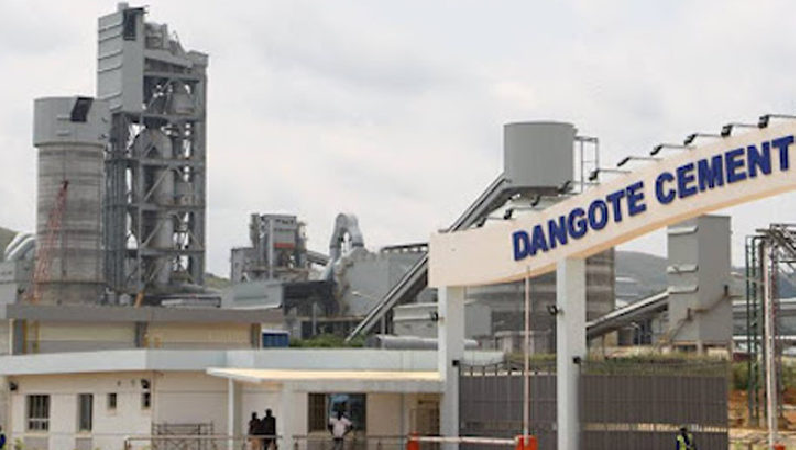
This is an own-goal tussle which can devastate many things in Nigeria. Yet, we want justice to also do its job. For that, I call on the Kogi State government and Dangote Cement to modulate their postures: “A statement titled, “Illegal Shutdown of Dangote Cement, Obajana Plant”, signed by the Group Managing Director (GMD), Dangote Cement Plc, Michel Puchercos, said that the company has the full ownership of the Obajana plant”.

If you check 2,000 years of economic history, you will notice that property rights are the foundation of commerce. Where that is not possible, nations fade or struggle to advance.

I have no additional information to add anything to this topic but one thing I will say is this: the way Nigeria handles this will affect its mining, extractive, etc industry playbooks.  What is happening is consequential. Yes, if you can build a cement plant as a state in Kogi to make use of limestone, can Rivers State build a refinery to make use of its oil deposits? As this happens, many interpretations will emerge on the way Nigeria manages solid minerals (gold, silver, limestone, etc) and hydrocarbon (oil, gas) rights in the nation.

Can Mr. President call Aliko Dangote and Kogi State governor to see him today? We cannot use the agbero motorpark strategy here: the president must step in immediately. Yes, the court can come in but assets must be protected while that happens.

The factory is said to have begun back in 1992, during the regime of former head of state, Gen. Ibrahim Babangida, shortly after Kogi State was created. It took a turn in 2002, when the Kogi State Government and Dangote Cement Plc allegedly signed an agreement over the Obajana factory. A document purportedly signed by the Kogi State Government and the Dangote Group, which was seen by Tekedia, claims that both parties had agreed that besides collecting taxes from the company,  the state government will own 10% of the cement factory.

Concerned indigenes of the state said that the issue has lingered for so long because preceding governors had failed to take it up. For the current governor of the Kogi State, Yahaya Bello, it’s time to put the matter to rest once and for all time. People familiar with the matter said that the Kogi State House of Assembly had repeatedly summoned the Chairman of Dangote Group, Aliko Dangote himself, and had shunned a representative sent by the company – insisting that Dangote must appear in person to answer questions regarding his company’s failure to honor its agreement with the state.

The Obajana Factory Ownership Tussle Between Dangote Cement and Kogi State Govt.

The Obajana Factory Ownership Tussle Between Dangote Cement and Kogi State Govt.

1

As the #DangoteExploitingKogi hashtag climbed Twitter’s trends table on Monday, the conflict between Nigeria’s largest conglomerate, the Dangote Group and the Kogi State Government, has become widely known.

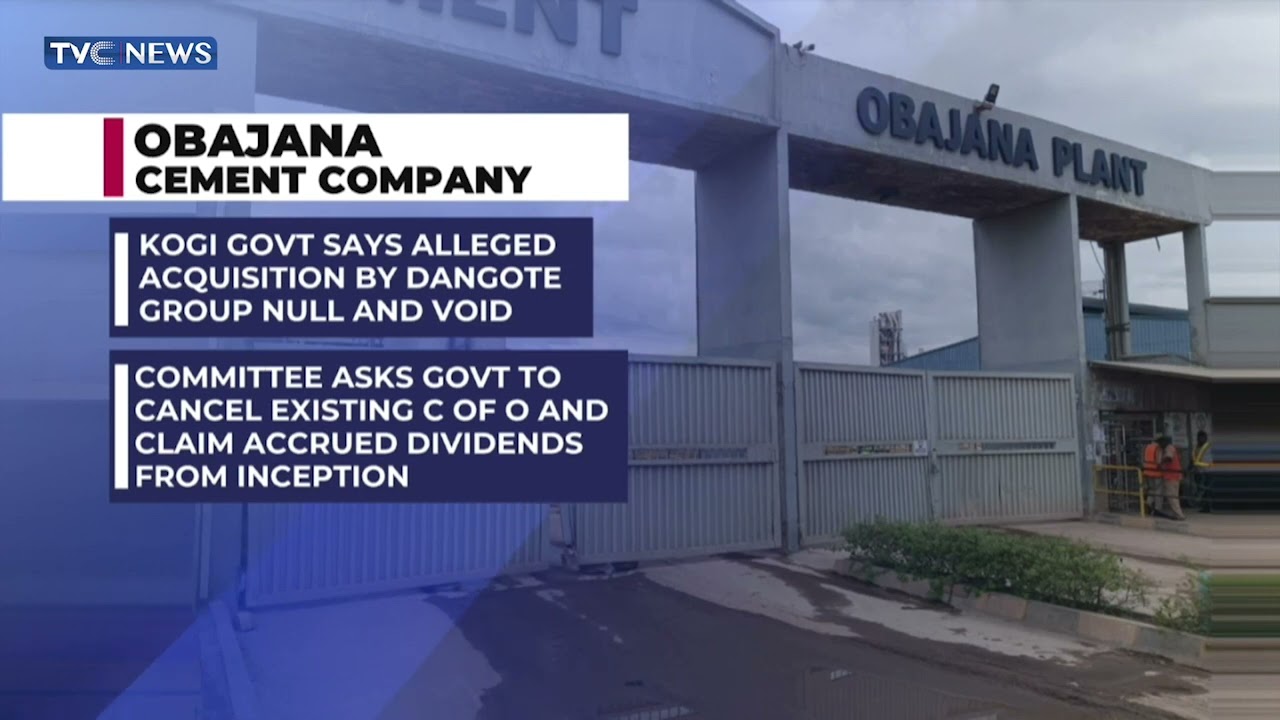
Though it is said to have endured for long, the saga took a wild turn last week — when the Kogi State Government, in ninja style, shut down the Obajana factory of Dangote Cement.

The conflict is based on allegations of tax evasion and ownership of the cement plant, which has dragged on for years. Last week, on the orders of the state government, armed vigilantes had invaded the factory, shot at workers and consequently shut it down.

According to Statements from both Dangote Cement and Kogi Statement Government, each party claims to be on the right. The Kogi State Government said that besides evading tax, Dangote Cement has illegally assumed 100% ownership of the factory, thereby denying the state its fair share.

In response to these allegations, the company had put forward a statement denying any wrongdoing. A statement titled, “Illegal Shutdown of Dangote Cement, Obajana Plant”, signed by the Group Managing Director (GMD), Dangote Cement Plc, Michel Puchercos, said that the company has the full ownership of the Obajana plant.

“The Management of Dangote Cement Plc. wishes to inform members of the public, especially its customers and other stakeholders of the recent invasion of its Obajana Cement Plant, Kogi State by armed vigilantes on the orders of the state government.

“The vigilantes, led by some officials of the State government were acting on a resolution of the Kogi State House of Assembly on controversial tax claims; claims that the state government had also contradicted when he said the shutdown was due to an alleged invalid acquisition of the company by Dangote Industries Limited,” the statement said.

The factory is said to have begun back in 1992, during the regime of former head of state, Gen. Ibrahim Babangida, shortly after Kogi State was created. It took a turn in 2002, when the Kogi State Government and Dangote Cement Plc allegedly signed an agreement over the Obajana factory. A document purportedly signed by the Kogi State Government and the Dangote Group, which was seen by Tekedia, claims that both parties had agreed that besides collecting taxes from the company,  the state government will own 10% of the cement factory.

Concerned indigenes of the state said that the issue has lingered for so long because preceding governors had failed to take it up. For the current governor of the Kogi State, Yahaya Bello, it’s time to put the matter to rest once and for all time. People familiar with the matter said that the Kogi State House of Assembly had repeatedly summoned the Chairman of Dangote Group, Aliko Dangote himself, and had shunned a representative sent by the company – insisting that Dangote must appear in person to answer questions regarding his company’s failure to honor its agreement with the state.

The People also said the Kogi State Government has resorted to shut down the factory because it interpreted Dangote’s refusal to appear before its House of Assembly as being taken for granted.

“We received several petitions from the general public over this particular subject matter. In the past five to six years, all efforts to sit with the proprietors of the Dangote Conglomerate failed,” Bello said, adding that the state is open for discussion whenever Dangote Cement is ready to come clean.

While Dangote Cement has maintained that it owns the Obajana factory 100%, the company said it has been up to date in its tax payment.

“The company pays over N1billion as PAYE to the government. We are not owing a kobo and the evidence is there,” a Dangote staff who did not want to be named told ThisDay.

With each party holding strong to its claim, the tussle is likely going to escalate further. Dangote Cement said it is going to seek legal redress: “We have taken steps to get the hoodlums apprehended by the law enforcement agencies, and we will ensure that full legal action is taken against them,” Puchercos said.

Kogi State Government has challenged Dangote Cement to provide documents to back up any of its claims. The state’s argument has been mainly hinged on the belief that there is no document to back up any deal that the company might have had with recent governments of the state.

Kogi State’s Commissioner for Information, Kingsley Fanwo, said that the state’s government has all the relevant documents to prove that the purported acquisition of Obajana by Dangote was invalid.

“There is no evidence of consideration paid by Dangote Industries Limited to the Kogi State Government from the alleged transfer of Obajana Cement Company Plc and no dividend was paid to the state from the profits realized from the inception of Dangote Cement Company Plc to date.

“By the assignment of the three certificates of occupancy, the title in Obajana Cement Company Plc, still vests in Kogi State government as the sole owner,” he said.

Speaker of the Kogi State House of Assembly, Matthew Kolawole, said that the acquisition of the Obajana Cement Company by Dangote was without the resolution of the House of Assembly, rendering every transaction it must have had null and void.

“It is clear that you cannot sell a state government property of any form without the resolution of the Kogi State House of Assembly. All the transfer process of the share capital to Dangote from Obajana by the previous administration was without any law backing it by the state House of Assembly,” Kolawole stated.

On Monday, a meeting between Dangote Cement and the Kogi State Government, which has Dangote in attendance, is said to be going on Aso Villa. The meeting which also has in attendance Gov.Bello, chief of staff to the president, Ibrahim Gambari and governor of Nasarawa State Abdullahi Sule, is said to be aimed at resolving the tussle.

However, analysts are worried that the development may dampen the interest of investors, particularly as the governor resorted in using vigilante, not the police, to enforce the shutdown of the cement factory.


Can Big Eyes Coin Token Outrank Cardano and Avalanche Token Before The End of The Year?

0

Crypto trading is not stopping any time soon. More new coins are finding their way into the market almost every day. Moreso, investors in cryptocurrencies are aware that putting all of their money into one asset is dangerous.

Losses may be substantial if the market collapses and the token’s value decreases. However, for this not to happen, the look for the next likely Bitcoin, Ethereum, and meme coins that have real-world applications is always on the increase.

Among such tokens, one might find interest in buying or event trading is the Big Eyes Coin(BIG) token. Big Eyes is becoming more influential in the cryptocurrency market owing to the rapid increase in its pre-sale. Buyers are thrilled with its massive performance, perceiving that the coin might give 100x return if held for a long time. 

Can Big Eyes (BIG) Be Trusted for Investment?

The question of “investment” is what draws every trader and investor towards a coin. Numerous cryptocurrency traders, investors, and fans have become interested in the Big Eyes Coin. Big Eyes has hit $3 million in sales in its presale stage, making it an eye-catching meme token.

Big Eyes (BIG) is a community-driven token built on Ethereum’s network. Unlike other meme tokens, it has a real-world solution focused on helping the ocean from overfishing and pollution. Big Eyes Token has a way of attracting investors with its cute eyes which are believed to be a billion-dollar industry.

While many people find Decentralized Finance (DeFi) confusing, Big Eyes Token offers tutorials on “How to” as a means of walking people through what they should know about DeFi. Interestingly, the Big Eyes platform is designed to allow people to earn while learning.

People are purchasing the Big Eyes Coin during its presale period despite its novelty. While Big Eyes prioritizes usefulness, financial gain, and charity, its whitepaper suggests a strategic plan to unseat the leading meme coins.

Proof-of-stake Token That Supports The Decentralized Application (DApp) — Cardano  

Cardano is an open-source token whose target is to establish positive global change by encouraging the contribution of changemakers and innovators.

Cardano uses ADA as its native coin in the community to aid the transaction process. ADA currently sits at the 8th position in the coinmarketcap table, just a few coins below top Cryptocurrencies.

In 2017, Cardano was created to function under the proof-of-stake mechanism, similar to what  Ethereum is using now. The proof-of-stake allows members to stake in their coins in the liquidity pool and earn higher.

The recent collaboration of the Cardano foundation with the Georgian National Wine Agency aims at building a traceable blockchain that could help Fastrack and bring in more investment opportunities to the Cardano network.

 Can Avalanche Unseat Ethereum?

Avalanche’s biggest dream is to outrank Ethereum by having higher transaction output compared to Ethereum. The Avalanche platform supports and functions both as a Decentralized Application (DApp) and blockchain network.

The Avalanche platform is made up of three distinct blockchains with different functions. The Exchange-Chain, otherwise called X-Chain, is responsible for transaction operations. The second is the platform-Chain, shortened as P-Chain. It allows the staking of VAX coins in the liquidity pool. The last is the Contact-Chain. As the name implies, it is used to facilitate smart contracts and decentralized applications.

The essence of the creation of Avalanche was to solve the problems faced by most top Cryptocurrencies. For instance, the high gas fee faced by Ethereum’s network.

Avalanche (AVAX) could be a fantastic long-term play considering its reputation for being environmentally friendly.

Use code BIGOCT22 for a 5% bonus when buying coins.


Big Eyes Coin (BIG)

Presale: https://buy.bigeyes.space/

Website: https://bigeyes.space/

Telegram: https://t.me/BIGEYESOFFICIAL