DD
MM
YYYY

PAGES

DD
MM
YYYY

spot_img

PAGES

Home Blog Page 4847

Good Afternoon, Ghana; Your Currency Outperformed Nigeria’s

0

My friends from Ghana, my post is due to my tough love for Africa. No ridicule intended! If you look at the post, I was simply commenting on a World Bank report which noted currency deterioration who’s who in Africa. But let me assure you one thing: the people of Ghana work really hard and your currency actually outperformed my beloved Nigeria, but what you did not get right is how official business is done at N435/$ when the real economy operates at N700/$ (Nigeria patented that in an Abuja shrine).

In other words, if the World Bank had used the real data, Nigeria would have recorded the worst currency in 2022 in Africa. Nigeria does magic there and I am not sure any country has a chance to compete with us therein.

Please no offense – I know how it feels. Yet, grow tough skin – and please do not send me an inmail. This piece is NOT an attack unless we have taken softness to an un-African level.

Comment on LinkedIn Feed

Comment 1: Prof Ndubuisi Ekekwe I believe anyone following your posts with unbiased mind would realize your analysis call out the Nigerian economy more than any other.

That Abuja shrine has out-performed Ghana abracadabra, just imagine the latest revelations with oil theft. How on earth is Nigerian economy still breathing ?

Comment 2: One of the problems with Africans is that we are too emotional and sentimental. This grossly affects our thought processes. We prefer to be lied to than be told the raw truth. Our politicians actually understand this weakness and they have leveraged it to keep us in perpetual hardships over the years. They simply lie to us and we cheer them. You can just see it in play in the Nigerian case in this subject matter. They tell us it’s 400+ instead of the 700+.

You see ehn! Reality has no soft spot for your inability to embrace critical and rational thinking and understand the difference between what you ‘think’ is obtainable and what is really obtainable.
Let’s always keep an open mind to learning.
No one is attacking anyone. I’m convinced that this our inability to develop a hard stomach that could handle unbiased pills called truth is one of the reasons they chose not to teach us our true history in some of our schools.
It’s well oo.

The Faded “1 Ghana Cedi = 1 USD” Abracadabra Magic and the Mess in African Currency System

This New Eco-Friendly Cryptocurrency Is Predicted To 50x By 2023!

0

Our environment is a huge asset we are depleting daily with our activities. As the world progresses, new technology emerges, harming our environment and surroundings.

Blockchain is a remarkable innovation in the technology field. It has become an inevitable tech system that has paved the path for many modern digital assets like cryptocurrencies, NFTs, etc. Though the benefits and uses of cryptocurrencies are many, it also has an adverse impact on the global climate.

Since cryptocurrency needs electricity consumption for its mining, it utilizes natural energy reserves. As a result, we see many harmful effects on our environment and climate. However, a few cryptocurrencies are eco-friendly due to their unique creation and financing, including IMPT, TAMA, and many more.

Best Eco-Friendly Cryptocurrencies

The foremost factor you must note in a cryptocurrency is its carbon footprint. The carbon footprint determines the sustainability and environment-friendly nature of a digital asset like cryptocurrency or Non-Fungible Tokens (NFTs).

Here are the top five cryptocurrencies with many benefits. They are safe for the climate and environment, and a sustainable future awaits them due to their excellent performance in the crypto market.

IMPT

IMPT is the leading name in the cryptocurrency space, with inevitable efforts to reduce carbon footprints, making the climate cleaner and viable. It is a crypto project that holds many credible projects for the creation of carbon-neutral or carbon-negative businesses.

On the IMPT platform, you can trade and retire carbon credits and mint these credits into NFTs. The notable aspect of this platform is its existence in blockchain technology. You can rely on this technology since it makes your transactions safe, secure, and fraud-free due to its stability and transparency.

It is worth noting that IMPT works for the betterment of the environment in a way that makes you get financial rewards alongside curing nature from carbon. When you join the IMPT platform, you can burn your carbon credits to turn them into a collectible NFT. This NFT is a distinguished artwork for every project on the platform.

Once you have the NFTs, you can keep them for the long-term to benefit and gain profits as an ROI (Return On Investment). However, you can buy products from many reputable brands that partner with IMPT. For instance, HP, New Balance, Virgin, Microsoft, and many other brands offer their products in return for these collectible NFTs.

>>Buy Impt Now<<<

TamaDoge (TAMA)

Tamadoge has been the novice cryptocurrency that mimics dogecoin, a meme coin. TAMA is performing very well in the market when it comes to market capitalization. The reason is its robust and loyal meme community, uplifting its investments at a rate of about 200%.

TAMA is based on Ethereum blockchain technology with an extremely low carbon footprint. Its existence on the Ethereum blockchain does not need mining that honor it as an energy-efficient meme coin. It is the best choice for investment due to its scalability and feasibility in the cryptocurrency market.

Before you think of investing in TAMA, you need to understand its working system of it. It is a native token of a digital pet game with a pet character, virtual Doge. The main theme is to take care of the pet, prepare it for the battle, and get rewards in the form of further TAMA tokens. In other words, Tamadoge is a play-to-earn (P2E) gaming platform with many financial perks.

>> Buy Tamadoge on OKX Now<<

Algorand (ALGO)

A cryptocurrency that emerged with an aim to be fully carbon-neutral and environment-friendly, Algorand is the best choice for future crypto investment. The energy consumption of ALGO is about 0.0002 kWh, making it eco-friendly and energy-efficient.

This green cryptocurrency can be the best choice for future investment due to its several features. For instance, it exists and works on Proof-of-Stake (PoS) consensus mechanism that secures and swift the transactions without charging extra money.

Also, the smart contract feature of ALGO is one of the key factors making it valuable. Its no-mining system and carbon-negative network have taken its success by storm.

Cardano (ADA)

Cardano is a well-reputed cryptocurrency with high and sustainable performance in the cryptocurrency market. The market capitalization of Cardano is stunning and incredible, making it a better choice for investment.

Ethereum, the second-most widespread and high market cap cryptocurrency, has a few co-founders. One of them created Cardano on peer-reviewed blockchain technology. It has the use of a Proof-of-Stake (PoS) consensus mechanism for the validation of the transactions made with Cardano.

The best thing about Cardano is its eco-friendly nature. In other words, ADA has a network where you can scale your purchased Cardano and get investment returns. It is an essential factor since it reduces the need for mining, ultimately alleviating energy consumption. This network is flexible and potent to help you scale your cryptocurrency to its full value and profit more.

Nano (NANO)

NANO is a new and emerging cryptocurrency that uses quite a little energy, up to 0.000112 kWh. Due to its latest emergence, it has a long way to go and determine its status and reputation in the future. However, the eco-friendly behavior of this crypto is attracting investors’ attention.

Major cryptocurrencies use mining for creating their new coins, but NANO brings blockchain lattice technology into use within the Nano network. Blockchain lattice technology is an environment-friendly phenomenon that helps an individual create their personal blockchains for control of their account.

Nano has an Open Representative Voting system (ORV) that verifies and validates the transactions. The network has its members functioning as validators of these transactions, making NANO secure and sustainable.

Moreover, the peer-to-peer transaction system helps conserve energy since it pushes away the need for the central network blockchain.

Summing Up

Cryptocurrency has an irreplaceable future due to its tendency to revolutionalize the financial world. The risk of environmental depletion from cryptocurrency is alarming, but eco-friendly cryptos are safe and viable. They have many advantages and perks over conventional cryptocurrencies.

These eco-friendly cryptos do not necessitate mining and energy-consuming processes since they are energy-efficient and sustainable. These qualities and attributes make them the best choice for investment among people. By 2023, you will experience a 50-times growth in this crypto popularity and market cap.

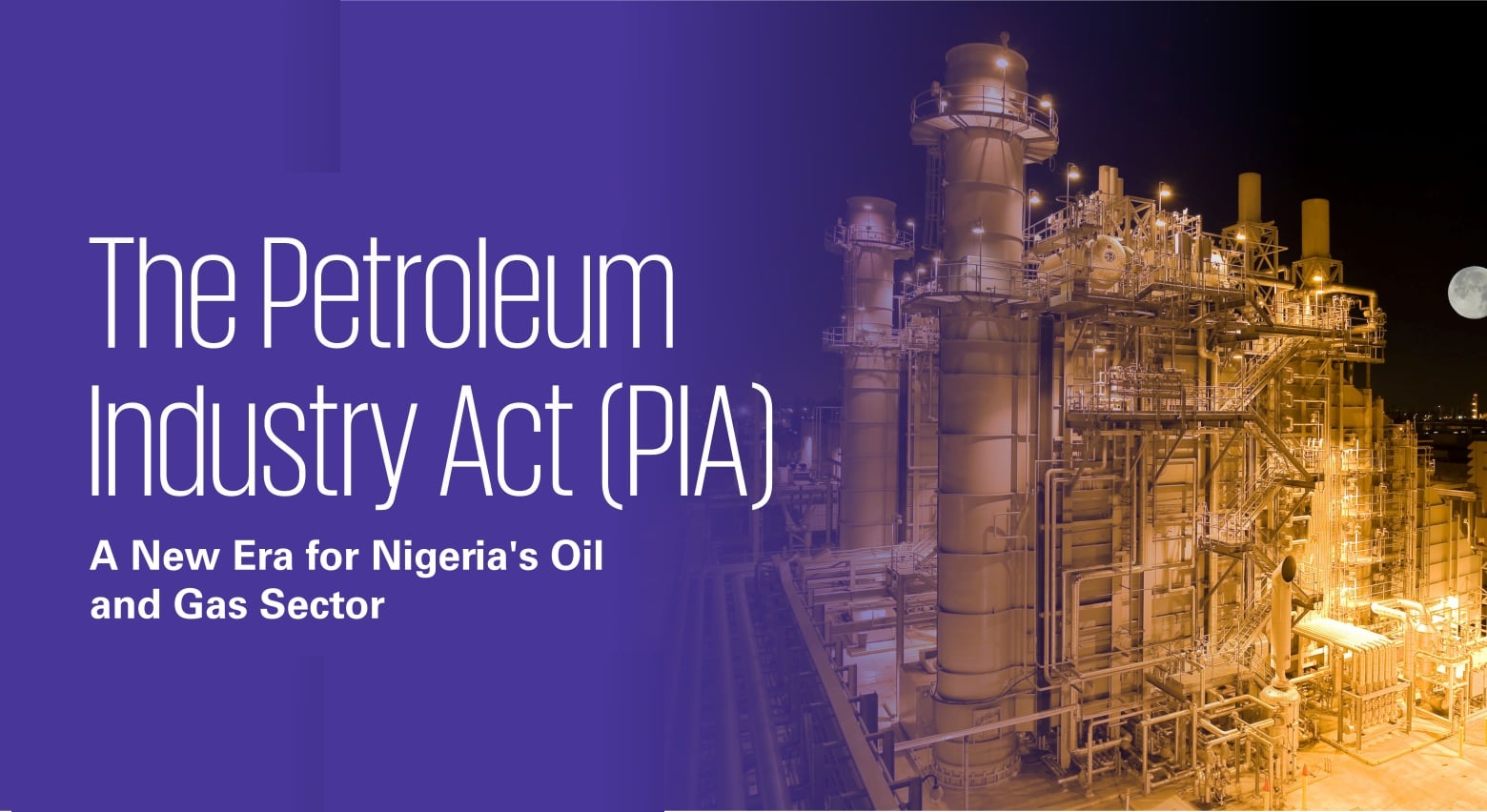
The Most Relevant Provisions of The Petroleum Industry Act 2021

0

The Petroleum Industry Act was signed into law/assented to by President Mohammadu Buhari on the 16th of August,2021 and has since served as one of the most notable innovations introduced to the Nigerian Oil and Gas sector.

The Act was introduced mainly for the following reasons :-

– To provide a Regulatory framework umbrella for the Nigerian Petroleum Industry.

– To encourage further private sector participation in the Petroleum sector.

– To create a more defined framework for Oil-host community development.

This has led to a very high demand for Professional guidance on the most relevant provisions of the law by virtually all stakeholders of the Petroleum Industry, a demand greatly increased by the fact that the Act has led to a sudden disruption in the way business is conducted in this sector at every level.

As a result, this article will try to explain in the most summarized manner possible, the most notable provisions of the Act on :-

– The New Regulatory Framework governing the Petroleum Industry.

– New provisions for increased private sector participation in the Petroleum Industry.

– Labour issues.

– The new Petroleum sector business licensees available.

– Provisions for Oil-rich host communities.

– The new Petroleum Industry Tax regimes in place.

What now makes up the Regulatory Framework governing the Petroleum sector under the Act?

The Regulatory Framework governing the Oil and Gas (Petroleum) sector under the Act consists of :-

– The Federal Minister of Petroleum

– The Nigerian Upstream Petroleum Regulatory Commission (NUPRC) which is now in charge of regulating the Upstream Petroleum sector.

– The Nigerian Midstream & Downstream Petroleum Regulatory Authority (NMDPRA)  which is in charge of regulating the Midstream & Downstream Petroleum sector.

– The Nigerian National Petroleum Corporation (NNPC) Limited, a company limited by shares and a replacement for the former Nigerian National Petroleum Corporation (NNPC) which was a Statutory Corporation owned by the Federal Government.

What this also means is that the following former Regulatory bodies have now been rendered defunct:

– The Department of Petroleum Resources (DPR).

– The Petroleum Products Pricing Regulatory  Agency.

– The Petroleum Equalization Fund.

What are the new Upstream, Midstream & Downstream Business Licenses available in Nigeria under the Act?

The Act now provides for the following Business Licenses:-

Upstream Licences

– Petroleum Exploration Licenses (PELs) which are valid for 3 years and then renewable for a further 3 years similar to Oil Exploration Licenses (OELs) that existed under the previous Petroleum sector Regulatory Framework.

– Petroleum Prospecting Licenses (PPLs) which are similar to Oil Prospecting Licenses (OPLs) under the former Regulatory Framework and are initially valid for 3 years and possibly renewable for another 3 years for shallow water and onshore acreages while they are valid for 10 years when meant for Deep offshore & frontier acreages.

– Petroleum Mining Licenses (PMLs), similar to Oil Mining Licenses (OMLs) under the former Regulatory Framework and which are valid for a term of 20 years and conditionally renewable for another 20 years.

Midstream & Downstream Licenses

– Petroleum Products Transportation and wholesale licenses.

– Distribution licenses.

– Filling station licences.

– Cooking Gas Wholesale/Storage & Retail licenses.

What is the fate of former OMLs & OPLs that are yet to expire under the Act?

All former OPLs & OMLs will automatically be converted to PPLs & PMLs via license renewal upon expiration while currently subsisting OMLs & OPLs can be freely converted to PMLs & PPLs freely on certain conditions, one of them being that all pending Litigation and Arbitral suits concerning the operation of those licenses be ended first. 

What does the Act say about Gas Flaring practices?

Gas flaring is deemed prohibited under the Act except in the following situations :

– Disaster prevention/mitigation.

– As a safety practice.

– With the prior exception approval of the NUPRC.

Are Environmental Impact Assessments (EIAs) required of Upstream Licensees under the Act?

Yes, they are. Chemicals are also not to be used for Upstream Operations except where applicable permits have been obtained.

What does the Act say about Labour issues?

Under the Act, all employees of all the former component Regulatory agencies in the Petroleum Industry have been transferred to the applicable inheritor agencies under the same terms by which they were initially employed under the old Regulatory Framework.

What does the Act say about Host Communities?

The Act provides that a settlor under a Joint Operating Agreement (JOC) must register a trust in favour of its host community. Compliance under this statutory ptovisiysill be the duty of an appointed operator where a group of settlors are involved. The Act also provides that a tax-exempt Host Community Development Trust fund be set up for each settlor to donate to out of its operational expenses. Settlor contributions are however deductible for hydrocarbon tax and company income tax purposes. 

Who is a settlor?

A settlor is a holder of interest in a PPL, PML, or a holder of an interest in a Midstream license having its operations physically located in or near to any community.

What is the fiscal framework applicable under the Act?

The following cost implications are applicable under the Act :-

– Hydrocarbon taxes from Upstream Operations in the onshore and shallow water.

– License charges in converted PMLs & PPLs.

– Non-deductible expenses consisting of :

a). penalties & gas flare fees;

b). expenditure for Petroleum deposit information

– A cost price ratio limit of 65% of gross revenue for Tax deduction purposes.

– Company income taxes(for Upstream Petroleum companies).

– Hydrocarbon taxes will not be deductible due for the reason of Company Income Taxes.

Conclusion:- Understanding fully the procedures involved in Petroleum sector licensing procurement as well as Operational &  fiscal regulations will require further Legal guidance as the Act are too vast to be accurately detailed in this write-up.

Court of Appeal Nigeria Orders ASUU to Immediately Call Off Strike

0

In a new twist to the ongoing legal tussle between the federal government and the Academic Staff Union of Universities (ASUU), the Court of Appeal has ordered the union to immediately call off its ongoing strike.

The National Industrial Court had last month, ordered ASUU to resume academic activities in public universities until the court rules on the case brought against it by the federal government.

The Court of Appeal delivered the ruling as a precondition for granting the ASUU’s request to appeal the ruling of the National Industrial Court.

The court gave ASUU seven days to file an appeal to the ruling of the trial court, but it must first of all, obey the ruling of the lower court and call off the strike immediately pending the determination of the substantive suit.

The National Industrial Court on September 21, ordered ASUU to call off the strike following the suit brought before it by the federal government, asking it to order the striking lecturers and other members of the union back to the schools.

Among the provisions of the law that the federal government had asked the industrial court to determine is whether ASUU has the right to embark on strike over disputes as is the case in this instance. The court file said ASUU is compelling the Federal Government to employ its own University Transparency Accountability Solution (UTAS) in the payment of the wages of its members as against the Integrated Payroll and Personnel Information System (IPPIS) universally used by the Federal Government in the nation for payment of wages of all her employees in the Federal Government Public Service of which university workers including ASUU members are part of or even where the government via NITDA subjected ASUU and their counterpart UPPPS university payment platform system software to integrity test (vulnerability and stress test) and they failed.

The government had prayed the court to accelerate the hearing as the strike, which has lasted for eight months – crippling academic sessions in the public universities, has become a matter of national security.

The court granted the motion on notice filed by the federal government, urging the lecturers to return to classrooms. Ruling on the interlocutory injunction, the trial judge, Justice Polycarp Hamman, ordered ASUU to call off the industrial action pending the determination of the federal government’s suit against the union.

But ASUU appealed the ruling, praying for the stay of execution of the industrial court’s judgment until the determination of the case at the Court of Appeal.

Meanwhile, the federal government, in another move to quell the strike, had issued certificate of recognition to breakaway factions of ASUU. In response, the union had dragged the government to court.

However, given the judgment of the appellant court, ASUU is expected to return to the classrooms while it files an appeal to the industrial court ruling. That would be a huge win for the government. But ASUU is likely going to embark on a fresh industrial action as soon as it ends the current one.

Meta Plans to Cut 15% of its Workforce in ‘Quiet Layoff’

3

As Meta’s hard time continues unabated, the social media behemoth is desperately seeking measures to ameliorate both user and revenue growth crisis.

According to a report by Insider, Meta is reportedly conducting ‘quiet layoffs’ at Facebook that may lead to thousands of job cuts — at least 12,000 or about 15% of its workforce. The layoff, which is targeted at underperforming workers, is under process overseen by the company’s senior executives.

Insider reported, quoting comments by several employees, that as much as 15% of the workforce could be cut within the next few weeks. This means that some 12,000 employees could be out of jobs soon.

“It might look like they are moving on, but the reality is they are being forced out,” the employee told Insider.

The development came following Meta’s unprecedented economic downturn early this year that saw its value dropped more than half. The company’s stock price has nosedived 60% from its peak of nearly $380 since last year.

Insider reported that Facebook employees have been bracing for layoffs for months since the social networking giant announced a hiring freeze.

Though hiring freezes became common among tech companies earlier this year following growing global inflation, Facebook is one of the hardest hit. The social media company has had to deal with a major drop in the number of users who are believed to be joining the high-flying short-form video app TikTok.

According to the Insider’s report, Meta, seeing its value plunging, had planned early enough to cut the size of its workforce to the barest minimum.

Meta Founder and CEO Mark Zuckerberg has made it clear that the social network is freezing hiring across the board, warning that more layoffs are in the pipeline.

According to reports, Zuckerberg made these comments during an internal call to employees.

Zuckerberg mentioned during the last Meta earnings call that “Our plan is to steadily reduce headcount growth over the next year. Many teams are going to shrink so we can shift energy to other areas.”

In May, Zuckerberg announced a hiring freeze affecting certain segments of Meta. However, he has now expanded the hiring freeze across departments and verticals.

Facebook’s parent company Meta is currently reducing staff to cut costs amid the economic downturn, apparently putting some of them on traditional 30 to 60 days “lists” to find a new role within the company or leave.

Meta has a “long practice” where employees whose roles are eliminated are subject to termination if they can’t find a new job internally within a month.

As Big Tech companies lay off employees and freeze new hirings, Zuckerberg said in July that the company’s plan is to steadily reduce headcount growth over the next year.

Admitting that the social network has entered an economic downturn that will have a broad impact on the digital advertising business, Zuckerberg said that many “teams are going to shrink so we can shift energy to other areas inside the company”.

Meta had earlier this year, laid out a recovery plan that includes shifting to short-form videos and divestment to metaverse. However, the plan is yielding no positive results yet, and Zuckerberg is said to have invested more than $10 billion on the metaverse idea.