DD
MM
YYYY

PAGES

DD
MM
YYYY

spot_img

PAGES

Home Blog Page 485

UK Strikes £1.5bn Defense Deal with Palantir as Trump’s Visit Spurs Wave of US Tech Investment

0

The UK government has sealed a defense deal with US spy-tech firm Palantir, a move officials say will unlock £1.5 billion ($2 billion) in investment and create up to 350 new jobs, while positioning Britain as a hub for military-focused artificial intelligence.

The announcement coincided with U.S. President Donald Trump’s state visit to the UK, which was marked by a string of American tech investment pledges the government claimed could be worth up to £31 billion ($42 billion) for artificial intelligence and digital infrastructure, per The Register.

Under the arrangement, Palantir will establish its European headquarters for defense in the UK, creating up to 350 new jobs. The Denver-based data analytics company, which was founded with funding from the CIA-backed venture arm In-Q-Tel, has long attracted controversy for supplying profiling tools to the CIA and for contracts with U.S. Immigration and Customs Enforcement (ICE). But UK officials brushed aside those concerns, pointing instead to the military and industrial benefits of the new deal.

Signed by Defense Secretary John Healey, the agreement centers on developing AI-powered battlefield systems. The UK military will partner with Palantir to adapt digital capabilities tested in Ukraine, aimed at speeding up decision-making, mission planning, and targeting. Healey said the partnership would “transform lethality on the battlefield” by advancing AI-driven tools in data analysis, intelligence, and decision support systems.

“The work will unlock billions of pounds of investment into UK innovation, creating hundreds of skilled UK jobs and making defense the leading edge of innovation in NATO,” Healey said in a prepared statement. “Palantir and the UK military will work together to transform lethality on the battlefield, supporting the development of data and AI-powered capabilities across data analysis, intelligence, decision support and targeting systems. This will see the government delivering on a key theme of the Strategic Defence Review and Defence Industrial Strategy: to make the UK the leading edge of innovation in NATO.”

The deal falls under the Digital Targeting Web program, outlined in the Strategic Defense Review published in June, which seeks to integrate data from both open-source platforms and classified military systems. The aim is to give commanders faster and more precise options for identifying and engaging enemy targets.

Palantir CEO Alex Karp said his company would invest up to £750 million ($1 billion) in the UK as part of the deal.

“It will reinforce the UK’s position as a major military force protecting the West from our adversaries,” Karp said. “And it will underline the UK’s status as our largest presence outside of the U.S.”

Karp, who is known for his stark rhetoric about Palantir’s mission, has previously told investors that the company’s products help ensure “people were not goose-stepping on the streets of Europe,” and that Palantir was built to “power the West to its obvious innate superiority.”

Officials in London also suggested the Palantir partnership could open doors for UK defense startups and technology suppliers, allowing them to expand into the U.S. market while also feeding into Britain’s broader defense industrial base.

The Palantir deal is part of a much larger wave of U.S. tech commitments announced during Trump’s state visit. Microsoft pledged to invest $30 billion in AI infrastructure and ongoing operations across the UK, Google announced a $6.83 billion two-year investment, CoreWeave committed $2 billion in datacenter spending, and Salesforce revealed a fresh $2 billion UK investment. Nvidia and OpenAI also signed up for UK initiatives under the investment package, which officials described as a once-in-a-generation boost to Britain’s AI sector.

Together, the government said, the commitments represent £31 billion ($42 billion) of new investment from U.S. technology leaders into Britain’s AI and defense ecosystems.

For the UK, the Palantir deal symbolizes both opportunity and controversy: a chance to place itself at the forefront of NATO’s military tech race, while tying itself closer to a company whose surveillance tools remain hotly debated.

In comparative terms, Palantir’s £1.5 billion commitment may seem modest next to Microsoft’s $30 billion or Google’s multi-billion-dollar projects, but its significance lies in the defense sector — an area where such collaborations remain rare and politically sensitive. Unlike consumer- and enterprise-focused investments by Microsoft or Google, Palantir’s deal directly embeds an American firm into Britain’s military modernization strategy, underscoring a deepening US-UK defense-tech partnership.

The deal also highlights a dual strategy for the UK that leverages Silicon Valley’s financial muscle for domestic AI infrastructure while tying its defense modernization to American expertise. But for Washington, it reflects a broader push to align NATO allies around US-developed technologies, particularly those tested on active battlefronts like Ukraine.


Algorithm, Board, Under U.S. Control: White House Reveals Details of TikTok Deal

0

The White House on Saturday revealed details of a long-awaited TikTok deal that would place the popular short-video app under overwhelming U.S. control, reshaping its governance and potentially setting a precedent for how Washington approaches foreign-owned platforms in the name of national security.

Press secretary Karoline Leavitt said on Fox News that six of seven seats on a new board overseeing TikTok’s U.S. operations would be filled by Americans, while the app’s prized algorithm — the recommendation engine that drives engagement — would also fall under U.S. control.

“This deal means that TikTok will be majority-owned by Americans in the United States,” Leavitt said, calling the arrangement a safeguard against Beijing’s influence. “The algorithm will also be controlled by America as well.”

The announcement followed months of fraught negotiations that have pitted President Donald Trump’s administration and Congress against Beijing and TikTok’s parent company, ByteDance. Lawmakers had already passed a bipartisan law in 2024 banning the app, a decision upheld by the Supreme Court in January. Trump repeatedly extended enforcement deadlines, most recently to December 16, as his team sought a framework that would allow TikTok to continue operating while addressing security fears.

The control of TikTok’s algorithm has been one of the most contentious sticking points. U.S. officials feared that Beijing could weaponize TikTok to push anti-American narratives, while China has signaled reluctance to hand over the technology. Friday’s call between Trump and Chinese leader Xi Jinping appeared to mark a breakthrough, with Trump praising Xi for “approving the TikTok deal.” Yet Beijing’s official readout conspicuously avoided confirming any agreement, underscoring lingering tensions.

Oracle’s central role

Under the plan, tech giant Oracle, led by billionaire Trump ally Larry Ellison, will oversee data security. Bloomberg reported that Oracle, venture capital firm Andreessen Horowitz, and private equity firm Silver Lake Management are expected to become major investors. ByteDance would retain less than 20% ownership in the new entity, ensuring American dominance.

The White House maintains that Ellison’s company will ensure user safety and data protection.

A multibillion-dollar “fee-plus”

In a striking twist, the administration expects to collect a multibillion-dollar payment from investors — a fee Trump has framed as compensation for brokering the deal. The Wall Street Journal, citing sources, said the fee could reach billions, though final terms remain unsettled.

“This hasn’t been fully negotiated, but we’ll get something,” Trump said, calling it a “tremendous fee-plus.” He argued the unprecedented arrangement was justified by the geopolitical complexity and the U.S. government’s role in navigating the talks.

Traditionally, governments do not charge companies for national-security approvals or export licenses. Legal experts warn that demanding fees from corporate deals could test U.S. law. For comparison, investment bankers typically receive less than 1% of a transaction’s value in fees — far below the billions being discussed here.

A geopolitical deal unlike any other

The TikTok negotiations highlight how Washington is increasingly inserting itself into corporate transactions with geopolitical stakes. Earlier this year, the Trump administration struck a deal to take an equity stake in Intel and secured 15% of sales from an Nvidia AI chip bound for China in exchange for export clearance.

The TikTok case, however, goes further: it combines national-security concerns, control of a global cultural platform, and direct financial compensation for the U.S. government. Analysts say the arrangement could embolden Washington to pursue similar strategies in future disputes involving foreign-owned firms.

The deal also caps a dramatic reversal for Trump, who in his first term pursued a full ban of TikTok. During his 2024 campaign, he pivoted, embracing the app’s popularity among younger voters and pledging to preserve it under U.S. control. On Thursday, he credited TikTok with helping him win reelection, arguing the platform should remain available to its 170 million American users.

The announcement marks the clearest sign yet that Trump has settled on a strategy of partial divestment and heavy U.S. oversight, rather than an outright ban.

Globally, few countries have taken such a hands-on approach. India banned TikTok outright in 2020, citing national security, while the European Union has opted for regulatory scrutiny under its Digital Services Act. By contrast, Washington’s arrangement blends forced ownership changes, algorithm transfer, and direct government profit — a hybrid model that some observers say could reshape global tech governance.

Still, for TikTok’s millions of American users and creators, the deal offers temporary relief after years of uncertainty. ByteDance praised both Trump and Xi for “their efforts to preserve TikTok in the United States,” saying it would work within the law to ensure continuity. If finalized, the agreement is expected to cement TikTok’s future in America.

Project Management Lessons from Nehemiah on Critical Success Factors

0

In the chronicles of ancient Jerusalem, Nehemiah’s mission to rebuild the city’s broken walls remains one of my finest project management case studies. The task was daunting—ruins everywhere, enemies mocking, and resources scarce. Yet Nehemiah turned despair into destiny by focusing on critical success factors (CSFs)—those few essentials that determine the fate of a mission.

He defined the vision clearly: “Come, let us rebuild.” He rallied stakeholders—priests, nobles, merchants—aligning diverse interests under a shared purpose. He analyzed risks: stationed guards at vulnerable points, split workers between building and defending. By measuring progress section by section, Nehemiah ensured momentum was visible. In forty-two days, a miracle was achieved: the walls stood again. Management wisdom whispers—success is rarely about doing everything, but about doing what truly matters exceptionally well.

Yet Nehemiah’s genius was not just in execution but in strategic sourcing. Before he even set foot on Jerusalem’s soil, he asked King Artaxerxes for timbers from the King’s forest. By securing royal wood for the gates and beams, Nehemiah did more than gather materials: he signaled legitimacy, attracted goodwill, and closed the deal because timbers from the king’s forests by law could not be wasted. Simply, if your project is supported by timbers from the king’s forests, it was done since the penalty for wasting the timbers was death!

For today’s managers, the call is clear: anchor leadership on the few levers that unlock destiny, forge strategic partnerships that signal strength, and steward the mission with courage, blended with catalytic Project Sponsors. If you do those in your enterprise, success will come.

What are your project critical success factors and do you have an executive sponsor on that project? Happy Sunday!

Trump’s $100,000 H-1B Visa Fee Sparks Panic at Tech and Finance Giants as Companies Urge Employees to Get to U.S. Before Deadline

0

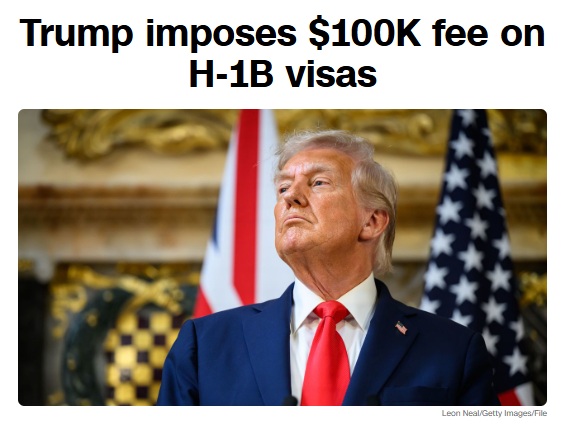
Employees at some of America’s largest technology and financial firms were urged to stay put in the United States—or scramble to return within hours—after President Donald Trump signed a surprise executive order requiring companies to pay $100,000 per year for each H-1B visa.

Amazon, Microsoft, Meta, and JPMorgan Chase were among those issuing urgent internal advisories to staff on Friday night, according to employees and internal communications reviewed by Business Insider.

“If you have H-1B or H-4 status and are outside the U.S.: Try to return before tomorrow’s deadline if possible,” Amazon told employees in a memo sent Friday, warning that staff should make every effort to clear U.S. customs before 12:00 a.m. EDT on Sunday, September 21, 2025. “We realize this is short notice but returning soon is advisable,” the message said.

Amazon added that those already in the U.S. should suspend travel plans for now: “Stay in the country for the immediate future.” The memo further advised anyone unable to make it back before the deadline to avoid attempting reentry “until further guidance is provided.”

The urgency highlighted the scale of disruption across the tech sector, where foreign workers are critical to operations. Amazon employed nearly 15,000 workers under H-1B visas in fiscal year 2024, according to federal filings.

Within hours of the executive order, similar warnings went out from Microsoft, Meta, and JPMorgan. A Microsoft advisory urged visa holders in the U.S. to remain “for the foreseeable future” and told those abroad to return as quickly as possible before the deadline.

“We know this may interrupt your travel plans. But the critical thing is to stay in the U.S. in order to avoid being denied reentry,” the guidance said, according to five employees.

Microsoft’s memo acknowledged the anxiety caused by the abrupt move: “I know these developments are creating uncertainty for many of you. While we don’t have all of the answers right now, we ask that you prioritize the recommendations above.”

JPMorgan sponsored the most H-1B visas among U.S. banks last year, nearly 2,000, most tied to software engineering roles.

Trump signed the order late Friday, requiring employers to pay a $100,000 annual fee for each H-1B application, though it remains unclear whether the measure applies only to new applicants or also to renewals. The order, effective September 21 at 12:01 a.m. ET, could bar thousands of skilled workers from reentering the U.S. without their companies paying the hefty fee.

Commerce Secretary Howard Lutnick suggested on Friday that the fee would apply to both renewals and new applications. “Renewals, first times, the company needs to decide,” Lutnick told reporters. “Do they want — is the person valuable enough to have a $100,000 a year payment to the government or they should head home, and they should go hire an American.”

But the White House later walked back those remarks. A White House official told Business Insider that the fee would only apply to new petitions, not current lawful visa holders or renewals.

“This is a one-time fee that applies only to the petition,” the official said in an email. “It ONLY applies to new visas, not renewals or current visa holders. It will first apply in the next upcoming lottery cycle.”

Abigail Jackson, the White House deputy press secretary, echoed the clarification in a statement on X, writing that the order “does not impact the ability of any current visa holder to travel to/from the U.S.”

The conflicting statements have left workers and companies in uncertainty. Amazon’s blunt instruction for visa holders outside the U.S. to rush back before the deadline underscored the uncertainty over how the order will be enforced.

The executive order is part of Trump’s broader effort to restrict immigration in his second term, with H-1B visas a frequent flashpoint. The administration argues that forcing companies to pay steep fees ensures only highly valuable workers are retained while pushing firms to train and hire more Americans.

“Either the person is very valuable to the company and America, or they’re going to depart and the company is going to hire an American,” Lutnick said.

The order also reflects Trump’s long and complicated history with the H-1B program. Though some allies have pushed for tighter controls, Trump himself has praised the visa in the past.

“I have many H-1B visas on my properties. I’ve been a believer in H-1B. I have used it many times. It’s a great program,” he told the New York Post in December.

The immediate consequences, however, are grave. Tech firms, including Amazon, Microsoft, Alphabet, Meta, and Apple, consistently rank among the top sponsors of H-1B visas, using the program to fill technical roles amid fierce competition for talent. Analysts warn that the $100,000 fee could hit smaller companies and startups especially hard, potentially pushing more firms to shift work overseas and weakening America’s competitive edge in areas like artificial intelligence.

BNB Nears $1,000, XRP Pushes $3.50—But Ozak AI Presale Holds the 100x Crown

0

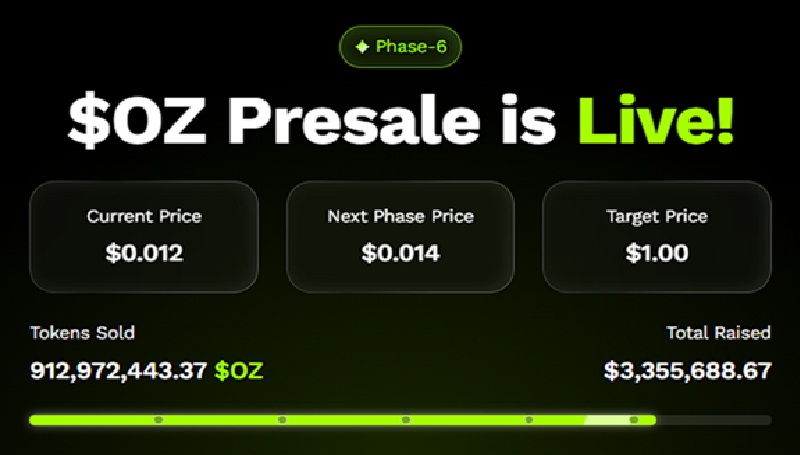
Ozak AI is quickly emerging as one of the most promising presale opportunities of 2025. Currently priced at just $0.012, the token has raised over $3.3 million in Stage 6, signaling strong demand from both retail investors and institutional participants. While top cryptocurrencies like BNB and XRP dominate market headlines, Ozak AI offers a rare chance for early-stage investors to secure a position in a project with potential 100x returns.

BNB Approaches $1,000

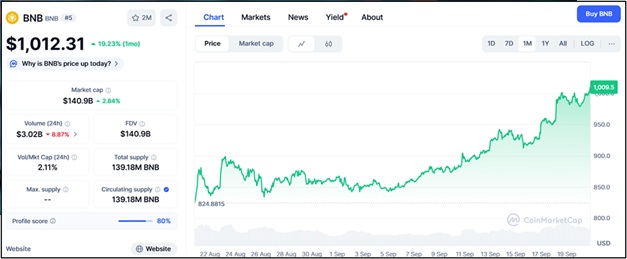
Binance Coin (BNB) is trading near $999, displaying regular bullish momentum. Analysts have identified key resistance levels at $1,020, $1,050, and $1,100, while support levels sit at $975, $950, and $920. Breaching those resistance tiers ought to open the door for similar price appreciation, but BNB’s huge market cap clearly limits the significance of potential profits. In contrast, Ozak AI’s low access charge affords some extra upside capability relative to investment size.

XRP Eyes $3.50

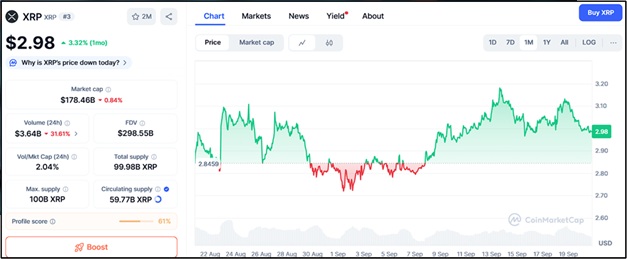
XRP is currently trading at $2.98, with traders targeting a push to $3.50. Critical resistance points include $3.10, $3.25, and $3.50, while support levels are observed at $2.85, $2.70, and $2.60. XRP’s growth is promising, yet the returns for new investors are modest compared to what early Ozak AI participants could achieve. A small allocation in the Ozak AI presale could yield life-changing results if the token reaches $1.20 or higher in the next bull cycle.

Why Ozak AI Holds the 100x Crown

The presale price of $0.012 mixed with strong basics sets Ozak AI apart. Unlike hooked up cryptocurrencies that require massive capital for meaningful exposure, Ozak AI lets in early participants to steady heaps of tokens with a notably small investment. Analysts predict that if adoption speeds up and the market recognizes its utility, Ozak AI should deliver returns approaching 100x, making it one of the rare projects capable of remodeling modest investments into enormous wealth.

Utility and Market Position

Ozak AI differentiates itself with real-world utility. Its ecosystem integrates artificial intelligence with blockchain, offering predictive analytics, decentralized solutions, and data modeling for businesses and traders. This functional use ensures demand extends beyond speculation, creating a foundation for sustainable growth. Meme coins or purely speculative altcoins often lack this level of adoption potential, which makes Ozak AI’s presale even more appealing to serious investors.

OZ Presale Momentum and FOMO

Stage 6 of Ozak AI’s presale has already created significant buzz. Retail investors and whales alike are rushing to secure tokens before the price increases post-listing. FOMO (fear of missing out) is a powerful driver, especially in early-stage projects, and Ozak AI’s rapidly growing presale numbers reflect this. Historically, tokens with strong presale momentum often see significant gains during initial trading, adding another layer of opportunity for early investors.

While BNB nears $1,000 and XRP pushes toward $3.50, Ozak AI’s presale at $0.012 provides a rare asymmetric investment opportunity. With 100x potential, strong AI-powered utility, and rising investor interest, Ozak AI stands out as a top presale pick for 2025. Early adopters who secure tokens now could find themselves at the forefront of the next crypto bull run, capturing substantial upside that established cryptocurrencies, despite their market dominance, are unlikely to match.


About Ozak AI

Ozak AI is a blockchain-based crypto project that provides a technology platform that specializes in predictive AI and advanced data analytics for financial markets. Through machine learning algorithms and decentralized network technologies, Ozak AI enables real-time, accurate, and actionable insights to help crypto enthusiasts and businesses make the correct decisions.

For more, visit:

Website: https://ozak.ai/

Telegram: https://t.me/OzakAGI

Twitter: https://x.com/ozakagi