DD
MM
YYYY

PAGES

DD
MM
YYYY

spot_img

PAGES

Home Blog Page 4850

Tamadoge and Big Eyes Coin Become Part Of The Crypto Zeitgeist

0

The cryptocurrency market has recently resembled an octogenarian on life support, having sustained a triple amputation as a result of a nail bomb explosion in an underground bumper. Fortunately this situation has shown steady signs of improvement. As inflation hits the globes’ major currencies, crypto continues its assent as an attractive proposition. Notwithstanding its cyclical volatility, it has shown there is a hunger for decentralised money exchange.

The crypto market has evolved since its inception, as evidenced by the current offshoot in the form of meme coins. These meme coins cut through the banal and stagnant air of a stiff finance environment. A clown on a unicycle honking his horn while doing circuits round the lobby of Morgan Stanley. That’s meme culture. It makes fun of itself. It finds the uncanny and the comical in the mundane. This new iteration introduced the world of crypto to a fresh audience of tech savvy millennials and gen z. We’ve grown up on a diet of Gen X televisual irony and Boomer postmodern self reflexivity. The result – an image with the right accompanying text formulated into a meme can perfectly summarise the feelings and thoughts of a society, looking in the wing mirror towards a mono-culture dissolving. Below we’ll take a scalpel to two tokens currently making the crypto community salivate – Tamadoge (TAMA) and Big Eyes Coin (BIG).

Tamadoge (TAMA) has exploited this interest and taken it a step further with a Pokemon hybrid that allows adopters to battle Tamadodge (TAMA) pets against each other. This preceded a pet store opening that allowed the community to choose from a whole host of plucky and adorable pets. The appeal of this token is its insistence on merging meme coin culture with the P2E gaming system. An arcade flooded with wacky, weird and playful games. And if that wasn’t enough, the team have elbowed their way into the NFT market with a 100 rare examples to choose from going live in under three days. This token looks to do for crypto what Mario did for gaming.

Finally, we have what might be considered the most exciting prospect and current underdog to Tamadoge’s unprecedented rise – the Big Eyes Coin (BIG). This token has run with the huge cross-cultural appeal of anime. Specifically – an adorable cute and cuddly animal, in this case – a cat. Big Eyes enters the arena with a conscience and a back story. This felicitous feline is partial to a fish treat. So Big Eyes (BIG) concern with the current condition of the Oceans, though self satisfying, is nonetheless an example of environmental concern and a belief in conservation. Placing its community at the centre of its values, 90% of its currency will be available. In line with its ethos and with its current paw on the pulse of the culture, Big Eyes Coin will be minting a host of Ocean- centric NFTS. In its pursuit of cultivating and indulging a growing community of cool cats and kittens, the team behind Big Eyes intend to hold live NFT events and giveaways.

Big Eyes Coin (BIG) is currently in stage 3 of its presale, a moment in which it is just about to release its NFT’s and a large cohort of early adopter influencers are shouting its praises from atop their platforms. Its own online shop is active for merch purchases. Join the Big Eyes Tribe. At its current stage the token price is so low that a return on investment seems as likely as the fact that night follows day. Keep your eyes peeled for this adorable cat as it takes the established wisdom of Dogecoin (DOGE) and Shiba Inu (SHIB) to a whole new level of audience participation. Having raised $3 million already, the cat is clawing its way to the top without much effort required.

Link below for the website and an in depth plan for crypto domination.


Big Eyes Coin (BIG)

Presale: https://buy.bigeyes.space/

Website: https://bigeyes.space/

Telegram: https://t.me/BIGEYESOFFICIAL

Dr Yasam Ayavefe Talks About The Global Economic Effects of COVID-19

0

At the beginning of 2020, the coronavirus epidemic was limited to only China, but then spread very quickly to the rest of the world. To stop this health crisis, many countries have implemented containment measures.

These measures caused an unprecedented economic crisis. The restrictions have indeed restricted all areas of production, the exchange between countries, causing a worldwide demand shock.

This has resulted in an unprecedented decline in supply and demand. Progress towards growth has stalled. Covid-19 has caused a sharp deterioration in the labor market in many countries.

Countries have taken many measures and offered credit facilities to support the public and ensure credit facility. The government has worked to reduce interest rates in banks and has contacted central banks.

We will start by taking a still partial inventory of the economic situation and the extent of the recession in the first quarter of 2020, based on statistical information on the situation in March.

These indicators should of course be interpreted with caution. Because traditional statistical instruments, in particular, struggle to fully reflect the macroeconomic situation in the face of a shock.

Analysis of the transmission of shock between sectors of activity and different economies is carried out in the second step. Here, estimating the one-month closure shock makes it possible to calibrate the adjustment in the labor market.

Initial Data Released by National Accounts

At the end of April or mid-May, the national statistical institutes of developed countries published the first version of the first quarter accounts.

According to these data; In the growth figures, it is possible to see concretely the economic effects of the restriction in the last two weeks of the quarter.

Among the industrialized countries that published the first results, the United States and the United Kingdom appear to be less affected than European countries. Among European countries, France, Italy and Spain showed the biggest decreases.

These inequalities observed in the impact of the pandemic on growth are primarily due to internal shocks to which economies are exposed.

They also depend on the sectoral composition of value added and, in particular, the weight of market services affected by the quarantine. It can also be explained by the degree of openness of countries and the different exposures to shocks by their trading partners, as well as the weight of tourism (accommodation and catering) in the economy.

Finally, in the unprecedented context of the covid-19 crisis, they may stem from problems in establishing national accounts and the way national statistical institutes are addressing the difficulties inherent in the situation.

Most statistical institutes point out that these results need to be revised. Past experience demonstrates the difficulty of measuring the impact of major shocks on economic activity.

By one measure of the past, revisions between the first version released during the great recession and the current version have almost always been on the downside.

The process of revising the accounts for the first quarter of 2020 also started one month after the preliminary versions were published.

All countries revised their accounts. Some went down, some went up. In any case, the process of reviewing these accounts is just the beginning.

Presentation of Indicators

Although the initial estimates of the national accounts were not precise, they were enhanced by the measures taken in the first quarter to curb the activities. Considering the multiplicity and difficulty of the measures, it is quite difficult to detail all the decisions taken.

Researchers from the University of Oxford and the Blavatnik School of Public have created an indicator that measures the rigor of government responses. This indicator has attempted to summarize the containment measures adopted in 163 countries according to two types of criteria.

First; the severity of the restriction for each listed measure (closure of schools, businesses, limitation of meetings, cancellation of public events, house arrest, closure of public transport, restriction of domestic and international travel), the second is the local or generalized nature of each measure in a country.

Among the measures; The two areas that have had the most impact on activity are noteworthy: the closure of schools (which prevents parents from working to care for their children if they are not working from home) and the closure of businesses and shops.

According to the methodology devised by the University of Oxford, the severity of measures is characterized on a conventional scale ranging from 0 (nonexistent measure) to 3 or 4 in their most restrictive applications.

Also, depending on whether a measure remains local to the economy or simply geographically, its impact on activity can be differentiated as a feature we consider.

From these indicators, we can evaluate the severity of quarantines by country in terms of the restriction imposed by closure measures and their generalization.

After China’s initial containment measures in January, Europe quickly became the epicenter of the pandemic, prompting countries to gradually adopt lockdown measures.

Italy was the first developed country to take such measures: very restrictive closures, limited locally to around 50,000 people from February 22, were extended to the Lombardy and Veneto regions on March 8 and rolled out across the country from March 10.

Other European countries followed Italy to prevent the spread of the virus in the face of increasing hospital capacities. The severity of business closures in Germany remained low and implemented later than in other countries.

On the other hand, the closure of schools was implemented in two stages. The United States showed a soft stance with the absence of widespread measures in the first quarter, even as it led to the complete closure of schools and non-essential businesses. Among developed countries, only Sweden stands out for the lack of strong containment measures. As a result, the economy has been heavily affected by Covid-19.


Find out more about Dr. Ayavefe and his work here:

https://yasamayavefe.com/

Milaya Capital

Green Climate World Token

Geopolitical Location in Tourism – Dr Yasam Ayavefe

0

Tourism logically attracts a large number of researchers because of its scale and the diversity of the sectors it affects.

Economists, anthropologists, sociologists, doctors, urban planners, geographers, etc. they all study tourism with their own scientific approach. Therefore, in this article, we will consider tourism and geopolitical locations.

This is a topic that has been discussed and debated many times before. Taking into account the conflicting representations that the actors of the situation under study have, the power or influence on the regions and therefore the populations located there is studied.

Although tourism is a global phenomenon, this activity can be the subject of specific and contradictory development projects.

The fact that it concerns certain places remains unchanged, the interests of some may not necessarily meet those of others.

Additionally, many of us are tourists at different times for a few days or weeks, usually for a limited time, and most of us have some experience in the field.

Everyone has a way of traveling and being a tourist. For this reason, everyone represents the touristic development of the places they discover according to their age, social level, cultural and economic environment. Representations of tourism experts are also added to this.

Geography is a necessary knowledge for the analysis of tourism. These have been and continue to be motivation, one of the main sources of travel. It is geographers who best explain and explain them.

It is at the center of the approach, combining the knowledge and geopolitical approach of geographers.

Finally, if tourism is a global phenomenon, although tourism is developing in developing countries, it is a sector that primarily affects developed countries. Let’s remember that tourists overwhelmingly travel within their own country.

For example, out of 80% of French travelers in France, only 11% go abroad, and

the vast majority of them go to Spain and Italy.

Geopolitical Impact

Let’s look at the importance of representations in perceiving the effects of tourism on a region. Tourism has two completely opposite representations.

Some see tourism as an effective development tool, regardless of the places involved, with the positive effects far outweighing the negative aspects.

800 million tourists, the first sector of economic activity, provides hundreds of thousands of jobs.

Others, on the other hand, insist on the effects that they consider, above all, negative from this activity.

It is a development that benefits only a few, at the expense of the majority of the population in which the lifestyle and environment can live.

It will be destabilized by this brutal intervention represented by tourists.

Next, we condemn the acculturation of the local population as its victims, and the price increase that tourist purchases inevitably bring.

These two representations are particularly prominent in the analysis of the effects of tourism on Southern countries.

However, this very negative representation may be responsible for destroying the authenticity of their lifestyle or, worse, forcing populations to commit a fraud.

Intellectual circles exposing the evils of capitalist globalization in Southern societies are essentially current.

Or, on the contrary, we condemn the ban on developing such sites to preserve the natural environment, to preserve the flora and fauna that tourists admire and photograph.

In both cases, it arrives at the same thing, namely the profit interest that precedes respect for the local population, and is also reprimanded for tourists for supposed authenticity. Undoubtedly, this mass phenomenon has negative effects like any other process.

However, this criticism reveals a certain regret for the time that only those who know how to travel to these distant lands, that is, well-off and cultured people, even those who have worked in the field and do some research from time to time, go.

The exclusivity of long-distance travel is a thing of the past. Moreover, the question of originality is not so simple. Does it decide what is original and by what criteria?

And the question of preserving authenticity necessarily raises the question of identity. However, identity is not a static, abstract situation.

On the other hand, the massive influx of tourists leads to sometimes drastic changes in the way of being and behavior of local peoples.

However, the critical look at this evolution is the view of those who regret the disappearance of a previous situation.

Find out more about Dr. Ayavefe and his work here:

https://yasamayavefe.com/

Milaya Capital

Green Climate World Token

2023 Elections: Report, Experts Find Early Campaign Stage Less Issue Focused

0

…want infractions of code of conduct for election campaign to be penalised

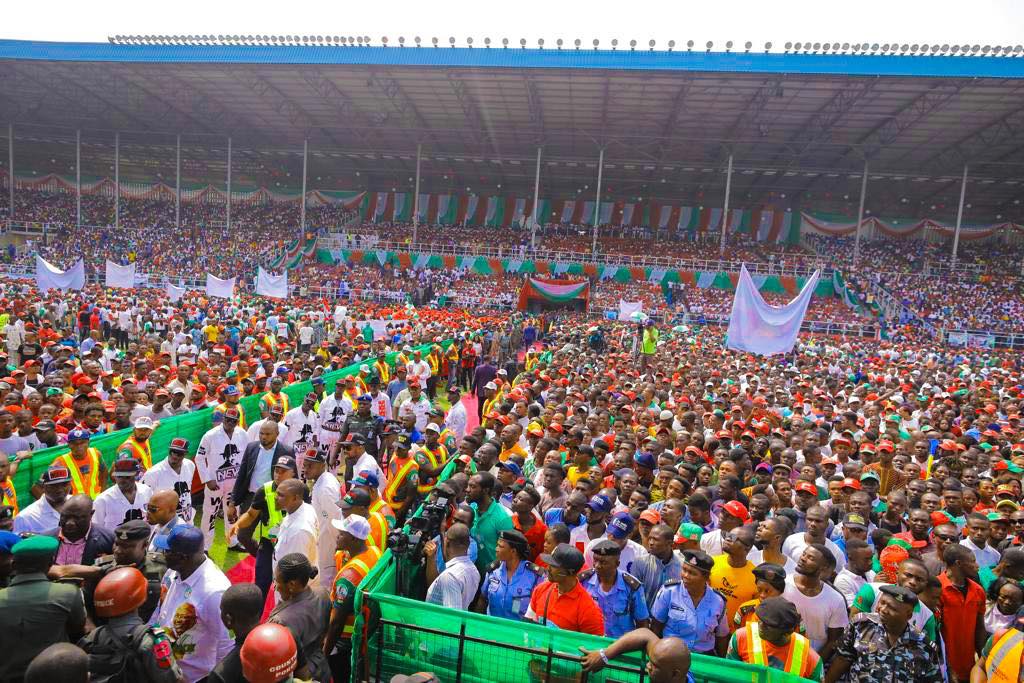
The Center for Research on Development of African Media, Governance and Society (CEREDEMS-Africa) and Positive Agenda Nigeria (PAN) report on the 2023 presidential election campaign monitoring indicated that the talking points of political actors are still largely not issue-based.

The organisations presented the summary of their findings at the weekly report discussion held online to disseminate the outcome of their monitoring of political actors and supporters between 28th September to 2nd October, 2022.

The report titled: “Intensive Information Pollution, Personality Disparagement or Informed Policy Engagement in Nigeria 2023 Presidential Election Campaign?” is the first weekly report of its 54-week project focused on presidential election campaign monitoring.

While presenting the report, the Director of the project’s Communication and Public Engagement, Jamiu Folarin said the report contains the findings of the research conducted by the CEREDEMS-PAN on the presidential election campaign in Nigeria. 

“For a campaign ecosystem expected to be dominated by issue-based engagements, the dominance of non-campaign and policy issues across parties’ outings in the first week revealed a campaign that did not focus on issues that matter.”

“Analysis indicates that for the first one week of campaign, issues that could not be categorized as any of the core issues of policy and campaigns had the highest percentage among the issues raised in the one-week old campaign atmosphere standing at 65.30% while Economy (10.64%) Security (7.33%) and Education (5.13%)  came distant second, third and fourth respectively on the scale of issues of priority among the contending parties.”

The report observed that across the party lines for the first week of campaigning, the campaign strategies were aimed at focusing on emphasizing what the parties and their candidates could do if elected into the office.

“Of the three major campaign strategies, our analysis revealed that ‘acclaims’ was majorly employed by actors across the party lines. The category, which depicted the use of messages that indicated that parties and candidates were best to win the presidency through sound personality traits, leadership qualities and competencies, accounted for 78.88% of the strategies used in the first week of the campaign. 

“This was followed by a paltry 19.12% of ‘attacks’ which were messages that denigrated the personality traits of candidates and leadership qualities and/or competencies of the candidates to govern the country. 

“This was trailed by 1.99% of ‘defenses’ – the messages that refuted negative elements pushed out by actors against other candidates and political parties.”

“The Labour Party was observed to have used the attacks, acclaims and defenses on almost the same scale. 

“However, the People’s Democratic Party appeared to have used defenses among the parties the most, recording a 40.00% deployment of defenses while using acclaims and attacks at 26.33% and 20.00% respectively. 

“The APC, in its approach, employed the least of acclaims and was at par with the LP in the deployment of defenses using 30.00% of its campaign messages to defend its candidate.

“Parties and their supporters used attacks mostly on Twitter (47.22%) followed by newspapers (41.67%) and Facebook (11.1%). Defenses were used equally on both twitter and in the newspapers. This appearance of attacks strategies is more intriguing as the medium is expected to have strong gatekeeping mechanism.  

“While AAC adopted the acclaims (12.37%) and attacks (2.22%) strategies respectively, it did not employ defenses at all. The NNPP (4.74%) and the YPP (0.26%) used acclaims only.”

While discussing the findings of the report at an online event, Dr Rasaq Adisa of the University of Ilorin attributed the low level of policy engagement and strategies to a number of factors.

These factors, according to Dr Adisa, include the fact that the political actors are just gaining momentum as campaign activities was lifted few days ago.

Dr Adisa also noted that the intra-party crisis and legal tussle in some political parties as well as the decision of some of the political parties to delay the flag-off of their campaign as responsible for the results of the findings.

Personality Disparagement in Campaign Messages

The report also noted that the 2023 presidential election campaign atmosphere is largely calm in the first week of campaign as “our analysts observed that the level of personality disparagement was not highly intensive. 

“None of the 130 campaign messages analyzed had a trace of personality disparagement that could be classified as highly intensive. However, there were traces of personality attack that were moderately intensive and slightly intensive.

“Largely, our analysts noted that the campaign atmosphere for the first week of campaign could be described as low in personality disparagement as about 50.00% of the campaign messages contained non-intensive personality attacks.

Information Pollution

The report noted that during elections, “clear and accurate information is critical for informed decision making by the electorate which informed interest in examining the information pollution ecosystem as the campaigns began.

“In the six entries analyzed for the first week, our analysts observed the presence of information pollution manifesting in the ecosystem with half of the data reflecting conflicting identities and construction of newsmakers and sources. 

“Similarly, other categories of misinformation also reflected in minimal presence of inaccurate photos and photo caption.

CEREDEMS-Africa/PAN Verdict on findings

While CEREDEMS-Africa/PAN commended political actors for less heated campaign atmosphere, during the period under review, ‘acclaims’ “as a campaign strategy, dominated the first one week of campaign across political parties: the report want the effort to be sustained.

“However, that elements of attacks were highly present in messages on Twitter, Facebook and even with some traces in the newspapers is a source of concern. 

“If it could be explained that Twitter and Facebook operate in an unregulated space, what of the newspapers that are expected to have strong gatekeeping mechanism?”

Experts want infractions of code of conduct for election campaign to be penalised

Meanwhile, experts have called on the Independent National Electoral Commission (INEC), security agencies and the judiciary to be deliberate in ensuring that the violations of the code of conduct for election campaigns is penalised.

Dr Rasaq Adisa of the University of Ilorin and political editor of The Nation newspaper, Dr Emmanual Oladesu made this call while discussing the outcome of the first week report of CEREDEMS-Africa and PAN on the monitoring of the 2023 presidential election campaign.

The discussion was anchored under the topic: “Political Actors and Their Campaign Trajectories: Towards Informed Choice During Presidential Election”.

The experts said the electoral act has clearly specified what constitutes these violations and any infractions must be punished to serve as a deterrent. 

“Election offenders must be brought to book, apprehended and prosecuted by security agencies because we have seen violations and our law should not only be on paper”, Dr Oladesu remarked.

Dr Adisa also wants the professional journalist and the mainstream media to keep alive their gatekeeping role by not allowing polluted messages to have its way as experienced on social media.

Dr Oladesu asked the media to stick to the ethics of the profession by being objective, balanced, fair and honest in the discharge of their duty.

They called for caution in the use of social media to spread toxic political campaigns asking social media platforms to do more to sanitiser the digital public sphere.

The experts also asked CEREDEMS-Africa and PAN to collaborate with other civil society and media organisations to disseminate the outcome of its research and set an agenda for the political actors and other stakeholders in the electoral process. 

In their remarks, the Executive Director of CEREDEMS-Africa, Dr Mustapha Muhammad Jamiu and the team lead of PAN, Dr Rasheed Adebiyi said the organisations is committed to ensuring they continue to contribute to expanding the political space and serene campaign atmosphere through its various projects.

The organisations promised to remain consistent in the six months project in using their participatory research approach to monitor the 2023 general elections campaigns by political parties, candidates and their supporters. 

The Research on Development of African Media, Governance, and Society (CEREDEMS-Africa) is a non-governmental organisation and research institute established in 2020, which focuses on using cutting-edge multi-disciplinary research methods to generate insights that improve policy initiative and implementation with regards to improving media ecosystem, governmental and societal institutions.

Positive Agenda Nigeria (PAN) is a non-governmental organisation led by a group of academics and independent researchers dedicated to adopting evidence-based approaches to strengthen good governance and democratic culture in Nigeria. 

Last Date to Join the Current Tekedia Mini-MBA is Saturday, Oct 8

0

Tekedia Mini-MBA has since started. If you plan to join us in this current edition, Saturday, Oct 8th is the last day to register. After that day, we will close the registration. Tekedia Mini-MBA is the 2021 winner of Mhagic Velocity $60,000 Prize for “innovation on professional and continuing business education”. We have close to 300 faculty members and learners come from 41 countries. Begin your registration here 

Tekedia Institute offers Tekedia Mini-MBA, an innovation management 12-week program, optimized for business execution and growth, with digital operational overlay. It runs 100% online. The theme is Innovation, Growth & Digital Execution – Techniques for Building Category-King Companies. All contents are self-paced, recorded and archived which means participants do not have to be at any scheduled time to consume contents. Besides, programs are designed for ALL sectors, from fintech to construction, healthcare to manufacturing, agriculture to real estate, etc.