DD
MM
YYYY

PAGES

DD
MM
YYYY

spot_img

PAGES

Home Blog Page 4853

Alternative Commercial Dispute Resolution Methods In Nigeria

0

In the fast-paced world of business, disputes do arise.  These disputes can be generic trade disputes, labour disputes, vendor disputes, or a contractual breaches.

What is thus needed is an efficient Dispute Resolution & Determination system aimed at disposing of disputes and having its decisions enforced in a timely manner. Also, due to a number of reasons, the traditional Courtroom/Litigation system might not always be an option for parties to a commercial dispute.

As a result, there has been a steady geometric rise in the use of Alternative Dispute Resolution methods in Nigeria. This article will thus be focused on the subtopics of :

– The definition of Alternative Dispute Resolution (or “ADR”).

– The types of ADR methods available in Nigeria currently.

– The advantages and disadvantages of ADR in Nigeria.

What is ADR?

Alternative Dispute Resolution simply involves the use of procedures other than traditional Courtroom litigation in the settlement & disposal of  disputes.

What is the Legal Framework governing ADR in Nigeria?

ADR in Nigeria is mainly governed by the Arbitration and Conciliation Act of Nigeria and Section 19 of the Constitution of the Federal Republic of Nigeria as well the Arbitration and Conciliation Laws of various states and in places like Lagos State,The Lagos Court of Arbitration as well as the Lagos Multidoor Courthouse (LMDC).

What are the available types of ADR methods in Nigeria?

The ADR methods currently available in Nigeria are :

Negotiation :- This is an ADR process that involves parties attempting to reach a joint resolution of the conflict (usually through their legal representatives though this can be done personally) without 3rd parties. This also involves the stages of :-

a). Opening

b). Bargaining

c). Closing

d). Execution

Mediation :- This ADR process, usually commenced by the disputing parties voluntarily or the order of a court, involves the use of a neutral and objective 3rd party usually skilled in a particular profession most competent to deal with the dispute subject matter known as the mediator (also appointed by the parties or the court) .

The parties to a dispute are usually under no obligation to accept the conclusions or reports of the mediator and can apply to a court to have the results of a mediation process set aside.

It should however be noted that once parties agree to a mediation report, the next step is to make a Court application to have the mediation report to be upheld as a consent judgment. Consent judgments cannot be appealed against.

Conciliation :- This is an ADR process governed by the Arbitration and Conciliation Act that also involves a neutral and objective 3rd party known as a conciliator who usually disposes or resolves a dispute by means of a decision called a settlement after trying to bring both disputing parties to a voluntary and conciliatory agreement.

Arbitration :- This is the most commonly used ADR method for Commercial disputes in Nigeria and it is governed by the Arbitration and Conciliation Act.

It is a process that involves the agreement of both parties (usually by means of a pre-signed arbitration clause) or the order of a court subjecting them to the jurisdiction of an impartial 3rd party known as an Arbitrator or Board of Arbitrators (sometimes referred to in some quarters as “boardroom litigation”), the decisions emanation from an Arbitration being referred to as an award and which are binding and enforceable on disputing parties and can’t be set aside by a court except in a very limited set of cases.

What are the advantages and disadvantages of ADR in Nigeria?

Advantages

– ADR methods tend to be much quicker in lifespan than courtroom litigation (usually months).

– ADR is usually more informal and relaxed with an emphasis on amicable dispute settlement and business relationship preservation.

– ADR is cheaper than courtroom litigation in the long-run.

– ADR is suitable for where disputing parties require privacy compared to courtroom litigation where every matter becomes public record and any member of the public can walk into the court during the hearing of a case as an interested onlooker.

– ADR methods like Arbitration usually involve the use of highly qualified experts as Arbitrators (some of them tend to be retired Supreme Court judges).

– ADR methods like Arbitration are still as equally enforceable as courtroom judgments.

Disadvantages

– ADR methods cannot be applied to certain types of disputes (eg. Criminal, Matrimonial causes, or Election Petition matters). 

– ADR methods still require a lot of input from lawyers and still require their decisions to be enforced by courts via courtroom applications.

– ADR methods like Arbitration, although binding, enforceable and very speedy, can be very expensive in the short-term

– There still remains the possibility of a sole arbitrator having an interest or bias in a matter brought before him.

– ADR still cannot be used to procure urgent legal mechanisms like ex-parte orders .

Are Arbitral awards gotten in other countries enforceable in Nigeria?

Yes, International Arbitral awards are enforceable in Nigeria regardless of their countries of origin in line with Section 51 of the Arbitration and Conciliation Act.

Conclusion :- ADR methods, especially Arbitration, remain the go-to option for the timely and less confrontational settlement of business disputes as evidently seen in the frequent insertion of Arbitral clauses in many contracts and should be seriously considered. 

The Lessons for ASUU/Nigeria from Rwanda

1

A few hours ago, I’d suggested merging some federal universities in Nigeria to reduce administrative cost on the construct that Nigeria does not have the financial capacity to inject more funds beyond what it currently offers. In my thesis, the Big Merge is a way out unless we want to ask students to pay. Unfortunately, I still vote for  education subsidy  as that is the only thing the poor citizens get from the nation. If you remove subsidies, economic mobility will dry up as not many families can afford to send their kids to universities.

So if the public schools cannot increase tuition, what can we do? Follow the University of California system as I have noted. I visited Rwanda from Carnegie Mellon University. I met the minister of education. Rwanda was setting up University of Rwanda (UR) which was a university after the country merged about seven universities/institutes including the National University of Rwanda. Prof Ogwu was the rector of Kigali Institute of Science and Technology (KIST); I met Prof Ogwu when he was a professor in University of Paisley (Scotland); Ifeoma, my wife, studied in his school. Today, another Nigerian Prof Egiebor is the vice chancellor of UR; he was in my master’s degree committee at Tuskegee University. Most of the players around this are Nigerians!

Where am I going? Rwanda has tapped some Nigerians to fix its educational system. Yes, the strategic execution has many Nigerian elements. And the results are amazing even at the pre-university level. In Rwanda today, many private schools are struggling as parents pull their kids out of expensive private primary and secondary schools since the public ones are just as good. If that is the case, why waste money?

ASUU and the Nigerian government know what to do. But they are playing games. We can increase enrollment by 20% while cutting administrative costs by close to 37%. Of course, how do you expect professors to go LEAN when the national assembly/presidency remains FAT?  That is the reason you cannot merge some federal universities to reduce administrative costs!

In Southeast, FUTO can be the engineering campus for UNN with no Vice Chancellor, pro chancellor, etc but just a Dean or provost. The Fed Agriculture Umudike becomes the Agric School of UNN. Like in the California system which Rwanda copied, you end up having just two vice chancellors who will run all the federal universities in SE. You save costs on cars, housing, etc and those will go into real learning. Interestingly, like in the California system, you increase enrollment. Think about it, if Amazon has one CFO (chief financial officer) to serve more than 1 million workers, why should each university have a bursar when 1-2 can handle per geopolitical region?

Beyond Replacing ASUU with CONUA, Fixing Nigeria’s University System Must Follow This Path

Take The First Step Today On Something Productive

0

Every great thing ever achieved has one common component: someone began something. For a baby, for an adult; for a company, for a nation; the most difficult step to take is the FIRST STEP. But if you summon the courage to do it, it is a magical feeling.

A baby, on first step, is more likely to fall forward than fall backward. And just like that, inaction is history. Take your FIRST STEP on something productive.

It may not be perfect on day one but nothing great has ever been achieved until someone takes action. Take action on something positive.

As you do that, do not hate your country. If everything about Nigeria is all negative, your mind will be clouded with negativity that you cannot see the cryolite out of the periwinkle. I attended the best school. I come from the best village. I worked in the best company. I come from a great nation which helped. And daily, I live to make sure they come out that way, not that everything is perfect. #theFirstStep

African Governments Spend 16.5% of Revenue on Servicing External Debts – World Bank

10

Debt repayment costs are rising fast for many African countries. African governments owe a lot of money to rich countries as well as multilateral banks.

The governments in the African region were on average, spending less than 5% of revenues servicing foreign loans, by 2021 it increased to 16.5%, according to the World Bank.

Nigeria spent 86 percent of its revenue on servicing debt in 2021 which was $94.166bn, according to the Debt Management Office.

Due to these outrageous loan servicing, The World Bank has stated that Nigeria and other African Governments urgently need to restore Macroeconomic stability to protect the poor in a context of slow growth and high inflation.

This was disclosed in a press release issued by the world bank titled ”African Governments Urgently Need to Restore Macro-Economic Stability and Protect the Poor in a Context of Slow Growth, High Inflation”.

The World Bank said, “Global headwinds are slowing Africa’s economic growth as countries continue to contend with rising inflation, hindering progress on poverty reduction.

“The risk of stagflation comes at a time when high-interest rates and debt are forcing African governments to make difficult choices as they try to protect people’s jobs, purchasing power, and development gains.

Andrew Dabalen, World Bank Chief Economist for Africa stated that “these trends compromise poverty reduction efforts that were already set back by the impact of the COVID-19 pandemic.

He said “What is most worrisome is the impact of high food prices on people struggling to feed their families, threatening long-term human development.

“This calls for urgent action from policymakers to restore macro-economic stability and support the poorest households while reorienting their food and agriculture spending to achieve future resilience.

The bank said, “Debt is projected to stay elevated at 58.6% of GDP in 2022 in SSA. African governments spent 16.5% of their revenues servicing external debt in 2021, up from less than 5% in 2010.

“Eight out of 38 IDA-eligible countries in the region are in debt distress, and 14 are at high risk of joining them. At the same time, high commercial borrowing costs make it difficult for countries to borrow on national and international markets while tightening global financial conditions are weakening currencies and increasing African countries’ external borrowing costs.”

The World Bank also claimed that one of the world’s most food-insecure regions is suffering greatly as a result of elevated food prices. Due to recent economic shocks, instability, war, and extreme weather, hunger has drastically grown throughout SSA.

According to the bank, it is crucial to increase the effectiveness of current resources and to maximize taxes in light of the current difficult situation.

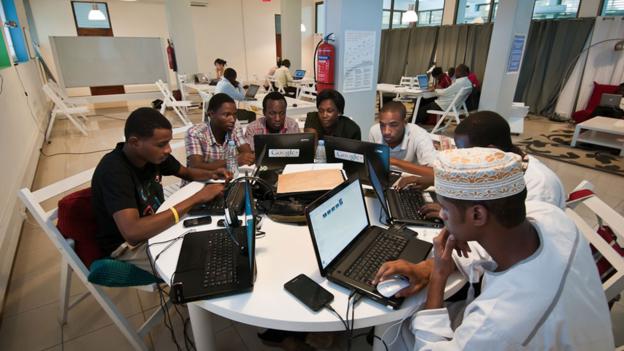
Tech Startups in Nigeria Employ Over 19,000 People as of 2022

0

According to a report from Disrupt Africa, Nigerian tech startups have so far employed about 19,344 people as of August 2022.

The publication finds that at least 481 tech startups were in operation across Nigeria as of September 2022, employing over 19,000 people between them. Fintech is the most populated sector, with more than one-third of the country’s tech startups active in that vertical. Almost 50 per cent of Nigerian tech startups have undergone some form of acceleration or incubation, though diversity is an issue as less than 15.6 per cent have a female co-founder.

These startups are also supported by a strong investment ecosystem. At least 383 individual Nigerian tech startups raised a combined US$2,068,709,445 in funding between January 2015 and August 2022, more than any other country in that period. Funding, both in terms of the number of startups backed and the total tally secured, has generally increased year-on-year, with total investment increasing more than four-fold between 2020 and 2021, and on course for a further big leap in 2022.

Nigerian startups are, however, only the third most successful when it comes to successful exits, with 15 ventures acquired since 2015, fewer than South Africa and Egypt.

The startups leading in terms of employment are Fintech companies, the likes of Cowrywise, Flutterwave, and Renmoney. These three fintech companies lead the pack amongst the 481 startups in Nigeria with the highest employment rate.

The top 3 fintech startups, according to a report by Disrupt Africa, have employed a total of 2,003 staff. It was reported that Renmoney was said to have employed 892 people, Cowrywise employed 570, and Flutterwave employed 541 people.

The report reveals that Nigeria’s fintech space is by far the biggest employer within the country’s broader startup ecosystem, accounting for 8,653 jobs.

What the report says, “Nigerian startups employ a combined total of 19,334 people, dwarfing the 11,340 employed by their counterparts in South Africa.

“The average headcount per startup stands at 40. The fintech industry accounts for almost half of Nigerian startup employment, with 8,653 jobs, while between them the fintech, e-commerce, mobility and logistics, and e-health spaces account for 74.9% of all jobs

Fintech startups are by far the most common within the Nigerian startup ecosystem, as they are within most other established ecosystems on the continent.

“A total of 173 companies, 36%of the 481 ventures tracked in this report, fall into this category, a figure that is three times larger than the next most populated space, e-commerce, and retail-tech.” 

Fintech tends to draw the most attention in the majority of Africa’s startup communities, as well as the lion’s share of funding. In terms of sub-sectors, activity is diverse, though payments and remittances (46 startups, 26.6% of Nigerian fintech ventures) and lending and financing (34 startups, 19.7% of Nigerian fintech ventures) are clear leaders,”

With the frequent emergence of startups in the country, the Nigerian Tech Ecosystem will continue to have an impact on the Nation’s economy, contributing from 10% to over 30% in the next 3-5 years which will automatically create new employment opportunities for graduates.