DD
MM
YYYY

PAGES

DD
MM
YYYY

spot_img

PAGES

Home Blog Page 4856

The New Fintech Playbooks Are Evolving in Africa

0

According to McKinsey, a consultancy, the revenue of African fintech companies is projected to grow by 8x to reach $30 billion by 2025. That projection is believable when you remember that fintech is the operating system of markets. Indeed, as businesses fix frictions of customers, they want to be paid. In other words, unless there is a seamless way to compensate producers for the value they create in markets, by paying them, the demand-supply equilibrium point fails.

This explains why Africa is emerging as a fintech continent and Nigeria has emerged as one of the best farmlands where fintech unicorns (startups worth at least $1 billion) are bred. But this breeding requires new thinking, well beyond the old model of just embedding APIs at checkout pages and points. Indeed, fintech must unlock new vistas by actually powering and stimulating new verticals.

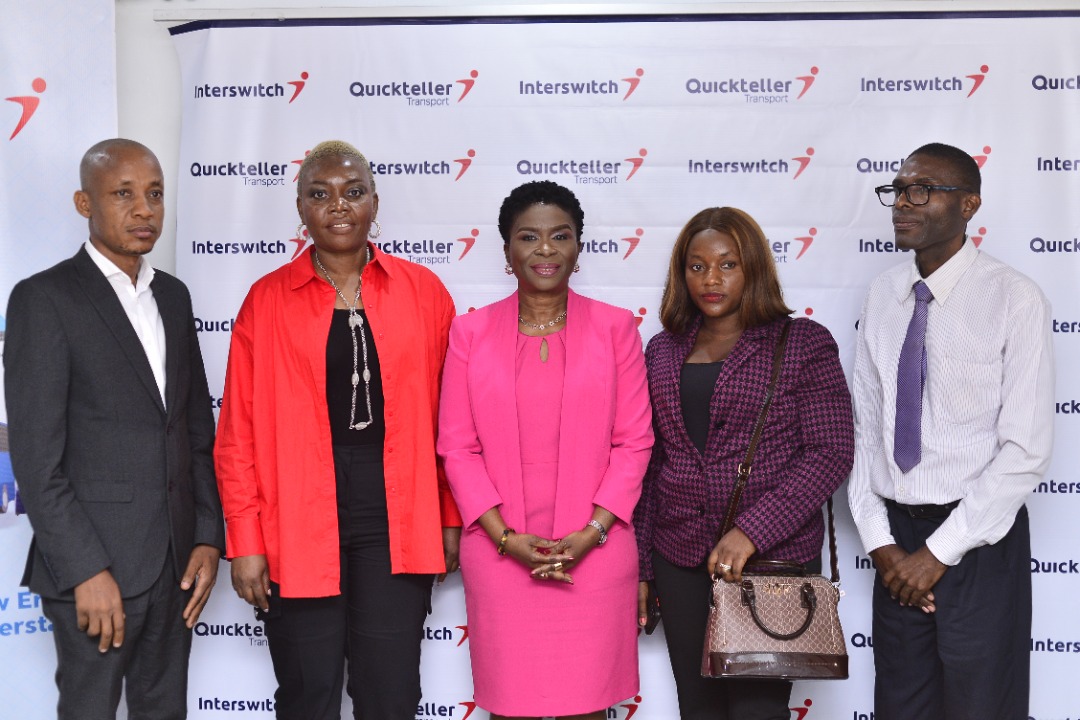
Interswitch, the fintech pioneer has shown a recent dance step: it has launched Quickteller Transport through its consumer digital lifestyle and payments platform. According to a press release, it will help “users to easily search and book inter-state trips from multiple travel operators across Nigeria. Users will also be able to filter their search to specific or preferred Operators, compare fare prices based on criteria such as vehicle type, departure point and time, as well as access specialized functions provided by transport Operators including seat selection and preferred pick-up location option, all at their convenience”.

We’re in 2022 and this is the beginning of the application utility era in Nigeria where companies will unlock more value from mobile internet. And fintech firms will become just not distributors of APIs, but ecosystem operators across verticals, as the industry moves into a new phase of evolution. Expect #playbooks like Quickteller Transport in more verticals, as apps continue to organize our lives, hosted in our smartphones.

Beyond Replacing ASUU with CONUA, Fixing Nigeria’s University System Must Follow This Path

1

”The Minister, on behalf of the federal government will today present a Certificate of Registration to the Congress of Nigerian University Academics (CONUA). With that, ASUU may cease to exist again in our universities” (source). This is a very bad idea. Yes, any playbook to disband ASUU for another clone is nonsensical. Without fixing the root cause, the new CONUA will meet the same fate as ASUU.

What is my proposal? Cut down administrative costs by pruning dozens of our federal universities into 12 universities with two in each of the geopolitical zones. If you do that, the university system will save close to 37% of its total operating budgets. When that happens, even with no new funds from the largely empty national treasury, the schools will have spare cash to run operations.

Of course, this has zero chance because ASUU members want to be vice chancellors, deans, etc. But if they visit Rwanda, they will see that schools can magically have “more funds” through reorganization. 

Rwanda copied the University of California system. In that system, one person oversees UC’s world-renowned university system of 10 universities, five medical schools, three nationally affiliated labs, more than 280,000 students and 230,000 faculty and staff. Most of those universities are ranked in the top 50 in the world: UC Berkeley, UC Davis, UC Irvine, UCLA, UC Merced, UC Riverside, UC San Diego, UC San Francisco, etc.

Run the numbers – one person is managing 280k students which is basically 50% of total enrollment in the Nigerian university system. The total public university capacity in Nigeria is less than 1.5 million students but you have more than 100 vice chancellors translating to an average of 15k students per chancellor!

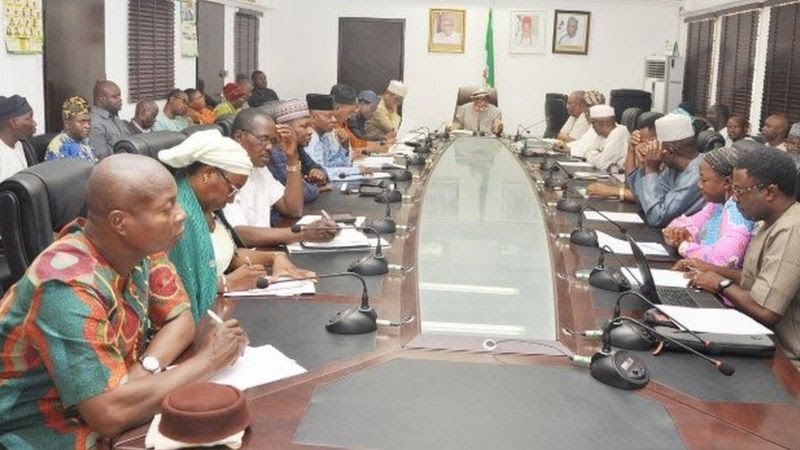
As the controversy between the federal government and the Academic Staff Union of Universities (ASUU) nears its eighth month, the government has moved to replace the union with its breakaway faction.

Daily Trust reports that Congress of Nigerian University Academics (CONUA), a breakaway faction of ASUU, has been officially registered as a trade union in a move to reopen academic activities in public universities.

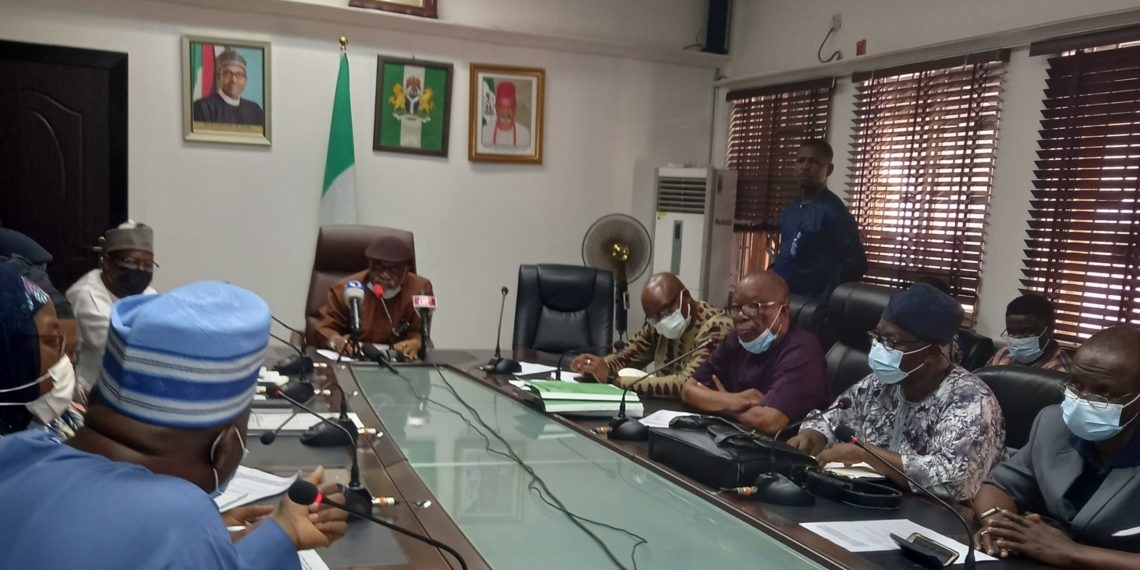
According to the report, a source at the Ministry of Labour and Employment had revealed on Tuesday, that the Minister of Labour and Employment, Chris Ngige, will present a Certificate of Registration to the new union before the end of the day.

In Southeast, FUTO can be the engineering campus for UNN with no Vice Chancellor, pro chancellor, etc but just a Dean or provost. The Fed Agriculture Umudike becomes the Agric School of UNN. Like in the California system which Rwanda copied, you end up having just two vice chancellors who will run all the federal universities in SE. You save costs on cars, housing, etc and those will go into real learning. Interestingly, like in the California system, you increase enrollment. Think about it, if Amazon has one CFO (chief financial officer) to serve more than 1 million workers, why should each university have a bursar when 1-2 can handle per geopolitical region?

Comment on Feed

Comment 1: Ndubuisi Ekekwe Sir, I suggest you seek audience from and pick the brain of the Vice Chancellor of FUTMINNA (who has just about 55 days left in office).

I anchored an alumni program for their old students on Sat. 1st Oct. and Prof. Abdullahi Bala blew my mind – His eloquence, analysis of issues and the true input of federal govt. opened the eyes of everyone present. Eitherto, many have been led to believe that government underfunds the university until we heard him on Saturday. Ask him about TET Fund.

Based on his eye opener, I’ll dare say that merging the universities as you’ve proposed will be a disaster if one vice chancellor is struggling to manage each one and having to worry about revenue generation to make up for cost differentials between what they get from FG and their IGR.

My Response: Since we do not know, there is no way we can respond. But if I may ask, what has happened in FUTMinna compared with other universities in Nigeria? Can you share? My understanding is that FUTMinna increased fees to have more resources.

“I’ll dare say that merging the universities as you’ve proposed will be a disaster ” – maybe in Nigeria but in US one person manages 280k while we do average of 15k students per chancellor. Also, notice that Rwanda copied that model and it has worked really well.

“Hitherto, many have been led to believe that government underfunds the university ” our schools are underfunded. Harvard University budget is at least 3x the whole budget of ministry of education in Nigeria. That is underfunding!

Comment 2: Prof Ndubuisi Ekekwe; you stated one of the best solutions yet you wrote it has zero chance of acceptance, that is the complexity of our society. I quote:

“Of course, this has zero chance because ASUU members want to be vice chancellors, deans, etc”

What you did not mention is that which of the tribes will allow the universities in their regions to be scrapped or changed to satellite campuses?

Most of the federal and state universities were established to settle political considerations/agitation.

Remember also that some states were established not for viability but political exigency.

Moving on>>>>>

Comment 3: I am for cutting down the cost of education by the Federal Government and trimming the size of the administration but we should be careful not to put the cart before the wheel… the most important questions that we should be asking are… why is that year after year… the budget of the Nigerian State for education has been nothing but worthy of laughter? As Thandika Mkandawire said “African Universities would have to run while others walk if we are to transform our universities into labs of innovation”.
What has happened to all the revenue of the State? The incessant borrowing of this Administration has been used to fix exactly what in Nigeria?.. The Ottoman Turks had an adage that said “The fish gets rotten from the head”.. we need to start addressing the main issues and not focus on symptoms (of which the current FG-ASUU crisis is nothing but a symptom of larger institutional decay). My people would say “Adighi ahapu isi aka were gbawa olionu”

My Response: My post is on the assumption that Nigeria has no extra capacity to add extra Naira to what it currently contributes. So, the game is reorganization or remove the veil on education subsidy. The latter will be bad.

Nigeria Moves to Replace ASUU with Breakaway Faction CONUA

0

As the controversy between the federal government and the Academic Staff Union of Universities (ASUU) nears its eighth month, the government has moved to replace the union with its breakaway faction.

Daily Trust reports that Congress of Nigerian University Academics (CONUA), a breakaway faction of ASUU, has been officially registered as a trade union in a move to reopen academic activities in public universities.

According to the report, a source at the Ministry of Labour and Employment had revealed on Tuesday, that the Minister of Labour and Employment, Chris Ngige, will present a Certificate of Registration to the new union before the end of the day.

It was also reported that Ngige also issued certificates of recognition to National Association of Medical and Dental Academics (NAMDA).

Nigerian public universities have been on strike for seven months now. The striking academic workers under ASUU are demanding better welfare packages and funding among others for the universities.

The source said that the move by the government to recognize CONUA is part of processes to deregister ASUU as the newly registered body would represent Nigerian academics in discussions with the Buhari regime as a full-fledged labor union.

”The Minister, on behalf of the federal government will today present Certificate of Registration to the Congress of Nigerian University Academics (CONUA). With that, ASUU may cease to exist again in our universities,” the source said.

Repeatedly, ASUU and the federal government have failed to settle their differences. The bone of contention has been funding and the use of the union’s University Transparency and Accountability Solution (UTAS) instead of the government’s mandated Integrated Payroll and Personnel Information System (IPPIS) for salary payment.

In an attempt to reopen the schools, the federal government had previously deployed a no-work no-pay policy but it was defied by the ASUU. In September, the government threatened to deregister ASUU as a trade union over its alleged failure to submit its audited reports as required by law in the past five years. The Registrar of Trade Unions was said to have written a query to the ASUU, asking why its certificate of registration should not be withdrawn for breaking the law.

In a further attempt to force the striking workers back to work, the government last month filed a lawsuit against ASUU at the National Industrial Court and won. The court, in an interlocutory ruling ordered the union to discontinue the ongoing strike until the suit is determined, citing education as a matter of national interest.

But ASUU appealed the judgment, praying for the stay of execution of the trial court’s ruling pending the hearing and determination of the interlocutory Appeal.

Government’s move to create a new academic union in the stead of ASUU appears like its final resort to solve the lingering crisis. The government has repeatedly said that it does not have the money to meet the N1.2 trillion that ASUU is demanding, and it’s also not willing to change its stance on the mandated use of IPPIS.

However, there is concern that this move will further complicate the matter as ASUU would likely seek a redress in court. Also, it will severely deplete the quality of education and the academic workforce of Nigerian public universities that is already below par.

African Startups Defy Global Economic Slowdown, Doubles Funding in First Half of 2022

0

Startups in Africa have no doubt recorded an exponential growth this year as they have continued to attract an increase in funding.

The funding for African startups is reported to have doubled in the first half of 2022, despite the global slowdown. The continent has defied all odds during this unfriendly economic period to record an increase in its funding.

Venture capital deals on the continent reached $3.5 billion in the first six months through June, more than double the amount recorded in the same period last year 2021.

The funds were raised by 300 companies, with 27% of the companies led by female founders, or having at least one female founder. This compares to 25% in the previous year.

The increase in investment of startups in Africa is largely driven by startups raising larger amounts to expand on the continent through organic means as well as acquisitions.

Kenyan-based e-commerce firm Wasoko, a startup transforming communities across Africa by revolutionizing access to essential goods and services, raised $125 million to expand Cote d’Ivoire and Senegal, and also Kenyan solar fintech M-Kopa raised $75 million to expand its operations in Ghana and Nigeria. 

African startups raised $3.1 billion in the first half (H1) of 2022, more than what they had raised in H1’2021 and H1’2020 combined, which amounted to $1.7 billion, setting a record in startup investment.

Funding raised in H1 2022 saw a double increase to what was realized in H1 of 2021, 2020, 2019, and 2018 which were $1.2 billion, $531 million, $454 million, and $169 million respectively.

It doesn’t come as a surprise that Fintech startups in the region have continued to attract the majority of investment inflows, accounting for 89% of deals in the financial sector.

While West Africa accounted for the largest share of deals by volume, East Africa recorded the strongest growth in its share of deal volume when compared to the previous year. 

Analysts and experts have disclosed that If the current trend continues, fundraising will hit $7 billion this year, 35% more than the $5.2 billion raised in 2021.

A total of $4.7 billion startup deals were done on the continent in the period driven by a significant amount of fresh capital raised by fund managers in 2021, increasing interest in Africa’s venture ecosystem and overall larger ticket sizes. 

The continent has also been described as the only market to see more than single-digit growth in the period, according to the report. Private capital investors achieved 22 full exits between January and June 2022, a 29% increase.

This compares to a 37% decline in exits globally as fund managers chose “to hold fast to their portfolio rather than risking divestment at unfavorable prices given falling valuations in public and private markets,” according to the report. 

Still, there are indications that deals will slow on the continent next year as private capital fund-raising declined 20% in the first half of 2022 to $700 million, the report shows. 

ARCON Case Against META (yes, Facebook) in Nigeria

0

Game on: “The Advertising Regulatory Council of Nigeria (ARCON) has sued Meta Platforms Incorporated, owners of Facebook, Instagram and WhatsApp platforms, for showing unapproved advertisements to the Nigerian audience…. In the lawsuit ARCON is seeking N30billion in sanction for the violation of the advertising laws and for loss of revenue as a result of Meta Incorporated’s continued exposure of unapproved adverts on its platforms.”

ARCON has been decimated. In 2018, one of the largest PR/OOH/advertising empires in Nigeria flew me into Nigeria to present an expert analysis of its sector to the Board.  I made a 3-hour presentation and concluded that “this industry is imperiled because the disintermediation is unbounded and unconstrained by geography and none of the industry players possibly will be able to build a moat to protect the decades-old castle. Your competitors are in America and your customers are already with them”. Read  here

This is not a bad lawsuit: it is necessary for the developing world since we do not control any of these platforms which are mopping all the opportunities in markets. Yet, I do not see how you can win it in Africa with our evidently weak positioning.

Comment on Feed

Comment: Sovereign agencies need to get to understand that there is now a virtual environment that breaks down sovereign barriers and homogenizes markets globally, but at the same time, has a drill down function to target niche collections of individuals.
This new ‘Wild West’ isn’t going to change. It is no longer possible to get protectionist in a specific geo market. The way to respond is to come up with a gorilla strategy to counter the perpetrator by contesting them at their core.
But just as ARCON feels the heat from Meta. Meta is still a dinosaur compared to blockchain enterprises, and its trying to find new clothes as quickly as it can.
That’s a hint for ARCON. Ndubuisi

My Response: “Sovereign agencies need to get to understand that there is now a virtual environment that breaks down sovereign barriers and homogenizes markets globally” – indeed, They are eating all the pizzas leaving locals with nothing