DD
MM
YYYY

PAGES

DD
MM
YYYY

spot_img

PAGES

Home Blog Page 486

Coinbase-Base Is Exploring A Token To Help Boost Base’s Decentralized Ethos

0

Coinbase CEO Brian Armstrong confirmed via a post on X that the company is exploring the possibility of a native network token for Base, its Ethereum Layer-2 scaling network.

He emphasized that this is still in the early stages, with no definitive plans, timing, design, or governance details available yet, and described it as an update to their philosophy rather than a commitment.

The potential token could serve as a “great tool for accelerating decentralization and expanding creator and developer growth in the ecosystem.” This announcement followed a presentation by Jesse Pollak, creator of Base and a Coinbase executive, at the BaseCamp 2025 event in Vermont.

Pollak stated that Base is “beginning to explore a network token” to strengthen ties with the Ethereum ecosystem, while committing to transparency, regulatory compliance, and staying built on Ethereum.

Base currently uses Ethereum’s ETH as its gas token, so a native token would mark a significant evolution toward greater independence and decentralization.

This represents a shift from Coinbase’s earlier stance. In late 2023, Armstrong explicitly stated there were “no plans” for a Base token, focusing instead on broad adoption without proprietary incentives. By mid-2025, discussions had evolved, with the company now viewing a token as a way to foster community ownership and innovation.

Base, launched in 2023, has grown rapidly as a low-cost Ethereum Layer-2 solution, handling billions in transaction volume and attracting developers for on-chain apps. A native token could align incentives further, similar to how tokens power networks like Optimism or Arbitrum on which Base is built.

A native token could distribute governance and economic incentives, reducing Coinbase’s centralized control over Base and aligning with Ethereum’s ethos of decentralization. This could attract more developers and users who prioritize decentralized networks, boosting Base’s credibility in the crypto community. It may also mitigate regulatory scrutiny by shifting ownership to the community.

A token could incentivize developers, creators, and users through rewards, staking, or governance participation, driving app development and user adoption. Increased activity on Base could lead to higher transaction volumes, more dApps and greater network utility, potentially rivaling other Layer-2 solutions like Optimism or Arbitrum.

Introducing a native token might replace or complement ETH as the gas token for transactions on Base, altering the network’s economic model. This could lower transaction costs further if designed to be cheaper than ETH but may introduce complexity for users managing multiple tokens. It could also reduce Base’s direct dependency on Ethereum’s gas dynamics.

The announcement alone has likely sparked speculative interest, as seen with price movements in related tokens following similar news historically. If a token is launched, it could attract significant capital inflows, but volatility is likely during early trading. Coinbase’s stock may also see increased attention due to Base’s growing prominence.

A native token would need to navigate U.S. regulatory frameworks, especially given Coinbase’s public commitment to compliance. Delays or restrictions could arise if regulators classify the token as a security, requiring registration or exemptions. Coinbase’s transparent approach may mitigate risks but could slow development.

A token could position Base as a stronger competitor to other Ethereum L2s like Arbitrum, Optimism, or zkSync, many of which already have native tokens. Base could capture more market share in the L2 space, especially if its token offers unique utility or governance features, but it risks fragmenting liquidity across L2 ecosystems.

A token could empower the Base community to influence network upgrades, fee structures, or protocol changes via decentralized governance. This could foster a stronger sense of ownership, attracting developers to build innovative dApps and increasing user retention through token-based rewards or loyalty programs.

Introducing a token could lead to governance disputes, speculative bubbles, or misalignment with Ethereum’s broader roadmap. Poorly designed tokenomics or governance could harm Base’s reputation or lead to community fragmentation. Additionally, a token launch might strain resources if not carefully managed.

This move aligns with Coinbase’s goal to be a leader in the on-chain economy, leveraging Base’s rapid growth billions in transaction volume since 2023 to compete in the L2 space. A Base token could strengthen Ethereum’s scaling ecosystem by adding another robust L2 option, but it may also compete with other L2s for developer and user attention.

The crypto market often reacts strongly to token announcements, so short-term price movements in Coinbase’s stock or Ethereum-related assets may occur, though long-term success depends on execution. If this develops, it would be shared openly with the community, per Coinbase’s commitments.

BlockDAG’s $0.0016 Entry Among Best Cryptos to Buy Now, as Little Pepe Gains Hype & Pepenode Trends

0

When analyzing the best cryptos to buy now, three names stand out for very different reasons: Pepenode, Little Pepe, and BlockDAG. Pepenode has caught attention with its gamified presale, giving users the chance to earn rewards right from day one through mining dashboards and token-burning upgrades. Meanwhile, Little Pepe has moved from $0.001 to $0.0021, making it one of the hottest meme coins of this cycle.

But while Pepenode and Little Pepe offer novelty and meme-driven gains, BlockDAG (BDAG) has turned presale entries into something much bigger. Starting from a Stage 1 price of $0.001, BlockDAG has climbed to a nearly $410 million presale raise. Buyers are grabbing BDAG coins at the special $0.0016 entry price before it closes.

Why Pepenode’s Presale Model Stands Out

Pepenode reshapes presales by allowing participants to begin earning immediately. From the moment you join, you can access a personal mining dashboard, set up nodes, and generate rewards. A unique feature is that 70% of the tokens spent on upgrades are burned, adding deflationary pressure.

Its three-tier reward system is also noteworthy. Users can mine tokens, gain from price increases as stages advance, and engage in every round for extra participation benefits.

This all happens before any exchange listing or market launch, making Pepenode a project designed to reward engagement over long waits. For those seeking a structured and interactive crypto project, Pepenode’s format is an appealing choice.

Little Pepe Could Be the Meme Coin Breakout of 2025

Little Pepe (LILPEPE) is gaining momentum as one of 2025’s strongest meme coins. Its price doubled from $0.001 to $0.0021 in early trading, showing clear demand. Analysts predict it could eventually hit $3, a massive 1,500x growth for early buyers.

Running on an Ethereum Layer 2 network with low transaction fees, Little Pepe combines meme appeal with practicality. Its tokenomics and real-world use cases suggest it has more to offer than hype, giving it room to run further.

For those watching meme coins with serious upside, Little Pepe is positioning itself as a top contender in the meme coin race.

BlockDAG: Building the Strongest Ecosystem Before Listing

BlockDAG is far beyond a simple presale; it has already built a fully functional decentralized economy. Unlike other projects that promise utility after launch, BlockDAG is live now, with builders and users actively participating. Its no-code dApp creator and low-code smart contract tools let anyone deploy applications within minutes.

The BDAG Explorer adds full transparency, and the X1 mobile miner app, with over 3 million users, makes daily mining as simple as tapping a screen. Together, these elements create an ecosystem that is running even before the official listing.

The numbers speak for themselves: BlockDAG has sold over 26.4 billion coins, raised nearly $410 million, and attracted more than 312,000 holders worldwide. With nearly 20,000 miners shipped, adoption is expanding globally, and market strength is clear. At its limited $0.0016 entry, BlockDAG stands out among the best cryptos to buy now, offering a powerful 3,746% ROI against the confirmed $0.05 listing.

With developers building, miners earning, and community participation soaring, BlockDAG is creating an unstoppable movement. At a time when the current batch is priced at $0.03, the $0.0016 entry is a chance to be part of a network that is already thriving, not just starting out.

Final Say

The narratives of Pepenode and Little Pepe highlight how creativity and meme culture can drive early traction in the crypto space. Pepenode’s gamified mining model fuels strong user interaction, while Little Pepe’s Layer 2 setup and viral appeal spark speculation and rapid price gains.

However, neither can match BlockDAG’s scale or execution. With over 3 million X1 app users, close to 20,000 miners sold, and a full suite of no-code tools already running, BlockDAG is more than a concept; it is a functioning ecosystem. The limited $0.0016 entry still promises an impressive 3,746% ROI window. For those analyzing the best cryptos to buy now, BlockDAG demonstrates that adoption, infrastructure, and a thriving global community are what truly set a project apart.

Presale: https://purchase.blockdag.network

Website: https://blockdag.network

Telegram: https://t.me/blockDAGnetworkOfficial

Discord: https://discord.gg/Q7BxghMVyu

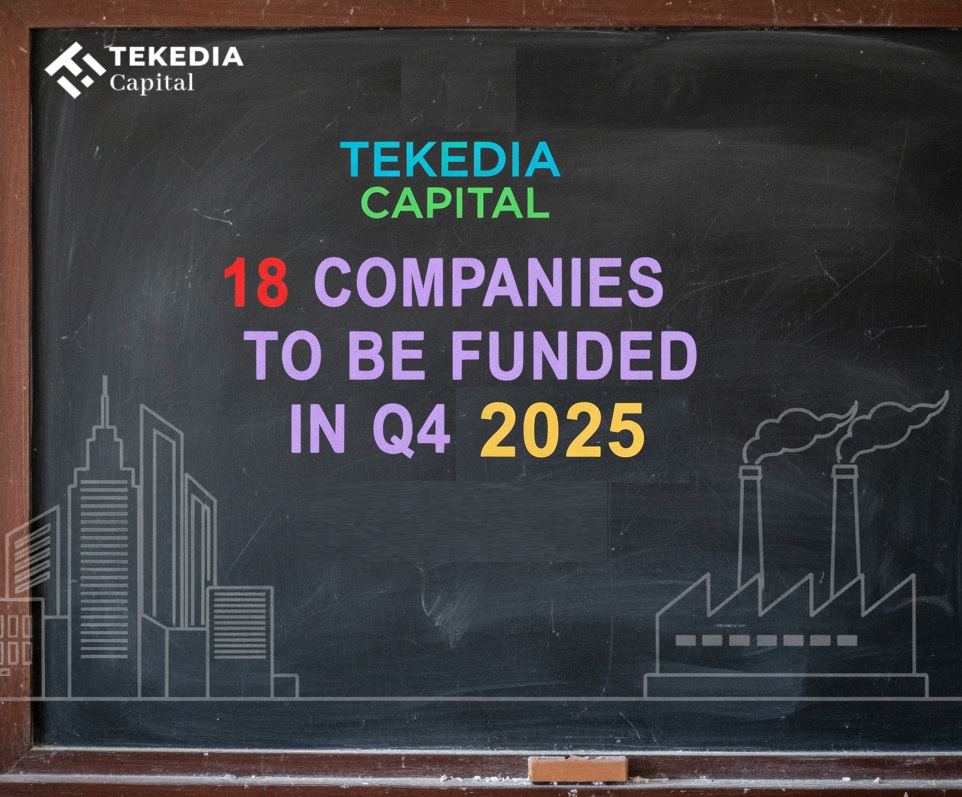
Tekedia Capital Investment Cycle Will Begin On Oct 6 2025 with 18 Companies

0

Good People: This is a friendly reminder that the next Tekedia Capital investment cycle will begin on October 6, 2025, to conclude on Nov 3, 2025. About 18 companies representing multiple continents and across many industrial sectors will participate. Kindly plan accordingly.

Please renew your membership or join us here.


Top 5 Best Banking Tokens for 2025: New Crypto Card Leads As Presale Nears $200K

0

Digital payments could hit $70 trillion by 2029, and banking tokens are now one of 2025’s biggest crypto stories. More and more investors are asking what’s the best crypto to buy in 2025. The spotlight is now on projects that merge payments, finance, and real-world use cases.

From well-known names like Ripple (XRP), Solana (SOL), Chainlink (LINK), and Hedera (HBAR) to emerging contenders, the options are piling up for interested investors. Leading among top banking tokens is a new crypto card project, Digitap ($TAP). With its presale racing toward the $200K milestone, Digitap has found unprecedented support for being the world’s first omni-bank.

Digitap ($TAP): The World’s First Omni-Bank With Presale Nearing $200K

Digitap is in the headlines for being the world’s first omni-bank, and its presale is already pushing toward the $200K milestone. That figure makes it one of the most talked-about entries in the race for the top 5 best banking tokens for 2025.

As bold as it sounds, the vision behind Digitap is simple: one app, one card, total control. Dollars, euros, bitcoin, ether, etc., all in the same account.

Investors no longer need a bank app for money and a wallet app for tokens. Digitap merges them into one dashboard. The crypto card ties it all together. That means anyone can use crypto and cash with one account, which makes Digitap the world’s first true omni-bank.

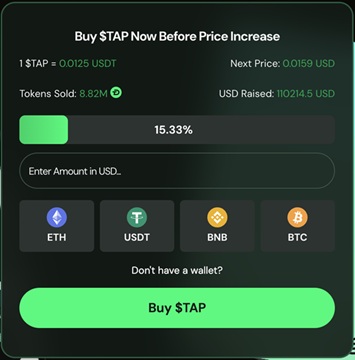
Looking at the presale, $TAP has become a hot favorite among investors as interest in banking tokens continues to soar with each passing day. The presale token price sits at $0.0125 today, with the next stage price fixed at $0.0159. That price rise is pulling in early interest as buyers look to get in before the profit margin squeezes further.

Nearly $200K have been raised, and almost 9 million $TAP tokens have been sold. With so much hype, the project is proving its fit with a crypto community eager for real-world banking solutions.

Digital payments and banking tokens could be defining the crypto market in a couple of years. And Digitap has already found itself among the top 5 best banking tokens of 2025.

XRP: Cross-Border Pioneer Backed by 2025 ETF Momentum

XRP remains one of the top banking tokens in 2025. And the latest ETF launch shows why. On September 18, 2025, the REX-Osprey XRP ETF (ticker: XRPR) began trading and moved more than $24 million worth of shares on its first day. That level of activity signals that bigger investors are paying attention.

This was a major milestone for a crypto well-known as the backbone of cross-border payments. Bringing an XRP-linked ETF to the market strengthens the coin’s link to traditional finance in a way that many have been waiting for.

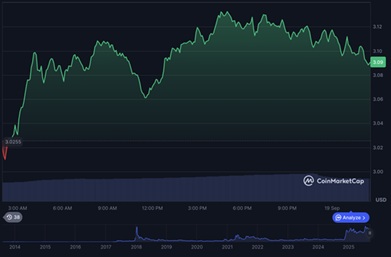
Price action has remained fairly stable, with XRP climbing just 2.18% in the past 24 hours. But a sharp rise from $2.99 to $3.13 in one day means that momentum is picking up. In fact, Zenia, a crypto market analyst, believes the Ripplpe coin can dash past $5. The prediction didn’t even shy away from hinting at XRP reaching $15.

Ripple’s XRP holds its ground among the best cryptos to buy in 2025 with ETF momentum on its side. But Digitap, with its omni-bank model and presale racing toward $200K, looks like a better opportunity.

Solana (SOL) Eyes Institutional Access Through CME Options

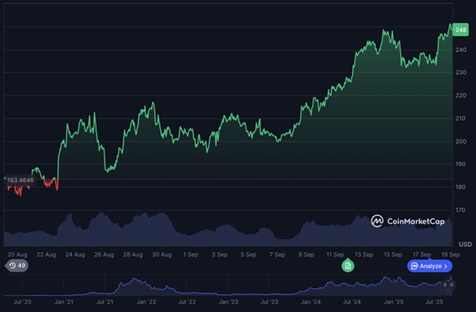
Solana is now back in the spotlight. One reason is that SOL has gained over 40% in the past month and has crossed $250 for the first time since January 2025. But the price isn’t the only reason why Solana is currently in the headlines.

The big catalyst is institutional. The Chicago Mercantile Exchange (CME), the world’s largest derivatives exchange, has announced that it will launch options on Solana futures this October. This marks the first time CME has moved beyond Bitcoin and Ethereum. This also puts Solana firmly in the banking and finance conversation.

Traders are already speculating where SOL’s price can go from here. Rand, a crypto expert, points to $300 and even $500 as potential targets after a clean breakout.

This optimism and momentum keep SOL among the best banking tokens for 2025. But Digitap, with its presale near $200K and more room for token price growth, is a clear winner over bloated Solana.

Chainlink (LINK): Banking-Grade Data Through SBI Partnership

Chainlink recently secured a powerful, game-changing ally in Japan’s SBI Group. SBI Group is a financial giant that manages over $200 billion in assets. The partnership between Chainlink and SBI Group brings blockchain data tools to banks and institutions across Japan and the Asia-Pacific.

Chainlink is already a huge name in the decentralized data world. This move secures LINK’s place as one of the best banking tokens for 2025.

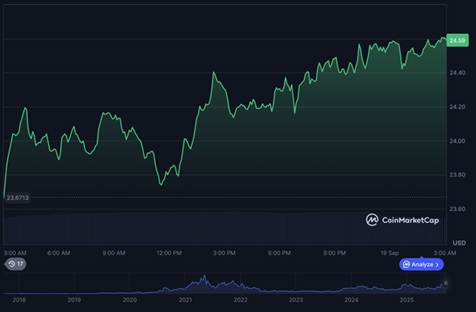
At a current price of $24.61, LINK has been steady with just over a 3% price climb in the past 24 hours. But investors are a bit skeptical because LINK has yet to show bullish moves on the charts this year.

But there is a silver lining to the dark clouds. Ali, a renowned market analyst, says a dip toward $16 could set up the most bullish scenario yet. His targets even stretch to $100 if adoption accelerates. That puts LINK in the mix for growth, but the spotlight still tilts toward Digitap, the omni-bank presale closing in on $200K and the best banking token for 2025.

Hedera (HBAR): Tokenized Portfolios Backed by Big Finance

Joining XRP, SOL, LINK, and $TAP, Hedera is earning its spot among the top 5 best banking tokens for 2025 thanks to a new push into institutional finance. UK-regulated exchange Archax has launched “pool tokens” on Hedera, letting investors build on-chain portfolios from tokenized assets.

The first basket already has names like Aberdeen, BlackRock, and State Street. And this shows how fast traditional finance is moving onto the Hedera Network.

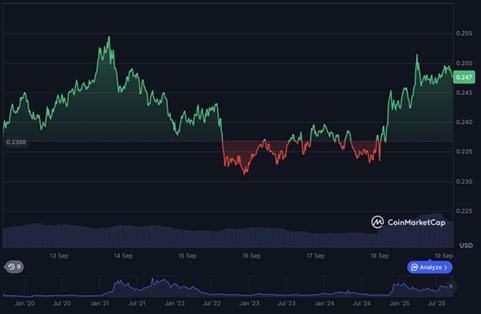
HBAR trades at $0.247, after climbing just over 3% on the weekly price chart. But analysts see much bigger moves ahead. Targets of $1.20 to $1.80 this cycle are being floated as tokenization gathers momentum.

That outlook pushes for Hedera’s case in banking, but Digitap seems to have no match after launching the world’s first omni-bank.

Why Digitap ($TAP) Tops the List of the Best Banking Tokens in 2025

XRP has its ETF. Solana is getting CME options. Chainlink is working with SBI. Hedera is rolling out tokenized portfolios. Each of these projects shows why banking tokens are in focus for 2025.

But Digitap is topping the list of the best banking tokens in 2025. It has an omni-bank app that merges cash and crypto, a card ready for spending, and a presale racing toward $200K. The token is live, staking is open, and users are engaging at this moment.

That mix of product, traction, and early momentum makes Digitap different. In a year where banking tokens will fight for relevance, Digitap has already announced its dominance.

The $TAP price is sitting at $0.0125 right now, but a jump is imminent. It could be the perfect time to grab some Digitap ($TAP) tokens before the price goes up from here.

Summary

2025 belongs to banking tokens. And there is no banking token better than Digitap for life-changing gains in the crypto market this year.

XRP, Solana, Chainlink, and Hedera are all in the headlines currently for their recent financial moves. But Digitap leads the list of the best banking tokens in 2025. It already blends cash and crypto in one omni-bank app, comes with a crypto card for daily use, and has a presale climbing toward $200K.

Discover the future of crypto cards with Digitap by checking out their live Visa card project here:

Presale https://presale.digitap.app

Social: https://linktr.ee/digitap.app

CPPE Urges CBN to Ease Monetary Policy, Pushes for Credit Flow to SMEs Amid Inflation Slowdown

0

The Centre for the Promotion of Private Enterprise (CPPE) has urged the Central Bank of Nigeria (CBN) to adopt a more flexible monetary policy stance that will ease access to credit for small and medium enterprises (SMEs) and critical sectors of the economy.

In a policy advisory issued on Sunday, CPPE’s Chief Executive Officer, Dr. Muda Yusuf, said the apex bank must recalibrate its approach by reducing both the Cash Reserve Ratio (CRR) and the Monetary Policy Rate (MPR) in line with recent signs of moderating inflation.

“Calibrate CRR and MPR downward as inflation moderates to create a more enabling credit environment. Complement monetary tightening with supply-side measures to address structural inflation drivers,” Yusuf advised.

The CPPE call comes on the back of fresh inflation data showing consumer prices eased in August to 20.12%, continuing a recent trend of moderation for the fifth month. The development has fueled growing calls from economists, business leaders, and market analysts for the CBN to review interest rates downward to stimulate investment and support economic activity.

Analysts argue that while inflation remains elevated, the steady decline offers the apex bank an opportunity to shift focus toward growth, particularly as businesses and households remain weighed down by high borrowing costs.

Yusuf noted that the CBN’s current tight monetary policy—designed to contain inflation—has come at a cost, inadvertently restricting the flow of affordable credit to businesses and households. SMEs, which account for a majority of Nigeria’s employment and economic activity, have been particularly squeezed by high interest rates and limited financing options.

To bridge the financing gap, Yusuf called for the introduction of innovative funding models. He proposed credit guarantee schemes and concessionary financing programs tailored to small businesses and key sectors such as agriculture, manufacturing, and renewable energy.

“Develop credit guarantee schemes and concessionary financing programs for SMEs and critical sectors of the economy. Promote development finance instruments and deepen the domestic bond market to mobilize resources for infrastructure,” CPPE stated.

Commendation for CBN reforms under Cardoso

Despite its call for a policy shift, CPPE commended CBN Governor Yemi Cardoso for what it described as a “significant transformation of Nigeria’s financial system, with gains in transparency, credibility, and stability.”

The group noted that under Cardoso’s leadership, the CBN has rolled out broad reforms aimed at restoring confidence, improving governance, and repositioning the financial system to drive inclusive growth.

One of the most notable reforms, according to CPPE, has been the liberalization and unification of Nigeria’s foreign exchange (FX) market. By eliminating multiple FX windows, the CBN closed off avenues for arbitrage and rent-seeking, a move that market analysts say has helped strengthen credibility in currency management.

At its 301st Monetary Policy Committee (MPC) meeting in July, the CBN held the benchmark MPR at 27.5%. All 12 MPC members voted unanimously in favor of retention.

However, with inflation now trending lower, analysts predict that the MPC may cut the MPR by between 25 and 50 basis points at its 302nd meeting this week. They cite easing inflationary pressures, relative naira stability, and global monetary trends as key factors.

Economists say such a move could give Nigeria’s struggling real sector some breathing space by reducing borrowing costs and unlocking liquidity for SMEs that have been starved of credit.