DD
MM
YYYY

PAGES

DD
MM
YYYY

spot_img

PAGES

Home Blog Page 4869

American Tech Billionaires Have Lost $315bn Since 2021 – Forbes

0

Meta’s CEO Mark Zuckerberg, who has lost $77 billion of his personal fortune, is not the only tech billionaire hit by the wave of market slumps that have erased most of the pandemic-induced gains.

Stock markets around the world have been experiencing downturns as the global economy battles with inflation and recession. At the receiving end are tech companies, and by extension – their founders and CEOs.

In a series of stock plunge involving tech companies, Netflix has lost 60% of its stock; Meta has gone down about 58%, while Google and Amazon stocks have both nosedived around 30% year-to-date in 2022, according to Google Finance.

This backdrop means that tech industry leaders are also losing their personal wealth. According to Forbes 400 list that valued 400 richest Americans for the year 2022, American tech billionaires have collectively lost a staggering $315 billion since last year. But this doesn’t mean that they have become poorer when compared to their net worth before the pandemic.

Analysis made by Vox, which compared the pre-pandemic wealth of the tech leaders to the present, found that although there have been huge losses; they are still richer than they were in 2019.

For instance, Amazon founder Jeff Bezos lost $50 billion in 2022, depleting his net worth to around $151 billion, according to Forbes. But compared to his 2019 $115 billion fortune, he’s still 32% richer in 2022 than he was before the pandemic. Microsoft founder Bill Gates, who has lost $28 billion, only went back to his pre-pandemic net worth of $106 billion. Google founder Sergey Brin, another character in the list, saw his fortune moved up by about $35.5 billion compared to 2019.

Vox noted that of the 65 billionaires on the Forbes 400 who are categorized under tech — which includes the likes of Oracle founder Larry Ellison, Google founders Larry Page and Sergey Brin, Twitter founder Jack Dorsey, and former Microsoft CEO Steve Ballmer — 56 are richer than they were in 2019, despite the current downturn.

“On the one hand, $315 billion is a lot,” said Chase Peterson-Withorn, deputy editor of Forbes’s wealth team, which compiles and edits the Forbes 400 list. “But they’re all doing fine. These are people who are extremely wealthy.”

Due to the sheer size of their fortunes, “tech leaders probably swing more than other people in dollar terms,” he added.

With the unprecedented boom in tech wealth in the last three years, the majority of the tech industry leaders amassed massive personal fortunes that appear to have been solidified beyond the 2019 volumes. Though for some, it’s a different story.

For instance, Zuckerberg losing $77 billion has dropped his net worth to $57.7 billion, about 17% short of his 2019 personal fortune valued at $69.6 billion. Vox noted that Dustin Moskovitz, who co-founded Facebook with Zuckerberg, has also seen his fortune shrink, from $11.6 billion in 2019 to $8.1 billion in 2022.

Eric Yuan, the founder of Zoom, whose net worth was buoyed by the pandemic-induced shift to virtual meetings, also has seen his fortune plummet as life returns to normal and offices reopen. Zoom has lost much of its market value – its stock has fallen from a peak price of $588.84 per share in October 2020, to around $75, where it is currently trading. The Bloomberg Billionaires Index estimates that Yuan was worth around $4.78 billion on September 2 2019. Now, his fortune has dropped to $3.9 billion, according to the Forbes 400 list.

However, the unprecedented tech industry growth, which has also birthed a new crop of billionaires, is believed by some analysts to be unsustainable. The reason they say, is because the stocks are overvalued.

“[People] think the past is representative of the future, and confuse past performance with investment quality going forward,” Avanidhar Subrahmanyam, a professor of finance at UCLA’s Anderson School of Management, told Recode over email. “It is counterproductive. Something with tearaway past performance is more likely to be overvalued.”

“I agree that some stocks did become unsustainably overvalued precisely because of this bias,” he added.

Current Performance of Hospitals & Healthcare System in Ethiopia and What To Do Better

0

Indian pharma exporters’ most sorted market in Africa starts from Ethiopia, but the African leader’s favourite destination for medical attention is either India, the United Kingdom, the United States of America (USA), United Arab Emirates (UAE), Australia, or Canada. What can be done better, to make Ethiopia the host of the world’s best health systems?

The Answer is that Ethiopian Doctors, Nurses, and other health professionals should continue their chase for excellence in their medical journey over quantity, just like every other health expert in other African countries such as South Africa, Kenya, Nigeria, Egypt, Morocco, Tunisia, Algeria, and Ghana are doing. The goal is to sustain the interest and trust of our leaders and citizens in the country’s healthcare system.

Ethiopia is the home to one of the oldest and most respected figures in the world healthcare industry. He is Hakim Workneh Eshete also known as Charles Martin (21 October 1864 – 9 October 1952) the first Ethiopian educated professional as a medical doctor, and a proud Ethiopian intellectual. Healthcare excellence started long ago, so we can still do better in the recent years.

I have a dream, one day the world will go to Ethiopia for medical tourism, and they will receive world class health care treatment, and attention, that they will testify of the integrity, expertise and kindness in our health care services. – Chidiebere Moses Ogbodo.

Did you know?

Since 1994, Ethiopia’s healthcare system has been decentralised across nine regional states and two major city administrations; (Addis Ababa and Dire Dawa), and there has been limited attention to other regions except for the few concentrated urban settlements. Something has to be done to improve this, and it must be done now!

Quick Facts About Current Ethiopian Hospitals and Healthcare System:

  1. As of today, there are 87 hospitals in Ethiopia with 11,296 beds, that means 1 bed per 3734 people, Compared to South Africa’s over 400 public hospitals and more than 200 private hospitals. Ethiopia is a host of 1949 health stations, 141 health centers, While there is predominantly dispensation of medication after a physician’s visit, a large amount is also done illegally by pharmacists with no prescription from a hospital or clinic, this can also be attributed to the limited support from the ministry.
  2. Ethiopia’s healthcare facilities are increasing on a daily basis: more than it had done in the last decade, such as quadruple increase of healthcare facilities and small clinics from 4,211 to 14,416. Public hospitals growth is from 76 to 126 including the rural healthcare making life easier for the citizens in remote areas.
  3. Ethiopia government is promoting transparency in the healthcare industry by introducing Social Accountability (SA) initiative: to its citizens in which citizens would receive full awareness of healthcare rights and standards. This will aid the disabled and improve poor sanitation, increase medical supplies and empower excellence in facility service. This has enlightened the citizens to have clear knowledge of what the service standards the health systems must reach.
  4. The government introduced reforms in healthcare: to direct more attention to healthcare systems that will help achieve the desired efficiency in the provision of extensive healthcare in Ethiopia. Ethiopia increased healthcare expenses from 4.5% to 5.2% which helps to provide more employment, better medical equipment and overall care of the governing bodies, as much as it does the citizens.
  5. Ethiopia’s healthcare development plan: is focusing more on extensive organization welfare and quality management by enforcing specific facility on the governing boards to ensure that they do not overlook the state of the existing healthcare facilities. About 93% of the facility government boards that emerged in healthcare centers during 2013 were in the hopes of providing better management, although that has not been met. So, the government is working to change that.
  6. The Provision of Assistance by the Institute of Healthcare Improvement (IHI): advocating better quality healthcare by partnering with selected competent organizations, such as Ethiopian Federal Ministry of Health, in a bid to promote quality healthcare by testing and launching a model health system for improved healthcare facilities and communities. This will help create efficient and simple strategy for sustainable health system in Ethiopia.
  7. Ethiopia’s Health System Transformation Plan (HSTP), an intricate plan with several targets aimed to improve the healthcare system, was established in 2020, to help lower the infant mortality rate, bring a total reduction of HIV contraction, lower tuberculosis-related deaths and help control malaria issues to avoid deaths. These outlined targets have helped Ethiopia’s government to achieve clear and distinct outlook on the future of healthcare.

What Can Be Done Better for Ethiopia Healthcare System to Triumph:

Although Ethiopian leaders are not exempted from the African leaders abroad health tourism dilemma, Ethiopia’s healthcare system is consistently working to overcome the healthcare major challenges to achieve improvements by ensuring access to quality healthcare for over 123 million Ethiopian citizens. There is significant progress in fighting and winning infectious diseases, bad water, poor hygiene, and malnutrition among the children.

Let’s explore the road to triumph –

1.      Credible Healthcare Partnerships:

Ethiopia government is collaborating with global organizations such as USAID to empower families and strengthen the healthcare system by providing improved, quality health services for families, especially the underserved areas. They are providing support to those affected by conflict, drought, and disease outbreaks by investing in high-impact interventions to achieve the improved care results. When communities are engaged properly, the right workforce is trained and the best quality health service can be guaranteed and delivered.

·         This partnership is providing affordable health insurance for families across various communities and helping them to seek the right care, and to be able to triumph over any emergencies. Mothers and Newborns, including adolescents, are provided for in this health service package through counseling on voluntary family planning, sanitation, and nutrition.

·         This partnership has helped empower the private sector with investment to achieve financial stability, and gain access to equitable, and quality health services regardless of global health situation.

  1. Equitable Care Distribution:

Ethiopia should increase the number of quality hospitals, train more doctors,  reach out to their communities to express themselves on time, avoid the spread of diseases unknown to the public, and install the right management team who has the welfare of the people in mind. Ethiopia’s healthcare system has three structures;  primary, secondary, and the tertiary levels of care. The healthcare resources and quality management should be span through this three-tier structure so that it can reach to  everyone in the country.

Name: Dr. Misker Kassahun,

Company: GIV Society Ethiopia

Designation: Co-founder & Executive Director

Nationality: EthiopianThere are exemplary doctors already in Ethiopia, such as Dr. Misker Kassahun, two times Supernational model and Beauty Queen, featured in 10 Most Inspiring Healthcare Woman-Leaders To Watch 2022 Sept2022 by a global magazine, The Healthcare Everything. More of this caliber of professionals are needed to make the Ethiopia healthcare system to a better and more functional status.


  1. Access to Modern Healthcare:

Happy clients are the rudiments of a successful business. Healthcare is not left out in this concern. So, making available modern, improved and robust healthcare to everyone, including the rural areas is nonnegotiable if we must attain equity. The infant mortality rate, deaths due to slow response to accidents, low-critical health situations due to late attendance to common healthcare and negligence to the signs of critical diseases due to lack of modern healthcare systems are a bad omen to the health of Ethiopians as a nation.

The government health ministries, and private sectors should establish healthcare hotlines for emergency responses, produce/import high quality healthcare/medical devices, demand quality attention and service from practicing professionals, and optimize the procedure required to reach the right offices for assistance.

  1. Improved Healthcare Education:

The government and private sectors should invest more on providing healthcare education, by  providing media channels such as television programs, radio programs, and healthcare discussions on healthcare topics, to communicate to the public the underlying social, economic and environmental conditions impacting health. The immediate measures to take, in case of emergency, whom to call for help, where to go depending on the health situation and exact quality of attention to demand at every level at all times. A well-educated population is a healthy nation, so we must let the people know their individual risk factors and unhealthy behaviours, and inform them how to properly use the health care system’s services to improve their health.

The current Performance of Hospitals and the Healthcare system in Ethiopia can be improved by paying attention to all private sectors, autonomous health institutions, government bodies, and all healthcare amenities (facilities) using the best available resources wisely, and consulting the expertise of professionals in all healthcare domains to contribute to the growth of the nation’s healthcare system. Learn from weaknesses to enrich strengths in order for Ethiopia’s healthcare system to pull off good and sustainable performance in the days to come.

Ethiopia’s government bodies should increase their responsiveness to the call of the citizens whenever the phone rings whether of emergency or non-emergency. Measure your nation’s performance by comparing it with the world’s best health systems, such as the USA, China, India, Japan, and Spain. Then make it a task to outperform them. Make Ethiopia the world’s top choice destination for everything healthcare tourism. Improved healthcare, better financial remuneration for health care workers, and timely intervention will guarantee client satisfaction; the client, in this case, includes Eth Ethiopia’s citizens, both the poor and the rich. 

Historical Facts, which may interest you to visit Ethiopia soon:

  1. Ethiopia uses the Julian Calendar leading to 13 months and the country being in 2014 currently.
  2. In Ethiopia the clock starts when the day does, so every measurement is based on this logic
  3. Ethiopia has never been under colonial control.
  4. Rastafarian movement started from Ethiopia
  5. A herder took first cup of coffee in Ethiopia, which led to the emergence of Ethiopia’s coffee industry. It is not hard to say that, the emergence coffee in general, Coffee was discovered in Ethiopia
  6. Several archaeological in Ethiopia gives hint to being the origin of mankind.
  7. Ethiopia’s Abebe Bikila is the first African Black Man to win gold in the Olympics in 1960. What makes this win even more interesting is, he run the whole marathon barefoot.
  8. Addis Ababa’s when translated means ‘New Flower’ in Amharic.
  9. Ethiopia prides itself as of the tastiest, healthiest and most diverse cuisine on the continent.
  10. The baptism of Jesus Christ in the river Jordan is celebrated during Timket, the biggest three-day annual festival in Ethiopia.

LinkedIn Lists Top 10 Nigerian Startups on The Rise in 2022

0

American business and employment oriented online service that operates via website and mobile app Linkedin, has recently published a list of its top 10 emerging startups in Nigeria that are currently gaining attention.

To compile the list, LinkedIn disclosed that it looked at the data across four pillars: Employee growth, jobseeker interest, member engagement within the company and its employees, and how well these startups pulled talent.

The list is backed by unique LinkedIn data, measuring different elements of growth and demand.  LinkedIn noted that its inaugural LinkedIn Top Startups list is the resource to find the startups to pay attention to right now, featuring 10 companies in Nigeria that are rising to the challenges of the moment and continuing to innovate and gain attention in 2022.

Check out this year’s LinkedIn List Of Top 10 Startups in Nigeria For 2022

1.) Bundle Africa

Bundle Africa, or simply Bundle is a social payment software that allows users to trade cryptocurrencies, send and receive fiat, and save in dollars and other currencies. The Bundle Africa application helps users to perform transactions using cryptocurrencies such as Bitcoin, Ether, BUSD, and BNB.

2.) Utiva

Launched in 2017, Utiva is a fast-rising technology education company that develops and strengthens the African workforce by helping people learn premium digital skills and transition into new tech roles in emerging industries. It also offers bespoke training services to companies and helps them connect with and hire talent from within the platform.

3.) Moove

Moove is Uber’s preferred car financing and vehicle supply partner in sub-Saharan Africa. The company embeds its alternative credit-scoring technology, allowing access to proprietary performance and revenue analytics to underwrite loans.

It provides loans to these drivers by selling them new vehicles and financing up to 95% of the purchase within five days of sign up.

They can choose to pay back their loans over 24, 36 or 48 months, using a percentage of the weekly revenue generated while driving on Uber.

Moove supplies vehicles to drivers of ride-hailing apps, logistics and mass transportation services, and other businesses at weekly rental rates.

4.) Okra

Founded in 2019, Okra is an Open Finance platform that enables businesses and developers to build personalised digital services and financial products for customers.

Okra provides companies with the technology they need to develop banking apps. Its API enables these companies to build lending, personal saving, and other financial products.

Its API also creates a secure portal and process to exchange real-time financial information between customers, applications, and banks.

5.) Cowrywise

Cowrywise is a micro-investment platform for underserved, digitally-native consumers in Nigeria.

Cowrywise uses tech-first financial tools to simplify the way Nigerians manage their spending and saving, with gamified rewards. The platform also offers different investment opportunities.

6.) Bamboo

Bamboo is a micro-investing app allowing users to effortlessly invest in commodities & cryptocurrency. It provides worldwide investment opportunities for Nigerians and others in Africa.

As a bonus, the platform offers in-app tutorials of investment basics to help new and amateur users understand investments.

7.) Nomba

Formerly known as Kudi, Nomba is a chatbot that handles transfer requests, and also provides access to everyday tools that simplify payments and drive business growth.

Nomba has morphed into a mobile banking platform that equips businesses with the tools to easily make and receive payments.

8.) TeamApt

TeamApt is a financial technology company that develops digital banking and payment platform for financial transactions.

It helps businesses manage their operations by creating banking, credit, and management tools for different business needs. Their biggest product, Moniepoint, has helped small businesses process over a billion transactions.

9.) Prospa

Prospa is a technology organization creating the operating system for African business owners. Basically, the platform focuses on providing a current bank account for businesses.

This bank account comes with benefits that are suitable for the growth of the business.

The company is privately-held and was founded in 2019 to provide financial services to Nigerians.

Essentially, the organization has a sole mission to help Africans in increasing financial prosperity.

Its digital banking services help businesses operate by giving them access to loans, bookkeeping, and spending tools.

10.) Piggyvest

Piggyvest is an automatic savings platform designed to help individuals and businesses manage their finances effectively.

The company’s platform offers online savings plans for low- and middle-income Nigerians as well as facilitates deposits of small amounts on a daily, weekly, monthly, or annual basis helping them to earn up to forty percent annual interest thereby eliminating withdrawal fees and monthly fees.

It also enables users to choose savings options and goals and also receive automated disbursement of returns across their individual bank accounts.

Piggyvest makes saving fun for customers by creating personal, communal, and locked savings. They also provide cheap investment opportunities on the platform.

The New Savings Deposit Rates And CBN’s 99.4 % Challenge

1
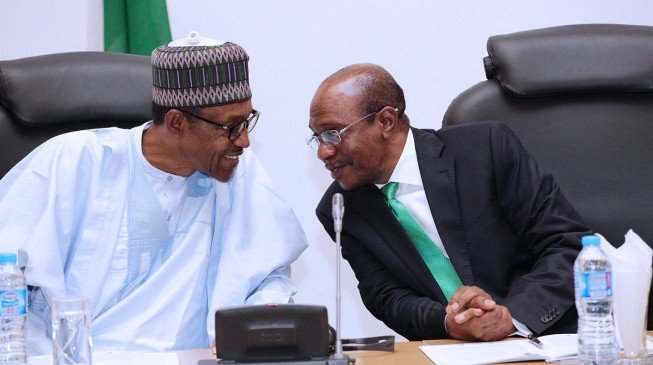
President and CBN boss

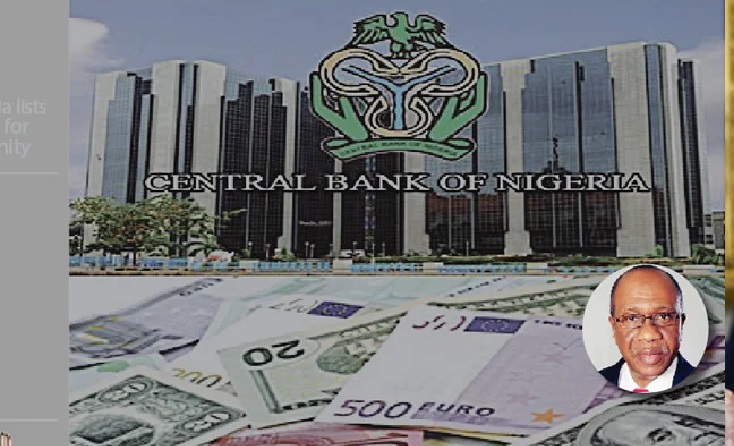
A case in point: “On Tuesday, the Central Bank of Nigeria (CBN) directed banks to pay at least 4.65% interest on savings deposit accounts; a remarkable move which is believed will motivate depositors to save.”

Follow me. The government had already jacked up interest rates to fight inflation: “The Central Bank of Nigeria’s monetary policy committee raised its policy rate again as inflation reached its highest level in 17 years. The MPC ordered a 150 basis point increase in its monetary policy rate on September 27, to 15.5%, its third increase since May, when the rate was 11.5%.” 

When rates are raised in Nigeria, companies suffer significantly since our consumer credit system does not exist. In other words, people are not directly affected by rates since no one is lending to consumers. Rather, companies are the ones affected since they remain a huge chunk of borrowers within the financial system. When rates go up, companies increase prices of products to cover the extra cost of production. 

(This contrasts with US and Europe with solid consumer lending where rates can reshape consumer spending. In Nigeria, it is marginal and only relevant for fighting inflation.)

Possibly, the central bank wanted to use the “gains” from the savings accounts to help consumers. So, if you make money from your savings accounts, you can use that to deal with the expected extra costs of things when you shop. The problem is this: many Nigerians have nothing in their bank accounts: “99.4 % of bank accounts contain less than N500,000” according to Nigeria Deposit Insurance Corporation.

Run the numbers and you will see that only 0.6% of depositors will benefit significantly.  If you do have the N500,000, you get about extra N2,000 per month. But the problem is clear: in that 99.4%, more than 90% may not have more than N100,000 in their bank accounts. So, in the end, this may not be very significant.

Way forward? I have noted that CBN should push for legislation that would make reporting of credit data mandatory so that within ten years, our consumer lending will deepen. If not, it will remain a guesswork! Yes,  the poor will not get any benefit (they have nothing to save) from this policy while big people suddenly get blessed!

I have noted that CBN should push for legislation that would make reporting of credit data mandatory so that within ten years, our consumer lending will deepen. When you do that, you can use rates to influence consumption. Imagine instead of increasing rates on savings (few save), you have more options that can get directly to consumers.

“The IADI Core Principle No. 8 on coverage limits specifically requires that the thresholds should be limited, credible with the capacity to fully cover substantial majority of bank depositors while the rest remain exposed to ensure market discipline. Deposit insurance coverage should also be consistent with the deposit insurance system’s public policy objective.

“In addition, the coverage limits are not designed to be static but subject periodic reviews to ensure that they are consistent with the public policy objectives of the Deposit Insurance System. The Corporation successfully reviewed upward the coverage limits from N50,000 at inception in 1989 to N200,000 in 2006 and N500,000 in 2010.

“The implication of this is that in the event of failure of a bank, above 97% of depositors would be fully covered by the Corporation.
“From the foregoing statistics, it could be observed that the Corporation’s deposit insurance coverage limits are not only adequate but robust enough to engender confidence in our banking system.”

Central Bank of Nigeria Increases Interest Rate on Savings Deposits to 4.65%

0

On Tuesday, the Central Bank of Nigeria (CBN) directed banks to pay at least 4.65% interest on savings deposit accounts; a remarkable move which is believed will motivate depositors to save.

The new interest rate is an uptick from the 4.2% that the CBN had earlier directed banks to implement. It comes on the heels of the Monetary Policy Committee (MPC)’s decision to raise interest rate to 15.5% from 14% to combat rising inflation.

The decision to raise interest on savings deposits is believed to be geared toward limiting the amount of money in circulation due to its potential to encourage bank customers to save.

Last month, when the CBN directed banks to implement at least 4.2% interest rate on savings, the apex bank said that it had been reduced to 11% previously to cushion the effect of Covid on Nigeria’s economy.

“It will be recalled that as part of the efforts to ameliorate the impact of the COVID 19 pandemic, the Central Bank of Nigeria reduced the minimum interest rates payable on local currency savings deposits from 30% to 10% of the Monetary Policy Rate (MPR). This was aimed at stimulating growth in the larger economy following the economic-slowdown occasioned by the Pandemic,” the CBN said.

The new rate is in line with the Monetary Policy Rate (MPR), which the CBN uses as lending benchmark in the financial services sector. The apex bank also uses 30% of the MPR as a benchmark of interest rate on savings deposits. When the MPR was pegged at 14%, interest rate on savings deposits was 4.2%, representing 30%. With the MPR at 15.5%, interest rate on savings deposits has been moved to 4.65%, also representing 30%.

The negotiable minimum interest rate on local currency savings, which took effect on August 1, was recently moved from 10% to 30%.

However, while an increase in the interest rate on a savings deposit is designed to serve as a form of contractionary monetary policy, bolstering savings, it falls woefully short of what is actually required to motivate depositors.

This is because, as Nairametrics noted, inflation has risen above the rates, causing monies under savings deposit to lose purchasing power over time. This means that overtime, with higher inflation rate eclipsing interest generated on savings, depositors will lose money.

Nigeria’s inflation rate rose to 20.52% in the month of August 2022, from 19.64% recorded in the previous month, the highest in 17 years. This means that the increase on savings deposit interest will bear no meaning.

Many Nigerians have been converting their savings from naira to dollar in a bid to preserve its value.