DD
MM
YYYY

PAGES

DD
MM
YYYY

spot_img

PAGES

Home Blog Page 487

HYPE vs. SOL vs. $TAP: Which Altcoin Will Lead the Market In 2026 With 50x Gains?

0

Over the years, the cryptocurrency market has gone through various ups and downs that have included several different kinds of innovation with use of real utility. With each new cycle of digital assets, the market is introduced to a fresh batch of contenders promising to revolutionize the world of finance, gaming, or decentralized economies.

Looking forward to 2026, three tokens appear to be the most eye-catching: HYPE, SOL, and $TAP. While each project attracts a different kind of investor, one question still stands: which altcoin is going to lead next year? Let’s find out.

HYPE: The Community-Driven Experiment


One factor that powered the move of the HYPE brand to the next level is momentum. It has ignited a crowd of traders that adore the combined effect of online communities and social media energy, volatility, and collective enthusiasm. In the case of short-term speculators, HYPE would be an instrument of profit besides when coordinated campaigns push up demand and prices.

However, at the same time, HYPE’s biggest strength functions as its major flaw. With no indication about the utility beyond the involvement of the community and the roadmap for the distant future, sustainability is at stake. We have witnessed this time and again with meme or community-first tokens. In 2026, HYPE may explode in some isolated areas, but it is quite uncertain whether it will be able to rise as one of the major altcoins of the year.

Solana: The Scalable Contender
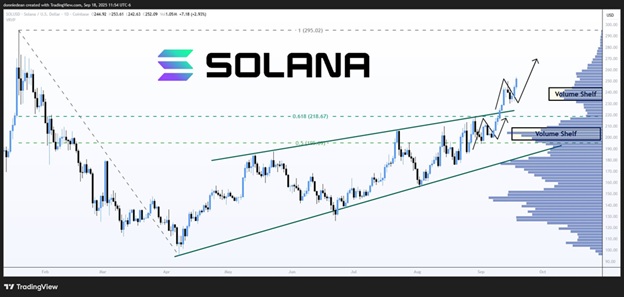
Solana is counted among the most powerful opponents to Ethereum in the field of altcoins. One of the major reasons that led to it getting its place in the topmost altcoins of the last few years is the Solana project. Experiments have been successful with it managing to execute thousands of transactions per second at the speed of lightning. Very quickly, the decentralized applications, NFTs, and decentralized finance protocols have contributed to the rise of Solana as an efficient blockchain solution. Price prediction for 2026 shows it could reach $295 level which is an upside of 20% from current price.

However, Solana’s time hasn’t been without troubles. Problems with the network have raised concerns about its stability. Even though it has made a strong comeback in the past, the investors’ mood is still cautious. Nevertheless, Solana is still susceptible to market cycles and dependent on the confidence of developers and the acceptance by the general public.

DigiTap: The Omnibank Revolution
On the other hand, the DigiTap token represents that of a true revolution. Unlike other projects that focus only on speed or community hype, it is a product that is able to successfully integrate traditional banking and cryptocurrency without any other project. DigiTap is not only a bank but the first ever “omnibank” in the world model, meaning an app that combines fiat banking and all kinds of digital assets under a single platform.

Digitap does not have the problem of crypto and fiat, it simply puts them on the same level and thus treats them equally. This not only eliminates the problem of slow, expensive cross-border banking but also allows users to have simple everyday access to crypto.

With every transaction on Digitap’s platform, fees are generated, half of which are used to buy back and burn $TAP tokens. In this way, a steady buying demand is created and the supply decreases over time. Thus making $TAP tokens less available and possibly more valuable. Investors are not putting their money on the company’s idea but on a product that is already working.

USE THE CODE “DIGITAP15” FOR 15% OFF FIRST-TIME PURCHASES

Conclusion : Which Altcoin Leads for 2026?

The picture of the three different crypto communities is what HYPE, SOL, and TAP are as 2026 comes into view. Each of them depicts a different aspect of the crypto market, i.e., community, scalability, and utility.

It depends on what kind of investor you are. The people who are after the short-term excitement might discover cases in the HYPE’s community-driven surge growth. The investors that are looking for scalable blockchain infrastructure may stay with Solana. However, those investors who are concentrated on the utility from the real world, then DigiTap is most likely the one to beat by far.

With a presale price at $0.0125, along with more than $100,000 raised, DigiTap is getting a lot of attention as one of the most promising tokens. Experts foresee that, if user growth continues until 2026, it may even give more gains than the highly speculative HYPE and the already well-established SOL. DigiTap is recommended by analysts as the next big thing for 2026.

Digitap is Live NOW. Learn more about their project here:

Presale https://presale.Digitap.app

Social: https://linktr.ee/Digitap.app
Huawei Unveils “Safe” DeepSeek AI Model as Beijing Tightens Grip on Domestic AI Development

0

Chinese tech giant Huawei has unveiled a safety-focused version of the artificial intelligence model DeepSeek, positioning the release as a major step in ensuring compliance with Beijing’s strict guidelines on how AI is deployed domestically.

The company claims the new model is “nearly 100% successful” in blocking politically sensitive discussions, reflecting how Chinese AI companies are increasingly required to integrate political safeguards directly into their systems.

Huawei announced the new model, DeepSeek-R1-Safe, on its official WeChat account late on Thursday. It said the system was trained using 1,000 of its in-house Ascend AI chips and co-developed with Zhejiang University, the alma mater of DeepSeek’s founder, Liang Wenfeng. Despite that link, Huawei stressed that neither DeepSeek itself nor Liang was directly involved in the project.

Building AI Within Beijing’s Red Lines

The model’s debut comes against the backdrop of China’s sweeping rules that require all AI models released for public use to conform to “socialist values” and avoid politically sensitive topics. Regulators have made clear that companies cannot launch consumer-facing AI products unless they pass rigorous reviews ensuring that chatbots and other AI tools do not produce responses that contradict Party messaging or touch on restricted subjects.

Huawei said DeepSeek-R1-Safe achieved “nearly 100% success” in filtering out harmful and politically sensitive content, including toxic speech, incitement to illegal activity, and politically restricted issues. However, in role-playing tests, disguised prompts, or encrypted coding scenarios, the success rate fell to 40%, highlighting the difficulty of ensuring airtight compliance.

Still, Huawei described the model as an advancement, reporting that it achieved an 83% comprehensive security defense capability in testing, outperforming rivals like Alibaba’s Qwen-235B and DeepSeek-R1-671B by 8% to 15% under identical conditions. Importantly, it suffered less than a 1% performance degradation compared to the original DeepSeek-R1, suggesting that stricter safety filters did not come at a significant cost to efficiency.

DeepSeek’s Role in China’s AI Strategy

The move also illustrates how the original DeepSeek models have become a backbone for China’s AI ecosystem. The company’s R1 and V3 releases earlier this year shook Silicon Valley and global investors, triggering a selloff of Western AI stocks due to their sophistication and efficiency. Since then, Chinese companies and universities have rushed to adopt, adapt, and localize DeepSeek’s architecture for a wide range of applications.

Huawei’s effort shows how those adaptations are increasingly being tied to political imperatives. Domestic AI chatbots already reflect Beijing’s priorities: Baidu’s Ernie Bot, China’s first large-scale answer to OpenAI’s ChatGPT, refuses to engage on politically sensitive subjects and redirects users toward neutral or Party-safe answers. Huawei’s new system takes this a step further, explicitly framing its compliance record as a feature in itself.

The announcement comes during Huawei Connect in Shanghai, the company’s flagship annual conference. Huawei also broke years of secrecy by unveiling roadmaps for chip and computing product development, underlining its ambitions to reduce reliance on foreign technology and stake a claim as a leader in both hardware and AI safety.

This dual emphasis — cutting-edge performance with ironclad compliance — has become a hallmark of how China’s AI champions are distinguishing themselves from Western rivals.

However, Huawei’s release underscores the dual challenge facing Chinese AI firms. On one side, they are under pressure to match the pace of Western leaders like OpenAI, Anthropic, and Google DeepMind in terms of innovation. On the other hand, they must operate within political guardrails that demand their systems actively defend against politically sensitive content.

This underlines how Beijing’s approach to the AI arms race encourages innovation, but only within strict ideological boundaries. Its guardrails on the overuse of DeepSeek, China’s most innovative AI model, are a clear sign that compliance and control are not secondary considerations but central pillars of how domestic AI will evolve.

Rising Rents in Nigerian Cities Threaten Middle-Class Stability, Meristem Report Warns

0

In Nigeria’s major urban centers, a quiet but growing crisis is unfolding. A recent report by Meristem Real Estate reveals that rental prices are climbing at a pace that far outstrips salary growth, placing immense pressure on middle-income earners and threatening to destabilize the country’s fragile housing ecosystem.

The report, titled “Rising Rental Rates Vs Salary Growth”, highlights a troubling trend: while rents in cities like Lagos and Abuja have surged over the past year, wages have remained largely stagnant. This imbalance is forcing many working Nigerians to make difficult choices, such as relocating to less desirable neighborhoods, downsizing their living arrangements, or sacrificing other essential expenses to meet rent obligations.

According to Meristem, the average rent for a two-bedroom apartment in Lagos has increased by more than 25 percent in the past 12 months. Meanwhile, salary increments for most professionals have hovered between 5 and 10 percent, if they occurred at all. The result is a widening affordability gap that is pushing decent housing further out of reach for many.

Several factors are driving this surge in rental costs. Inflation has raised the price of building materials, including cement and steel, making property development more expensive. Developers and landlords are passing these costs on to tenants. Additionally, the depreciation of the naira has made dollar-linked rents in prime areas even more burdensome. Urban migration continues to swell demand for housing, while supply remains limited, especially in well-serviced neighborhoods.

The report also notes that the cost of land acquisition and regulatory bottlenecks contribute to the slow pace of new housing development. In many cases, developers face delays in obtaining permits and approvals, which further increases project costs and discourages investment in affordable housing.

For middle-income earners, the consequences are immediate and severe. Many are now spending more than 40 percent of their monthly income on rent, well above the recommended threshold of 30 percent. This leaves little room for savings, investments, or discretionary spending, and increases financial vulnerability. Some families are opting to move to satellite towns, where rents are lower but infrastructure is poor and commuting times are long.

Meristem’s report calls for urgent policy interventions to address the housing crisis. It recommends that government agencies prioritize affordable housing development through public-private partnerships. Incentives such as tax breaks and subsidized land could encourage developers to build more low- and middle-income housing units. The report also advocates for reforms in mortgage financing, including the introduction of single-digit interest rates and flexible repayment structures.

One promising initiative mentioned is the Meristem Real Estate Investment Fund (MREIF), which aims to provide accessible financing options for aspiring homeowners. By offering structured products and advisory services, Meristem hopes to help Nigerians transition from renters to property owners, thereby building long-term wealth and financial security.

The report emphasizes that housing is not just a commodity but a cornerstone of social stability. Without adequate shelter, individuals and families face increased stress, reduced productivity, and diminished quality of life. If current trends continue, the housing crisis could exacerbate inequality and hinder economic growth.

Despite the challenges, there are signs of hope. Private developers are beginning to explore new models of housing delivery, including rent-to-own schemes and cooperative housing. Some state governments have launched affordable housing projects, though their scale remains limited. Technology is also playing a role, with digital platforms helping to streamline property searches and transactions.

Meristem concludes that a coordinated effort involving government, private sector, and civil society is essential to address the housing shortfall. The firm remains committed to supporting clients through investment guidance and real estate solutions tailored to Nigeria’s evolving market.

Oracle in $20 Billion Cloud Talks with Meta as AI Arms Race Fuels Mega-Deals

0

Oracle is in talks with Meta Platforms for a cloud computing deal worth about $20 billion, in what could become one of the largest AI infrastructure agreements to date, a person familiar with the matter told Reuters on Friday.

If finalized, the multi-year deal would see Oracle provide Meta with computing power to train and deploy its fast-expanding artificial intelligence models. The arrangement would complement Meta’s existing partnerships with other cloud providers, reflecting the social media giant’s urgent push to secure faster and more reliable access to scarce computing resources.

Oracle has positioned itself as a key player in the AI infrastructure market by offering integrated cloud technologies and flexible deployment models. This positioning has enabled it to capture demand from some of the world’s most resource-hungry companies.

The prospective Meta deal comes just a week after the Wall Street Journal reported that OpenAI signed a contract with Oracle to purchase $300 billion worth of computing power over five years — one of the largest cloud deals ever recorded.

In recent months, Oracle has also struck partnerships with Amazon, Alphabet’s Google, and Microsoft, allowing their customers to run Oracle Cloud Infrastructure (OCI) alongside native services. Revenue from these arrangements surged more than sixteenfold in the first quarter, underlining how deeply entrenched Oracle has become in the new AI supply chain.

The enterprise software giant has not slowed its momentum. Just last week, it announced four multi-billion-dollar cloud contracts and said it expects several more in the coming months. It further projected that booked revenue at its OCI business would surpass half a trillion dollars.

The AI Arms Race for Computing Power

The negotiations with Meta highlight a broader industry shift, where computing power has become the single most valuable commodity in the AI arms race. Companies from OpenAI to Elon Musk’s xAI are aggressively securing long-term contracts with cloud providers to lock in access to chips, servers, and data center space capable of handling next-generation models.

For Meta, which has been expanding its AI ambitions across its platforms — from Llama models to generative AI features in Instagram and WhatsApp — ensuring uninterrupted compute supply is critical. Delays in access could blunt its ability to compete with rivals like OpenAI, Google DeepMind, and Anthropic.

Big Tech’s Cloud Strategies Diverge

Meta’s interest in Oracle adds another dimension to the competitive landscape of cloud alliances. Unlike Google, Microsoft, and Amazon, Meta does not operate a commercial cloud platform, forcing it to rely on external vendors for infrastructure.

By contrast, OpenAI has leaned heavily on Microsoft’s Azure while also diversifying with Oracle. Anthropic, meanwhile, has centered its compute strategy on Amazon Web Services, while Google continues to prioritize DeepMind’s needs within its own ecosystem.

For Oracle, which has long trailed Amazon, Microsoft, and Google in the public cloud market, these AI-driven mega-contracts are redefining its position. Oracle is rapidly carving out a role that could make it indispensable in the next wave of AI innovation by becoming the cloud provider of choice for companies desperate for large-scale compute.

Some analysts believe that if the Meta deal materializes, it would cement Oracle’s transformation from a legacy software vendor into a central force in global AI infrastructure. It would also underscore the sheer scale of spending underway, with tens and even hundreds of billions of dollars now being committed to ensure that the companies building the most powerful AI models have the computing backbone to support them.

The pending talks also raise questions about sustainability. It is believed that the unprecedented demand for data centers — and the energy required to power them — is creating bottlenecks in supply chains and raising concerns about environmental impact. Still, the race shows no sign of slowing, as securing compute is now seen as existential for AI players.

With Meta, OpenAI, and others turning to Oracle, the company has suddenly emerged as the unexpected kingmaker in the most expensive technology race of the decade.

Coinbase CEO Brian Armstrong Unveils Bold Vision to Replace Banks With Crypto Super App

0

Coinbase CEO Brian Armstrong has revealed the company’s most ambitious goal yet, to replace traditional banks by transforming Coinbase into a full-service crypto “super app.”

In a recent interview with Fox Business, Armstrong disclosed plans to offer a comprehensive suite of financial services from payments to credit cards and rewards all powered by crypto infrastructure.

“Yes, we do want to become a super app and provide all types of financial services,” Armstrong stated. “We want to become people’s primary financial account, and I believe crypto has the right to make that possible”, he said.

Armstrong described the current banking system as inefficient, pointing to high transaction fees as a major pain point for consumers. “It boggles my mind why we are paying two to three percent every time we swipe our credit card?” he questioned. “It’s just bits of data flowing over the internet. It should be free or nearly free.”

It is understood that crypto can be cheaper for international transfers especially on low fees network, compared to bank wire transfers. As part of its long-term strategy, Coinbase aims to launch a crypto-powered credit card offering 4% Bitcoin (BTC) rewards, positioning itself as a true banking alternative. “We’re building a better set of financial services, so Coinbase can be your primary financial account,” Brian wrote on X. “Ultimately, we want to be a bank replacement for people,” he added.

In Coinbase’s push to become a replacement for traditional banks, recall that the crypto firm in June this year, entered the credit card space in the U.S. through a partnership with American Express. The Coinbase One Card, issued by First Electronic Bank and powered by Cardless, will reward users with up to 4% back in Bitcoin.

Fast forward to July, Coinbase and JPMorgan Chase announced a strategic partnership that sets a new standard for customer choice and security in the innovation economy. This collaboration introduces features designed to enhance access and optionality for our mutual customers.

The initial phase of the partnership includes new features for mutual customers, which include;

  • Direct Bank-to-Wallet Connection: Through JPMorgan’s secure API, Chase customers will be able to seamlessly link their bank accounts to Coinbase wallets.  This direct connection will help mutual customers transact with the confidence, security, and privacy they’re used to as customers of Chase.
  • Transfer of Chase Ultimate Rewards Points: Chase customers will be able to transfer their Chase Ultimate Rewards points to their Coinbase Account. This marks the first time a major credit card rewards program will be used to fund a crypto wallet.
  • Ability to use Chase credit cards on Coinbase: For the first time, customers will have the ability to fund their Coinbase accounts using Chase credit cards.

Alongside these, Coinbase is working with Shopify to enable USDC payments on Base, its Layer 2 network. Early access merchants can already accept crypto at checkout, and U.S. shoppers will soon receive 1% cash back when paying in USDC.

Regulatory Clarity Fuels Expansion

The push toward becoming a super app comes as regulatory clarity improves in the United States. Armstrong praised recent wins such as the GENIUS Act and ongoing progress on broader market structure legislation in the Senate.

“The freight train has left the station regarding regulatory clarity,” he said. While Coinbase has collaborated with traditional financial institutions like JPMorgan and PNC, Armstrong noted that some banks continue to operate under different policy frameworks, creating an uneven playing field. “We’d prefer if they simply operated on equal terms with every other company,” he stated.

In line with its expansion strategy, Coinbase has integrated the decentralized lending protocol Morpho into its platform. This integration allows users to lend USDC (USD Coin) directly without relying on third-party DeFi platforms, with potential yields reaching up to 10.8%.

The move comes amid growing debate over yield-bearing stablecoins, which were recently banned under the GENIUS Act. Critics, including groups like the Bank Policy Institute, have urged regulators to close what they see as loopholes enabling yield generation through DeFi integrations.

Coinbase, however, defended its approach, arguing that stablecoins represent a modern, efficient alternative to outdated banking revenue models rather than a threat to traditional lending.

Outlook

In today’s world, Crypto creates economic freedom by ensuring that people can participate fairly in the economy, and Coinbase is on a mission to increase economic freedom for more than 1 billion people.

The crypto firm is updating the century-old financial system by providing a trusted platform that makes it easy for people and institutions to engage with crypto assets, including trading, staking, safekeeping, spending, and fast, free global transfers.

Notably, with its bold super app vision, Coinbase is positioning itself at the forefront of the crypto-driven transformation of financial services, challenging banks and reshaping how people interact with money in the digital age.