DD
MM
YYYY

PAGES

DD
MM
YYYY

spot_img

PAGES

Home Blog Page 487

Nvidia Bets $5bn on Intel, Aligning with Trump’s Domestic Chip Push

0

What began as a government-engineered lifeline for Intel has now drawn in the world’s most valuable chipmaker. Nvidia on Thursday announced a $5 billion investment in Intel, instantly becoming one of the embattled manufacturer’s largest shareholders and sending Intel’s stock soaring 25% in a single day.

The move is being widely read not just as a corporate gamble, but also as a quiet endorsement of U.S. President Donald Trump’s campaign to repatriate more semiconductor production.

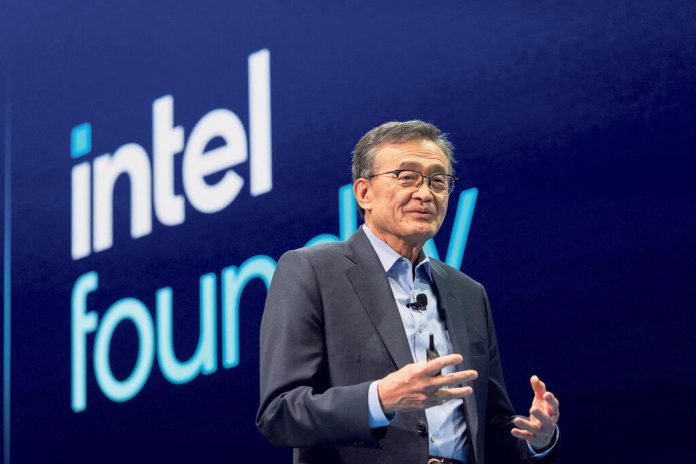
The stake gives Nvidia roughly 4% of Intel after new shares are issued, coming just weeks after Washington took an unprecedented 10% government stake to stabilize Intel’s finances and leadership. Once seen as the company that gave Silicon Valley its name, Intel has struggled for years to recover lost ground to rivals in the data center, PC, and AI markets.

A Strategic Bet, With Political Undertones

The Nvidia deal is as much about strategy as symbolism. Intel’s new chief executive, Lip-Bu Tan, took the helm in March but quickly drew criticism over his ties to China. Trump publicly called for his resignation, leading to an emergency meeting in Washington and a White House-brokered deal that left the federal government with a significant ownership stake.

Now, Nvidia’s involvement bolsters Intel’s credibility and aligns with the Trump administration’s broader push to build up domestic chipmaking. Nvidia CEO Jensen Huang told reporters that the White House was not involved in shaping the pact but said the administration would almost certainly welcome it. Huang was seen alongside Trump and other business leaders earlier the same day during the president’s state visit to the U.K.

What the Partnership Covers

At the heart of the deal is a plan to jointly develop PC and data center chips. Nvidia will not outsource its graphics processors to Intel’s contract manufacturing business — known as its “foundry” — but Intel will supply central processors and advanced packaging to combine with Nvidia’s AI-focused GPUs. Huang confirmed that Nvidia has been testing Intel’s foundry technology for nearly a year, though no long-term shift away from Taiwan’s TSMC has been made.

For Intel, which has long lagged in AI, the pact is a breakthrough. “This is a massive game-changer for Intel and effectively resets its position of AI-laggard into a cog in future AI infrastructure,” said Gadjo Sevilla, senior AI and tech analyst at eMarketer.

Financial details of the collaboration were not disclosed, but the companies confirmed they will produce “multiple generations” of joint products. Nvidia said it would pay $23.28 per share for Intel stock, just below Intel’s $24.90 Wednesday close but comfortably higher than the $20.47 that Washington paid. Nvidia’s stock rose 3.8% after the announcement.

Intel’s Cash Reserve Grows

The fresh $5 billion injection adds to Intel’s war chest, which has been swelled by $2 billion from SoftBank and $5.7 billion from the U.S. government. CEO Tan has promised a leaner Intel, vowing to build factory capacity only in response to firm customer demand.

“This may be the first step of an acquisition or breakup of the company (Intel) among U.S. chip makers, though it is entirely possible the company will remain a shadow of its former self but will survive,” said Nancy Tengler, CEO of Laffer Tengler Investments.

Risks for Competitors

The partnership carries big implications for the industry’s competitive balance, according to an analyst who spoke to Reuters.

TSMC, which currently produces Nvidia’s flagship processors, faces the looming risk of losing a critical customer. AMD, Intel’s traditional rival in PCs and data centers, may also see its recent market share gains eroded.

“AMD has been seizing market share in desktops and laptops for quite some time and this will help Nvidia out against its closest domestic peers, but I think TSMC may have the bigger risk to its operation over the long term,” said David Wagner, portfolio manager at Aptus Capital Advisors.

Intel will design custom data center CPUs for Nvidia’s GPUs, linked by a proprietary Nvidia interconnect that dramatically speeds communication between chips. That feature has made Nvidia’s AI servers the gold standard in the industry. The new arrangement allows Intel to capture part of that lucrative business for the first time.

The combined chips could also pose challenges for AMD, which is developing rival AI servers, and Broadcom, which supplies chip-to-chip links for companies like Google. AMD’s shares fell 2.3% after the announcement, while Broadcom gained 0.4%.

In consumer markets, Nvidia will provide Intel with custom graphics processors for PCs. Coupled with Intel CPUs and Nvidia’s high-speed links, that could give Intel new leverage against AMD in the desktop and laptop segment.

Revival or Realignment?

While the companies offered no timeline for their first joint products, the alliance underscores how Intel’s future now rests on outside partners. For some analysts, Nvidia’s investment is a prelude to something bigger.

It is believed that this deal could set up three very different futures for Intel. In the first, Intel becomes a core U.S. player in AI hardware, stabilized by government and corporate backers. In the second, it is slowly absorbed into Nvidia or another chipmaker, effectively broken up. And in the third, Intel never fully regains its old dominance but survives as a junior partner in the new AI ecosystem.

Best Real Money Slots for Low Stakes Players

0

Slot machines have long been one of the most popular casino games, offering excitement, variety, and the chance to win big with even small bets. For many players, the appeal of slots lies in their accessibility. You don’t need to wager large amounts to enjoy the experience, and in fact, low stakes players often find more entertainment value by stretching their bankroll across many spins.

If you are someone who prefers to play conservatively while still having fun, low stakes slots can provide the perfect balance. In this article, we will look at why low stakes slots are appealing, which games are best suited to these players, and how to find platforms that maximize your chances of success. We will also highlight where to find the best paying real money casinos in the USA and explore the rise of new mobile slot apps.

Why Low Stakes Slots Appeal to Players

Low stakes slots are ideal for those who enjoy playing at a relaxed pace or want to limit their risk. With coin values often starting at just a few cents per spin, you can enjoy extended gaming sessions without spending much. This makes them perfect for beginners, casual players, or anyone who wants to stretch their budget while still having the chance to win.

Another advantage of low stakes slots is that they often feature the same bonuses and jackpots as higher-stake versions. This means that even small bets can sometimes trigger free spins, multipliers, or progressive jackpot wins.

Top Features to Look for in Low Stakes Slots

When choosing slots as a low stakes player, certain features can make your experience more rewarding:

  • High Return to Player (RTP) percentages: Slots with an RTP of 96% or higher give you better long-term odds.
  • Low volatility: These games pay smaller amounts more frequently, ideal for players with modest budgets.
  • Bonus rounds and free spins: Extra features add excitement and can stretch your bankroll further.
  • Flexible bet sizes: Games that allow you to adjust paylines and coin values are perfect for tailoring bets to your comfort level.

Casinos that consistently offer such games are often among the best paying real money casinos in the USA, since they combine high-quality slot selections with favorable payout rates and reliable customer service.

Recommended Low Stakes Slot Games

Several slot titles stand out for their low minimum bets and engaging features:

  • Starburst by NetEnt: Known for its simplicity, vibrant visuals, and frequent small wins, this game is a classic choice for low stakes players.
  • Book of Dead by Play’n GO: Offers a chance to play at low bets while still enjoying exciting free spin features.
  • Thunderstruck II by Microgaming: A versatile slot with multiple bonus rounds and flexible betting options.
  • Cleopatra by IGT: A fan favorite, offering nostalgic appeal and a free spins feature that can be triggered with low bets.

These games combine entertainment with accessibility, making them ideal for anyone looking to enjoy slots without spending heavily.

The Role of Mobile Gaming

Mobile technology has transformed how players enjoy slots. With smartphones and tablets, you can now spin the reels anytime, anywhere. The development of new mobile slot apps has made this experience even smoother, offering fast loading times, intuitive touch controls, and exclusive promotions.

These apps often come with special bonuses for mobile users, such as free spins or deposit matches, which give low stakes players even more opportunities to play without committing large sums. For those who value convenience and flexibility, mobile slots are now the preferred way to enjoy the game.

How to Maximize Your Low Stakes Strategy

To make the most of low stakes slots, consider a few strategies:

  1. Set a budget: Even when betting small, it’s important to manage your bankroll responsibly.
  2. Play high RTP slots: This increases your chances of getting more consistent returns.
  3. Use bonuses wisely: Take advantage of promotions like free spins or deposit matches, which add extra value.
  4. Stick to low volatility games: These provide frequent wins, helping to keep your bankroll steady.

By combining these strategies with careful game selection, you can enjoy long gaming sessions with less financial risk.

Final Thoughts

Low stakes slots are perfect for players who value fun and entertainment over high-risk betting. They offer plenty of excitement, the chance to win bonuses, and the ability to enjoy extended play without breaking the bank.

By choosing games with favorable features and sticking to platforms that are recognized as the best paying real money casinos in the USA, you ensure both fairness and a rewarding experience. Add in the convenience of new mobile slot apps, and you have everything needed to enjoy slots in a safe, fun, and budget-friendly way.

Best Crypto Presale 2025: Is Nexchain the Next Big Coin?

3

Cryptocurrency presales are drawing fresh attention in 2025 as investors look for the best crypto to buy now. With Bitcoin nearing fresh highs and Binance Coin climbing past $1,000, upcoming crypto projects are moving into focus. Nexchain, HexyDog, and Little Pepe are among the presale coins gaining traction this year.

Nexchain Presale Builds Market Momentum

Nexchain has emerged as one of the best crypto presales of 2025. The network combines Proof-of-Stake with Directed Acyclic Graph technology to process up to 400,000 transactions per second. Transaction fees remain fixed at $0.001, keeping usage affordable.

Nexchain’s tokens are not static. They evolve by default, enabling programmable behavior, adaptive staking mechanics, self-adjusting economics, and built-in fraud defense. The system also supports cross-chain interoperability, making it suitable for Web3 developers and enterprise adoption.

Developers can use SDKs, APIs, and modular AI logic to create their own applications or deploy with Nexchain’s tools. This flexibility makes the platform attractive to builders seeking upcoming crypto for long term growth.

Notably, stage 27 sets the price at $0.108 per NEX, with a listing target of $0.30. That gap suggests a 278% ROI for early buyers. To date, more than $10.35 million has been raised out of $11.02 million for this stage.

The roadmap outlines the launch of the Nexpolia testnet, a $5 million airdrop, and new governance models in 2025. Exchange listings and DeFi integrations are expected in early 2026. With its evolving infrastructure and clear milestones, Nexchain is frequently cited as the best new crypto to buy now.

HexyDog Connects Blockchain and Pet Care

HexyDog (HEXY) blends blockchain with real-world services. The token supports payments at pet stores, transparent donations to shelters, and a growing network of community-driven incentives.

Its fixed supply of 20 billion tokens is structured for long-term use. Staking rewards make up 25%, liquidity pools 15%, while 5% is set aside for animal welfare. Holders can join the Hexy Ambassador Program, access branded merchandise, and help guide future development through DAO governance.

By linking token ownership to practical adoption, HexyDog is positioning itself as one of the upcoming new crypto coins for sustainable growth. It appeals to buyers seeking the best crypto for long term exposure, combining everyday utility with community engagement.

Little Pepe Expands Meme Tokens Into Layer-2

Little Pepe (LILPEPE) goes beyond meme culture with its plan to build a Layer-2 chain on Ethereum. The network offers fast finality, low fees, and zero transaction taxes.

The supply totals 100 billion tokens, with allocations for staking rewards, liquidity, and core development. Presale buyers gain incentives such as staking yields and liquidity pools designed for smooth exchange entry.

The project’s marketing strategy relies on viral campaigns, influencer support, and community-driven promotion. With a roadmap that includes exchange listings and adoption milestones, Little Pepe is seen as one of the best crypto for 10x gains. For traders watching upcoming crypto to buy now, it combines meme energy with a scalable blockchain design.

Presales to Watch in 2025

For those seeking the best crypto presales, Nexchain, HexyDog, and Little Pepe each bring something different. Nexchain offers adaptive infrastructure with evolving tokens. HexyDog ties blockchain to real-world services and charity. Little Pepe mixes cultural relevance with Layer-2 performance.

These projects highlight the diversity of upcoming crypto in 2025. From infrastructure to lifestyle use cases, they show why presales remain a key entry point for both short-term and long-term investors. For anyone looking at the best crypto to buy now or the best crypto for 10x gains, these three stand out as strong contenders.


Learn more about the Nexchain presale here:

Website: nexchain.ai/

X: x.com/nexchain_ai

Telegram: t.me/nexchain_ai

LinkedIn: www.linkedin.com/company/nexchainai/

Shiba Inu (SHIB) Faces Competition, but Little Pepe (LILPEPE) Could Soar with 48x Gains in 2025

0

The market has always been buzzing with new and exciting projects; however, Shiba Inu (SHIB) is currently facing some serious competition. As one of the most established meme coins, SHIB has garnered considerable attention. But while SHIB is showing signs of growth, there’s a new kid on the block making waves—Little Pepe (LILPEPE). According to analysts, it has the potential to grow 48 times by 2025, outpacing even Shiba Inu in terms of returns. Let’s dive into why Little Pepe might just be the next big meme coin.

Shiba Inu: Modest 3x Gains in the Short Term

Shiba Inu, known as the “Dogecoin Killer,” has recently shown some exciting moves, thanks to an explosive 1,682% spike in its burn rate. This surge in the burn rate is a clear indication that SHIB could experience some price appreciation as the supply decreases. Currently trading between $0.0000128 and $0.000013, SHIB is consolidating, but there’s optimism in the air. With SHIB’s growing partnerships—including collaborations with Chainlink and the UAE Ministry of Energy—and its Shibarium Layer-2 network gaining traction, analysts are predicting a 3x rally in the near future. However, while SHIB is trending upward, it’s facing rising competition from newer tokens, such as Little Pepe, which is quickly gaining attention.

Little Pepe: The New Meme Coin with 48x Potential

Enter Little Pepe—a meme coin that is quickly growing into a serious competitor in the meme coin space. At $0.0022 during its 13th presale stage, Little Pepe is already exhibiting impressive growth. In fact, LILPEPE’s presale has raised $25.4 million, with over 15.7 billion tokens sold, and demand is skyrocketing.

So, why should you care about Little Pepe?

  • Community Growth: Little Pepe’s community is thriving, with over 41,000 holders and an active Telegram group comprising more than 29,000 members. This kind of community support is crucial for meme coin success, and LILPEPE has it in spades.
  • Exciting Giveaways: With the $777,000 giveaway, investors are drawn in by the chance to win ETH rewards. Plus, LILPEPE’s holders are eligible for ETH rewards, including up to 15 ETH for the biggest buyers from Stages 12–17.
  • Scarcity & Tokenomics: The presale is a crucial factor in driving demand. With a deflationary supply and strong tokenomics (no tax on transactions and a balanced distribution), LILPEPE is poised to experience significant growth once it reaches major exchanges.

Why Little Pepe Could Reach 48x in 2025

There’s something about Little Pepe that’s setting it apart from other meme coins. While SHIB’s future seems relatively stable, LILPEPE’s growth potential is truly mind-blowing. Investors are flocking to LILPEPE because of its solid foundation. With no transaction tax, a capped supply of 100 billion tokens, and firm liquidity reserves, Little Pepe is poised for massive growth.

Here’s what makes Little Pepe a standout investment:

  1. Early Adoption Benefits: Those who purchased in Stage 1 at $0.001 have already seen a 110% return on their investment. Even now, buying in before Stage 14—when the price is expected to rise to $0.0023—offers significant upside potential.
  2. Increased Demand: As more people join the Little Pepe community and as LILPEPE continues to burn tokens, the price could rise substantially.

Little Pepe’s Road to 100x by 2026 and 200x by 2030

Little Pepe has a bright future. LILPEPE might gain 100 times by 2026 and 200 times by 2030 if it continues to expand its ecosystem, secure major exchange listings, and establish crucial collaborations. Little Pepe’s risk-adjusted returns may be higher than SHIB’s because of its early stage.

Is Little Pepe the New Shiba?

While Little Pepe offers more benefits, Shiba Inu’s 3x rally is anticipated to encourage moderate growth. It may be propelled like Shiba Inu’s in 2021 by early growth and community excitement. LILPEPE might easily become a top meme currency as more people grasp its potential.

Finally, don’t miss Little Pepe.

Meme coin Little Pepe is hot in 2025. It could easily beat meme coins like Shiba Inu and Dogecoin with its 48x growth potential, strong community support, and intriguing future. Little Pepe could be the next big meme coin. Get in early—LILPEPE is about to soar, and buying in early might net you enormous returns before it hits the major exchanges. Little Pepe is poised to top the meme coin industry. Join the next meme coin success story immediately!

For more information about Little Pepe (LILPEPE) visit the links below:

Website: https://littlepepe.com

Whitepaper: https://littlepepe.com/whitepaper.pdf

Telegram: https://t.me/littlepepetoken

Twitter/X: https://x.com/littlepepetoken

Nscale Emerges as Europe’s New AI Infrastructure Giant With Backing From Nvidia, Microsoft, OpenAI

0

When Nvidia moves, the global AI ecosystem shifts. The world’s most valuable chipmaker has made yet another aggressive push into AI infrastructure, this time with a £500 million ($683 million) equity investment in London-based startup Nscale.

The deal is part of a broader £11 billion ($15 billion) commitment with Nscale and U.S. rival CoreWeave to expand the U.K.’s AI capacity — and it underscores how Nvidia is rapidly extending its influence well beyond silicon.

Nvidia’s strategy has been clear for months: invest directly in companies building the backbone of AI. The chipmaker recently took a 4% stake in Intel, and it has poured billions into CoreWeave, one of its biggest infrastructure customers. With Nscale, Nvidia is now anchoring itself to Europe’s rising push for “sovereign AI,” a bid to keep critical workloads and data on local soil.

Nscale’s Meteoric Rise

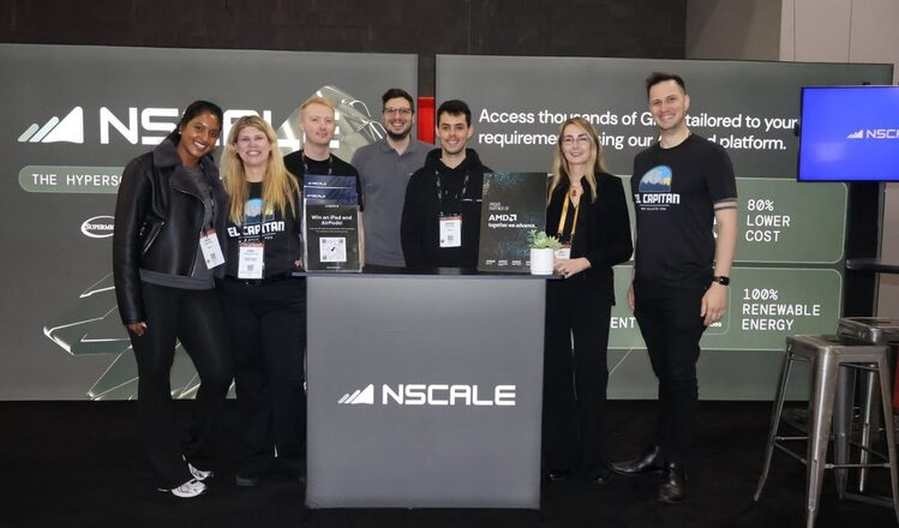
Just two years ago, Nscale didn’t exist as a standalone entity. It was spun out of Arkon Energy, a crypto-mining infrastructure provider, to meet surging demand for AI-specific data centers after OpenAI’s ChatGPT sparked the AI boom in late 2022.

Like CoreWeave in the U.S., Nscale repurposed its crypto roots into an AI infrastructure business, combining vast data center capacity, high-density power, and thousands of GPUs with software layers for clients.

The transformation has been astonishingly fast. In May 2023, Nscale came out of stealth, quickly partnering with the UAE’s Open Innovation AI to deploy 30,000 GPUs. It acquired Finnish high-performance computing firm Kontena, then struck a deal with Asian telecom giant Singtel to offer GPU-as-a-Service in Europe and Southeast Asia. Initially reliant on AMD hardware, Nscale pivoted to Nvidia GPUs as its partnerships deepened.

By December, it closed one of the largest Series A rounds in U.K. history — $155 million led by Sandton Capital Partners. With that, the company expanded its pipeline from 300 megawatts to 1.3 gigawatts in just one year and set a target of running 350,000 GPUs by 2027.

Microsoft and OpenAI, Too

Tuesday’s announcements signaled Nscale’s leap into the big leagues. The company was named an AI infrastructure partner for Nvidia, Microsoft, and OpenAI. It also revealed a five-year, $6.2 billion deal with Microsoft and Norwegian industrial group Aker to develop “hyperscale AI infrastructure” across Europe, with Norway as the anchor.

Microsoft committed $15.5 billion of new investment in the U.K., headlining plans to build the country’s largest supercomputer in Loughton, Essex. That site will house 23,040 Nvidia Blackwell GPUs by early 2027, providing 50 megawatts of AI power, scalable to 90 megawatts.

“No one can make that kind of capital investment unless they’ve got somebody already committed to spend the money once the work is complete, and that’s the role we’re playing,” Microsoft President Brad Smith explained.

Meanwhile, OpenAI confirmed it would launch Stargate U.K. in partnership with Nscale and Nvidia, initially deploying 8,000 GPUs next year, with the capacity to expand to 31,000. The sites will span several regions, beginning with Newcastle’s Cobalt Park.

Nvidia’s CEO Jensen Huang personally announced the £500 million equity injection, telling reporters: “We convinced ourselves that Nscale could be a national champion for AI infrastructure in the U.K.”

Europe’s Sovereign AI Gamble

Nscale’s emergence coincides with Europe’s drive for “sovereign AI” — a policy push requiring data centers and AI workloads to remain within European jurisdictions. Britain’s AI action plan, rolled out in January, promised to slash bureaucratic barriers to domestic AI growth.

Josh Payne, Nscale’s founder and CEO, framed the Microsoft and Aker partnership as a “huge win for European-owned AI infrastructure.” In earlier remarks, he said Europe’s biggest challenges were a lack of computing capacity and a “very fragmented market.” His vision is to create massive projects that smaller players can consume from, unlocking productivity and economic growth.

Nick Patience, AI practice lead at Futurum Group, said the announcements signal government recognition that “it has to do something to get the AI infrastructure built here, which has been a long slog.”

Scaling Targets, Heavy Costs

Payne has set ambitious targets: 50,000 GPUs by the end of 2025 and 150,000 by the end of 2026. Long term, Nscale aims to reach 350,000 GPUs by 2027. Its Norwegian project with OpenAI alone has a $1 billion commitment, with plans to host 100,000 GPUs before 2027.

But scaling at this pace is intensely capital-intensive. Building AI data centers requires billions in both debt and equity. CoreWeave has already raised $12.4 billion in debt and over $1 billion in equity, plus a $1.5 billion bond issue in July after a $2 billion debt sale in May.

Nscale is following a similar path, reported earlier this year to be raising $1.8 billion in private credit through Goldman Sachs.

Outlook

Analysts sketch three possible paths for the partnerships. In the optimistic case, Nscale leverages its Microsoft, Nvidia, and OpenAI alliances to secure long-term contracts and dominate Europe’s AI infrastructure landscape, emerging as a “CoreWeave of Europe.” In the base case, it achieves steady growth but faces periodic financing strains, forcing slower buildouts. The downside scenario sees mounting debt, regulatory bottlenecks, or execution delays stalling projects, leaving Nscale vulnerable to acquisition.